

2013-2025 Mazda CX-5 & 2014-2021 Mazda6 Rear Hub Bearing Noise: Diagnosis & Replacement
A complete guide to diagnosing humming or grinding noises from the rear of your Mazda CX-5 or Mazda6, and how to choose the right replacement hub assembly.
- A humming or roaring noise from the rear is the primary symptom; Mazda warns this is often misdiagnosed as a costly differential failure.
- For 2013-2021 CX-5s, FWD and AWD models use different rear hubs. The FWD Mazda6 shares its rear hub with the AWD CX-5.
- When replacing the hub, inspect the metal backing plate for flatness. A separate TSB notes that an uneven plate can cause premature failure of the new bearing.
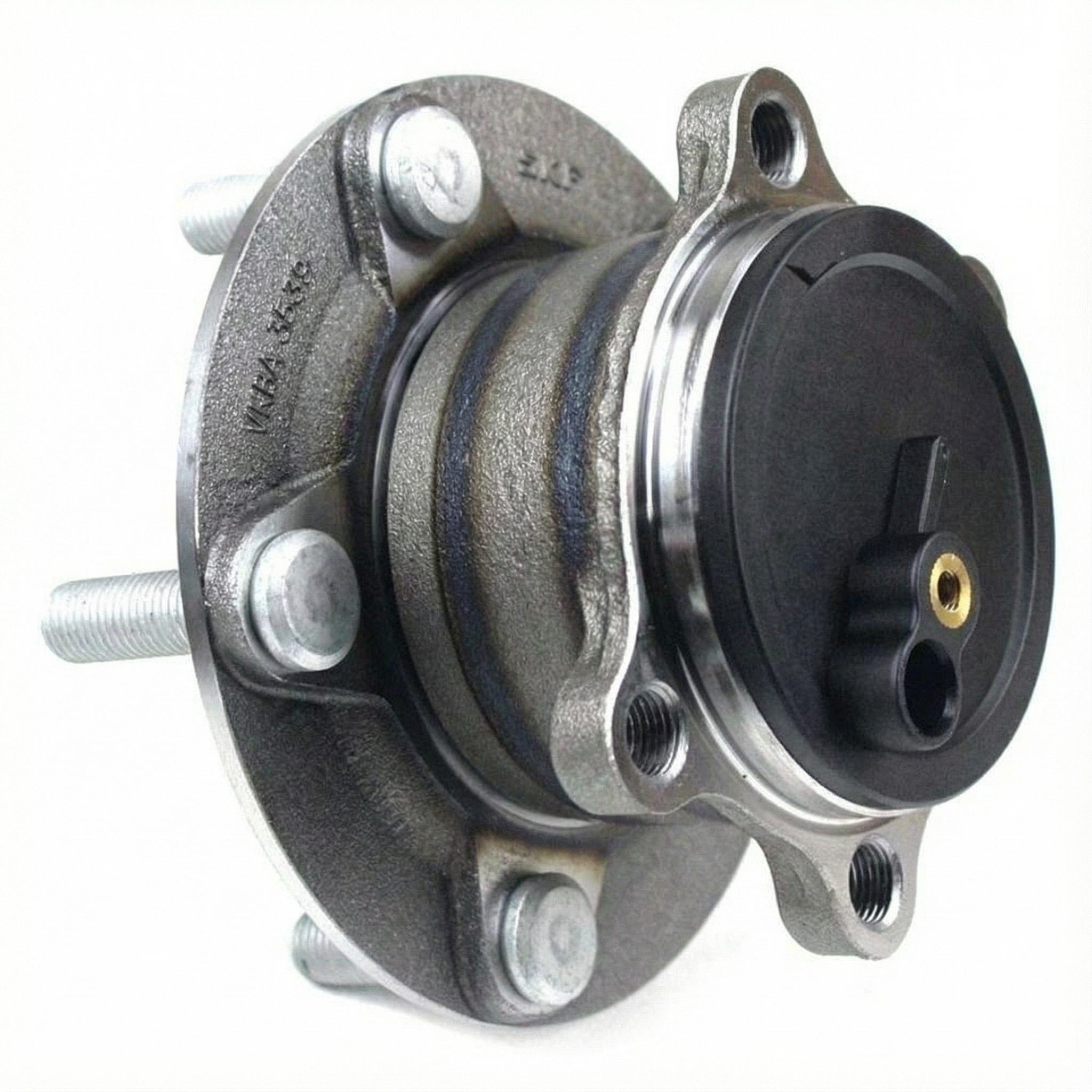
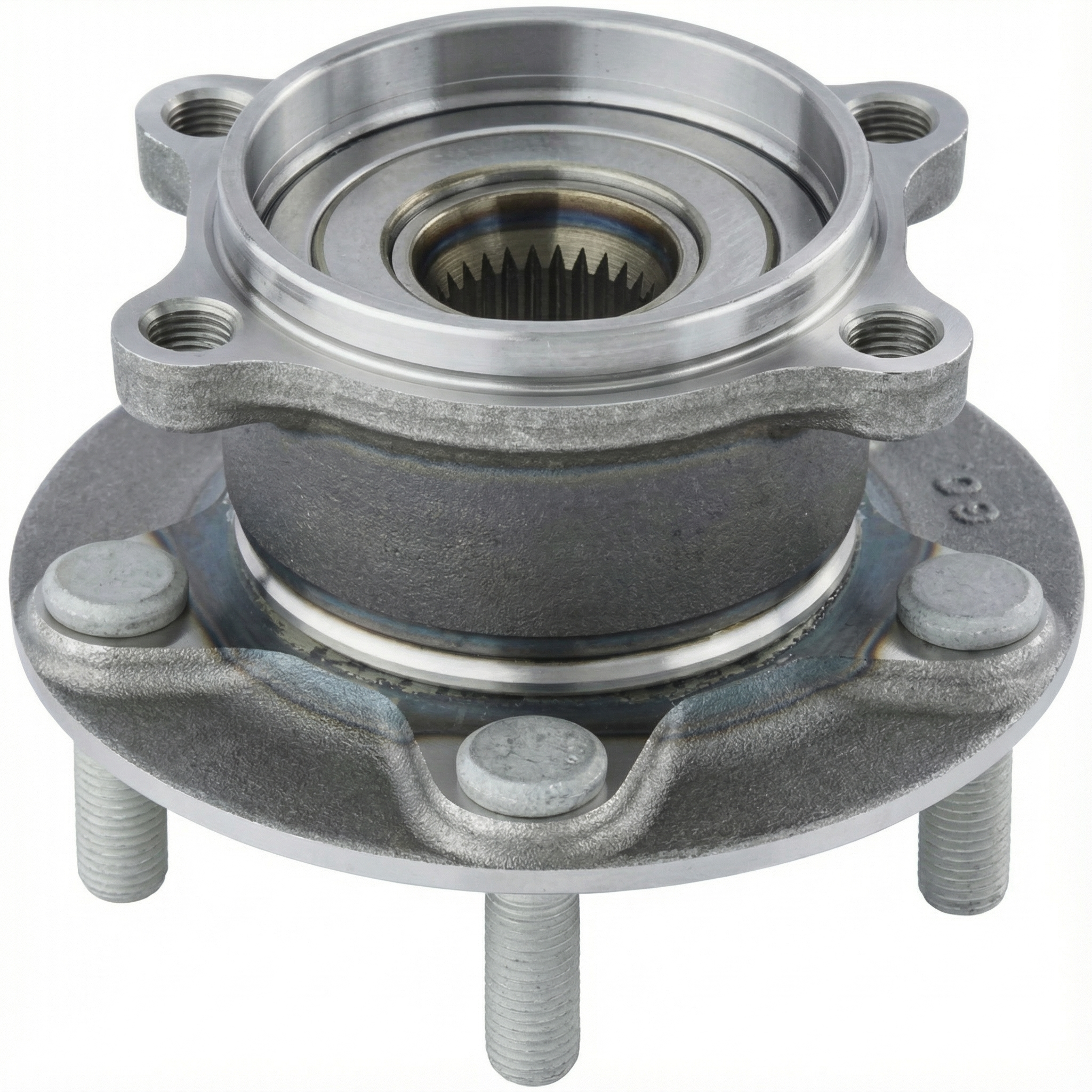
- This is a bolt-on assembly. The bearing cannot be replaced separately. High-quality used OEM parts are a viable alternative to new parts.
Symptoms of a Failing Rear Hub Assembly

A failing rear hub bearing typically gives several warning signs. The most common symptom is a noise that changes with vehicle speed. It's crucial to identify these sounds correctly, as Mazda has issued a service alert (SA-032/21) warning that wheel bearing noise is often misdiagnosed as a more expensive differential or transmission problem.
- Humming, Roaring, or Grinding Noise: This is the classic sign of a bad wheel bearing. The noise typically starts as a faint hum and gets progressively louder over time. It is directly related to wheel speed, not engine speed, and will be present whether you are accelerating, coasting, or in neutral.
- Noise Changes While Turning: 🎬 Watch: How to tell which wheel bearing is bad A key diagnostic clue is a change in the noise when turning or swerving. For example, if you swerve to the left, the vehicle's weight shifts to the right-side wheels. If the noise gets louder during a left turn, it often indicates the right rear bearing is failing, and vice-versa.
- Vibration or Wobble: In more advanced stages of failure, you may feel a vibration through the floor or steering wheel. In severe cases, you might feel a wobble from the rear of the car, indicating excessive play in the bearing.
- ABS Warning Light: The hub assembly contains the sensor ring for the wheel speed sensor. If the bearing develops excessive play or the sensor ring is damaged, it can cause an erratic signal, triggering the ABS and traction control warning lights on your dashboard.
- Uneven Tire Wear: A worn and loose wheel bearing can affect the wheel's alignment, leading to abnormal or accelerated tire wear on the affected corner.
Known Issues, TSBs, and Recalls

While there are no direct safety recalls for the hub assemblies on these vehicles, Mazda has released several Technical Service Bulletins (TSBs) that are highly relevant to diagnosing and repairing rear-end noises.
TSB SA-032/21: Wheel Bearing Noise Misdiagnosed as Drivetrain Failure
This is the most important bulletin for any owner experiencing a humming or growling noise. Mazda noted that many warranty claims were being filed for expensive differential, transfer case, and transmission repairs when the actual cause was a simple wheel bearing failure. A technician may mistake the sound's origin, leading to a costly and incorrect repair. If you are quoted for a differential replacement, make sure the wheel bearings have been thoroughly ruled out first.
🎬 See this diagnosis of an extremely loud rear-end soundTSB for Rear Backing Plate
Mazda issued a service bulletin related to a "howling-type sound" from the rear of the vehicle caused by a faulty hub bearing. The investigation found that unevenness on the surface of the brake backing plate (the thin metal shield behind the brake rotor) could cause the new hub to be installed improperly, leading to premature failure. The TSB instructs technicians to replace the rear hub assembly and the backing plate as a set to ensure a proper, flat mounting surface. When replacing a hub, especially if it has failed prematurely, inspecting or replacing the backing plate is a wise precaution.
TSB 02-015/18: Broken Rear Coil Spring
For 2013-2018 Mazda CX-5 models, Mazda issued a TSB regarding a knocking noise or a lower-than-normal rear ride height caused by a broken rear coil spring. Corrosion can cause the bottom of the spring to fracture. While not a hub issue, the resulting noise could be confused with a bad bearing or other suspension problem, making it a relevant diagnostic consideration.
Vehicle Fitment and Part Variants

This rear hub assembly is shared between the 2014-2021 Mazda6 and the 2013-2025 Mazda CX-5 due to their shared platform architecture. However, there are critical differences based on the drivetrain.
- 2014-2021 Mazda6: All Mazda6 models of this generation are Front-Wheel Drive (FWD). They use the same rear hub assembly.
- 2013-2021 Mazda CX-5: These models were available in both FWD and All-Wheel Drive (AWD). The FWD and AWD models use different rear hub assemblies. It is critical to order the correct part for your specific drivetrain. The hub for the AWD model is designed to have the drive axle pass through it.
- 2022-2025 Mazda CX-5: Aftermarket data suggests that from 2022 onward, Mazda may have begun using the same rear hub assembly for both FWD and AWD models, but it is always best to verify the part number with your vehicle's VIN.
Warning: The FWD Mazda6 and the AWD Mazda CX-5 share the same rear hub assembly. However, the FWD Mazda CX-5 uses a different part. Do not attempt to install a hub meant for an AWD CX-5 on a FWD CX-5, or vice-versa, for the 2013-2021 model years.
Buying a Used Hub Assembly
A high-quality, low-mileage used OEM hub assembly can be a great value compared to a new part from the dealer or a cheap aftermarket alternative. OEM parts are manufactured to a higher standard than many aftermarket options, which can sometimes fail prematurely. Here’s what to look for when buying used:
- Verify Part Numbers: Check the stamped part number against the list of known OEM numbers. Pay close attention to the supersession history; a later part number like KD35-26-15XD is a revised, newer version of an older part like KD35-26-15XB.
- Check for Play: With the hub in hand, try to wiggle the center flange relative to the outer mounting bracket. There should be absolutely no play or looseness. The bearing should spin smoothly with some resistance, but without any grinding, catching, or roughness.
- Inspect the ABS Sensor and Connector: Ensure the integrated ABS sensor is not physically damaged and the electrical connector pins are clean and straight. A damaged sensor will render the part useless.
- Mileage and Condition: Ask for the mileage of the donor vehicle. While failures can happen at any time, bearings from vehicles with under 100,000 miles are generally a safer bet. Avoid hubs that show heavy corrosion or signs of impact damage.
- Confirm Drivetrain Compatibility: For CX-5 owners, double-check if the part came from an AWD or FWD vehicle to ensure it matches yours.
Cost of Replacement
The cost to replace a rear hub assembly can vary significantly based on the parts you choose and who performs the labor.
| Part/Service | Estimated Cost |
|---|---|
| New OEM Hub Assembly | $150 - $220 |
| New Aftermarket Hub Assembly | $50 - $150 |
| Used OEM Hub Assembly | $50 - $90 |
| Shop Labor | $100 - $290 |
| Total Professional Repair (New OEM) | $250 - $510 |
Replacement Overview & Torque Specs

Replacing the rear hub assembly is a feasible DIY job for someone with moderate mechanical experience and the right tools. The process does not require a press, as the hub is a bolt-in unit.
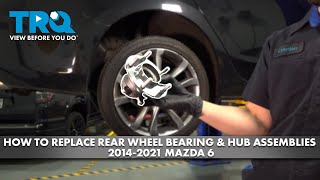
🎬 Watch: How to replace the rear wheel bearing and hubPro Tip: Before starting, spray the four hub mounting bolts and the area where the hub meets the knuckle with penetrating oil. These can be seized with rust, making removal difficult.
- Safely raise and support the vehicle on jack stands and remove the rear wheel.
- Remove the brake caliper and its mounting bracket. Hang the caliper securely with a hook or wire; do not let it hang by the brake hose.
- Remove the brake rotor. If it is stuck, a few taps with a hammer on the area between the lug studs can help break it free.
- Disconnect the ABS wheel speed sensor connector. Remove the 10mm bolt holding the sensor to the knuckle and carefully wiggle the sensor out.
- From behind the knuckle, remove the four bolts that secure the hub assembly. Access to the top bolt may be partially blocked by the shock absorber.
- With the bolts removed, the hub may be seized in the knuckle. Use a hammer or dead blow to strike the old hub from behind to knock it out.
- Thoroughly clean the mounting surface on the knuckle and the bore where the hub sits. Use a wire brush or wheel to remove all rust and debris. This is critical for the longevity of the new bearing. Consider applying a thin layer of anti-seize to the knuckle surface to prevent future corrosion.
- Install the new hub assembly, ensuring the dust shield is correctly positioned. Tighten the four mounting bolts in a star pattern to the correct torque.
- Reassemble the remaining components in the reverse order of removal.
Torque Specifications are Critical: Improper torque can lead to premature failure. There is some conflicting information from DIY sources, so cross-referencing with an official service manual is always best.
| Fastener | Torque Spec | Source |
|---|---|---|
| Hub Assembly Bolts (17mm) | 60 - 72 ft-lbs | (2013 Mazda6) |
| Hub Assembly Bolts (14mm) | 90 ft-lbs | (2014+ Mazda6) |
| Caliper Bracket Bolts (14mm) | 38 - 48 ft-lbs | |
| ABS Sensor Bolt (10mm) | 71 - 88 in-lbs | |
| Wheel Lug Nuts (21mm) | 80 - 108 ft-lbs |
Frequently Asked Questions (FAQ)
Is the rear hub assembly side-specific?
No, the rear hub assembly for these models is the same for the left and right sides. You can install the same part on either the driver's or passenger's side rear.
Do I need to replace the axle nut when changing the rear hub?
This only applies to All-Wheel Drive (AWD) CX-5 models. On FWD models (Mazda6 and CX-5), there is no rear axle or axle nut. For AWD CX-5s, yes, you must remove the axle nut to pull the axle shaft out of the hub. It is a one-time-use, staked nut and must be replaced with a new one and torqued to the correct specification to prevent bearing failure.
Can I just replace the bearing instead of the whole hub assembly?
No. The rear wheel bearing on these vehicles is part of a sealed, bolt-in hub assembly. It is not designed to be pressed out and replaced separately. The entire unit must be replaced.
How long does a wheel bearing last on a Mazda CX-5 or Mazda6?
There is no set lifespan. Some owners have reported failures in as little as 30,000-50,000 miles, while others have driven over 200,000 miles on the original bearings. Factors like road conditions, climate (road salt), and driving habits can influence their longevity.
Helpful Videos
Technical Specifications
OEM Part Numbers: KD31-26-15XA KD31-26-15XB KD35-26-15XB KD35-26-15XC KD35-26-15XD BCKE-26-15XA
Bolt-in assembly with integrated ABS sensor ring. 5-lug pattern with a 114.3mm bolt circle diameter.
We Have This Part in Stock

The information in this article is provided for general reference and educational purposes only. Vehicle specifications, procedures, and part compatibility can vary by production date, trim level, and region. Always consult your vehicle's factory service manual and verify part numbers before purchasing or performing repairs. Safety-critical components such as airbags, seat belts, and braking systems should be installed by a qualified professional.
- Mazda CX-5:
- Mazda Mazda6:
- 🎬 Helpful Videos
- 🛍️ Shop This Part
- Symptoms of a Failing Rear Hub Assembly
- Known Issues, TSBs, and Recalls
- TSB SA-032/21: Wheel Bearing Noise Misdiagnosed as Drivetrain Failure
- TSB for Rear Backing Plate
- TSB 02-015/18: Broken Rear Coil Spring
- Vehicle Fitment and Part Variants
- Buying a Used Hub Assembly
- Cost of Replacement
- Replacement Overview & Torque Specs
- Frequently Asked Questions (FAQ)
- 🎟️ Get 5% Off