

Mazda3, Mazda5 & Mazdaspeed3 Rear Hub Noise (2004-2017): Diagnosis & Replacement Guide
A definitive guide to diagnosing and replacing the rear wheel hub assembly on the 2004-2013 Mazda3, 2006-2017 Mazda5, and 2007-2013 Mazdaspeed3.
- The most common symptom of failure is a speed-dependent humming or roaring noise from the rear.
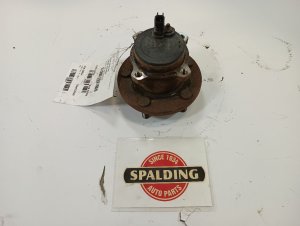
- This part is a sealed hub and bearing unit with an integrated ABS sensor ring; failure can cause both noise and ABS/TCS warning lights.
- The same part fits the Mazda3 (04-13), Mazda5 (06-17), and Mazdaspeed3 (07-13), and the replacement procedure is identical.
- A known TSB suggests a howling noise can be caused by a warped backing plate, requiring the hub and plate to be replaced as a set to prevent repeat failure.
Symptoms of a Failing Rear Hub Assembly
A bad rear wheel hub assembly on a Mazda3, Mazda5, or Mazdaspeed3 will typically provide clear warning signs. Ignoring these can lead to more significant damage or a dangerous failure where the wheel could separate from the vehicle.
1. Humming, Roaring, or Grinding Noise
The most common symptom is a noise coming from the rear of the car that changes with vehicle speed, not engine RPM. This sound is often described as:
- Humming or Roaring: A constant drone that gets louder as you drive faster, similar to the sound of aggressive off-road tires or an airplane taking off.
- Grinding or Growling: A rough, metal-on-metal sound indicating the internal bearing has lost its lubrication and is destroying itself.
- Clicking or Popping: These sounds may be more noticeable at lower speeds or during turns and can indicate a more advanced stage of failure.
The noise may change in pitch or volume when turning. For example, a failing right rear bearing might get louder during a left turn as more load is placed on it.
2. ABS, Traction Control, or Stability Control Warning Lights
Because the hub assembly contains the toothed ring for the ABS sensor, a failing bearing can cause problems with the sensor's reading. The excessive play or wobble from a worn bearing can damage the sensor or create an inconsistent signal. This will often trigger one or more warning lights on your dashboard, including the ABS, TCS (Traction Control System), or DSC (Dynamic Stability Control) lights.
3. Vibration or Wheel Wobble
As the bearing wears, it can develop excessive play. This may be felt as a vibration in the steering wheel or floor, especially at higher speeds. In severe cases, you can diagnose this by safely jacking up the rear of the car and trying to shake the wheel from side-to-side and top-to-bottom. If there is any noticeable play or looseness, the hub bearing is likely bad.
Known Issues, TSBs, and Recalls
While there are no major recalls specifically for the rear hub assemblies on these models within the specified year ranges, a relevant Technical Service Bulletin (TSB) has been issued.
TSB for Howling Noise from Rear
Mazda issued a TSB for a "howling-type sound" coming from the rear of the vehicle. The cause was identified as potential unevenness on the mounting surface of the brake backing plate (dust shield). This uneven surface can affect the alignment and concentricity of the hub assembly when it's bolted on, leading to premature bearing failure. The official repair procedure requires replacing both the hub/bearing assembly and the corresponding backing plate as a matched set to ensure a flat, true mounting surface.
Pro Tip: When replacing a hub assembly due to noise, carefully inspect the old backing plate for rust or warping. To be safe and prevent a repeat failure, consider replacing the backing plate at the same time, as recommended by the TSB.
Vehicle-Specific Information
The same rear hub assembly fits the 2004-2013 Mazda3, 2006-2017 Mazda5, and 2007-2013 Mazdaspeed3 because they are all built on the same Ford C1 platform. The replacement procedure is identical for all three vehicles.
- Mazda3 & Mazda5: The process is straightforward for these models.
- Mazdaspeed3: While the Mazdaspeed3 features a stiffer, lower suspension with different spring rates and larger stabilizer bars, the fundamental multi-link rear suspension design is the same. The hub assembly mounting points and the replacement process are identical to the standard Mazda3.
Buying a Used Hub Assembly
A used OEM hub assembly can be a smart purchase, often providing better longevity than a cheap, new aftermarket part. However, since this is a wear-and-tear item, careful inspection is crucial.
- Mileage is Key: Bearing failure is often related to mileage. Aim for a used part from a low-mileage vehicle (ideally under 75,000 miles) to maximize its remaining lifespan. While some bearings last over 100,000 miles, many fail between 75,000 and 100,000 miles.
- Physical Inspection: Before purchasing, inspect the part if possible. Hold the hub flange and try to turn the center. It should spin smoothly with no grinding, notchiness, or clicking sounds.
- Check for Play: Try to wiggle the hub flange relative to the stationary mounting body. There should be absolutely zero play or wobble. Any movement indicates the bearing is already worn.
- Inspect the ABS Ring: Look at the toothed ring on the back of the hub. Ensure it is not cracked, damaged, or packed with metallic debris.
- Check Wheel Studs: Make sure all wheel studs are straight and the threads are in good condition.
- Why Used OEM is Often Better: Original Equipment (OEM) parts are made to the manufacturer's exact specifications for metallurgy and tolerances. Many budget aftermarket hubs use lower-quality steel and seals, leading to a much shorter service life. A low-mileage used OEM hub from a trusted recycler is often a more reliable and cost-effective choice than a new, unbranded aftermarket part.
Replacement Overview & Torque Specs
Replacing the rear hub assembly is a feasible DIY job for someone with intermediate mechanical skills and the right tools. The hub is a bolt-on unit, so no hydraulic press is needed.
Required Tools & Parts:
- Jack and Jack Stands
- Socket Set (14mm, 21mm)
- Torx Sockets (T45, T50)
- Torque Wrench
- Breaker Bar
- Wire Brush
- Hammer or Rubber Mallet
- Brake Caliper Piston Tool (for retracting the piston)
Step-by-Step Summary:
- Safely jack up the vehicle and secure it on jack stands. Chock the front wheels.
- Remove the rear wheel.
- Remove the brake caliper. This may require a T45 Torx or an Allen key for the slider pins. Hang the caliper securely with a hook or zip tie; do not let it hang by the brake hose.
- Remove the two 14mm bolts holding the caliper bracket and remove the bracket.
- Remove the brake rotor. If it's stuck, a few taps with a hammer on the back may be needed.
- Disconnect the ABS sensor wire from its harness connection point.
- From behind the knuckle, remove the four T50 Torx bolts that secure the hub assembly. These can be very tight or rusted, so a breaker bar or impact wrench is highly recommended.
- With the bolts removed, the hub assembly may be seized in the knuckle due to rust. You may need to strike it from behind with a hammer to break it free.
- Thoroughly clean the mounting surface on the knuckle with a wire brush to ensure the new hub sits perfectly flat. This is critical to prevent premature failure.
- Installation is the reverse of removal.
Important: The four hub mounting bolts are critical fasteners. There are slightly conflicting torque specifications from various sources. One DIY guide suggests 40 ft-lbs, while another technical guide specifies 62 Nm (approximately 46 ft-lbs). It is highly recommended to consult a factory service manual for your specific year and model. Always tighten the bolts in a star or criss-cross pattern to ensure the hub is seated evenly.
Cost of Replacement
The cost to replace a rear hub assembly can vary significantly based on the parts you choose and whether you do the work yourself.
| Part/Service | Estimated Cost (Per Side) | Notes |
|---|---|---|
| New OEM | $150 - $250 | Highest quality and cost, purchased from a Mazda dealer. |
| New Aftermarket | $50 - $200 | Wide range. Premium brands like MOOG, SKF, or Timken are on the higher end ($100+), while budget brands are cheaper. |
| Used OEM | $60 - $120 | A cost-effective option, especially from low-mileage vehicles. Price depends on condition and source. |
| Shop Labor | $150 - $375 | Labor costs can range from 1.5 to 2.5 hours. Estimates for a Mazda3 are around $255-$374, while a Mazda5 may be slightly less at $188-$276. |
Frequently Asked Questions (FAQ)
Can I drive with a bad wheel bearing?
It is not recommended. While the car may be drivable for a short time when the noise first appears, a failing wheel bearing is a serious safety risk. If the bearing completely fails, the wheel can seize or even detach from the vehicle, leading to a total loss of control.
Why did my ABS and traction control lights come on?
The rear hub assembly for these vehicles has an integrated ABS tone ring. A worn, wobbly bearing can damage this ring or its sensor, or simply create an erratic signal that the car's computer interprets as a fault. This deactivates the ABS, traction control, and stability control systems as a safety precaution, triggering the warning lights.
Do I need to replace the hub assemblies in pairs?
It is not strictly necessary, but it is often recommended. Wheel bearings on both sides of the vehicle have been subjected to the same mileage and conditions. If one has failed, the other may not be far behind. Replacing them in pairs can save you from having to do the same job again in the near future.
Is rebuilding the hub an option?
No, for this specific part, rebuilding is not an option. The hub and bearing are a single, sealed assembly that cannot be disassembled or repacked with grease. The entire unit must be replaced. This design simplifies the replacement process as it eliminates the need for a hydraulic press.
Technical Specifications
OEM Part Numbers: BBM22615X BBM22615XA BBM22615XB BP4K2615XA BP4K2615XB BP4K2615XC BP4K2615XD BP4K2615XE
Fits rear left or right side. For models with Anti-Lock Brakes (ABS). Hub Mounting Bolt Torque: 40-46 ft-lbs (54-62 Nm). Hub Mounting Bolt Tool: T50 Torx.
We Have This Part in Stock

The information in this article is provided for general reference and educational purposes only. Vehicle specifications, procedures, and part compatibility can vary by production date, trim level, and region. Always consult your vehicle's factory service manual and verify part numbers before purchasing or performing repairs. Safety-critical components such as airbags, seat belts, and braking systems should be installed by a qualified professional.
- Mazda Mazda3:
- Mazda Mazda5:
- Mazda Mazdaspeed3:
- 🛍️ Shop This Part
- Symptoms of a Failing Rear Hub Assembly
- 1. Humming, Roaring, or Grinding Noise
- 2. ABS, Traction Control, or Stability Control Warning Lights
- 3. Vibration or Wheel Wobble
- Known Issues, TSBs, and Recalls
- TSB for Howling Noise from Rear
- Vehicle-Specific Information
- Buying a Used Hub Assembly
- Replacement Overview & Torque Specs
- Required Tools & Parts:
- Step-by-Step Summary:
- Cost of Replacement
- Frequently Asked Questions (FAQ)
- 🎟️ Get 5% Off