

1992-1995 Taurus & Sable HVAC Control: Fixing Failed Knobs and Airflow
A complete guide to diagnosing, replacing, and buying a used manual HVAC control unit for your 1992-1995 Ford Taurus or Mercury Sable.
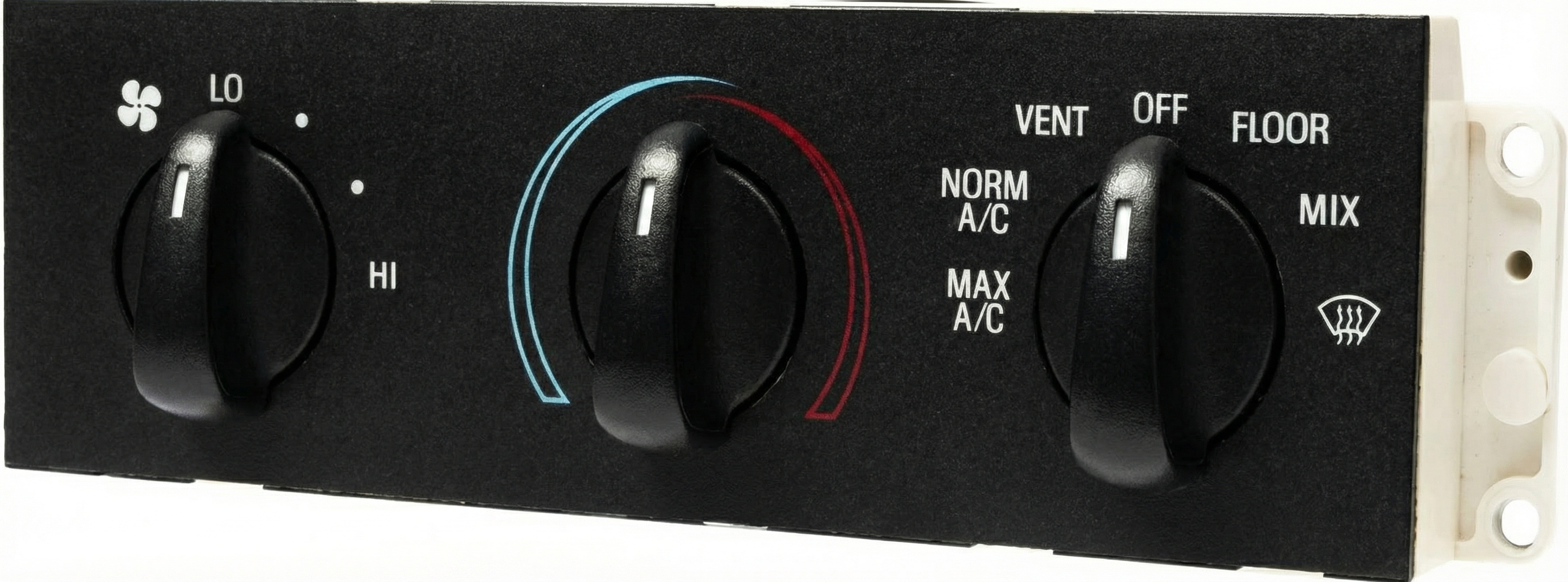
- This manual HVAC control (F2DZ19980AA) is NOT interchangeable with the digital automatic climate control (EATC) unit.
- If your fan only works on high speed, the problem is the blower motor resistor, not this control unit.
- If air is stuck on the defrost vents, check for a broken vacuum line under the hood before replacing any parts.
- When buying a used unit, carefully inspect the rear electrical connectors for signs of melting or heat damage, which is a common failure point.
Symptoms of a Failing HVAC Control Unit
When the HVAC control unit in a 1992-1995 Ford Taurus or Mercury Sable begins to fail, the symptoms can sometimes be confusing. It's important to distinguish between a bad control unit and a failure in the part it controls. Here are the most common signs that point to the control unit itself.
- Unresponsive Knobs or Buttons: You turn the fan speed knob or change the temperature slider, but nothing happens, or it only works intermittently.
- Air Comes Out of the Wrong Vents: You select the dashboard vents, but the air only comes out of the defroster or floor vents. This indicates a problem with the mode selector switch, which controls vacuum-operated actuators.
- Inability to Change Temperature: The slider or knob that controls temperature has no effect, leaving you stuck with either full heat or full cold air. This could be the control unit, but it's also a common symptom of a failed blend door actuator.
- No Power or Dead Unit: The backlights don't turn on, and none of the functions work at all. This could be a blown fuse, a wiring problem, or an internal failure on the unit's circuit board.
Pro Tip: If the fan only works on the highest speed, the problem is almost certainly the blower motor resistor, not the HVAC control unit. The resistor is a separate, inexpensive part located under the dashboard on the passenger side. If air is stuck on defrost, it's often caused by a broken vacuum line in the engine bay, not a faulty control head.
Buying a Used HVAC Control: What to Check
For these vehicles, a quality used OEM control unit is often a better choice than a new aftermarket part, which may be made with inferior materials. Since new OEM units are likely discontinued, a recycled part is your most practical option. Here’s what to inspect before you buy.
- Confirm Compatibility: This guide covers the manual temperature control unit with OEM part number F2DZ19980AA. It fits the 1992-1995 Ford Taurus and 1992-1995 Mercury Sable equipped with factory air conditioning. It will NOT work in vehicles with Electronic Automatic Temperature Control (EATC), which has a digital display.
- Inspect the Faceplate: Check for deep scratches, cracks, and worn-off graphics that make the settings hard to read.
- Test the Knobs and Sliders: All controls should move smoothly but with firm, distinct clicks or detents. A loose, wobbly fan switch or a gritty-feeling temperature slider is a sign of excessive wear and internal damage.
- Examine the Rear Connectors: This is the most critical check. Look at the electrical connector ports on the back of the unit. Pay close attention to the pins for the fan switch; they often overheat. Look for any signs of melted plastic, discoloration (brown or black marks), or corroded/bent pins. Do not buy a unit with visible heat damage.
- Check the Vacuum Port: The mode selector is vacuum-operated. Inspect the plastic block where the multi-colored vacuum lines connect. Ensure it is not cracked, brittle, or broken.
Known Issues, TSBs, and Recalls
For vehicles of this age, formal documentation can be scarce, but the primary known issues are well-documented in owner forums and by mechanics.
- Vacuum Leaks: The most common issue related to airflow direction is not the control unit itself, but brittle or broken vacuum lines under the hood. A significant vacuum leak will cause the system to default to the defrost vents.
- Blend Door Actuator Failure: A clicking sound from behind the glove box when changing temperature is a classic sign of a failing blend door actuator, a common issue on these cars. This part is often misdiagnosed as a faulty control head. 🎬 See how to troubleshoot and fix common no-heat issues
- Recalls: While there are no recalls specifically for the HVAC control unit, several recalls exist for the 1992-1995 Taurus and Sable. Notably, recall 97V019000 (Ford 97S66) was issued for an engine cooling fan issue in cold weather states that could lead to overheating and fire risk. Another recall, 97V025000 (Ford 97S65), addressed a speed control cable that could freeze, affecting throttle control.
Installation Guide
Replacing the HVAC control unit is a straightforward job for a DIYer with basic tools.
- Difficulty: 2 out of 5
- Time: 30-60 minutes
- Tools Needed: Phillips screwdriver, flathead screwdriver, trim removal tool (optional, but recommended).
Step-by-Step Process:
- Disconnect the Battery: Always disconnect the negative battery terminal before working on any electrical components to prevent short circuits.
- Remove the Dash Trim: The trim piece surrounding the radio and HVAC controls is held in by clips. Carefully pry it off using a trim removal tool or a flathead screwdriver wrapped in tape to prevent scratching the dashboard.
- Unscrew the Control Unit: The HVAC control unit is typically held in place by two or four Phillips head screws. Remove them.
- Disconnect the Unit: Gently pull the unit out from the dash. You will see one or two electrical connectors and a block of vacuum lines on the back. Press the release tabs on the electrical connectors and pull them straight out. The vacuum line connector pulls straight off.
- Installation: Installation is the reverse of removal. Connect the vacuum and electrical plugs to the new unit, screw it into the dash, and snap the trim piece back into place. Reconnect the battery and test all functions.
Warning: Be gentle when removing the dashboard trim. The plastic can be brittle after decades of sun exposure and may crack if you apply too much force.
Cost Comparison
| Part Type | Estimated Cost |
|---|---|
| New OEM (F2DZ19980AA) | Discontinued / No Longer Available |
| New Aftermarket | $50 - $100 (Availability may be limited) |
| Used OEM | $35 - $75 |
| Shop Labor | $110 - $165 |
Frequently Asked Questions
Will this part fix my fan that only works on high speed?
No. A fan that only functions on the highest setting is a classic symptom of a failed blower motor resistor, which is a separate part located under the passenger side of the dashboard.
Why is my air stuck on the defrost setting?
This is almost always caused by a loss of vacuum to the control head. The system is designed to default to defrost for safety (to clear the windshield). Check for a disconnected or broken black vacuum line in the engine bay, often near the passenger side firewall, before replacing the control unit.
🎬 Watch: Quick fix for air stuck on the defrost settingCan I use a control unit from a car with automatic climate control?
No. The manual and automatic (EATC) systems use completely different wiring and control methods. The plugs will not match, and the units are not interchangeable. You must use a manual control unit for a manual system.
Do I need any special tools to replace this part?
No special tools are required. A basic set of screwdrivers is all that is needed. A plastic trim removal tool is highly recommended to avoid scratching your dashboard panels, but a flathead screwdriver can be used with care.
Helpful Videos

Technical Specifications
OEM Part Numbers: F2DZ19980AA
Manual temperature control for vehicles with factory A/C. Uses vacuum-actuated mode doors.
We Have This Part in Stock

The information in this article is provided for general reference and educational purposes only. Vehicle specifications, procedures, and part compatibility can vary by production date, trim level, and region. Always consult your vehicle's factory service manual and verify part numbers before purchasing or performing repairs. Safety-critical components such as airbags, seat belts, and braking systems should be installed by a qualified professional.
- Ford Taurus:
- Mercury Sable: