

2012-2022 Honda Civic HVAC Control: Solving Failures and Compatibility
This guide explains common failures of the Civic's climate control unit and how to navigate the complex world of part numbers to find the correct used replacement.
- Compatibility is extremely complex. You must exactly match your Civic's year, body style, build location, and features like single/dual-zone and heated seats.
- The only guaranteed way to find the correct part is to remove your original unit and match the OEM part number on the sticker.
- For 2016-2021 Civics, an A/C system that blows warm air is very likely a leaking A/C condenser (covered by Honda's extended warranty TSB 19-091), not a faulty control unit.
- A replacement unit, especially on 2016+ models, may require programming with a dealer-level scan tool to function correctly after installation.
Common Symptoms of a Failing HVAC Control Unit
When the HVAC control unit in a 2012-2022 Honda Civic begins to fail, the symptoms can range from minor annoyances to a complete loss of climate functions. It's important to distinguish these from other HVAC system problems.
- Completely Dead Panel: The most obvious sign is when the entire control panel is unresponsive. The backlights are off, and pressing buttons or turning knobs does nothing. This often points to an internal failure of the unit or a blown fuse.
- Buttons Don't Work or Are Unresponsive: You might find that some or all of the buttons light up, but pressing them has no effect on the climate system. For example, the A/C light may turn on, but the compressor clutch doesn't engage.
- Incorrect Air Temperature: The unit fails to properly command the blend door actuator, resulting in air that is always hot or always cold, regardless of the temperature you set.
- Airflow Stuck in One Position: If the air is stuck coming out of the defrost vents and won't switch to the dash or floor vents, the control unit may not be sending the correct signal to the mode door actuator.
- Blower Fan Issues: While a fan that only works on the highest setting is a classic sign of a failed blower motor resistor, a control unit failure can cause other erratic fan behavior, such as not turning on at all or running at incorrect speeds.
- A/C Compressor Not Engaging: In some cases, a faulty control module may fail to send the correct voltage to the A/C compressor's control valve or clutch, resulting in no cold air even if the rest of the system is functional.
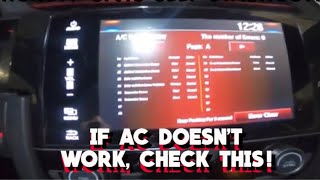
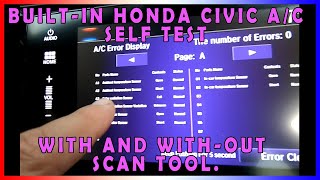
- Flashing Lights (Self-Diagnosis): Many Honda models have a built-in self-diagnostic function. Flashing lights on the control panel can indicate a specific Diagnostic Trouble Code (DTC) that the unit has stored. 🎬 Watch: How to run the built-in A/C diagnostic self-test.
Pro Tip: Before condemning the control unit, check for related issues. A fan that only works on high is almost always a bad blower motor resistor. An A/C system that blows warm air on 10th generation Civics (2016-2021) is very often caused by a leaking A/C condenser, a problem so common that Honda issued a warranty extension (TSB 19-091).
Known Issues, Recalls, and Technical Service Bulletins (TSBs)
While there are no major recalls specifically for the HVAC control unit itself across this entire model range, it is closely tied to other well-known Civic issues.
TSB 19-091: The Leaking A/C Condenser (2016-2021 Civics)
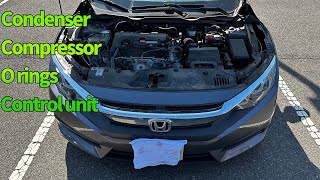
The most significant issue affecting the climate system in these Civics is not the control unit, but the A/C condenser. On 2016-2021 models, the condenser was prone to developing tiny leaks, allowing refrigerant to escape and causing the A/C to stop blowing cold air. Honda extended the warranty on the A/C condenser to 10 years with unlimited mileage for affected vehicles. Many owners might mistakenly blame the control unit when the A/C fails, making it crucial to have the system properly diagnosed for leaks before buying any parts.
🎬 See this breakdown of common 10th Gen Civic A/C issues.TSB for A/C Compressor Shaft Seal (10th Gen)
Another TSB addresses an oil/refrigerant leak from the A/C compressor's main shaft seal on 10th generation Civics. A leaking compressor can also lead to a loss of refrigerant and cause the A/C to fail. Some owners have reported needing both the condenser and compressor replaced, with dealers sometimes initially refusing to cover the compressor until pressed about the known issues.
The Buyer's Gauntlet: How to Buy the Correct Used HVAC Control
This is the most critical part of the process. The HVAC control unit for the Honda Civic is extremely specific. Buying the wrong one is a common and costly mistake. A used OEM unit is often a great value, but only if it's an exact match. Follow these steps precisely.
Step 1: Identify Your Civic's DNA
You must know the following details about the vehicle the part is for:
- Generation: 9th Gen (2012-2015), 10th Gen (2016-2021), or 11th Gen (2022+).
- Body Style: Coupe (2-door), Sedan (4-door), or Hatchback (5-door).
- Build Location: Check the first character of your VIN. This is especially important for hatchbacks.
Step 2: Match Features EXACTLY
The control unit's internal electronics and external buttons are tied to the car's factory options. There is no interchangeability.
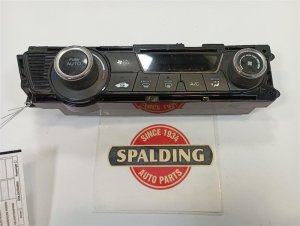
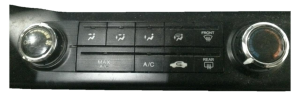
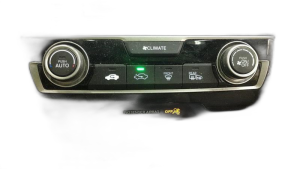
- Single-Zone vs. Dual-Zone Climate Control: Does your car have one temperature knob for the whole cabin (single-zone) or separate knobs for the driver and passenger (dual-zone)? A dual-zone unit will not work in a single-zone car, and vice-versa.
- Heated Seats: Does your car have heated seats? The buttons are integrated into the HVAC control unit. You must get a unit that matches your car's heated seat configuration.
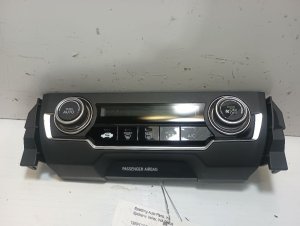
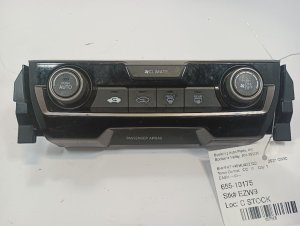
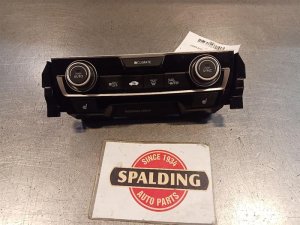
- Button Layout: Pay close attention to the physical layout. Some warnings specify things like "4 buttons in the center." Visually compare the button layout of the potential replacement with your original unit.
Step 3: The Golden Rule - Match the Part Number
This is the only 100% guaranteed method for ensuring compatibility. You must physically remove your original HVAC control unit to find the manufacturer's part number, which is typically on a sticker on the housing. When buying a used part, insist on getting a clear photo of this part number sticker to compare against your own.
Step 4: Physical Inspection of a Used Unit
- Connectors: Inspect the electrical connector ports on the back. Look for any signs of corrosion (green or white powder), bent pins, or melted plastic.
- Faceplate and Buttons: Check for deep scratches, cracks, or worn-out button graphics. Ensure the knobs turn smoothly and the buttons press without sticking.
- Donor Vehicle Information: If possible, get the Vehicle Identification Number (VIN) from the car the part was removed from. This can be used to look up its original factory configuration and double-check compatibility.
Replacement Overview & Programming
Replacing the HVAC control unit is generally straightforward for those comfortable with interior trim work.
- Difficulty: 2 out of 5.
- Tools: A set of plastic trim removal tools is essential to avoid scratching the dashboard, along with a Phillips head screwdriver.
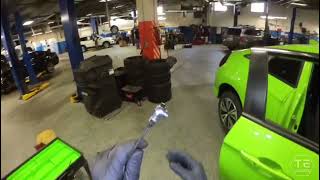
- General Process: The process involves carefully prying off the trim surrounding the unit, removing a few screws, and disconnecting the electrical connectors from the back. Always disconnect the negative battery terminal before starting work to prevent electrical damage. 🎬 Watch this POV walkthrough of the control unit replacement process.
Warning: Potential for Reprogramming. On newer models, particularly the 10th generation (2016+) and newer, the HVAC control unit may need to be calibrated or programmed to the vehicle's main computer (Body Control Module). This may require a dealer-level scan tool (like the Honda HDS). If you install a new unit and it doesn't function correctly, a trip to a dealer or a well-equipped independent shop for programming may be necessary.
Cost Comparison
Prices can vary significantly based on the specific part number and vehicle configuration.
| Part Type | Estimated Cost |
|---|---|
| New OEM | $400 - $900+ |
| New Aftermarket | Not commonly available |
| Used OEM | $75 - $300 |
| Shop Labor | $100 - $250 |
Frequently Asked Questions (FAQ)
My A/C is blowing warm air. Is the HVAC control unit bad?
It's possible, but less likely than other causes. First, check for low refrigerant. On 2016-2021 Civics, the A/C condenser is a known weak point and often leaks (TSB 19-091). Have the system checked for leaks before replacing the control unit.
Can I upgrade my single-zone climate control to a dual-zone system by swapping the control unit?
No. A dual-zone system uses additional sensors, wiring, and a different blend door actuator assembly inside the dashboard. Simply swapping the control panel will not work.
Do I have to disconnect the battery to replace the control unit?
Yes, absolutely. Disconnecting the negative battery terminal before unplugging any electronic modules is critical. This prevents potential short circuits that could damage the new control unit or other expensive electronics in the car.
My fan only works on the highest speed. Is this the control unit?
This is almost certainly not the control unit. This is the classic symptom of a failed blower motor resistor. This is a separate, much cheaper part that is located near the blower motor itself, usually under the passenger-side dashboard.
How do I run the self-diagnostic test?
On many Civics, you can initiate a self-test without a scan tool. For example, on some models, you press and hold the recirculation and rear defogger buttons, then turn the ignition ON. The panel lights will flash to indicate any stored error codes. The exact procedure varies by year and trim, so it's best to search for the specific method for your vehicle.
Helpful Videos
Technical Specifications
OEM Part Numbers: 79500TR0A11 79500TR0A11ZD 79500TR0A11ZH 79500TR0A11ZJ 79500TR6A01 79500TR6A013M1 79500TR6A01ZB 79600-TGG-A11ZA 79600-TGG-A11ZB 79600-TGG-A11ZC 79600-TGG-A91 79600-TGG-A91ZA 79600T21A51 79600TBAA11 79600TBAA112M1
Varies by part number. Key specifications are tied to vehicle features: Single vs. Dual Zone, Heated Seats, and specific button configurations for different trims and body styles.
We Have This Part in Stock

The information in this article is provided for general reference and educational purposes only. Vehicle specifications, procedures, and part compatibility can vary by production date, trim level, and region. Always consult your vehicle's factory service manual and verify part numbers before purchasing or performing repairs. Safety-critical components such as airbags, seat belts, and braking systems should be installed by a qualified professional.
- Honda Civic:
- 🎬 Helpful Videos
- 🛍️ Shop This Part
- Common Symptoms of a Failing HVAC Control Unit
- Known Issues, Recalls, and Technical Service Bulletins (TSBs)
- TSB 19-091: The Leaking A/C Condenser (2016-2021 Civics)
- TSB for A/C Compressor Shaft Seal (10th Gen)
- The Buyer's Gauntlet: How to Buy the Correct Used HVAC Control
- Step 1: Identify Your Civic's DNA
- Step 2: Match Features EXACTLY
- Step 3: The Golden Rule - Match the Part Number
- Step 4: Physical Inspection of a Used Unit
- Replacement Overview & Programming
- Cost Comparison
- Frequently Asked Questions (FAQ)
- 🎟️ Get 5% Off