

2019-2025 Hyundai Santa Fe HVAC Control: Decoding Failures and Part Numbers
This guide explains the common failures, complex compatibility issues, and replacement costs for the 2019-2025 Hyundai Santa Fe climate control unit.
- Compatibility is extremely complex; you MUST match the OEM part number from your original unit exactly.
- For 2019 models, ensure the part is for the redesigned Santa Fe, not the Santa Fe XL.
- Symptoms like incorrect temperature or airflow are common, but can also be caused by cheaper parts like blend door actuators.
- Upgrading from manual to automatic controls is not feasible due to differences in wiring, sensors, and other components.
Key Compatibility Warnings: Read Before Buying

The 2019-2025 Hyundai Santa Fe was available with many different HVAC control units. They look similar but are not interchangeable. Ordering the wrong one will result in it not working or causing damage. You must physically remove your original unit and match the part number on the back exactly.
Warning: For the 2019 model year, there were two different vehicles named Santa Fe. This part fits the redesigned 5-passenger Santa Fe, NOT the larger 7-passenger Santa Fe XL. The parts are not compatible.
Manual vs. Automatic Climate Control
The most significant difference is between manual and automatic systems.
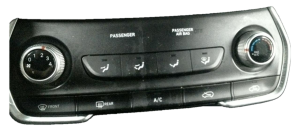
- Manual Controls: Have knobs for temperature and fan speed with set positions. You manually adjust them to get the desired comfort level.
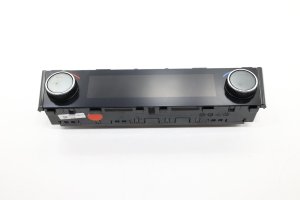
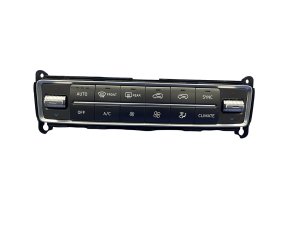
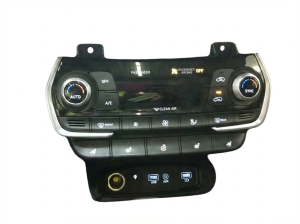
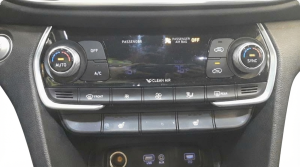
- Automatic Controls: Have a digital display for temperature and an "AUTO" button. You set a specific temperature (e.g., 72°F), and the system automatically adjusts fan speed and air direction to maintain it.
Navigation vs. Non-Navigation Systems
For models with automatic climate control, there are different units for vehicles with and without the factory navigation system. The control unit integrates with the main infotainment screen, so they must be compatible. Verify if your vehicle has factory navigation before ordering.
Heated Seats and Other Features
Some control units have integrated buttons for features like heated seats or a heated steering wheel. Ensure the replacement unit has the exact same buttons and features as your original part. A unit without the heated seats button cannot operate your heated seats.
Common Symptoms of a Failing HVAC Control Module

A failing HVAC control module can cause a wide range of confusing issues. Because it's the system's brain, a problem with the module can look like a failure of another component.
- Unresponsive Buttons or Knobs: You press a button or turn a knob, and nothing happens, or it works only sometimes.
- Blower Fan Issues: The fan may be stuck on one speed (usually high), not work at all, or change speeds randomly.
- Incorrect Temperature Output: The system blows only hot air or only cold air, regardless of the temperature setting. This can happen if the module fails to command the blend door actuators.
- Air Blows from Wrong Vents: You select the dash vents, but air only comes out of the defrost or floor vents. This indicates the module isn't controlling the mode door actuators correctly.
- Blank or Flickering Display: The screen on the control unit may be dead, dim, or flicker intermittently.
- A/C System Inoperative: In some cases, a faulty control module can prevent the A/C compressor from turning on.
Known Issues, Recalls, and Technical Service Bulletins (TSBs)

As of early 2026, there are no specific recalls for the HVAC control module itself on the 2019-2025 Hyundai Santa Fe. However, some related issues are worth noting:
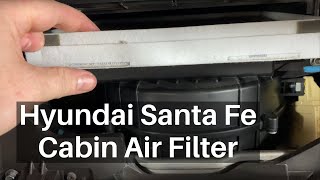
- TSB 21-HA-001H: For some 2020 Santa Fe models, Hyundai issued a bulletin for A/C that stops blowing cold after a period of normal operation. This was traced to a faulty Evaporator Temperature Sensor 🎬 While you're at it, see how to replace the cabin filter., not the control head itself.
- A/C Compressor Failure Investigation: A law firm has been investigating a class-action lawsuit for premature A/C compressor failure on several Hyundai models, including the 2018-2022 Santa Fe. Symptoms include the A/C blowing warm air. While this is a compressor issue, it can be misdiagnosed as a control module problem.
- Owner Complaints: Some owners have reported erratic fan behavior even when the system is in "Auto" mode, with the fan speed changing unpredictably. Others have reported the climate control panel becoming completely unresponsive, sometimes in connection with a failed software update.
Buying a Used 2019-2025 Santa Fe HVAC Control

Buying a used OEM control unit is often the most cost-effective solution. New aftermarket units for this part are not common, and new OEM units can be very expensive. Here’s what to look for:
- Verify the Part Number: This is the most critical step. Before you buy, you must remove your original unit and get the exact Hyundai part number from the sticker on the back. There are dozens of variations. Do not buy a part that is "for your car"; buy the part that has the number that matches yours.
- Physical Inspection: Check the face of the unit for deep scratches or damage. Ensure all buttons and knobs are physically present and move freely. Check that the display screen is not cracked or showing signs of delamination.
- Check the Connectors: Look at the back of the unit. Ensure the plastic connector ports are not cracked or broken and that no pins are bent or corroded.
- Why Used OEM is a Smart Choice: A used OEM unit came from a vehicle just like yours. It was designed by Hyundai to work perfectly with the rest of the car's systems. As long as you match the part number, it is often more reliable than a theoretical aftermarket part and significantly cheaper than a new one from the dealer.
Pro Tip: A qualified technician may need to perform a programming or calibration procedure after installation to ensure all functions, especially those related to automatic climate control, work correctly with your vehicle's other modules.
Replacement Overview
Replacing the HVAC control unit is generally straightforward for a DIYer with basic tools.
- Difficulty: 2 out of 5
- Estimated Time: 0.5 - 1 hour
- General Steps:
- Disconnect the negative battery terminal.
- Carefully pry off the plastic trim surrounding the HVAC control unit and infotainment screen using plastic trim removal tools to avoid scratching the dashboard.
- Unscrew the bolts (typically Phillips head or 10mm) holding the control unit in place.
- Gently pull the unit out and disconnect the electrical connectors from the back.
- Connect the new unit and reverse the steps for reassembly.
Cost of Replacement
| Part Type | Estimated Cost |
|---|---|
| New OEM | $475 - $855 |
| New Aftermarket | Not Widely Available |
| Used OEM | $75 - $250 |
| Shop Labor | $100 - $200 |
Part Number Reference Table
This is a partial list of known part numbers. Many more may exist. Always verify the number on your specific part.
| Part Number | Known Applications / Notes |
|---|---|
| 97250-R6060-VCA | Manual control (without auto temp). |
| 97250-S2300-UAY | Automatic temp, without heated seats (fits 2019-2020). |
| 97250-S2301-UAY | Automatic temp. |
| 97250-S2AA0 | Automatic temp. |
| 97250S2001UMB | Manual control, with heated seats and rear wiper. |
Frequently Asked Questions (FAQ)
Can I upgrade my manual HVAC controls to automatic digital controls?
This is not a simple plug-and-play swap. An automatic system uses additional sensors (like in-car temperature sensors and sunload sensors) and different wiring harnesses and actuators that a manual system lacks. Attempting this conversion would be extremely complex and expensive, requiring a near-complete replacement of the dashboard wiring and HVAC box components. It is not recommended.
Does a used HVAC control need to be programmed?
Sometimes. While many units will work immediately upon being plugged in, some may require a "variant coding" or initialization procedure with a professional scan tool to learn the vehicle's specific configuration (like whether it has a heated steering wheel, etc.). It's best to be prepared for this possibility.
My A/C blows hot on one side and cold on the other. Is this the control module?
While it's possible, this specific symptom is more often caused by a failed blend door actuator. The actuator is a small motor that moves a flap inside the dashboard to mix hot and cold air. In a dual-zone system, there is at least one actuator for each side. The control module tells the actuator what to do, but the actuator itself is the more common failure point for this symptom.
Why are there so many different part numbers?
Part numbers vary based on a combination of features: manual vs. automatic control, with or without navigation, with or without heated seats, with or without a heated steering wheel, and sometimes even minor software updates during the production run. This is why matching your original part number exactly is essential for ensuring compatibility.
Helpful Videos
Technical Specifications
OEM Part Numbers: 84704-R6060 84704-R6090 97250-R6060-VCA 97250-R6300 97250-R63000-VCA 97250-R6300VCA 97250-S2JA0-RRB 97250HB300VCA 97250R6060VCA 97250S2001UMB 97250S2300 97250S2300UAY 97250S2301 97250S2301UAY 97250S2AA0
Varies by part number. Units can be manual or automatic, with or without navigation support, and with or without heated seat controls.
We Have This Part in Stock

The information in this article is provided for general reference and educational purposes only. Vehicle specifications, procedures, and part compatibility can vary by production date, trim level, and region. Always consult your vehicle's factory service manual and verify part numbers before purchasing or performing repairs. Safety-critical components such as airbags, seat belts, and braking systems should be installed by a qualified professional.
- Hyundai Santa Fe:
- 🎬 Helpful Videos
- 🛍️ Shop This Part
- Key Compatibility Warnings: Read Before Buying
- Manual vs. Automatic Climate Control
- Navigation vs. Non-Navigation Systems
- Heated Seats and Other Features
- Common Symptoms of a Failing HVAC Control Module
- Known Issues, Recalls, and Technical Service Bulletins (TSBs)
- Buying a Used 2019-2025 Santa Fe HVAC Control
- Replacement Overview
- Cost of Replacement
- Part Number Reference Table
- Frequently Asked Questions (FAQ)
- 🎟️ Get 5% Off