

2018-2026 Wrangler & Gladiator HVAC Control: Why It Fails and Your Buttons Must Match
This guide covers the common failures, complex part variations, and replacement procedure for the climate control module in the Jeep Wrangler JL and Gladiator JT.
- Compatibility is critical. You must buy a replacement unit with a part number that matches the exact features of your vehicle (Auto vs. Manual A/C, heated seats, etc.).
- Software issues are common. A software update from a dealer (TSB 24-007-21) can fix issues like warm air blasts or poor temperature regulation.
- Replacement is a simple DIY job, typically taking less than an hour with basic tools.
- Programming may be required. While a direct part number match may be plug-and-play, be prepared for potential programming needs, especially if upgrading.
Common Symptoms of a Failing HVAC Control Module

When the HVAC control module begins to fail, it can cause a range of frustrating and unpredictable issues. Because it's an electronic component, symptoms can be intermittent at first. You might notice one or more of the following problems:
- Unresponsive Buttons or Knobs: You press a button or turn a dial, and nothing happens, or the response is delayed. This is a primary sign that the control unit itself is failing.
- Incorrect Temperature Output: The system blows hot air when you want cold, or cold air when you want heat. It may get stuck on full hot or full cold, regardless of the temperature you set.
- Air Blows from the Wrong Vents: You select the dash vents, but air only comes out of the defrost or floor vents. This indicates the module is failing to command the mode door actuators correctly.
- Fan Speed Issues: The fan may be stuck on one speed (often high or low) or may not turn on at all, even though the display shows it should be working.
- System Defaults on Startup: Some owners report the system intermittently defaults to a specific setting on startup, such as blowing hot air on the defrost vents, and remains unresponsive for a minute or two before returning to normal.
- Software Glitches: On models with automatic climate control, the system may get stuck on 'LO' or 'HI' and not allow you to select a specific temperature. This can sometimes be resolved with a system reboot.
Is It the Control Module or Something Else?
It's important to know that other failing parts can mimic a bad control module. For example, if the air temperature is stuck on hot or cold, or if it's not blowing from the right vents, a faulty blend door actuator could be the cause. If the fan only works on the highest setting, the blower motor resistor is the most likely culprit. A technician can use a scan tool to check for communication errors with the HVAC module, which often confirms the module itself is the problem.
Known Issues, Recalls, and Technical Service Bulletins (TSBs)

While there are no major recalls specifically for the HVAC control module at this time, Jeep has issued a Technical Service Bulletin (TSB) to address common software-related complaints.
TSB 24-007-21: This bulletin applies to 2018-2021 Jeep Wranglers and 2020-2021 Jeep Gladiators built on or before September 30, 2020. It addresses customer complaints of:
- An intermittent blast of warm air when the A/C is on.
- The cabin feeling too warm, especially in ambient temperatures between 40-60°F (4.5-15.5°C).
- Intermittent changes in smell or humidity levels.
The fix for these issues is a software update for the HVAC control module, which a Jeep dealer can perform. If your vehicle exhibits these specific symptoms, referencing this TSB at the dealership can lead to a quicker diagnosis.
Pro Tip: Some owners have temporarily fixed software glitches by rebooting the Uconnect system. This can be done by pressing and holding the power and tune buttons simultaneously for about 30 seconds until the system restarts. Disconnecting the vehicle's battery for about 10 minutes can also reset the modules and may resolve temporary communication issues.
Buying a Used HVAC Control: What to Inspect

Buying a used OEM HVAC control is a great way to save money, as new aftermarket options are not widely available for the JL and JT platforms. However, because these parts are highly specific, careful selection is critical. Getting the wrong one will result in features not working or the unit being completely inoperable.
CRITICAL: The Feature Checklist
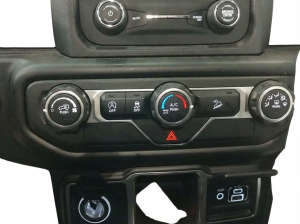
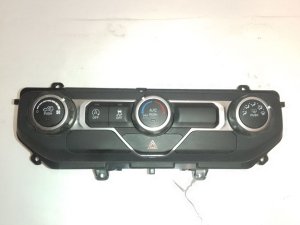
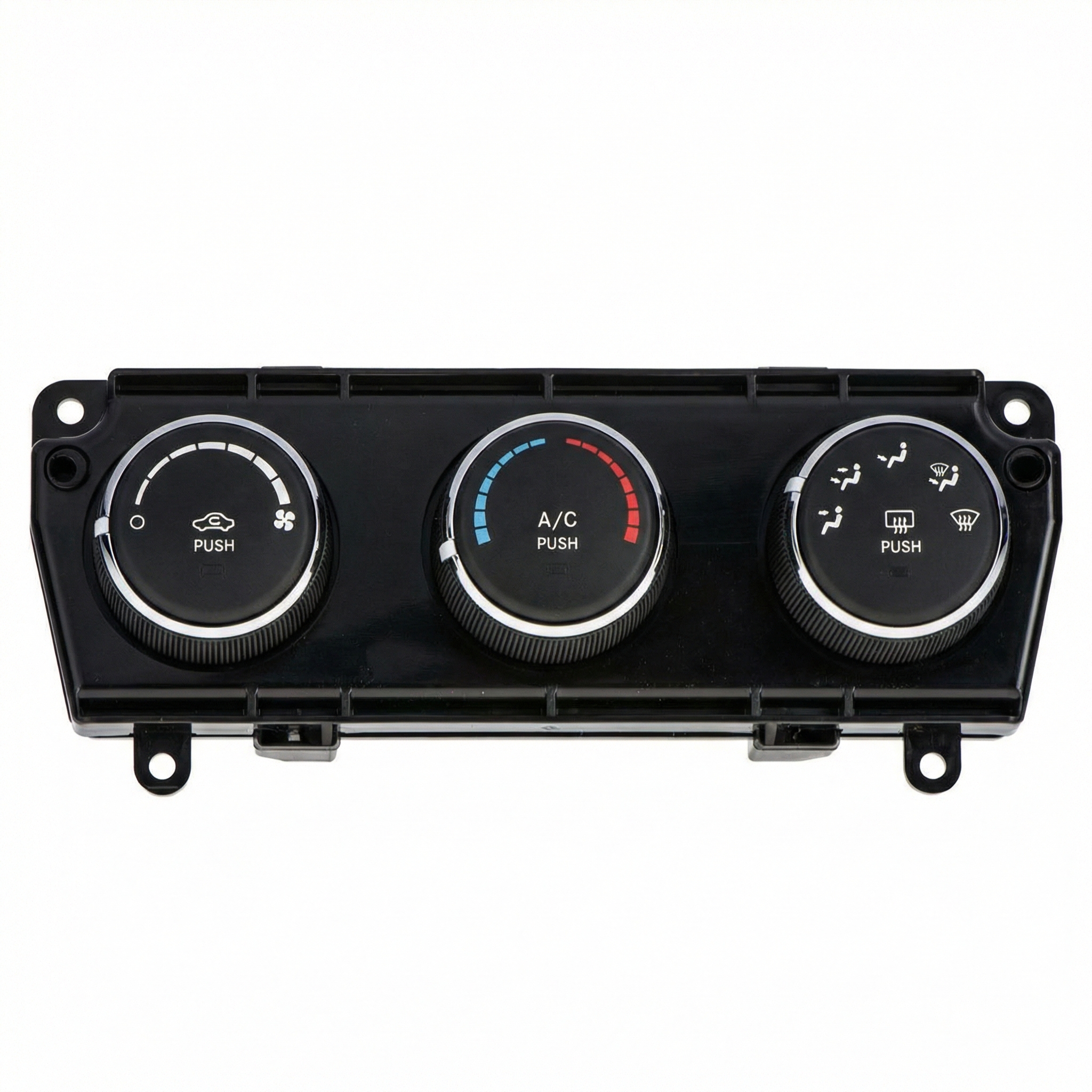
Before you buy, you must verify that the donor vehicle has the exact same options as your Jeep. The part number on the back of the unit must match your original part. Use this checklist:
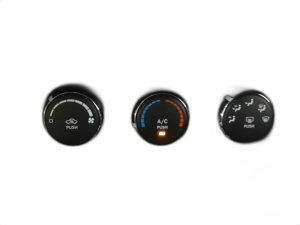
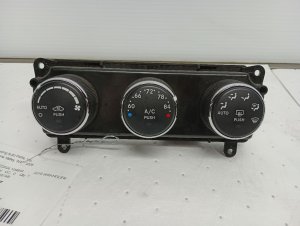
- Manual vs. Automatic Temperature Control (ATC): Does your Jeep have dials with blue and red zones, or can you set a specific temperature number?
- Heated Seats: Does your vehicle have heated front seats?
- Heated Steering Wheel: Does your vehicle have a heated steering wheel?
- Park Assist: Does your vehicle have buttons for the parking sensor system?
- Hill Descent Control: This is standard on many models but is another button to verify.
- Rear Window Defrost: For hardtop models.
- Compatibility with 4xe Hybrid Models: The initial data indicates these units are not compatible with 4xe models, which have their own specific controls. Always verify by part number.
Physical Inspection
- Verify the Part Number: This is the most important step. The part number is printed on a sticker on the back or side of the unit. The last two letters (e.g., AA, AB, AC) are revisions; getting a later revision like AC to replace an AA is generally fine and often preferred.
- Check the Connectors: Inspect the electrical connector ports on the back of the unit. Look for any signs of bent, corroded, or melted pins.
- Button and Knob Condition: Make sure the buttons are not excessively worn and that the knobs turn smoothly with a solid click.
Warning: Part number 6AB21SRRAA is often mistaken for an HVAC control. It is actually the red dash trim bezel found on Rubicon models and is a separate part from the control unit itself.
Replacement and Programming
Replacing the HVAC control module is a relatively simple job that most DIYers can complete in under an hour.
- Difficulty: 2 out of 5
- Estimated Time: 0.75 - 1.5 hours
- Tools Needed: Plastic trim removal tool, 7mm socket or screwdriver.
Step-by-Step Replacement Guide
- Disconnect the Battery: Always disconnect the negative battery terminal before working on electrical components.
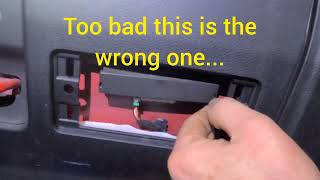
- Remove Dash Bezel: The large trim piece surrounding the radio and HVAC controls is held in by clips. Use a plastic trim removal tool to carefully pry it off. 🎬 See this walkthrough for safely removing your Jeep's dash panel.
- Unscrew the Control Unit: The HVAC module is secured by four 7mm screws. Remove these screws.
- Disconnect Wiring: Gently pull the unit forward and disconnect the electrical connectors from the back. There are typically several plugs. Press the release tab on each connector to remove it.
- Install the New Unit: Connect the wiring to the replacement module, slide it into place, and secure it with the four 7mm screws.
- Reassemble and Test: Snap the dash bezel back into place and reconnect the battery. Start the vehicle and test all functions—fan speed, temperature, vent modes, and all buttons—to ensure everything works correctly.
Programming Requirements
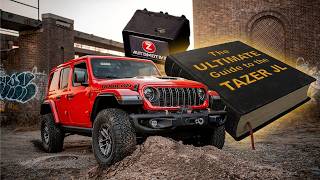
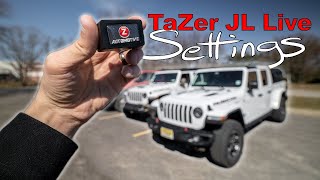
For a simple like-for-like replacement (matching part numbers exactly), programming is not always required. However, if you are upgrading (e.g., from a manual to an automatic control as part of a radio upgrade) or if the new unit doesn't function correctly, programming will be necessary. This is often done with an aftermarket tool like a Tazer, which allows you to tell the vehicle's main computer about the new hardware. 🎬 Watch: How to use a Tazer to program your new module. In some cases, a trip to the dealer for a software flash may be required.
Cost Comparison
Prices can vary based on the specific part number and its features.
| Part Type | Estimated Cost |
|---|---|
| New OEM | $225 - $350 |
| Used OEM | $50 - $150 |
| New Aftermarket | Not widely available at this time. |
| Remanufactured | Not widely available for JL/JT models at this time. |
| Shop Labor | $100 - $250 |
Frequently Asked Questions (FAQ)
Can I upgrade from manual to automatic climate control by just swapping the panel?
No, this is not a simple plug-and-play swap. Upgrading to automatic climate control requires the new control panel, additional sensors (like a cabin temperature sensor and sun sensor), and programming the vehicle with a tool like a Tazer to recognize the new hardware. Many Jeeps are pre-wired for these sensors, but not all.
Why are my HVAC controls dead for a minute after starting the Jeep?
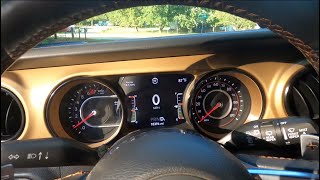
This is a known intermittent issue where the module fails to initialize properly on startu 🎬 Watch: Troubleshooting a Gladiator HVAC unit that is dead on startup.p. Owners have reported that it often resolves itself after 60-90 seconds. Some have fixed it permanently by disconnecting the battery for an extended period or by unplugging and reconnecting the HVAC module itself, which suggests it may be a communication handshake issue.
Does a used HVAC control need to be programmed?
If you replace your unit with a used one that has the exact same part number, it will often work without programming. However, if any functions are incorrect, a system reboot or programming may be needed. If you are changing the type of controller, programming is almost always required.
Will a control from a Wrangler fit my Gladiator (or vice-versa)?
Yes, the HVAC control modules are shared between the Wrangler (JL) and Gladiator (JT) platforms. As long as the part number and features match your vehicle's original equipment, it will be compatible.
Helpful Videos

Technical Specifications
OEM Part Numbers: 7BU52DX9AA 7BU52DX9AB 7BU52DX9AC 7BU53DX9AA 7BU53DX9AB 7BU53DX9AC 7BU56DX9AA 7BU56DX9AB 7BU56DX9AC 7BU70DX9AA 7BU70DX9AB
Varies by part number. Controlled via the vehicle's CAN bus network. Requires 12V DC power.
We Have This Part in Stock

The information in this article is provided for general reference and educational purposes only. Vehicle specifications, procedures, and part compatibility can vary by production date, trim level, and region. Always consult your vehicle's factory service manual and verify part numbers before purchasing or performing repairs. Safety-critical components such as airbags, seat belts, and braking systems should be installed by a qualified professional.
- Jeep Gladiator:
- Jeep Wrangler:
- 🎬 Helpful Videos
- 🛍️ Shop This Part
- Common Symptoms of a Failing HVAC Control Module
- Is It the Control Module or Something Else?
- Known Issues, Recalls, and Technical Service Bulletins (TSBs)
- Buying a Used HVAC Control: What to Inspect
- CRITICAL: The Feature Checklist
- Physical Inspection
- Replacement and Programming
- Step-by-Step Replacement Guide
- Programming Requirements
- Cost Comparison
- Frequently Asked Questions (FAQ)
- 🎟️ Get 5% Off