

2014-2025 Mazda3 & CX-30 HVAC Control Failure: A Buyer's Guide to Matching the Right Part
This guide covers common failures, diagnosis, and why verifying options like heated seats is the most critical step before buying a replacement climate control unit for your Mazda3 or CX-30.
- Matching your vehicle's exact features (Dual-Zone, Heated Seats, Heated Steering Wheel) is mandatory when buying a replacement.
- A replacement unit will likely require programming by a dealer or qualified technician to ensure full functionality.
- Before buying a replacement, rule out simpler issues like blown fuses or related problems like a faulty ambient air temperature sensor.
- You cannot add features like heated seats just by swapping to a control panel that has the buttons for them.
Known Issues and Related Problems
While the HVAC control module itself is generally reliable, its symptoms can sometimes be confused with other issues in the 2014-2025 Mazda3 and 2020-2023 Mazda CX-30. Before replacing the control unit, consider these related problems:
- Faulty Ambient Temperature Sensor: Some Mazda vehicles have experienced issues with the outside air temperature sensor, which is typically located behind the front bumper. If this sensor provides an incorrect reading to the HVAC system (e.g., says it's much colder than it actually is), the automatic climate control will not cool the cabin effectively. This can be mistaken for a faulty control unit.
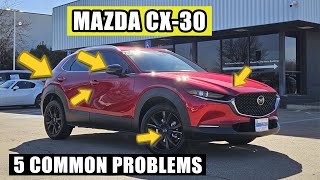
- Poor A/C Performance on CX-30: Many Mazda CX-30 owners report that the air conditioning system struggles in very hot weather or seems to stop cooling during hard acceleration. This is often a result of factory programming that temporarily disengages the A/C compressor to maximize engine power. While software updates have been released to improve this behavior, it is a characteristic of the vehicle's design 🎬 Watch: Learn about common CX-30 issues and design quirks. rather than a failure of the HVAC control module.
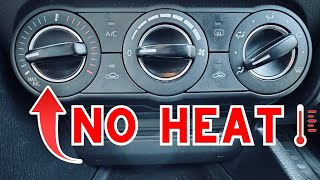
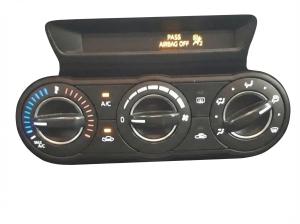
- Manual Control Linkage (2014-2018 Mazda3): On lower trim models with manual (non-automatic) climate controls, a common issue is the temperature control knob getting stuck or failing to produce heat. This is often caused by a small plastic swivel joint behind the glove box popping out of its track, which prevents the blend door from moving correctly. This is a simple mechanical fix and does not require replacing the control unit. 🎬 See how to fix the manual temperature control linkage.
Common Symptoms of a Failing HVAC Control
When the control module itself is the problem, you may experience one or more of the following symptoms:
- Unresponsive Buttons or Dials: Pressing buttons for fan speed, temperature, or mode results in no change, or the change is intermittent.
- Air Blows from Incorrect Vents: You select the dash vents, but air only comes out of the defroster or floor vents. This indicates the module is failing to command the mode door actuators.
- Inability to Control Temperature: The system is stuck blowing only hot air or only cold air, regardless of the temperature setting.
- Fan Speed is Uncontrollable: The blower motor may be stuck on one speed (often high) or may not turn on at all, even though the blower motor and resistor are functional.
- Complete Failure: The entire control panel is dark, with no lights or display, and does not respond at all. This can sometimes be caused by a blown fuse.
- Erratic or Illogical Behavior: The system may seem to have a mind of its own, changing settings randomly or failing to maintain a set temperature in 'Auto' mode.
Diagnosing the Problem
Before condemning the control module, perform these simple checks:
- Check the Fuses: The first and easiest step is to check the fuse box for any blown fuses related to the HVAC system or climate control. Consult your owner's manual for the specific fuse locations.
- Listen for Actuators: When you change modes (e.g., from dash to floor), you should hear faint whirring or clicking sounds from behind the dashboard as the blend doors move. If you hear nothing, the problem could be the control module, the actuator itself, or the wiring between them.
- Rule Out Other Components: Symptoms like a fan that only works on the highest setting often point to a failed blower motor resistor, not the control module. If there is no airflow at all, the blower motor itself could be the culprit.
Buying a Used HVAC Control: A Step-by-Step Guide
Purchasing a used OEM HVAC control is an excellent way to save money, but careful verification is required to avoid getting the wrong part. These vehicles have numerous control unit variations.
Step 1: Verify Your Vehicle's Exact Features (Crucial)
The single most important factor is matching the control unit to your car's factory-installed options. A unit from a car with different features will not work correctly. You must verify if your vehicle has:
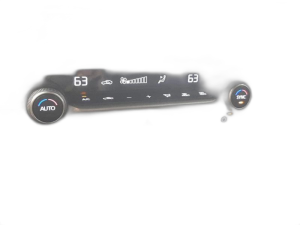
- Automatic or Manual Control: Does your system have an 'AUTO' button and a specific temperature display (e.g., 72°F), or does it just have blue and red zones on the dial?
- Single-Zone or Dual-Zone Control: Does your unit have separate temperature controls for the driver and passenger?
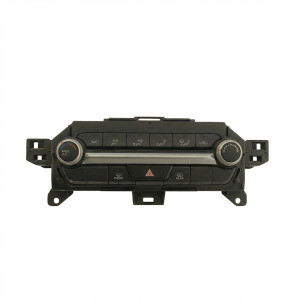
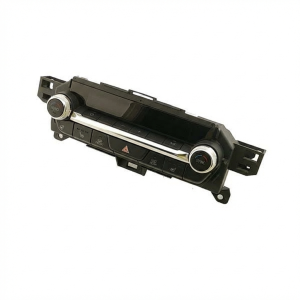
- Heated Front Seats: Does your car have heated front seats? The control unit will have the corresponding buttons.
- Heated Steering Wheel: Does your car have a heated steering wheel? This is another button that must be present on the replacement unit if your car has the feature.
Warning: You cannot add features by swapping control units. For example, installing a control unit with heated seat buttons in a car that did not come with heated seats will not make the feature work. The necessary wiring, heating elements, and programming are missing. You must buy a unit that exactly matches the features your car was built with.
Step 2: Inspect the Used Unit
When you have the part in hand, check the following:
- Buttons and Dials: Press every button and turn every dial. They should move smoothly without sticking and have a solid, tactile click.
- Connectors: Look at the electrical connectors on the back. Ensure there are no bent, corroded, or broken pins.
- Faceplate Condition: Check for deep scratches, cracks, or worn-out button graphics that might be unacceptable to you.
Replacement and Programming
Removal and Installation
Physically replacing the HVAC control unit is straightforward for a DIYer with basic tools. The process generally involves carefully prying off surrounding trim panels, removing a few screws or bolts holding the unit in place, and disconnecting the electrical connectors. The difficulty is primarily in removing the plastic trim without scratching or breaking it.
Programming and Calibration Requirements
Warning: This is not always a simple plug-and-play swap. On these modern vehicles, the HVAC control module communicates with other computers in the car, like the Body Control Module (BCM). After installation, the new (used) unit may need to be reprogrammed or calibrated by a Mazda dealership or a qualified independent shop with advanced diagnostic tools. This procedure ensures the car recognizes the new module and that all functions, especially those in automatic mode, operate as intended.
Cost Comparison
| Part Type | Estimated Cost |
|---|---|
| New OEM | $400 - $600+ |
| New Aftermarket | Limited to no availability |
| Used OEM | $75 - $150 |
| Shop Labor | $110 - $165 |
Frequently Asked Questions (FAQ)
Why are there so many different part numbers for the same vehicle?
The large number of part numbers reflects the many different combinations of features (heated seats, heated steering wheel, dual-zone) and numerous small revisions made by Mazda over the years. While several part numbers may be compatible, the safest approach is to match the features exactly.
Can I upgrade to dual-zone or add heated seats by just swapping the control panel?
No. The control panel is only the interface. The underlying hardware, such as extra blend door actuators for dual-zone control, heating elements in the seats, and all the necessary wiring and computer programming, will not be present in a vehicle that wasn't equipped with these features from the factory.
Is reprogramming always necessary after replacement?
While the vehicle may operate on a basic level, full functionality, especially for the automatic climate control system, often requires programming. It's best to assume that a trip to a dealer or a well-equipped mechanic for calibration will be necessary to ensure everything works perfectly.
Could my problem just be a blown fuse?
Yes, absolutely. If the entire control panel is dead (no lights, no response), a blown fuse is a likely culprit. Always check the appropriate fuses in the interior and under-hood fuse boxes before spending money on a replacement part.
Helpful Videos
Technical Specifications
OEM Part Numbers: BAES61190A BAES61190B BAES61190C BAES61190D BCKA61190 BCKA61190A BDGG61190 BDGG61190A BDGJ-61190A BDGJ61190A BEKD61190 BFVP61190 BFVT61190 BFWA61190 BFWC-61-190
Compatibility is determined by vehicle options: Dual-Zone Auto Climate, Heated Front Seats, and Heated Steering Wheel.
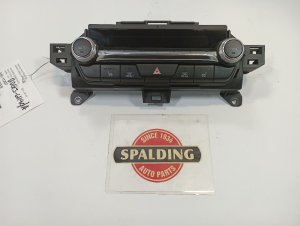
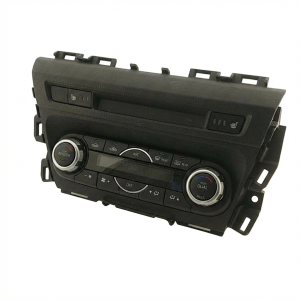
We Have This Part in Stock

The information in this article is provided for general reference and educational purposes only. Vehicle specifications, procedures, and part compatibility can vary by production date, trim level, and region. Always consult your vehicle's factory service manual and verify part numbers before purchasing or performing repairs. Safety-critical components such as airbags, seat belts, and braking systems should be installed by a qualified professional.
- Mazda MAZDA3:
- Mazda CX-30:
- 🎬 Helpful Videos
- 🛍️ Shop This Part
- Known Issues and Related Problems
- Common Symptoms of a Failing HVAC Control
- Diagnosing the Problem
- Buying a Used HVAC Control: A Step-by-Step Guide
- Step 1: Verify Your Vehicle's Exact Features (Crucial)
- Step 2: Inspect the Used Unit
- Replacement and Programming
- Removal and Installation
- Programming and Calibration Requirements
- Cost Comparison
- Frequently Asked Questions (FAQ)
- 🎟️ Get 5% Off