

2005-2019 Legacy & Outback HVAC Control: Solving Failures and Upgrades
This guide covers common problems, part number identification, and crucial buying advice for the HVAC control unit in your Subaru Legacy or Outback.
- The #1 mistake is buying a manual control for a car with automatic climate control, or vice-versa. They are not interchangeable.
- Verify all feature buttons (Heated Seats, Wiper De-Icer, Dual-Zone) match your car's original unit.
- For 2015-2019 models, a known issue is sticking heated seat buttons; later model parts were redesigned to fix this.
- Owners of 2015 models can upgrade to a 2016+ unit (like 72311AL11D) for a larger, better display.
Symptoms of a Failing HVAC Control Unit
When an HVAC control unit begins to fail, it can cause a range of frustrating issues. While some problems point directly to the control head, others might be caused by related parts like actuators or sensors. Here are the most common symptoms:
- Unresponsive Buttons or Knobs: You press a button (like A/C or Recirculation) or turn a knob, and nothing happens. The light may not illuminate, and the function does not engage.
- Incorrect Temperature Output: You set the temperature to cold, but only get hot air, or vice-versa. This can also manifest as a dual-zone system blowing hot on one side and cold on the other.
- Fan Speed Issues: The blower fan might be stuck on one speed, only work on the highest setting, or not work at all. While this can be the control unit, it's also a common symptom of a failed blower motor resistor.
- Flashing A/C Light: On some models, a blinking A/C light can indicate a fault within the climate control system. This is the system's way of letting you know it has detected a problem.
- Erratic or Intermittent Operation: The controls may work one day and not the next, or change settings on their own.
- Dead or Frozen Display: For units with a digital screen, the display may go blank, freeze, or show incorrect information.
Known Issues by Vehicle Generation
The Subaru Legacy and Outback platforms covered three distinct generations from 2005 to 2019. Each has its own common issues and unique control units.
2005-2009 (4th Generation)
These models often have the radio and climate controls integrated into a single silver-faced unit. The most common issue is the unit becoming completely unresponsive.
- Common Failure: The control unit, including the radio display, may freeze or fail to power on. Often, the fan will be stuck on its last used setting. This is frequently caused by poor internal grounding contacts that oxidize over time.
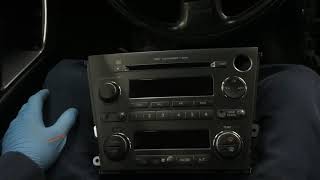
- The Fix: A common DIY repair involves removing the unit, separating the faceplate from the main body, and cleaning the small metal spring contacts and the pads they touch on the circuit board. 🎬 Watch this video to see how to clean those internal contacts.
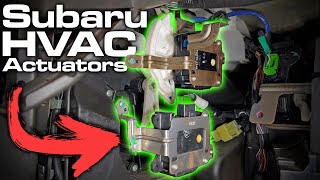
- Actuator Failures: A clicking or tapping sound from behind the dashboard is usually a failing mode door or blend door actuator, not the control unit itself. This can cause air to be stuck in one position, like defrost only. 🎬 Watch: How to diagnose and fix those annoying dashboard clicking noises.
2010-2014 (5th Generation)
This generation separated the HVAC controls from the radio into a distinct module below the stereo.
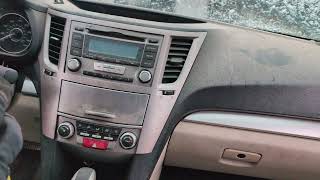
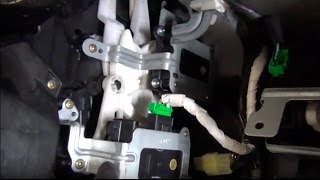
🎬 See this walkthrough for removing the 2010-2014 HVAC control module.- Blower Motor Issues: A TSB was issued regarding blower motors that could fail due to water intrusion. On automatic A/C systems, the fan may stop working entirely. On manual A/C systems, the fan may only operate on high speed. This is a failure of the blower motor or resistor, which is commanded by the control unit.
- Dual-Zone Problems: In vehicles with dual-zone climate control, a common complaint is one side blowing hot while the other blows cold. This is almost always caused by a failed air mix actuator for the affected side, not the control head.
- Post-Radio Install Failure: Some owners report the climate controls stop working after an aftermarket radio installation, suggesting a shared or sensitive wiring connection. Always double-check connections if the failure coincides with other dash work.
2015-2019 (6th Generation)
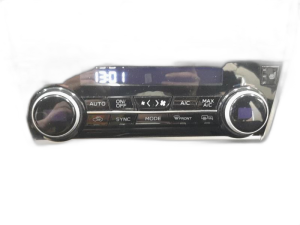
These models feature a more modern unit with a larger digital display integrated between the knobs.
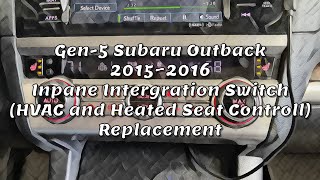
TSB 10-90-19: Sticking Seat Heater Buttons: Subaru issued a Technical Service Bulletin for an issue where the heated seat buttons could stick in the pressed position due to dust and debris. Updated replacement parts have small vents added to the assembly to prevent this. When buying a used unit, look for a later part number or one from a newer model year if possible.
- Display Upgrade for 2015 Models: The 2015 Legacy and Outback came with a smaller, more basic information display. In 2016, Subaru updated the control unit with a larger, more legible screen for the clock and temperature. The 2016+ units (like part number 72311AL11D) are a direct, plug-and-play swap for the 2015 models and are a popular upgrade.
Buying a Used HVAC Control: What to Check
Purchasing a used OEM HVAC control is a great way to save money, but careful verification is essential to avoid getting the wrong part. Here’s your checklist:
1. Automatic vs. Manual Climate Control: The #1 Mistake
This is the most critical compatibility check. The two systems are not interchangeable. A manual control will not work in a car wired for automatic, and vice-versa.
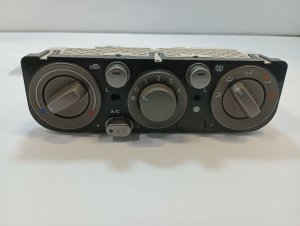
- Manual Controls: Identified by two large, simple knobs for fan speed and temperature (one with a blue-to-red gradient). They do not have a specific temperature setting like '72°'.
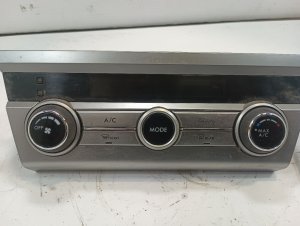
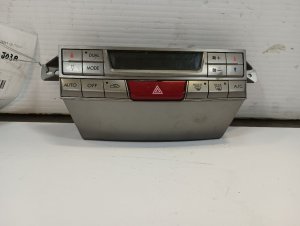
- Automatic Controls: Identified by a digital display that shows a specific temperature (e.g., '72°F') and an 'AUTO' button. The temperature knob selects a target temperature for the system to maintain.
2. Match Your Features
After confirming Auto vs. Manual, you must match the specific options your vehicle has. Inspect the button layout on the used unit and compare it to your original.
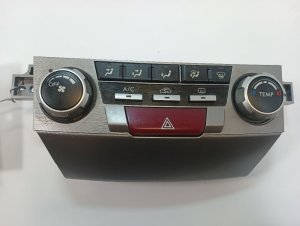
- Heated Seats: Does your car have them? Ensure the replacement unit has the high/low heated seat buttons.
- Windshield De-Icer: Some models have a button for the heated wiper park area. If your vehicle has this feature, the control unit must have the corresponding button.
- Dual-Zone Climate: If your car has dual-zone control (separate temperature knobs for driver and passenger), your replacement unit MUST also be a dual-zone model. A single-zone unit will not work.
3. Physical Inspection
- Button and Knob Wear: Check for excessive wear on the button graphics or knobs.
- Screen Condition: For automatic units, inspect the display for scratches, delamination, or dark spots.
- Mounting Tabs: Ensure all plastic mounting tabs and screw holes are intact and not cracked.
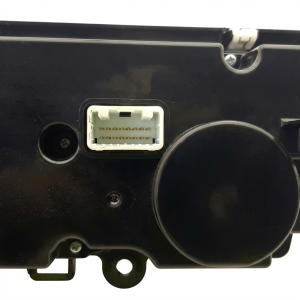
- Part Number: If possible, match the OEM part number on the back of the unit. While superseded numbers exist, this is a good starting point.
Replacement Overview
Replacing the HVAC control unit in a 2005-2019 Legacy or Outback is a straightforward DIY job for most people.
- Difficulty: 2 out of 5
- Estimated Time: 30 minutes
- Tools Needed: Plastic pry tools, Phillips head screwdriver.
General Steps:
- Use a plastic pry tool to carefully unclip and remove the trim bezel surrounding the HVAC unit and radio. Start from a bottom corner and work your way around.
- Once the trim is off, the HVAC control unit is typically held in by two or four Phillips head screws. Remove them.
- Gently pull the unit out from the dashboard.
- Press the release tabs on the electrical connectors on the back of the unit and unplug them.
- Installation is the reverse of removal. Plug in the new unit, screw it into place, and carefully snap the trim bezel back on. No programming is required.
Pro Tip: Before snapping all the trim back into place, turn the key to the 'On' position and test all functions of the replacement unit—fan speeds, temperature changes, mode doors, and all buttons—to ensure it works correctly.
Cost Comparison
| Part Type | Estimated Cost |
|---|---|
| New OEM | $500 - $850 |
| New Aftermarket | Not commonly available |
| Used OEM | $50 - $200 |
| Shop Labor | $75 - $150 |
Frequently Asked Questions (FAQ)
Can I upgrade from manual to automatic climate control?
No, this is not a feasible upgrade. It would require changing not only the control head but also the main wiring harness, multiple sensors (like a sunload sensor and in-cabin temperature sensor), and potentially the entire HVAC box assembly behind the dashboard.
Why is only one side of my dual-zone system working correctly?
This is almost always a failed air mix door actuator, not the control unit. Each side of the dashboard has a small motor (actuator) that controls a flap (blend door) to mix hot and cold air. When one fails, that side gets stuck in either a hot or cold state, independent of the other side.
Do I need to get the new HVAC control programmed by a dealer?
No. As long as you are replacing your unit with a compatible used OEM unit (matching auto/manual and features), it is a plug-and-play installation with no programming required.
For my 2015 Outback, which part number do I need for the larger screen upgrade?
You should look for a control unit from a 2016 or 2017 Legacy or Outback. Part number 72311AL11D is a common replacement that features the larger, improved display and is known to be a direct swap for the 2015 models.
Helpful Videos
Technical Specifications
OEM Part Numbers: 72311AG04A 72311AJ03A 72311AJ08A 72311AL11A 72311AL11B 72311AL11D 72311AL20A 72311AL32A 72311AL32B
Compatibility is determined by vehicle generation, manual vs. automatic climate control, and optional features (heated seats, dual-zone).
We Have This Part in Stock

The information in this article is provided for general reference and educational purposes only. Vehicle specifications, procedures, and part compatibility can vary by production date, trim level, and region. Always consult your vehicle's factory service manual and verify part numbers before purchasing or performing repairs. Safety-critical components such as airbags, seat belts, and braking systems should be installed by a qualified professional.
- Subaru Legacy:
- Subaru Outback:
- 🎬 Helpful Videos
- 🛍️ Shop This Part
- Symptoms of a Failing HVAC Control Unit
- Known Issues by Vehicle Generation
- 2005-2009 (4th Generation)
- 2010-2014 (5th Generation)
- 2015-2019 (6th Generation)
- Buying a Used HVAC Control: What to Check
- 1. Automatic vs. Manual Climate Control: The #1 Mistake
- 2. Match Your Features
- 3. Physical Inspection
- Replacement Overview
- Cost Comparison
- Frequently Asked Questions (FAQ)
- 🎟️ Get 5% Off