

Dodge Ram & Viper V10 Ignition Coils: The Critical 6-Post and 4-Post Guide (1997-2006)
This guide covers the unique two-coil ignition system for Dodge Ram 2500/3500, Ram 1500 SRT-10, and Viper V10 engines, focusing on symptoms, diagnosis, and how to avoid incompatible parts.
- This V10 engine uses two separate ignition coils: one 6-post and one 4-post. You must identify which one has failed before buying a replacement.
- BEWARE of cheap aftermarket coils. Many are not wired correctly for the V10's waste spark system and will not work, even if they look identical.
- Buying a used OEM coil with the correct part number (e.g., 56029098AB) is often a safer and better value than a new, unverified aftermarket part.
- On the Dodge Viper, accessing the coils is difficult and requires removing the windshield cowl panel.
V10 Engine and Ignition Coil Variants

Compatibility Warning: The V10 engines in this period use a two-part ignition system: one 6-post coil pack and one 4-post coil pack. This article focuses on the 6-post ignition coil. Both coils must be functional for the engine to run correctly. Always verify which coil you are replacing before purchase.
It is crucial to understand which V10 engine your vehicle has, as this affects part compatibility:
- 1997-2003 Dodge Ram 2500/3500: These trucks used the 8.0L Magnum V10 engine.
- 1997-2006 Dodge Viper: Used an 8.0L V10, which evolved into an 8.3L V10 around 2003.
- 2004-2006 Dodge Ram 1500: These were the high-performance SRT-10 models, which used the 8.3L V10 from the Viper.
While the coils appear similar across these years, there can be subtle differences in connectors and internal wiring. Always match part numbers when possible.
Symptoms of a Failing 6-Post Ignition Coil
A failing ignition coil will cause up to six of the ten cylinders to misfire. This results in severe and obvious performance problems. Symptoms include:
- Severe Engine Misfire: The engine will run very roughly, shaking and vibrating noticeably at idle and during acceleration.
- Flashing Check Engine Light: A severe misfire will almost always cause the Check Engine Light (CEL) to flash, which indicates a potentially damaging condition. You should not drive the vehicle for extended periods with a flashing CEL.
- Significant Loss of Power: With more than half the engine not firing correctly, the vehicle will struggle to accelerate and maintain speed.
- Rough Idle and Stalling: The engine may idle erratically and is likely to stall, especially when stopped.
- Engine Backfiring: Unburned fuel from the misfiring cylinders can enter the exhaust and ignite, causing a loud popping or banging sound.
- Drastically Reduced Fuel Economy: The engine will consume fuel inefficiently as the computer tries to compensate for the misfires.
- Hard Starting: The engine will be difficult to start because it cannot fire on all cylinders.
Common Diagnostic Trouble Codes (DTCs)
An OBD-II scanner will likely show codes related to misfires and the ignition circuit. Look for:
- P0300: Random/Multiple Cylinder Misfire Detected.
- P0301 - P0310: Cylinder-specific misfire codes (e.g., P0301 is cylinder 1). The scanner will report misfires on the cylinders serviced by the failing coil.
- P0350 - P0359: Ignition Coil Primary/Secondary Circuit Malfunction. These codes point directly to a problem with the coil or its wiring.
Diagnosing the Issue

If you suspect a bad ignition coil, you can perform a few diagnostic steps:
- Scan for Codes: Use an OBD-II scanner to read the trouble codes. This will tell you which cylinders are misfiring and can help you determine if the 6-post or 4-post coil is the culprit.
- Visual Inspection: Look at the coil pack for any visible signs of damage, such as cracks in the plastic housing, burn marks, or corrosion on the terminals. Also check the wiring connector for damage or loose pins.
- Test Resistance (for advanced users): Using a multimeter, you can test the coil's internal resistance. Disconnect the coil and measure the resistance between the primary terminals and between the secondary output towers. While specific values vary, a healthy coil's primary resistance is typically very low (0.4-2.0 ohms), and the secondary resistance is much higher (6,000-11,000 ohms). A reading of infinite resistance indicates an open circuit and a defective coil.
Pro Tip: Unlike vehicles with individual coil-on-plug setups, you cannot easily swap the 6-post and 4-post coils to diagnose a problem. Diagnosis relies on identifying which cylinders are misfiring via an OBD-II scanner and tracing them back to the corresponding coil pack.
Buying a Used 6-Post Ignition Coil: The Most Important Section

For these V10 engines, buying a quality used OEM coil is often a better choice than a cheap new aftermarket part. Here’s what to look for:
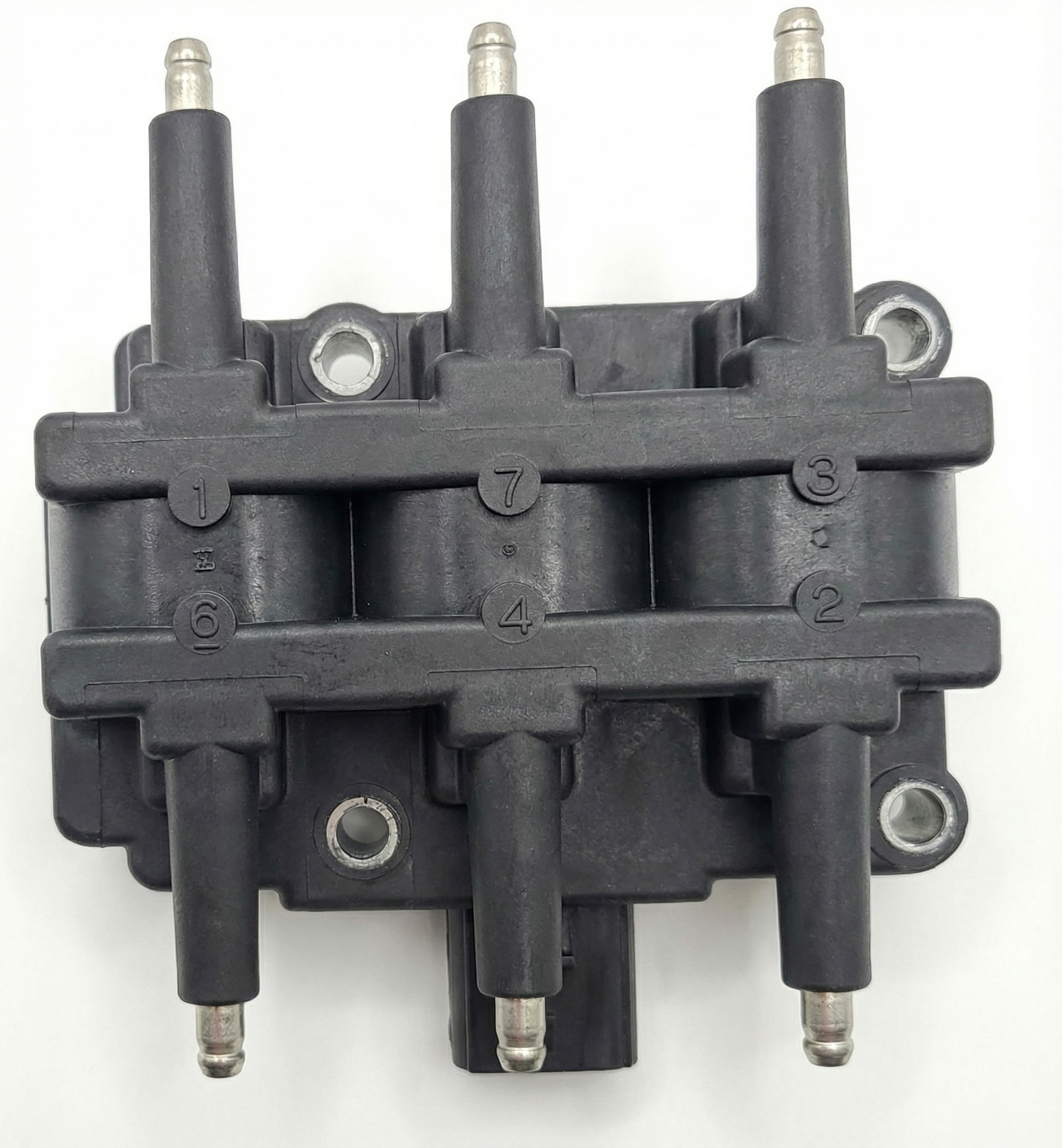
- The Aftermarket Trap: Be extremely cautious of new, cheap aftermarket coil packs. Many are simply generic 6-cylinder coils that have the wrong internal wiring for the V10's waste spark system. They may have cylinder numbers stamped as 1-2-3-4-5-6, which is incorrect. An OEM coil will have specific, non-sequential cylinder numbers printed on it corresponding to the V10's firing order. Installing an incorrectly wired coil will cause immediate running problems and misfire codes.
- Verify OEM Part Numbers: The most reliable way to ensure compatibility is to match the part number. The primary OEM part number for the 6-post coil on later models is 56029098AB, which supersedes 56029098AA. For earlier 8.0L V10s, confirm the number on your original part. A used OEM part with the correct number is far more likely to work than a questionable aftermarket alternative.
- Physical Inspection: When inspecting a used coil, look for cracks, melting, or any signs of heat damage on the housing. Check the spark plug wire towers for corrosion or carbon tracking (black lines). The plastic should be clean and free of oil.
- Check for Oil Contamination: A common reason ignition coils fail is due to oil leaking from a bad valve cover gasket and pooling around the coil or spark plug wires. If the used coil you are considering is covered in oil, it may have been subjected to conditions that could shorten its life.
- Mileage Isn't Everything: A low-mileage OEM part is ideal, but a well-cared-for part from a higher-mileage vehicle is still often superior to a new, poorly made aftermarket coil. Focus on the physical condition and correct part number.
Replacement Difficulty & Location
On both the Ram and Viper, the two coil packs are mounted together at the back of the engine, near the firewall.
- Dodge Ram (2500/3500/SRT-10): Access is generally tight but more manageable than in the Viper due to the larger engine bay.
- Dodge Viper: Replacement is more difficult. The coils are tucked under the cowl (the panel at the base of the windshield). Access typically requires removing the wiper arms and the plastic cowl panel to reach the coil mounting bolts. This can be a frustrating job due to the tight space.
Installation Difficulty: 3 out of 5 (Ram) / 4 out of 5 (Viper)
Cost Comparison
Prices can vary, but this gives a general idea of the value of a used OEM part.
| Part Type | Estimated Cost | Notes |
|---|---|---|
| New OEM (Mopar) | $130 - $195 | Highest quality and guaranteed compatibility. |
| New Aftermarket | $40 - $100 | High risk of incompatibility due to incorrect internal wiring for the V10. Purchase with extreme caution. |
| Used OEM | $50 - $120 (for the pair) | Often sold as a set (6-post and 4-post). Excellent value if inspected properly. |
| Shop Labor | $150 - $300 | Labor time is typically 1-2 hours. Viper will be on the higher end due to the need to remove the cowl. |
Frequently Asked Questions (FAQ)
Can I replace just the 6-post coil if the 4-post is still good?
Yes. The coils are separate parts and can be replaced independently. However, they are the same age and have been subjected to the same conditions. If one fails, the other may not be far behind. Many owners choose to replace them as a pair for peace of mind, especially given the labor involved in accessing them.
Why do so many aftermarket coils not work on this engine?
The V10 uses a waste spark system where two cylinders are fired by the same coil signal. The OEM coil packs are specifically wired to send spark to the correct, non-sequential cylinder pairs. Many cheap aftermarket manufacturers simply re-case a standard 6-cylinder coil pack, which is not wired for the V10's unique firing order, leading to immediate misfires.
Do I need to replace the spark plugs and wires with the coil?
It is highly recommended. A failing coil can damage spark plugs, and old, high-resistance spark plug wires can put extra strain on a new coil, causing it to fail prematurely. Replacing the coils, wires, and plugs at the same time is the best practice for a complete ignition system tune-up.
Will a bad ignition coil cause my truck/car to not start at all?
It's possible, but it will more likely result in a very rough start followed by a poorly running engine. If both the 6-post and 4-post coils fail simultaneously (which is rare), the engine will not start. A failure of just one coil will cause the engine to run on only a fraction of its cylinders.
Technical Specifications
OEM Part Numbers: 056029098AA 56029098AB
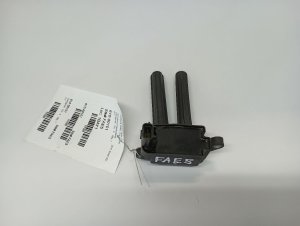
This is a 6-post, waste-spark ignition coil pack designed for use in a two-coil system for a V10 engine. It has a single rectangular 4-pin electrical connector.
We Have This Part in Stock

The information in this article is provided for general reference and educational purposes only. Vehicle specifications, procedures, and part compatibility can vary by production date, trim level, and region. Always consult your vehicle's factory service manual and verify part numbers before purchasing or performing repairs. Safety-critical components such as airbags, seat belts, and braking systems should be installed by a qualified professional.
- Dodge Ram 1500:
- Dodge Ram 2500:
- Dodge Ram 3500:
- Dodge Viper:
- 🛍️ Shop This Part
- V10 Engine and Ignition Coil Variants
- Symptoms of a Failing 6-Post Ignition Coil
- Common Diagnostic Trouble Codes (DTCs)
- Diagnosing the Issue
- Buying a Used 6-Post Ignition Coil: The Most Important Section
- Replacement Difficulty & Location
- Cost Comparison
- Frequently Asked Questions (FAQ)
- 🎟️ Get 5% Off