

2010-2020 Ford F-150 Instrument Cluster: Swaps, Programming, and Failure Guide
This guide covers the critical differences, common failures, and essential programming requirements for F-150 instrument clusters across two truck generations.
- A replacement instrument cluster MUST be programmed to the truck's VIN and options to function and to allow the engine to start.
- The 2010-2014 (12th Gen) and 2015-2020 (13th Gen) clusters are not interchangeable.
- Common failures include blank screens and erratic gauges, often caused by bad solder joints on the circuit board.
- When buying a used cluster, choose one with mileage LOWER than your truck's, as mileage can only be programmed upwards with DIY tools like FORScan.
Key Differences: 12th Gen (2010-2014) vs. 13th Gen (2015-2020)

The 2010-2020 Ford F-150 spans two distinct vehicle generations, and their instrument clusters are not interchangeable. Understanding which generation you have is the first step in diagnosing issues or finding a replacement.
2010-2014 F-150 (12th Generation)
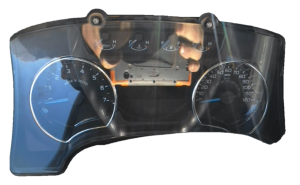
Clusters from this era feature analog gauges surrounding a small central digital screen, known as the "productivity screen." Common issues on these models often relate to physical component failure.
- Screen Failures: The central LCD screen is a known failure point, often going blank or becoming unreadable.
- Gauge Issues: Individual gauges may become stuck, provide incorrect readings, or stop working entirely.
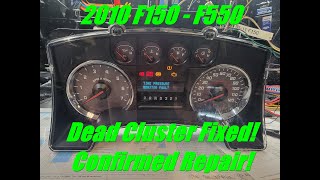
- Bad Solder Joints: A very common cause of failure is cracked or "cold" solder joints on the main circuit board, particularly at the main connector pins. 🎬 Watch: How to repair dead or power cycling clusters at home This can cause intermittent power loss to the entire cluster, leading to flickering, random gauge sweeps, and a host of false warning lights.
2015-2020 F-150 (13th Generation)
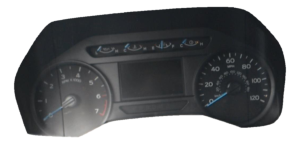
These trucks introduced more advanced clusters with larger, more capable digital displays. Base models (XL, some XLT) retained a smaller 4.2-inch screen, while higher trims (Lariat, King Ranch, Platinum) received a large 8-inch full digital display. Problems are often a mix of hardware and software issues.
- Blank Screens: The 4.2-inch and 8-inch screens can fail to turn on, leaving the driver with no information. This can be caused by internal component failure or software glitches.
- Erratic Behavior: In some cases, the entire electronic system, including the cluster and radio, may shut down while driving, often pointing to an issue with the Body Control Module (BCM) or a poor ground connection.
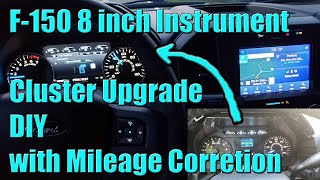
- Software Upgrades: Upgrading from a 4.2-inch to an 8-inch screen is a popular modification but requires significant programming using tools like FORScan. 🎬 See this walkthrough for upgrading to the 8-inch Lariat display
Symptoms of a Failing Instrument Cluster

A faulty instrument cluster can manifest in many ways, from minor annoyances to critical safety issues.
- Blank or Dark Display: The entire cluster or just the central digital screen fails to light up.
- Erratic or Stuck Gauges: The speedometer, tachometer, or other gauges give false readings, jump around, or don't move at all.
- Flickering Lights: The backlighting or warning lights flicker intermittently.
- Warning Light "Christmas Tree": Multiple warning lights (ABS, Airbag, Check Engine) illuminate for no apparent reason, often due to communication errors.
- No-Start Condition: If the cluster is part of the PATS immobilizer system, a complete failure can prevent the engine from starting. The truck may crank but will not fire, and the theft light will often flash rapidly.
- Intermittent Power: The cluster powers on and off randomly while driving. This is frequently caused by bad solder joints on the main connector.
The #1 Most Important Factor: Programming and Immobilizer

Warning: A replacement instrument cluster is NOT a plug-and-play part. It must be programmed to your truck's specific configuration and VIN to function correctly and allow the engine to start.
The instrument cluster is a central node in the F-150's electronic system. It stores vehicle configuration data (known as "As-Built" data) and, crucially, is linked to the Passive Anti-Theft System (PATS).
What is PATS?
PATS is Ford's immobilizer system. Your ignition key contains a transponder chip that is read by the vehicle. The instrument cluster verifies this key against a stored list. If the key is valid, the cluster tells the Engine Control Module (ECM) that it's okay to start the engine. When you install a used cluster from another truck, it has a different set of keys stored. This mismatch causes the PATS system to activate, preventing your truck from starting.
🎬 Watch: How to program keys and reset PATS after replacementProgramming Requirements
To replace a cluster, you must perform several programming steps:
- Configuration (As-Built Data): The new cluster must be programmed with your truck's original As-Built data. This tells the cluster which features your truck has (e.g., 4x4, engine size, trailer brake controller, etc.). Without this, you'll get errors for features you don't have or be unable to use features you do have.
- PATS Relearn / Key Programming: The new cluster must be synchronized with the ECM and programmed to accept your existing keys. This typically requires erasing all known keys from the new cluster and programming at least two of your keys back into it.
- Mileage Correction: The odometer reading is stored in the instrument cluster. When you install a used cluster, it will show the mileage from the donor vehicle. Federal law prohibits misrepresenting a vehicle's mileage. The correct mileage from your old cluster must be programmed into the replacement.
Who Can Program the Cluster?
- Ford Dealership: A dealer has the factory tools (IDS/FDRS) to perform all necessary programming. This is the most straightforward but also the most expensive option.
- Advanced DIY (FORScan): Many owners and independent shops use a software tool called FORScan with a compatible OBD-II adapter. With an extended license, FORScan can back up your original cluster's As-Built data, write it to the new cluster, and perform the PATS key relearn procedure. It can also be used to adjust the mileage *upwards* to match your vehicle's true mileage, but it cannot lower the mileage.
- Automotive Locksmiths: A well-equipped automotive locksmith can often perform the key programming and PATS functions, but may not be able to handle the As-Built configuration.
Buying a Used 2010-2020 F-150 Instrument Cluster

Buying a used OEM cluster can save you hundreds of dollars compared to a new unit, but you must be careful to ensure compatibility and be prepared for the required programming.
Verifying Compatibility
Matching the part number is a good start, but it's not enough. You must match:
- Vehicle Generation: 2010-2014 (12th Gen) and 2015-2020 (13th Gen) clusters are not cross-compatible.
- Trim Level and Features: A cluster from a Lariat will have different programming and potentially different gauge faces than one from an XL. Ensure the donor vehicle had similar options to yours.
- Screen Size: For 2015-2020 models, match the 4.2-inch or 8-inch screen size unless you are intentionally performing an upgrade.
- Transmission Type: Ensure the cluster is for the correct transmission (e.g., with or without paddle shifter support).
The Mileage Question
When buying used, it is best to find a cluster with mileage *lower* than your truck's actual mileage. This is because programming tools like FORScan can only increase the mileage, not decrease it. If you buy a cluster with higher mileage, you will need a specialized service to correct it, which adds cost and complexity.
Pro Tip: Before removing your old cluster, take a clear photo of the odometer showing the exact mileage. You will need this for programming the replacement.
Why a Used OEM Cluster is Often a Better Choice
While cheap aftermarket clusters exist, they often cause more problems than they solve. Used OEM clusters, when properly sourced and programmed, offer the best compatibility. Repairing your original cluster is also an excellent option, as it requires no programming and addresses common failure points with upgraded components.
Cost of Replacement
Prices can vary significantly based on the source of the part and the labor involved.
| Item/Service | Estimated Cost |
|---|---|
| New OEM Cluster | $700 - $1,200+ |
| New Aftermarket Cluster (Dorman) | $350 - $700 |
| Used OEM Cluster | $100 - $400 |
| Remanufactured / Repair Service | $170 - $400 |
| Shop Labor (Physical Swap) | $100 - $200 |
| Shop Labor (Programming) | $150 - $300 |
Frequently Asked Questions (FAQ)
Can I drive my truck with a broken instrument cluster?
It is not recommended and may be illegal in some areas. You will not be able to see your speed, fuel level, or critical engine warnings. If the cluster is completely dead, the PATS system may prevent the truck from starting at all.
Will replacing the cluster fix my truck's electrical problems?
Only if the cluster itself is the source of the problem. Issues like flickering lights or random warnings can also be caused by a failing Body Control Module (BCM), a weak battery, a failing alternator, or poor ground connections. Proper diagnosis is key before replacing parts.
My screen went blank. Do I need a whole new cluster?
Not always. For 12th generation (2011-2014) F-150s with color screens, the LCD screen itself can be replaced without replacing the entire cluster, which avoids the need for programming. For other models, a blank screen is often a sign of internal power supply failure that can be fixed by a repair service.
What is FORScan and do I need it?
FORScan is a powerful software tool for Ford vehicles. If you plan to replace the instrument cluster yourself with a used unit, you will almost certainly need FORScan (and an extended license) and a compatible OBD-II adapter to program the As-Built data and PATS security system to make the cluster work in your truck.
Helpful Videos
Technical Specifications
OEM Part Numbers: AL34-10849-BNA AL3410849BNA AL3Z10849BNA FL3T10849BAA FL3T10849BAB FL3T10849BAC FL3T10849BAD FL3T10849BAE FL3T10849BAF FL3T10849BAG FL3T10849BAH FL3T10849BBA FL3T10849BBB FL3T10849BBC FL3T10849BBD DL3Z-10849-CA FL3Z-10849-CJA FL3Z-10849-APA
Varies by trim and year. Key specifications include screen size (2.3-inch, 4.2-inch, or 8-inch), gauge layout (with/without tachometer), and compatibility with features like paddle shifters and specific engine types.
We Have This Part in Stock
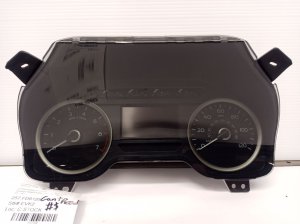
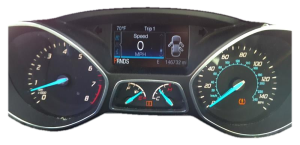
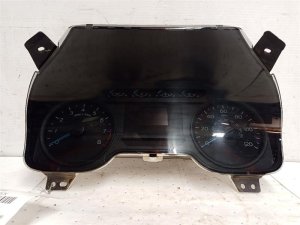
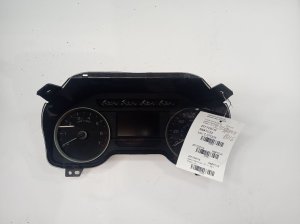

The information in this article is provided for general reference and educational purposes only. Vehicle specifications, procedures, and part compatibility can vary by production date, trim level, and region. Always consult your vehicle's factory service manual and verify part numbers before purchasing or performing repairs. Safety-critical components such as airbags, seat belts, and braking systems should be installed by a qualified professional.
- Ford F-150:
- 🎬 Helpful Videos
- 🛍️ Shop This Part
- Key Differences: 12th Gen (2010-2014) vs. 13th Gen (2015-2020)
- 2010-2014 F-150 (12th Generation)
- 2015-2020 F-150 (13th Generation)
- Symptoms of a Failing Instrument Cluster
- The #1 Most Important Factor: Programming and Immobilizer
- What is PATS?
- Programming Requirements
- Who Can Program the Cluster?
- Buying a Used 2010-2020 F-150 Instrument Cluster
- Verifying Compatibility
- The Mileage Question
- Why a Used OEM Cluster is Often a Better Choice
- Cost of Replacement
- Frequently Asked Questions (FAQ)
- 🎟️ Get 5% Off