

2004-2011 Mazda 3 Instrument Cluster: Decoding Failures, Swaps & Programming
This guide covers common instrument cluster problems in the first and second-generation Mazda 3, and explains the critical programming steps required for a replacement.
- A replacement cluster MUST be programmed to the car's immobilizer system, or the engine will not start.
- Always match the OEM part number from your original cluster exactly when buying a used replacement.
- Compatibility depends on engine, transmission (AT/MT), and options like TPMS and DSC.
- Cloning services can transfer data (VIN, mileage, security) from your old cluster to the new one, making it plug-and-play and avoiding a dealer visit.
Symptoms of a Failing Mazda 3 Instrument Cluster
When the instrument cluster in a 2004-2011 Mazda 3 begins to fail, it can cause a wide range of confusing symptoms. Because it's a central communication hub, a bad cluster can sometimes mimic other problems. Here are the most common signs to watch for.
Gauges Behaving Erratically or Not Working
One of the most obvious signs of failure is when the gauges give incorrect readings or stop working altogether. This can include:
- Speedometer or Tachometer Stuck at Zero: The needle doesn't move at all. This can sometimes be caused by a faulty vehicle speed sensor (VSS) or ABS sensor, which provides the speed data.
- Jumping or Inaccurate Needles: The speedometer, tachometer, or temperature gauge needles may jump around randomly, or show readings that are clearly incorrect.
- Fuel Gauge Fluctuation: The fuel gauge may read full when the tank is empty, or vice-versa, or fluctuate wildly while driving.
Warning Lights and Display Issues
Problems with the warning lights or the central information display are also common indicators of a failing cluster.
- All Warning Lights On: Sometimes, a failing cluster will cause all the 'idiot lights' to illuminate simultaneously, often accompanied by gauge failure.
- Warning Lights Staying On or Not Coming On: A specific warning light might stay on even when there's no issue, or fail to illuminate during the initial key-on bulb check.
- Flickering or Dim Backlighting: The lights that illuminate the gauges for night driving may flicker, dim, or go out completely.
- Odometer Display Failure: The digital screen showing the mileage may become blank, show garbled characters, or fail to light up.
Complete or Intermittent Power Failure
In some cases, the entire cluster may lose power. This can be intermittent, with the cluster shutting off and turning back on randomly, or it can be a complete failure where nothing works at all. This can be caused by a bad connection, a blown fuse, or an internal failure within the cluster's circuit board. A total loss of communication can also prevent diagnostic tools from connecting 🎬 See how to diagnose cluster issues using an OBD2 scanner to the vehicle's main computer.
Known Issues, Recalls, and Technical Service Bulletins (TSBs)
While there are no major recalls specifically for the 2004-2011 Mazda 3 instrument cluster in the NHTSA database, there are some relevant TSBs for later models that highlight common issues. For example, TSB 09-018/20 was issued for 2019-2020 models experiencing white lines on the LCD screen due to poor internal contacts. Although this TSB doesn't cover the 2004-2011 generation, it points to the potential for LCD-related failures. Another TSB for 2010-2013 models extended warranty coverage for issues with the instrument panel material itself, but not the electronics.
The #1 Issue: Programming and Immobilizer Sync
You cannot simply swap an instrument cluster in a 2004-2011 Mazda 3. The cluster is a key part of the vehicle's immobilizer (anti-theft) system. If you install a used cluster without proper programming, the security light will flash and the car will not start. This is because the replacement cluster is not paired with your car's Powertrain Control Module (PCM) and your keys. The VIN, security codes, and mileage are all stored and must be synchronized for the vehicle to function.
Buying a Used Mazda 3 Instrument Cluster
Purchasing a used OEM cluster is a cost-effective way to fix a failed unit, but careful matching is essential to avoid compatibility problems. Here’s what you need to know.
1. Match the Part Number EXACTLY
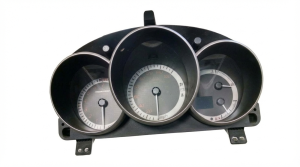
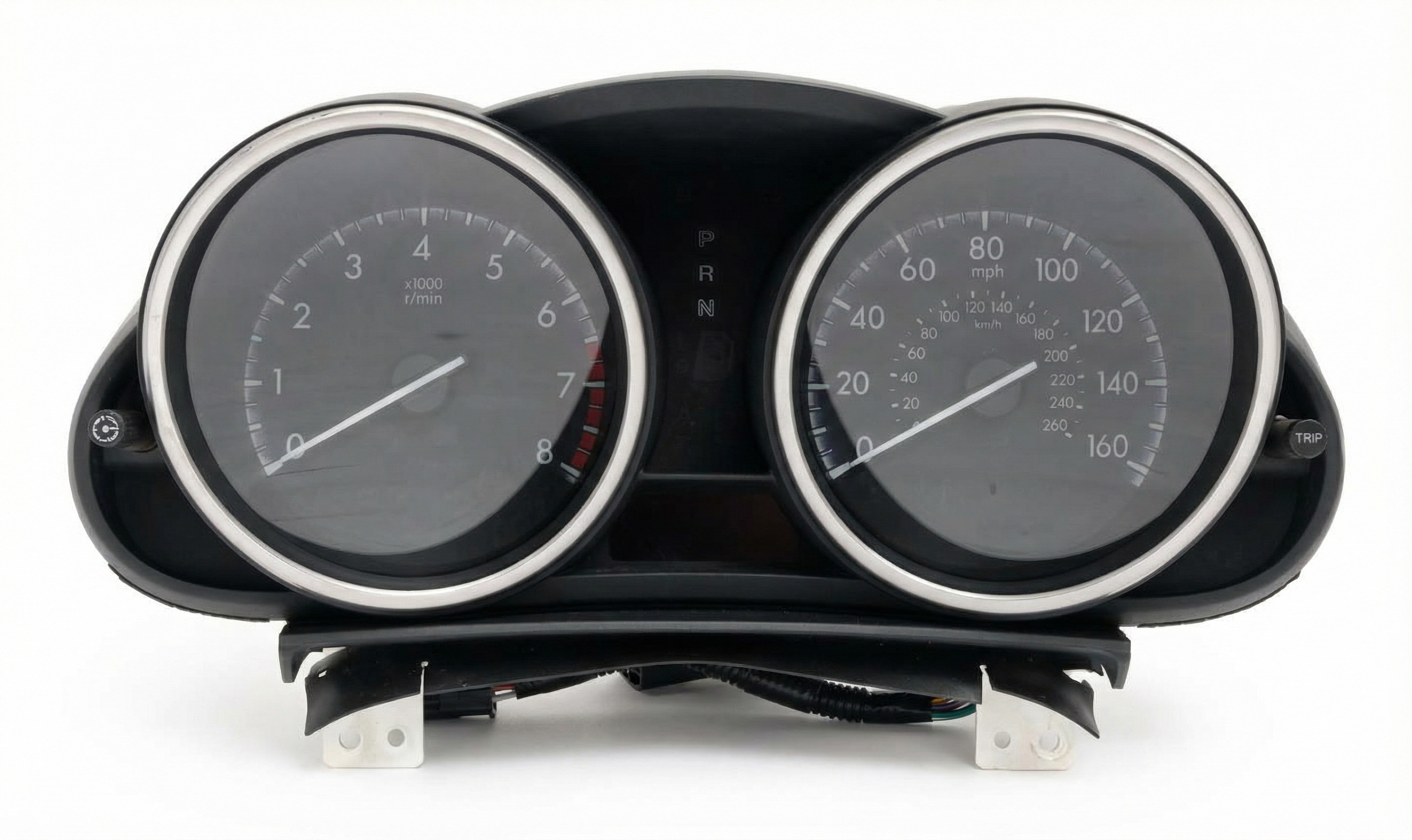
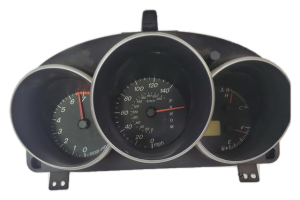
This is the most important step. Mazda produced many different cluster versions for the Mazda 3, depending on the model year, engine, transmission, and features. The only way to guarantee compatibility is to remove your original cluster and match the OEM part number on the back. Do not rely on visual appearance alone.
2. Verify Vehicle Options
When searching for a replacement, you must match it to your vehicle's original configuration:
- Engine: 2.0L, 2.3L, and 2.5L engines often used different clusters with different redlines on the tachometer.
- Transmission: Automatic and Manual transmission clusters are different and not interchangeable. The AT version has indicators for PRNDL.
- Special Features: You must match whether your car has a Tire Pressure Monitoring System (TPMS) or Dynamic Stability Control (DSC). A cluster from a car without these features will cause errors if installed in a car that has them, and vice-versa.
3. Plan for Programming
Remember that any used cluster will require programming to work in your car. You have a few options:
- Dealer Programming: A Mazda dealership can program the replacement cluster to your car. This is the most straightforward but often most expensive option.
- Cloning Service: Many independent shops and mail-in services can 'clone' your original cluster. They transfer the vital data (VIN, mileage, immobilizer info) from your old cluster's memory chip to the replacement one. This makes the replacement cluster a plug-and-play part, with no further programming needed.
- Locksmiths: Some automotive locksmiths with advanced diagnostic tools (like Autel IM508 or Smart Pro) may be able to perform the necessary immobilizer and key programming.
Pro Tip: If your original cluster is still partially functional, a cloning service is often the best choice. It preserves your car's original mileage and avoids a trip to the dealer. If the original cluster is completely dead and unreadable, you will likely need a dealer or a specialized locksmith to program the new cluster from scratch.
Cost Comparison for Mazda 3 Instrument Cluster Replacement
| Part/Service | Estimated Cost | Notes |
|---|---|---|
| New OEM Cluster | $515 - $925 | Price varies significantly by part number and model year. Does not include programming. |
| Used OEM Cluster | $50 - $150 | Widely available from online sellers and salvage yards. Requires programming. |
| Remanufactured Cluster | $250 - $400 | Repaired and tested original units. Often come with a warranty. |
| Shop Labor (Installation) | $80 - $150 | Physical replacement is relatively simple, taking about an hour. | 🎬 Watch: Step-by-step guide to removing your Mazda 3 speedometer
| Dealer Programming | $150 - $300 | Cost for labor to sync the new cluster to the vehicle's immobilizer and other modules. |
| Cloning Service | $100 - $250 | A mail-in service to transfer data from your old cluster to the replacement. |
Frequently Asked Questions (FAQ)
Can I drive my Mazda 3 with a broken instrument cluster?
It is not recommended. If your speedometer is not working, you cannot accurately judge your speed, which is unsafe and illegal. If the temperature gauge is broken, you won't know if your engine is overheating until it's too late. While the car may still run, driving without critical information is a significant risk.
Will a used cluster show my car's actual mileage?
No. An instrument cluster stores the mileage of the vehicle it came from. When you install a used cluster, it will display the mileage from the donor car. To have the correct mileage, you must use a cloning service that transfers your original mileage data to the replacement cluster, or have a specialist with the right tools perform a mileage correction.
Why won't my car start after I installed a replacement cluster?
Your car won't start because the replacement cluster has not been programmed to your vehicle's immobilizer system. The cluster, engine computer, and keys all need to be electronically paired. When you install an unpaired cluster, the anti-theft system activates and prevents the engine from starting. You will need a dealer, locksmith, or cloning service to resolve this.
Can I just repair my original cluster instead of replacing it?
Yes, in many cases. There are numerous mail-in repair services that specialize in fixing common instrument cluster failures like faulty gauges, power issues, or bad displays. This can be a great option as it avoids all programming and mileage issues, since you are reinstalling your original, paired part. This is often a good first option to explore before buying a replacement.
Helpful Videos
Technical Specifications
OEM Part Numbers: BAS155471A BBM255214 BBM255463A BBM555471 BBM555471D BBM555471E BBM555471F BBM555471G BBM555471H BCP855447 BCS255447 BCS355471H BN8E55471A BP4K55214 BP4K55446
The instrument cluster communicates with other vehicle modules via the CAN (Controller Area Network) bus. It is integrated with the vehicle's immobilizer system.
We Have This Part in Stock

The information in this article is provided for general reference and educational purposes only. Vehicle specifications, procedures, and part compatibility can vary by production date, trim level, and region. Always consult your vehicle's factory service manual and verify part numbers before purchasing or performing repairs. Safety-critical components such as airbags, seat belts, and braking systems should be installed by a qualified professional.
- Mazda MAZDA3:
- 🎬 Helpful Videos
- 🛍️ Shop This Part
- Symptoms of a Failing Mazda 3 Instrument Cluster
- Gauges Behaving Erratically or Not Working
- Warning Lights and Display Issues
- Complete or Intermittent Power Failure
- Known Issues, Recalls, and Technical Service Bulletins (TSBs)
- Buying a Used Mazda 3 Instrument Cluster
- 1. Match the Part Number EXACTLY
- 2. Verify Vehicle Options
- 3. Plan for Programming
- Cost Comparison for Mazda 3 Instrument Cluster Replacement
- Frequently Asked Questions (FAQ)
- 🎟️ Get 5% Off