

Mazda3 Instrument Cluster (2014-2024): Programming, Swaps, and Known Failures
This guide covers the critical differences, required programming, and common problems for the 3rd and 4th generation Mazda3 instrument clusters.
- A replacement cluster is NOT plug-and-play; it MUST be professionally programmed to the vehicle to sync the immobilizer and correct the mileage.
- Clusters are generation-specific. 2014-2018 (Gen 3) and 2019-2024 (Gen 4) parts are not interchangeable.
- Compatibility is critical. You must match the part number to your car's engine, transmission, and Head-Up Display (HUD) options.
- A common failure symptom is the OBD-II code U0155, often accompanied by multiple, seemingly unrelated warning lights.
- A known TSB (09-018/20) exists for 2019-2020 models that develop white lines on the digital display.
Generation Gap: 2014-2018 vs. 2019-2024 Clusters

The most important thing to understand is that the 2014-2024 model years cover two different Mazda3 generations. The instrument clusters are completely different and are NOT interchangeable.
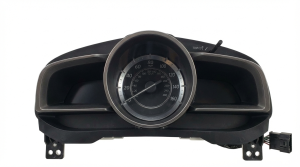
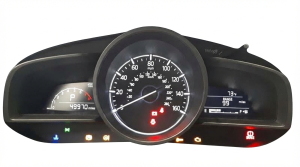
- 3rd Generation (BM/BN, 2014-2018): These models typically feature a central analog speedometer or tachometer flanked by digital screens. Some base models came with a simpler digital speedometer and no tachometer.
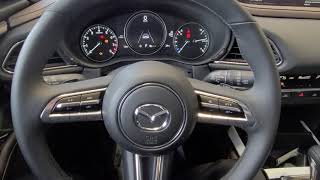
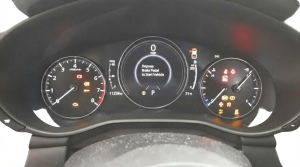
- 4th Generation (BP, 2019-2024): These models use a more advanced, partially or fully digital display with a central configurable screen. The technology and programming requirements are different from the previous generation. 🎬 Watch: A walkthrough of the Gen 4 digital dash features.
Warning: Always confirm your vehicle's generation before sourcing a part. A 3rd gen cluster will not work in a 4th gen vehicle, and vice-versa.
Symptoms of a Failing Instrument Cluster

A failing Mazda3 cluster can manifest in several ways, from annoying glitches to a complete shutdown that leaves you without critical information.
- Complete or Intermittent Failure: The entire cluster may go dark or stop responding, either permanently or randomly. This can sometimes be triggered by temperature changes or vehicle vibration.
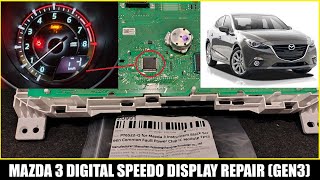
- Inaccurate or Dead Gauges: The speedometer, tachometer, fuel gauge, or temperature gauge may get stuck, provide incorrect readings, or not move at all.
- Flickering Display or Backlighting: The digital screens or the backlights for the analog gauges may flicker, dim, or go out completely.
- Warning Light Chaos: Multiple warning lights (Check Engine, ABS, Airbag, etc.) may illuminate on the dash for no apparent reason. This is often due to a communication breakdown.
- OBD-II Code U0155: This is a very common trouble code indicating "Lost Communication with Instrument Panel Cluster (IPC) Module." If you see this code, the cluster itself is a primary suspect.
- Display Screen Defects (Gen 4): Some 2019-2020 models may develop horizontal white lines across the digital display.
Known Issues, TSBs, and Recalls

TSB 09-018/20: White Lines on Gen 4 Display
For 2019-2020 Mazda3 models, Mazda issued a Technical Service Bulletin (TSB) for an issue where white lines appear on the digital display. This was caused by poor contact at the internal LCD terminals during manufacturing. The official fix is to replace the instrument cluster with a modified part. This repair was covered under warranty, but can be expensive otherwise.
Recall 19V-363: Faulty Indicator Lights (2019 Models)
Mazda recalled approximately 17,000 2019 Mazda3 vehicles for an issue where incorrect programming could cause the passenger airbag and seatbelt status lights to give false information. For example, the airbag deactivation light might turn off even if the airbag is off. The fix involved the dealer replacing the indicator assembly with an updated part, free of charge. An airbag system malfunction light on the cluster would typically alert the driver to this problem.
Easily Scratched Cluster Lens
Many owners across both generations report that the clear plastic lens over the gauges is very soft and scratches easily, even with a clean microfiber towel. There is a TSB related to this issue, and some dealerships may replace the lens under warranty if the scratches are severe. Replacement lenses are available separately from the entire cluster. 🎬 See how to easily fix a scratched speedometer lens.
Pro Tip: When cleaning the cluster lens, use a high-quality, clean microfiber towel with minimal pressure. Applying a plastic-safe anti-static screen protector can help prevent future scratches.
Buying a Used Instrument Cluster: What You MUST Know

Buying a used cluster can save a significant amount of money, but it is filled with potential problems if you don't get an exact match. A replacement cluster is NOT plug-and-play.
1. Programming is MANDATORY
You cannot simply swap a used instrument cluster and drive away. The vehicle's mileage and immobilizer (anti-theft) data are stored in the cluster. Installing a different cluster will cause a no-start condition and display the mileage from the donor car. The replacement cluster must be professionally programmed to your vehicle's VIN, have the immobilizer system synchronized, and have your car's correct mileage written to it. This typically requires a Mazda dealership with their proprietary MDARS software or a specialized automotive electronics shop that offers 'cloning' services.
2. Match The Part Number EXACTLY
To ensure compatibility, the part number on the replacement cluster must match your original. There are many variations based on:
- Vehicle Generation: 2014-2018 (Gen 3) vs. 2019-2024 (Gen 4).
- Engine: 2.0L vs 2.5L. For Gen 4, Turbo vs. Non-Turbo is also a critical difference.
- Transmission: Automatic vs. Manual.
- Head-Up Display (HUD): Clusters for cars with and without the pop-up HUD are different.
- Tachometer: Some base model Gen 3 clusters do not have a tachometer.
- Units: Ensure the cluster is calibrated for MPH (for the US market) and not KPH.
Warning: Do not buy a cluster just because it 'looks' the same. Verify the part number from your original unit before ordering. Installing an incompatible cluster will cause incorrect gauge readings and persistent error messages, even after programming.
3. Physical Inspection
When buying a used part, inspect the clear plastic lens for deep scratches or hazing. Check all mounting tabs on the housing to ensure they are intact. Look at the electrical connectors for any signs of corrosion or damage.
Replacement Procedure and Cost
While the final programming must be done by a professional, a DIY-savvy owner can perform the physical installation to save on labor costs.
Physical Installation (DIY)
The physical swap is relatively straightforward. The general steps involve:
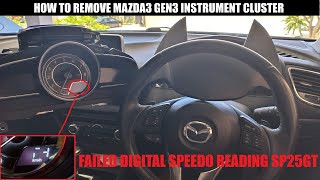
🎬 Watch: Step-by-step guide to removing a Gen 3 instrument cluster.- Disconnect the negative battery terminal.
- Lower the steering column to its lowest position.
- Carefully remove the trim pieces surrounding the instrument cluster (the 'meter hood'). This usually involves gently prying and releasing clips.
- Remove the screws (typically 2-3 Phillips head screws) holding the cluster in place.
- Pull the cluster forward, disconnect the electrical connector(s) on the back, and remove it.
- Installation is the reverse of removal.
After installation, the car will likely not start and will need to be towed to a dealer or specialist for programming.
Cost Comparison
Prices can vary significantly based on generation, features, and condition.
| Part/Service | Estimated Cost |
|---|---|
| New OEM Cluster | $350 - $1,200+ |
| Used OEM Cluster | $75 - $250 |
| Remanufactured Cluster | $200 - $400 |
| Shop Labor (Physical Swap) | $100 - $160 |
| Dealer Programming/Calibration | $100 - $250 |
Frequently Asked Questions (FAQ)
Do I have to program a replacement Mazda3 instrument cluster?
Yes, absolutely. All 2014-2024 Mazda3 instrument clusters must be programmed to the vehicle after installation. This is required to sync the immobilizer system (so the car will start) and to set the correct odometer reading.
Will my car's mileage be correct after installing a used cluster?
No. The used cluster will display the mileage from the vehicle it was removed from. Correcting the mileage is a key part of the professional programming process and is legally required in most areas.
Can an independent mechanic or locksmith program the cluster?
It is unlikely, but possible. Programming requires specific software, like Mazda's MDARS for newer models. Most general mechanics and locksmiths do not have this. You will likely need to go to a Mazda dealer or find a specialist that offers mail-in 'cloning' services.
Can I upgrade from a base model cluster (no tachometer) to a higher-trim cluster?
This is sometimes possible, especially on the 3rd generation models, but requires advanced programming with tools like FORScan and careful part matching. It is not a simple swap and may require changing configuration data in the vehicle's other modules. It should be considered an advanced project.
Why are all my warning lights on and gauges not working?
This can be a sign of complete instrument cluster failure. When the cluster stops communicating on the vehicle's network, other modules log errors, triggering multiple warning lights. The OBD-II code U0155 is a strong indicator of this specific failure. Always check fuses and battery voltage first to rule out simpler power supply issues.
Helpful Videos

Technical Specifications
OEM Part Numbers: BALV55214 BALV55471C BDGG55430B BEDP55430A BEDP55430B BEDP55430C BHN155471A BHP555471A BHP555471B BHP555471C BHR155430 BHR155447 BJS755430 DGD255430A BHP555471C DGJ255430A DAKM55430A
Varies by vehicle generation and trim. Communicates via Controller Area Network (CAN bus). Mileage and immobilizer data are stored on the cluster's internal memory.
We Have This Part in Stock

The information in this article is provided for general reference and educational purposes only. Vehicle specifications, procedures, and part compatibility can vary by production date, trim level, and region. Always consult your vehicle's factory service manual and verify part numbers before purchasing or performing repairs. Safety-critical components such as airbags, seat belts, and braking systems should be installed by a qualified professional.
- Mazda MAZDA3:
- 🎬 Helpful Videos
- 🛍️ Shop This Part
- Generation Gap: 2014-2018 vs. 2019-2024 Clusters
- Symptoms of a Failing Instrument Cluster
- Known Issues, TSBs, and Recalls
- TSB 09-018/20: White Lines on Gen 4 Display
- Recall 19V-363: Faulty Indicator Lights (2019 Models)
- Easily Scratched Cluster Lens
- Buying a Used Instrument Cluster: What You MUST Know
- 1. Programming is MANDATORY
- 2. Match The Part Number EXACTLY
- 3. Physical Inspection
- Replacement Procedure and Cost
- Physical Installation (DIY)
- Cost Comparison
- Frequently Asked Questions (FAQ)
- 🎟️ Get 5% Off