

2017-2020 Nissan Rogue Instrument Cluster: A Guide to VINs, Part Numbers, and Programming
Avoid the common and costly pitfalls when replacing your Rogue's instrument cluster—matching the part number is only the first step.
- Programming by a Nissan dealer or a specialized locksmith is MANDATORY after installation; the car will not start without it.
- A used cluster will display the donor vehicle's mileage. You must have the mileage professionally corrected to comply with the law.
- Compatibility is extremely complex. You must match the OEM part number exactly, considering VIN (USA vs. Korea), engine, and trim.
- This guide covers the 2017-2020 Rogue. Clusters from the 2021+ generation are completely different and will not work.
Vehicle Generation Note
This article specifically covers the second-generation Nissan Rogue, model years 2017, 2018, 2019, and 2020. The instrument clusters for the third-generation Rogue (2021-2025) are different and not interchangeable with these parts.
Symptoms of a Failing Instrument Cluster
A faulty instrument cluster can cause a variety of issues, ranging from minor annoyances to problems that can make the vehicle undrivable. Because it's a communication hub, its failure can sometimes be misdiagnosed.
- Complete Blackout: The entire cluster goes dark and is unresponsive. This can be intermittent or permanent. Sometimes, a faulty battery replacement can cause an electrical surge that fries the cluster.
- Flickering or Dim Display: The backlighting or the central digital information screen may flicker, appear dim, or fail to light up.
- Inaccurate or Dead Gauges: The speedometer, tachometer, fuel gauge, or temperature gauge may provide incorrect readings, get stuck in one position, or stop working entirely. 🎬 Watch: Troubleshooting erratic or dead gauges in your instrument cluster
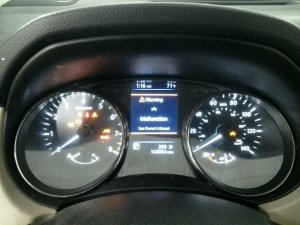
- Erratic Warning Lights: Multiple warning lights (such as Check Engine, ABS, or Airbag) may turn on for no apparent reason.
- Communication Error Codes: A common trouble code associated with cluster failure is U0155 (Lost Communication With Instrument Panel Cluster Control Module). This code is often stored in other vehicle modules when they can no longer receive a signal from the cluster.
- No-Start Condition: Because the cluster is tied to the immobilizer system, a complete failure can prevent the car from starting.
Known Issues, TSBs, and Recalls
While no major safety recalls exist for widespread instrument cluster failure on the 2017-2020 Rogue, Nissan has issued at least one relevant Technical Service Bulletin (TSB).
- TSB NTB17-057b: This bulletin addresses an issue on 2015-2019 Rogue models where the "Distance to Empty" calculation on the instrument display does not reset after refueling. This is a software issue that a dealer can address.
Warning: The compatibility of these instrument clusters is extremely complex. Failure to purchase the correct part for your specific vehicle will result in it not working. You must verify several details before ordering.
Variant Differences: Decoding Your Rogue's Cluster
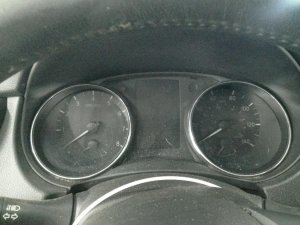
Nissan used multiple instrument cluster suppliers and configurations for the Rogue, especially during the 2017 model year. Simply ordering a "2017 Rogue cluster" is not enough. You must verify the following:
- Country of Manufacture (VIN): The first digit of your Vehicle Identification Number (VIN) tells you where your Rogue was built, and this often determines which cluster you need. A VIN starting with '5' indicates it was built in the USA, while a 'K' indicates it was built in Korea.
- Engine Type: Clusters for the 2.5L gasoline engine are different from those for the 2.0L Hybrid models.
- Trim Level and Options: Features like All-Wheel Drive (AWD) have specific indicator lights. A cluster from a base model 'S' may not have the same display capabilities as one from an 'SL' or 'SV' trim.
- Production Date: For 2017 models in particular, there were mid-year changes. Some parts are only for vehicles built before or after a specific date (e.g., March 31, 2017).
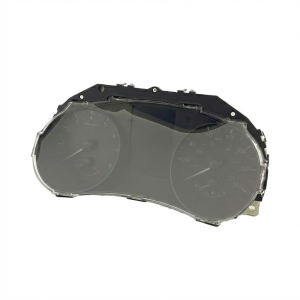
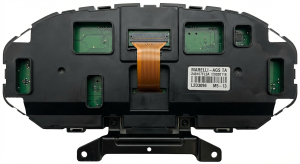
Pro Tip: The only guaranteed way to ensure compatibility is to remove your original instrument cluster and match the OEM part number printed on the sticker on its housing 🎬 See this walkthrough on how to remove your Rogue's cluster to the replacement part. Do not rely on visual appearance alone.
Buying a Used Instrument Cluster
Given the high cost of a new OEM cluster, a used part is a popular choice. Here's what you need to know.
- Match the Part Number Exactly: This is the most important rule. The OEM part numbers provided in your vehicle's data are a starting point, but the number on your physical part is the ultimate source of truth.
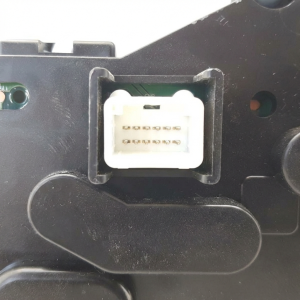
- Inspect the Part: Check photos for deep scratches or cracks on the clear plastic lens. Ensure the rear housing and electrical connectors are not damaged and the pins are straight.
- Understand the Mileage Issue: A used cluster will display the mileage from the vehicle it was removed from, not your car's actual mileage. This is a legal issue, as misrepresenting a vehicle's mileage is odometer fraud. You MUST plan to have the mileage corrected.
- Budget for Programming: A used cluster is not plug-and-play. You must factor in the cost of programming, which can be several hundred dollars. The part will not work correctly and may prevent the car from starting until it is programmed.
Programming and Immobilizer Requirements
THIS IS THE MOST CRITICAL STEP. YOU CANNOT SKIP IT.
When you install a replacement instrument cluster in a 2017-2020 Rogue, it must be electronically programmed to the vehicle.
- Immobilizer Link (NATS): The cluster is part of the Nissan Anti-Theft System. If the security information in the cluster doesn't match the vehicle's other computers and keys, the immobilizer will activate and the engine will not start.
- VIN and Configuration: The cluster must be programmed with your car's VIN and configured for its specific options (trim, AWD, etc.) to ensure all gauges and warning lights function correctly.
- Who Can Program It?
- Nissan Dealer: A Nissan dealership is the most reliable option. They have the proprietary CONSULT-III diagnostic tool required to perform the programming.
- Automotive Locksmiths/Independent Shops: Some high-end locksmiths and specialty repair shops may have the advanced tools (like Autel or Snap-on with the right software subscriptions) and expertise to program Nissan modules. You MUST call and confirm with the shop *before* bringing the car to them.
Repair vs. Replace
Another option is to have your original cluster repaired. Companies that offer this service can fix common failures like dead displays or faulty gauges. The major advantage is that a repaired original unit requires no programming, as it already belongs to your car and retains the correct mileage. This can be a simpler and sometimes more cost-effective solution than buying used and paying for programming.
Cost of Replacement
| Part Type | Estimated Cost (Part Only) |
|---|---|
| New OEM | $800 - $2,100+ |
| Used OEM | $75 - $250 |
| Remanufactured / Repair Service | $400 - $500 |
| Shop Labor (Installation & Programming) | $150 - $300 |
Will my car start after I install a used instrument cluster?
Most likely not. Because the cluster is tied to the Nissan Anti-Theft System (NATS), the vehicle will probably not start until the replacement cluster is programmed to your car's computer and keys.
Will the mileage be correct if I install a used cluster?
No. The mileage is stored inside the instrument cluster itself. A used cluster will show the mileage of the car it came from. You are legally required to have the mileage corrected to match your vehicle's actual mileage. Services exist that can perform this odometer correction.
Can I install the cluster myself and then drive to the dealer for programming?
No. Since the car will likely not start after the swap, you cannot drive it. You would need to have the vehicle towed to the dealer or programming-capable shop after installing the new part.
Is it better to repair my original cluster?
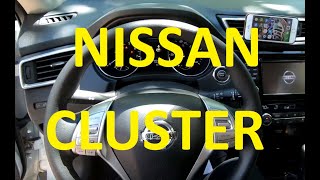
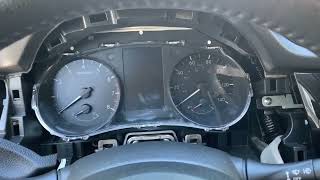
It can be. Repairing your original cluster is often a great choice because it avoids all programming and mileage correction issues. The unit comes back ready to be plugged in. 🎬 Watch: Step-by-step guide for removing a 2019 Rogue gauge cluster If your cluster has a common, repairable problem (like a dead screen), this can be the simplest and most cost-effective solution.
Helpful Videos
Technical Specifications
OEM Part Numbers: 24810-6RF0A 24810-6RR0A 24810-6RR0B 24810-6RR0C 24810-6RR0E 24810-6RR1B 24810-6RR2A 24810-6RR3B 24810-6RR4A 24810-6RR4D 24810-7FM2A 248105HK0A 248105HR0A 248105HS0A 248105HT0A 24810-6FL0A
Display type and features vary by trim level (S, SV, SL) and optional packages. All units are integrated with the vehicle's CAN bus network and NATS immobilizer system.
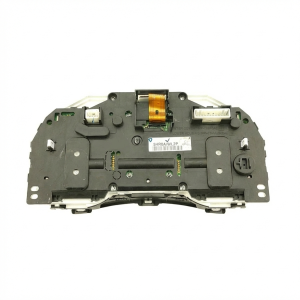
We Have This Part in Stock

The information in this article is provided for general reference and educational purposes only. Vehicle specifications, procedures, and part compatibility can vary by production date, trim level, and region. Always consult your vehicle's factory service manual and verify part numbers before purchasing or performing repairs. Safety-critical components such as airbags, seat belts, and braking systems should be installed by a qualified professional.
- Nissan Rogue:
- 🎬 Helpful Videos
- 🛍️ Shop This Part
- Vehicle Generation Note
- Symptoms of a Failing Instrument Cluster
- Known Issues, TSBs, and Recalls
- Variant Differences: Decoding Your Rogue's Cluster
- Buying a Used Instrument Cluster
- Programming and Immobilizer Requirements
- Repair vs. Replace
- Cost of Replacement
- 🎟️ Get 5% Off