

2005-2014 Toyota Camry Instrument Cluster: Failure Symptoms & Replacement Guide
This guide covers common failures like flickering gauges and blank displays, and explains the critical compatibility checks needed before buying a replacement instrument cluster for your Camry.
- The vehicle's mileage is stored in the instrument cluster; swapping it will display the donor car's mileage. Professional mileage correction is required.
- For 2007-2009 models, flickering gauges and ABS/brake lights are almost always caused by a faulty ABS module, not the cluster itself.
- Compatibility is extremely specific. You must match the OEM part number exactly, considering your Camry's year, trim, engine, and VSC status.
- The cluster does not need to be programmed to the car's computer to function, but the odometer reading must be legally corrected.
Key Differences by Camry Generation (2005-2014)

The 2005-2014 Toyota Camry spans three distinct generations, and the instrument clusters are not interchangeable between them. It is crucial to identify your vehicle's specific generation before searching for a replacement part.
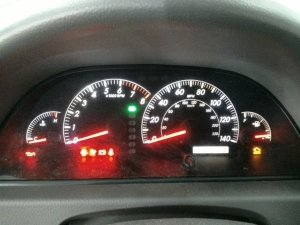
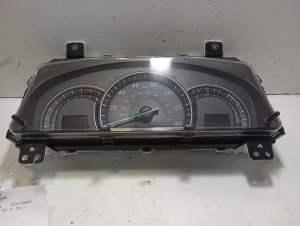
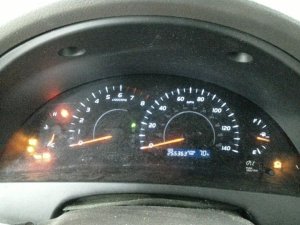
- XV30 Generation (2005-2006 models): These clusters typically feature straightforward analog gauges with a central digital odometer display. Common issues often relate to backlight bulb failure or individual gauge motor failure.
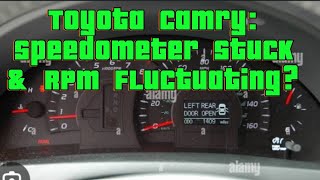
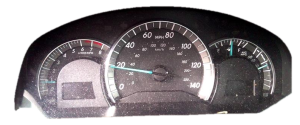
- XV40 Generation (2007-2011 models): This generation introduced more refined styling with Optitron gauges on some trims. A widely reported issue involves a faulty ABS module causing the speedometer and other gauges to flicker 🎬 Watch: Troubleshooting a speedometer that has stopped working. or stop working entirely.
- XV50 Generation (2012-2014 models): These clusters incorporate a more modern design, often with a multi-information display (MID) for trip computer and vehicle settings. Failures are more likely to be electronic, such as blank screens or fuse-related problems.
Common Symptoms of a Failing Camry Instrument Cluster

A failing instrument cluster can present a variety of symptoms, ranging from minor annoyances to critical failures that make the vehicle unsafe to drive.
- Inaccurate or Dead Gauges: The speedometer, tachometer, fuel, or temperature gauge may provide incorrect readings, get stuck in one position, or stop moving altogether.
- Flickering Gauges and Lights: Gauges may bounce sporadically, and warning lights like the ABS and Brake indicators may illuminate. This is a well-documented issue, particularly in 2007-2009 models, often linked to a failing ABS module.
- Complete or Intermittent Power Loss: The entire cluster may go dark, with no gauges, lights, or displays functioning. This can be caused by a blown fuse, a bad ground wire, or an internal failure of the cluster's circuit board.
- Backlight Failure: The illumination behind the gauges may become dim or fail completely, making the cluster difficult to read at night. This is often due to burnt-out incandescent bulbs in older models.
- Warning Lights Stay On: Critical warning lights may remain illuminated even when there is no underlying issue with the corresponding system, often pointing to a fault within the cluster itself or a communication error.
OBD-II codes associated with cluster problems are often "U" codes, indicating a loss of communication. For example, code U0129 (Lost Communication With Brake System Control Module) is common when a faulty ABS module is causing gauge issues.
Known Issues, Recalls, and Technical Service Bulletins (TSBs)

While there are no widespread recalls specifically for the 2005-2014 Camry instrument cluster itself, related issues and programs exist.
- 2007-2009 Camry ABS Module Failure: A prevalent issue for this model range is the failure of the ABS module, which directly causes the instrument cluster to malfunction. Symptoms include flickering gauges, speedometer failure, and the ABS and brake warning lights turning on. The fix is to replace the ABS module, not the cluster itself. 🎬 Watch: How to fix flickering gauges and ABS lights.
- 2010-2011 Camry Dashboard Cracking/Melting: Toyota initiated a Customer Support Program (ZJA) for cracked or sticky dashboards caused by heat and humidity. While this doesn't affect the cluster's function, it is a common issue with the dashboard assembly that houses the cluster.
- Fuse-Related Failures: Before condemning the cluster, it's essential to check the related fuses. On 2012-2014 models, for instance, there are at least three fuses related to the instrument cluster located in the under-hood fuse box. A blown "GAUGE" fuse can cause a total loss of function. 🎬 See this video to locate your instrument cluster fuses.
Pro Tip: For 2007-2009 models with flickering gauges, unplug the main electrical connector to the ABS module. If the gauges start working normally during a test drive (though ABS and brake lights will be on), it confirms the ABS module is the source of the problem, not the instrument cluster.
Programming, Mileage, and Immobilizer Considerations

This is the most critical area to understand when replacing a Camry instrument cluster.
- Programming: In general, the instrument cluster itself does not need to be programmed or flashed to the vehicle's computer (ECU) to function. It is typically a plug-and-play installation in terms of gauge and light operation.
- Mileage: The vehicle's total mileage (odometer reading) is stored electronically within the instrument cluster itself on these Camry models. This means if you install a used cluster, it will display the mileage from the donor vehicle, not your car's original mileage.
- Mileage Correction: Displaying incorrect mileage can be illegal. To correct this, the replacement cluster must be sent to a specialized service that can reprogram the odometer to match your vehicle's true mileage. This requires providing documentation to prove the original mileage. This service is separate from the physical installation.
- Immobilizer: The vehicle's anti-theft immobilizer system is not linked to the instrument cluster on these Camry generations. Replacing the cluster will not prevent the car from starting.
Warning: When you install a used instrument cluster, your vehicle's odometer reading will change to that of the donor car. It is your responsibility to have the mileage professionally corrected to reflect your vehicle's actual mileage.
Buying a Used 2005-2014 Camry Instrument Cluster

Purchasing a used OEM cluster is a cost-effective solution, but careful verification is required to ensure you get the right part.
Step 1: Verify Your Exact Vehicle Configuration
Compatibility is extremely specific. Before buying, confirm your Camry's:
- Year and Generation: (e.g., 2006, 2009, 2013)
- Trim Level: (Base, CE, LE, SE, XLE)
- Engine Size: (2.4L, 2.5L, 3.5L V6)
- Key Features: Note whether your vehicle has Vehicle Stability Control (VSC), as some clusters are not compatible with VSC-equipped cars.
Step 2: Match the Part Number
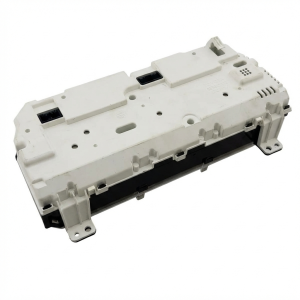
The most reliable method is to match the OEM part number from your original cluster to the replacement. The part number is printed on a sticker on the back or side of the cluster housing. Even a single digit difference can mean incompatibility.
Step 3: Follow Compatibility Warnings
Pay close attention to specific fitment notes, which often highlight common compatibility traps:
- Some clusters fit LE and CE models with a 2.4L engine and automatic transmission but are specifically for vehicles WITHOUT Vehicle Stability Control (VSC).
- For some 2.5L models, you may need to verify that the 5th digit of your vehicle's VIN is 'F' to ensure compatibility.
- XLE trim level clusters will often not fit Base, LE, or SE models.
- For 2010 models, some parts are only compatible with vehicles manufactured from February 2010 onwards.
Step 4: Physical Inspection
When you receive the used part, inspect it for:
- Clear Lens: Check for deep scratches, cracks, or hazing that will obstruct your view. The plastic lens can often be replaced separately.
- Mounting Tabs: Ensure all plastic mounting points are intact and not broken.
- Circuit Board: Look at the back for any signs of corrosion, water damage, or burnt components.
Replacement Cost Comparison
| Part Type | Estimated Cost |
|---|---|
| New OEM | $400 - $750+ |
| New Aftermarket | Not commonly available |
| Used OEM | $50 - $200 |
| Remanufactured / Repaired | $150 - $300 |
| Shop Labor (Installation) | $100 - $200 |
| Mileage Correction Service | $100 - $200 |
Frequently Asked Questions (FAQ)
Does a replacement Camry instrument cluster need to be programmed by a dealer?
No, the cluster itself does not require programming by a dealer to function with the car's main computer. However, the odometer reading will be incorrect and must be adjusted by a specialized service to match your vehicle's original mileage.
Will replacing the instrument cluster fix my check engine light?
No. The instrument cluster only displays the warning lights. If your check engine light is on, it's because the engine control unit (ECU) has detected a fault in the engine or emissions system. You must diagnose and fix the underlying problem; replacing the cluster will not resolve it.
How do I correct the mileage on a used instrument cluster?
You must remove the cluster and send it to a professional odometer correction service. They have the tools to electronically set the mileage to your specified value. You will need to provide proof of your vehicle's original mileage for legal compliance.
Can I install a cluster from an XLE model into my LE for more features?
This is generally not recommended. Clusters are designed for specific trim levels, engines, and feature sets (like VSC). Attempting to 'upgrade' can lead to incompatibility, where gauges don't work, warning lights stay on, or the cluster doesn't function at all. Always match the part number from your original unit.
Why is my speedometer flickering and my ABS light on (2007-2009 Camry)?
This is a classic symptom of a failing ABS module, not a bad instrument cluster. The faulty module sends bad data over the car's network, causing the cluster to behave erratically. Replacing the ABS module is the correct repair for this specific issue.
Helpful Videos
Technical Specifications
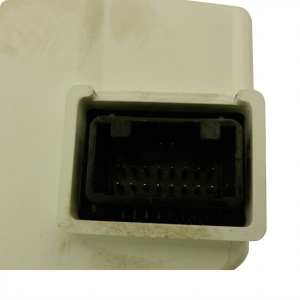
OEM Part Numbers: 83800-0X620-RP 83800-0X640 8380006C10 8380006C11 8380006Q50 8380006S20 8380006V10 8380006V30 8380006Z30 8380006Z50 838000X090 838000X100 838000X620 838000X62000 838000X640 83800-06J50 83800-33A10
Display type varies by trim and year, from analog gauges with a small LCD odometer to Optitron gauges with a multi-information display (MID).
We Have This Part in Stock

The information in this article is provided for general reference and educational purposes only. Vehicle specifications, procedures, and part compatibility can vary by production date, trim level, and region. Always consult your vehicle's factory service manual and verify part numbers before purchasing or performing repairs. Safety-critical components such as airbags, seat belts, and braking systems should be installed by a qualified professional.
- Toyota Camry:
- 🎬 Helpful Videos
- 🛍️ Shop This Part
- Key Differences by Camry Generation (2005-2014)
- Common Symptoms of a Failing Camry Instrument Cluster
- Known Issues, Recalls, and Technical Service Bulletins (TSBs)
- Programming, Mileage, and Immobilizer Considerations
- Buying a Used 2005-2014 Camry Instrument Cluster
- Step 1: Verify Your Exact Vehicle Configuration
- Step 2: Match the Part Number
- Step 3: Follow Compatibility Warnings
- Step 4: Physical Inspection
- Replacement Cost Comparison
- Frequently Asked Questions (FAQ)
- 🎟️ Get 5% Off