

2005-2008 Toyota Corolla Instrument Cluster: Decoding Failures and Mileage Swaps
Your guide to diagnosing dead gauges, understanding trim-specific compatibility, and navigating the critical mileage issue when replacing your cluster.
- The vehicle's mileage is stored in the instrument cluster; swapping in a used unit will display incorrect mileage unless professionally reprogrammed.
- You must match the OEM part number from your original cluster exactly, as they vary by trim (CE, LE, S) and transmission type.
- A repeatedly blowing 'GAUGE' fuse is often caused by a short in the alternator or reverse light circuit, not a faulty cluster.
- Physical replacement is a simple DIY task, but mileage correction requires a specialized electronics service.
Symptoms of a Failing Instrument Cluster

A faulty instrument cluster in a 9th generation Toyota Corolla can manifest in several ways. Problems can range from a minor annoyance to a complete loss of critical vehicle information.
- Erratic or Dead Gauges: The most common symptom is when one or more gauges behave unpredictably or stop working entirely. The speedometer might read 0 MPH while driving, the fuel gauge may fluctuate wildly, or the temperature gauge could be stuck on cold. This is often due to failing internal stepper motors that drive the needles.
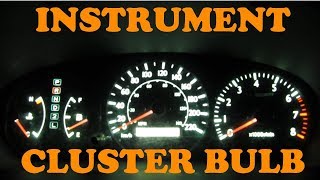
- Dim or Flickering Backlight: The illumination behind the gauges may flicker, appear very dim, or fail completely, making the cluster impossible to read at night. On LE models with the "Optitron" display, the bright white LED backlighting is a known failure point that can be repaired. Sometimes, this is mistaken for a fault when the 🎬 See this helpful walkthrough for replacing dim or dead cluster bulbs. dimmer switch has been accidentally turned down.
- Complete Cluster Failure: In some cases, the entire cluster may lose power intermittently or die altogether. None of the gauges, lights, or displays will work. This can be caused by an internal circuit board failure, a bad connection at the main plug, or a blown fuse.
- Warning Lights Stay On or Don't Turn On: A fault within the cluster can cause warning lights (like the check engine or ABS light) to stay illuminated even when there is no problem, or fail to light up during the initial startup check.
Common Causes and Diagnostic Tips

Before condemning the instrument cluster, it's important to rule out simpler issues. A weak battery or failing alternator can cause a host of strange electrical problems, including issues with the instrument cluster.
Pro Tip: Check the "GAUGE" Fuse First. On 2004-2008 Corollas, a repeatedly blowing 10-amp "GAUGE" fuse in the under-dash fuse box is a known issue. While the name suggests a cluster problem, this fuse also protects the backup light circuit and the alternator. Before replacing the cluster, unplug both reverse light sockets and the main plug on the alternator. If the new fuse no longer blows, you've isolated the problem to one of those circuits, not the cluster itself.
Known Issues, TSBs, and Recalls

While there have been no major recalls specifically for the instrument cluster on the 2004-2008 Toyota Corolla, Toyota did issue a Technical Service Bulletin (TSB) related to its operation in certain conditions.
- TSB #TSB-0047-09: This bulletin addresses an issue on some 2008 models where, after being left in sub-freezing temperatures, the vehicle may exhibit multiple warning lights on the instrument cluster, fail to shift from Park, and have other inoperative accessories. This points to the cluster's sensitivity to extreme cold in some cases.
Warning: The information in this guide is specific to the 9th generation Toyota Corolla, primarily models from 2005-2008. Part numbers and compatibility differ significantly for 2009 and newer models.
Buying a Used 2005-2008 Corolla Instrument Cluster

Buying a used OEM instrument cluster is a cost-effective solution, but careful verification is required to ensure you get the right part that will function correctly in your car.
Compatibility is Critical
You must match the part number from your original cluster exactly. Corollas of this era came in different trim levels (CE, L, LE, S, XRS) with different features, and the clusters are not always interchangeable.
- Part Number: The OEM part number is the single most important factor. Part numbers like 83800-F2100, 83800-02D90, and 83800-02D40 are specific to certain trims and transmissions. Always verify the number on your original part before purchasing a replacement.
- Transmission: Clusters are specific to either automatic or manual transmissions.
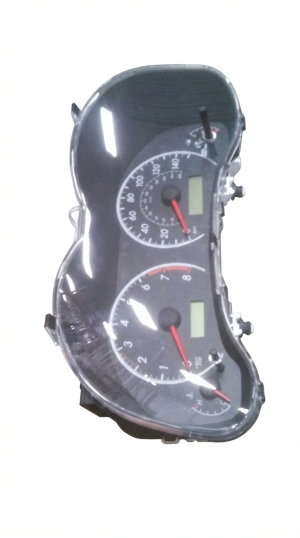
- Trim Level: The presence of a tachometer (RPM gauge) varies by trim. Base models may not have one, while S and XRS models do. Ensure the replacement cluster matches your original layout.
- Model Year Cutoff: For the 2004 model year, a change was made mid-year. This guide's part numbers generally apply to vehicles manufactured from May 2004 onwards.
The Mileage Issue: What You MUST Know
The vehicle's mileage is stored electronically inside the instrument cluster itself, not in the car's main computer (ECU). This is the most critical factor to understand when buying a used cluster.
- Incorrect Mileage Display: When you install a used instrument cluster, it will display the mileage from the vehicle it was removed from, not your car's actual mileage.
- Legal Implications: Driving a vehicle with an odometer that shows mileage different from the actual mileage can be considered odometer fraud if not properly disclosed upon selling the vehicle.
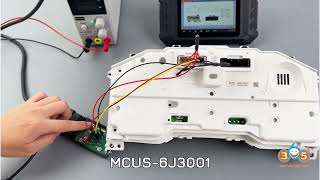
- Solutions: To correct the mileage, you cannot simply have a dealer "program" it. The data is stored on a small chip (EEPROM) on the cluster's circuit board. You have two main options: 1) Send both your original cluster and the replacement cluster to a specialized electronics repair service that can read the mileage from your old chip and write it to the new one. 2) If you are highly skilled with electronics and soldering, you can de-solder the EEPROM chip from your original board and solder it onto the replacement board. This is a delicate operation and not recommended for beginners. 🎬 Learn how to correct mileage electronically without removing the cluster.
Physical Inspection
When your used part arrives, inspect it for the following:
- Lens Condition: Minor scratches on the clear plastic lens are common, but check for deep gouges or cracks.
- Mounting Tabs: Ensure all plastic mounting tabs are intact and not broken.
- Connectors: Look at the electrical connector ports on the back. They should be clean, with no bent or corroded pins.
Programming and Installation
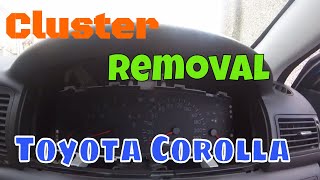
Physical installation of the cluster is a straightforward job suitable for a DIY mechanic. 🎬 Watch: Step-by-step guide on how to remove the instrument cluster. However, the electronic side requires special attention.
- Programming: For this generation of Corolla, the cluster is not linked to the engine immobilizer. "Programming" is not required for the car to start and run. The only programming needed is the mileage correction as described above.
- Installation Steps: The replacement process generally involves carefully prying off the plastic trim around the cluster, removing a few screws holding the cluster in place, and disconnecting one or two electrical connectors from the back. The steering wheel may need to be lowered to its lowest position to provide clearance.
Cost Comparison
| Part Type | Estimated Cost |
|---|---|
| New OEM | $300 - $500 |
| New Aftermarket | $130 - $340 |
| Used OEM | $75 - $200 |
| Repair Service (Your Unit) | $150 - $450 |
| Shop Labor (Installation) | $100 - $180 |
Frequently Asked Questions (FAQ)
Will my car's mileage change if I install a used instrument cluster?
Yes. The mileage is stored in the instrument cluster. A used cluster will show the mileage of the car it came from. You must have the mileage corrected by a professional service to match your vehicle's true mileage.
Does this instrument cluster need to be programmed by a dealer?
No, not for the car to function. Unlike in some newer vehicles, the cluster is not tied to the immobilizer system. The only "programming" required is to have the odometer corrected by a specialized repair shop, which is not something a dealer typically does on a used part.
Can I drive my Corolla with a broken instrument cluster?
While the car may still run, it is not safe and may be illegal in many areas. You will not be able to see your speed, fuel level, or critical engine warnings like overheating or low oil pressure. This poses a significant safety risk.
My cluster gets dim when I turn on my headlights. Is it broken?
This is usually normal operation. Most Corollas are designed to dim the cluster lights when the headlights are on to reduce glare for night driving. The brightness can typically be adjusted by a small knob or by pressing and holding the trip reset button while the lights are on. If the display is completely dark, then you may have an issue with the backlight itself.
Helpful Videos

Technical Specifications
OEM Part Numbers: 83800-F2100 8380002D90 8380002D91 83800F2100 8380002D40 8380002D41
Display Type: Analog gauges with digital odometer. Backlighting: Standard bulb (Base models) or LED 'Optitron' (LE models). Main Connector: Single large multi-pin plug.
We Have This Part in Stock

The information in this article is provided for general reference and educational purposes only. Vehicle specifications, procedures, and part compatibility can vary by production date, trim level, and region. Always consult your vehicle's factory service manual and verify part numbers before purchasing or performing repairs. Safety-critical components such as airbags, seat belts, and braking systems should be installed by a qualified professional.
- Toyota Corolla:
- 🎬 Helpful Videos
- 🛍️ Shop This Part
- Symptoms of a Failing Instrument Cluster
- Common Causes and Diagnostic Tips
- Known Issues, TSBs, and Recalls
- Buying a Used 2005-2008 Corolla Instrument Cluster
- Compatibility is Critical
- The Mileage Issue: What You MUST Know
- Physical Inspection
- Programming and Installation
- Cost Comparison
- Frequently Asked Questions (FAQ)
- 🎟️ Get 5% Off