

Audi 4.0T Intercooler & Turbo Failure: 2013-2015 S6, S7, RS7, A8, S8 & More
A complete guide to the 4.0T engine's 'hot-V' intercooler, including symptoms of coolant leaks and its critical relationship to the infamous turbo oil starvation issue.
- The most critical issue on the 4.0T engine is turbo failure from a clogged oil screen (Recall 21H7 / TSB 2044640). This must be addressed during any intercooler service.
- Due to extreme labor costs, always replace the intercooler, PCV/oil separator, turbo oil screen, and check valve at the same time.
- The primary failure of the intercooler itself is an internal coolant leak, which can cause white smoke and eventually lead to catastrophic engine damage if ignored.
- This is a professional-level repair (5/5 difficulty) and is not suitable for DIY mechanics due to its complexity.
Vehicle Fitment
This guide covers the water-to-air intercooler and related components for all Audi models equipped with the 4.0L twin-turbo V8 TFSI engine for the following model years:
- 2013-2014 Audi A8
- 2013-2014 Audi S8
- 2013-2015 Audi S6
- 2013-2015 Audi S7
- 2013-2015 Audi RS6
- 2014-2015 Audi RS7
Known Issues: The 'Hot-V' Problem Trio
The intercooler on the 4.0T engine rarely fails in isolation. Its location in the engine's 'V' means it is part of a complex assembly that includes the turbochargers and the PCV system. Problems with one component often require servicing the others due to the extensive labor involved in accessing this area. Understanding these related issues is critical for any owner.
1. The Infamous Turbo Oil Strainer (TSB 2044640 / Recall 21H7)
The single most critical issue affecting the 4.0T engine is turbocharger failure due to oil starvation. A small oil strainer (screen) designed to protect the turbos can become clogged with carbon deposits and sludge. When this happens, oil flow to the turbos is restricted, leading to bearing failure and catastrophic damage to one or both turbochargers. This is not a matter of 'if' but 'when' for many of these vehicles. Audi issued Technical Service Bulletin (TSB) 2044640 and later a recall (NHTSA Campaign Number 21V198000, Audi recall code 21H7) to address this by replacing the oil strainer. Because replacing the intercooler requires removing the turbochargers, it is absolutely essential to replace this oil strainer and the associated oil check valve at the same time.
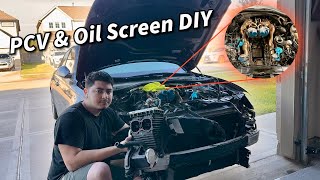
🎬 See how to install a relocation kit for the oil strainer.2. PCV / Oil Separator Failure
The Positive Crankcase Ventilation (PCV) valve, also known as the oil separator, is another common failure point located in the engine 'V'. When it fails, it can no longer properly regulate crankcase pressure. This typically leads to a loud whistling or squealing noise at idle, excessive oil consumption, and a rough idle. Like the oil strainer, the PCV is difficult to access, and it is highly recommended to replace it preventatively during an intercooler or turbo replacement job.
3. Intercooler Internal Coolant Leak
The intercooler itself can fail by developing an internal leak. Because it's a water-to-air unit, this means engine coolant can leak from the intercooler core directly into the engine's air intake path. This is a serious condition that can lead to misfires, rough running, and, in severe cases, catastrophic engine damage (hydrolock) if a large amount of coolant is ingested by the cylinders.
Symptoms of a Failing Intercooler and Related Parts
Symptoms can be complex because they may point to the intercooler, the PCV system, or failing turbos. Here’s how to tell the difference.
Symptoms of a Leaking Intercooler
- Unexplained Coolant Loss: You may need to top off your coolant reservoir frequently with no visible leaks on the ground.
- White Exhaust Smoke: Coolant burning in the combustion chambers produces sweet-smelling white smoke from the tailpipes, especially on startup.
- Engine Misfires: Coolant contaminating the air-fuel mixture can cause misfires, a rough idle, and a check engine light.
- Creamy Residue in Intake or Oil: In advanced stages, you may find a milky, creamy substance inside the intake piping or under the oil cap, indicating coolant has mixed with oil or air.
Symptoms of a Boost Leak (Could be Intercooler or Hoses)
- Noticeable Loss of Power: The car will feel sluggish and slow to accelerate as the turbochargers cannot produce the target boost pressure.
- Hissing or Whistling Sounds: You may hear a distinct hissing or whistling noise from the engine bay under acceleration as pressurized air escapes from a crack or loose connection.
- Check Engine Light with P0299 Code: A common trouble code for this issue is P0299 (Turbo/Supercharger Underboost), indicating the system is not reaching its expected pressure.
Symptoms of Related Component Failure
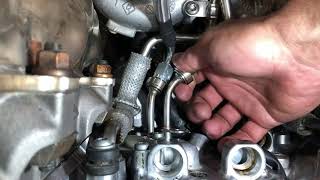
- Loud Whistling at Idle (PCV Failure): A high-pitched squeal or whistle when the engine is idling is a classic sign of a failed PCV/oil separator. 🎬 Watch: Hear the specific whistling sound caused by PCV failure.
- Sudden, Severe Power Loss (Turbo Failure): A complete failure of the turbos due to oil starvation will result in a dramatic loss of power, potentially putting the car into limp mode.
- Engine Difficult to Start (Turbo Failure): Seized or damaged turbos can make the engine very difficult to start.
Warning: If you suspect an internal coolant leak, do not continue to drive the vehicle. Ingesting a large amount of coolant can cause hydrolock, which will bend connecting rods and destroy the engine.
Step-by-Step Diagnosis
- Check for Coolant Loss: Monitor your coolant expansion tank. If the level is dropping, it's the first sign of a potential leak.
- Perform a Cooling System Pressure Test: A technician can pressurize the cooling system while the engine is off. If the system cannot hold pressure, there is a leak. If no external leaks are visible, the intercooler is a primary suspect.
- Inspect Spark Plugs: Remove the spark plugs and inspect them. A plug from a cylinder that is ingesting coolant will often be steam-cleaned and look unusually white or clean compared to the others.
- Perform a Boost Leak Test: This test involves pressurizing the intake system with compressed air to listen for leaks. This can identify cracked hoses, loose clamps, or a cracked intercooler end tank.
- Check for PCV Failure: With the engine idling, try to remove the oil filler cap. If there is a very strong vacuum making the cap difficult to remove, the PCV system has likely failed.
Replacement Information
- Difficulty Rating: 5 out of 5 (Professional Level)
- Estimated Time: 8-12 hours
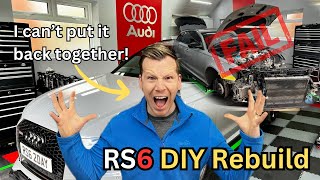
- DIY Feasible: No. This is not a DIY-friendly repair. It requires putting the vehicle's front end into a 'service position,' disconnecting high-pressure fuel lines, and removing the turbochargers. This should only be performed by an experienced technician 🎬 Watch: A detailed walkthrough of the complex charge cooler replacement. specializing in European vehicles.
Pro Tip: This is a classic 'while you're in there' job. The labor cost is the biggest part of the repair. If you are replacing the intercooler for any reason, you absolutely must also replace the turbo oil strainer (part # 079115175G), the oil check valve, and the PCV/oil separator assembly. Failing to do so will likely lead to another, even more expensive, repair down the road.
Buying a Used Intercooler
Purchasing a used OEM intercooler can be a cost-effective option, as the original units are well-made. However, careful inspection is crucial.
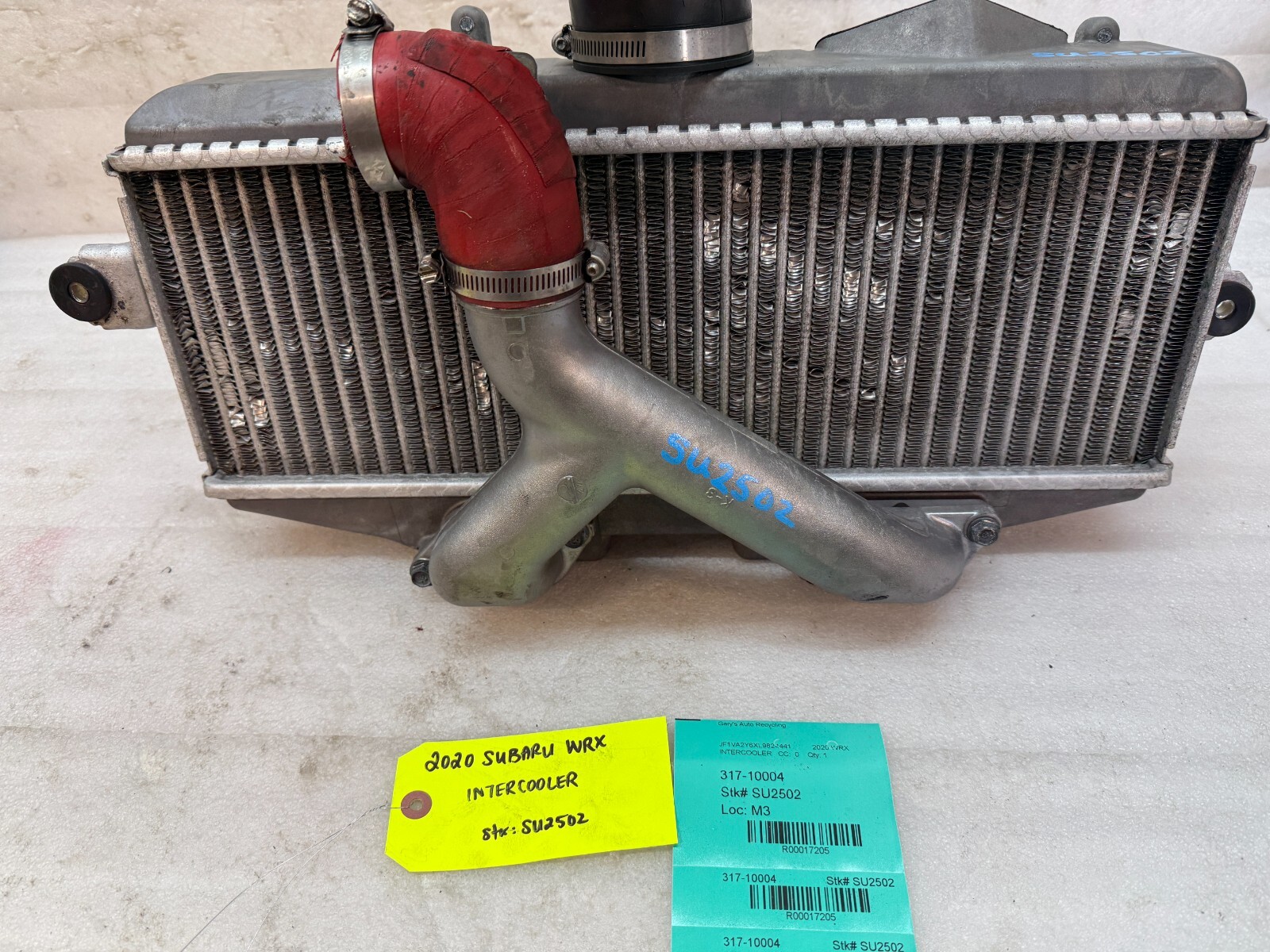
- Physical Inspection: Check the aluminum body for any cracks, especially around the welds and hose connections. Ensure none of the cooling fins are badly bent or damaged, as this can restrict airflow.
- Check Inside the Ports: Look inside the air inlet and outlet ports with a flashlight. Any sign of a thick, oily film could indicate it came from an engine with a severe PCV or turbo failure. A chalky or greenish residue indicates a past coolant leak. Avoid units with heavy internal contamination.
- Verify Part Numbers: Ensure the part number on the used unit matches one of the compatible OEM numbers for your vehicle. Superseded parts are common, so cross-reference is key.
- Mileage and History: If possible, choose a part from a lower-mileage, accident-free vehicle. A part from a front-end collision could have hidden stress cracks.
- Why Used OEM is a Good Choice: The OEM intercooler is designed specifically for the 4.0T's performance and heat-rejection needs. A quality used OEM part often provides better fitment and durability than a cheap, new aftermarket alternative.
Cost Comparison
The cost of this repair is driven primarily by the high labor time. Prices are estimates and will vary by location and shop.
| Part/Service | Estimated Cost | Notes |
|---|---|---|
| New OEM Intercooler | $1100 - $1500 | Part only, from an Audi dealership. |
| New Aftermarket Intercooler | $650 - $900 | Performance-oriented upgrades are available from brands like CTS Turbo and MercRacing. |
| Used OEM Intercooler | $350 - $600 | A significant savings, but requires careful inspection. |
| Shop Labor | $1200 - $2000+ | This is the largest expense. Includes labor to replace intercooler, turbos, oil screen, and PCV. |
| Complete Job (Used OEM) | $1550 - $2600+ | Using a recycled intercooler but including labor and other necessary parts (gaskets, fluids, oil screen). |
| Complete Job (New OEM) | $2300 - $3500+ | Using a new factory intercooler and including all labor and related parts. |
OEM Part Numbers
This intercooler assembly has been updated by Audi several times. The latest part number typically supersedes the older ones. Always confirm fitment with the seller using your vehicle's VIN.
- 079145581M
- 079145785
- 079145785G
- 079145785H
- 079145785J
- 079145785K
Frequently Asked Questions (FAQ)
Can I just replace my failed turbos and not the intercooler?
Yes, but it is strongly discouraged. When turbos fail, they can send metal debris into the intake system, which can get trapped in the intercooler. At a minimum, the intercooler must be removed and thoroughly cleaned. Given the high labor cost, most technicians recommend replacing it to avoid future problems.
What is the turbo oil screen issue I keep hearing about?
It's the most common and severe problem with the 4.0T engine. A small mesh oil screen in the engine valley gets clogged, starving the turbos of oil and causing them to fail. Audi issued a recall (21H7) and a TSB (2044640) for it. This screen MUST be replaced during any service in the engine 'V'. Some owners opt for an aftermarket oil line relocation kit to make future servicing easier.
Is an upgraded, aftermarket intercooler worth it?
For a stock or lightly modified vehicle, the OEM intercooler is sufficient. For vehicles with a performance tune (Stage 1 or higher), an upgraded intercooler can provide significant benefits by preventing 'heat soak'—a condition where the stock cooler can't keep up, causing the ECU to reduce power to protect the engine.
Why is this repair so expensive?
The cost is almost entirely due to the intercooler's location. To access it, a technician must remove the front bumper, put the car in 'service mode,' and then remove the intake, throttle bodies, high-pressure fuel lines, and both turbochargers. It is one of the most labor-intensive jobs on this platform.
Helpful Videos

Technical Specifications
OEM Part Numbers: 079145581M 079145785 079145785G 079145785H 079145785J 079145785K
Water-to-air charge air cooler located in the engine 'V'.
We Have This Part in Stock

The information in this article is provided for general reference and educational purposes only. Vehicle specifications, procedures, and part compatibility can vary by production date, trim level, and region. Always consult your vehicle's factory service manual and verify part numbers before purchasing or performing repairs. Safety-critical components such as airbags, seat belts, and braking systems should be installed by a qualified professional.
- Audi A8:
- Audi S8:
- Audi RS6:
- Audi RS7:
- Audi S6:
- Audi S7:
- 🎬 Helpful Videos
- 🛍️ Shop This Part
- Vehicle Fitment
- Known Issues: The 'Hot-V' Problem Trio
- 1. The Infamous Turbo Oil Strainer (TSB 2044640 / Recall 21H7)
- 2. PCV / Oil Separator Failure
- 3. Intercooler Internal Coolant Leak
- Symptoms of a Failing Intercooler and Related Parts
- Symptoms of a Leaking Intercooler
- Symptoms of a Boost Leak (Could be Intercooler or Hoses)
- Symptoms of Related Component Failure
- Step-by-Step Diagnosis
- Replacement Information
- Buying a Used Intercooler
- Cost Comparison
- OEM Part Numbers
- Frequently Asked Questions (FAQ)
- 🎟️ Get 5% Off