

Toyota Rear View Mirror (2013-2025): Auto-Dim, Digital & Manual Mirror Problems and Replacement
This guide covers the common failures, replacement, and critical compatibility differences between the manual, auto-dimming, and digital rear-view mirrors on many modern Toyota cars, trucks, and SUVs.
- There are four incompatible mirror types: manual, auto-dimming, auto-dimming with HomeLink, and digital display. You must replace your mirror with the exact same type.
- The most common failure on auto-dimming mirrors is leaking or bubbling fluid, which can damage your interior and requires immediate replacement.
- Upgrading from a manual to an auto-dimming mirror is possible but requires custom wiring; upgrading to a digital mirror is not feasible.
- Replacement is a very simple DIY job for all types, requiring only a T20 Torx driver and about 15 minutes.
Identifying Your Toyota's Rear-View Mirror Type
Before buying a replacement, it's crucial to identify which mirror your vehicle has, as the different types are not easily interchangeable. Mismatched mirrors will lead to missing features or incompatible wiring connectors.
1. Manual-Dimming Mirror
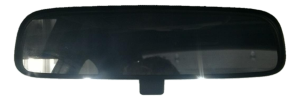
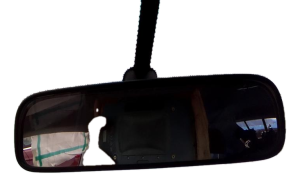
This is the most basic type. It has no electrical wiring. You can easily identify it by the small flip lever on the bottom edge. This lever manually toggles the mirror between a day and night setting to reduce glare.
2. Auto-Dimming Mirror
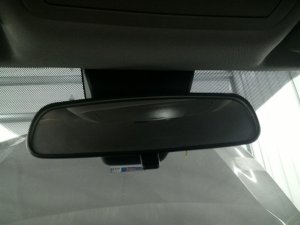
This mirror automatically darkens when its sensors detect bright light from behind. It has no manual flip lever. Look for a power button and a small sensor on the face of the mirror and another on the back. It requires a simple power and ground connection. These are common on mid-level trims of the 2016-2025 Toyota Prius, 2013-2023 Toyota RAV4, and 2017-2025 Toyota Highlander.
3. Auto-Dimming Mirror with HomeLink
This version includes all the features of the standard auto-dimming mirror but adds three buttons, usually on the bottom edge, for programming garage door openers and gates. 🎬 Follow this guide to program your HomeLink garage door buttons. It uses the same mounting and a similar electrical connector as the standard auto-dimming mirror. This was a common option on higher trims of the 2016-2018 Toyota Avalon and many other vehicles in this list.
4. Digital Display Rear-View Mirror
This is the most advanced and expensive option. It looks like a normal mirror but is actually a high-resolution LCD screen. It can be switched between a traditional mirror and a live video feed from a rear-mounted camera by using the lever on the bottom. This feature is typically found on top-tier trims of newer models like the 2022-2025 Toyota Tundra, 2024-2025 Toyota Grand Highlander, 2025 Toyota Sienna, and recent RAV4s.
Warning: The Digital Display mirror uses a completely different wiring harness (for the video signal) and requires a dedicated rear camera. It cannot be installed as a simple upgrade in a vehicle originally equipped with a manual or standard auto-dimming mirror.
Common Symptoms of a Failing Rear-View Mirror
Failure symptoms vary depending on the type of mirror installed in your vehicle.
Auto-Dimming Mirror Failures
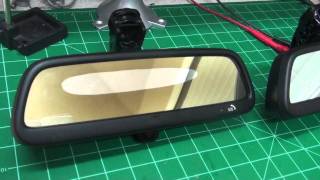
- Leaking Fluid or Bubbles: The most common failure is the breakdown of the electrochromic gel inside the mirror. 🎬 See how to handle and repair a failing auto-dimming mirror. This creates a "bubble" effect, discoloration (often yellow or brown), or a double-image reflection. If the seal breaks, this fluid can leak out and cause permanent damage to your dashboard or center console plastics.
- Dimming Feature Stops Working: The mirror no longer darkens in response to headlight glare at night, which can be caused by failed internal electronics or faulty light sensors.
- HomeLink Buttons Inoperative: The garage door opener buttons stop working, which could be an internal failure in the mirror's electronics.
Digital Display Mirror Failures
- Flickering or Intermittent Black Screen: Owners of some models, particularly the 2022-2025 Toyota Tundra, have reported the digital display flickering or turning off intermittently.
- "Camera Obstructed" Icon: The screen may display an icon of a camera with a line through it, even when the camera lens is clean. This often points to an internal fault or a connection issue.
- Overheating: Some users have noted the mirror housing becoming extremely hot to the touch, which can precede a screen malfunction.
Manual Mirror Failures
- Loose, Vibrating, or Drooping: The most frequent issue with the basic manual mirror is the internal ball-and-socket joint wearing out. This causes the mirror to vibrate excessively while driving or droop and not hold its position. Tightening the mounting screw will not fix this; the entire mirror assembly must be replaced.
Known Issues, TSBs, and Recalls by Vehicle
While these mirrors are used across many platforms, a few vehicle-specific issues are worth noting.
- 2022-2025 Tundra & 2023-2025 Sequoia: A major recall was issued because the main infotainment screen could go blank, preventing the backup camera image from displaying. This is a software issue with the head unit, not a failure of the interior mirror itself. Dealers will update the software for free to resolve this.
- 2020+ Toyota Highlander: There are numerous owner complaints about the driver's *side-view* mirror vibrating at highway speeds. This is a known issue with the external mirror assembly and is unrelated to the interior rear-view mirror.
- All Models: There are no widespread recalls or Technical Service Bulletins (TSBs) specifically for failures of the interior rear-view mirror itself across the listed vehicles. Most issues are isolated component failures.
Pro Tip: If you are considering upgrading from a manual mirror to an auto-dimming or HomeLink version, it is possible but will require custom wiring. You will need to tap into a 12-volt switched power source, often found in the overhead map light console.
Buying a Used Interior Rear-View Mirror
A used OEM mirror is an excellent, cost-effective alternative to an expensive new part, especially for electronic versions. However, careful inspection is key to getting a good part.
- Verify the Exact Type: First and foremost, confirm if you need a manual, auto-dim, auto-dim with HomeLink, or digital display mirror. A seller's description might be inaccurate; use photos to confirm the presence of a manual lever, power buttons, HomeLink buttons, or the distinct look of the digital screen.
- Match the Part Number: The surest way to guarantee compatibility is to match the part number. Remove your old mirror (see instructions below) and find the number printed on the back. Part numbers like 87810-0WQ40 (auto-dim) and 87810-0WK21 (auto-dim for older RAV4) are common.
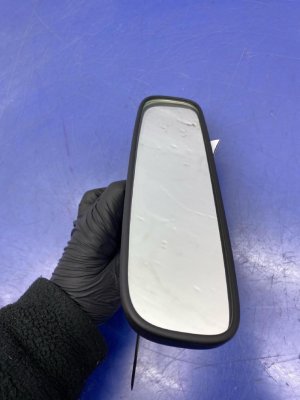
- Inspect Auto-Dimming Mirrors for Leaks: This is the most critical check. Look at photos carefully for any signs of a "bubble," dark distorted areas, or a clear line separating two different colors within the glass. This indicates the electrochromic fluid is failing, and the mirror should be avoided.
- Check the Wiring Connector: Ask the seller for a photo of the back of the mirror showing the electrical connector. Compare it to your original mirror to ensure it's a perfect match. Digital mirrors have a much different connector than standard auto-dimming mirrors.
- Test the Ball Joint (Manual Mirrors): For manual mirrors, the only real point of failure is the pivot joint. While you can't test it online, ask the seller to confirm that the mirror's ball joint is firm and holds its position tightly.
Cost of Replacing a Toyota Rear-View Mirror (2013-2025)
| Part Type | Estimated Cost |
|---|---|
| New OEM | $60 - $850 (Basic auto-dim is cheaper; digital or HomeLink versions can be extremely expensive) |
| New Aftermarket | $100 - $300 (From brands like Gentex, an OEM supplier) |
| Used OEM | $40 - $250 (Varies significantly based on features) |
| Shop Labor | $50 - $125 |
Step-by-Step Replacement Guide
Replacing the interior rear-view mirror on these Toyota models is a simple DIY task that usually takes less than 15 minutes.
🎬 Watch this quick walkthrough on replacing a modern Toyota mirror.Tools Needed: T20 Torx screwdriver, small trim removal tool (optional).
- Remove the Plastic Cover: Behind the mirror mount against the windshield, there is a plastic cover. Gently pry it apart or slide it down to expose the mirror's metal base.
- Disconnect Wiring (If Applicable): If you have an electronic mirror, unplug the small wiring harness connected to the top or back of the mirror base.
- Loosen the Set Screw: Using a T20 Torx driver, loosen the set screw on the mirror's mounting bracket. You do not need to remove the screw completely.
- Slide the Mirror Off: Once the screw is loose, slide the entire mirror assembly upwards, parallel to the windshield, to release it from the metal mounting button that is glued to the glass.
- Install the New Mirror: Slide the replacement mirror down onto the windshield mount until it is fully seated. While holding it in place, tighten the T20 Torx screw until snug. Do not overtighten.
- Reconnect and Reassemble: Plug the electrical connector back in (if equipped) and snap the plastic cover back into place.
Frequently Asked Questions (FAQ)
Can I upgrade from a manual mirror to an auto-dimming mirror?
Yes, this is a popular upgrade. However, it is not plug-and-play. You will need to run a power wire to the mirror's location, as vehicles with manual mirrors lack the necessary factory wiring. Most DIYers tap into a switched 12V power source in the overhead console or map light assembly.
Can I upgrade to the digital display mirror?
This is not a realistic upgrade. The digital mirror requires a dedicated rear camera, a different mounting system, and a complex video signal wiring harness that is not present in other vehicles. It is only compatible with vehicles originally equipped with this feature.
Why does my auto-dimming mirror look like it has a bubble or is discolored?
This is a sign of failure. The electrochromic gel between the layers of glass has broken down or the seal has failed. The mirror's ability to dim is compromised, and it should be replaced before the fluid potentially leaks and damages your interior trim.
How do I program the HomeLink buttons on my replacement mirror?
First, clear any old codes by pressing and holding the two outer HomeLink buttons for about 20 seconds until the indicator light flashes rapidly. To program, hold your garage door remote near the mirror and simultaneously press and hold both the remote button and the desired HomeLink button. The indicator light will change from a slow flash to a rapid flash. If you have a rolling code opener (most modern ones), you will then need to press the 'Learn' button on your garage door opener motor unit and then press the programmed HomeLink button in your car two or three times to sync.
Helpful Videos
Technical Specifications
OEM Part Numbers: 87810-0WQ40 878100WK20 878100WK21 878100WQ40 87840-0W690 878400W500 878400W690 878400W790 87810-0R110
Mounting Type: Windshield Wedge Mount, Tool Required: T20 Torx Driver
We Have This Part in Stock

The information in this article is provided for general reference and educational purposes only. Vehicle specifications, procedures, and part compatibility can vary by production date, trim level, and region. Always consult your vehicle's factory service manual and verify part numbers before purchasing or performing repairs. Safety-critical components such as airbags, seat belts, and braking systems should be installed by a qualified professional.
- Toyota Prius:
- Toyota Crown Signia:
- Toyota RAV4:
- Toyota Avalon:
- Toyota Grand Highlander:
- Toyota Highlander:
- Toyota Prius Prime:
- Toyota Sienna:
- Toyota Tacoma:
- Toyota Tundra:
- 🎬 Helpful Videos
- 🛍️ Shop This Part
- Identifying Your Toyota's Rear-View Mirror Type
- 1. Manual-Dimming Mirror
- 2. Auto-Dimming Mirror
- 3. Auto-Dimming Mirror with HomeLink
- 4. Digital Display Rear-View Mirror
- Common Symptoms of a Failing Rear-View Mirror
- Auto-Dimming Mirror Failures
- Digital Display Mirror Failures
- Manual Mirror Failures
- Known Issues, TSBs, and Recalls by Vehicle
- Buying a Used Interior Rear-View Mirror
- Cost of Replacing a Toyota Rear-View Mirror (2013-2025)
- Step-by-Step Replacement Guide
- 🎟️ Get 5% Off