

OBD-II Code B0010: Passenger Airbag Circuit Fault
The Ultimate 2026 Guide to Diagnosing and Fixing B0010
- Code B0010 disables the passenger-side frontal airbag, preventing deployment during a crash and creating an immediate safety hazard.
- Damaged wiring or loose yellow connectors under the passenger seat cause over 60% of B0010 faults.
- Diagnosis requires an SRS-capable OBD-II scanner to read 2-digit sub-codes (like :13 for open circuits) that pinpoint the exact electrical fault.
- Never test an airbag inflator directly with a multimeter; use a 2.0-2.5 ohm diagnostic resistor to safely simulate the circuit.
What Does B0010 Mean?
Code B0010 means the Restraints Control Module (RCM) detects an electrical problem in the passenger-side frontal airbag deployment circuit. This circuit carries the signal that fires the airbag in an accident. Because the module detects abnormal resistance or voltage, it disables the passenger airbag to prevent accidental deployment.
Technical definition: The SAE/OBD-II definition is "Passenger Frontal Stage 1 Deployment Control Circuit Fault." The control module detects an out-of-spec condition—such as an open circuit, high resistance, low resistance, or a short—in the electrical circuit for the first-stage deployment of the passenger-side front airbag.
Can I Drive With B0010?
No — Do Not Drive. Driving with code B0010 is not recommended. The passenger-side frontal airbag is disabled and will NOT deploy in a collision. This removes a critical safety feature designed to prevent severe head, neck, and chest injuries. The vehicle's drivability remains unaffected, but the safety risk to a passenger increases significantly. Repair this issue immediately.
Common Causes
- Damaged or Corroded Wiring/Connectors (Very Common) — The most frequent cause. Wires under the passenger seat or behind the glove box stretch, chafe, or cut. The main yellow airbag connectors develop high resistance from moisture intrusion or loose pins.
- Faulty Front Impact Sensor (Common) — Front-mounted impact sensors provide collision severity data. If a sensor fails or its wiring corrodes (common in winter climates), the module interprets this as a deployment circuit fault.
- Improper Previous Repairs (Post-Collision) (Common) — If the vehicle was in a prior accident, improper repairs cause faults. This includes incompatible replacement parts, damaged wiring harnesses, or failing to reset the SRS module containing crash data.
- Faulty Passenger Airbag Module (Inflator/Squib) (Common) — The airbag unit contains a pyrotechnic charge called a squib. The RCM monitors its internal resistance. If the squib fails, its resistance changes, triggering the code.
- Faulty Occupant Classification System (OCS) Sensor (Less Common) — The sensor mat detecting passenger weight can fail. If the main computer loses this signal, it disables the airbag as a precaution.
- Low System Voltage / Poor Grounds (Uncommon) — A weak battery causes voltage fluctuations. The sensitive SRS module interprets this instability as a circuit fault, especially during startup.
- Faulty Passenger Airbag Cutoff Switch (Uncommon) — In vehicles with a manual key switch to disable the passenger airbag, the switch or its wiring fails, appearing as an open circuit.
- Faulty Restraints Control Module (RCM/SRS Module) (Rare) — The main computer controlling the airbag system fails internally. Suspect this only after exhaustively ruling out all wiring and sensor issues.
Symptoms
- Airbag Warning Light is On — The most common and often the only symptom. The dashboard light with an icon of a person and an airbag stays lit or flashes continuously.
- Passenger Airbag Off/Disabled Light is On — A message or specific light indicates the passenger airbag is turned off, even when an adult sits in the seat.
- Failed Safety Inspection — In many regions, a vehicle fails a required safety inspection if the airbag warning light illuminates.
- Audible Chime or Beep — Some vehicles sound a periodic chime when the ignition is on to provide an audible alert of an SRS system fault.
- No Other Drivability Issues — Code B0010 does not affect engine performance, braking, or handling. The only issue is the disabled airbag system.
Diagnostic Flowchart
Tap your situation to follow the diagnostic path that matches what you're seeing on this code.
Common Fixes & Costs
- Repairing Damaged Wiring or Cleaning Connectors — Parts: $10-$50, Labor: $150-$400, ~2 hr book time (Intermediate)
- Replacing a Front Impact Sensor — Parts: $70-$350, Labor: $100-$200, ~1 hr book time (Intermediate)
- Replacing the Passenger Airbag Module — Parts: $400-$1,200, Labor: $150-$350, ~1.5 hr book time (Professional)
- Replacing the SRS/RCM Control Module — Parts: $800-$1200, Labor: $350-$550, ~1.5 hr book time (Professional)
DIY vs Professional
- Repairing Damaged Wiring or Cleaning Connectors 🟢 Beginner
Tools: Flashlight, basic hand tools, contact cleaner, multimeter. - Replacing a Front Impact Sensor 🟢 Beginner
Tools: Socket set, ratchet, torque wrench (in-lbs), trim removal tools. - Replacing the Passenger Airbag Module 🟢 Beginner
Tools: Specialized tools, vehicle-specific instructions. - Replacing the SRS/RCM Control Module 🟢 Beginner
Tools: Basic hand tools for removal, OEM-level scan tool for programming.
Used vs. New Parts: Buying Guide
When a used part is worth it: For the SRS Control Module, using a salvaged part is rarely advisable. The best cost-saving option is sending your original module to a specialist for a reset service to clear crash data. For impact sensors or connectors, new aftermarket or OEM parts are recommended to avoid repeat labor costs.
Donor-vehicle mileage cap: roughly under 50000 miles for the part to have meaningful remaining life.
Donor quality checklist:
- For SRS modules, verify the donor vehicle was not in a collision and did not have flood/fire damage.
- Never buy a used airbag inflator or pyrotechnic seatbelt tensioner.
- Match part numbers exactly; airbag system components are highly VIN-specific.
Decision logic:
- If Original SRS module has 'crash data' but is not physically damaged → Use a mail-in reset service ($50-$150) instead of buying new or used.
- If The fault is a simple component like a front impact sensor → Buy a new OEM or reputable aftermarket part. The savings on a used sensor are not worth the risk of premature failure.
- If You must buy a used SRS Control Module → Budget for professional reprogramming ($150-$250) as it will not be plug-and-play.
Warranty tradeoff: Used parts from a salvage yard typically have a 30-90 day warranty. A professional module reset service or new aftermarket part often comes with a 1-year or lifetime warranty.
Worst-case if a used part fails: 500-1000. If a used SRS module is incompatible or fails, you pay for diagnostic and programming labor again, plus the cost of another module.
What Happens If You Wait — Timeline
- Immediately: Code B0010 is set, the airbag warning light illuminates, and the passenger frontal airbag system is disabled. The vehicle drives normally. (MPG impact: 0%% · Added cost: $0)
- 0-12 months: The primary consequence is the ongoing safety risk; the passenger airbag will NOT deploy in a crash. There is no progressive mechanical damage. (MPG impact: 0%% · Added cost: Potential for severe injury or liability in an accident.)
- At next state inspection: The vehicle fails mandatory safety inspections in states with comprehensive checks, preventing legal registration renewal until repaired. (MPG impact: 0%% · Added cost: $50-$200 in inspection fees, fines, and lost time.)
- 6+ months (if cause is water leak): If the root cause is an unaddressed water leak, moisture continues to damage other electronics, leading to widespread electrical failures. (MPG impact: 0%% · Added cost: $500-$2500+ for diagnosing and replacing other water-damaged control modules.)
Cost of Not Fixing It
- Immediately: The passenger frontal airbag is disabled and will not deploy in a collision. This represents a critical failure of a federally-mandated safety system. (Added cost: N/A)
- 0-12+ months: Significantly increased risk of severe or fatal injury to a passenger in a moderate to severe frontal collision. (Added cost: Potential for injury/liability)
- At next state inspection: Vehicle fails a mandatory state safety inspection in jurisdictions like Virginia or Pennsylvania, preventing legal operation until repaired. (Added cost: Cost of re-inspection and potential fines.)
Diagnosis Steps
- Read the Full Code with Suffix
Use an SRS-capable OBD-II scanner to read the code. Note any additional numbers after B0010, like B0010:13 (Open Circuit) or B0010:11 (Short to Ground). This two-digit suffix pinpoints the exact electrical fault.
Tools: SRS-capable OBD-II Scanner (Beginner) - Visually Inspect Under the Passenger Seat
Look for loose or disconnected yellow connectors under the passenger seat. Check if wires are pinched, stretched, or damaged from stored items or seat movement.
Tools: Flashlight (Beginner) - Inspect Connectors Behind the Glove Box
Remove the glove box. Locate the yellow airbag connectors and the passenger airbag module. Check for loose connections, pushed-out pins, or corrosion.
Tools: Basic hand tools (screwdriver, socket set) (Intermediate) - Perform a Battery System Reset
Disconnect the negative battery terminal and wait 15 minutes to discharge backup power capacitors. Inspect, disconnect, and securely reconnect the primary airbag connectors. Reconnect the battery and clear the codes.
Tools: Wrench or socket for battery terminal (Intermediate) - Swap Front Impact Sensors (If Applicable)
If the vehicle has identical left and right front impact sensors, swap them. Disconnect the battery, swap their positions, and clear codes. If the code changes to the driver's side (B0001), the sensor requires replacement.
Tools: Basic hand tools (Intermediate) - Test the Wiring Circuit Resistance
With the battery and airbag disconnected, use a multimeter to check continuity and resistance between the airbag module connector and the main RCM connector. Compare the reading to specifications (typically 1.5-3.0 ohms).
Tools: Digital Multimeter, vehicle-specific wiring diagram (Advanced) - Check for Shorts to Power/Ground
With the battery, passenger airbag, and RCM disconnected, probe the harness-side squib terminals for voltage (should be 0V). Check for continuity between the squib wires and chassis ground (should be infinite resistance).
Tools: Digital Multimeter, vehicle-specific wiring diagram (Advanced) - Test with a Resistor (Professional Level)
Plug a 2.0-2.5 ohm airbag diagnostic resistor into the harness connector in place of the airbag. If the code clears, the wiring and RCM are good, proving the airbag inflator itself is faulty.
Tools: Airbag system diagnostic resistor set (Professional) - Live Data Resistance Monitoring (Professional Level)
Use a high-end scan tool to monitor the 'Passenger Airbag Resistance' live data PID. Wiggle the wiring harness under the seat and behind the glovebox. Erratic jumps in resistance pinpoint the exact location of a wiring fault.
Tools: Advanced bidirectional scan tool (Professional) - CAN Bus Network Check (Professional Level)
If multiple SRS codes exist, check the CAN Bus network using an oscilloscope connected to the DLC. A flat or noisy signal indicates a network problem affecting the SRS module.
Tools: Oscilloscope, DLC breakout box (Professional)
When This Code Triggers (Freeze-Frame Conditions)
- System Voltage: 11.5V - 14.5V (The SRS module continuously monitors system voltage. A code sets during startup if voltage is too low from a weak battery.)
- Passenger Airbag Circuit Resistance: 1.5 - 3.5 Ohms (The code triggers instantly if resistance goes too high (Open Circuit) or too low (Short Circuit).)
- Fault Status: Active/Current (The code sets the moment the electrical fault is detected by the SRS module's self-test, which runs at every ignition cycle.)
- Ignition Cycle Counter: 0 at time of fault (A capable scanner shows how many key cycles have passed since the fault was first detected, helping diagnose intermittent issues.)
Related Codes
- B0011 — This code is for the 'Passenger Frontal Stage 2 Deployment Control' circuit. B0010 is for the first stage. If both codes are present, the fault is in a shared component like the airbag module or a main connector.
- B0001 — This is the equivalent code for the driver's side airbag. If you see both, it points to a central problem like the main SRS control module or its power/ground supply.
- B0091 — Relates to the Passenger Presence System. A fault here causes the main SRS module to set a B0010 because it cannot safely determine if it should enable the passenger airbag. Diagnose B0091 first.
- B0020 — Refers to a fault in the Left Front Side Impact Sensor circuit. Seeing B0020 alongside B0010 points to a broader wiring harness issue or a failing SRS module.
Climate & Environmental Factors
- Road Salt / High Humidity: Causes severe corrosion on externally mounted components, particularly front impact sensors located on the radiator support. This corrosion destroys the sensor or connector, leading to an open circuit.
- Extreme Cold: Causes old, brittle wiring or plastic connectors to contract and lose contact, resulting in a temporary high-resistance fault that disappears as the cabin warms up.
How to Talk to a Mechanic About This Code
Say this: "I have an airbag warning light and my scanner shows code B0010 for the passenger airbag circuit. I'd like to schedule a diagnostic to pinpoint the exact electrical fault. Can you check for a manufacturer-specific sub-code and focus on testing the wiring and connectors before quoting major parts?"
This signals you are an informed customer. It directs the technician to perform logical, cost-effective diagnosis (checking common failure points like wiring first) rather than immediately suggesting expensive module replacement.
Avoid saying:
- 'My airbag light is on, can you fix it?'
- 'Just replace whatever is broken.'
- 'I think I need a new airbag.'
Questions to ask before authorizing the repair:
- What specific sub-code was found (e.g., open circuit, short to ground)?
- What were the resistance readings on the passenger airbag circuit?
- Did you test the circuit by substituting a diagnostic resistor to confirm the fault isn't the airbag module itself?
- Can you show me the damaged wiring or corroded connector that you found?
- If the SRS module needs replacement, does the quoted price include the mandatory VIN programming?
Where to Take It: Dealer vs Independent vs Chain
- Dealer:
A safe but expensive option. The best choice if the SRS control module needs replacement and programming, or if the vehicle is under warranty.
Best for: Vehicles under warranty., Complex repairs requiring SRS module replacement and programming., Known manufacturer-specific issues covered by technical service bulletins (TSBs).
Downsides: Highest labor rates., Defaults to replacing entire assemblies rather than performing detailed wiring repairs. (Typical cost: +50% vs. baseline) - Independent Shop:
Best fit for most B0010 repairs. A reputable independent shop with ASE-certified technicians handles common causes (wiring, connectors, sensors) at a much lower cost than the dealer.
Best for: Out-of-warranty vehicles where the cause is likely wiring, a connector, or a sensor., Cost-conscious owners who have vetted the shop's reputation and certifications.
Downsides: Quality and diagnostic capabilities vary widely., Lacks the expensive, manufacturer-specific tools to program a new SRS module if needed. (Typical cost: +0% vs. baseline) - Chain Shop:
AVOID. Airbag system diagnosis is a safety-critical task requiring specialized expertise. Chain shops are not equipped for this level of diagnostic work.
Best for: Simple, unrelated maintenance like oil changes or tires.
Downsides: Technicians lack specialized training and tools for complex SRS diagnostics., Business model encourages quick parts replacement over detailed electrical troubleshooting. (Typical cost: -10% vs. baseline)
When to Walk Away From the Repair
If the estimated repair cost for the airbag system exceeds 50% of the car's current private-party value, seriously consider selling the car as-is or trading it in. This is especially true on older, high-mileage vehicles.
- Car worth $4000, fix is $2200: Walk away. The repair cost is over 50% of the vehicle's value. It is not a sound financial decision.
- Car worth $15000, fix is $450: Fix it. This is a relatively minor cost to restore a critical safety feature on a valuable vehicle.
- Car worth $2500, fix is $1600: Walk away. The repair cost is 64% of the car's value. Put that money towards a more reliable vehicle.
What Scan Tool You Need for This Code
Minimum: A scanner that reads and clears codes from the SRS (Airbag) control module. A basic engine-only OBD-II reader will not work.
A standard $20 scanner only communicates with the Engine Control Module (ECM). It cannot see the Supplemental Restraint System (SRS) module where the B0010 code is stored, resulting in a misleading 'No Codes Found' message.
Budget: Autel MaxiLink ML629 (~$80) — Reads and clears codes from the four basic systems: Engine, Transmission, ABS, and SRS. It confirms the B0010 code and allows you to clear it after a repair.
Mid-range: BlueDriver Pro or Foxwell NT630 Plus (~$120) — Reads/clears SRS codes and displays live data. This is crucial for B0010, as you can graph 'Passenger Airbag Resistance' while wiggling wires to find intermittent open circuits.
Professional: Autel MaxiCOM MK808 / MK900-BT (~$500-900) — Provides full, OEM-level diagnostics. It reads manufacturer-specific sub-codes, views extensive live data, and performs bidirectional controls. Handles necessary programming if the SRS module needs replacement.
Rent vs buy: Most auto parts store loaner tools are basic engine code readers and will NOT read SRS codes. Buying a mid-range scanner with SRS capability is a worthwhile investment that pays for itself quickly.
How to Clear the Code After You Fix It
- Ensure the underlying electrical fault has been properly repaired.
- Reconnect the negative battery terminal (if disconnected for the repair).
- Use an SRS-capable OBD-II scan tool to access the Supplemental Restraint System.
- Select the function to 'Clear Codes' or 'Reset SRS Module'.
Drive cycle (~5 minutes): No specific drive cycle is required for a B0010 code. The SRS system performs a self-test every time the ignition turns to the 'ON' position. After clearing the code, cycle the ignition off, wait 10 seconds, and turn it back on. If the repair was successful, the airbag light illuminates for a few seconds for its self-check and then turns off.
Readiness monitors affected: None. SRS system faults do not affect emissions readiness monitors.
Watch out for:
- Using a basic OBD-II scanner that cannot access the SRS module; the code will remain.
- Simply disconnecting the battery will not reliably clear the fault code from the SRS module's memory.
- The code returns immediately upon the next key cycle if the root electrical cause has not been fixed.
Will This Fail Emissions / State Inspection?
No — by itself this code doesn't fail OBD inspection (but it can keep readiness monitors from setting, which causes a separate fail).
- California: Will NOT fail. A California SMOG check is only concerned with emissions-related systems. An airbag light does not affect the outcome.
- New York: Will NOT fail. An illuminated airbag light is documented as an advisory on the inspection report, but it is not a reason for failure in NYS.
- Texas: Will NOT fail. The Texas state inspection does not check for or fail a vehicle due to an airbag warning light.
- Virginia / Pennsylvania: WILL FAIL. In states with comprehensive annual safety inspections, an illuminated airbag light is considered a critical safety defect and causes the vehicle to fail inspection.
Most Commonly Affected Vehicles
- Ford Transit (2019-2021) — Wiring stress under the passenger seat or dash triggers B0010. The fault is often mechanical (seat structure failure) causing an electrical problem.
- Chevrolet / GMC Silverado / Sierra 1500 (2003-2007) — Notorious for front impact sensor failures due to corrosion from road salt. The sensor is often part number 25820342.
- Hyundai Sonata (2006-2010) — Owners frequently report airbag lights due to a faulty Occupant Classification System (OCS) mat in the passenger seat. Hyundai offers an extended warranty for this part.
- Mazda CX-5 (2019-2021) — Mazda provides highly specific diagnostic codes. Look for suffixes like B0010:13 (open circuit), which point directly to wiring issues.
- Ford F-250 Super Duty (2015-2016) — This code appears intermittently as B0010-13 (open circuit). The cause is frequently a loose connector under the passenger seat.
- Nissan X-Trail / Rogue (2014-2020) — Appears after a collision if the module stores crash data. Resetting the module with an advanced scan tool is a common fix.
- Honda Accord (2023-2025) — Newer models log this code with specific suffixes indicating the fault type, such as B0010-13 for an open circuit or B0010-12 for a short to power.
- Subaru Outback (2005-2009) — A faulty belt tension sensor, part of the passenger seat belt assembly, triggers SRS codes. Cracked solder joints on the overhead indicator light also cause faults.
- Volkswagen Jetta / EOS (2011-2017) — Airbag faults relate to high resistance in a deployment circuit or issues with the 'Passenger Airbag Disabled' indicator light.
Manufacturer-Specific Notes
- Ford: This code is often intermittent and caused by poor pin tension in a connector. Technicians use a scan tool to watch circuit resistance live while wiggling harnesses to find the loose connection.
- Mazda: Mazda provides extremely helpful sub-codes (e.g., B0010:11 for short to ground, B0010:13 for open circuit). Always use a scanner that reads these manufacturer-specific details.
- General Motors (Chevy, GMC): On 2003-2007 trucks, front impact sensors on the radiator support are a primary failure point due to corrosion. A secondary issue is high resistance in the C221/C222 connectors behind the kick panels.
- Honda: Honda service information specifically calls for the use of a special SRS inflator simulator tool (a 2-ohm resistor) to determine if the fault is in the airbag itself or the wiring.
- Hyundai / Kia: Hyundai has a 15-year extended warranty for the passenger Occupant Classification System (OCS) sensor mat on 2006-2011 models, which causes related codes.
Real Owner Stories
2015 Ford F-250 Super Duty with Intermittent Airbag Light
Airbag light turned on and off randomly between drives. Code reader showed B0010.
Outcome: The issue traced to a loose connector. Wiggling and re-seating the connectors for the airbag system resolved the intermittent fault without replacing parts.
Lesson: For intermittent airbag faults, the cause is usually a poor connection rather than a failed part. Visually inspect and re-seat all accessible yellow connectors first.
2007 Chevy Silverado with Persistent B0010 Code
Airbag light stayed on constantly. The truck operated in a northern state with heavy road salt use.
Outcome: The front impact sensor on the radiator support was heavily corroded. Replacing the sensor (Dorman 590-223) and clearing the code permanently fixed the issue.
Lesson: On older trucks from regions with harsh winters, inspect externally mounted front impact sensors for corrosion, as they are a primary failure point.
Nissan X-Trail After Minor Collision
The vehicle was in a minor accident where airbags did not deploy, but the airbag light illuminated with code B0010.
Outcome: The SRS control module stored crash data, locking the system. The owner used a $60 mail-in reset service to clear the crash data from the original module, resolving the light.
Lesson: If B0010 appears immediately after any collision, the SRS module has stored crash data. A specialized reset service is a cost-effective alternative to buying a new module.
How to Prevent This Code From Triggering
- Secure Under-Seat Wiring (Once, or after any seat adjustment) — Prevents wires and connectors from being kicked or pinched by items stored under the seat. Use zip ties to secure loose wiring.
- Apply Dielectric Grease to Connectors (During any related repair) — Seals electrical connections from moisture, preventing the corrosion that causes high resistance and open circuits.
- Clean Sunroof and Cowl Drains Annually (Once per year, especially before rainy seasons) — Prevents water from overflowing and leaking into the cabin, where it damages sensitive electronics like the SRS module.
- Avoid Storing Items Under Passenger Seat (Daily habit) — Objects sliding under the seat are the primary cause of physical damage to airbag wiring harnesses.
Frequently Asked Questions
Is it safe to drive with code B0010?
No. While the car drives normally, it is not safe. The passenger airbag system is disabled and will not deploy in an accident, significantly increasing the risk of serious injury. Repair this immediately.
Can I fix the B0010 code myself?
Simple fixes like reconnecting a loose under-seat connector are possible for a DIYer after disconnecting the battery. However, working with airbag systems carries a risk of accidental deployment. Stop DIY and take the vehicle to a certified SRS technician for any repair involving component removal or wire testing.
Will the airbag light go off by itself?
No. B0010 is a latched safety system code. Even if the underlying electrical problem is fixed, the code remains in the SRS module's memory. It must be manually cleared with an SRS-capable OBD-II scanner.
My car was in a minor accident, and now I have this code. Why?
Even if the airbags did not deploy, the SRS module stores crash data. Once stored, the module sets fault codes and disables the system until it is replaced or professionally reset.
Can I test an airbag with a multimeter?
No, never probe an airbag inflator directly with a multimeter. While modern multimeters use low current, it remains an unnecessary deployment risk. The safe method uses a 2.0-2.5 ohm diagnostic resistor plugged into the harness to simulate the airbag.
What's the difference between Stage 1 and Stage 2 in the code definition?
Modern airbags are dual-stage, deploying with less force (Stage 1) in a moderate crash or full force (Stage 2) in a severe crash. B0010 refers to a fault in the electrical circuit for the initial, lower-force deployment stage.
Can a weak or dead battery cause the B0010 code?
Yes. The SRS control module requires stable voltage. A weak battery causes voltage drops during startup that the module interprets as a system fault, triggering the B0010 code.
What are common mistakes when diagnosing a B0010 code?
A frequent mistake is immediately replacing an expensive component like the passenger airbag without proper diagnosis. Technicians must first rule out simpler causes like corroded connectors or damaged wiring. Another pitfall is failing to use a scanner that reads manufacturer-specific sub-codes critical for pinpointing the fault.
Key Takeaways
- Code B0010 disables the passenger-side frontal airbag, preventing deployment during a crash and creating an immediate safety hazard.
- Damaged wiring or loose yellow connectors under the passenger seat cause over 60% of B0010 faults.
- Diagnosis requires an SRS-capable OBD-II scanner to read 2-digit sub-codes (like :13 for open circuits) that pinpoint the exact electrical fault.
- Never test an airbag inflator directly with a multimeter; use a 2.0-2.5 ohm diagnostic resistor to safely simulate the circuit.
Helpful Videos
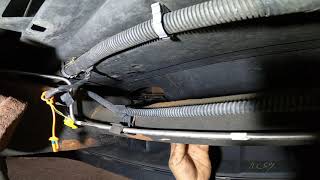
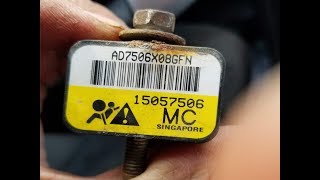
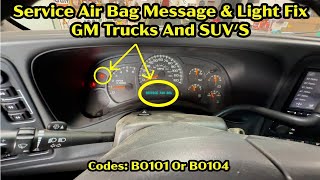
Shop the Parts Behind B0010
Below are the parts most often responsible for code B0010, ranked by how frequently each one is the actual culprit (per the diagnosis above). Tap any to see what we have for your vehicle.




The information in this article is provided for general reference and educational purposes only. Vehicle specifications, procedures, and part compatibility can vary by production date, trim level, and region. Always consult your vehicle's factory service manual and verify part numbers before purchasing or performing repairs. Safety-critical components such as airbags, seat belts, and braking systems should be installed by a qualified professional.
- 🧭 Diagnostic Flowchart
- 🎬 Helpful Videos
- 🛍️ Shop This Part
- What Does B0010 Mean?
- Can I Drive With B0010?
- Common Causes
- Symptoms
- Common Fixes & Costs
- DIY vs Professional
- Used vs. New Parts: Buying Guide
- What Happens If You Wait — Timeline
- Cost of Not Fixing It
- Diagnosis Steps
- When This Code Triggers (Freeze-Frame Conditions)
- Related Codes
- Climate & Environmental Factors
- How to Talk to a Mechanic About This Code
- Where to Take It: Dealer vs Independent vs Chain
- When to Walk Away From the Repair
- What Scan Tool You Need for This Code
- How to Clear the Code After You Fix It
- Will This Fail Emissions / State Inspection?
- Most Commonly Affected Vehicles
- Manufacturer-Specific Notes
- Real Owner Stories
- 2015 Ford F-250 Super Duty with Intermittent Airbag Light
- 2007 Chevy Silverado with Persistent B0010 Code
- Nissan X-Trail After Minor Collision
- How to Prevent This Code From Triggering
- Frequently Asked Questions
- Is it safe to drive with code B0010?
- Can I fix the B0010 code myself?
- Will the airbag light go off by itself?
- My car was in a minor accident, and now I have this code. Why?
- Can I test an airbag with a multimeter?
- What's the difference between Stage 1 and Stage 2 in the code definition?
- Can a weak or dead battery cause the B0010 code?
- What are common mistakes when diagnosing a B0010 code?
- Key Takeaways
- 🎟️ Get 5% Off