

OBD-II Code B0012: Driver-Side Airbag Deployment Loop 1 Fault
The Ultimate 2026 Guide: What B0012 means, why it triggers, and how to fix it for good
- Code B0012 disables the driver's airbag, guaranteeing it will not deploy in a crash and requiring immediate repair.
- A failed clock spring or a broken $10 plastic CPA connector clip causes over 80% of B0012 faults.
- Always check for Technical Service Bulletins (TSBs) first, as GM has a massive bulletin (#08-09-41-002H) specifically for faulty connector clips on 2005-2014 models.
- Disconnect the negative battery terminal and wait exactly 15 minutes before touching any SRS components to prevent accidental, lethal airbag deployment.
What Does B0012 Mean?

Code B0012 means the Sensing and Diagnostic Module (SDM) detects a critical electrical fault in the driver's side airbag circuit (Deployment Loop 1). The SDM disables the Supplemental Restraint System (SRS), illuminates the airbag warning light, and prevents airbag deployment until the fault is repaired.
Technical definition: The SAE/OBD-II definition is "Driver Frontal Deployment Loop Stage 1 Fault." The SDM detects an electrical anomaly—such as an open circuit, high resistance (>4.4 ohms on GM), low resistance (<1.7 ohms), or a short—in the primary circuit connected to the driver's airbag inflator.
Can I Drive With B0012?
No — Do Not Drive. The vehicle drives normally, but this is a critical safety failure. The driver's airbag is guaranteed not to deploy in a frontal collision, dramatically increasing the risk of severe head, neck, and chest trauma or death. Repair this issue immediately.
Common Causes

- Faulty Airbag Clock Spring (SIR Coil) (Very Common) — The clock spring is a coiled ribbon wire inside the steering column. Constant turning fatigues and breaks this ribbon, causing an open circuit or high resistance.
- Damaged Connector or Poor Terminal Tension (Very Common) — Yellow airbag connectors use plastic Connector Position Assurance (CPA) clips that become brittle and break. Additionally, metal terminals lose grip over time due to vibration, creating high resistance (B0012-0D).
- Damaged or Corroded Wiring (Common) — Wires in the steering column pinch, fray, or corrode from moisture intrusion. This physical damage disrupts the electrical signal and triggers the fault code.
- Improper Previous Repair (Common) — If the steering column or dashboard was recently serviced, a connector was likely left unseated, a CPA retainer forgotten, or a wire pinched during reassembly.
- Faulty Driver's Airbag Module (Less Common) — The airbag inflator's internal wiring or pyrotechnic squib develops high resistance. Suspect this only after ruling out wiring and clock spring issues.
- Electrical Interference (GM Specific) (Rare) — Poorly shielded aftermarket accessories plugged into 12V outlets create radio frequency interference (RFI). The SDM misinterprets this as a circuit fault (GM TSB PIT5564C).
- Faulty Sensing and Diagnostic Module (SDM) (Very Rare) — The main airbag computer fails internally and falsely reports a circuit fault. This is a rare, last-resort diagnosis after proving all other components are functional.
Symptoms

- Airbag Warning Light & Messages — A solid or flashing SRS warning light appears on the dash, often accompanied by a 'Service Airbag System' message on the driver information center.
- Horn and Steering Wheel Controls Inoperative — A broken clock spring severs the electrical connection for the horn, radio buttons, and cruise control simultaneously with the airbag circuit.
- Intermittent Airbag Light — The light toggles on and off when turning the steering wheel or hitting bumps, indicating a loose connection rather than a completely severed wire.
Diagnostic Flowchart

Tap your situation to follow the diagnostic path that matches what you're seeing on this code.
Common Fixes & Costs
- Replace Airbag Clock Spring
— Parts: $50-$350, Labor: $150-$300, ~1.5 hr book time
(Intermediate)
Chevrolet/GMC Trucks (2007-2014): OEM GM #25966964 (Alt: Dorman #525-016)
Ford F-150 (2015-2020): OEM Ford #HL3Z-14A664-A (Alt: Standard Motor Products #CSP293) - Replace Airbag Connector Position Assurance (CPA) Clip
— Parts: $5-$20, Labor: $100-$150, ~0.5 hr book time
(DIY)
General Motors (Various): OEM GM #88988974 (Alt: ACDelco #88988974) - Repair or Replace Wiring Pigtail Connector
— Parts: $15-$50, Labor: $150-$250, ~2 hr book time
(Intermediate)
Cadillac (per TSB PI1474): OEM GM #13580115 (Alt: ACDelco #PT2795) - Replace Driver's Airbag Module — Parts: $500-$1000, Labor: $100-$200, ~1 hr book time (Professional)
- Replace Sensing & Diagnostic Module (SDM) — Parts: $600-$1000, Labor: $200-$300, ~2.5 hr book time (Professional)
DIY vs Professional
- Replace Airbag Clock Spring — Beginner:
- Replace Airbag Connector Position Assurance (CPA) Clip — Beginner:
- Repair or Replace Wiring Pigtail Connector — Beginner:
- Replace Driver's Airbag Module — Beginner:
- Replace Sensing & Diagnostic Module (SDM) — Beginner:
Used vs. New Parts: Buying Guide
When a used part is worth it: For a safety-critical wear item like an airbag clock spring, buying used is strongly discouraged. A used part should only be considered as a last resort if new parts are unavailable for an older vehicle.
Donor-vehicle mileage cap: roughly under 40000 miles for the part to have meaningful remaining life.
Donor quality checklist:
- Verify the exact part number, as multiple versions exist for the same model.
- Avoid parts from vehicles with high mileage or from regions with extreme temperatures.
- Never buy a used airbag module or clock spring from a vehicle that was in a collision.
Decision logic:
- If The part is an airbag, clock spring, or sensor → Buy new OEM or a high-quality aftermarket brand. The cost savings of a used part do not justify the safety risk.
- If Budget is the absolute primary concern → A new aftermarket part from a brand with a good warranty is a better choice than a used part with no history.
- If The vehicle is a high-end or newer model → Buy new OEM to ensure perfect compatibility and function with other vehicle systems.
Warranty tradeoff: Used parts typically have a 30-90 day warranty covering only the part. New aftermarket parts offer 1-year to limited lifetime warranties. New OEM parts carry a 12-month manufacturer's warranty when installed by a dealer.
Worst-case if a used part fails: $300-$700 if a used clock spring fails prematurely, requiring repeat labor costs plus the price of another replacement part.
What Happens If You Wait — Timeline
- 0-3 months: An intermittent fault begins. The airbag light comes on when turning the wheel or hitting a bump and then goes off. This indicates a loose connection or a fraying wire. (Added cost: $0)
- 1-6 months: The fault becomes more frequent. The airbag light stays on for entire drives. This indicates a consistently poor connection (high resistance) that is not yet completely broken. (Added cost: $0)
- 3-9 months: The fault becomes a 'hard fault'. The airbag light stays on permanently. The connection is now a permanent high resistance or a complete open circuit (B0012-04). (Added cost: $0)
- N/A: This fault does not cause progressive physical damage to other components. (Added cost: $0)
Cost of Not Fixing It
- Immediate: The driver's airbag is disabled. In a frontal collision, the risk of severe injury or death for the driver is significantly increased. (Added cost: N/A (Safety Risk))
- 0-12 months: Automatic failure of any state-mandated vehicle safety inspection, preventing legal registration renewal. (Added cost: $50-$200 in failed inspection fees and potential fines.)
- Long-term: Significantly reduced vehicle resale value and potential liability or denied insurance claims in the event of an accident. (Added cost: $500-$2000+ in diminished value and potential legal costs.)
Diagnosis Steps
- Read Full SRS Diagnostic Trouble Code (DTC)
Use an OBD-II scanner that reads SRS codes. Record the full code and its symptom byte (e.g., B0012-04 for Open Circuit, B0012-0D for High Resistance). This directs your entire diagnosis.
Tools: SRS-capable OBD-II Scanner (Beginner) - Check for TSBs and Recalls
Search online for Technical Service Bulletins (TSBs) for your specific vehicle. GM vehicles have TSB #08-09-41-002H for faulty connector clips. Hyundai has a 15-year extended warranty for clock springs.
Tools: Internet access (Beginner) - Perform Visual Inspection (Safety First!)
CRITICAL: Disconnect the negative battery terminal and wait 15 minutes. Visually inspect the yellow airbag connectors behind the driver's airbag and at the steering column base. Look for broken plastic CPA clips or pushed-out pins.
Tools: Basic hand tools, Trim removal tools (Intermediate) - [Pro Tip] Analyze Live SRS Data
Navigate to the SRS module's live data stream. Monitor 'Driver Deployment Loop 1 Resistance'. A healthy circuit reads 2.1 to 4.0 ohms. Slowly turn the steering wheel lock-to-lock. If the value jumps to 'OL' (Open Loop) or fluctuates wildly, the clock spring is bad.
Tools: Professional SRS Scan Tool (Advanced) - Test the Clock Spring Circuit
With the battery disconnected and airbag removed, disconnect the clock spring connectors. Use a multimeter set to Ohms to test the resistance of the two wires through the clock spring while turning the wheel. Erratic readings confirm a failed clock spring.
Tools: Multimeter, basic hand tools (Advanced) - [Pro Tip] Perform Connector Terminal Tension Test
If a high resistance fault (B0012-0D) is intermittent, test terminal tension. Disconnect the suspect connector and use a terminal test probe to check the 'grip' of each female pin. Replace the connector pigtail if any pin feels loose.
Tools: Terminal test probes (e.g., GM J-35616-65B) (Professional) - Isolate the Fault with a Resistor
Plug a 2.0 to 3.0-ohm airbag simulator tool into the vehicle-side connector for the clock spring. Reconnect the battery and clear codes. If B0012 does not return, the fault is upstream (clock spring/airbag). If it persists, the fault is downstream (wiring/SDM).
Tools: Airbag system resistor tool, SRS-capable scanner (Advanced) - Inspect the SDM Connector
If all other components verify as good, inspect the main electrical connector at the Sensing and Diagnostic Module (SDM). Check for water intrusion corrosion or backed-out pins.
Tools: Basic hand tools (Intermediate)
When This Code Triggers (Freeze-Frame Conditions)
- SRS Lamp Status: ON (The fault was detected during the last ignition cycle.)
- Ignition Cycles Since Fault: 0 (The fault is current and was detected in the present ignition cycle.)
- Vehicle Speed: 0-15 mph (Fault often triggers at low speeds when turning the steering wheel, stressing the clock spring.)
- System Voltage: 13.5-14.5 V (Fault is typically independent of system voltage, occurring during normal operation.)
Related Codes
- B0013 — This code is for the 'Stage 2' circuit of the same driver's airbag. Seeing both B0012 and B0013 together confirms a shared component failure, almost certainly the clock spring.
- B0012-04 — Symptom byte for 'Open Circuit'. The SDM detects infinite resistance, indicating a completely broken wire inside the clock spring or an unplugged connector.
- B0012-0D — Symptom byte for 'Resistance Above Threshold'. The circuit is complete but weak. This points to a loose CPA clip, corrosion, poor terminal tension, or a frayed wire.
- B0012-0E — Symptom byte for 'Resistance Below Threshold'. The circuit resistance is too low, indicating a short circuit between the two deployment loop wires.
- B0012-02 — Symptom byte for 'Shorted to Ground'. The deployment loop circuit has an unwanted connection to the vehicle's chassis ground, usually from a chafed wire.
Climate & Environmental Factors
- High Humidity / Moisture: Moisture from water leaks or coastal air causes corrosion on airbag connector pins or the SDM. This increases circuit resistance, directly causing B0012-0D.
- Extreme Temperatures: Extreme cold makes plastic CPA retainer clips brittle and prone to breaking. Temperature swings cause metal connector terminals to expand and contract, creating loose connections.
How to Talk to a Mechanic About This Code
Say this: "I have an airbag light on, and my scanner shows code B0012. I know this is often a clock spring or a connector issue. I'd like to book a diagnostic to confirm the specific failure point before replacing any major parts."
This signals that you understand the common, inexpensive causes. It directs the technician to start with diagnosis (checking connectors, TSBs, and resistance) rather than immediately quoting a full airbag replacement.
Avoid saying:
- 'My airbag light is on, can you fix it?'
- 'Just replace whatever is broken.'
- 'I think I need a new airbag.'
Questions to ask before authorizing the repair:
- Did you check for any Technical Service Bulletins related to B0012 for my vehicle?
- Was the failure a high resistance/open circuit or a low resistance/short? What was the resistance reading?
- Did you inspect the connector and the plastic CPA clip behind the airbag? Was it broken or loose?
- Can you show me the failed part and explain why it needs to be replaced?
Where to Take It: Dealer vs Independent vs Chain
- Dealer:
Best for: Vehicles under warranty or with an open recall/extended warranty for the clock spring., Very new or complex vehicles requiring specialized diagnostic tools., If you want the absolute guarantee of OEM parts and factory-trained technicians.
Downsides: Highest labor rates, typically 1.5-2x more than an independent shop., May be more inclined to replace a larger assembly when a smaller component would suffice. (Typical cost: +50% vs. baseline) - Independent Shop:
Best fit for most situations. An experienced independent mechanic offers the best balance of expertise and value. Always check for recalls with a dealer first.
Best for: Most out-of-warranty vehicles., Reputable independent shops have extensive experience with clock springs and connector issues., Better pricing on labor and willing to use high-quality aftermarket parts.
Downsides: Quality varies. You must ensure they are experienced with SRS/airbag system repairs. (Typical cost: +0% vs. baseline) - Chain Shop:
AVOID. Airbag system repair is safety-critical and requires specific expertise. This is not a job for a quick-lube or general muffler shop.
Best for: Simple maintenance like oil changes, tires, and brakes.
Downsides: Not equipped or trained for complex electrical or safety system diagnostics., High potential for misdiagnosis or refusal to work on the system due to liability concerns. (Typical cost: -10% vs. baseline)
When to Walk Away From the Repair
If the estimated repair cost for the B0012 code exceeds 40-50% of your car's Kelley Blue Book private-party value, consider selling or trading it in.
- Car worth $4000, fix is $550: Fix it. This is a common repair cost for a clock spring and is well below the 50% threshold.
- Car worth $3000, fix is $1800: Walk away. The diagnosis points to a rare airbag and SDM module failure. The repair cost is over 50% of the car's value.
- Car worth $8000, fix is $150: Fix it immediately. The diagnosis was a simple broken CPA connector clip, a cheap and easy repair.
What Scan Tool You Need for This Code
Minimum: A scanner that reads and clears Supplemental Restraint System (SRS) codes. A basic OBD-II engine code reader will NOT work for B0012.
A standard $20 scanner only communicates with the Engine Control Module (ECM). You need a tool that accesses the Sensing and Diagnostic Module (SDM) to read the code, view its symptom byte, and clear it.
Budget: BlueDriver Pro Bluetooth Scanner (~$99) — Connects to your smartphone and reads/clears SRS codes for most major brands. It provides repair reports generated from a database of verified fixes.
Mid-range: Foxwell NT630 Plus (~$180) — A dedicated handheld unit that reads and clears SRS codes. It views live data for deployment loop resistance, allowing you to turn the wheel and watch the resistance value change.
Professional: Autel MaxiCOM MK808 (~$500) — A professional-level tablet offering full-system diagnostics, deep SRS analysis, and live data graphing. Overkill for a single B0012 diagnosis but ideal for serious DIYers.
Rent vs buy: Auto parts store loaner tools typically do NOT read SRS codes. You must purchase your own SRS-capable scanner. Given the low cost of budget options, buying one is more economical than paying for a single diagnostic session at a shop.
How to Clear the Code After You Fix It
- Ensure the physical fault has been properly repaired.
- Reconnect the negative battery terminal.
- Turn the ignition to the 'ON' position without starting the engine.
- Use an SRS-capable OBD-II scan tool to connect to the airbag control module.
- Select the function to 'Clear DTCs' or 'Erase Faults'.
- Cycle the ignition off, then on again, and confirm the airbag warning light performs its self-check and stays off.
Drive cycle (~5 minutes): An SRS drive cycle is not required. The airbag module performs a self-test of its circuits upon every ignition-on event. If the repair was successful and the code is cleared, the light stays off. If the fault persists, the light reappears immediately.
Watch out for:
- Using a basic engine code reader that cannot communicate with the SRS module.
- Believing that disconnecting the battery clears the code; it does not clear SRS hard faults.
- The code returning instantly, indicating the root cause was not fixed or a connector is not fully seated.
Will This Fail Emissions / State Inspection?
No — by itself this code doesn't fail OBD inspection (but it can keep readiness monitors from setting, which causes a separate fail).
- California: Will NOT fail a standard emissions (SMOG) check. The airbag system is not part of the emissions test.
- New York: WILL fail the mandatory annual safety inspection. An illuminated airbag warning light is an automatic failure item.
- Texas: Technically should pass emissions, but some inspection stations erroneously fail the vehicle for having any warning light on.
Most Commonly Affected Vehicles
- Chevrolet / GMC Silverado, Sierra, Suburban, Tahoe, Yukon (2007-2014) — Extremely common due to faulty clock springs (GM #25966964) and brittle CPA clips (GM #88988974) documented in TSB #08-09-41-002H.
- General Motors Various (Malibu, Enclave, CTS, Impala, etc.) (2005-2014) — A widespread issue across dozens of GM models is a poor connection at the airbag module due to a faulty plastic CPA retainer clip.
- Cadillac ATS, CTS Sedan (2015-2015) — GM TSB PI1474 points to poor terminal tension in the steering wheel airbag coil connector (X85), requiring pigtail replacement (P/N 13580115).
- Chevrolet / GMC Silverado, Sierra, Tahoe, Escalade (2020-2021) — Subject of NHTSA investigation PE 21-008. Rust particles in the driver airbag connector terminal interface cause high resistance.
- Ford F-150 (2008-2020) — A failed clock spring is the most common cause. Some models were subject to a recall for this issue (e.g., Recall 11S21).
- Hyundai Elantra, Sonata (2011-2016) — Hyundai has an extended warranty campaign (15 years / unlimited miles) covering clock spring replacement for many of these vehicles.
- Nissan Altima, Sentra, Frontier (2007-2015) — B0012 is a well-documented indicator of a faulty clock spring, which Nissan refers to as a 'spiral cable'.
Manufacturer-Specific Notes
- General Motors (Chevrolet, GMC, Cadillac, Buick): The failure of small, brittle plastic Connector Position Assurance (CPA) clips on the yellow airbag connectors is extremely common. Always check these first per TSB #08-09-41-002H.
- Hyundai / Kia: Hyundai has an extended warranty campaign (TXXA/TXXJ) covering the clock spring for 15 years with unlimited mileage on many 2011-2016 models. Contact a dealer to check your VIN before paying for repairs.
- General Motors: Aftermarket 12V phone chargers create electrical interference (EMI/RFI) that causes the SDM to falsely set a B0012 code. Unplug all accessories as a preliminary diagnostic step (TSB PIT5564C).
- GM (2020-2021 Trucks/SUVs): A NHTSA investigation (PE 21-008) found rust particles form inside the driver's airbag connector, creating high resistance. The fix involves disconnecting, cleaning, and reconnecting the connector.
Real Owner Stories
2012 GMC Yukon with intermittent B0012-0D
Owner experienced an intermittent 'Service Airbag' light. A scanner showed code B0012-0D (Resistance Above Threshold) and a high resistance reading of 4.6 ohms.
What they tried:
- Visually inspected connectors in the steering wheel.
- Performed continuity checks on wiring from the steering wheel back to the module.
Outcome: The owner pulled all locking harnesses on the main airbag module and reseated them. The light stayed off, and the scan tool showed a healthy resistance of 2.9 ohms. The fix was simply reseating the main module connectors.
Lesson: For intermittent high-resistance codes, the fault is often a poor connection at the main SDM connector. Reseating all related connectors is a simple, free first step.
Chevrolet vehicle with B0012-04 (Open Circuit)
Airbag light was on with code B0012-04, indicating a broken wire in the driver's airbag circuit.
What they tried:
- Replaced the airbag clock spring.
Outcome: After replacing the clock spring, the code changed to B0012-0E (Low Resistance). The owner disconnected the battery, removed the airbag, and cleaned the contacts on the 4-wire connector, slightly bending the copper pins for a tighter fit. This resolved the low resistance code.
Lesson: If a code changes after a repair (e.g., from 'open' to 'low resistance'), it strongly points to an issue with the connection of the new part, not the part itself.
2006 Chevrolet Malibu with B0013 (similar to B0012)
Airbag light was on, triggering a B0013 code, which points to the second stage of the driver's airbag circuit. The root cause is identical to B0012.
What they tried:
- Following GM TSB #08-09-41-002H, the owner inspected the connectors behind the driver's airbag.
Outcome: The owner found the small plastic Connector Position Assurance (CPA) clip was brittle and broken. Replacing this inexpensive plastic clip (P/N 88988974) solved the problem.
Lesson: For 2005-2014 GM vehicles, always check for a broken CPA clip on the yellow airbag connector before replacing expensive parts. This is a highly documented, cheap fix.
GM vehicle with intermittent B0012 and other SRS codes
Owner complained of an intermittent airbag light. Scan tool showed B0012 with both high resistance (0D) and low resistance (0E) symptom codes.
What they tried:
- Standard diagnostics could not find a fault in the wiring or components.
Outcome: Per GM TSB PIT5564A, the cause was radio frequency interference (RFI) from a cheap aftermarket phone charger. Live data showed resistance fluctuating wildly when the phone was charging. The fix was discarding the faulty charger.
Lesson: Before starting physical repairs on a GM vehicle with an intermittent B0012 code, unplug ALL aftermarket accessories from the 12V power outlets and clear the codes.
How to Prevent This Code From Triggering
- Be Gentle with the Steering Wheel (Daily habit) — Avoid frequently turning the steering wheel to its absolute lock position. This reduces maximum stress on the clock spring's internal ribbon cable.
- Keep Cabin Dry and Clean (As needed) — Prevent water leaks from bad window seals or clogged drains. Moisture corrodes electrical connectors, including the SDM, causing high resistance faults.
- Use High-Quality 12V Accessories (GM) (When purchasing accessories) — Cheap phone chargers emit radio frequency interference (RFI) that the airbag module misinterprets as a circuit fault. Using certified accessories minimizes this risk.
- Apply Dielectric Grease During Repairs (During any connector-related repair) — Applying a small amount of dielectric grease to the connector housing seals it from moisture and oxygen, preventing future corrosion.
Frequently Asked Questions
Can I just clear the B0012 code?
You can clear the code with an SRS-capable scanner, but it returns instantly if the underlying electrical problem remains. The airbag light stays illuminated until you successfully complete the physical repair.
What is an airbag deployment loop?
A deployment loop is the dedicated two-wire electrical circuit connecting the airbag control module (SDM) to a specific airbag inflator. The SDM constantly sends a low-voltage signal through this loop to monitor resistance. If resistance falls outside the expected range, the SDM sets a fault code like B0012.
My horn and radio buttons also stopped working. Is that related?
Yes, this is a classic symptom of a failed clock spring. The clock spring houses the wiring for the driver's airbag, horn, and steering wheel buttons. When all these components fail simultaneously, the clock spring is the definitive root cause.
What does B0012-0E (Resistance Below Threshold) mean?
This sub-code indicates the SDM detects abnormally low resistance in the driver's airbag circuit (e.g., below 1.7 ohms on GM vehicles). This usually happens when the two wires in the deployment loop short together due to pinched insulation. It also points to a faulty airbag module.
I replaced the clock spring, but the B0012 code came back. What's next?
First, verify you fully seated all connectors and didn't bend any pins during reassembly. If the connections are perfect, test the wiring harness between the clock spring and the SDM for shorts or breaks. If the wiring passes, the fault lies in the airbag module or the SDM itself.
Can a weak or bad battery cause a B0012 code?
A weak battery causes random electrical glitches, but it does not directly trigger a persistent B0012 code. B0012 indicates a specific, measurable resistance problem in the driver's airbag circuit. Always ensure your battery is healthy before diagnosing complex electrical issues.
Do I need to reprogram the SDM after fixing a B0012 fault?
No, replacing a clock spring, connector, or airbag module does not require SDM reprogramming. You simply need to clear the fault code with an SRS-capable scanner. Reprogramming is only necessary if you replace the SDM itself or if it locked after an actual airbag deployment.
Is it safe to work on the airbag system myself?
Airbag systems are extremely dangerous because they contain explosive charges that cause severe injury if accidentally deployed. Always disconnect the negative battery terminal and wait exactly 15 minutes before touching any SRS components. If you lack experience or proper tools, take the vehicle to a professional shop immediately.
Will my car pass inspection with code B0012?
No. In any jurisdiction requiring a safety inspection, an illuminated airbag warning light is an automatic and immediate failure. The SRS system must be fully functional to pass.
Why are the airbag connectors always yellow?
The bright yellow color is a universal safety standard mandated for all vehicle manufacturers. It serves as a high-visibility warning to technicians that they are handling the Supplemental Restraint System (SRS). This prompts them to follow strict safety precautions to prevent accidental deployment.
What are the most common misdiagnosis mistakes for B0012?
The biggest mistake is replacing the expensive airbag module or clock spring before inspecting the cheap, highly failure-prone plastic connector clips. Always check for TSBs and test terminal tension first. On GM vehicles, failing to unplug aftermarket 12V chargers before diagnosing is another major oversight.
Key Takeaways
- Code B0012 disables the driver's airbag, guaranteeing it will not deploy in a crash and requiring immediate repair.
- A failed clock spring or a broken $10 plastic CPA connector clip causes over 80% of B0012 faults.
- Always check for Technical Service Bulletins (TSBs) first, as GM has a massive bulletin (#08-09-41-002H) specifically for faulty connector clips on 2005-2014 models.
- Disconnect the negative battery terminal and wait exactly 15 minutes before touching any SRS components to prevent accidental, lethal airbag deployment.
Helpful Videos
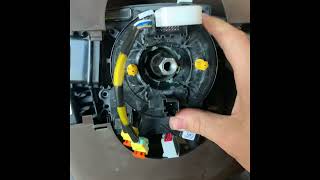
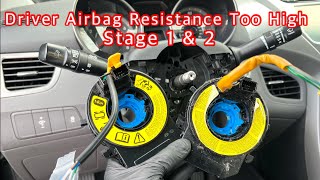
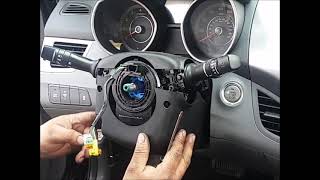
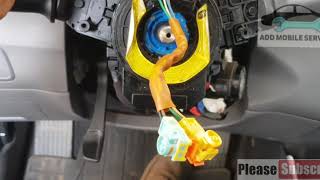
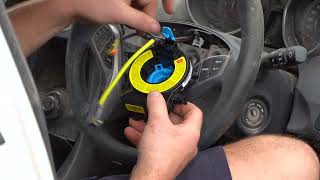
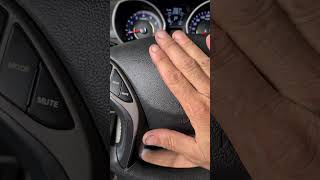
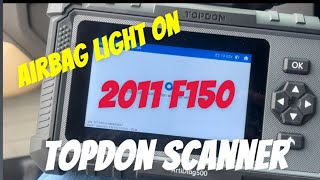
Shop the Parts Behind B0012
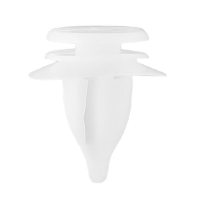
Below are the parts most often responsible for code B0012, ranked by how frequently each one is the actual culprit (per the diagnosis above). Tap any to see what we have for your vehicle.





The information in this article is provided for general reference and educational purposes only. Vehicle specifications, procedures, and part compatibility can vary by production date, trim level, and region. Always consult your vehicle's factory service manual and verify part numbers before purchasing or performing repairs. Safety-critical components such as airbags, seat belts, and braking systems should be installed by a qualified professional.
- 🧭 Diagnostic Flowchart
- 🎬 Helpful Videos
- 🛍️ Shop This Part
- What Does B0012 Mean?
- Can I Drive With B0012?
- Common Causes
- Symptoms
- Common Fixes & Costs
- DIY vs Professional
- Used vs. New Parts: Buying Guide
- What Happens If You Wait — Timeline
- Cost of Not Fixing It
- Diagnosis Steps
- When This Code Triggers (Freeze-Frame Conditions)
- Related Codes
- Climate & Environmental Factors
- How to Talk to a Mechanic About This Code
- Where to Take It: Dealer vs Independent vs Chain
- When to Walk Away From the Repair
- What Scan Tool You Need for This Code
- How to Clear the Code After You Fix It
- Will This Fail Emissions / State Inspection?
- Most Commonly Affected Vehicles
- Manufacturer-Specific Notes
- Real Owner Stories
- 2012 GMC Yukon with intermittent B0012-0D
- Chevrolet vehicle with B0012-04 (Open Circuit)
- 2006 Chevrolet Malibu with B0013 (similar to B0012)
- GM vehicle with intermittent B0012 and other SRS codes
- How to Prevent This Code From Triggering
- Frequently Asked Questions
- Can I just clear the B0012 code?
- What is an airbag deployment loop?
- My horn and radio buttons also stopped working. Is that related?
- What does B0012-0E (Resistance Below Threshold) mean?
- I replaced the clock spring, but the B0012 code came back. What's next?
- Can a weak or bad battery cause a B0012 code?
- Do I need to reprogram the SDM after fixing a B0012 fault?
- Is it safe to work on the airbag system myself?
- Will my car pass inspection with code B0012?
- Why are the airbag connectors always yellow?
- What are the most common misdiagnosis mistakes for B0012?
- Key Takeaways
- 🎟️ Get 5% Off