

OBD-II Code B0015: Driver Seatbelt Pretensioner Fault
The Ultimate Guide to B0015: What It Means, Why It Triggers, and How to Fix It for Good
What Does B0015 Mean?
Code B0015 means the airbag computer (Sensing and Diagnostic Module or SDM) detects a critical electrical fault in the driver's seatbelt pretensioner circuit. The pretensioner uses a small explosive charge to instantly tighten the seatbelt during a crash. This fault disables the entire airbag system as a non-negotiable safety precaution.
Technical definition: The SAE/ISO definition is 'Driver Seat Belt Retractor Pretensioner Deployment Loop' fault. The SDM sets this code when it detects resistance outside the specified range (typically <1.1 ohms or >3.9 ohms) for 120-500 milliseconds. A scan tool reading of 25.5 ohms confirms an open circuit.
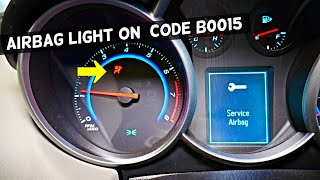
🎬 Watch: Diagnosing B0015 codes on GM, Chevy, and Buick vehicles.Can I Drive With B0015?
No — Do Not Drive. While the engine operates normally, this code disables your ENTIRE Supplemental Restraint System (SRS). In a collision, zero airbags and zero seatbelt pretensioners will deploy, drastically increasing the risk of severe injury or death. Fix this critical safety failure immediately.
Common Causes
- Loose Under-Seat Connector or Broken CPA Clip (Very Common) — The most frequent cause is a poor connection at the large yellow connector under the driver's seat. Constant seat movement stresses the wiring, or the small plastic Connector Position Assurance (CPA) clip breaks, preventing the plug from seating fully. This is documented in GM TSB #08-09-41-002H. 🎬 See how to fix a loose under-seat SRS connector.
- Damaged Under-Seat Wiring Harness (Common) — Wires in the harness under the seat stretch, chafe, or break from seat movement or items stored underneath. On models like the Chevy Equinox, the harness gets pinched by the seat frame.
- Previously Deployed/Locked Pretensioner (Common) — If the vehicle was in a collision, the pretensioner fired and locked the seatbelt. A deployed pretensioner is a one-time-use device causing a permanent high-resistance fault until replaced.
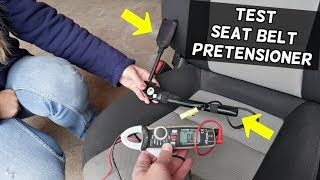
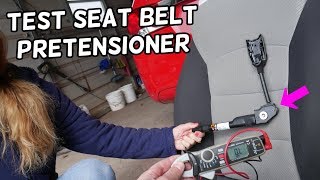
- Faulty Driver Seatbelt Pretensioner (Less Common) — The pretensioner unit itself fails internally. The internal resistance of its explosive squib falls out of the acceptable 1.1 to 3.9 ohm range. 🎬 Watch: How to safely test seat belt pretensioner resistance.
- Low System Voltage (Uncommon) — A weak battery causes a temporary voltage drop. The sensitive SDM registers this as a fault, requiring a manual code clear after replacing the battery.
- Electromagnetic Interference (EMI) (Rare) — Strong EMI from aftermarket devices like phone chargers plugged into 12V outlets interferes with SRS wiring. Unplugging all devices is a simple first check.
- Faulty Sensing and Diagnostic Module (SDM) (Very Rare) — The airbag control module is the least likely cause. Consider it faulty only after thoroughly testing all wiring, connectors, and the pretensioner.
Symptoms
- Airbag Warning Light On — The airbag warning light stays illuminated on the dashboard.
- Service Air Bag Message — The driver information center displays 'Service Air Bag' or 'Service Restraints System'.
- Locked Seatbelt — If caused by a past impact, the driver's seatbelt is locked and will not retract or extend.
- Failed Safety Inspection — The vehicle fails state safety inspections that check for an illuminated airbag light.
- Complete SRS System Deactivation (scan-tool only — no driver-felt sign) — The entire SRS system is offline. No airbags or pretensioners will deploy in a crash.
Diagnostic Flowchart
Tap your situation to follow the diagnostic path that matches what you're seeing on this code.
Common Fixes & Costs
- Reseat Under-Seat Connector and Replace CPA Clip — Parts: $5-$20, Labor: $120-$180 (diagnostic fee), ~1 hr book time (DIY)
- Repair Damaged Wiring or Replace Connector Pigtail — Parts: $25-$50, Labor: $150-$250, ~2 hr book time (Intermediate)
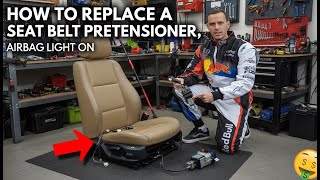
- Replace Driver's Seatbelt Assembly — Parts: $250-$400, Labor: $150-$250, ~1.5 hr book time (Professional)
- Mail-in Pretensioner Rebuild Service — Parts: $0, Labor: $60-$100, ~1.5 hr book time (Intermediate)
Used vs. New Parts: Buying Guide
When a used part is worth it: Never. Using a salvaged seatbelt pretensioner is extremely unsafe. You cannot verify if it suffered moisture damage or deployed previously.
Donor quality checklist:
- Do not purchase used SRS components from junkyards or online sellers.
- Used parts are frequently subject to open safety recalls.
- Counterfeit and stolen pretensioners flood the used market and provide zero crash protection.
Decision logic:
- If The seatbelt pretensioner has deployed or is electrically faulty. → Buy a new OEM part from a dealership or authorized reseller to guarantee safety.
- If A new OEM part is prohibitively expensive or unavailable. → Use a professional mail-in rebuild service that replaces the explosive charge and internal mechanisms.
Warranty tradeoff: Used parts offer no safety guarantee. New OEM parts carry manufacturer warranties. Professional rebuild services typically offer lifetime warranties.
Worst-case if a used part fails: N/A (Catastrophic safety failure). A faulty used part provides zero protection in a crash.
Cost of Not Fixing It
- Immediate: The entire SRS is disabled. Zero airbags or pretensioners will deploy in a crash. (Added cost: N/A (Safety Risk))
- Ongoing: Drastically increased risk of severe injury or death for all vehicle occupants. (Added cost: N/A (Safety Risk))
- Next State Inspection: Automatic safety inspection failure in states requiring it, preventing registration renewal. (Added cost: $20-$70 (Failed inspection fee))
- In an Accident: Increased civil liability if passengers are injured while you knowingly operate with a disabled safety system. (Added cost: Potentially thousands in legal fees)
Diagnosis Steps
- Read the Specific Fault Code and Suffix
Use an SRS-capable OBD-II scanner to confirm B0015. Note any suffix codes (e.g., B0015-04 for an open circuit, B0015-0D for high resistance) to pinpoint the electrical fault.
Tools: SRS-capable OBD-II Scan Tool (Beginner) - SAFETY SHUTDOWN: Disconnect Battery
CRITICAL SAFETY STEP: Disconnect the negative battery terminal and wait exactly 15 minutes. This discharges the system's backup power capacitors, preventing accidental explosive deployment while you work.
Tools: 10mm Wrench (Beginner) - Inspect and Reseat Main Airbag Connector
Locate the large yellow connector under the driver's seat. Unplug any aftermarket 12V chargers to rule out EMI. Inspect the plastic CPA clip for breakage. Unclip the CPA, disconnect the yellow plug, and check pins for corrosion. Apply dielectric grease, reconnect firmly until it clicks, and re-engage the CPA lock.
Tools: Flashlight, Dielectric Grease (Intermediate) - Clear Codes and Re-Test
Reconnect the battery. Use the SRS-capable scan tool to clear the trouble code. Start the car. If the code stays away, the loose connection was the problem. Secure the harness with a zip-tie to the seat frame.
Tools: SRS-capable OBD-II Scan Tool, Zip-Tie (Intermediate) - Perform Live Data Wiggle Test
If the code returns intermittently, monitor live data for 'Driver Pretensioner Deployment Loop Resistance'. Have a helper wiggle the under-seat harness. If resistance spikes to 25.5 ohms, you found the exact location of the intermittent connection.
Tools: Advanced SRS Scan Tool with Live Data (Advanced) - Isolate the Fault with a Simulator
If the code returns immediately, disconnect the battery, unplug the pretensioner, and connect a 2.2-3.3 ohm airbag simulator tool to the harness. Reconnect the battery and clear codes. If B0015 disappears, the pretensioner is faulty. If it returns, the wiring or SDM is faulty.
Tools: Airbag Load Tool/Simulator (Advanced) - Test Pretensioner Circuit Resistance
Observe the 'Driver Pretensioner Deployment Loop Resistance' PID. A healthy circuit reads 1.1 to 3.9 ohms. Readings above 3.9 ohms trigger B0015-0D (High Resistance). Readings of 25.5 ohms indicate an open circuit (B0015-04). NEVER use a standard multimeter to measure resistance on a live SRS component.
Tools: Advanced SRS Scan Tool with Live Data (Advanced)
When This Code Triggers (Freeze-Frame Conditions)
- Ignition Status: ON (The SDM runs a continuous self-test whenever the ignition is on.)
- System Voltage: 9-16 Volts (The SDM requires 9 to 16 volts to run diagnostics.)
- Fault Duration: 120-500 milliseconds (The electrical fault must persist for 120 to 500 milliseconds to trigger the code.)
- Resistance Reading: >3.9 ohms or <1.1 ohms (The SDM measures resistance outside the manufacturer's 1.1 to 3.9 ohm acceptable range.)
How to Talk to a Mechanic About This Code
Say this: "I have an airbag light on and my scanner shows code B0015 for the driver's seatbelt pretensioner. Can you please start by inspecting the yellow connector under the seat, its CPA clip, and the wiring harness before recommending a full pretensioner replacement?"
This directs the technician to the highest probability cause first, preventing them from immediately quoting an expensive seatbelt assembly replacement. It shows you expect a logical diagnostic process.
Avoid saying:
- My airbag light is on, can you fix it?
- I need a new seatbelt, my light is on.
- Just do whatever it takes to turn the light off.
Questions to ask before authorizing the repair:
- Did you inspect the under-seat connector and wiring first? What did you find?
- If recommending a new pretensioner, what was the resistance reading of the old one?
- Is this a wiring repair or a full component replacement?
- What is the warranty on this specific repair and the parts used?
Where to Take It: Dealer vs Independent vs Chain
- Dealer:
Recommended if your vehicle has a known recall or a complex electrical issue. A safe, but expensive, option.
Best for: Vehicles under warranty or with an open safety recall., Complex electrical issues requiring a factory-level scan tool to diagnose suffix codes.
Downsides: Highest labor rates and part costs., Often defaults to replacing the entire seatbelt assembly rather than repairing a simple connector. (Typical cost: +50% vs. baseline) - Independent Shop:
Best fit for most cases. An experienced independent mechanic easily diagnoses and fixes the common causes of B0015 at a lower cost.
Best for: Out-of-warranty vehicles where the cause is likely the common under-seat connector issue., Shops with verified electrical or SRS system expertise.
Downsides: Quality varies; ensure they have an SRS-capable scan tool. (Typical cost: +0% vs. baseline) - Chain Shop:
AVOID. Airbag system repair is a safety-critical task beyond the scope of chain shops.
Best for: Simple, unrelated services like oil changes or tires.
Downsides: Technicians lack specialized training for SRS systems., Not equipped or authorized to handle airbag system repairs. (Typical cost: -10% vs. baseline)
When to Walk Away From the Repair
If the total repair cost exceeds 50-60% of the vehicle's value, critically evaluate the expense. However, for a safety failure like B0015, the calculation changes.
- Car worth $4000, fix is $600: Fix it. The car is unsafe and fails safety inspections with this fault. The cost is necessary to have a usable vehicle.
- Car worth $12000, fix is $600: Fix it without question. This is a routine cost to maintain a critical safety system.
- Car worth $2500, fix is $1500: Walk away. A $1500 repair on a $2500 car is rarely economical unless you use a lower-cost mail-in rebuild service.
What Scan Tool You Need for This Code
Minimum: An OBD-II scanner that reads and clears Supplemental Restraint System (SRS) codes. A basic engine code reader WILL NOT WORK.
A $20 engine code reader cannot communicate with the airbag control module (SDM). It shows 'No Codes Found' even when the airbag light is on.
Budget: BlueDriver Bluetooth Pro (~$100) — Confirms the B0015 code and clears the SRS code after the repair is complete.
Mid-range: Autel ML629 / Foxwell NT630 Plus (~$150) — Provides dedicated access to SRS modules and shows live data for pretensioner circuit resistance, crucial for performing a 'wiggle test'.
Professional: Autel MaxiCOM MK808 / Launch CRP919E (~$500-700) — Offers full-system, bidirectional control and reads manufacturer-specific suffix codes (e.g., B0015-04) to pinpoint the exact electrical fault.
Rent vs buy: Auto parts stores do NOT rent SRS-capable scanners due to liability. Buy a budget pick like the BlueDriver or pay a shop's $120-$180 diagnostic fee.
How to Clear the Code After You Fix It
- Ensure all wiring is securely connected and the physical fault is repaired.
- Reconnect the negative battery terminal.
- Use an SRS-capable OBD-II scan tool to access the airbag control module.
- Select 'Clear DTCs' or 'Erase Codes' within the SRS module.
Drive cycle (~1 minutes): An SRS fault is not cleared by a drive cycle. After repair, manually erase the code with an SRS-compatible scan tool. The system self-test runs within seconds of turning the ignition on; if the light stays off, the repair succeeded.
Readiness monitors affected: None
Watch out for:
- Using a basic engine code reader that cannot communicate with the SRS module.
- Expecting the airbag light to turn off automatically; it is a 'hard code' requiring manual clearing.
- Attempting to clear the code before fixing the physical fault; it returns instantly.
Will This Fail Emissions / State Inspection?
No — by itself this code doesn't fail OBD inspection (but it can keep readiness monitors from setting, which causes a separate fail).
- California: Will NOT fail a smog check. The inspection is emissions-only.
- New York: Will NOT fail. An illuminated airbag light is an 'advisory', not grounds for failure.
- Texas: Will NOT fail. The airbag system is not a required inspection item.
- Virginia / Pennsylvania / Massachusetts: WILL fail. These states mandate comprehensive safety inspections; an airbag light is an automatic failure.
Helpful Videos
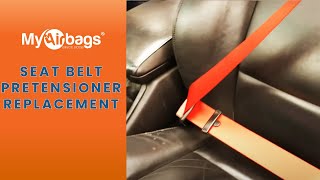
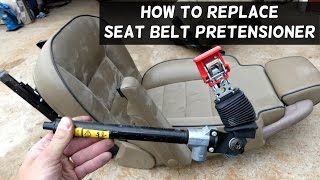
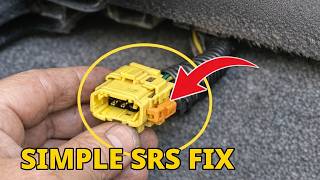

Shop the Parts Behind B0015
Below are the parts most often responsible for code B0015, ranked by how frequently each one is the actual culprit (per the diagnosis above). Tap any to see what we have for your vehicle.




The information in this article is provided for general reference and educational purposes only. Vehicle specifications, procedures, and part compatibility can vary by production date, trim level, and region. Always consult your vehicle's factory service manual and verify part numbers before purchasing or performing repairs. Safety-critical components such as airbags, seat belts, and braking systems should be installed by a qualified professional.
- 🧭 Diagnostic Flowchart
- 🎬 Helpful Videos
- 🛍️ Shop This Part
- What Does B0015 Mean?
- Can I Drive With B0015?
- Common Causes
- Symptoms
- Common Fixes & Costs
- Used vs. New Parts: Buying Guide
- Cost of Not Fixing It
- Diagnosis Steps
- When This Code Triggers (Freeze-Frame Conditions)
- How to Talk to a Mechanic About This Code
- Where to Take It: Dealer vs Independent vs Chain
- When to Walk Away From the Repair
- What Scan Tool You Need for This Code
- How to Clear the Code After You Fix It
- Will This Fail Emissions / State Inspection?
- 🎟️ Get 5% Off