

Ultimate Guide to OBD-II Code B0016: A Comprehensive Analysis
Why B0016 triggers, how to diagnose it like a pro, and the definitive fixes that work.
- Code B0016 indicates a critical fault that disables your vehicle's entire airbag system, meaning zero airbags will deploy in an accident.
- The number one cause on GM vehicles is a broken $10 plastic Connector Position Assurance (CPA) clip on a yellow airbag connector, not a failed airbag.
- Before touching any yellow SRS connectors, you must disconnect the negative battery terminal and wait exactly 15 minutes to prevent accidental, potentially fatal airbag deployment.
- A standard $20 OBD-II engine code reader cannot clear this fault; you must use a professional-level scan tool capable of communicating with the Sensing and Diagnostic Module (SDM).
What Does B0016 Mean?
B0016 is an OBD-II trouble code indicating that your vehicle's airbag computer, known as the Sensing and Diagnostic Module (SDM), detects an electrical fault within a specific airbag deployment loop. This fault means the circuit's electrical resistance is either too high, too low, or the circuit is open. When the SDM detects this anomaly for just 120 milliseconds, it triggers the airbag warning light and deactivates the entire SRS system to prevent accidental deployment.
Technical definition: The SAE/ISO definition for B0016 is a fault in a specific airbag deployment loop, indicating the circuit's resistance is outside the manufacturer's specified range (typically 1.1 to 3.9 ohms). The specific circuit associated with B0016 varies by make and model. The code is often appended with a two-digit symptom byte, such as -0D (Resistance Above Threshold >3.9Ω), -0E (Resistance Below Threshold <1.1Ω), or -04 (Open Circuit), which provides crucial diagnostic direction.
Can I Drive With B0016?
No, recommended While the vehicle remains mechanically operational, driving with code B0016 is strongly discouraged. This code signifies that the entire Supplemental Restraint System (SRS) is disabled as a fail-safe. In the event of a collision, NONE of the airbags—including driver, passenger, side, and curtain—deploy, and seat belt pretensioners do not activate. This dramatically increases the risk of serious or fatal injury for all occupants.
Common Causes
- Loose, Damaged, or Missing Connector Position Assurance (CPA) Retainer (Very Common) — This is the single most frequent cause, especially on General Motors vehicles from 2005-2014. The CPA is a small plastic clip that ensures the main yellow airbag connector is fully locked. Heat cycles and vibration cause it to become brittle and break, leading to a loose connection and a high-resistance fault.
- Damaged Wiring or Connector Under Front Seat (Common) — The wiring harness under the driver or passenger seat is highly susceptible to damage from seat movement, items stored on the floor, or carpet snagging the harness. This strains wires, dislodges the connector, or damages pins.
- Fretting Corrosion on Connector Terminals (Common) — The terminals within SIR connectors are often gold-plated for low-resistance conductivity. Micro-vibrations wear away this plating, leading to a type of corrosion known as fretting. This creates an insulating oxide layer, increasing resistance and triggering codes like B0016-0D.
- Faulty Connector Shorting Bars (Less Common) — Airbag connectors have internal shorting bars that automatically short the circuit when unplugged as a safety feature. If a connector is not fully seated or its CPA clip is broken, these bars fail to fully disengage, causing a low resistance or shorted circuit fault (typically B0016-0E).
- Pinched or Chafed Wiring Harness (Less Common) — Airbag wiring runs throughout the vehicle's chassis, including along rooflines and inside A/B/C pillars. A wire gets pinched during previous repairs or chafes against a metal edge over time, eventually causing an open or short in the circuit.
- Water Intrusion and Corrosion (Less Common) — Moisture from a leaking windshield, sunroof, or saturated carpets enters airbag connectors or modules, causing terminal corrosion and electrical faults.
- Damage from Previous Improper Repairs (Rare) — Technicians unfamiliar with SIR systems damage the delicate connectors or terminals during diagnosis. Using standard test probes spreads the female terminals, creating a permanent poor connection.
- Faulty Airbag Component (e.g., Airbag Module, Pretensioner) (Rare) — While the code points to a circuit issue, the internal wiring of the airbag inflator or seat belt pretensioner fails occasionally. This is far less common than a wiring or connector problem and is only suspected after the external circuit is confirmed intact.
- Faulty Sensing and Diagnostic Module (SDM) (Very Rare) — It is exceptionally rare for the airbag control module (SDM) to fail in a way that generates a single circuit code like B0016. Module failure typically results in multiple codes or a complete loss of communication.
Symptoms
- Airbag Warning Light On — The primary and most obvious symptom is the illumination of the red airbag, SRS, or SIR warning light on the instrument cluster.
- "Service Air Bag" Message — Many vehicles display a text-based "Service Air Bag" or similar warning on the Driver Information Center (DIC), often in conjunction with the warning light.
- Intermittent Airbag Light — In the early stages of a connector failure, the airbag light turns on and off as the vehicle goes over bumps or as the seat is adjusted. This indicates a marginal connection that eventually becomes a permanent fault.
- Airbag System Completely Disabled (scan-tool only — no driver-felt sign) — Though not visible, this is the most critical symptom. The presence of a hard fault like B0016 causes the SDM to disable the entire system, meaning no airbags or pretensioners function in a crash.
- Seat Belt Pretensioner Inoperative (scan-tool only — no driver-felt sign) — If the B0016 code on your specific vehicle points to a seat belt pretensioner circuit, that pretensioner fails to tighten the belt in a collision. 🎬 Watch: How to test and replace a seat belt pretensioner.
Diagnostic Flowchart
Tap your situation to follow the diagnostic path that matches what you're seeing on this code.
Common Fixes & Costs
- Replace Connector Position Assurance (CPA) Retainer
— Parts: $5-$20, Labor: $100-$200 (parts+labor), ~1.0 hr book time
(DIY)
General Motors (Most affected models): OEM - Reseat, Clean, and Secure Airbag Connector — Parts: $0-$25 (for lubricant), Labor: $100-$200 (parts+labor), ~1.0 hr book time (Intermediate)
- Replace Airbag Wiring Harness Pigtail
— Parts: $30-$80, Labor: $200-$400 (parts+labor), ~2.0 hr book time
(Professional)
Chevy Tahoe / GMC Yukon (2007-2014): OEM
Chevy Tahoe / GMC Yukon (2007-2014): OEM
Chevy Corvette C6 (2005-2013): OEM - Solder Wires to Bypass Connector — Parts: $5, Labor: $200-$400 (parts+labor), ~2.0 hr book time (Professional)
- Replace Airbag Module (Curtain, Seat, etc.) — Parts: $400-$800, Labor: $550-$1100 (parts+labor), ~1.8 hr book time (Professional)
Used vs. New Parts: Buying Guide
When a used part is worth it: For B0016, the most common parts are connectors, pigtails, and CPA clips. Used connectors/pigtails from a reputable auto recycler are acceptable if in good condition. Buying a used airbag module is highly discouraged due to safety, legal, and compatibility issues. Many jurisdictions and sales platforms prohibit the sale of used airbags by uncertified sellers.
Donor-vehicle mileage cap: roughly under 100000 miles for the part to have meaningful remaining life.
Donor quality checklist:
- For connectors, ensure there is no corrosion, the plastic isn't brittle, and the locking tabs are intact.
- Verify the donor vehicle was not involved in a flood or fire, as moisture damages airbag components internally.
- Match part numbers exactly for any electronic component, including the airbag module itself. A used module requires VIN programming by a professional to function.
Decision logic:
- If The required part is a CPA clip or connector pigtail → New is strongly preferred as it is inexpensive and guarantees integrity. A used pigtail is a viable second option if new is unavailable.
- If The fault is diagnosed as the airbag module itself (rare) → Buy a new OEM part. A used airbag is a significant safety risk and is often illegal to install. Its history is unknown, and it may have been exposed to conditions that compromise its function.
- If The fault is the Sensing and Diagnostic Module (SDM) → Sending your original module for a reset service is more cost-effective than buying a new one, as it avoids reprogramming issues. A used SDM requires professional reprogramming.
Warranty tradeoff: Used connectors/pigtails typically have a 30-90 day warranty. New aftermarket parts carry a 1-year to limited lifetime warranty. New OEM parts have a 1-2 year warranty. Used airbags have no reliable warranty and are a safety gamble.
Worst-case if a used part fails: $500-1500 if a used airbag module or faulty used connector is installed. This includes repeat labor costs and the price of purchasing the correct new part after the used one fails to resolve the issue.
What Happens If You Wait — Timeline
- Immediately (0 seconds): The SDM detects the resistance fault for 120ms, the airbag warning light illuminates, and the entire SRS system is disabled as a fail-safe. There is no physical degradation yet. (MPG impact: 0%% · Added cost: $0 (The immediate cost is a critical loss of safety, not monetary).)
- 1 week - 3 months: The fault remains active. If the cause is an intermittent loose connection, continued vibration and temperature cycles lead to fretting corrosion on the connector terminals, making the connection progressively worse. The vehicle fails a mandatory state safety inspection. (MPG impact: 0%% · Added cost: $50-$200 (Potential fines, failed inspection fees, or cost of initial diagnostic visit).)
- 3 - 12 months: A simple loose connection degrades into a physically damaged one. The constant movement breaks a wire at the connector pin or damages the connector housing itself. What started as a no-parts fix now requires a new pigtail connector and splicing. (MPG impact: 0%% · Added cost: $250-$500 (Repair cost escalates from a simple labor charge to include parts like a harness pigtail and the additional labor for splicing wires).)
- 12+ months / In an accident: The ultimate cost is realized. The vehicle is involved in a collision, and as promised by the warning light, no airbags deploy and no pretensioners activate, leading to a drastically increased risk of serious injury or death. Alternatively, the fault becomes so difficult to trace that a mechanic shotgun-replaces expensive parts, costing thousands. (MPG impact: 0%% · Added cost: The incalculable cost of injury, or $1000-$2500+ in unnecessary parts (new airbag, clock spring, SDM) and repeated diagnostic labor.)
Cost of Not Fixing It
- Immediately: The entire Supplemental Restraint System (SRS) is disabled. No airbags deploy and seatbelt pretensioners do not activate in a collision. (Added cost: The cost is a dramatically increased risk of serious or fatal injury to all vehicle occupants in an accident.)
- Ongoing: Failure to pass mandatory state safety inspections in many jurisdictions, preventing legal vehicle registration and operation. (Added cost: Potential fines for driving an uninspected vehicle and the inability to legally sell the car.)
- Long-term: An intermittent connection issue worsens over time due to vibration and corrosion, making the eventual diagnosis more difficult. What started as a simple loose connector becomes a damaged wiring harness. (Added cost: A simple fix costing $100-$200 escalates into a more complex wiring repair costing $400+.)
Diagnosis Steps
- CRITICAL SAFETY WARNING: Disable the Airbag System
Before any physical inspection, you MUST disable the SRS system. Disconnect the negative battery terminal and wait exactly 15 minutes. This allows the backup power capacitors within the SDM to fully discharge. Failure to wait causes accidental airbag deployment, resulting in severe injury or death.
Tools: 10mm wrench or socket (Beginner) - Scan for Codes and Symptom Bytes
Use a professional-grade scan tool capable of reading the SRS/SDM module. A standard engine code reader does not work. Confirm B0016 is active and record the two-digit symptom byte (e.g., -04, -0D, -0E). This byte tells you if the fault is an open circuit (>3.9Ω), high resistance (>3.9Ω), or low resistance (<1.1Ω), which is vital for diagnosis.
Tools: SRS-capable scan tool (e.g., GM Tech 2, GDS2, Autel MK808) (Intermediate) - Visually Inspect Common Failure Points
Based on your vehicle model, inspect the most likely connector. For many GM cars and SUVs, this is the large yellow connector under the driver's or passenger's seat. For C6 Corvettes, it is the passenger side. For GMT900 trucks/SUVs, it is often the A-pillar connector for the roof rail bag. Look for obvious damage, check if it is loose, and meticulously inspect the small plastic CPA clip to see if it is broken, missing, or not fully seated.
Tools: Flashlight (Beginner) - Inspect Connector Terminals and Apply Lubricant
With the system disabled, carefully disconnect the suspect connector. Examine the male and female pins for any signs of corrosion (white or green powder), moisture, or pins that have backed out. Look for spread terminals. Apply a small amount of Nyogel 760G lubricant to the terminals to prevent future fretting corrosion before reconnecting.
Tools: Trim removal tools, Nyogel 760G dielectric grease (Intermediate) - Perform a 'Wiggle Test' with Live Data
If the fault is intermittent, reconnect the battery (staying clear of all airbags) and use your scan tool to monitor the live resistance of the specific deployment loop. The value must be stable between 1.1 and 3.9 ohms. While observing the reading, carefully wiggle the wiring harness and connector associated with the code. A spike or drop in the resistance value when you move a certain area pinpoints the location of the fault.
Tools: SRS-capable scan tool (Professional) - Measure Circuit Resistance (Component Disconnected)
With the system disabled and the component (e.g., airbag) and SDM disconnected, use a high-impedance multimeter to check the circuit wiring. A normal deployment loop has a specific resistance, often between 1.1 and 3.9 ohms (this value includes the special resistor tool needed to substitute the airbag for testing). A reading of 'OL' indicates an open circuit (broken wire), while a reading near zero ohms indicates a short between the two wires. WARNING: NEVER probe an airbag module or inflator directly with a multimeter; this triggers deployment.
Tools: High-impedance multimeter, Airbag simulator resistor, Wiring diagram (Professional) - Isolate the Fault with an Airbag Simulator
To determine if the fault is in the wiring or the airbag component itself, disconnect the component and plug an airbag simulator resistor into the vehicle-side harness connector. A 2.2 ohm resistor is a common value for GM vehicles. Reconnect the battery, clear the codes, and cycle the ignition. If the B0016 code does not return, the wiring is good and the airbag component is faulty. If the code returns, the fault is in the wiring between the connector and the SDM.
Tools: Airbag simulator resistor (e.g., 2.2Ω), SRS-capable scan tool (Advanced) - Repair the Circuit
If a broken CPA is found, replace it (GM P/N 88988974 is common). If a terminal is damaged, use an approved SIR terminal repair kit to replace it. For the C6 Corvette, the official permanent fix is to remove the problematic connector and solder the wires directly. Secure the repaired harness away from any moving parts with zip ties.
Tools: Wire strippers, soldering iron, heat shrink, or new CPA clip (Professional) - Clear Codes and Verify Repair
After all components are reconnected and the battery is hooked up, use the SRS-capable scan tool to clear the B0016 code from the SDM. Cycle the ignition off and on. If the airbag light remains off after several cycles, the repair is successful. The light does NOT go off by itself even if the fault is fixed.
Tools: SRS-capable scan tool (Beginner)
When This Code Triggers (Freeze-Frame Conditions)
- Ignition Voltage: 9-16 Volts (The code is set when ignition voltage is within the normal operating range.)
- Fault Detection Time: 120 milliseconds (The SDM continuously monitors resistance. If the resistance is out of the 1.1-3.9 ohm range for just 120ms, the code is set.)
- Physical Trigger: N/A (The fault often occurs at key-on during the initial system self-check or when a loose connector is disturbed by vehicle vibration, seat movement, or temperature changes.)
- System Status: Active (The code is set whenever the Sensing and Diagnostic Module (SDM) is powered on and detects the resistance anomaly.)
Related Codes
- B0015 — A sister code to B0016. On many GM vehicles, B0015 points specifically to the Driver Seat Belt Pretensioner circuit. The root cause (bad CPA/connector) is identical, just in a different location.
- B0022 / B0023 — These codes relate to other airbag circuits, with B0022 often corresponding to the Passenger Seat Belt Pretensioner and B0023 to the Right Roof Rail Airbag. Seeing these alongside B0016 strongly suggests a systemic CPA retainer failure issue rather than multiple simultaneous component failures.
- B0012, B0013, B0019, B0020 — This is a family of airbag deployment loop codes for driver-side and passenger-side circuits. All are covered by GM TSB #08-09-41-002H and share the same likely cause: a faulty connector or CPA retainer.
- B0026, B0033, B0040, B0042, B0044 — This is a further extension of the deployment loop fault code family. Their appearance, individually or together, points to the same common connector integrity issues outlined in TSB #08-09-41-002H, making a wiring inspection the primary diagnostic step.
Climate & Environmental Factors
- Temperature Cycles (Hot/Cold): Repeated expansion and contraction of plastic components, particularly the Connector Position Assurance (CPA) clips, causes them to become brittle and fail over time. This is a primary contributor to the widespread CPA failure on GM vehicles.
- Humidity / Moisture: High humidity or direct water intrusion (from leaks or spills) accelerates fretting corrosion on the gold-plated connector terminals. Once a connection becomes loose due to a broken CPA, moisture easily penetrates the connector, leading to high resistance faults (B0016-0D).
- Vibration: Normal vehicle vibration contributes to micro-movements (fretting) at the connector terminals. Over thousands of miles, this wears away the conductive plating, leading to oxidation and increased resistance. A securely locked connector with an intact CPA minimizes this effect.
How to Talk to a Mechanic About This Code
Say this: "I have an airbag light on and my scanner shows code B0016. I know this code is often caused by a simple connector issue, like a broken CPA clip or fretting corrosion, as noted in GM's technical service bulletins. I want to book a diagnostic appointment to have you inspect the specific circuit connector before quoting any major part replacements."
This signals you are an informed customer. It directs the technician to the most common, low-cost failure point first and prevents them from immediately quoting an expensive airbag or control module replacement. It establishes a logical diagnostic path and sets expectations for a cost-effective initial inspection.
Avoid saying:
- 'My airbag light is on, can you fix it?' (This is too vague and invites a high quote for the worst-case scenario.)
- 'I think I need a new airbag.' (Never diagnose the part yourself; you anchor them to an expensive and incorrect repair.)
- 'Just do whatever it takes to turn the light off.' (This gives the shop a blank check to replace parts without proper diagnosis.)
Questions to ask before authorizing the repair:
- Did you find the specific cause of the out-of-range resistance? Was it a broken CPA clip, corrosion, or a damaged wire?
- If you are recommending an airbag module replacement, can you show me the test results that prove the wiring and connectors are good?
- What is the part number for the component you are replacing?
- What is the warranty on both the parts and the labor for this specific repair?
Where to Take It: Dealer vs Independent vs Chain
- Dealer:
A safe but expensive choice. Best if you suspect the issue is more than a simple connector or if the vehicle is covered by a specific GM program.
Best for: Vehicles still under a special coverage program for this issue (like the C6 Corvette)., Complex cases where the initial connector inspection doesn't solve the problem., Owners who prioritize peace of mind and are less sensitive to cost.
Downsides: Highest labor rates., Less willing to perform simpler, non-standard repairs like soldering wires (unless specified by a TSB). (Typical cost: +50% vs. baseline) - Independent Shop:
Best fit for most situations. An experienced independent mechanic is likely familiar with the TSBs for this common code and efficiently checks the connectors, providing the best value.
Best for: Most B0016 cases, especially on out-of-warranty GM vehicles., Cost-conscious owners who want a reliable repair.
Downsides: Quality and experience with SRS systems vary greatly. Vet the shop first., Ensure they have a scan tool capable of reading and clearing SRS codes. (Typical cost: +0% vs. baseline) - Chain Shop:
AVOID. Airbag system repair is a safety-critical task that requires specific expertise beyond what is typically found at chain shops that focus on brakes, tires, and oil changes.
Best for: Not recommended for airbag system diagnostics.
Downsides: Technicians lack the specialized training for SRS systems., High pressure to sell parts leads to misdiagnosis and unnecessary replacement of expensive components., Often lack the appropriate SRS-capable scan tools. (Typical cost: -10% vs. baseline)
When to Walk Away From the Repair
If the total estimated repair cost for the B0016 code exceeds 50% of your car's current private-party value (according to Kelley Blue Book), you should seriously consider selling the car as-is or trading it in rather than repairing it.
- Car worth $4000, fix is $2200: Walk away. A $2,200 repair is 55% of the car's value. It is not a sound investment.
- Car worth $12000, fix is $350: Fix it. A $350 repair for a common connector issue is only 3% of the car's value and restores a critical safety feature.
- Car worth $2500, fix is $1100: Borderline. The $1,100 fix (e.g., a new airbag module) is 44% of the value. Get a second opinion to confirm a cheaper wiring fix isn't possible before proceeding.
What Scan Tool You Need for This Code
Minimum: A scan tool that reads and clears codes from the SRS (Supplemental Restraint System) / Airbag module. A basic engine-only (powertrain) code reader does NOT work for this code.
A $20 code reader cannot communicate with the airbag control module. It does not see the B0016 code, nor does it clear the code after the repair is made. The airbag light remains on until cleared with a capable scanner.
Budget: Autel AutoLink AL619 or BlueDriver Pro (~$70-120) — Both read and clear SRS/Airbag codes on most major vehicle brands. They confirm the B0016 code and, most importantly, clear it after you fix the physical fault, turning the light off.
Mid-range: Foxwell NT510 Elite (~$150-250) — In addition to reading/clearing SRS codes, this tool offers bi-directional control and views live sensor data. For B0016, this allows you to perform a 'wiggle test' while graphing the deployment loop resistance in real-time to pinpoint the exact location of a bad connection.
Professional: Autel MaxiCOM MK808 / MaxiDiag MD802 (~$450-800) — Provides full, dealership-level diagnostics for all vehicle modules. It offers comprehensive live data, bi-directional controls, and access to manufacturer-specific symptom bytes (like -0D or -0E) that are crucial for professional diagnosis.
Rent vs buy: Most auto parts stores (like AutoZone) do NOT rent out scanners capable of clearing SRS codes due to liability. If you plan to do this repair yourself, you must buy a capable scanner.
How to Clear the Code After You Fix It
- Ensure the physical fault (e.g., loose connector, broken wire) has been properly repaired.
- Reconnect the negative battery terminal.
- Use an SRS/airbag-capable OBD-II scan tool to connect to the Sensing and Diagnostic Module (SDM).
- Select the function to 'Clear DTCs' or 'Erase Codes'.
- Cycle the ignition off, then on, and confirm the airbag warning light turns off after the initial self-check.
Drive cycle: No specific drive cycle is required for an SRS code. The airbag light turns off immediately after the code is cleared with a proper scan tool, provided the underlying fault has been fixed. If the fault persists, the light reappears instantly on the next key cycle.
Watch out for:
- Using a basic engine code reader, which cannot communicate with the airbag (SRS/SDM) module.
- Thinking the light goes off on its own after fixing the problem. It must be manually cleared.
- Disconnecting the battery does not clear the hard fault code from the SDM's memory.
- A history DTC clears itself after 100 fault-free ignition cycles, but an active fault does not.
Will This Fail Emissions / State Inspection?
No — by itself this code doesn't fail OBD inspection (but it can keep readiness monitors from setting, which causes a separate fail).
- California: An airbag light does NOT cause a failure of the emissions-focused smog check. The test is concerned with powertrain codes (P-codes), not body codes (B-codes).
- New York: An illuminated airbag warning light is an automatic failure of the annual safety inspection. You cannot legally operate the vehicle until it is repaired.
- Texas: Officially, the airbag system is not a required inspection item. However, individual inspection stations refuse to pass a vehicle with any warning light on as a safety precaution. It is inconsistent, but a failure is possible.
Most Commonly Affected Vehicles
- Chevrolet Tahoe / Suburban / Avalanche (2007-2014) — Extremely common for B0016-0D, pointing to the 'Left Roof Rail Initiator 1 Deployment Loop'. The cause is almost always the CPA retainer on the connector behind the driver-side A-pillar trim, as documented in GM TSB #08-09-41-002H.
- GMC Yukon / Acadia (2007-2014) — Shares the GMT900/Lambda platform issues. B0016 is typically for the roof rail airbag, but any airbag circuit is affected by the failing CPA retainers under seats or behind trim panels.
- Chevrolet Corvette (C6) (2005-2013) — A notorious design flaw where the under-seat harness for the passenger airbag snags on the carpet during seat movement, pulling the connector apart. Covered by GM Special Coverage Adjustment 15643/15643A, which specifies replacing the connector with a soldered connection.
- Chevrolet Express / GMC Savana (2008-2012) — On these vans, B0016 specifically points to the 'Right Front Seat Side Air Bag Deployment Loop'. The fault is commonly a faulty CPA retainer on the connector under the passenger seat, per TSB #08-09-41-002H.
- GMC Envoy / Chevrolet Trailblazer (2005-2009) — On this GMT360 platform, B0016 often relates to the passenger seat belt pretensioner circuit. The cause is the well-documented CPA retainer failure on the yellow connector under the passenger seat.
- Chevrolet Malibu (2006-2013) — Prone to under-seat connector issues causing high resistance in the passenger-side airbag deployment loop. The fix is almost always securing the connection with a new CPA retainer per TSB #08-09-41-002H.
- Saab 9-7X (2005-2009) — Being a GMT360 platform vehicle, it is highly susceptible to code B0016 caused by faulty CPA retainers on airbag connectors, as covered by TSB #08-09-41-002H.
- Nissan Altima / Maxima (2013-2018) — While not a GM vehicle, many owners report identical symptoms and fixes. The airbag light is often triggered by a loose or dirty connector under the front passenger seat, especially if items are stored there or the seat is moved frequently.
- Subaru Outback / Forester (2009-2014) — These models present airbag lights due to similar faults, such as a 'belt tension sensor failure.' The diagnostic principle is the same: check connectors and wiring integrity under the seat before condemning an expensive sensor.
Manufacturer-Specific Notes
- General Motors (Chevrolet, GMC, Cadillac, Buick, Saab, etc.): GM TSB #08-09-41-002H is the definitive document for this issue. It covers dozens of models from 2005-2014 and explicitly names faulty Connector Position Assurance (CPA) retainers as the primary cause for a wide range of intermittent airbag codes, including B0016. This is a service bulletin, not a recall, intended to guide technicians to the common cause.
- Chevrolet (Corvette C6): GM issued Special Coverage Adjustment 15643 (later updated to 15643A) specifically for the C6 Corvette. It acknowledges the under-seat connector gets pulled apart by the carpet. This program extended the warranty for this specific issue to 10 years or 120,000 miles. The official dealer fix is not to replace the connector, but to remove it entirely and solder the wires, creating a permanent, robust connection.
- General Motors (All): The terminals in GM's SIR (airbag) circuits are gold-plated to ensure low resistance. Using standard test probes damages them. Technicians recommend applying Nyogel 760G lubricant to connector terminals during reassembly to prevent fretting corrosion, a common cause of high-resistance faults.
- Nissan / Subaru: Though not covered by GM bulletins, many Nissan and Subaru models exhibit the exact same problem: an airbag light caused by a loose or contaminated connector under one of the front seats. The diagnostic and repair philosophy is identical—check the simple, cheap connection before suspecting an expensive component.
Real Owner Stories
2008 Chevy Trailblazer at 115K miles - The Classic CPA Fix
The airbag light came on and stayed on. A local auto parts store scanned it for free but their tool lacked SRS capabilities. The owner bought a more advanced scanner and found code B0016-0D, pointing to the passenger seat belt pretensioner.
What they tried:
- After researching online forums, the owner learned about the common CPA clip failure on the GMT360 platform.
- With the battery disconnected, they checked the yellow connector under the passenger seat and found the small plastic CPA retainer was broken.
- They ordered a new CPA clip (GM P/N 88988974) online for under $10.
Outcome: Installed the new CPA clip, ensuring the connector was tightly seated. Cleared the code with their scan tool, and the airbag light stayed off. Total cost was under $10 for the part, plus the cost of the scanner.
Lesson: For GM vehicles of this era, a B0016 code is very frequently a cheap and simple connector issue. Always check for a broken CPA clip before assuming a more expensive part has failed.
2007 C6 Corvette at 75K miles - The Infamous Seat Harness
Airbag light came on intermittently, especially after the passenger seat was adjusted. Eventually, the light stayed on permanently. A forum search immediately pointed to the under-seat connector.
What they tried:
- Initially, the owner reached under the passenger seat and wiggled the large yellow connector, which made the light go off temporarily, confirming the location of the fault.
- They tried securing the connector with zip-ties, which worked for a few months before the light returned.
- The owner learned about GM's Special Coverage Adjustment 15643, which covered this exact issue for 10 years/120,000 miles.
Outcome: Even though their car was over 10 years old, they took it to a dealer who was familiar with the issue. The dealer performed the official fix of removing the connector and soldering the wires for a permanent solution. The cost was approximately $400 in labor.
Lesson: On a C6 Corvette, the B0016 code is almost guaranteed to be the under-seat connector. While a zip-tie is a temporary fix, the permanent solution is to eliminate the connector by soldering the wires as per GM's own special coverage program.
2013 GMC Acadia - A Costly Misdiagnosis
The 'Service Air Bag' message appeared on the dash. The light was intermittent at first, then became constant. The owner took it to a dealership for repair.
What they tried:
- The first dealer charged for 'cleaning contacts,' but the light returned. A second dealer replaced an airbag module, costing over $800. The light came back on within a week.
- Frustrated and having spent over $1,500, the owner found forum posts describing similar issues with under-seat connectors on the Acadia platform.
Outcome: The owner, with the battery disconnected, systematically unplugged and replugged the various yellow connectors under both front seats. After reconnecting one specific plug under the driver's seat, the fault cleared and did not return. The expensive professional repairs failed to fix what was ultimately a simple loose connection.
Lesson: Do not automatically trust that a professional has correctly diagnosed the issue. The most common cause of B0016 is a simple connection problem. Insist that the technician inspects and verifies the integrity of the connectors (especially the CPA clips) before authorizing the replacement of expensive modules.
2007 Chevy Avalanche - The Water Leak Cause
Airbag light for B0016-0D (Left Roof Rail Initiator) appeared a few weeks after noticing the driver's side floor was damp after heavy rain.
What they tried:
- Based on the code, the owner knew the issue was with the driver's side curtain airbag. Recalling the water leak, they suspected a connection.
- They removed the driver's side A-pillar trim and located the yellow airbag connector. Upon disconnecting it, they found clear signs of moisture and green corrosion on the pins.
Outcome: The owner cleaned the connector terminals carefully with an electrical contact cleaner and a small brush. After letting it dry completely, they applied a small amount of dielectric grease to the terminals and reconnected it securely. After clearing the code, the light remained off. The root cause was a leaking windshield seal that allowed water to drip onto the airbag connector.
Lesson: If the code's appearance coincides with rain or signs of water intrusion, inspect the related connectors for moisture and corrosion before doing anything else. An electrical fault is often a symptom of a water leak.
How to Prevent This Code From Triggering
- Be Mindful of Under-Seat Area (Ongoing) — Avoid storing items under the front seats that snag, dislodge, or damage the sensitive airbag wiring and connectors during seat adjustment.
- Proactively Secure Connectors (Once per vehicle) — On vehicles known for CPA failures (like many 2005-2014 GM models), proactively securing the main under-seat connectors with a high-quality zip-tie prevents them from vibrating loose, even if the CPA clip eventually breaks.
- Apply Protective Lubricant to Connectors (During any related service) — If you ever have a reason to disconnect an airbag connector, apply a small amount of a specified electrical connector lubricant like Nyogel 760G. This seals the terminals from moisture and prevents micro-vibrations (fretting) from causing high-resistance faults.
- Address All Water Leaks Immediately (As needed) — Promptly repair leaking windshield seals, sunroof drains, or door seals. This prevents moisture from reaching airbag modules or connectors located in pillars and under carpets, which leads to terminal corrosion and codes like B0016.
- Use Care During Interior Cleaning (Every cleaning) — Avoid aggressively using vacuum cleaner nozzles under seats and prevent excessive moisture from carpet cleaners from soaking the connectors.
Frequently Asked Questions
Will my airbags still work with code B0016?
No. As a safety precaution, the Sensing and Diagnostic Module (SDM) disables the entire airbag system when a fault like B0016 is detected. No airbags deploy and no seatbelt pretensioners activate in a crash until the fault is repaired and the code is cleared.
What are the symptom bytes like -0D, -0E, and -04?
These two-digit suffixes specify the fault type. '0D' means high resistance (>3.9 ohms), '0E' means low resistance (<1.1 ohms), and '04' means an open circuit. This information is critical for an accurate diagnosis.
What is a CPA clip and why does it fail?
A Connector Position Assurance (CPA) clip is a secondary locking device that prevents critical electrical connectors from vibrating loose. After years of heat cycles, these plastic clips become brittle and break, causing a loose connection. Replacing a broken CPA clip often resolves the B0016 code.
I fixed the connector, but the airbag light is still on. Why?
The airbag system does not automatically reset the warning light after a repair. B0016 is a 'hard fault' latched in the SDM's memory. You must manually clear the code using an SRS-compatible scan tool.
Is it safe for me to work on my own airbag system?
Working on the SRS system is extremely dangerous without proper precautions. You must disconnect the battery and wait 15 minutes for backup power to discharge before handling any yellow airbag connectors. If you are not 100% confident, leave this repair to a professional.
What is the most common misdiagnosis for B0016?
The biggest and most expensive mistake is immediately replacing the airbag module, clock spring, or SDM. The fault is almost always in the wiring or connectors. A thorough inspection of the circuit and connectors usually reveals a simple fix like a $10 CPA clip or a loose plug.
Can I just use a zip-tie to hold the connector together?
Many DIYers successfully use a zip-tie as a last resort to secure a connector when the CPA clip has failed and a replacement isn't readily available. While it works by holding the connector tightly, the correct and recommended repair is to use the proper CPA retainer (like GM P/N 88988974) to ensure correct terminal alignment and locking force.
Key Takeaways
- Code B0016 indicates a critical fault that disables your vehicle's entire airbag system, meaning zero airbags will deploy in an accident.
- The number one cause on GM vehicles is a broken $10 plastic Connector Position Assurance (CPA) clip on a yellow airbag connector, not a failed airbag.
- Before touching any yellow SRS connectors, you must disconnect the negative battery terminal and wait exactly 15 minutes to prevent accidental, potentially fatal airbag deployment.
- A standard $20 OBD-II engine code reader cannot clear this fault; you must use a professional-level scan tool capable of communicating with the Sensing and Diagnostic Module (SDM).
Helpful Videos

Shop the Parts Behind B0016
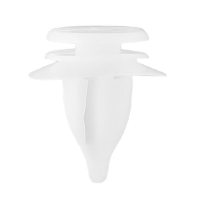
Below are the parts most often responsible for code B0016, ranked by how frequently each one is the actual culprit (per the diagnosis above). Tap any to see what we have for your vehicle.



The information in this article is provided for general reference and educational purposes only. Vehicle specifications, procedures, and part compatibility can vary by production date, trim level, and region. Always consult your vehicle's factory service manual and verify part numbers before purchasing or performing repairs. Safety-critical components such as airbags, seat belts, and braking systems should be installed by a qualified professional.
- 🧭 Diagnostic Flowchart
- 🎬 Helpful Videos
- 🛍️ Shop This Part
- What Does B0016 Mean?
- Can I Drive With B0016?
- Common Causes
- Symptoms
- Common Fixes & Costs
- Used vs. New Parts: Buying Guide
- What Happens If You Wait — Timeline
- Cost of Not Fixing It
- Diagnosis Steps
- When This Code Triggers (Freeze-Frame Conditions)
- Related Codes
- Climate & Environmental Factors
- How to Talk to a Mechanic About This Code
- Where to Take It: Dealer vs Independent vs Chain
- When to Walk Away From the Repair
- What Scan Tool You Need for This Code
- How to Clear the Code After You Fix It
- Will This Fail Emissions / State Inspection?
- Most Commonly Affected Vehicles
- Manufacturer-Specific Notes
- Real Owner Stories
- 2008 Chevy Trailblazer at 115K miles - The Classic CPA Fix
- 2007 C6 Corvette at 75K miles - The Infamous Seat Harness
- 2013 GMC Acadia - A Costly Misdiagnosis
- 2007 Chevy Avalanche - The Water Leak Cause
- How to Prevent This Code From Triggering
- Frequently Asked Questions
- Will my airbags still work with code B0016?
- What are the symptom bytes like -0D, -0E, and -04?
- What is a CPA clip and why does it fail?
- I fixed the connector, but the airbag light is still on. Why?
- Is it safe for me to work on my own airbag system?
- What is the most common misdiagnosis for B0016?
- Can I just use a zip-tie to hold the connector together?
- Key Takeaways
- 🎟️ Get 5% Off