

OBD-II Code B0017: Passenger Frontal Deployment Loop (Stage 1) Open
The Ultimate 2026 Guide: What B0017 Means, Why It Triggers, and How to Fix It
- Code B0017 disables your vehicle's entire airbag system, meaning 0 airbags will deploy in a crash until the code is cleared.
- On 2005-2014 GM vehicles, the most common cause is a broken $10 plastic Connector Position Assurance (CPA) clip under the passenger seat.
- Always disconnect the negative battery terminal and wait exactly 15 minutes before touching any yellow SRS connectors to prevent accidental deployment.
- A standard $20 OBD-II engine reader cannot clear code B0017; you must use a scanner specifically programmed to read Supplemental Restraint System (SRS) modules.
What Does B0017 Mean?
B0017 indicates the Sensing and Diagnostic Module (SDM) detected an 'open' circuit or high resistance in the passenger-side front airbag circuit. The computer interprets this as a broken wire or disconnected component. This single fault deactivates the entire airbag system to prevent unpredictable behavior.
Technical definition: The SAE/ISO definition is 'Passenger Frontal Deployment Loop (Stage 1) Open'. The resistance in the first-stage passenger airbag deployment loop has exceeded the manufacturer's threshold (e.g., >4.8 ohms for 500 milliseconds on GM vehicles). The SDM continuously sends a low-current signal to monitor circuit integrity; losing this signal sets the code. A healthy airbag loop measures between 1.5 and 3.5 ohms.
Can I Drive With B0017?
No, unsafe Driving with code B0017 is unsafe. The code signifies the entire Supplemental Restraint System (SRS) is disabled as a fail-safe. In a collision, zero airbags will deploy, drastically increasing the risk of severe injury or death. While the vehicle remains mechanically operational, its primary passive safety system is non-functional.
Common Causes
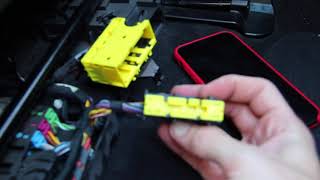
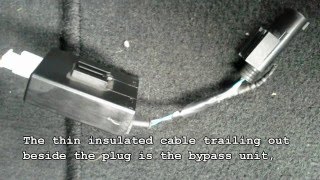
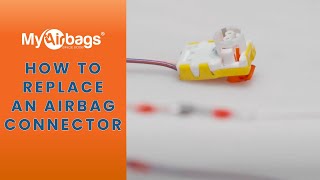
- Broken Connector Position Assurance (CPA) Clip (Very Common) — On millions of 2005-2014 GM vehicles, a small plastic clip (CPA) securing the airbag connector becomes brittle and breaks. This allows the connector to back out slightly, creating an open circuit (GM TSB #08-09-41-002E). 🎬 Watch: How to replace a damaged airbag connector plug.
- Loose or Damaged Wiring/Connector (Very Common) — A poor connection in the yellow airbag harness connectors under the passenger seat or behind the glove compartment. Items pushed under the seat, corrosion, or vibration cause this disconnect.
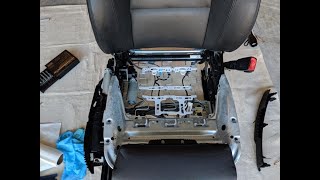
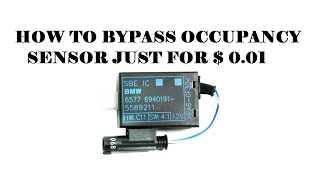
- Faulty Passenger Seat Occupancy Mat/Sensor (Common) — On many BMW, Subaru, and Mercedes vehicles, the passenger seat occupancy sensor mat fails. A break in this weight-detecting mat creates an open circuit within the SRS, triggering B0017 and disabling the passenger airbag.
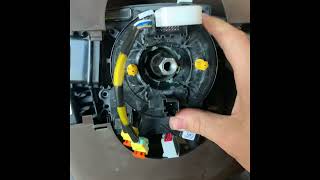
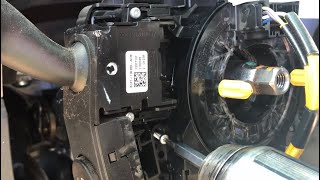
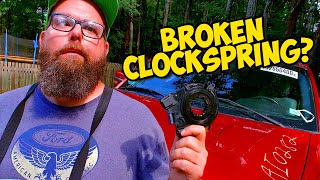
- Damaged Clock Spring (Airbag Squib) (Common) — The clock spring is a ribbon cable in the steering column. While usually associated with driver-side codes, a clock spring fault disrupts the entire SRS network, sometimes triggering passenger-side codes. This is a frequent failure on Ford and Chrysler vehicles.
- Corroded or Water-Damaged Module/Connector (Less Common) — Water intrusion from a leaky sunroof or spilled drinks pools under seats or the center console. This corrodes the SDM or related connectors, creating high resistance and open circuits.
- Faulty Passenger Airbag Module (Less Common) — The airbag inflator module in the dashboard fails internally. The internal coil that is part of the deployment loop breaks, creating a permanent open circuit.
- Faulty Sensing and Diagnostic Module (SDM) (Rare) — The main airbag control computer rarely fails. Exhaustively test all other circuit components, wiring, and connectors before condemning the SDM.
Symptoms
- Airbag warning light is on — A continuously illuminated or flashing airbag (SRS) warning light on the instrument panel.
- Airbags will not deploy — In a collision, the entire SRS system is inactive. Zero airbags will deploy.
- Passenger airbag 'Off' light is illuminated — The indicator light showing passenger airbag status remains lit, confirming the passenger-side restraint is disabled.
- Failed safety inspection — A vehicle with an active airbag warning light automatically fails state-mandated safety inspections in most jurisdictions.
- Horn or Steering Wheel Controls Inoperative — If a failed clock spring causes the fault, the horn or steering wheel audio/cruise buttons also stop working.
Diagnostic Flowchart
Tap your situation to follow the diagnostic path that matches what you're seeing on this code.
Common Fixes & Costs
- Replace Connector Position Assurance (CPA) Clip
— Parts: $10-$20, Labor: $150-$200 (includes diagnosis), ~1.0 hr book time
(DIY)
: OEM Not sold separately by GM. (Alt: Dorman 926-056) - Clean and Re-seat Wiring Connector — Parts: $10-$15 (contact cleaner), Labor: $150-$200 (diagnosis and labor), ~1.0 hr book time (DIY)
- Replace Passenger Seat Occupancy Sensor Mat
— Parts: $200-$400, Labor: $300-$600, ~2.5 hr book time
(Professional)
: OEM 65779153119 (E90/E92, verify by VIN) (Alt: Emulator modules ($40-$80) bypass the sensor but force the airbag to deploy even if the seat is empty.) - Replace Airbag Wiring Pigtail/Harness
— Parts: $30-$80, Labor: $200-$400, ~1.5 hr book time
(Intermediate)
: OEM GM 23156629 (verify by VIN) (Alt: ACDelco PT2795) - Replace Passenger Airbag Module — Parts: $400-$1000, Labor: $200-$400, ~2.0 hr book time (Professional)
- Replace Airbag Control Module (SDM) — Parts: $300-$800, Labor: $150-$350 (plus programming), ~1.5 hr book time (Professional)
Used vs. New Parts: Buying Guide
When a used part is worth it: Used parts make sense for non-pyrotechnic components like connector pigtails or seat occupancy sensors on older vehicles. Never-deployed airbags from certified recyclers are cost-effective but carry inherent risks.
Donor-vehicle mileage cap: roughly under 100000 miles for the part to have meaningful remaining life.
Donor quality checklist:
- For airbag modules, use a certified automotive recycler (ARA) to ensure it is a genuine, non-deployed OEM part.
- Verify the donor vehicle was not scrapped due to flood or fire damage.
- Match part numbers exactly. An incorrect part will not communicate with the SRS module.
- Avoid parts from vehicles with salvage or rebuilt titles.
Decision logic:
- If The part is a pyrotechnic device (airbag module, inflator). → Buy new OEM. The safety risk and potential for counterfeit used parts are too high.
- If The part is a seat occupancy sensor mat and the vehicle is high-mileage. → A used sensor from a low-mileage donor is an acceptable risk to save on a costly repair.
- If The part is a simple connector or pigtail. → Used or aftermarket is perfectly acceptable and cost-effective.
Warranty tradeoff: Used parts typically have a 30-90 day warranty. New OEM parts carry a 1-2 year warranty. Aftermarket new parts vary from 1 year to lifetime.
Worst-case if a used part fails: $1500-6000. If a faulty used airbag fails to deploy in a crash, the cost is severe injury or death.
What Happens If You Wait — Timeline
- Immediate (0 seconds): The SDM disables the entire Supplemental Restraint System as a fail-safe. The airbag warning light illuminates. (MPG impact: 0%% · Added cost: $0 (Safety Risk is Maximum))
- 0 days - First State Inspection: The vehicle operates normally but provides zero airbag protection. In a collision, occupants face severe injury or death. (MPG impact: 0%% · Added cost: $35-$250 (Failed inspection fees and fines))
- 1-6 months: The constant warning light masks any new SRS faults. If the driver's clock spring fails next, you receive no new warning. (MPG impact: 0%% · Added cost: $100-$200 (Increased diagnostic time for multiple faults))
- 6+ months: Repeated electrical arcing from a loose connection damages the terminal pins on the airbag module or SDM, forcing a module replacement. (MPG impact: 0%% · Added cost: $500-$1800 (Cost to replace a damaged airbag module or SDM))
Cost of Not Fixing It
- Immediate: The entire SRS is disabled. Zero airbags will deploy in a crash, dramatically increasing the risk of severe injury or death. (Added cost: N/A (Safety Risk))
- First Inspection: The vehicle fails any state safety inspection checking for an illuminated airbag warning light, preventing legal registration renewal. (Added cost: $35-$250 (Failed inspection fees, fines))
- Long Term: Ignoring the initial fault masks new, more severe SRS problems, complicating future diagnosis. (Added cost: $100-$200 (Increased diagnostic time))
Diagnosis Steps
- Scan for All SRS Codes
Use an SRS-capable OBD-II scanner. A standard engine code reader will not work. Confirm B0017 is active and note any other codes (e.g., B0013, B0016) for diagnostic clues.
Tools: SRS-capable OBD-II Scanner (Beginner) - CRITICAL: Disable the SRS System
Disconnect the negative terminal of the car battery and wait exactly 15 minutes. This allows the backup power capacitor within the SDM to fully discharge, preventing accidental deployment. This is a mandatory safety step.
Tools: Wrench set (Beginner) - Inspect Connectors and CPA Clips
With the system disabled, check under the front passenger seat and behind the glove box. Disconnect the main yellow airbag connectors. Inspect for bent, spread, or corroded pins. On GM vehicles, check if the small plastic CPA clip is broken or missing.
Tools: Flashlight, Pick tool (Intermediate) - Clean and Re-seat Connectors
Spray dirty pins with electrical contact cleaner. Re-seat the connector firmly until it clicks, ensuring the CPA clip locks securely. Reconnect the battery and clear codes to see if the fault returns.
Tools: Electrical contact cleaner (Intermediate) - Live Data PID Monitoring & Wiggle Test (Professional)
With the scanner displaying live SRS data for 'Passenger Deployment Loop 1 Resistance', carefully wiggle the wiring harness under the seat and behind the glove box. A resistance spike (>4.8 ohms) or 'Open' reading pinpoints the exact location of an intermittent break.
Tools: SRS-capable OBD-II Scanner with Live Data (Advanced) - Test with an Airbag Simulator (Professional)
NEVER use a standard multimeter on an airbag module. Disconnect the passenger airbag and connect a certified airbag simulator (2.2-3.5 ohm resistor) to the vehicle-side harness. Clear the codes. If the code stays away, the airbag module itself is faulty. If it returns, the wiring or SDM is bad.
Tools: Airbag simulator/resistor tool (Advanced) - Measure Circuit Resistance (Professional)
With the battery, SDM, and airbag module disconnected, use a multimeter to check for an open circuit between the 'high' and 'low' control wires for the passenger loop. An 'OL' reading confirms a broken wire in the harness.
Tools: High-impedance Multimeter (Advanced)
When This Code Triggers (Freeze-Frame Conditions)
- Fault Status: Active / Current (The fault is present at the time of the scan.)
- System Voltage: 9-16 Volts (The code sets when the vehicle's electrical system is within normal operating voltage.)
- Occurrence Counter: 1-255 (Shows how many times the fault has been detected, useful for tracking intermittent loose connections.)
Related Codes
- B0013 — Indicates an 'Open' circuit in 'Stage 2' of the same passenger airbag. If B0017 and B0013 appear together, it points to a single connector issue affecting both circuits.
- B0016 — Indicates 'Resistance Low' for the Stage 1 passenger airbag loop. B0017 sets when resistance is too high (open), while B0016 sets when resistance is too low (shorted).
- B0018 — Indicates 'Voltage Out of Range' for the Stage 1 loop. B0017 indicates a broken wire, whereas B0018 indicates the circuit is shorted to a power source or ground.
- B0022 — The driver-side equivalent of B0017, indicating an open in the Driver Frontal Deployment Loop (Stage 1). Focuses on the driver's airbag and clock spring.
Climate & Environmental Factors
- High Humidity / Moisture: Moisture from rain, spills, or high ambient humidity infiltrates connectors or the airbag control module. This corrodes electrical pins, increasing circuit resistance and triggering an 'Open' fault code.
- Extreme Cold: In temperatures below freezing, metal contacts and plastic components within connectors contract. This creates a microscopic gap, leading to an intermittent open circuit that illuminates the airbag light only on cold starts.
How to Talk to a Mechanic About This Code
Say this: "I have an airbag light on and my scanner shows code B0017, pointing to an open in the passenger frontal deployment loop. I'd like to schedule a diagnostic. Based on my vehicle, I suspect it is a common issue like the connector under the passenger seat or behind the glovebox."
This signals you are an informed consumer. It directs the technician to the specific system and the cheapest failure points first, preventing a shop from immediately recommending an expensive airbag module replacement.
Avoid saying:
- 'My airbag light is on, can you just fix it?' (Too vague, invites part-swapping.)
- 'I need my airbag serviced.' (Airbags are diagnosed and repaired, not 'serviced'.)
- 'Just do whatever you think is best.' (Gives up control and leads to up-sells.)
Questions to ask before authorizing the repair:
- What was the specific resistance reading on the passenger deployment loop?
- Did you perform a 'wiggle test' on the harness to locate an intermittent open?
- Can you show me the faulty connector or component before you replace it?
- If replacing a module, how did you rule out the wiring harness?
- What is the warranty on this specific repair, covering both parts and labor?
Where to Take It: Dealer vs Independent vs Chain
- Dealer:
Best for: Vehicles under warranty., Known manufacturer-specific issues requiring SDM software updates., Complex diagnostics on German vehicles requiring specialized tools.
Downsides: Highest labor rates., Defaults to replacing entire assemblies instead of repairing a single connector. (Typical cost: +50% vs. baseline) - Independent Shop:
Best overall fit for out-of-warranty vehicles. A reputable independent mechanic with electrical diagnostic skills handles B0017 efficiently.
Best for: Out-of-warranty vehicles where cost is a major factor., Diagnosing well-documented problems like GM CPA clips or Ford clock springs., Getting a second opinion on a dealership quote.
Downsides: Shop quality varies widely. Vet shops based on ASE certifications., Lacks the latest diagnostic software for brand new models. (Typical cost: +0% vs. baseline) - Chain Shop:
AVOID. The risk of misdiagnosis is high. Airbag systems require qualified technicians with specific SRS experience.
Best for: Simple maintenance like oil changes, tires, and batteries.
Downsides: Technicians lack specialized training for complex SRS diagnostics., High pressure to meet sales quotas leads to unnecessary upselling., Not equipped for in-depth electrical troubleshooting. (Typical cost: -10% vs. baseline)
When to Walk Away From the Repair
If the estimated repair cost for B0017 exceeds 40-50% of your car's current private-party value, seriously consider selling or trading in the vehicle as-is.
- Car worth $3500, fix is $1800: Walk away. The repair cost is over 50% of the car's value.
- Car worth $15000, fix is $1200: Fix it. The repair cost is less than 10% of the vehicle's value and restores a critical safety feature.
- Car worth $5000, fix is $200: Fix it. This is a low-cost repair that adds significant value and makes the car safe.
What Scan Tool You Need for This Code
Minimum: A scanner that reads and clears Supplemental Restraint System (SRS) / Airbag codes. A basic engine-only code reader will NOT work.
A standard $20 code reader only communicates with the engine and transmission. Code B0017 is stored in the separate Sensing and Diagnostic Module (SDM). You need a tool specifically advertised with 'SRS' capabilities.
Professional: Autel MaxiSys MS906Pro / Launch X431 Series (~$500-1200) — Provides full bidirectional control to test individual components, access to manufacturer-specific data, and advanced programming functions needed if replacing the SDM.
Rent vs buy: Auto parts store loaner tools often do not support SRS. If you only plan to use it once, a budget pick is sufficient. For regular DIY maintenance, a mid-range tool offers the best long-term value.
How to Clear the Code After You Fix It
- Ensure all SRS components are properly connected.
- Reconnect the negative battery terminal.
- Use an SRS-capable OBD-II scan tool to read and erase the fault codes.
- Cycle the ignition off, wait 10 seconds, then start the vehicle.
- Verify the airbag warning light illuminates briefly and then turns off.
Drive cycle (~10 minutes): A complex drive cycle is not required. After clearing the code, a 10-minute test drive confirms the fault does not immediately return. The system self-checks upon every startup.
Readiness monitors affected: None. SRS status does not affect powertrain readiness monitors for emissions testing.
Watch out for:
- Using a standard engine code reader, which cannot access or clear SRS module codes.
- Disconnecting the battery will not clear 'hard' SRS codes from memory.
- The code returns immediately if the underlying electrical fault is not repaired.
Will This Fail Emissions / State Inspection?
No — by itself this code doesn't fail OBD inspection (but it can keep readiness monitors from setting, which causes a separate fail).
- California: An airbag light will not cause a smog test failure, but it will fail a separate safety inspection if required.
- New York: An illuminated airbag warning light is noted as an advisory but is NOT cause for rejection of the annual safety inspection.
- Texas: The airbag system is not an inspected item. A vehicle with an illuminated airbag light passes the state safety inspection.
Most Commonly Affected Vehicles
- General Motors (Chevrolet, GMC, Buick, Cadillac) Silverado, Sierra, Tahoe, Yukon, Cobalt, Impala, Escalade (2005-2014) — Extremely prone to broken Connector Position Assurance (CPA) clips under the seat or behind the glove box. Covered by GM TSB #08-09-41-002H.
- BMW 3-Series (E46, E90), 5-Series (E39, E60), X3 (E83), X5 (E53) (1998-2012) — Commonly caused by a failed passenger seat occupancy mat sensor. A popular DIY fix involves installing an emulator module to bypass the faulty mat.
- Subaru Outback, Legacy, Forester, Impreza (2005-2012) — Caused by a faulty Occupant Detection System (ODS) sensor mat. Subaru issued a warranty extension for the ODS on many of these models.
- Ford F-150, Explorer, Focus, Mustang (2004-2014) — Frequently traced back to a failed clock spring in the steering column. Technicians check for an inoperative horn or steering wheel buttons to confirm.
- Honda Pilot, Accord, Civic, CR-V (2003-2012) — The passenger airbag status indicator light assembly fails. The SRS module monitors the bulb's circuit; a burned-out bulb creates high resistance and triggers the code.
Manufacturer-Specific Notes
- General Motors: TSB #08-09-41-002H covers brittle plastic Connector Position Assurance (CPA) retainers on airbag connectors. A broken CPA is the #1 cause of this code on GM trucks and SUVs.
- BMW: The passenger seat occupancy sensor mat (OC3) is a notoriously common failure point, leading to multiple NHTSA recalls. Due to the $1000+ replacement cost, many owners install an aftermarket emulator to bypass it.
- Subaru: Subaru's Occupant Detection System (ODS) has a high failure rate and a subsequent warranty extension program. Always check dealer coverage before paying for repairs.
- Ford: The clock spring ribbon cables fracture from repeated steering wheel motion, causing an open circuit. Dead steering wheel buttons are strong secondary indicators.
Real Owner Stories
2010 Chevy Cobalt with 132K miles
The 'Service Air Bag' light was on intermittently. A shop scan identified a fault in the pretensioner circuit, but the principles match passenger-side codes like B0017.
Outcome: The owner seated the connector firmly and wrapped a zip tie tightly around the housing to prevent it from backing out. This permanently resolved the intermittent light.
Lesson: For intermittent airbag codes, vibration is the enemy. A secure mechanical connection is mandatory. A zip tie is a highly effective way to secure a problematic connector lacking a robust locking tab.
2007 BMW 3-Series (E90)
The airbag warning light and 'Passenger Restraint System Malfunction' message appeared, indicating a failed passenger seat occupancy mat.
Outcome: The emulator tricks the SRS module into thinking a passenger is always present. The owner cleared the code, but the passenger airbag will now deploy in a crash even if the seat is empty.
Lesson: On BMWs, a seat mat emulator is a cheap alternative to a costly repair. However, it modifies a key safety system and carries legal liability implications if you sell the car.
2005 Ford Focus
The airbag light illuminated, followed shortly by the horn and steering wheel radio controls failing.
Outcome: The owner installed a new clock spring ($255). After reassembly, the airbag light cleared, and the horn and wheel controls functioned normally.
Lesson: When an airbag code is accompanied by dead steering wheel buttons or horn, the clock spring is the definitive culprit.
How to Prevent This Code From Triggering
- Apply dielectric grease or Nyogel 760G to airbag connectors. (Any time a connector is serviced or disconnected.) — Prevents microscopic vibrations (fretting) from wearing away metal plating on pins, stopping oxidation and high resistance.
- Keep the area under the front seats clear of debris. (Ongoing habit.) — Water bottles or tools rolling under the seat snag, stretch, or disconnect the sensitive airbag wiring harness.
- Avoid placing heavy, sharp, or wet items on the passenger seat. (Ongoing habit.) — Focused pressure damages the delicate seat occupancy sensor mat embedded in the cushion, cracking it and creating an open circuit.
- Address water leaks promptly. (As needed.) — Leaking windshields or sunroofs allow water to pool under carpets, corroding the SDM and connectors.
Frequently Asked Questions
Is it safe to drive with code B0017?
No. The code disables the entire airbag system. In an accident, zero airbags will deploy, dramatically increasing the risk of serious injury or death.
What is the most common fix for B0017 on a Chevy Silverado or GMC Sierra?
The most common fix is replacing the broken plastic Connector Position Assurance (CPA) clip on the yellow airbag connector under the passenger seat. Replacing this $10 clip and re-seating the connector usually resolves the code.
Can I fix code B0017 myself?
A skilled DIYer can safely inspect and re-seat connectors under the seats. However, you MUST disconnect the negative battery terminal and wait 15 minutes before touching any yellow airbag wiring. Leave any circuit testing or component replacement to a professional to avoid accidental deployment.
What is an airbag 'squib' or 'deployment loop'?
The 'deployment loop' is the complete electrical circuit the computer monitors, including wiring and the airbag module. The 'squib' is the small pyrotechnic igniter inside the airbag. When commanded, current fires the squib to inflate the airbag.
My scanner shows B0017 and B0013. Does that mean two things are broken?
No. B0017 is Stage 1 and B0013 is Stage 2 of the same passenger airbag. Seeing both simultaneously indicates a single connector common to both circuits has failed, rather than the airbag module itself. Focus on the main harness connector at the airbag.
How much does it cost to fix B0017?
A simple connector fix costs $150-$250 for diagnosis and labor. Replacing a failed BMW passenger seat mat costs $500-$1,000. Replacing a faulty passenger airbag module ranges from $800 to $1,800 at a dealership.
Can I reset the airbag light by disconnecting the battery?
No. SRS codes are stored in non-volatile memory and survive battery disconnects. You must clear the code using an SRS-capable scan tool after repairing the underlying fault. The airbag light will only turn off once the computer verifies the circuit is healthy.
Key Takeaways
- Code B0017 disables your vehicle's entire airbag system, meaning 0 airbags will deploy in a crash until the code is cleared.
- On 2005-2014 GM vehicles, the most common cause is a broken $10 plastic Connector Position Assurance (CPA) clip under the passenger seat.
- Always disconnect the negative battery terminal and wait exactly 15 minutes before touching any yellow SRS connectors to prevent accidental deployment.
- A standard $20 OBD-II engine reader cannot clear code B0017; you must use a scanner specifically programmed to read Supplemental Restraint System (SRS) modules.
Helpful Videos
Shop the Parts Behind B0017
Below are the parts most often responsible for code B0017, ranked by how frequently each one is the actual culprit (per the diagnosis above). Tap any to see what we have for your vehicle.



The information in this article is provided for general reference and educational purposes only. Vehicle specifications, procedures, and part compatibility can vary by production date, trim level, and region. Always consult your vehicle's factory service manual and verify part numbers before purchasing or performing repairs. Safety-critical components such as airbags, seat belts, and braking systems should be installed by a qualified professional.
- 🧭 Diagnostic Flowchart
- 🎬 Helpful Videos
- 🛍️ Shop This Part
- What Does B0017 Mean?
- Can I Drive With B0017?
- Common Causes
- Symptoms
- Common Fixes & Costs
- Used vs. New Parts: Buying Guide
- What Happens If You Wait — Timeline
- Cost of Not Fixing It
- Diagnosis Steps
- When This Code Triggers (Freeze-Frame Conditions)
- Related Codes
- Climate & Environmental Factors
- How to Talk to a Mechanic About This Code
- Where to Take It: Dealer vs Independent vs Chain
- When to Walk Away From the Repair
- What Scan Tool You Need for This Code
- How to Clear the Code After You Fix It
- Will This Fail Emissions / State Inspection?
- Most Commonly Affected Vehicles
- Manufacturer-Specific Notes
- Real Owner Stories
- 2010 Chevy Cobalt with 132K miles
- 2007 BMW 3-Series (E90)
- 2005 Ford Focus
- How to Prevent This Code From Triggering
- Frequently Asked Questions
- Is it safe to drive with code B0017?
- What is the most common fix for B0017 on a Chevy Silverado or GMC Sierra?
- Can I fix code B0017 myself?
- What is an airbag 'squib' or 'deployment loop'?
- My scanner shows B0017 and B0013. Does that mean two things are broken?
- How much does it cost to fix B0017?
- Can I reset the airbag light by disconnecting the battery?
- Key Takeaways
- 🎟️ Get 5% Off