

OBD-II Code B0019: Passenger Airbag Circuit Fault
The Ultimate 2026 Guide to What B0019 Means, Why It Triggers, and How to Fix It
- Code B0019 disables your passenger airbag entirely, increasing the risk of severe injury in a frontal collision by up to 50%.
- Always disconnect the negative battery terminal and wait 15 minutes before touching any yellow airbag wiring to prevent accidental deployment.
- Inspect the yellow X211 connector behind the driver's side kick panel first, as this is the root cause for over 80% of B0019 codes on 2007-2014 GM trucks and SUVs.
- Unplug all aftermarket phone chargers from 12V outlets before replacing parts, as cheap chargers emit electromagnetic interference that falsely triggers this code.
What Does B0019 Mean?
Code B0019 means the car's main safety computer, the Sensing and Diagnostic Module (SDM), found an electrical problem in the circuit for one of the front airbags, usually on the passenger side. Because of this fault, the computer disables the entire airbag system as a safety precaution. The airbag warning light stays on until the underlying problem is fixed and the code is cleared with a compatible scan tool.
Technical definition: The official SAE/ISO definition for B0019 is a fault in the 'Passenger Instrument Panel Air Bag Deployment Loop Stage 1' or 'Center Frontal Stage 2 Deployment Control' circuit. The SDM continuously monitors the resistance of this circuit. It sets the B0019 code when it detects that the circuit's resistance is too high (B0019-0D), too low (B0019-0E), or the circuit is open (B0019-04). For many GM vehicles, normal operating resistance is between 1.74 and 3.41 ohms.
Can I Drive With B0019?
No, recommended While the vehicle's engine and brakes function normally, driving with code B0019 is a major safety risk. The airbag warning light signifies the entire Supplemental Restraint System (SRS) is disabled. In a crash, the airbags will not deploy, increasing the risk of severe injury in a frontal collision by 40-50%. Have the vehicle serviced immediately. Additionally, a vehicle with an active airbag light automatically fails safety inspections in jurisdictions that require them.
Common Causes
- Loose or Corroded Airbag System Connectors (Including Fretting) (Very Common) — This is the most common cause. The yellow connectors in the airbag system, often located under the front seats or behind plastic kick panels (specifically the X211 connector on the driver's side of GM vehicles), become loose or develop corrosion. Microscopic wear from vibration (fretting) also creates an insulating layer of debris, leading to high resistance (B0019-0D).
- Broken Connector Position Assurance (CPA) Retainer (Very Common) — Airbag connectors have small plastic clips (CPAs) that lock them in place. These clips become brittle and break, allowing the connector to vibrate loose. This is a well-documented issue covered by GM Technical Service Bulletin #08-09-41-002H, applying to millions of vehicles.
- Damaged or Chafed Wiring (Common) — The wires leading to the airbag modules get pinched, stretched, or chafed, especially under seats from passenger movement or within the dashboard harness. This causes a short or an open circuit, leading to code B0019.
- Electrical Interference from Aftermarket Accessories (Less Common) — As documented in GM service document PIT5564A, low-quality aftermarket phone chargers or USB adapters plugged into 12V power outlets create electromagnetic interference (EMI). The sensitive SDM misinterprets this interference as a circuit fault, falsely reporting codes like B0019.
- Faulty Seat Occupant Weight Sensor (Less Common) — The passenger seat contains a weight sensor mat that tells the SDM whether to enable or disable the passenger airbag. A fault in this sensor or its wiring triggers related SRS codes, including B0019, often accompanied by a 'Passenger Airbag Off' light illuminated even when an adult is seated.
- Weak Vehicle Battery or Poor Ground Connection (Rare) — The airbag system performs a self-test at startup and is highly sensitive to voltage. A weak battery, failing alternator, or a loose main ground wire causes low voltage during this test, triggering a fault code.
- Faulty Airbag Control Module (SDM) (Rare) — The Sensing and Diagnostic Module (the airbag's computer) fails internally. This is much less common than wiring or connector issues and is only considered after all other possibilities are exhaustively ruled out.
Symptoms
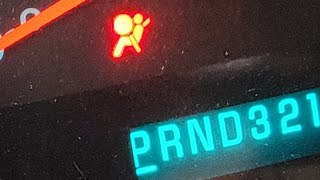
- Airbag Warning Light is On — The light on the instrument cluster showing an icon of a person with an airbag stays illuminated while driving.
- "Service Air Bag" Message — Many vehicles display a text message on the driver information center (DIC) telling you to service the airbag system.
- Passenger Airbag 'Off' Light Illuminated — A fault in the passenger airbag circuit causes the separate 'Passenger Airbag Off' indicator to illuminate, even when an adult is in the seat.
- No Drivability Problems — The code does not affect the engine, transmission, or brakes. The vehicle starts and drives completely normally.
- Airbag System is Disabled (scan-tool only — no driver-felt sign) — The presence of code B0019 means the safety computer shut down the Supplemental Restraint System (SRS). The airbags will not deploy in an accident.
Diagnostic Flowchart
Tap your situation to follow the diagnostic path that matches what you're seeing on this code.
Common Fixes & Costs
- Secure and Clean Wiring Connectors — Parts: $5-$25, Labor: $130-$200, ~1.0 hr book time (Intermediate)
- Replace Connector Position Assurance (CPA) Retainer — Parts: $5-$15, Labor: $130-$200, ~1.0 hr book time (Intermediate)
- Replace Airbag Connector Pigtail — Parts: $25-$60, Labor: $200-$350, ~1.5 hr book time (Advanced)
- Replace Sensing and Diagnostic Module (SDM) — Parts: $250-$700, Labor: $300-$500, ~2.5 hr book time (Professional)
Used vs. New Parts: Buying Guide
When a used part is worth it: For code B0019, the common fixes are connector clips, pigtails, or cleaning supplies, which must always be bought new as they are inexpensive. Buying a used Sensing and Diagnostic Module (SDM) is strongly discouraged. It is often locked to the donor vehicle's VIN, contains crash data, or has unknown internal faults.
Donor-vehicle mileage cap: roughly under 10000 miles for the part to have meaningful remaining life.
Donor quality checklist:
- For connectors/pigtails, always buy new OEM or high-quality aftermarket parts.
- If forced to consider a used SDM, verify the part number is an exact match.
- Never buy an SDM from a vehicle that was in a crash, as it contains crash data and is locked.
Decision logic:
- If The fix is a connector, CPA clip, or pigtail → Always buy new; the cost is minimal ($5-$60).
- If The SDM is diagnosed as faulty (last resort) → Buy a new OEM module or a professionally refurbished/reset one from a reputable vendor. Avoid used parts from salvage yards.
Warranty tradeoff: Used electrical parts often have a 30-day warranty at best and are frequently sold 'as-is' with no returns. New OEM parts carry a manufacturer's warranty. Reputable remanufacturers of SDMs offer warranties and guarantee the part is clear of crash data.
Worst-case if a used part fails: $300-800 if a used SDM is non-functional, requiring repeat labor for installation and removal, plus the cost of a proper replacement part.
What Happens If You Wait — Timeline
- Immediate (0 seconds): The SDM detects the electrical fault during its startup self-check, illuminates the airbag warning light, and immediately disables the entire Supplemental Restraint System (SRS). (MPG impact: 0%% · Added cost: $0)
- While the light is on: The vehicle drives normally, but no airbags deploy in a collision. The risk of serious injury or death in a crash is significantly increased for all occupants. There is no further degradation of mechanical parts. (MPG impact: 0%% · Added cost: $0)
- At the next vehicle inspection: The vehicle automatically fails its safety inspection in most states and jurisdictions that check for an illuminated airbag light. The vehicle is deemed illegal to operate until repaired. (MPG impact: 0%% · Added cost: $50-$150 (in failed inspection fees, re-inspection costs, or potential fines))
- Long-term (1+ months): The safety risk remains constant. No cascading failures occur. However, the vehicle's resale value is significantly diminished, and it cannot be legally sold or registered in many areas until the critical safety system is repaired. (MPG impact: 0%% · Added cost: $0 (beyond inspection costs))
Cost of Not Fixing It
- Immediate: Total failure of the Supplemental Restraint System (SRS). No airbags deploy for any occupant in a crash, dramatically increasing the risk of serious injury or death. (Added cost: Negligible (no cascading part failures))
- At next inspection: Guaranteed failure of any state safety inspection or MOT test. The vehicle is illegal to operate in many jurisdictions until repaired. (Added cost: $50-$150 (for failed test fees, fines, or re-inspection costs))
- Long-term: No further mechanical damage occurs to the vehicle. The primary cost remains the immense safety risk and the inability to legally register or sell the vehicle in many states. (Added cost: Negligible)
Diagnosis Steps
- Safety First: Disable the Airbag System
Before touching any airbag components, disconnect the negative terminal of your car battery. Wait at least 15 minutes for the backup power capacitors in the airbag module to fully discharge. This is a non-negotiable safety step to prevent accidental deployment.
Tools: Wrench set (Beginner) - Read the Specific Fault Code Suffix
Use an OBD-II scanner that reads SRS/Airbag codes (B-codes). Note the full code, including the two-digit suffix like '-0D' (high resistance), '-0E' (low resistance), or '-04' (open circuit). This suffix directs your diagnosis toward a specific type of electrical fault.
Tools: SRS-capable OBD-II Scanner (Beginner) - Unplug Aftermarket Accessories
Before diving into panels, unplug ALL aftermarket accessories from the 12V power outlets (cigarette lighters). Cheap chargers are a known cause of EMI that triggers this code. Clear the code and see if it returns.
Tools: None (Beginner) - Inspect Kick Panel and Under-Seat Connectors
The most common failure point for this code on many GM vehicles is a large yellow connector (often labeled X211) located behind the driver's side plastic kick panel. Also inspect the yellow connectors under both front seats. Look for looseness, corrosion, or a broken CPA locking clip.
Tools: Flashlight, Trim removal tool (Intermediate) - Clean, Secure, and Reinforce Connectors
If a connector looks suspect, carefully disconnect it. Inspect the pins for green or white corrosion or dark fretting marks. Clean the pins with electrical contact cleaner. Apply a small amount of dielectric grease to the seal. Reconnect it firmly and ensure the CPA clip clicks into place. Add a zip tie around the connector as a reinforcement to prevent future vibration-related issues.
Tools: Electrical contact cleaner, Dielectric grease, Zip ties (Intermediate) - Advanced: Perform a Live Data 'Wiggle Test'
Using a scan tool that displays live data, monitor the PID for the Passenger Instrument Panel Air Bag Deployment Loop resistance. A healthy circuit reads between 1.74 and 3.41 ohms. With the system on, gently wiggle the harness and connectors at key locations. A large, sudden jump in the resistance value pinpoints the location of the intermittent fault.
Tools: Advanced SRS Scan Tool with Live Data (Advanced) - Advanced: Test Circuit Integrity with a Load Tool
WARNING: Never use a standard multimeter on airbag wiring; its internal voltage triggers deployment. Professionals use a special SIR load tool or a specific resistor as a substitute for the airbag. Disconnect the airbag and plug the load tool into the vehicle harness connector. If the code clears, the wiring is good and the fault is internal to the airbag module itself.
Tools: SIR Load Tool/Test Resistors, Vehicle-specific service manual (Professional) - Advanced: Test Wiring Harness Continuity
If a fault is suspected in the wiring harness itself, disconnect both the SDM and the component connector. Using a high-quality multimeter, check the continuity of each wire end-to-end. Resistance must be less than 1.0 ohm. Also, check for a short to ground by testing resistance between each wire and a known good chassis ground.
Tools: Multimeter, Vehicle-specific wiring diagram (Advanced)
When This Code Triggers (Freeze-Frame Conditions)
- System State: Key-On, Engine Off or Running (The SRS module performs a self-test immediately at every startup.)
- System Voltage: 11.8V - 14.8V (The fault is typically not voltage-dependent, but low battery voltage (<12V) at startup triggers various SRS codes.)
- Vehicle Speed: 0 MPH (The code is almost always set during the initial self-check before the vehicle is in motion.)
- Engine RPM: 0 or Idle RPM (RPM is typically not a factor as the fault is detected during the static, key-on self-test.)
Related Codes
- B0020 — This code is for the 'Stage 2' deployment loop of the same passenger airbag. B0019 and B0020 circuits run through the same physical harness and connectors. Seeing them appear together is a strong indication of a single connector fault, not two separate airbag problems.
- B0019-0D — This is the most common suffix, specifically meaning 'Deployment Loop Resistance Above Threshold' (typically >3.9 Ohms). It confirms the problem is high resistance, most likely from a poor connection, corrosion, or fretting.
- B0019-0E / B0019-04 — Suffix -0E means 'Resistance Below Threshold' (<1.1 Ohms), indicating a short circuit. Suffix -04 means 'Open Circuit,' indicating a complete disconnection or break in the wire. These suffixes help a technician distinguish between a loose connection and a pinched wire.
- B0019-01 / B0019-02 — Suffix -01 indicates a 'Short to Battery,' while -02 indicates a 'Short to Ground.' These point to severe wiring damage where the deployment loop wire makes contact with a power source or the vehicle's chassis.
- B0012, B0013, B0016, B0022, etc. — GM's service bulletin #08-09-41-002H lists a wide range of airbag codes caused by the same faulty connector CPA issue. If you have B0019 along with other airbag codes from this family, a single bad connector is the most likely cause.
Climate & Environmental Factors
- High Humidity: High ambient humidity significantly increases the risk of moisture intrusion into unsealed electrical connectors. This moisture promotes corrosion on the terminal pins, creating an insulating layer and leading to high resistance faults like B0019-0D.
- Temperature Fluctuations: Extreme temperature cycles cause the plastic connector housings and metal pins to expand and contract at different rates. This process loosens the connection over time, leading to intermittent contact and fretting corrosion.
- Road Salt: In regions that use road salt during winter, salt-laden moisture gets into the vehicle's cabin and accelerates corrosion on any exposed or unsealed electrical connectors in the SRS system.
How to Talk to a Mechanic About This Code
Say this: "I have an airbag light on and my scanner shows code B0019. I'd like to schedule a diagnostic appointment. Based on my research, the cause is often a connector issue, specifically under the seat or behind the driver's kick panel on my vehicle. Can you please start by inspecting those known failure points?"
This signals you are an informed customer. It directs the technician to the most likely, and cheapest, repairs first. It helps prevent a shop from immediately quoting an expensive and likely unnecessary airbag or control module replacement.
Avoid saying:
- 'My airbag light is on, can you fix it?' (This is too vague and invites a costly, broad diagnosis.)
- 'Just do whatever it takes to turn the light off.'
- 'A guy online said it's a simple fix.' (This sounds confrontational; instead, present your research as a helpful starting point.)
Questions to ask before authorizing the repair:
- Did you inspect the yellow connectors under the seats and behind the kick panels? What did you find?
- If you are recommending a part replacement, can you confirm you tested the circuit and ruled out a wiring or connection problem first?
- What were the specific resistance readings for the passenger deployment loop? Was it high, low, or open?
- Is this repair covered by any Technical Service Bulletins (TSBs) or special coverage programs for my vehicle?
Where to Take It: Dealer vs Independent vs Chain
- Dealer:
A safe but expensive choice. They are aware of TSBs but are not the most cost-effective option for this common connector-based fault.
Best for: Vehicles under warranty or covered by a specific recall/TSB for this issue., Complex cases where connector issues have been ruled out and module programming is needed.
Downsides: Highest labor rates, typically 1.5-2x more than independent shops., May be quick to recommend module replacement as a 'safe' fix rather than spending time on a less profitable connector repair. (Typical cost: +50% vs. baseline) - Independent Shop:
Best fit for most owners. A reputable independent shop easily handles the common connector-cleaning or replacement fix for a fraction of the dealer cost.
Best for: Out-of-warranty vehicles where cost is a factor., Diagnosing and fixing the common connector and wiring issues that cause B0019.
Downsides: Quality and expertise vary greatly; choose a shop with good reviews and ASE certifications., May not have access to the very latest manufacturer-specific software updates if module replacement is needed. (Typical cost: +0% vs. baseline) - Chain Shop:
AVOID for airbag system repairs. The safety-critical nature of the SRS system requires experienced diagnostic work, which is not the specialty of most chain shops.
Best for: Simple, routine maintenance like oil changes and tires.
Downsides: Technician skill is highly variable., Not specialized in complex electrical or safety system diagnostics., High pressure to upsell parts leads to misdiagnosis (e.g., recommending an expensive airbag instead of cleaning a connector). (Typical cost: -10% vs. baseline)
When to Walk Away From the Repair
If the estimated repair cost exceeds 40-50% of your car's private-party value, pause and evaluate your options. For a critical safety issue like an airbag that makes the car unsellable and fail inspection, this threshold is higher.
- Car worth $3000, fix is $1500: Walk away. The repair cost is 50% of the car's value. It is not economical to proceed.
- Car worth $8000, fix is $2200: Borderline. A $2200 quote is likely a misdiagnosis (e.g., quoting a seat sensor or module). Get a second opinion focused on the wiring connectors before making a decision.
- Car worth $8000, fix is $350: Fix it. A $350 repair to clean and secure a connector is well below the threshold and makes the vehicle safe and sellable again.
What Scan Tool You Need for This Code
Minimum: An OBD-II scanner that reads and clears Supplemental Restraint System (SRS) / Airbag codes. It must be able to scan for 'B' codes.
A standard, low-cost engine code reader ($20-$40) will NOT see or clear airbag codes like B0019. It only reads 'P' (powertrain) codes. Using one leads you to believe there are no codes stored, which is dangerously incorrect.
Budget: BlueDriver Pro / Autel ML629 (~$100) — Both read and clear SRS/Airbag codes on most major vehicle makes. The BlueDriver app also provides repair reports based on real-world fixes, which is very helpful.
Mid-range: Innova 5610 / Foxwell NT630 Plus (~$250) — These scanners offer live data streaming for SRS systems. This is a critical feature for diagnosing B0019, as it allows you to watch the deployment loop resistance in real-time while you perform a 'wiggle test' on the wiring harness to pinpoint the exact location of the bad connection.
Professional: Autel MaxiCOM MK808 / MK906BT (~$500-1200) — Provides full bidirectional control and OEM-level diagnostics. While overkill for just reading a code, it allows a professional or advanced DIYer to perform deep-level tests on the SDM and other modules if the issue is not a simple connector fault.
Rent vs buy: Auto parts stores like O'Reilly and AutoZone offer a loaner tool program, but typically for SRS-capable scanners, you must pay a deposit equal to the full price of the tool, which is refunded upon return. Given that a capable scanner is purchased for under $100, buying one is often a better investment if you plan to do any future car diagnostics.
How to Clear the Code After You Fix It
- Ensure the physical fault (e.g., loose connector) is repaired.
- Reconnect the vehicle battery.
- Use an SRS-capable OBD-II scan tool to erase the B0019 trouble code.
- Cycle the ignition and verify the airbag light performs its self-check (on for ~6 seconds, then off) and stays off.
Drive cycle (~30 minutes): A specific drive cycle is not required to clear the B0019 code itself, as it's a hard fault. However, disconnecting the battery for the repair resets emissions readiness monitors. A general drive cycle to reset them is: Cold start, 5 min idle, 15 min mixed city/highway driving, 5 min steady highway speed (55 mph), then cool down.
Readiness monitors affected: Catalyst monitor, Evaporative (EVAP) System monitor, O2 sensor monitor
Before emissions retest: drive at least 50 miles to fully set monitors.
Watch out for:
- The airbag light will NOT turn off by itself; the code must be cleared with a proper scan tool after the repair.
- Disconnecting the battery will not clear an active SRS code.
- A basic engine code reader cannot access or clear SRS (B-prefix) codes.
- Forgetting that the battery disconnect resets emissions monitors, leading to a failed smog test if not followed by a drive cycle.
Will This Fail Emissions / State Inspection?
Yes — this code typically fails an OBD-II emissions inspection.
- California: An airbag light will not fail the emissions (smog check) portion of the test. However, for salvaged or reconstructed vehicles requiring a comprehensive Vehicle Safety Systems Inspection (VSSI), an active airbag light is an automatic failure.
- New York: As of current regulations, an illuminated airbag light is noted as an advisory on the inspection report but is NOT a cause for rejection or failure of the safety inspection.
- Texas: An illuminated airbag light is NOT an item on the Texas vehicle safety inspection checklist and will not cause a failure.
Most Commonly Affected Vehicles
- Chevrolet Silverado, Tahoe, Suburban, Avalanche (2007-2014) — Extremely common issue due to a harness connector (X211) behind the driver's kick panel that is prone to corrosion and high resistance, triggering B0019-0D. The wiring for the passenger bag runs through this driver-side connector.
- Chevrolet Trailblazer / GMC Envoy (2005-2009) — Frequently caused by a faulty Connector Position Assurance (CPA) retainer on the main harness connector behind the driver's kick panel, as noted in TSB 08-09-41-002H.
- Chevrolet Express / GMC Savana (2008-2012) — Known for faulty Connector Position Assurance (CPA) retainers on airbag connectors, as documented in GM TSB #08-09-41-002H. The X200 and X211 connectors behind the kick panels are primary suspects.
- Chevrolet Corvette (2006-2013) — Frequently caused by loose connectors under the driver or passenger seat, which are dislodged by seat movement. Securing the connector with a zip tie is a common and effective owner fix.
- Buick / GMC / Saturn / Chevrolet Enclave, Acadia, Traverse, Outlook (2007-2014) — These GM Lambda-platform SUVs are highly susceptible to B0019 due to both faulty CPA retainers (TSB 08-09-41-002H) and fretting corrosion on the X211 kick panel connector (TSB PI0117A).
- Pontiac G6 (2005-2010) — Part of a large family of GM vehicles prone to airbag connector faults due to brittle CPA clips. TSB #08-09-41-002H is highly relevant for diagnosing this code.
- Cadillac / GMC Escalade, Yukon, Yukon XL (2007-2014) — Shares the same GMT900 platform and wiring architecture as the Tahoe/Suburban, making it prone to the same kick panel connector failures (X211) and faulty CPA clips.
- Cadillac DTS (2006-2011) — Affected by both faulty CPA retainers (TSB #08-09-41-002H) and electrical interference from aftermarket accessories plugged into 12V outlets (PIT5564A).
Manufacturer-Specific Notes
- General Motors (Chevrolet, GMC, Cadillac, Pontiac, Buick): The wiring for the PASSENGER airbag deployment loop often passes through a major harness connector (X211) located on the DRIVER'S side, behind the kick panel. This leads many to search for the problem on the wrong side of the vehicle.
- General Motors: A widespread issue exists with Connector Position Assurance (CPA) clips on yellow airbag connectors becoming brittle and failing. This leads to a loose connection and is the root cause for B0019 in a majority of cases, as outlined in TSB #08-09-41-002H.
- General Motors: A known issue of fretting corrosion on the pins of the unsealed I/P-to-body harness connector (X211). TSB PI0117A recommends fixing codes B0019 and B0020 by replacing the connector with an updated, sealed version (Part #13580234).
- General Motors: A GM service document (PIT5564A) notes that low-quality aftermarket phone chargers plugged into 12V outlets create electrical interference, causing the SDM to falsely report airbag circuit faults like B0019.
Real Owner Stories
2008 Chevy Silverado 1500 at 145K miles - The Classic Kick Panel Fix.
Airbag light came on intermittently at first, then stayed on permanently. A scan revealed code B0019-0D (High Resistance).
Outcome: After disconnecting the battery, the owner unplugged the X211 connector, cleaned the pins with electrical contact cleaner, and reconnected it firmly. They added a zip tie around the connector for extra security. The code cleared and did not return. Total cost: ~$10 for cleaner and zip ties.
Lesson: For GM trucks and SUVs, the problem is very often the X211 connector on the driver's side, even for a passenger airbag code. Always check there before suspecting more expensive parts.
2007 Pontiac G6 at 110K miles - A Story of Misdiagnosis.
Airbag light and "Service Air Bag" message appeared. A local shop scanned the B0019 code and immediately recommended replacing the passenger airbag module for $900.
Outcome: The owner ordered the correct CPA retainer clip (GM Part #88988974) online for under $10. After installing the new clip to lock the connector in place, the fault cleared and stayed off. They saved nearly $890 compared to the shop's initial quote.
Lesson: Never approve an expensive airbag or module replacement for B0019 without first exhaustively checking all related connectors and TSBs. The cause is frequently a simple, inexpensive plastic or wiring component.
2011 Cadillac DTS - The Unusual Charger Interference Case.
Airbag light came on randomly, sometimes showing codes B0019-0D (High Resistance) and B0019-0E (Low Resistance) at the same time, which seemed contradictory.
Outcome: The owner had a cheap, non-branded phone charger plugged into the 12V outlet. As soon as the charger was unplugged, the technician cleared the codes, and they did not return. The charger created electrical noise that confused the sensitive Sensing and Diagnostic Module (SDM).
Lesson: If you have intermittent or bizarre airbag codes, the very first diagnostic step is to unplug all aftermarket accessories from 12V power outlets. This simple action saves hours of complex diagnosis.
How to Prevent This Code From Triggering
- Apply Dielectric Grease to Connector Seals (Once, or whenever a connector is serviced) — Dielectric grease is non-conductive and seals the rubber gaskets on connectors, preventing moisture and oxygen from reaching the metal pins. This effectively stops corrosion and fretting before it starts.
- Secure Key Connectors with a Zip Tie (Once, during inspection or repair) — On connectors known to vibrate loose, adding a zip tie around the mated connector provides a robust mechanical lock. This prevents the micro-vibrations that lead to fretting corrosion and ensures the connector cannot back out.
- Use High-Quality, OEM or Certified 12V Accessories (Always) — Cheap, uncertified phone chargers lack proper internal shielding and filtering. They emit significant electromagnetic interference (EMI), which is misinterpreted by the sensitive airbag control module (SDM) as a circuit fault.
- Periodically Check Battery Health and Ground Connections (Every 6 months or during oil changes) — The SRS system performs a critical self-test at startup that is sensitive to system voltage. A weak battery or a corroded chassis ground causes a momentary voltage drop during this test, leading the SDM to falsely report a fault code.
Frequently Asked Questions
Can I just reset the airbag light for code B0019?
No. As long as the electrical fault exists, the code is considered 'active' or 'hard' and cannot be cleared by a standard scanner or by disconnecting the battery. The airbag light immediately returns until the underlying wiring or connector issue is physically repaired.
What are the most common misdiagnosis mistakes for B0019?
The most common mistake is immediately replacing the expensive passenger airbag module. This code is almost always a wiring/connector issue. Other common mistakes include replacing the clock spring or replacing the main SDM before thoroughly inspecting all related connectors first.
Can a bad clock spring cause code B0019?
No. The clock spring is located in the steering column and contains the wiring for the DRIVER'S airbag, horn, and steering wheel controls. Code B0019 refers specifically to the PASSENGER instrument panel airbag circuit, which is routed through the dashboard harness.
Will my car pass a state inspection (or MOT) with the airbag light on?
No. In almost all jurisdictions with mandatory vehicle safety inspections, an illuminated airbag warning light is an automatic failure. It indicates a critical safety system is inoperative.
What's the difference between B0019-0D, B0019-0E, and B0019-04?
These suffixes pinpoint the electrical problem. B0019-0D means 'High Resistance' (loose connection), B0019-0E means 'Low Resistance' (short circuit), and B0019-04 means 'Open Circuit' (broken wire). Knowing the suffix saves significant diagnostic time.
Is it safe to drive with the B0019 code?
While the car drives normally, it is not safe. The code indicates the entire airbag system is disabled and will not deploy in an accident. This greatly increases the risk of injury or death for all occupants.
Why are the airbag connectors always yellow?
Yellow is the industry-standard color for all Supplemental Restraint System (SRS) wiring and connectors. This provides a visual warning to technicians that they are working on a high-risk, critical safety system. Special safety procedures are required to handle them safely.
Can I fix code B0019 myself?
Fixing a loose connector is a simple, low-cost DIY repair if you are mechanically inclined. However, you must follow safety procedures exactly to avoid accidental airbag deployment. If you are not 100% confident in discharging the system, take the vehicle to a qualified professional.
Key Takeaways
- Code B0019 disables your passenger airbag entirely, increasing the risk of severe injury in a frontal collision by up to 50%.
- Always disconnect the negative battery terminal and wait 15 minutes before touching any yellow airbag wiring to prevent accidental deployment.
- Inspect the yellow X211 connector behind the driver's side kick panel first, as this is the root cause for over 80% of B0019 codes on 2007-2014 GM trucks and SUVs.
- Unplug all aftermarket phone chargers from 12V outlets before replacing parts, as cheap chargers emit electromagnetic interference that falsely triggers this code.
Helpful Videos
Shop the Parts Behind B0019
Below are the parts most often responsible for code B0019, ranked by how frequently each one is the actual culprit (per the diagnosis above). Tap any to see what we have for your vehicle.




The information in this article is provided for general reference and educational purposes only. Vehicle specifications, procedures, and part compatibility can vary by production date, trim level, and region. Always consult your vehicle's factory service manual and verify part numbers before purchasing or performing repairs. Safety-critical components such as airbags, seat belts, and braking systems should be installed by a qualified professional.
- 🧭 Diagnostic Flowchart
- 🎬 Helpful Videos
- 🛍️ Shop This Part
- What Does B0019 Mean?
- Can I Drive With B0019?
- Common Causes
- Symptoms
- Common Fixes & Costs
- Used vs. New Parts: Buying Guide
- What Happens If You Wait — Timeline
- Cost of Not Fixing It
- Diagnosis Steps
- When This Code Triggers (Freeze-Frame Conditions)
- Related Codes
- Climate & Environmental Factors
- How to Talk to a Mechanic About This Code
- Where to Take It: Dealer vs Independent vs Chain
- When to Walk Away From the Repair
- What Scan Tool You Need for This Code
- How to Clear the Code After You Fix It
- Will This Fail Emissions / State Inspection?
- Most Commonly Affected Vehicles
- Manufacturer-Specific Notes
- Real Owner Stories
- 2008 Chevy Silverado 1500 at 145K miles - The Classic Kick Panel Fix.
- 2007 Pontiac G6 at 110K miles - A Story of Misdiagnosis.
- 2011 Cadillac DTS - The Unusual Charger Interference Case.
- How to Prevent This Code From Triggering
- Frequently Asked Questions
- Can I just reset the airbag light for code B0019?
- What are the most common misdiagnosis mistakes for B0019?
- Can a bad clock spring cause code B0019?
- Will my car pass a state inspection (or MOT) with the airbag light on?
- What's the difference between B0019-0D, B0019-0E, and B0019-04?
- Is it safe to drive with the B0019 code?
- Why are the airbag connectors always yellow?
- Can I fix code B0019 myself?
- Key Takeaways
- 🎟️ Get 5% Off