

The Ultimate Guide to OBD-II Code B0023: Right Side Airbag Circuit Fault
Why B0023 triggers, how to diagnose it like a pro, and how to fix it for good.
- Code B0023 disables your entire airbag system, meaning zero airbags will deploy in a crash, so do not drive the vehicle until repaired.
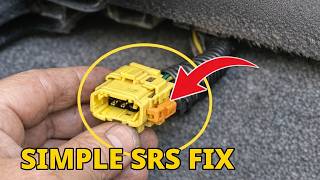
- The root cause is rarely the $500+ airbag module; it is almost always a loose connection or broken plastic CPA clip in a yellow wiring harness.
- On 2007-2014 GM SUVs and trucks, immediately check the yellow connector under the front passenger seat or behind the right-side interior pillar trim.
- Never probe an airbag connector with a standard multimeter or attempt repairs without disconnecting the battery and waiting 15 minutes to prevent accidental deployment.
What Does B0023 Mean?
Code B0023 signifies your vehicle's airbag computer, the Sensing and Diagnostic Module (SDM), detected a critical electrical fault in a right-side airbag circuit. While the generic definition refers to the 'Right Roof Rail' or curtain airbag, the root cause is almost always a bad connection in the wiring. This fault typically originates in a yellow connector under the front passenger seat or behind an interior pillar. When detected, the SDM illuminates the airbag warning light and deactivates the entire SRS to prevent unintended deployment.
Technical definition: The SAE/OBD-II definition is 'Right Roof Rail Air Bag Deployment Loop Fault'. The SDM continuously monitors the resistance of each airbag deployment loop, expecting a stable value between 1.1 and 3.9 ohms to confirm circuit integrity. If the SDM detects resistance outside this range (open circuit, short circuit, short to ground, or short to power) for 120-500 milliseconds, it sets code B0023 and disables the system.
Can I Drive With B0023?
No — Do Not Drive. The vehicle is drivable but unsafe. Code B0023 means the Sensing and Diagnostic Module (SDM) has disabled the entire Supplemental Restraint System (SRS) as a fail-safe. In a collision, zero airbags will deploy, dramatically increasing the risk of fatal injury. Because the most common fix is a simple connector repair costing $150-$350, driving without a functioning airbag system is an unnecessary risk.
🎬 See this simple trick to reset your airbag warning lightCommon Causes
- Loose connector or fretting corrosion (Very Common) — The number one cause is a loose or corroded yellow airbag connector. Vehicle vibrations cause microscopic rubbing (fretting) between metal pins, wearing away protective plating and causing oxidation. This increases circuit resistance. On GM SUVs, the connector under the front passenger seat is the primary culprit. On trucks, it is often behind the A-pillar or C-pillar trim.
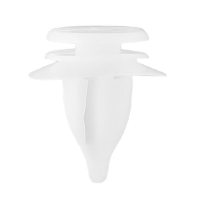
- Broken Connector Position Assurance (CPA) retainer (Very Common) — The CPA is a small plastic clip (often blue, orange, or green) providing a secondary lock to keep the yellow connector from vibrating loose. These clips become brittle and break. GM issued TSB #08-09-41-002H covering numerous models for this exact failure.
- Damaged wiring harness (Less Common) — Wires become frayed, pinched, or severed. This occurs under seats from stored items, under carpet from water intrusion, or behind trim panels from improper installation of aftermarket equipment.
- Water intrusion at a connector (Less Common) — On vehicles with sunroofs, clogged drains or failing roof seam sealer cause water to leak into the cabin. This water runs down interior pillars and drips directly onto airbag connectors, causing severe corrosion.
- Improper aftermarket installations (Less Common) — Installers for remote starts, dash cams, or stereos frequently unplug or splice into the wrong harness, leaving a connector partially unplugged or wires damaged behind a trim panel.
- Faulty ancillary component in circuit (Rare) — The deployment loop includes related indicators. On some Hondas, a failing LED inside the 'Passenger Airbag Off' light causes a high resistance code. On Subarus, cracked solder joints on the overhead console circuit board trigger the fault.
- Faulty right roof rail airbag module (Rare) — The airbag module itself rarely fails. It contains the inflator and charge. Always exhaust all wiring and connector diagnostic steps before replacing this expensive component.
- Faulty Sensing and Diagnostic Module (SDM) (Very Rare) — It is extremely rare for the central airbag computer to fail in a way that isolates the fault to a single airbag circuit. This is the absolute last item to replace.
Symptoms
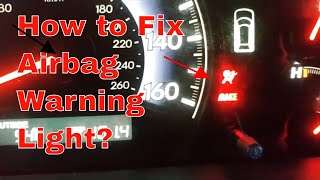
- Airbag warning light and 'Service Air Bag' message — The dashboard light showing a person with a deployed airbag illuminates constantly, accompanied by a text warning on the driver display.
- Passenger airbag status indicator is off or erratic — The light indicating whether the passenger airbag is 'ON' or 'OFF' fails to illuminate correctly.
- Audible noise from trim panels — A rattling sound from the A-pillar or C-pillar area indicates a loose airbag connector vibrating against plastic trim.
- Complete airbag system is disabled (scan-tool only — no driver-felt sign) — The entire SRS is deactivated as a safety precaution. Zero airbags will deploy in a crash.
Diagnostic Flowchart
Tap your situation to follow the diagnostic path that matches what you're seeing on this code.
Common Fixes & Costs
- Clean, Reseat, and Secure Connector with New CPA Clip — Parts: $15-$45, Labor: $150-$350, ~1.5 hr book time (DIY)
- Repair Harness by Splicing in New Connector (Pigtail) — Parts: $25-$75, Labor: $250-$500, ~2.2 hr book time (Intermediate)
- Bypass Connector by Soldering Wires (GM Recall Fix) — Parts: $5, Labor: $200-$450, ~2.0 hr book time (Professional)
- Replace the right roof rail airbag module — Parts: $400-$800, Labor: $300-$700, ~3.2 hr book time (Professional)
Used vs. New Parts: Buying Guide
When a used part is worth it: Used OEM connector pigtails from a reputable auto recycler are acceptable. Buying a used airbag module is cost-effective ONLY from a certified supplier who guarantees the part is non-deployed.
Donor-vehicle mileage cap: roughly under 100000 miles for the part to have meaningful remaining life.
Donor quality checklist:
- Verify the donor vehicle was not in a flood or fire.
- Ensure the airbag module has never been deployed.
- Match the part number exactly; modules are VIN-specific.
- Avoid parts from unverified online marketplace sellers.
Decision logic:
- If The fix is a connector pigtail → A new aftermarket or used OEM pigtail is acceptable.
- If The airbag module is confirmed faulty → A new OEM part is safest. A used OEM part from a certified recycler saves money but carries programming risks.
- If The part is a counterfeit or 'aftermarket' airbag → Never buy it. Legitimate aftermarket airbags do not exist; they are dangerous fakes.
Warranty tradeoff: Used parts offer a 30-90 day warranty. New OEM parts installed by a dealer carry a 12-month/12,000-mile warranty.
Worst-case if a used part fails: $1500
What Happens If You Wait — Timeline
- Immediately: The SDM detects resistance > 3.9 ohms, sets code B0023, illuminates the warning light, and disables the entire SRS system. (MPG impact: 0%% · Added cost: $0)
- 0-6 months: If caused by moisture, corrosion degrades the connector terminals severely, turning an intermittent fault into a permanent open circuit. (MPG impact: 0%% · Added cost: $75)
- 6+ months: Prolonged risk of driving without functioning airbags. The vehicle fails state safety inspections, resulting in fines or registration suspension. (MPG impact: 0%% · Added cost: $50-$200)
- In case of an accident: The disabled SRS system fails to deploy airbags or activate seatbelt pretensioners, dramatically increasing the risk of fatal injury. (MPG impact: N/A% · Added cost: Incalculable)
Cost of Not Fixing It
- Immediately: The entire Supplemental Restraint System (SRS) is disabled. Zero airbags or seatbelt pretensioners will function in a crash. (Added cost: Incalculable (Risk to life and health))
- Next Vehicle Inspection: The vehicle fails safety inspections in strict states (e.g., Virginia, Pennsylvania, New York), making it illegal to drive. (Added cost: $50-$200)
- Long-Term: Unresolved corrosion spreads through the wiring harness, requiring a full harness replacement instead of a simple connector pigtail. (Added cost: $500-$1200)
Diagnosis Steps
- Check for Recalls and TSBs
Check for open safety campaigns. GM Safety Recall #14030A addresses the under-seat connector issue for 2008-2014 Lambda SUVs. TSB #08-09-41-002H covers faulty CPA clips on other models. A VIN check is essential, as the dealer repair is often free.
Tools: Vehicle Identification Number (VIN), internet access (Beginner) - Read the Full Code with Suffix
Use an SRS-capable scanner to read the two-digit suffix after B0023: -0D (High Resistance), -0E (Low Resistance), -04 (Open Circuit), -02 (Short to Ground), -01 (Short to Power). The -0D suffix strongly indicates a connector or wiring integrity problem.
Tools: OBD-II scanner (SRS/Body code capable) (Intermediate) - SAFETY FIRST: Disable the Airbag System
Disconnect the negative battery terminal. Wait exactly 15 minutes before working on any airbag components. This allows backup power in the SDM's capacitors to discharge, preventing accidental deployment.
Tools: 10mm wrench for battery terminal (Beginner) - Inspect Common Connector Locations
For GM Lambda SUVs, inspect under the front passenger seat. For GM GMT900 trucks, inspect behind the right-side A-pillar or C-pillar trim. Look for the bright yellow connector. Verify the CPA locking clip is engaged and check for green/white corrosion.
Tools: Flashlight, trim removal tools (Intermediate) - Perform a 'Wiggle Test' with Live Data
Reconnect the battery. Using a scan tool, monitor the 'Right Roof Rail Deployment Loop' resistance (expected: 1.1-3.9 ohms). Carefully wiggle the suspect connector and harness. If the resistance spikes to OL (Over Limit) or drops out, you have pinpointed the intermittent fault.
Tools: SRS-capable scan tool with live data (Advanced) - Check for Aftermarket Interference
Inspect the area around the fault for non-factory wiring. Remote starters and dash cams are common sources of SRS faults. Look for T-taps, scotch locks, or poorly wrapped electrical tape near yellow harnesses.
Tools: Flashlight, trim removal tools (Advanced) - Test the Circuit with a Resistor Load Tool
Disable the system. Disconnect the harness from the airbag module. Plug a 2.2-2.5 ohm airbag simulator tool into the vehicle-side harness. Reconnect the battery and clear codes. If B0023 does not return, the airbag module is faulty. If it returns, the wiring is faulty. Stop DIY testing and tow the vehicle to an ASE-certified shop if this test fails.
Tools: Airbag load tool/simulator (2.2-2.5 ohm), SRS-capable scan tool (Professional) - Test Wiring Harness with a Multimeter
With the system disabled and SDM disconnected, check continuity on each wire in the deployment loop (must be < 2.0 ohms). Check for a short to ground (must be OL) and a short between the two wires (must be OL).
Tools: Digital multimeter, vehicle-specific wiring diagram (Professional)
When This Code Triggers (Freeze-Frame Conditions)
- Ignition Cycle Counter: Varies (Records the number of times the vehicle has been started since the fault first occurred.)
- Fault Status: Present, Intermittent, or Historic (Indicates if the fault is currently active. An intermittent status strongly points to a loose connection.)
- Battery Voltage: 11.5-14.5V (Low battery voltage at startup triggers spurious SRS codes across the system.)
- Time Since Fault: Varies (Records how long ago the fault was last detected, aiding in intermittent issue diagnosis.)
Related Codes
- B0016 — Code for the 'Left Roof Rail Air Bag'. Seeing B0016 and B0023 together points to a systemic issue like failing CPA clips on both sides of the vehicle or a problem at the main SDM connector.
- B0022 — Code for the 'Passenger Pretensioner'. Wiring for the seat belt pretensioner routes through the same yellow connector under the seat. A fault here triggers B0022, B0023, or both.
- B0012, B0013, B0015, B0019 — GM TSB #08-09-41-002H lists these codes as sharing the same cause: a faulty CPA retainer. Seeing B0023 with these makes a connector problem the certain culprit.
- B0081 / B0074 — Relates to the Occupant Presence System (OCS) sensor mat. OCS wiring runs alongside airbag wiring under the seat. B0081/B0074 points specifically to the passenger detection system, not the deployment loop.
Climate & Environmental Factors
- Extreme Cold: Low temperatures cause plastic connectors and metal terminals to contract at different rates. This turns a marginal connection into an open circuit, triggering B0023. The light often turns on during a cold start but disappears after the cabin warms up.
- High Humidity / Moisture: Moisture accelerates fretting corrosion on connector terminals. This creates an insulating layer, increasing circuit resistance and leading to a B0023-0D fault.
How to Talk to a Mechanic About This Code
Say this: "I have an airbag light on and my scanner shows code B0023. Based on my research, the cause is often a wiring connector issue, not the airbag itself. Please instruct the technician to inspect the common failure points—like the connectors under the seat or in the pillars—and perform a wiggle test before quoting a full airbag module replacement."
This signals you are an informed consumer. It directs the technician toward the cheapest repair first and sets the expectation for a proper circuit diagnosis.
Avoid saying:
- 'My airbag light is on, can you fix it?'
- 'Just replace the airbag.'
- 'I heard it's probably a loose wire, can you just check that?'
Questions to ask before authorizing the repair:
- Did the deployment loop show high resistance (open) or low resistance (short)?
- Did you perform a 'wiggle test' on the harness while monitoring live data?
- Is the connector's CPA clip intact and fully engaged?
- If recommending an airbag module, have you tested the wiring from the connector to the SDM?
- Is this repair covered by any open recalls, like GM's recall #14030A?
Where to Take It: Dealer vs Independent vs Chain
- Dealer:
Best for: Vehicles with an active recall (e.g., GM #14030A) where the repair is free., Complex cases requiring SDM programming., Vehicles under bumper-to-bumper warranty.
Downsides: Highest labor rates., Quick to recommend expensive module replacements over detailed wiring diagnosis. (Typical cost: +50% vs. baseline) - Independent Shop:
Best fit for most situations. A reputable independent shop easily diagnoses and repairs common wiring faults at a much lower cost than the dealer.
Best for: Out-of-warranty vehicles., Diagnosing and fixing common connector and wiring faults., Getting a cost-effective second opinion on a high dealer quote.
Downsides: Quality varies; ensure the shop has ASE-certified technicians and SRS scan tools., Cannot perform free recall fixes. (Typical cost: +0% vs. baseline) - Chain Shop:
Avoid for this code. SRS diagnosis requires specific expertise. The risk of misdiagnosis is too high at a non-specialized chain shop.
Best for: Simple maintenance like oil changes and tires.
Downsides: Technician skill for complex electrical and SRS issues is inconsistent., Business model incentivizes quick parts replacement over diagnostics. (Typical cost: -10% vs. baseline)
When to Walk Away From the Repair
If the estimated repair cost exceeds 50% of the car's value, pause and evaluate. However, because B0023 disables a critical safety system, the decision is driven by safety and liability, not just economics.
- Car worth $5000, fix is $300: Fix it. This low-cost repair restores a critical safety feature and the full value of your vehicle.
- Car worth $5000, fix is $1500: Borderline - Get a second opinion. A $1500 quote means an airbag module replacement. Ensure all cheaper wiring possibilities are exhausted. If confirmed, consider selling 'as-is'.
- Car worth $2500, fix is $1500: Walk away. The repair cost is 60% of the car's value. Sell the car as a 'mechanic's special' with full disclosure of the airbag fault.
What Scan Tool You Need for This Code
Minimum: A scanner that reads and clears Supplemental Restraint System (SRS) or 'B' codes.
A standard $20 OBD-II reader only sees engine codes. It cannot communicate with the airbag control module to read or clear B0023.
Budget: Autel AutoLink AL619 or Foxwell NT604 Elite (~$80-120) — Reads and clears SRS codes for most brands. Displays live data, which is the minimum required for a DIYer to confirm and clear the code.
Mid-range: BlueDriver Pro or Autel ML629 (~$100-150) — Offers robust SRS code reading and detailed live data graphing. Excellent for performing a 'wiggle test' by watching the resistance graph spike.
Professional: Autel MaxiCOM MK808 or XTOOL D7 (~$450-700) — Provides full bidirectional control, OEM-level diagnostics, and module programming capabilities.
Rent vs buy: Auto parts stores do NOT rent advanced SRS scanners. For a one-time issue, paying a shop a 1-hour diagnostic fee is more cost-effective than buying a mid-range scanner.
How to Clear the Code After You Fix It
- Ensure all connectors are secure and components are reinstalled.
- Reconnect the negative battery terminal.
- Use an SRS-capable OBD-II scan tool to access the Sensing and Diagnostic Module (SDM).
- Select the function to clear/erase DTCs.
Drive cycle (~10 minutes): An SRS fault is a 'hard code' and never clears itself with a drive cycle. The code MUST be cleared with a scan tool. The airbag system performs a self-test every time the ignition turns on; if the light illuminates for 7 seconds and turns off, the repair is successful.
Readiness monitors affected: None
Watch out for:
- Using a basic engine code reader that cannot communicate with the SRS module.
- Assuming the light will turn off on its own after fixing the physical problem.
- Failing to confirm the repair. If the light returns immediately, the root cause remains.
Will This Fail Emissions / State Inspection?
No — by itself this code doesn't fail OBD inspection (but it can keep readiness monitors from setting, which causes a separate fail).
- California: An airbag light is related to safety, not emissions. It does not cause a Smog Check failure.
- New York: An illuminated airbag warning lamp causes a safety inspection failure under updated state guidelines.
- Texas: An illuminated airbag light is not on the safety inspection checklist and does not cause a failure.
- Virginia / Pennsylvania: An illuminated airbag light is an automatic failure, as the SRS is a critical safety system.
Most Commonly Affected Vehicles
- Chevrolet Traverse (2009-2014) — The fault is almost always the yellow connector under the front passenger seat. Covered by GM Safety Recall #14030A.
- Buick Enclave (2008-2014) — Identical issue to the Traverse. The connector under the passenger seat is the culprit. Covered by GM Safety Recall #14030A.
- GMC Acadia (2007-2014) — Shares the under-seat connector problem. Earlier models have the fault in the A-pillar connector. Check for recall #14030A.
- Chevrolet Suburban / Tahoe (2007-2014) — The fault is typically a broken CPA retainer on the airbag connector behind the right-side B-pillar or C-pillar trim (TSB #08-09-41-002H).
- Cadillac Escalade (2007-2014) — Suffers from the same connector and CPA retainer issues as the Suburban/Tahoe behind the right-side pillar trim.
- Chevrolet Corvette (2006-2013) — This code almost always points to the yellow connector under the passenger seat. Covered under Special Coverage program 15643.
- Nissan Altima (2013-2018) — Loose or dirty connectors under the front seats trigger airbag faults. Shops frequently misdiagnose this as a failed Occupant Classification System (OCS) sensor.
- Honda Pilot, Accord, CR-V (2003-2012) — A failing LED within the passenger airbag 'OFF' indicator light assembly creates high resistance in the monitoring circuit, triggering the code.
- Subaru Outback, Legacy (2007-2009) — Experiences airbag faults due to cracked solder joints on the overhead console circuit board, requiring removal and resoldering.
Manufacturer-Specific Notes
- General Motors (Chevrolet, GMC, Buick, Cadillac): The code definition is misleading. On Lambda SUVs, B0023 points to the roof airbag but the fault is the connector under the seat. On GMT900 trucks, it points to the roof airbag, but the fault is the connector in the pillar.
- Saab (GM-era): On the Saab 9-7X, code B0023 points to a fault in the DRIVER'S side airbag circuit due to the connector under the driver's seat (TSB #08-09-41-002H).
- Subaru: On 2010-2018 models, wiggling harnesses under the passenger seat temporarily fixes an airbag light, pointing to a known issue with the ODS sensor mat harness (Recall WUM-98).
- Fleet/Police Vehicles (All Makes): Rear curtain airbags are intentionally disconnected to install prisoner partitions. If not reprogrammed or terminated with a load resistor, it permanently sets codes B0016 and B0023.
Real Owner Stories
2010 GMC Sierra, mileage unknown
The airbag light was on intermittently, triggered by driving over bumps. The code was B0023-0D (High Resistance).
What they tried:
- Clearing the code, but it always returned.
Outcome: The owner removed the passenger-side C-pillar trim, found the yellow airbag connector slightly loose, applied dielectric grease, and reconnected it securely. This permanently resolved the code.
Lesson: For intermittent airbag faults on GM trucks, pillar connectors are the primary suspect. A simple 'reseat and grease' fix saves hundreds over a shop diagnosis.
2011 GMC Acadia, mileage unknown
The 'Service Airbag' light and code B0023 appeared immediately after a windshield replacement.
What they tried:
- Inspected the common A-pillar connector but saw no visible damage.
Outcome: Closer inspection revealed the wiring harness running up the A-pillar was pinched by the installer's tools. Repairing the damaged wire cleared the fault.
Lesson: If a fault appears directly after another repair (windshield, stereo, dash cam), the installation likely damaged or disconnected the airbag wiring.
2009 Chevrolet Traverse, mileage unknown
Airbag light on with code B0023. The owner was aware of GM Safety Recall #14030A.
What they tried:
- Took the vehicle to a GM dealer for the free recall service.
Outcome: The dealer removed the problematic connector under the passenger seat and permanently soldered the wires together, resolving the code at no cost.
Lesson: Always check for recalls before paying for a repair. A 5-minute VIN search saves the entire cost of the fix.
Former Police K-9 Unit (Chevrolet Tahoe), mileage unknown
The vehicle had permanent airbag codes B0016 and B0023 since purchase at auction.
What they tried:
- Investigated the history of the vehicle.
Outcome: Discovered that rear curtain airbags are intentionally disconnected in police vehicles to install prisoner cages. The system was never terminated with a proper resistor.
Lesson: On former fleet vehicles, airbag codes are often the result of intentional modification, requiring a different diagnostic approach.
How to Prevent This Code From Triggering
- Apply Dielectric Grease to Connectors (During any related repair) — Synthetic dielectric grease seals the connector, preventing moisture intrusion and fretting corrosion on metal pins.
- Secure Harnesses and Connectors (During any interior work) — Zip-ties secure loose airbag harnesses under seats, preventing them from being snagged or disconnected by seat movement.
- Avoid Storing Items Under Seats (Daily habit) — Objects shoved under front seats dislodge yellow airbag connectors, break plastic housings, or damage wires.
- Address Water Leaks Immediately (As needed) — Water intrusion is a primary cause of connector corrosion. Fix clogged sunroof drains before they damage critical SRS wiring.
Frequently Asked Questions
Is it safe to drive with code B0023?
No. The airbag light signifies the entire safety system is offline. In an accident, zero airbags will deploy, placing occupants at a significantly higher risk of fatal injury. It must be repaired immediately.
My mechanic quoted thousands for a new airbag. Is this correct?
Get a second opinion. The overwhelming majority of B0023 faults are caused by an inexpensive wiring or connector issue, not a failed airbag module. Insist the technician performs a 'wiggle test' before authorizing expensive parts.
What does the -0D, -04, or -0E after B0023 mean?
This 'symptom byte' specifies the fault type. -0D is 'High Resistance' (>3.9 ohms), -04 is 'Open Circuit', and -0E is 'Low Resistance' (<1.1 ohms). Knowing this tells the technician exactly what electrical failure to look for.
What is a 'CPA clip' and why does it matter?
CPA stands for Connector Position Assurance, a small plastic clip that prevents electrical connectors from vibrating loose. They become brittle and break, causing intermittent, high-resistance faults like B0023-0D.
Will the airbag light go off by itself after I fix it?
No. SRS codes are 'hard codes' stored in the control module's memory. After the physical repair, the code must be manually cleared using an SRS-capable scan tool.
Can I just use a zip-tie on the connector to fix it?
This is a common DIY fix that works temporarily if the problem is a loose connector body. However, it does not fix the root cause of a broken CPA clip or internal terminal corrosion. The proper repair is replacing the CPA and cleaning the terminals.
My car had the recall solder fix, but the light is back. Now what?
Verify the code is still B0023. If so, the solder splice has failed, or the problem is further down the line at the SDM connector. A technician must perform a full circuit diagnosis starting from the previous repair point.
Key Takeaways
- Code B0023 disables your entire airbag system, meaning zero airbags will deploy in a crash, so do not drive the vehicle until repaired.
- The root cause is rarely the $500+ airbag module; it is almost always a loose connection or broken plastic CPA clip in a yellow wiring harness.
- On 2007-2014 GM SUVs and trucks, immediately check the yellow connector under the front passenger seat or behind the right-side interior pillar trim.
- Never probe an airbag connector with a standard multimeter or attempt repairs without disconnecting the battery and waiting 15 minutes to prevent accidental deployment.
Helpful Videos
Shop the Parts Behind B0023
Below are the parts most often responsible for code B0023, ranked by how frequently each one is the actual culprit (per the diagnosis above). Tap any to see what we have for your vehicle.



The information in this article is provided for general reference and educational purposes only. Vehicle specifications, procedures, and part compatibility can vary by production date, trim level, and region. Always consult your vehicle's factory service manual and verify part numbers before purchasing or performing repairs. Safety-critical components such as airbags, seat belts, and braking systems should be installed by a qualified professional.
- 🧭 Diagnostic Flowchart
- 🎬 Helpful Videos
- 🛍️ Shop This Part
- What Does B0023 Mean?
- Can I Drive With B0023?
- Common Causes
- Symptoms
- Common Fixes & Costs
- Used vs. New Parts: Buying Guide
- What Happens If You Wait — Timeline
- Cost of Not Fixing It
- Diagnosis Steps
- When This Code Triggers (Freeze-Frame Conditions)
- Related Codes
- Climate & Environmental Factors
- How to Talk to a Mechanic About This Code
- Where to Take It: Dealer vs Independent vs Chain
- When to Walk Away From the Repair
- What Scan Tool You Need for This Code
- How to Clear the Code After You Fix It
- Will This Fail Emissions / State Inspection?
- Most Commonly Affected Vehicles
- Manufacturer-Specific Notes
- Real Owner Stories
- 2010 GMC Sierra, mileage unknown
- 2011 GMC Acadia, mileage unknown
- 2009 Chevrolet Traverse, mileage unknown
- Former Police K-9 Unit (Chevrolet Tahoe), mileage unknown
- How to Prevent This Code From Triggering
- Frequently Asked Questions
- Is it safe to drive with code B0023?
- My mechanic quoted thousands for a new airbag. Is this correct?
- What does the -0D, -04, or -0E after B0023 mean?
- What is a 'CPA clip' and why does it matter?
- Will the airbag light go off by itself after I fix it?
- Can I just use a zip-tie on the connector to fix it?
- My car had the recall solder fix, but the light is back. Now what?
- Key Takeaways
- 🎟️ Get 5% Off