

OBD-II Code B0024: Driver-Side Airbag Circuit Voltage Problem
What B0024 means, why it triggers, and how to fix it
- Code B0024 disables the driver's airbag, increasing the risk of fatal injury in a frontal crash by 29%.
- A broken steering wheel clockspring causes over 80% of B0024 codes, often accompanied by dead horn or cruise control buttons.
- Inspect the yellow C221/C222 kick-panel connectors and CPA clips on 2003-2014 GM vehicles before buying any replacement parts.
- Never probe airbag connectors directly with a multimeter; use a 2.0-2.5 ohm simulator resistor to safely isolate the fault.
- Expect to pay $100 to $200 for a professional SRS diagnosis, which is required since basic $20 OBD-II scanners cannot read or clear airbag codes.
What Does B0024 Mean?
Code B0024 means your car's Supplemental Restraint System (SRS) module detected an electrical problem in the driver's front airbag circuit. The voltage is either too high (short to power) or too low (short to ground). The computer disables the driver's airbag to prevent unexpected deployment, keeping the entire SRS system offline until repaired.
Technical definition: The SAE/ISO definition for B0024 is: Driver Frontal Deployment Loop (Stage 1) – Voltage Out Of Range. The SRS control module detected voltage in the driver's airbag stage-1 deployment loop outside specified limits. For example, GM vehicles set this code if circuit voltage exceeds 6 volts or drops below 2 volts. This stems from a short to ground or a short to voltage in the circuit's high or low wires.
Can I Drive With B0024?
No — Do Not Drive. Driving is not recommended. Code B0024 means the driver's airbag and potentially the seatbelt pretensioner are disabled. In a frontal crash, the risk of fatal injury for the driver increases by an estimated 29% without a functioning airbag. Furthermore, the vehicle's event data recorder ('black box') logs the faulted system during a crash, leading to insurance claim denial or increased liability. The vehicle fails any safety inspection with this light on.
Common Causes
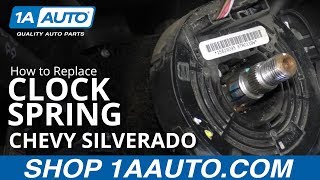
- Faulty Airbag Clockspring (Spiral Cable) (Very Common) — The clockspring is a coiled ribbon of wires inside the steering column connecting the steering wheel's electronics. Constant turning fatigues these thin wires, causing them to break (open circuit) or short out, making this the most frequent cause of code B0024. 🎬 See this step-by-step guide to replacing a Chevy clock spring.
- Wiring or Connector Issues (Common) — Airbag systems use yellow connectors with locking tabs (CPAs). Loose connections, corroded pins, or pinched wires in the steering column, under the seats, or near the firewall cause shorts to ground or power. Items shoved under the driver's seat frequently crush the SRS module wiring harness.
- Low Vehicle System Voltage (Uncommon) — A dying battery or failing alternator causes erratic voltage readings across the SRS module. The system is highly sensitive, and a low-voltage event triggers a B0024 code that becomes a 'hard fault' requiring a scanner to clear.
- Aftermarket Accessories or Modifications (Uncommon) — Improperly installed remote starters, alarms, or stereos interfere with SRS wiring. Tapping into the wrong power or ground source near the steering column introduces electrical noise that triggers the code.
- Faulty Driver Airbag Module (Inflator) (Less Common) — The steering wheel's airbag module contains the inflator charge. It rarely develops an internal short. Technicians diagnose this by substituting the airbag with a 2.0-ohm resistor to see if the code clears.
- Faulty Supplemental Restraint System (SRS) Control Module (Rare) — The SRS module is the system's 'brain'. It fails rarely due to internal faults, water damage, or voltage spikes, and is always the last component replaced after ruling out wiring and the clockspring.
Symptoms
- Airbag Warning Light is On — The dashboard airbag light stays illuminated, indicating a disabled system.
- Steering Wheel Controls Fail — The clockspring carries signals for the horn, cruise control, and radio. Losing these functions alongside the airbag fault strongly points to a failed clockspring.
- Horn Does Not Work — A broken electrical connection inside the clockspring disables the horn. Testing the horn quickly verifies clockspring health.
- 'Service Airbag' Message — The driver information center displays a text warning alongside the dashboard light.
- No Communication with SRS Module (scan-tool only — no driver-felt sign) — A short circuit brings down the serial data line, preventing a scan tool from communicating with the SRS module.
Diagnostic Flowchart
Tap your situation to follow the diagnostic path that matches what you're seeing on this code.
Common Fixes & Costs
- Replace Airbag Clockspring
— Parts: $75-$350, Labor: $150-$300, ~1.5 hr book time
(Intermediate)
Chevy/GMC Trucks (2007-2013): OEM 25966963 (Alt: Dorman 525-215)
Ford F-150 (2009-2014): OEM BL3Z-14A664-B (Alt: Dorman 525-226)
Ram 1500 / Jeep Wrangler (Various Years): OEM 68193280AB, 68339336AB (supercedes) (Alt: Various, check fitment for 5156106AD) - Repair Wiring or Replace Connector/CPA Clip — Parts: $5-$50, Labor: $150-$300, ~1.5 hr book time (Professional)
- Pay for Professional Diagnosis — Parts: $0, Labor: $100-$200, ~1.0 hr book time (Beginner)
- Replace Driver-Side Airbag Module — Parts: $200-$800, Labor: $70-$170, ~0.8 hr book time (Professional)
- Replace SRS Control Module
— Parts: $200-$600, Labor: $150-$350, ~1.5 hr book time
(Professional)
Chevy Silverado (2007): OEM 15897261 (Alt: ACDelco 15897261)
DIY vs Professional
- Replace Airbag Clockspring — Beginner: Not recommended for beginners.
Tools: SRS-capable scan tool, socket set, torque wrench, trim removal tools, steering wheel puller (sometimes). - Repair Wiring or Replace Connector — Beginner: No.
Tools: Professional diagnostic tools, multimeter, wire strippers, terminal crimpers, soldering iron, service manual. - Replace Driver-Side Airbag Module — Beginner: No. Extremely dangerous.
Tools: Socket set, torque wrench, SRS scan tool. - Replace SRS Control Module — Beginner: No.
Tools: Socket set, SRS scan tool for module programming.
Used vs. New Parts: Buying Guide
When a used part is worth it: For the clockspring, a used OEM part from a low-mileage vehicle is a cost-effective option for an older car, but carries risks as it is a wear item. New aftermarket parts are a budget option, but quality is inconsistent.
Donor-vehicle mileage cap: roughly under 70000 miles for the part to have meaningful remaining life.
Donor quality checklist:
- Verify the donor vehicle part number matches exactly.
- Avoid parts from vehicles with flood or front-end damage.
- Ask for a warranty, even if it's only 30-90 days, to protect against a dead-on-arrival part.
Decision logic:
- If Vehicle is newer or you plan to keep it long-term → Buy a new OEM part. The higher cost is justified for the primary safety system's reliability.
- If Budget is the primary concern and you accept the risk → A new, reputable aftermarket part (e.g., Dorman) is a better risk than a used part with unknown history.
- If The part is for a very old vehicle with low value → A used OEM part from a trusted recycler is a viable last resort, but understand it has a limited remaining lifespan.
Warranty tradeoff: Used parts typically have a 30-90 day warranty. Aftermarket new parts often come with a 1-year to limited lifetime warranty. New OEM parts carry a 1-year manufacturer warranty.
Worst-case if a used part fails: $200-$400 if a used or cheap aftermarket part fails prematurely, requiring repeat labor costs plus the price of another part.
What Happens If You Wait — Timeline
- Immediately: The SRS computer detects the voltage fault during its initial power-on self-test. The airbag warning light illuminates. The entire SRS system, including the driver's airbag, is disabled. (MPG impact: 0%% · Added cost: $0 (Safety risk is the primary cost))
- First Drive: The vehicle is driven with a disabled airbag. In a frontal collision, the driver's airbag will not deploy, increasing the risk of serious injury or death by an estimated 29%. (MPG impact: 0%% · Added cost: N/A (Extreme safety risk))
- Next State Inspection: An illuminated airbag light is an automatic failure in nearly all jurisdictions. You cannot legally register the vehicle until it is repaired. (MPG impact: 0%% · Added cost: $100-$200 (Failed inspection fees, re-test costs, and potential fines))
- After a Collision: If a collision occurs, the vehicle's event data recorder ('black box') shows the SRS system was faulted at the time of the crash. Insurance companies use this to argue negligent maintenance, reducing claim payouts or increasing liability. (MPG impact: 0%% · Added cost: $1,000s - $100,000s (Potential for denied insurance claims, legal fees, and uncovered medical expenses))
Cost of Not Fixing It
- Immediately: The driver's airbag is disabled and will not deploy in a crash, drastically increasing the risk of serious injury or death. (Added cost: N/A (Safety Risk))
- At next inspection: The vehicle automatically fails any mandatory state safety inspection, preventing legal registration renewal. (Added cost: $100-$200 (Failed inspection fees and re-test costs))
- After a collision: An insurance company denies a claim or increases liability if it determines the safety system was knowingly left in a faulted state. (Added cost: Potentially thousands in denied claims or legal fees.)
Diagnosis Steps
- Read the Codes with an SRS-Capable Scan Tool
Use a scan tool that reads SRS (airbag) codes to confirm B0024. Basic OBD2 scanners cannot read these codes. Note any other codes. Codes like B0026 (open circuit) or B0044 (stage 2 fault) often appear with B0024 and pinpoint the issue.
Tools: SRS-Capable OBD-II Scan Tool (Beginner) - Visually Inspect Wiring and Connectors
Check the bright yellow airbag connectors under the dash, at the base of the steering column, and under the driver's seat. Look for loose connections, pushed-out pins, or green/white corrosion. Remove items stored under the seat that crush the harness.
Tools: Flashlight (Beginner) - Inspect Connector Position Assurance (CPA) Clips
On GM vehicles, a broken plastic CPA clip on the yellow airbag connectors causes this code. Per GM TSB #08-09-41-002H, inspect the CPA on the connectors at the steering column and behind the kick panels. Replace broken clips.
Tools: Flashlight, Trim Removal Tools (Intermediate) - Analyze Live Data PIDs
View the live data for the SRS module. Look for 'Driver Deployment Loop Resistance'. A healthy circuit reads between 2.0 and 3.5 ohms. A reading > 4.8 ohms or 'OL' suggests a broken wire. A reading < 1.3 ohms suggests a short circuit. Unstable readings point to a bad clockspring.
Tools: Advanced Bi-Directional Scan Tool (Advanced) - Perform a Wiggle Test
With the scan tool displaying live data for the driver's airbag circuit resistance, carefully wiggle the wiring harness at the steering column, under the driver's seat, and at kick panel connectors. If the resistance value jumps wildly, you found an intermittent connection.
Tools: SRS-Capable OBD-II Scan Tool (Intermediate) - Perform Resistor Substitution Test
Disconnect the battery and wait 15 minutes. Disconnect the driver airbag module and connect a 2.0 to 2.5-ohm airbag simulator resistor in its place. Reconnect the battery and clear codes. If the code stays away, the airbag module is faulty. If it returns, disconnect the clockspring at the steering column base and connect the resistor to the vehicle harness. If the code clears, the clockspring is faulty.
Tools: 2.0-2.5 Ohm Airbag Simulator/Resistor, Basic Hand Tools, SRS-Capable Scan Tool (Advanced) - Test Circuit Voltage and Resistance with a Multimeter
NEVER probe airbag module connectors directly. With the battery and airbag disconnected, check for a short to ground by probing between each airbag circuit wire and chassis ground; the reading must be infinite (OL). Check resistance through the clockspring; it must be under 1.0 ohm per wire. Readings outside this range indicate a fault.
Tools: Digital Multimeter, Service Manual, Back-Probe Kit (Advanced) - Replace the Faulty Component and Clear Codes
After replacing the identified part, reconnect everything, ensuring all connectors and CPA clips are fully seated. Reconnect the battery. Use the SRS scan tool to clear the B0024 code. Cycle the ignition and re-scan to confirm the light stays off.
Tools: SRS-Capable OBD-II Scan Tool, Basic Hand Tools (Intermediate)
When This Code Triggers (Freeze-Frame Conditions)
- System State: Key On (Fault detected during the SRS module's initial self-test, which runs for ~6 seconds after ignition is turned on.)
- Circuit Voltage: <1.0V or >4.1V (The voltage on the deployment loop circuit was measured outside the manufacturer's specified range for a set time (e.g., >2 seconds).)
- Vehicle Speed: 0 mph (The fault is almost always detected before the vehicle is in motion, during the power-on self-test.)
- Engine RPM: 0 or >500 (Occurs during 'Key On, Engine Off' or immediately after the engine starts.)
Related Codes
- B0026 — This code means 'Driver Frontal Deployment Loop Open'. It often appears with B0024. B0026 sets when resistance is too high (e.g., > 4.8 ohms on a GM), pointing specifically to a broken wire or disconnected connector. If you have both, the fault is intermittent, causing both high resistance and voltage fluctuations.
- B0022 — This code means 'Driver Frontal Deployment Loop Resistance Low'. It indicates a short circuit between the high and low wires of the airbag circuit, causing resistance to drop below a threshold (e.g., < 1.3 ohms on a GM). If you have only B0022, the two airbag wires are touching.
- B0044 — This code relates to the second stage ('Stage 2') of a dual-stage driver airbag. A single faulty component, like the clockspring, contains wiring for both stages. Seeing B0024 (Stage 1 fault) alongside B0044 (Stage 2 fault) strengthens the case for a failed clockspring or main connector.
- B0012 / B0013 — These codes relate to the passenger-side airbag deployment loop. While they refer to a different airbag, they are included in the same GM Technical Service Bulletins as B0024. Seeing one of these codes alongside B0024 suggests a systemic issue like a faulty SRS module or widespread corrosion.
Climate & Environmental Factors
- Cold Weather: Intermittent faults are more common in cold temperatures. As materials contract, a worn wire inside a clockspring or a loose pin in a connector temporarily loses contact, creating an open circuit that triggers the code during startup. The fault disappears once the cabin warms up.
- High Humidity: Humid environments accelerate corrosion on connector terminals, especially if water intruded into the cabin. This corrosion creates unwanted resistance, triggering high-resistance codes like B0026 or intermittent voltage faults like B0024.
How to Talk to a Mechanic About This Code
Say this: "I have an airbag warning light on, and my scanner shows code B0024 for the driver-side airbag circuit. I'd like to schedule a diagnostic appointment to pinpoint the electrical fault. I suspect it might be the clockspring or a connector issue."
This signals you understand the code relates to a specific circuit. It directs the technician to perform a targeted electrical diagnosis rather than a vague 'check airbag light' request, preventing unnecessary part replacements.
Avoid saying:
- 'My airbag light is on, just fix it.'
- 'I need a new airbag.' (The module itself is rarely the cause)
- 'Can you just clear the code?' (The code returns immediately if the fault isn't fixed)
Questions to ask before authorizing the repair:
- What were the results of the diagnostic tests? Was the resistance in the circuit too high or too low?
- How did you isolate the failure to this specific part (e.g., clockspring, connector)? Did you perform a resistance or wiggle test?
- Is the recommended part a new OEM, aftermarket, or used part, and what is the warranty on both the part and the labor?
- If the repair involves replacing a module, does it require programming, and is that included in the quote?
Where to Take It: Dealer vs Independent vs Chain
- Dealer:
A strong, safe choice, especially if module programming is needed. They are best equipped for SRS work but are the most expensive option.
Best for: Vehicles under warranty, Complex repairs involving module programming, Vehicles with known manufacturer-specific issues or TSBs
Downsides: Typically the highest labor rates and parts costs., Quicker to replace a whole assembly rather than diagnose a smaller component or wiring fault. (Typical cost: +50% vs. baseline) - Independent Shop:
Best fit for most common repairs (clockspring, wiring). Choose a reputable shop with ASE-certified technicians, and confirm they are experienced working on airbag systems.
Best for: Out-of-warranty vehicles where cost is a factor., Common repairs like clockspring replacement., Building a long-term relationship with a trusted mechanic.
Downsides: Shop quality and technician expertise with SRS systems varies widely., Lacks the latest manufacturer-specific diagnostic tools or information. (Typical cost: +0% vs. baseline) - Chain Shop:
AVOID. Airbag system repair is a safety-critical task requiring specialized expertise beyond the scope of most chain shops. The risk of improper repair is too high.
Best for: Simple, routine maintenance like oil changes or tires.
Downsides: Technicians lack specialized training for complex SRS diagnostics., High pressure to upsell leads to misdiagnosis or unnecessary repairs. (Typical cost: -10% vs. baseline)
When to Walk Away From the Repair
If the estimated repair cost for the airbag system exceeds 50% of the vehicle's current private-party market value, seriously consider whether the investment is worthwhile, especially on an older, high-mileage car.
- Car worth $4000, fix is $700: Fix it. This is a critical safety repair and the cost is well within a reasonable limit relative to the car's value.
- Car worth $2500, fix is $1200: Borderline. The repair cost is nearly 50% of the car's value. If the car has other pending issues, consider selling it 'as-is' to a buyer who can fix it themselves.
- Car worth $1500, fix is $900: Walk away. It rarely makes economic sense to put this much money into a low-value car for a single repair. The vehicle is approaching the end of its economic life.
What Scan Tool You Need for This Code
Minimum: A scan tool that reads and clears Supplemental Restraint System (SRS) or airbag codes. Basic engine code readers (OBD-II) will NOT work for this code.
A standard $20 OBD-II scanner only accesses powertrain codes. It cannot communicate with the SRS module, so it will not see or clear code B0024.
Budget: Autel AutoLink AL619 (~$92) — Reads and clears codes from the SRS (airbag), ABS, engine, and transmission systems. It retrieves the B0024 code and clears it after the repair is complete.
Mid-range: BlueDriver Pro (~$120) — Connects to a smartphone app via Bluetooth and reads/clears SRS codes for many major brands. It offers live data graphing, useful for performing 'wiggle tests' to find intermittent connection issues.
Professional: Autel MaxiCOM MK808 / Foxwell NT630 Plus (~$150-500) — Offers bi-directional control, allowing the user to command the SRS module and view advanced live data and circuit resistance. This level of diagnostics is essential for accurately isolating the fault between the clockspring, airbag module, and wiring.
Rent vs buy: Most auto parts stores do NOT rent SRS-capable scanners due to liability. If you plan on doing your own car repairs, buying a budget or midrange SRS-capable scanner is a worthwhile investment. If this is a one-time fix, it's more cost-effective to pay a shop's diagnostic fee ($100-$200).
How to Clear the Code After You Fix It
- Ensure all components are correctly installed and all connectors are secure.
- Reconnect the vehicle's battery.
- Use an SRS-capable OBD-II scan tool to access the SRS module and select the option to clear codes.
- Turn the ignition off, then turn it back to the 'ON' position and observe the airbag light.
Drive cycle (~1 minutes): No drive cycle is required. After clearing the code, the system performs a self-test for approximately 7 seconds upon the next ignition 'ON' cycle. If the repair was successful, the airbag light illuminates briefly and turns off.
Readiness monitors affected: None
Watch out for:
- Using a basic OBD-II scanner that cannot access or clear SRS codes.
- Simply disconnecting the battery will not clear a 'hard fault' like B0024 from the SRS module's memory.
- The code returns immediately during the next self-test if the root electrical cause is not fixed.
Will This Fail Emissions / State Inspection?
No — by itself this code doesn't fail OBD inspection (but it can keep readiness monitors from setting, which causes a separate fail).
- California: An airbag light will NOT fail a California smog check, as it is an emissions-only test. However, the vehicle is still considered unsafe.
- New York: An illuminated airbag warning light is an automatic failure of the annual safety inspection.
- Texas: In counties requiring a safety inspection, an illuminated airbag light is a failure item. In other counties, it is not checked.
Most Commonly Affected Vehicles
- Chevrolet Silverado, Trailblazer, Tahoe, Traverse (2002-2014) — Known for issues with connectors. TSB #05-09-41-001B points to connectors C221/C222 behind the kick panels on 2003-2007 trucks. TSB #08-09-41-002H covers 2005-2014 models for faulty Connector Position Assurance (CPA) clips. The SRS module is often under the driver's seat, where wiring is prone to damage.
- GMC Sierra, Yukon, Acadia (2003-2014) — Shares the same platforms and wiring issues as Chevrolet trucks. Covered by the same GM Technical Service Bulletins (#05-09-41-001B and #08-09-41-002H) addressing high resistance in specific connectors (C221/C222) and faulty CPA clips.
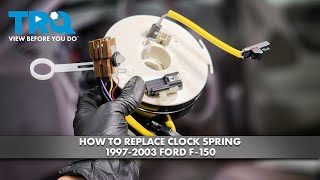
- Ford F-150, Mustang, Focus (2004-2015) — The clockspring is a very common failure point. Diagnosis often reveals an internal break in the clockspring's ribbon cable. Ford issued Customer Satisfaction Program 15N02, extending warranty coverage for the clockspring on some models.
- Toyota Corolla, Camry, Tacoma (2003-2013) — Clockspring failures are a well-documented issue on these high-volume models. The replacement part is more expensive for Toyota compared to some domestic brands, with repair costs often in the $450-$700 range.
- Chrysler/Dodge/Ram Ram 1500, Grand Caravan, Town & Country (2008-2018) — Clockspring failures are a frequent issue, often leading to B0024 and loss of steering wheel controls. Part number 68193280AB is a common replacement.
- Nissan Altima, Sentra, Rogue, Versa (2012-2024) — Nissan has a known issue with the Occupant Classification System (OCS) under the passenger seat (TSB NTB19-071D). This highlights the sensitivity of under-seat wiring and connectors, which also cause driver-side faults.
- Saab 9-5 (2002-2005) — Service information provides very specific voltage and resistance values that trigger B0024, pointing to a sensitive diagnostic system. The code sets if voltage is >4.1V or <1.0V for 2 seconds.
- Cadillac Escalade, CTS (2003-2014) — Included in the same GM TSBs (#05-09-41-001B and #08-09-41-002H) as Chevy and GMC trucks for faulty instrument panel connectors and CPA clips causing airbag codes.
Manufacturer-Specific Notes
- General Motors (Chevy, GMC, Cadillac): GM has two major TSBs for this issue. TSB #05-09-41-001B for 2003-2007 trucks/SUVs targets high resistance in connectors C221/C222 behind the kick panels. TSB #08-09-41-002H for 2005-2014+ vehicles addresses intermittent airbag lights caused by poor connections and advises inspecting/replacing Connector Position Assurance (CPA) locks. Checking these connectors is a critical first step before replacing parts.
- Ford: Ford issued Customer Satisfaction Program 15N02 which extended the warranty coverage for the clockspring on certain 2011-2014 F-150, 2012-2013 Mustang, and other models due to high failure rates. Owners of affected vehicles were eligible for a free replacement even outside the standard warranty period.
- Saab: Saab's service information is very specific, stating that code B0024 sets if the control module sees voltage above 4.1 volts or below 1.0 volt for more than 2 seconds. It also specifies resistance thresholds for related codes (B0022 < 2.0 ohms, B0026 > 4.5 ohms).
- Chrysler / Dodge / Ram: On many Chrysler-family vehicles, the clockspring is a known weak point. Failure is so common that it is the primary suspect if B0024 is present along with non-functional steering wheel buttons. No large-scale recall has been issued specifically for the clockspring itself despite widespread reports.
Real Owner Stories
2006 GMC Sierra with 150K miles - The Intermittent Connector Fix
Airbag light came on when making a left turn. Horn and steering wheel controls worked fine. Codes B0026 and B0024 were present.
What they tried:
- Initially suspected the clockspring due to the turning symptom. Replaced the front impact sensor with no change.
Outcome: The actual problem was high resistance in the C221 connector behind the driver's side kick panel, a known issue covered by GM TSB #05-09-41-001B. The owner disconnected the connector, cleaned the pins, and re-secured it. This permanently cleared the codes.
Lesson: On GM trucks, always check the kick panel connectors (C221/C222) before assuming a bad clockspring. A simple connector cleaning saves hundreds of dollars.
2002 Chevy Trailblazer - The Misdiagnosis Story
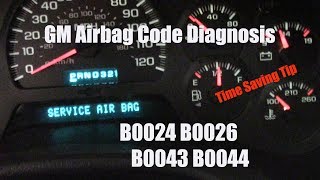
Airbag light and 'Service Airbag' message appeared. Scan showed multiple codes: B0024, B0026, B0043, and B0044.
What they tried:
- A shop immediately quoted a clockspring replacement.
Outcome: Using a 2-ohm resistor test, a technician isolated the fault. With the resistor connected at the base of the steering column, the code cleared, proving the vehicle's main wiring was fine. Connecting the resistor in place of the airbag itself caused the code to return, confirming the fault was in the clockspring. Replacing the clockspring fixed the issue.
Lesson: Don't just replace parts. A systematic diagnosis using a simple resistor definitively proves whether the clockspring, the airbag module, or the vehicle wiring is at fault.
Honda with aftermarket stereo - The Unusual Root Cause
Airbag light came on intermittently after a new stereo and remote starter were installed. The code was B0024.
What they tried:
- The owner checked all standard SRS connectors with no success. The stereo shop denied responsibility.
Outcome: An electrical shop found the stereo installer tapped into a power wire on the same circuit as the SRS module. This created voltage fluctuations that the sensitive SRS module interpreted as a fault. The remote starter was re-wired to a proper power source, and the B0024 code cleared permanently.
Lesson: If the fault appears shortly after an aftermarket electronic installation, the new wiring is the primary suspect. Improperly tapped wires introduce voltage instability.
2017 Toyota Camry - The Under-Seat Damage Fix
Airbag light appeared after the owner's puppy chewed on wires under the driver's seat. The yellow airbag wiring harness was visibly damaged.
What they tried:
- The owner took the vehicle to the dealership for repair.
Outcome: The dealership repaired the damaged wires and cleared the codes. To prevent recurrence, the owner fashioned a protective barrier from flexible plastic sheeting, secured with zip ties to the seat frame, to block access to the wiring harness.
Lesson: Always check for physical damage to under-seat wiring, especially if items are stored there or if you have pets. A visual inspection quickly identifies the cause.
How to Prevent This Code From Triggering
- Avoid storing items under the front seats (Daily habit) — Items like water bottles or shoes roll under the seat and crush the yellow SRS wiring harness and connectors, causing codes like B0024.
- Protect under-seat wiring (Once) — If you store items near the seats or have pets, create a physical barrier using flexible plastic sheeting or split-loom tubing secured with zip ties to shield the exposed SRS harness.
- Secure the steering wheel during repairs (During repairs) — When removing the steering wheel or dropping the column, secure the steering wheel to prevent it from spinning. If the wheel spins freely, it over-rotates and snaps the delicate ribbon cable inside the clockspring.
- Keep cabin dry and address water leaks promptly (As needed) — Water intrusion from a leaking windshield drips onto connectors in the kick panels or the SRS module itself. Moisture causes corrosion on connector pins, increasing resistance and triggering voltage faults.
- Use connector-safe cleaning products (During repairs) — When cleaning SRS connectors, use a dedicated electronic contact cleaner. General-purpose lubricants degrade plastic housings and leave residue that alters circuit resistance.
Frequently Asked Questions
Is it safe to drive with code B0024?
No, it is not safe. The B0024 code means the driver's airbag is disabled and will not deploy in an accident, significantly increasing the risk of injury or death in a frontal collision.
Can I fix code B0024 myself?
Visual checks are okay, but airbag repairs require professionals. Mishandling components causes accidental deployment and severe injury. Special tools are required to safely disarm the system and diagnose the fault.
Will clearing the code fix the problem?
No. B0024 is a 'hard code' indicating a persistent electrical fault. Clearing the code without fixing the underlying issue results in the airbag light coming right back on as soon as the SRS module runs its self-test.
My horn and radio buttons also stopped working. Is that related?
Yes, it is very likely related. The airbag clockspring in the steering column also contains the wiring for those controls. Losing those functions at the same time strongly indicates the clockspring is the problem.
What are the most common misdiagnosis mistakes for B0024?
A common mistake is immediately replacing the expensive clockspring or airbag module without testing the circuit. The fault is often a much cheaper fix, like a corroded connector under the seat or a broken plastic CPA clip in the kick panel.
How much does it cost to fix code B0024?
A professional diagnosis costs $100-$200. Replacing a faulty clockspring, the most common fix, totals $225-$650. Minor wiring repairs cost $150-$350, while module replacements exceed $800.
Can a low battery cause code B0024?
Yes. The SRS module is very sensitive to voltage. A weak battery, failing alternator, or jump-start causes a momentary voltage drop or spike, setting a B0024 code. If clearing the code with a capable scanner fixes it permanently, the low voltage event was the cause.
Will my car pass a state inspection with the airbag light on?
No. In virtually all jurisdictions that have mandatory vehicle safety inspections, an illuminated airbag warning light is an automatic failure. The vehicle is considered unroadworthy.
What is a 'shorting bar' in an airbag connector?
A shorting bar is a safety feature built into airbag system connectors. When you disconnect the connector, this small metal or plastic piece automatically shorts the two terminals together. This prevents stray voltage or static electricity from accidentally deploying the airbag during service.
Key Takeaways
- Code B0024 disables the driver's airbag, increasing the risk of fatal injury in a frontal crash by 29%.
- A broken steering wheel clockspring causes over 80% of B0024 codes, often accompanied by dead horn or cruise control buttons.
- Inspect the yellow C221/C222 kick-panel connectors and CPA clips on 2003-2014 GM vehicles before buying any replacement parts.
- Never probe airbag connectors directly with a multimeter; use a 2.0-2.5 ohm simulator resistor to safely isolate the fault.
- Expect to pay $100 to $200 for a professional SRS diagnosis, which is required since basic $20 OBD-II scanners cannot read or clear airbag codes.
Helpful Videos
Shop the Parts Behind B0024
Below are the parts most often responsible for code B0024, ranked by how frequently each one is the actual culprit (per the diagnosis above). Tap any to see what we have for your vehicle.



The information in this article is provided for general reference and educational purposes only. Vehicle specifications, procedures, and part compatibility can vary by production date, trim level, and region. Always consult your vehicle's factory service manual and verify part numbers before purchasing or performing repairs. Safety-critical components such as airbags, seat belts, and braking systems should be installed by a qualified professional.
- 🧭 Diagnostic Flowchart
- 🎬 Helpful Videos
- 🛍️ Shop This Part
- What Does B0024 Mean?
- Can I Drive With B0024?
- Common Causes
- Symptoms
- Common Fixes & Costs
- DIY vs Professional
- Used vs. New Parts: Buying Guide
- What Happens If You Wait — Timeline
- Cost of Not Fixing It
- Diagnosis Steps
- When This Code Triggers (Freeze-Frame Conditions)
- Related Codes
- Climate & Environmental Factors
- How to Talk to a Mechanic About This Code
- Where to Take It: Dealer vs Independent vs Chain
- When to Walk Away From the Repair
- What Scan Tool You Need for This Code
- How to Clear the Code After You Fix It
- Will This Fail Emissions / State Inspection?
- Most Commonly Affected Vehicles
- Manufacturer-Specific Notes
- Real Owner Stories
- 2006 GMC Sierra with 150K miles - The Intermittent Connector Fix
- 2002 Chevy Trailblazer - The Misdiagnosis Story
- Honda with aftermarket stereo - The Unusual Root Cause
- 2017 Toyota Camry - The Under-Seat Damage Fix
- How to Prevent This Code From Triggering
- Frequently Asked Questions
- Is it safe to drive with code B0024?
- Can I fix code B0024 myself?
- Will clearing the code fix the problem?
- My horn and radio buttons also stopped working. Is that related?
- What are the most common misdiagnosis mistakes for B0024?
- How much does it cost to fix code B0024?
- Can a low battery cause code B0024?
- Will my car pass a state inspection with the airbag light on?
- What is a 'shorting bar' in an airbag connector?
- Key Takeaways
- 🎟️ Get 5% Off