

OBD-II Code B0040: Airbag Deployment Circuit Fault
The Ultimate 2026 Guide: What B0040 Means, Why It Triggers, and How to Fix It for Good
- Code B0040 disables your entire airbag system, meaning zero airbags will deploy in a collision.
- Over 80% of B0040 codes on General Motors vehicles stem from a loose yellow connector or broken $15 CPA clip under the driver's seat.
- Always perform a visual inspection of the under-seat wiring harness before authorizing a $1,000+ Airbag Control Module (SDM) replacement.
- Disconnect the negative battery terminal and wait exactly 15 minutes to discharge the backup capacitors before touching any yellow SRS connectors.
- The airbag warning light will not turn off automatically; you must manually clear the hard code using an SRS-capable OBD-II scanner after completing the repair.
What Does B0040 Mean?
Code B0040 signifies your vehicle's primary safety computer, the Sensing and Diagnostic Module (SDM), detected a critical electrical fault in an airbag deployment circuit. This fault is an open circuit (broken wire), a short circuit, or an out-of-spec resistance value. In response, the SDM illuminates the airbag warning light and deactivates the entire airbag system to prevent unintended deployment, rendering it inoperative until repaired and cleared.
Technical definition: The official SAE/OBD-II definition for code B0040 varies significantly by manufacturer. For most General Motors (GM) vehicles, it is defined as 'Left Front/Driver Side Deployment Loop'. Advanced scan tools retrieve a symptom byte (e.g., 04, 0D, 0E) specifying if the circuit's resistance is too high (open/loose connection) or too low (short circuit), which is crucial for accurate diagnosis.
Can I Drive With B0040?
No — Do Not Drive. Mechanically, the vehicle operates normally, but it is critically unsafe to drive. The B0040 code confirms the entire Supplemental Restraint System (SRS) is disabled. In a collision, airbags will not deploy, placing occupants at a significantly higher risk of serious injury or death. This condition is an automatic failure for safety inspections in many jurisdictions.
Common Causes
- Loose or Damaged Airbag System Connector (Very Common) — This is the primary cause, especially on GM vehicles. A small plastic lock called a Connector Position Assurance (CPA) retainer breaks or loosens, causing the main yellow connector to lose contact. These connectors sit under the front seats and are easily disturbed by seat movement or floor items.
- Damaged, Stretched, or Chafed Wiring (Common) — The wiring harness leading to airbag components, particularly under the driver's seat, stretches, cuts, or rubs through from years of seat movement. This creates an open or short circuit.
- Faulty Clock Spring (Airbag Spiral Cable) (Less Common) — The clock spring is a coiled ribbon cable in the steering column maintaining electrical contact for the driver's airbag. Failure creates an open or short in the circuit, often accompanied by a non-working horn or dead steering wheel controls.
- Corroded Connectors or Ground Posts (Less Common) — Water intrusion (from sunroof leaks or convertible tops) corrodes airbag wiring connectors under carpets. Additionally, B-pillar ground posts for the SRS system can loosen or corrode, causing intermittent high-resistance faults.
- Faulty Airbag or Seat Belt Pretensioner (Rare) — The airbag module or seat belt pretensioner fails internally. Suspect this component only after testing and confirming the entire electrical circuit is intact.
- Faulty Airbag Control Module (SDM) or Software (Rare) — Internal failure or software corruption of the main airbag computer causes a B0040 code. This results from moisture damage, voltage spikes, or a weak battery during an update. This is a last-resort diagnosis.
Symptoms
- Solid Airbag Warning Light & DIC Message — The primary symptom is the airbag light remaining illuminated on the dashboard. Many vehicles also display a 'Service Air Bag' or 'Service Restraints System' message on the Driver Information Center.
- No Change in Vehicle Drivability — The fault isolates to the safety system and does not affect engine, transmission, or braking performance. The vehicle feels completely normal to drive.
- Audible Click from SRS Module on Startup — Some owners hear a distinct 'click' sound from the SRS control module area during the vehicle's startup self-test, indicating the system detected a fault and disabled itself.
- Airbag System Completely Disabled (scan-tool only — no driver-felt sign) — When the airbag light is on for a B0040 fault, the entire Supplemental Restraint System (SRS) deactivates as a fail-safe. No airbags or pretensioners function in a crash.
Diagnostic Flowchart
Tap your situation to follow the diagnostic path that matches what you're seeing on this code.
Common Fixes & Costs
- Reseat Connector and Replace CPA Retainer — Parts: $5-$20, Labor: $100-$200, ~1.0 hr book time (DIY)
- Repair Damaged Wiring Harness — Parts: $25-$65, Labor: $150-$300, ~2.0 hr book time (Intermediate)
- Replace Clock Spring — Parts: $60-$250, Labor: $150-$350, ~1.5 hr book time (Professional)
- Replace Seat Belt Pretensioner — Parts: $150-$400, Labor: $100-$300, ~1.0 hr book time (Professional)
- Replace Airbag Control Module (SDM) — Parts: $500-$1,200, Labor: $150-$300, ~1.8 hr book time (Professional)
Used vs. New Parts: Buying Guide
When a used part is worth it: For non-pyrotechnic parts like connector pigtails, used is a viable option. For safety-critical components like clock springs or seat belt pretensioners, new OEM or reputable rebuilt parts are strongly recommended. Used airbags and modules carry significant risks.
Donor-vehicle mileage cap: roughly under 60000 miles for the part to have meaningful remaining life.
Donor quality checklist:
- Verify the donor vehicle was not involved in a flood or fire, as moisture and heat damage SRS components.
- For electronic modules, the part number must be an exact match.
- Avoid used pyrotechnic devices (airbags, pretensioners) as their history is unknown.
Decision logic:
- If The part is a simple connector or wiring pigtail. → Used is acceptable if in good condition.
- If The part is a clock spring or seat belt pretensioner. → New OEM or a professionally rebuilt unit from a reputable source is the safest choice.
- If The part is an airbag module (SDM) or the airbag itself. → Buy new. Used modules are often VIN-locked and require costly reprogramming.
Warranty tradeoff: Used parts typically have a 30-90 day warranty. New aftermarket parts often carry a 1-year to limited lifetime warranty. New OEM parts carry the manufacturer's warranty.
Worst-case if a used part fails: $300-$800 if a used component like a clock spring or pretensioner fails. This includes repeat labor plus another part.
What Happens If You Wait — Timeline
- Instant (0 seconds): The SDM detects a resistance value outside its specified range for more than 500 milliseconds during startup. The airbag warning light illuminates, and the entire SRS system is immediately disabled. (MPG impact: 0%% · Added cost: $0)
- 0-6 months (The 'Simple Fix' Window): The fault is an intermittent high-resistance open circuit from a loose connector. The repair is as simple as reseating a connector and replacing a $15 CPA clip. (MPG impact: 0%% · Added cost: $100-$250 (Typical diagnostic cost))
- 6-18 months (The 'Complex Fix' Window): An ignored loose connector allows for micro-arcing and movement, damaging the connector's pins or chafing wire insulation. The repair requires a new wiring pigtail and 2 hours of labor. (MPG impact: 0%% · Added cost: $300-$550 (Cost of a more complex wiring repair))
- 18+ months (The 'Catastrophic' Window): A chafed wire rubs through completely and shorts to ground. A short circuit sends incorrect voltage to the SDM, damaging the module's internal circuitry. The repair escalates to a module replacement. (MPG impact: 0%% · Added cost: $1,200-$1,800 (Cost of SDM replacement and programming))
Cost of Not Fixing It
- Immediate: The entire Supplemental Restraint System (SRS) is disabled. No airbags or seat belt pretensioners deploy in a crash, drastically increasing the risk of serious injury or death. (Added cost: N/A)
- Next Vehicle Inspection: The vehicle automatically fails the safety portion of any state vehicle inspection checking for an illuminated airbag warning light. (Added cost: $20-$50 (for the failed inspection fee and re-test fee))
- Long-Term: There is no direct escalating mechanical damage from ignoring a B0040 code. The cost is entirely related to safety risk and the inability to legally register the vehicle. (Added cost: Potentially infinite in the event of an accident.)
Diagnosis Steps
- Read the Full Code with a Capable Scanner
Use an OBD-II scanner that reads SRS/Airbag 'B' codes. Record the exact code and any two-digit 'symptom byte' (e.g., 02, 04, 0D, 0E). This byte pinpoints the electrical nature of the fault (e.g., 0D = High Resistance, 0E = Low Resistance), saving significant diagnostic time.
Tools: SRS-capable OBD-II Scan Tool (Beginner) - CRITICAL SAFETY STEP: Disable the SRS System
Disconnect the negative battery terminal. Wait exactly 15 minutes before proceeding. This allows the backup power capacitors within the SDM to fully discharge, preventing accidental airbag deployment and serious injury.
Tools: Wrench set (Beginner) - Visually Inspect Under-Seat Connectors and Wiring
The most common failure point is the large, yellow airbag connector under the driver's seat. Check if it is loose, disconnected, or damaged. Pay close attention to the small plastic Connector Position Assurance (CPA) clip; if broken or missing, the connection is insecure. Examine the harness for chafing or pinch points.
Tools: Flashlight (Beginner) - Inspect Other Related Connectors (B-Pillar, Steering Column)
Inspect other yellow connectors in the circuit, including the connector at the base of the B-pillar for the seat belt pretensioner or the connectors at the base of the steering column for the clock spring. Look for loose connections or broken CPA clips.
Tools: Trim removal tools, Flashlight (Intermediate) - Analyze Live Data PIDs (Advanced Users Only)
Using a professional scan tool, view the live data for the deployment loop. Look for the 'Deployment Loop Resistance' PID. A healthy circuit displays between 1.3 and 3.9 ohms. A reading near zero indicates a short (B0040 0E), while a very high reading indicates a broken wire or loose connection (B0040 0D).
Tools: Professional Bi-directional Scan Tool (Advanced) - Measure Circuit Resistance (Advanced Users Only)
NEVER use a standard ohmmeter on an airbag or its connector; the meter's current triggers deployment. With the component disconnected, safely measure the resistance of the component itself. A typical airbag deployment loop reads between 1.5 and 3.5 ohms. Infinity (OL) indicates an open circuit; 0 ohms indicates a short.
Tools: High-quality Digital Multimeter (Professional) - Use a Diagnostic Resistor to Isolate the Fault (Advanced Users Only)
To determine if the fault is in the wiring or the component, use a special SRS diagnostic resistor (typically 2.0-2.5 ohms) to substitute the airbag component in the circuit. Clear the codes. If the code is gone, the component is faulty. If the code remains, the fault is in the wiring harness or SDM.
Tools: SRS Diagnostic Resistor Kit (Professional) - Verify Module Voltage and Ground (Advanced Users Only)
With the SDM connector unplugged, check for solid power and ground at the module's connector. Ground resistance to the chassis should be less than 0.1 Ω. Once the battery is reconnected, voltage at the power pin should be stable at 12.0V +/- 0.5V with the ignition on.
Tools: Digital Multimeter, Vehicle-specific wiring diagram (Advanced) - Repair the Fault
If a loose connection is found, reseat it firmly and install a new CPA clip. If a wire is broken, repair it using approved methods for SRS wiring (solder and heat shrink). Do not use simple butt connectors. For corroded terminals, use electronic contact cleaner and apply dielectric grease.
Tools: Soldering iron, Heat shrink, Wire strippers, Dielectric grease (Intermediate) - Reconnect, Clear Codes, and Verify Repair
After the repair is complete, reconnect the negative battery terminal. Use your SRS-capable scan tool to clear the B0040 code from the SDM's memory. Start the car and confirm the airbag light performs its self-check and stays off.
Tools: SRS-capable OBD-II Scan Tool (Beginner)
When This Code Triggers (Freeze-Frame Conditions)
- Ignition Status: ON (The fault is detected during the initial system self-test immediately after the ignition is turned on.)
- System Voltage: 11.5V - 14.5V (The SRS module performs its resistance check when system voltage is within the normal operating range.)
- Deployment Loop Resistance: Varies (e.g., < 1.3 ohms or > 3.9 ohms) (The code sets the instant the SDM measures a resistance value outside the manufacturer's specified range for the circuit.)
- Fault Type: High Resistance / Open Circuit (For B0040, the most common freeze frame data indicates an open or high-resistance fault, consistent with a loose connector.)
Related Codes
- B0040 with symptom bytes (e.g., B0040 02, B0040 04, B0040 0D, B0040 0E) — GM-specific codes providing critical diagnostic detail. '02' or '0E' indicate low resistance (short), while '04' or '0D' indicate high resistance (open/loose connection).
- B0042, B0044 — These codes point to faults in the driver's airbag deployment loops. B0042 indicates low resistance; B0044 indicates high resistance. An intermittent wiring issue causes any of these codes.
- B0012, B0013, B0022, B0033 — This family of codes relates to various airbag circuits. They frequently appear alongside B0040 due to a widespread connector issue affecting multiple circuits.
- U0172 — A 'U' code indicates a communication problem. Seeing this with B0040 points to a severe wiring break or a faulty SDM unable to communicate with a specific sensor.
Climate & Environmental Factors
- High Humidity / Water Intrusion: Moisture and high humidity accelerate corrosion on airbag system connectors, pins, and ground posts. This corrosion increases electrical resistance, triggering high-resistance fault codes like B0040 0D.
- Extreme Temperature Cycles (Hot/Cold): Significant temperature swings cause electrical connectors to expand and contract. Thermal cycling loosens connections, leading to intermittent open circuits. Cold weather makes plastic components like CPA retainers brittle and prone to breaking.
How to Talk to a Mechanic About This Code
Say this: "My airbag light is on and my scanner shows code B0040. I know on these vehicles it is often a bad connector under the driver's seat, as mentioned in GM TSB 08-09-41-002H. Please start by inspecting that specific connector and its CPA clip before diagnosing more expensive parts."
This immediately shows you are an informed customer. It directs the technician to the most likely, and cheapest, cause first. It prevents them from starting with a lengthy diagnostic procedure or immediately quoting an expensive part like a clock spring or control module.
Avoid saying:
- 'My airbag light is on, can you fix it?' (This is too vague and invites a full-cost diagnostic.)
- 'Just replace whatever is broken.'
- 'I think it might be the airbag module.'
Questions to ask before authorizing the repair:
- Did you find a loose connection or a broken CPA clip under the seat?
- If you are recommending a part, what was the resistance reading on the original part's circuit?
- If the connector is the problem, will you be repairing the wiring or just securing the connection?
- What is the warranty on this specific repair and the parts used?
Where to Take It: Dealer vs Independent vs Chain
- Dealer:
Recommended only if the issue is covered by a warranty or recall, or if you've exhausted other options and module programming is required.
Best for: Vehicles still under warranty or covered by a specific recall/special coverage for this issue., Complex cases where a new SDM needs to be programmed to the vehicle.
Downsides: Significantly higher labor rates, often 1.5x to 2x more than an independent shop., Defaults to replacing a component assembly when a simpler wiring repair suffices. (Typical cost: +75% vs. baseline) - Independent Shop:
Best fit for most scenarios. An experienced independent technician is familiar with the common under-seat connector issue, leading to a quick and cost-effective repair.
Best for: Out-of-warranty vehicles, especially GM models where B0040 is a well-known issue., Cost-conscious owners seeking a reliable repair.
Downsides: Quality and experience vary, so choose a shop with ASE-certified technicians specializing in electrical diagnostics. (Typical cost: +0% vs. baseline) - Chain Shop:
AVOID for repair. Use them only for the initial free code scan, then take that information to a recommended independent shop or dealer.
Best for: Reading the initial code. Most do this for free.
Downsides: Technician skill varies dramatically. Many are not equipped or trained for in-depth SRS diagnostics., High pressure to sell parts leads to misdiagnosis., Many chains explicitly state they do not perform airbag system repairs. (Typical cost: -10% vs. baseline)
When to Walk Away From the Repair
If the estimated repair cost for the B0040 code exceeds 50% of your vehicle's current private-party value, seriously consider your options.
- Car worth $4000, fix is $1500: Borderline. A $1500 quote likely means a module replacement. Get a second opinion focused on the wiring before proceeding.
- Car worth $12000, fix is $450: Fix it. This cost is likely for a clock spring or wiring repair and is well below the threshold.
- Car worth $2500, fix is $1200: Walk away. The repair cost is nearly half the car's value. This is not an economically sound repair.
What Scan Tool You Need for This Code
Minimum: A scanner that specifically reads and clears Supplemental Restraint System (SRS) / Airbag codes. A basic engine-only code reader will NOT work.
A standard $20 OBD-II reader only sees 'P' (Powertrain) codes. Airbag codes are 'B' (Body) codes, requiring a more advanced scanner to access the SRS control module. Without this, you cannot read the code, get symptom bytes, or clear the light after the repair.
Budget: Autel AutoLink AL619 (~$70) — Reads and clears codes from the SRS and ABS modules, in addition to standard engine codes. It is a cost-effective tool providing the essential functions needed to diagnose and finalize the repair for a B0040 code.
Mid-range: Foxwell NT630 Plus (~$150) — Provides in-depth SRS diagnostics, including viewing live data streams from airbag sensors. This helps confirm if a connection is intermittent by wiggling wires while watching resistance values. It includes SAS calibration, useful if a clock spring is replaced.
Professional: Autel MaxiCOM MK808 / MK906BT (~$400-1200) — Offers full bidirectional control, allowing the user to command specific functions and tests within the SRS system. It reads manufacturer-specific symptom bytes (e.g., B0040 0D) crucial for an exact diagnosis on GM vehicles.
Rent vs buy: Most auto parts stores do NOT rent out SRS-capable scanners due to liability concerns. Buying a budget-friendly SRS-capable scanner is a worthwhile investment.
How to Clear the Code After You Fix It
- Ensure the physical fault (e.g., loose connector, broken wire) is properly repaired.
- Reconnect all SRS components and the negative battery terminal.
- Turn the ignition to the 'ON' position (do not start engine).
- Connect an SRS-capable OBD-II scan tool.
- Navigate to the SRS/Airbag control module menu.
- Select the function to 'Clear DTCs' or 'Erase Codes'.
- Cycle the ignition off, then on again, and verify the airbag warning light performs its self-test and stays off.
Drive cycle: No specific drive cycle is required. Unlike emissions codes, SRS codes do not clear themselves through driving. The fault must be repaired and the code manually cleared with a compatible scan tool.
Watch out for:
- Using a basic engine code reader that cannot access the SRS module to clear the code.
- Failing to fix the underlying electrical fault, causing the code to reappear immediately.
- Assuming disconnecting the battery clears a hard SRS fault code from the module's memory.
Will This Fail Emissions / State Inspection?
Yes — this code typically fails an OBD-II emissions inspection.
- California: While the airbag light is a safety issue, not an emissions one, a vehicle cannot be certified as safe and faces registration issues. The SMOG check itself does not fail for an airbag light, but a comprehensive inspection does.
- New York: An illuminated airbag warning light is a cause for failure of the annual safety inspection.
- Texas: As of current regulations, an airbag light is NOT an automatic failure item for the state safety inspection, though some inspection stations advise strongly against it. This is subject to change.
Most Commonly Affected Vehicles
- Chevrolet Impala (2006-2013) — Extremely common. Almost always caused by the under-seat connector issue as documented in GM TSB #08-09-41-002H.
- Chevrolet Tahoe / Suburban (2007-2014) — Highly prone to B0040 from loose/damaged CPA retainers under the front seats.
- GMC Yukon / Yukon XL (2007-2014) — Frequently experiences B0040 due to faulty wiring connections under the driver's seat or at the side impact sensor.
- GMC Acadia (2007-2014) — Affected by the common CPA retainer issue and subject to a specific safety recall (14V118) for corroded under-seat connectors.
- Cadillac Escalade (2007-2014) — Often triggered by a poor connection at the driver's seat position sensor or seat belt pretensioner connector.
- Chevrolet Malibu (2006-2013) — The problem is very likely a loose connection under the driver's seat or a broken plastic CPA clip.
- Chevrolet Cobalt (2006-2010) — A 2010 recall (NHTSA #09V489000) was issued for an improperly routed driver's door sensor harness that chafes and triggers this code.
- Nissan Altima (2013-2018) — Owners report airbag light issues misdiagnosed as expensive module failures but ultimately traced back to dirty connectors under front seats.
- Volkswagen Eos (2007-2016) — Susceptible to water intrusion from clogged drains, corroding airbag wiring connectors under the carpet.
Manufacturer-Specific Notes
- General Motors (Chevrolet, GMC, Cadillac, Buick): This code is overwhelmingly caused by a poor connection at a yellow airbag system connector due to a faulty Connector Position Assurance (CPA) retainer. GM issued Technical Service Bulletin #08-09-41-002H covering dozens of models for this exact issue. Diagnosis on a GM vehicle must ALWAYS start with inspecting these connectors.
- Saab: On some Saab models, B0040 is specifically defined as 'Driver side deployment, resistance low,' pointing directly to a short circuit in the driver's airbag loop, often related to the clock spring.
- Volkswagen: On convertible models like the Eos, water leaks from clogged body drains lead to corrosion in airbag wiring connectors located under the carpet, causing high resistance faults.
- General: The specific component indicated by B0040 (e.g., 'Third Row Left' vs. 'Driver Side Pretensioner') varies significantly between manufacturers. Always use a scan tool providing the full, manufacturer-specific code definition.
Real Owner Stories
2008 Chevy Impala with 125K miles - The Classic Under-Seat Connector Fix
Airbag light came on intermittently, then stayed on permanently. The code was B0040. No other symptoms were present.
Outcome: The owner inspected the yellow connector under the driver's seat and found the small plastic CPA clip broken. They disconnected the battery, cleaned the connector, re-seated it firmly, and secured it with a zip-tie. After clearing the code with an SRS-capable scanner, the light stayed off. Total cost was under $10, saving over $750.
Lesson: For GM vehicles, always inspect the under-seat connectors and CPA clips per TSB #08-09-41-002H before replacing expensive components. A zip-tie provides a temporary secure connection.
2009 GMC Yukon at 150K miles - Misdiagnosed Clock Spring
Airbag light on with code B0040. Horn and steering wheel controls worked perfectly. A chain auto parts store scanned the code and suggested the clock spring.
Outcome: The owner took the vehicle to a dealership specializing in GM trucks. The technician pulled TSB #08-09-41-002H and found a loose connector under the driver's seat. They replaced the $15 CPA retainer, secured the connection, and cleared the code. The problem was solved for a one-hour diagnostic fee.
Lesson: Do not assume B0040 is the clock spring, especially if the horn and wheel controls work. A common misdiagnosis is replacing the clock spring when the actual fault is a cheaper connector issue.
2007 Chevy Tahoe after Interior Detailing - The 'Detailer's Fault'
The airbag light appeared immediately after getting the vehicle's interior professionally detailed. A scan showed code B0040 0D (High Resistance).
Outcome: The detailer moved the driver's seat to its limits to vacuum, tugging the wiring harness and slightly unseating the main yellow airbag connector. The owner disconnected the battery and pushed the connector back into place until it clicked. The hard fault code was then cleared with an SRS scanner.
Lesson: If the airbag light appears immediately after seats are moved to their limits, the first suspect is always a tugged or slightly disconnected under-seat connector.
2008 Corvette C6 with Aftermarket Seats - Resistor Fix
Owner installed aftermarket racing seats, removing the factory seats containing side airbags. This immediately triggered an airbag light and code B0040.
Outcome: To resolve this for off-road use, the owner bypassed the circuit by installing a 2.2-ohm resistor into the vehicle's harness connector. This resistor mimics the electrical load of a real airbag, tricking the SDM into keeping the rest of the airbag system active.
Lesson: When removing factory airbag components, the circuit must be electrically completed with a specific resistor (typically 2.2-3.3 ohms) to prevent codes and keep the rest of the SRS system functional.
How to Prevent This Code From Triggering
- Avoid Storing Items Under Front Seats (Daily habit) — Objects stored under the seat shift and snag on the yellow airbag connector, pulling it loose or breaking wires. This is a leading cause of B0040 faults.
- Apply Dielectric Grease to Connectors (During any related service) — Applying a small amount of dielectric grease to the pins helps seal out moisture and prevent micro-corrosion that causes high-resistance faults over time.
- Secure Harness with a Zip-Tie (Once, as a proactive measure) — On high-mileage GM vehicles, adding a zip-tie around the connector body acts as a secondary lock, preventing it from vibrating loose if the internal CPA clip fails.
- Be Mindful When Adjusting Seats or Cleaning (As needed) — Avoid slamming the seat to its forward or rearward limit. Repeatedly straining the wiring harness causes wires to stretch and break internally.
- Lock the Steering Wheel During Service (During any front-end alignment or steering component work) — If the steering wheel spins freely while the steering linkage is disconnected, it rotates past its limits and snaps the delicate ribbon cable inside the clock spring, instantly causing an open circuit fault.
Frequently Asked Questions
Is it safe to drive with code B0040?
No. The vehicle drives normally, but it is critically unsafe. The B0040 code confirms the entire airbag system is disabled and will not protect occupants in a crash.
How much does it cost to fix code B0040?
Costs vary dramatically based on the root cause. A simple CPA clip replacement costs under $20 in parts and $100-$250 in labor. A clock spring replacement runs $210-$600, while a module replacement exceeds $1,500.
What is a 'symptom byte' and why is it important for B0040?
A symptom byte is a two-digit code (like 0D or 0E) read by advanced scan tools after the main B0040 code. It provides critical details: '0D' means high resistance (loose connection), while '0E' means low resistance (short circuit). This tells a technician exactly what to look for, saving hours of diagnostic time.
Can I fix code B0040 myself?
Fixing a loose connector is a manageable DIY repair, but you MUST follow safety procedures like disconnecting the battery for 15 minutes. Stop DIY and take the vehicle to a certified SRS technician if wires are broken or parts like the clock spring require replacement.
Will the airbag light go off by itself after I fix the problem?
No. Airbag fault codes are 'hard faults' stored permanently in the module's memory. After completing the physical repair, you must use an SRS-capable scan tool to clear the code and turn off the light.
What is a CPA clip and why does it fail?
A Connector Position Assurance (CPA) clip is a small plastic lock on an electrical connector that prevents it from vibrating loose. They are a common failure point because the plastic becomes brittle over time and breaks during service or seat movement.
Can a weak battery cause an airbag code like B0040?
Yes, indirectly. Low system voltage during startup causes communication glitches within the SRS module, sometimes logging erroneous codes or corrupting memory. Ensure your battery rests above 12.6V before diagnosing complex electronic issues.
What is the most common misdiagnosis for B0040?
The most common and costly misdiagnosis is replacing the airbag control module (SDM) before thoroughly inspecting the wiring and connectors. Many owners receive $1,000+ quotes for a module when the actual problem is a loose under-seat connector.
Key Takeaways
- Code B0040 disables your entire airbag system, meaning zero airbags will deploy in a collision.
- Over 80% of B0040 codes on General Motors vehicles stem from a loose yellow connector or broken $15 CPA clip under the driver's seat.
- Always perform a visual inspection of the under-seat wiring harness before authorizing a $1,000+ Airbag Control Module (SDM) replacement.
- Disconnect the negative battery terminal and wait exactly 15 minutes to discharge the backup capacitors before touching any yellow SRS connectors.
- The airbag warning light will not turn off automatically; you must manually clear the hard code using an SRS-capable OBD-II scanner after completing the repair.
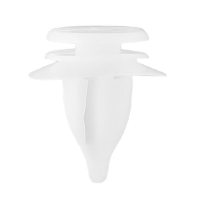
Shop the Parts Behind B0040
Below are the parts most often responsible for code B0040, ranked by how frequently each one is the actual culprit (per the diagnosis above). Tap any to see what we have for your vehicle.





The information in this article is provided for general reference and educational purposes only. Vehicle specifications, procedures, and part compatibility can vary by production date, trim level, and region. Always consult your vehicle's factory service manual and verify part numbers before purchasing or performing repairs. Safety-critical components such as airbags, seat belts, and braking systems should be installed by a qualified professional.
- 🧭 Diagnostic Flowchart
- 🛍️ Shop This Part
- What Does B0040 Mean?
- Can I Drive With B0040?
- Common Causes
- Symptoms
- Common Fixes & Costs
- Used vs. New Parts: Buying Guide
- What Happens If You Wait — Timeline
- Cost of Not Fixing It
- Diagnosis Steps
- When This Code Triggers (Freeze-Frame Conditions)
- Related Codes
- Climate & Environmental Factors
- How to Talk to a Mechanic About This Code
- Where to Take It: Dealer vs Independent vs Chain
- When to Walk Away From the Repair
- What Scan Tool You Need for This Code
- How to Clear the Code After You Fix It
- Will This Fail Emissions / State Inspection?
- Most Commonly Affected Vehicles
- Manufacturer-Specific Notes
- Real Owner Stories
- 2008 Chevy Impala with 125K miles - The Classic Under-Seat Connector Fix
- 2009 GMC Yukon at 150K miles - Misdiagnosed Clock Spring
- 2007 Chevy Tahoe after Interior Detailing - The 'Detailer's Fault'
- 2008 Corvette C6 with Aftermarket Seats - Resistor Fix
- How to Prevent This Code From Triggering
- Frequently Asked Questions
- Is it safe to drive with code B0040?
- How much does it cost to fix code B0040?
- What is a 'symptom byte' and why is it important for B0040?
- Can I fix code B0040 myself?
- Will the airbag light go off by itself after I fix the problem?
- What is a CPA clip and why does it fail?
- Can a weak battery cause an airbag code like B0040?
- What is the most common misdiagnosis for B0040?
- Key Takeaways
- 🎟️ Get 5% Off