

OBD-II Code B0042: Driver Airbag Circuit Fault
What B0042 means, why it triggers, and how to fix it
- Code B0042 disables your vehicle's entire Supplemental Restraint System (SRS), meaning zero airbags will deploy in a collision.
- On GM vehicles from 2005-2014, a broken $10 plastic Connector Position Assurance (CPA) clip is the most frequent cause of this code.
- Always inspect the yellow airbag connectors under the driver's seat and inside the steering column for loose wires before replacing the $250+ clock spring.
- Disconnect the negative battery terminal and wait 15 minutes before touching any yellow SRS connectors to prevent accidental and potentially fatal airbag deployment.
What Does B0042 Mean?
Code B0042 means the Sensing and Diagnostic Module (SDM) detects abnormally low electrical resistance in the driver's airbag circuit, indicating a short circuit. This fault disables the entire Supplemental Restraint System (SRS) as a safety precaution. You cannot rely on any airbags to deploy in a crash.
Technical definition: The SAE/ISO definition for B0042 is 'Driver Frontal Deployment Loop Stage 2 Resistance Low'. The SDM detects that electrical resistance in the second-stage deployment circuit of the driver's steering wheel airbag has dropped below the specified threshold (typically under 1.3 ohms) for at least 500 milliseconds. Advanced scan tools display a symptom byte like '0E' or '02' to confirm the 'Short to Ground' or 'Resistance Below Threshold' condition.
Can I Drive With B0042?
Yes, But With Caution. The vehicle drives normally, but the active code disables the entire Supplemental Restraint System (SRS). No airbags will deploy in an accident, significantly increasing the risk of serious injury or death. Repair this critical safety failure immediately.
Common Causes
- Broken or Loose Airbag Connector Position Assurance (CPA) Retainer (Very Common) — This is the most frequent cause on GM vehicles. A brittle plastic clip (CPA) on a yellow airbag connector breaks or vibrates loose. This creates a poor connection that the system reads as a short circuit because internal shorting bars fail to disengage. GM Technical Service Bulletin #08-09-41-002H 🎬 Watch: How to fix the common GM airbag connector issue. covers this exact defect.
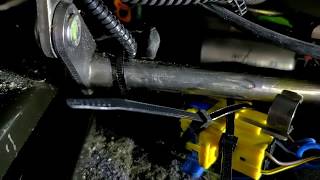
- Damaged Wiring or Loose Connector Under Seat (Common) — The wiring harness under the driver's seat is a known weak point, especially on GM trucks, SUVs, and the C6 Corvette. Moving the power seat chafes wires or pulls the main yellow connector apart. GM issued Special Coverage #15643 to fix this on Corvettes by soldering the wires directly. 🎬 See this walkthrough for fixing intermittent Corvette airbag lights.
- Faulty Clock Spring (Airbag Coil) (Common) — The clock spring is a coiled ribbon wire inside the steering column that maintains the electrical connection to the airbag as the wheel turns. Constant turning wears out the ribbon, causing internal shorts. This often triggers Stage 1 (B0022) and Stage 2 (B0042) codes simultaneously.
- Corroded Terminals or Pins (Less Common) — Moisture from water leaks, high humidity, or winter road salt corrodes the pins on airbag connectors or the SDM. Corrosion creates an unintended path for electrical current, resulting in a low resistance reading.
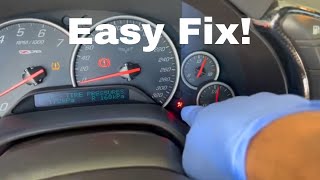
- Blown Airbag System Fuse (Rare) — A blown SIR/SRS fuse causes unpredictable voltage drops and resistance readings in the airbag system. On many GM trucks, a blown 15A fuse in the instrument panel block triggers this code. 🎬 Watch: Diagnosing and fixing SRS lights on Chevy Silverado trucks.
- Faulty Sensing and Diagnostic Module (SDM) (Rare) — Failure of the main airbag computer is uncommon and usually caused by severe water intrusion under the carpet. Occasionally, the module functions normally but holds a 'latched' fault code from a previous electrical spike that requires specialized third-party reprogramming to clear.
Symptoms
- Airbag Warning Light On — A steady or flashing red airbag icon illuminates on the instrument cluster.
- 'Service Airbag' Message — The driver information center displays a text warning such as 'Service Air Bag' or 'Service Restraints System'.
- Airbag System Disabled — The entire SRS system shuts down. No airbags or seatbelt pretensioners will deploy in a collision.
- Intermittent Light with Movement — The warning light toggles on and off when turning the steering wheel (indicating a bad clock spring) or adjusting the driver's seat (indicating under-seat wiring damage).
Diagnostic Flowchart
Tap your situation to follow the diagnostic path that matches what you're seeing on this code.
Common Fixes & Costs
- Replace Connector Position Assurance (CPA) Retainer — Parts: $5-$15, Labor: $100-$200, ~1.0 hr book time (Intermediate)
- Repair Damaged Wiring Under Seat — Parts: $10-$50, Labor: $150-$300, ~1.5 hr book time (Intermediate)
- Replace Clock Spring — Parts: $75-$300, Labor: $150-$300, ~1.5 hr book time (Professional)
- Replace Sensing and Diagnostic Module (SDM) — Parts: $400-$900, Labor: $150-$300, ~1.5 hr book time (Professional)
Used vs. New Parts: Buying Guide
When a used part is worth it: A used OEM clock spring from a low-mileage, un-crashed vehicle is a viable option for older cars where budget is the primary concern.
Donor-vehicle mileage cap: roughly under 80000 miles for the part to have meaningful remaining life.
Donor quality checklist:
- Verify the donor vehicle did not have airbag deployment, as heat damages the connectors.
- Ensure the part number exactly matches your VIN and steering wheel options.
- Inspect the connectors for melted plastic or bent pins.
Decision logic:
- If The cost of a new OEM part is under $150 → Buy new OEM. The reliability and warranty outweigh the small savings.
- If The vehicle is over 10 years old and budget is tight → Buy a used OEM part from a reputable recycler. Avoid cheap, no-name aftermarket options due to high failure rates.
- If The fault is a broken CPA clip or under-seat wiring → Do not buy any parts. The existing components only require a simple connector repair.
Warranty tradeoff: Used parts typically have a 30-90 day warranty. New OEM parts carry a 1-year warranty.
Worst-case if a used part fails: $150-$300 in repeat labor costs if a cheap aftermarket clock spring fails prematurely.
What Happens If You Wait — Timeline
- Immediately: The airbag warning light illuminates, and the SDM disables the entire Supplemental Restraint System (SRS). (MPG impact: 0%% · Added cost: $0)
- 0-2 months: The vehicle automatically fails mandatory annual safety inspections in states like NY, VA, and TX, preventing legal registration renewal. (MPG impact: 0%% · Added cost: $50-$200 in potential fines or failed inspection fees.)
- 2-12 months: If caused by a chafing wire, the wire eventually breaks completely, changing the fault from a 'low resistance' code (B0042) to a 'high resistance' code (B0044). The system remains disabled. (MPG impact: 0%% · Added cost: $0)
- Ongoing: The primary cost is the massively increased risk of serious injury or death in a collision due to non-functional airbags. (MPG impact: 0%% · Added cost: The incalculable cost of a preventable injury.)
Cost of Not Fixing It
- Immediately: The entire Supplemental Restraint System (SRS) is disabled. No airbags or seatbelt pretensioners will deploy in an accident. (Added cost: Severe injury or death in a collision.)
- Days to Weeks: The vehicle fails state safety inspections, preventing legal registration or sale. (Added cost: Fines for expired registration.)
Diagnosis Steps
- Read Fault Codes & Symptom Bytes
Use an SRS-capable OBD-II scanner to confirm B0042. Standard engine code readers cannot access airbag modules. Note the two-digit symptom byte (e.g., 0E, 02) to confirm the 'Resistance Low' condition.
Tools: SRS-capable OBD-II Scan Tool (Beginner) - Disconnect Battery (Safety First)
Disconnect the negative battery terminal and wait exactly 15 minutes. This discharges the SRS backup capacitors and prevents accidental, potentially fatal airbag deployment while you work.
Tools: 10mm Wrench (Beginner) - Inspect Fuses
Check the cabin and under-hood fuse panels for blown fuses labeled 'SIR', 'SRS', or 'Airbag'. Replace any blown fuses and retest the system.
Tools: Fuse Puller (Beginner) - Inspect Connectors and CPA Clips
Locate the yellow airbag connectors under the driver's seat and at the base of the steering column. Verify the small plastic Connector Position Assurance (CPA) clips are fully seated and unbroken. A missing or loose CPA clip is the leading cause of this code on GM vehicles.
Tools: Flashlight (Intermediate) - Live Data Resistance Test
Reconnect the battery. Use an advanced scan tool to monitor the 'Driver Airbag Stage 2 Resistance' live data. The specification is typically 1.5-4.8 ohms. Wiggle the under-seat harness and turn the steering wheel. If resistance drops below 1.3 ohms during movement, you have located the intermittent short.
Tools: Advanced Scan Tool with Live Data (Advanced) - Check Wiring Harness Continuity
Disconnect the battery again. Unplug the SDM and the clock spring connector. Use a multimeter to test for continuity between the deployment loop wires and chassis ground. Any reading other than infinite (OL) confirms a short to ground in the harness.
Tools: Digital Multimeter, Wiring Diagrams (Advanced) - Professional Circuit Resistance Measurement
Stop DIY and tow to a shop if previous steps fail. Professionals use an Airbag Load Tool (simulator resistor) in place of the airbag to isolate the wiring from the module. Never use a standard ohmmeter directly on an airbag module, as the multimeter's voltage will trigger deployment.
Tools: Airbag Load Tool/Simulator Resistor (Professional) - Clear Codes and Test
After repairs, reconnect the battery and use the SRS scanner to clear the B0042 code. The airbag light will not turn off automatically. Cycle the ignition to confirm the light stays off.
Tools: SRS-capable OBD-II Scan Tool (Beginner)
When This Code Triggers (Freeze-Frame Conditions)
- Ignition Status: ON (The fault is detected during the initial system self-test immediately after turning the key.)
- System Voltage: 9-16 Volts (Normal operating voltage. Low system voltage triggers separate module errors, not specific resistance codes.)
- Fault Status: Active/Current (The SDM logs the code as soon as the low resistance condition persists for 500 milliseconds.)
Related Codes
- B0044 — Driver Frontal Deployment Loop Stage 2 Open/High Resistance. A loose connection fluctuates, causing a short (B0042) one moment and an open circuit (B0044) the next. The diagnostic process is identical.
- B0022 — Driver Frontal Deployment Loop Stage 1 Resistance Low. Stage 1 and Stage 2 circuits run through the same clock spring. If B0022 and B0042 appear together, the clock spring or main column connector is the culprit.
- B0012 / B0013 — Passenger side resistance codes. Grouped with B0042 in GM TSB #08-09-41-002H because the root cause is identical: a faulty CPA retainer on an airbag connector.
- B0043 — Driver Frontal Deployment Loop Stage 2 Voltage Out of Range. Indicates an active electrical issue, like a short to a power source, rather than a passive resistance problem. Diagnosis shifts to finding chafed wires touching power lines.
Climate & Environmental Factors
- High Humidity / Moisture: Water from leaks or high ambient humidity penetrates unprotected connectors. This moisture causes terminal corrosion, creating unintended electrical paths that trigger a short circuit fault.
- Coastal Climates / Road Salt: Salt-laden air or winter road salt significantly accelerates corrosion on exposed electrical components, including sensitive airbag wiring under the carpet.
- Extreme Temperature Cycles: Repeated heating and cooling causes plastic connectors to expand and contract, eventually leading to a loss of pin tension and intermittent connections.
How to Talk to a Mechanic About This Code
Say this: "I have an airbag light on and my scanner shows code B0042. Since this is a GM vehicle, I'd like the technician to start by inspecting the known high-failure areas mentioned in service bulletins, specifically the yellow connector CPA clips and the wiring harness under the driver's seat, before quoting a clock spring or airbag module."
This signals you are an informed consumer, directing the shop to the most common and least expensive fixes first. It sets the expectation that they rule out simple connection issues before recommending costly parts.
Avoid saying:
- 'My airbag light is on, can you just fix it?'
- 'I think I need a new airbag.'
- 'Just do whatever you think is best.'
Questions to ask before authorizing the repair:
- Did you inspect the yellow connectors and their CPA retainers as described in GM TSB #08-09-41-002H?
- If you recommend a clock spring, what specific test confirmed it failed and ruled out the wiring?
- Can you show me the failed part and explain why it needs replacement?
- What is the warranty on both the parts and the labor for this specific repair?
Where to Take It: Dealer vs Independent vs Chain
- Dealer:
Recommended only if your vehicle is under warranty or a known special coverage program. They are most expensive for out-of-pocket repairs.
Best for: Vehicles under warranty or covered by a manufacturer's 'Special Coverage' program., Complex electrical issues requiring proprietary diagnostic software.
Downsides: Significantly higher labor rates and parts costs., May replace a whole assembly rather than perform a detailed wiring repair. (Typical cost: +50% vs. baseline) - Independent Shop:
Best fit for most out-of-warranty cases. An experienced independent mechanic is highly familiar with this common GM fault and its inexpensive fixes.
Best for: Out-of-warranty vehicles, especially common domestic models like GM., Cost-conscious owners needing affordable labor.
Downsides: Quality varies; ensure the shop employs ASE-certified technicians with SRS experience., Must have an SRS-capable scan tool to clear the code. (Typical cost: +0% vs. baseline) - Chain Shop:
AVOID. Airbag system repair is a critical safety task beyond the scope of most chain shops. The risk of improper repair is too high.
Best for: Simple, routine maintenance like oil changes and brake pads.
Downsides: Technicians often lack specialized training for complex safety systems., High pressure to meet sales quotas leads to misdiagnosis., May lack advanced diagnostic tools for SRS systems. (Typical cost: -10% vs. baseline)
When to Walk Away From the Repair
If the total estimated repair cost exceeds 50% of the car's private-party value, and the fix is not required to pass a mandatory safety inspection, consider selling the car as-is with full disclosure.
- Car worth $4000, fix is $2200: Walk away. The repair cost is over half the car's value. Sell as a 'mechanic's special'.
- Car worth $8000, fix is $600: Fix it. This repair is well below the threshold and restores a critical safety feature.
- Car worth $5000, fix is $150: Fix it. For B0042, the fix is often an inexpensive connector repair. This is a small price to pay for safety.
What Scan Tool You Need for This Code
Minimum: A scanner that reads and clears Supplemental Restraint System (SRS/Airbag) codes. Standard engine-only readers will not work.
A basic $20 code reader cannot communicate with the airbag control module. It won't see the B0042 code and cannot clear the light after a repair.
Budget: Autel AutoLink AL629 (~$90) — Reads and clears codes for Engine, Transmission, ABS, and SRS. It's a cost-effective way to confirm B0042 and clear it after a DIY repair.
Mid-range: BlueDriver Pro (~$120) — Connects to your smartphone via Bluetooth to read/clear enhanced codes. It provides live data graphing, crucial for watching circuit resistance while wiggling wires to find a short.
Professional: Launch X431 Series / Autel MaxiCOM MK808 (~$450-900) — Offers bidirectional control and access to manufacturer-specific data. These professional tools diagnose virtually any issue but are overkill for most DIY users.
Rent vs buy: Most auto parts store loaner tools will NOT read SRS codes; they are for check engine lights only. Buying a budget SRS scanner is often cheaper than paying for a single diagnostic session at a shop.
How to Clear the Code After You Fix It
- Perform the physical repair (e.g., replace CPA clip, repair wire).
- Reconnect the negative battery terminal.
- Connect an SRS-capable scan tool to the OBD-II port.
- Select the 'Clear All SIR DTCs' command in the airbag module menu.
Drive cycle (~5 minutes): An extensive drive cycle is not required. After clearing the code, cycle the ignition off and on three times, waiting 10 seconds between cycles. If the repair was successful, the airbag light remains off after the initial startup bulb check.
Readiness monitors affected: None
Watch out for:
- Using a standard engine OBD-II reader, which cannot communicate with the SRS module to clear the code.
- Assuming disconnecting the battery clears the code. Hard airbag faults must be cleared digitally.
- The code immediately returns because the underlying short circuit was not properly fixed.
Will This Fail Emissions / State Inspection?
No — by itself this code doesn't fail OBD inspection (but it can keep readiness monitors from setting, which causes a separate fail).
- California: An airbag light does NOT cause a failure of the California Smog Check, as it is an emissions-only test.
- New York: An illuminated airbag warning light is an automatic failure of the annual safety inspection.
- Texas: While not legally required on the state checklist, many inspection stations refuse to pass a vehicle with an active safety warning light as a matter of policy.
- Virginia: Virginia's annual safety inspection includes the SRS system. An illuminated airbag light results in an automatic failure.
Most Commonly Affected Vehicles
- Chevrolet Impala (2006-2014) — Extremely prone to failure of the CPA retainer on the driver's airbag connector, as documented in GM TSB #08-09-41-002H.
- Chevrolet Corvette (2005-2013) — Commonly caused by the large yellow connector under the driver's seat pulling apart. Addressed by GM Special Coverage #15643.
- Chevrolet Silverado / Tahoe / Suburban (2007-2014) — Frequently caused by damaged wiring under the driver's seat or a faulty CPA clip in the steering column.
- GMC Yukon / Sierra (2007-2014) — Shares the same platform and CPA clip/under-seat wiring issues as Chevrolet trucks.
- Pontiac G6 (2005-2010) — Highly susceptible to the faulty CPA retainer issue outlined in TSB #08-09-41-002H.
- Cadillac Escalade / DTS (2006-2014) — Specifically included in GM TSB #08-09-41-002H, making the inexpensive CPA retainer clip the primary suspect.
- Chevrolet Cobalt / HHR (2005-2011) — The most likely cause is a faulty CPA retainer on a yellow airbag connector.
- Buick Enclave / Lucerne (2006-2014) — Often points to a poor connection under the front seats or a faulty CPA clip. The Enclave is part of recall #14V118 for under-seat wiring.
Manufacturer-Specific Notes
- General Motors (Chevrolet, GMC, Buick, Pontiac, Cadillac): A widespread defect with brittle plastic airbag connector clips (CPA retainers) is documented in TSB #08-09-41-002H. GM also issued Special Coverage #15643 for Corvette under-seat wiring, and recall #14V118 for Lambda platform (Acadia, Enclave) under-seat wiring.
- Subaru: Code 'C0042' is common on Subarus, but refers to 'Power Supply Voltage Failure' for the ABS module. Do not confuse this chassis code with the B0042 airbag code.
- Chrysler / Dodge / Jeep / Ram: The code appears as B0042-2B, meaning 'Driver Bolster Control Wires Shorted Together'. This points to the connector's plastic locking tab failing to separate the internal shorting bars, similar to the GM CPA issue.
Real Owner Stories
2007 Chevy Corvette with intermittent airbag light
The airbag light illuminated immediately upon startup. The passenger airbag status light on the rearview mirror also failed to illuminate.
What they tried:
- Inspected the yellow connector under the driver's seat based on forum advice.
Outcome: The large yellow connector under the seat had sagged and wiggled loose. The owner pushed the connector tightly together and secured it to the seat rail with a zip tie to prevent future movement. The light stayed off permanently.
Lesson: On a C6 Corvette, always check the large yellow connector under the driver's seat first. Securing it with a zip tie is a zero-cost fix that resolves most intermittent airbag lights.
2008 Chevy Trailblazer with B0022 and B0042 after a repair
Immediately after replacing the steering column, the airbag light illuminated with codes B0022 (Stage 1) and B0042 (Stage 2).
What they tried:
- Attempted to clear the codes with a scan tool, but they returned instantly.
Outcome: The owner replaced the clock spring. The original clock spring was not centered correctly during the steering column installation, snapping the internal ribbon cables upon turning the wheel.
Lesson: If airbag codes appear immediately after steering column repairs, the clock spring was likely damaged or improperly indexed during reassembly.
2011 Chevy Tahoe with airbag light tied to seat movement
A 'Service Airbag' message appeared specifically when the driver's power seat moved all the way back, and disappeared when moved forward.
What they tried:
- Visually inspected the wiring harness under the seat.
Outcome: The owner found a broken wire inside the yellow harness directly under the seat. Seat movement stretched the wire, causing an intermittent short. Repairing the wire and adding slack to the harness fixed the issue.
Lesson: If the airbag light toggles when adjusting a power seat, inspect the under-seat wiring harness for chafing, pinching, or broken wires before replacing any modules.
2008 Chevy Silverado with persistent 'Service Airbag' message
The truck had a constant airbag light. Connectors under the seat showed no obvious damage.
What they tried:
- Took the truck to an independent electrical specialist.
Outcome: The technician found the small plastic CPA clip missing from the driver's airbag connector inside the steering column. Installing a new $10 CPA clip immediately resolved the code.
Lesson: Do not just look for unplugged connectors; specifically verify the presence of the small plastic CPA clips. Per GM TSB #08-09-41-002H, a missing CPA is a primary cause of this code.
How to Prevent This Code From Triggering
- Secure Under-Seat Wiring (Once, or after any seat adjustment) — Zip-tying the airbag harness to the seat frame prevents the wires from sagging into the seat tracks or being stretched and broken during seat adjustments.
- Exercise Caution During Interior Repairs (Any time the dashboard or steering column is serviced) — Handling yellow airbag connectors roughly breaks the fragile CPA clips. Always ensure these clips 'click' securely into place to prevent loose connections and shorting bar faults.
- Avoid Storing Items Under Seats (Daily habit) — Water bottles or tools rolling under the front seats snag and break the sensitive yellow airbag wiring harnesses located directly on the floorboard.
- Do Not Use Dielectric Grease on Airbag Connectors (During any repair) — Dielectric grease is an insulator. Airbag circuits operate on highly sensitive, low-resistance thresholds. Adding grease alters this resistance and triggers false codes.
Frequently Asked Questions
Can I fix code B0042 myself?
Due to the risk of accidental airbag deployment, professional repair is strongly recommended. If you proceed, you must disconnect the battery and wait 15 minutes before handling any airbag wiring.
Will my airbags still work with a B0042 code?
No. The airbag warning light indicates the entire SRS system is disabled as a safety precaution. No airbags will deploy in a crash.
What are common misdiagnosis mistakes for code B0042?
Technicians often replace the expensive clock spring ($250+) or airbag module ($800+) when the actual fault is a broken $10 CPA clip. Always inspect the yellow connectors first.
Why does this code seem to only affect GM cars?
B0042 is overwhelmingly common on 2005-2014 GM vehicles due to a widespread manufacturing defect in the plastic Connector Position Assurance (CPA) retainers. This is documented in TSB #08-09-41-002H.
Will the airbag light go off by itself after the repair?
No. The B0042 fault code is stored as a hard code and must be manually cleared from the SDM using an SRS-capable scan tool.
Do I need to replace the whole airbag?
It is highly unlikely. Code B0042 is a circuit code indicating a wiring or connector problem, not a failure of the airbag module itself.
What is a 'dual-stage' airbag?
Modern airbags deploy with different force levels depending on crash severity. Stage 1 is a lower-force deployment, while Stage 2 (related to this code) is a powerful deployment for severe collisions.
What is a Connector Position Assurance (CPA) retainer?
A CPA is a small locking clip on an electrical connector that prevents it from vibrating loose and separates internal shorting bars. When the CPA breaks, the system flags a short circuit fault.
Key Takeaways
- Code B0042 disables your vehicle's entire Supplemental Restraint System (SRS), meaning zero airbags will deploy in a collision.
- On GM vehicles from 2005-2014, a broken $10 plastic Connector Position Assurance (CPA) clip is the most frequent cause of this code.
- Always inspect the yellow airbag connectors under the driver's seat and inside the steering column for loose wires before replacing the $250+ clock spring.
- Disconnect the negative battery terminal and wait 15 minutes before touching any yellow SRS connectors to prevent accidental and potentially fatal airbag deployment.
Helpful Videos

Shop the Parts Behind B0042
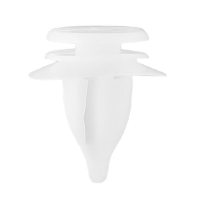
Below are the parts most often responsible for code B0042, ranked by how frequently each one is the actual culprit (per the diagnosis above). Tap any to see what we have for your vehicle.



The information in this article is provided for general reference and educational purposes only. Vehicle specifications, procedures, and part compatibility can vary by production date, trim level, and region. Always consult your vehicle's factory service manual and verify part numbers before purchasing or performing repairs. Safety-critical components such as airbags, seat belts, and braking systems should be installed by a qualified professional.
- 🧭 Diagnostic Flowchart
- 🎬 Helpful Videos
- 🛍️ Shop This Part
- What Does B0042 Mean?
- Can I Drive With B0042?
- Common Causes
- Symptoms
- Common Fixes & Costs
- Used vs. New Parts: Buying Guide
- What Happens If You Wait — Timeline
- Cost of Not Fixing It
- Diagnosis Steps
- When This Code Triggers (Freeze-Frame Conditions)
- Related Codes
- Climate & Environmental Factors
- How to Talk to a Mechanic About This Code
- Where to Take It: Dealer vs Independent vs Chain
- When to Walk Away From the Repair
- What Scan Tool You Need for This Code
- How to Clear the Code After You Fix It
- Will This Fail Emissions / State Inspection?
- Most Commonly Affected Vehicles
- Manufacturer-Specific Notes
- Real Owner Stories
- 2007 Chevy Corvette with intermittent airbag light
- 2008 Chevy Trailblazer with B0022 and B0042 after a repair
- 2011 Chevy Tahoe with airbag light tied to seat movement
- 2008 Chevy Silverado with persistent 'Service Airbag' message
- How to Prevent This Code From Triggering
- Frequently Asked Questions
- Can I fix code B0042 myself?
- Will my airbags still work with a B0042 code?
- What are common misdiagnosis mistakes for code B0042?
- Why does this code seem to only affect GM cars?
- Will the airbag light go off by itself after the repair?
- Do I need to replace the whole airbag?
- What is a 'dual-stage' airbag?
- What is a Connector Position Assurance (CPA) retainer?
- Key Takeaways
- 🎟️ Get 5% Off