

OBD-II Code B0051: Deployment Commanded / Seatbelt Sensor Fault
The ultimate guide to what B0051 means, its two different definitions, and how to fix it correctly.
- Code B0051 means 'Deployment Commanded' (crash data) on GM/Ford vehicles, but indicates a 'Seatbelt Sensor Fault' on Honda/Toyota models.
- For GM and Ford, standard scanners cannot clear this latched code; you must mail the airbag module to a reset service for $50-$150 or replace it entirely.
- For Honda and Toyota, do not replace the airbag module; test the front center seatbelt buckle switch and wiring, which usually costs under $250 to fix.
- Driving with an active B0051 code disables your entire airbag system and causes an automatic failure during state safety inspections.
What Does B0051 Mean?
Code B0051 has two completely different meanings depending on the manufacturer. For General Motors (GM) and Ford, it is a 'hard code' indicating the Sensing and Diagnostic Module (SDM) detected a collision and stored irreversible crash data. For Asian and some domestic manufacturers like Honda, Toyota, and Nissan, B0051 points to a much less severe fault with the 'First Row Center Seatbelt Sensor'. Correct diagnosis requires knowing which definition applies to your vehicle.
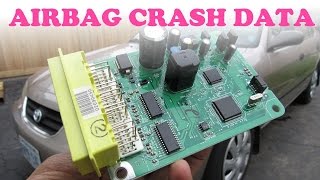
Technical definition: For GM and Ford, the definition is 'Deployment Commanded,' meaning the SDM detected an impact and locked crash data into non-volatile memory. For Honda and Toyota, the definition is 'First Row Center Seatbelt Sensor (Subfault),' indicating an open or short circuit in the seatbelt buckle switch.
Can I Drive With B0051?
No — Do Not Drive. Driving with code B0051 is extremely unsafe. It signifies that the entire Supplemental Restraint System (SRS), including all airbags and seatbelt pretensioners, is disabled and will not function in a collision. Continuing to drive risks severe injury or death in an otherwise survivable accident. Furthermore, driving with a known SRS fault causes automatic failure of state safety inspections and risks insurance claim denial or increased personal liability in the event of a crash.
Common Causes
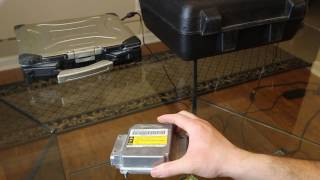
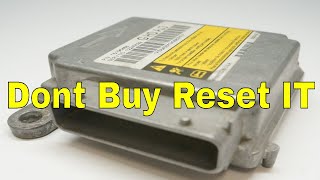
- Vehicle was in a collision (GM/Ford) (Very Common) — The primary cause for this code on GM and Ford vehicles is an accident. The SDM sensed the impact, stored crash data, and triggered the code, permanently locking the module. 🎬 Watch: How to reset the SDM on GM trucks and SUVs.
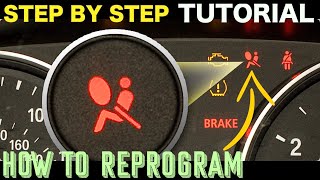
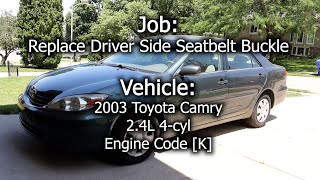
- Faulty seatbelt buckle sensor or wiring (Honda/Toyota) (Very Common) — On Honda, Toyota, and Nissan, the most common cause is a failed microswitch inside the seatbelt buckle or damaged wiring under the seat, causing an open or short in the sensor circuit. 🎬 See this 10-minute fix for Toyota seatbelt buckle and airbag lights.
- Installed a used SDM with stored crash data (Less Common) — If the vehicle's original airbag module was replaced with a used one from a salvaged vehicle, the used module will carry the B0051 code from the donor car's crash.
- Water damage or corrosion to the SDM (Rare) — The SDM is often located under a seat or center console. Spilled liquids or moisture from high-humidity climates can seep into the carpet and corrode the module's circuit board, causing internal shorts that trigger a false B0051 code.
- Faulty Sensing and Diagnostic Module (SDM) (Rare) — In rare instances, the airbag computer fails its internal self-test and falsely triggers the B0051 code without any impact due to a processor glitch or internal accelerometer fault.
Symptoms
- Airbag warning light is continuously illuminated — The most obvious symptom is the airbag or SRS warning light on the dashboard stays on permanently.
- Seatbelt reminder chime is silent (Honda/Toyota) — On vehicles where B0051 relates to the seatbelt sensor, the warning chime that sounds when the belt is unbuckled stops working.
- Code cannot be cleared (GM/Ford) (scan-tool only — no driver-felt sign) — When attempting to erase the trouble code with an OBD-II scanner, B0051 will not clear or returns an error like 'cannot execute routine'.
- Other airbag system codes present (scan-tool only — no driver-felt sign) — You may see codes related to specific deployed components (e.g., B0052, B0053) or configuration errors (B1001) if a module was improperly replaced.
Diagnostic Flowchart
Tap your situation to follow the diagnostic path that matches what you're seeing on this code.
Common Fixes & Costs
- Reset the Airbag Control Module (SDM) — Parts: $0, Labor: $50 - $150 (mail-in service), ~1.5 hr book time (Professional)
- Replace Seatbelt Buckle Assembly
— Parts: $80 - $200, Labor: $100 - $150, ~1.0 hr book time
(Intermediate)
: OEM
: OEM - Replace the Airbag Control Module (SDM)
— Parts: $300 - $800, Labor: $150 - $300 (includes programming), ~1.5 hr book time
(Professional)
: OEM
: OEM - Repair Seatbelt Buckle/Sensor Wiring — Parts: $5 - $20, Labor: $150 - $250, ~1.5 hr book time (Intermediate)
Used vs. New Parts: Buying Guide
When a used part is worth it: A 'used' module from a junkyard is highly risky as it likely contains crash data or is incompatible. Having your ORIGINAL module professionally 'reset' by a mail-in service is the safest and most cost-effective option.
Donor-vehicle mileage cap: roughly under 100000 miles for the part to have meaningful remaining life.
Donor quality checklist:
- Verify the exact part number matches your original module. Superseded numbers must be verified with a dealer.
- If buying a 'pre-reset' used module, only buy from a reputable rebuilder that guarantees it is clear of crash data.
- Avoid any module with physical damage, corrosion, or signs of water intrusion.
Decision logic:
- If Vehicle was in a crash and original module is physically undamaged → Send original module for a reset service. This is the most cost-effective solution and requires no programming.
- If Original module is lost, water damaged, or internally fried → Buy a brand new OEM module. It guarantees compatibility but requires VIN programming by a dealer or qualified shop.
Warranty tradeoff: New OEM Module: 1-year part warranty typical. Reset Original Module: Lifetime warranty on the reset service is common. Used/Salvage Module: 30-90 day warranty at best, often sold 'as-is'.
Worst-case if a used part fails: $300-$800 if a used module fails, including the cost of a second replacement part plus repeat labor and programming fees.
What Happens If You Wait — Timeline
- Immediate (0 seconds): Airbag light turns on. The SRS control module detects a critical fault and disables the entire supplemental restraint system to prevent accidental deployment. All airbags are offline. (MPG impact: 0%% · Added cost: $0 (but safety is compromised))
- At next state safety inspection: Vehicle is presented for mandatory safety inspection. The illuminated airbag light is an automatic failure in most jurisdictions. The vehicle cannot be legally registered until repaired. (MPG impact: 0%% · Added cost: $20 - $50 (failed test fee))
- In case of a low-to-moderate speed accident: A collision occurs that would normally deploy airbags. Because the system is disabled, they do not deploy. Occupants suffer preventable injuries. Insurance investigations may argue 'negligent maintenance'. (MPG impact: 0%% · Added cost: $5,000 - $500,000+ (medical bills and personal liability))
- At time of resale: Attempting to sell the vehicle. You are legally obligated to disclose the known safety defect. The vehicle's value is reduced by 25-50% as it is unsellable to most buyers. (MPG impact: 0%% · Added cost: $2,000 - $10,000 (lost vehicle value))
Cost of Not Fixing It
- Immediate: The entire Supplemental Restraint System (airbags and seatbelt pretensioners) is disabled. Risk of severe injury or death is significantly increased. (Added cost: N/A)
- Next Vehicle Inspection: The vehicle automatically fails mandatory safety inspections in jurisdictions that require them. (Added cost: $20 - $50 (failed test fee))
- In Case of Accident: Insurance companies may investigate and deny claim payouts or increase liability, arguing the vehicle was operated with a known safety defect. (Added cost: $5,000 - $500,000+ (potential personal liability))
- At Vehicle Resale: Vehicle value is drastically reduced. You are legally required to disclose the safety defect, and the car cannot be legally registered by the new owner in many states until repaired. (Added cost: 25-50% reduction in vehicle value)
Diagnosis Steps
- Identify Vehicle and Code Definition
Determine the vehicle's make. Use a professional scan tool to pull the code's official definition. For GM/Ford, expect 'Deployment Commanded'. For Honda/Toyota/Nissan, expect 'First Row Center Seatbelt Sensor'. All subsequent steps depend entirely on this distinction.
Tools: SRS-capable OBD-II Scan Tool (Beginner) - Attempt to Clear the Code
Using an SRS-capable scanner, try to clear B0051. If it is a latched crash code (GM/Ford), it will not clear. If it clears but returns immediately, it suggests an active circuit fault, like a bad seatbelt sensor (Honda/Toyota).
Tools: SRS-capable OBD-II Scan Tool (Intermediate) - Check Vehicle History (GM/Ford)
If the code is 'Deployment Commanded', investigate the vehicle's history. Look for signs of collision repair like mismatched paint, non-OEM body panels, or overspray. A vehicle history report confirms prior accidents.
Tools: Visual inspection, vehicle history report (Beginner) - [PRO TIP] Test Seatbelt Buckle Sensor Circuit (Honda/Toyota)
Access the seatbelt buckle connector under the seat. Use a multimeter to check for 12V on the power wire and good continuity to ground (resistance ≤ 0.5 Ω). Monitor the signal wire with a scan tool or oscilloscope; it should switch voltage states when buckled. No change indicates a faulty buckle.
Tools: Multimeter, SRS Scan Tool with Live Data (Advanced) - Inspect the SDM and Connectors
Locate the SDM (often under the center console or front seats). Visually inspect the module and connectors for physical damage, pushed-out pins, or signs of water intrusion like white/green corrosion.
Tools: Basic hand tools, flashlight (Intermediate) - [PRO TIP] Verify SDM Power, Ground, and CAN Bus (GM/Ford)
Before condemning the SDM, verify it receives battery voltage (12.0V - 14.5V) and has a solid ground connection (< 1.0 Ω). Use an oscilloscope to check for communication activity on the CAN bus lines. A flat line indicates a wiring or network problem.
Tools: Multimeter, Oscilloscope, Wiring Diagram (Advanced) - Remove the SDM for Service or Replacement
If diagnosis confirms a latched crash code, the SDM must be serviced. CRITICAL: Disconnect the negative battery terminal and wait 15-30 minutes for backup capacitors to discharge before unbolting the module.
Tools: Socket set, trim removal tools (Advanced)
When This Code Triggers (Freeze-Frame Conditions)
- Condition Type: Event Data Recorder (EDR) Snapshot (For the 'Deployment Commanded' variant, the SDM saves a detailed, non-erasable record of the crash event rather than standard powertrain freeze frame data.)
- Delta-V (Change in Velocity): > 9 mph (The module records the severity of the impact as a change in velocity to determine if deployment was warranted.)
- Seatbelt Status: Buckled / Unbuckled (The EDR logs whether the driver and passenger seatbelts were fastened at the exact moment of impact.)
Related Codes
- B0052 / B0053 — Functionally identical to B0051 on GM vehicles, these codes also mean 'Deployment Commanded'. They confirm a crash event was recorded.
- B1001 — An 'Option Configuration Error' code. This indicates the SDM is not programmed for the vehicle it's in, often appearing alongside B0051 if a used, un-programmed module is installed.
- B0022 — This code for 'Driver Side Airbag Circuit' fault sometimes appears with B0051 if the crash damaged the clock spring or airbag wiring.
Climate & Environmental Factors
- High Humidity / Water Intrusion: Moisture leaking into the vehicle cabin pools in the carpet padding. If the SDM is located under a seat, this trapped moisture causes severe corrosion on the module's housing and connector pins, triggering false codes.
- Road Salt: Salty slush tracked into the vehicle accelerates damage to an under-seat SDM or under-carpet wiring. GM issued a special coverage program (09184B) for 2007-2009 Silverado/Sierra trucks due to SDM corrosion from this exact issue.
How to Talk to a Mechanic About This Code
Say this: "I have an airbag light on and a B0051 code. My vehicle is a [Your Make]. I need a diagnostic to confirm the cause. If it's a GM/Ford, I'd like to discuss the cost for module removal and reinstallation if I use a mail-in reset service. If it's a Honda/Toyota, please focus the diagnosis on the seatbelt buckle sensor and its wiring before quoting a module replacement."
This signals you know the code has two different meanings depending on the make. It directs the shop to the correct diagnostic path, preventing them from quoting an expensive module replacement on a Honda/Toyota, and opens the door to the most cost-effective repair (reset service) on a GM/Ford.
Avoid saying:
- 'My airbag light is on, can you fix it?' (Too vague, invites a worst-case-scenario quote).
- 'I have a B0051 code, I need a new airbag computer.' (You may be misdiagnosing the issue and asking for a costly, unnecessary repair).
- 'Just do whatever it takes to turn the light off.' (Gives the shop a blank check to perform the most expensive repair).
Questions to ask before authorizing the repair:
- For GM/Ford: What is the cost to remove the airbag module, and will you reinstall it if I have it reset by a third-party service?
- For GM/Ford: If you are recommending a new module, does that price include the required VIN programming?
- For Honda/Toyota: Did you test the seatbelt buckle sensor's circuit directly to confirm it has failed?
- What is the warranty on both the parts and the labor for this repair?
Where to Take It: Dealer vs Independent vs Chain
- Dealer:
Recommended only if you need a new, programmed module. Otherwise, an independent shop is more cost-effective.
Best for: Full post-collision repairs on a newer vehicle., When a brand new, VIN-programmed airbag module is required., Vehicles still under warranty.
Downsides: Highest labor rates., Will almost never agree to reinstall a customer-supplied 'reset' module., May lack expertise on the 'seatbelt sensor' variant of B0051 on other makes. (Typical cost: +75% vs. baseline) - Independent Shop:
Best fit for most B0051 scenarios, especially for the seatbelt sensor fault or for facilitating a module reset.
Best for: Diagnosing the seatbelt sensor fault on Honda/Toyota., Removing and reinstalling an airbag module for a mail-in reset service., General post-collision repairs on out-of-warranty vehicles.
Downsides: Quality and experience with SRS systems vary greatly; vet the shop first., Most cannot program a new airbag module, which still requires a dealer. (Typical cost: +0% vs. baseline) - Chain Shop:
AVOID. The complexity and safety-critical nature of the SRS system make it a poor fit for chain repair shops.
Best for: Not recommended for SRS system diagnostics.
Downsides: Technicians often lack the specialized training for complex SRS diagnostics., High risk of misdiagnosing the dual-meaning B0051 code, leading to incorrect repair recommendations. (Typical cost: -10% vs. baseline)
When to Walk Away From the Repair
If the estimated repair cost exceeds 40-50% of the car's private-party value, strongly consider selling the vehicle as-is instead of repairing it.
- Car worth $3000, fix is $2500: Walk away. The repair cost is over 80% of the car's value. It's not economically viable.
- Car worth $15000, fix is $1200: Fix it. The repair cost is less than 10% of the vehicle's value and restores a critical safety feature.
- Car worth $5000, fix is $300: Fix it. This scenario is typical for a Honda/Toyota with a seatbelt sensor fault. The low repair cost makes it an easy decision.
What Scan Tool You Need for This Code
Minimum: A scanner that can read and clear Supplemental Restraint System (SRS) codes. Basic engine-only OBD-II readers will not see or clear airbag codes like B0051.
A standard $20 scanner only reads 'P' (Powertrain) codes. B0051 is a 'B' (Body) code stored in the SRS module. Without an SRS-capable scanner, you cannot diagnose the problem or verify a repair was successful.
Budget: BlueDriver Pro (~$100) — Reads and clears SRS/airbag codes on most major brands. It displays live data, which is useful for diagnosing the seatbelt sensor variant on Honda/Toyota. Connects to your smartphone via Bluetooth.
Mid-range: Foxwell NT630 Plus (~$130) — A dedicated handheld unit well-regarded for its ABS and SRS capabilities. It reads and clears airbag codes across a wide range of vehicles and shows live sensor data.
Professional: Autel MaxiCOM MK808 (~$380) — Offers professional-level diagnostics. It reliably reads and clears SRS codes, views live data, and provides detailed information including module part numbers. Essential for a shop or serious DIYer.
Rent vs buy: Most auto parts store loaner tools are basic code readers and will NOT read SRS/airbag codes. Buying a budget-level SRS scanner often pays for itself in one use compared to a $100-$150 shop diagnostic fee.
How to Clear the Code After You Fix It
- For 'Deployment Commanded' (GM/Ford): The module must be physically removed and sent to a reset service or replaced. A standard scanner CANNOT clear this code.
- For 'Seatbelt Sensor Fault' (Honda/Toyota): Repair the faulty wiring or replace the seatbelt buckle assembly. Then, use an SRS-capable scan tool to erase the code.
- For ALL repairs: Disconnect the negative battery terminal and wait 15-30 minutes before working on any SRS components to allow system capacitors to discharge.
Drive cycle: No drive cycle is required. The SRS system performs a complete self-test every time the ignition is turned on. If the repair was successful, the airbag light turns on for a 5-second bulb check and then turns off.
Readiness monitors affected: Not Applicable. Readiness monitors are part of the OBD-II emissions system and do not interact with the Supplemental Restraint System (SRS).
Watch out for:
- Attempting to clear a 'Deployment Commanded' code with a standard scanner, which always fails.
- Replacing a faulty seatbelt buckle but failing to clear the 'soft' code from the SRS module memory with a capable scanner.
- Forgetting to reconnect all sensors under the seat after a repair, triggering new SRS codes.
Will This Fail Emissions / State Inspection?
No — by itself this code doesn't fail OBD inspection (but it can keep readiness monitors from setting, which causes a separate fail).
- California: An airbag light will NOT fail the emissions-only 'smog check'. However, selling a car with a known safety defect creates severe legal liability.
- New York: An illuminated airbag light results in an 'advisory notification' on the safety inspection report but is currently NOT cause for failure.
- Texas: An illuminated airbag light is an automatic FAILURE of the state safety inspection.
Most Commonly Affected Vehicles
- Chevrolet Silverado, Tahoe, Suburban (2003-2014) — B0051 is the standard 'Deployment Commanded' code. The SDM is typically under the driver's seat or center console and must be reset or replaced after a crash.
- GMC Sierra, Yukon (2003-2014) — Mechanically identical to Chevrolet counterparts, these vehicles use the same SDM and exhibit the same latched B0051 code behavior post-collision.
- Ford F-150, Mustang, Explorer (2005-2015) — Ford's Restraints Control Module (RCM) uses B0051 for 'Deployment Commanded'. Post-accident procedure requires RCM reset or replacement.
- Honda Accord, Civic, CR-V (2003-2012) — CRITICAL: On Hondas, B0051 almost always means 'First Row Center Seatbelt Sensor' fault. Diagnosis must focus on the seatbelt buckle switch and wiring under the seat.
- Toyota Camry, Corolla, RAV4 (2002-2013) — Like Honda, Toyota uses B0051 for the 'First Row Center Seatbelt Sensor'. The issue is commonly a broken wire near the buckle connector due to seat movement.
Manufacturer-Specific Notes
- General Motors (Chevrolet, GMC, Cadillac, Buick): For GM, B0051 is the definitive 'Deployment Commanded' code. Official GM procedure mandates replacing the SDM, all deployed components, and all front impact sensors after any deployment event. Resetting the original module is a safe aftermarket practice but is not endorsed by the manufacturer.
- Honda / Toyota / Nissan: These brands repurpose B0051 to mean 'First Row Center Seatbelt Sensor' fault. Mistaking this for a crash code leads to thousands of dollars in unnecessary repairs. The fix is almost always a new seatbelt buckle or a simple wiring repair.
- Ford: Ford's Restraints Control Module (RCM) latches code B0051 after a crash. Ford often requires replacement of the seatbelt retractors if they were in use during a collision, even if they did not deploy a pyrotechnic pretensioner.
Real Owner Stories
2008 Honda CR-V with ~100K miles
Airbag light stayed on permanently. No accident history. The seatbelt chime also stopped working for the center seat.
What they tried:
- Took it to a local mechanic who scanned B0051 and quoted $800+ to replace the main SRS module.
- Owner searched online and learned B0051 on Hondas is likely the seatbelt buckle sensor.
Outcome: Owner declined the module replacement. A Honda-specialist shop confirmed the fault was in the seatbelt buckle. They replaced the buckle assembly for ~$250 parts and labor. The code was cleared and did not return.
Lesson: For Honda/Toyota, B0051 is almost always the seatbelt buckle. Do not let a shop replace the expensive airbag module without first diagnosing the buckle and its wiring.
2007 Chevy Silverado 1500, purchased used
Bought the truck from a private seller. A few weeks later, the airbag light came on with code B0051 'Deployment Commanded'.
What they tried:
- Tried to clear the code with a professional tool, which failed, confirming it was a latched code.
- The shop quoted $1,200 for a new, programmed SDM from the dealer.
Outcome: The owner removed the SDM from under the driver's seat and mailed it to a reset service for ~$60. After reinstalling the reset module, the light stayed off. The previous owner had likely installed a used, non-reset module from a junkyard to pass inspection before selling.
Lesson: If you have a 'Deployment Commanded' code but no known crash history, suspect a used, non-reset module was installed. A mail-in reset of your original module is the most cost-effective fix.
2010 GMC Sierra with 150K miles in a 'Salt Belt' state
Airbag light came on with code B0051. The truck had been in a minor fender bender years ago, but the airbags did not deploy.
What they tried:
- Assumed it was related to the old accident and prepared for a module reset.
- Inspected the module under the driver's seat and found the carpet damp and the SDM heavily corroded.
Outcome: The corrosion was so severe the module was unserviceable. A reset service would not fix the internal damage. The owner had to buy a new OEM module and have it programmed, costing over $1,000. Water and road salt trapped in the carpet destroyed the module.
Lesson: Always physically inspect the SDM, especially on trucks where it sits under the seat in a salt-belt state. Heavy corrosion means the module must be replaced.
How to Prevent This Code From Triggering
- Keep the area under front seats clean and dry (Regularly) — On many trucks and SUVs, the SDM is located under a seat. Spilled drinks or tracked-in snow pool in the carpet and corrode the module and its connectors, causing failure.
- Be gentle with seatbelt buckles (Daily habit) — For the Honda/Toyota variant, the fault is in the buckle's sensor. Slamming the buckle or allowing debris inside damages the delicate internal switch.
- Never install a used airbag module from a junkyard (During post-accident repairs) — It is impossible to know the history of a salvage module. It likely contains crash data (B0051) or is incompatible. Always reset your original module or buy new.
Frequently Asked Questions
Can I clear the B0051 code myself with a scanner?
If it is the 'Deployment Commanded' variant on a GM or Ford, no. It is a latched hard code that standard scanners cannot erase. The module must be professionally reset by a mail-in service or replaced.
What's the difference between a 'hard code' and a 'soft code'?
A soft code can be cleared with a scan tool once the underlying issue is fixed. A hard code, like a latched B0051, is written to a permanent part of the module's memory. It serves as a non-erasable record of a critical event like a crash.
Does a B0051 code mean my airbags deployed?
Not necessarily; it means the computer commanded them to deploy. In some impacts, the command is sent, but a specific airbag may not inflate if no passenger is present. The crash data is still stored, triggering the code and disabling the system.
Is it illegal to drive with code B0051?
While most jurisdictions do not explicitly outlaw driving with the light on, you are operating a vehicle with a known, critical safety defect. This makes you liable in an accident and causes automatic failure of mandatory safety inspections in many states.
Will a B0051 code fail my state inspection?
Yes, an illuminated airbag warning light is an automatic failure in most states with safety inspections, such as Texas and Virginia. States with emissions-only testing, like California, will not fail the vehicle for this code.
All the deployed parts were replaced, why is the light still on?
Replacing the physical airbags and seatbelts does not clear the B0051 crash data locked in the airbag control module's memory. You must send the module to a specialist for a reset or replace the entire module and program it to your vehicle.
What's the difference between resetting and replacing the airbag module?
Resetting involves a mail-in service electronically clearing the crash data from your original module for $50-$150, requiring no new programming. Replacing means buying a new module for $300-$800+, which must be programmed by a dealer to match your car's VIN.
My car never crashed. Why do I have a 'Deployment Commanded' code?
The most common reason is a previous owner installed a used, non-reset module from a crashed car to bypass a different problem. Alternatively, the module may have suffered an internal failure or severe water damage.
Can I sell a car with a B0051 code active?
You can legally sell it, but you must disclose the safety defect to the buyer. Failing to disclose a disabled airbag system invites significant legal liability. The vehicle's value drops by 25-50% because the new owner cannot pass a safety inspection.
What is the most common misdiagnosis for B0051?
The biggest mistake is ignoring the manufacturer-specific definitions. Mechanics often waste hundreds of dollars replacing the airbag module on a Honda when the problem is a simple seatbelt buckle, or vice-versa on a Chevrolet.
Key Takeaways
- Code B0051 means 'Deployment Commanded' (crash data) on GM/Ford vehicles, but indicates a 'Seatbelt Sensor Fault' on Honda/Toyota models.
- For GM and Ford, standard scanners cannot clear this latched code; you must mail the airbag module to a reset service for $50-$150 or replace it entirely.
- For Honda and Toyota, do not replace the airbag module; test the front center seatbelt buckle switch and wiring, which usually costs under $250 to fix.
- Driving with an active B0051 code disables your entire airbag system and causes an automatic failure during state safety inspections.
Helpful Videos

Shop the Parts Behind B0051
Below are the parts most often responsible for code B0051, ranked by how frequently each one is the actual culprit (per the diagnosis above). Tap any to see what we have for your vehicle.



The information in this article is provided for general reference and educational purposes only. Vehicle specifications, procedures, and part compatibility can vary by production date, trim level, and region. Always consult your vehicle's factory service manual and verify part numbers before purchasing or performing repairs. Safety-critical components such as airbags, seat belts, and braking systems should be installed by a qualified professional.
- 🧭 Diagnostic Flowchart
- 🎬 Helpful Videos
- 🛍️ Shop This Part
- What Does B0051 Mean?
- Can I Drive With B0051?
- Common Causes
- Symptoms
- Common Fixes & Costs
- Used vs. New Parts: Buying Guide
- What Happens If You Wait — Timeline
- Cost of Not Fixing It
- Diagnosis Steps
- When This Code Triggers (Freeze-Frame Conditions)
- Related Codes
- Climate & Environmental Factors
- How to Talk to a Mechanic About This Code
- Where to Take It: Dealer vs Independent vs Chain
- When to Walk Away From the Repair
- What Scan Tool You Need for This Code
- How to Clear the Code After You Fix It
- Will This Fail Emissions / State Inspection?
- Most Commonly Affected Vehicles
- Manufacturer-Specific Notes
- Real Owner Stories
- 2008 Honda CR-V with ~100K miles
- 2007 Chevy Silverado 1500, purchased used
- 2010 GMC Sierra with 150K miles in a 'Salt Belt' state
- How to Prevent This Code From Triggering
- Frequently Asked Questions
- Can I clear the B0051 code myself with a scanner?
- What's the difference between a 'hard code' and a 'soft code'?
- Does a B0051 code mean my airbags deployed?
- Is it illegal to drive with code B0051?
- Will a B0051 code fail my state inspection?
- All the deployed parts were replaced, why is the light still on?
- What's the difference between resetting and replacing the airbag module?
- My car never crashed. Why do I have a 'Deployment Commanded' code?
- Can I sell a car with a B0051 code active?
- What is the most common misdiagnosis for B0051?
- Key Takeaways
- 🎟️ Get 5% Off