

OBD-II Code B0052: Deployment Commanded / Passenger Seatbelt Sensor Fault
The Ultimate 2026 Guide to B0052: What it means, why it triggers, and how to fix it for good.
- Code B0052 disables your vehicle's entire airbag and seatbelt pretensioner system, making it extremely unsafe to drive until repaired.
- In General Motors vehicles, B0052 indicates 'Deployment Commanded,' meaning the airbag module has permanently stored crash data from an impact.
- For Ford, Honda, and Subaru models, B0052 flags a passenger seatbelt sensor fault, often requiring a $150-$300 buckle replacement or wiring repair.
- You cannot clear a 'Deployment Commanded' hard code with a standard OBD-II scanner; you must mail the module to a professional reset service for approximately $50.
- Always verify your vehicle's specific B0052 definition first, as fixing a $50 crash data hard code requires a completely different approach than diagnosing a broken seatbelt circuit.
What Does B0052 Mean?
Code B0052 is a complex body fault code with two primary, manufacturer-dependent meanings. For General Motors vehicles (Chevrolet, GMC, Cadillac), it means 'Deployment Commanded,' indicating the airbag control module (SDM) detected a crash event and stored permanent crash data. In most other vehicles (Ford, Honda, Subaru), it signifies a fault within the 'Passenger Seatbelt Sensor' circuit. This circuit tells the vehicle's safety systems if the passenger seat is occupied and the seatbelt is buckled.
Technical definition: The formal SAE/OBD-II definition for B0052 varies. For General Motors, it is 'Deployment Commanded,' set by the Sensing and Diagnostic Module (SDM) when it records an impact meeting the threshold for restraint system deployment. For manufacturers like Ford and Honda, it is 'Passenger Seatbelt Sensor (Subfault)' or 'Passenger Seat Belt Buckle Switch Circuit Open,' indicating an electrical fault in the passenger-side seatbelt buckle sensor circuit.
Can I Drive With B0052?
No — Do Not Drive. It is extremely unsafe to drive with this code. The B0052 code indicates a critical failure in the Supplemental Restraint System (SRS). As a fail-safe, the entire airbag system is disabled. In a collision, no airbags will deploy and the seatbelt pretensioners will not activate, dramatically increasing the risk of serious injury or death. This is a critical safety issue that must be repaired immediately before the vehicle is driven.
Common Causes
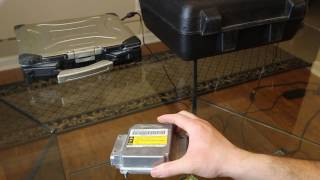
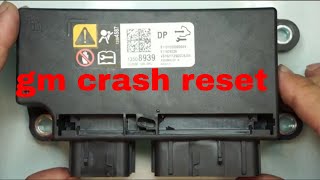
- Collision Event (Deployment Commanded) (Very Common) — This is the leading cause for GM vehicles. The Sensing and Diagnostic Module (SDM) records a 'deployment event' from a collision, setting this hard code. This happens even in minor accidents where only the seatbelt pretensioners activate. The module must be professionally reset or replaced. 🎬 Watch: How to reset GM airbag module crash data.
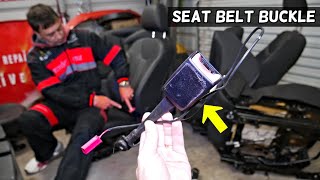
- Faulty Passenger Seatbelt Buckle Switch (Common) — The mechanical switch inside the seatbelt buckle wears out or breaks. It fails to send the correct signal to the control module, making the system think the belt is unbuckled when it is not, or vice-versa. 🎬 See this walkthrough on replacing a seat belt buckle.
- Damaged Wiring or Corroded Connectors (Common) — The SRS wiring harness, especially vulnerable connectors under the passenger seat, frays, pinches, or corrodes from moisture and spills. This causes an open or short circuit, triggering the code.
- Faulty Airbag Control Module (ACM/SDM) (Common) — The module fails internally from voltage spikes, water damage, or age. It stores false crash data or loses communication with SRS sensors.
- Faulty Impact Sensors (Less Common) — External impact sensors sustain damage in a collision or fail internally. If a 'Deployment Commanded' code is present, these sensors require inspection and replacement as part of the post-collision repair.
- Software Glitch or Corrupted Memory (Rare) — The Body Control Module (BCM) or Airbag Control Module (ACM) develops software glitches, misinterpreting sensor data and falsely triggering code B0052. A software re-flash resolves this.
Symptoms
- Airbag warning light is on — This is the most common and often the only symptom. The light illuminates and stays on, indicating the SRS system is disabled.
- Passenger airbag 'Off' light is illuminated — The system defaults to disabling the passenger airbag as a precaution. The 'Passenger Airbag Off' light stays on regardless of whether the seat is occupied.
- Passenger seatbelt warning acts erratically — The seatbelt reminder chime fails to sound when a passenger is unbuckled, or the dash light stays on even when the belt is securely fastened.
- Dashboard message appears — Specific messages display in the instrument cluster, such as 'Service Airbag System' or 'Service Seat Belt System'.
- Code cannot be cleared with a standard scanner (scan-tool only — no driver-felt sign) — For the 'Deployment Commanded' variant, the code is stored as permanent crash data. A standard OBD-II scanner fails to erase it, returning an error like 'cannot execute routine'.
Diagnostic Flowchart
Tap your situation to follow the diagnostic path that matches what you're seeing on this code.
Common Fixes & Costs
- Reset the Airbag Control Module — Parts: $40-$60 (for mail-in reset service), Labor: $100-$250 (for removal and reinstallation), ~1.5 hr book time (Professional)
- Replace Passenger Seatbelt Buckle/Pretensioner Assembly — Parts: $150-$300, Labor: $100-$200, ~1.2 hr book time (Intermediate)
- Repair SRS Wiring or Connectors — Parts: $20-$50, Labor: $100-$300, ~1.5 hr book time (Intermediate)
- Replace the Airbag Control Module (ACM/SDM) — Parts: $300-$1,200 (depending on vehicle make/model), Labor: $150-$350 (plus mandatory VIN programming fees), ~1.5 hr book time (Professional)
- Replace Occupant Classification Sensor Mat — Parts: $500-$1100 (often part of the seat cushion), Labor: $150-$300, ~2.0 hr book time (Professional)
- Replace Deployed Airbags and Impact Sensors — Parts: $400-$1500+, Labor: $250-$500, ~2.5 hr book time (Professional)
DIY vs Professional
- Reset the Airbag Control Module — Beginner:
- Replace the Airbag Control Module — Beginner:
- Repair SRS Wiring or Connectors — Beginner:
- Replace Passenger Seatbelt Buckle/Pretensioner Assembly — Beginner:
- Replace Deployed Airbags and Impact Sensors — Beginner:
- Replace Occupant Classification Sensor Mat — Beginner:
Used vs. New Parts: Buying Guide
When a used part is worth it: For safety-critical SRS components, buying used is STRONGLY DISCOURAGED and often illegal for commercial installers. The only exception is sending your ORIGINAL module for a professional reset service, which is safe and cost-effective. Buying a used seatbelt buckle is risky as its history is unknown; it may have been deployed.
Donor-vehicle mileage cap: roughly under 10000 miles for the part to have meaningful remaining life.
Donor quality checklist:
- For airbag modules, NEVER buy a used one from another vehicle. It is programmed to the wrong VIN and contains hidden crash data.
- For seatbelt assemblies, only consider a used part if it comes from a very low-mileage vehicle with absolutely no collision history, and even then, it is a significant risk.
- Always match part numbers exactly. Superseded numbers may not be compatible.
Decision logic:
- If The fault is 'Deployment Commanded' (crash data) → Send your original module for a professional reset. This is the safest and most economical option.
- If The airbag module itself has failed internally (water damage, etc.) → Buy a NEW OEM module. Used modules are a major liability and require expensive dealer programming.
- If The seatbelt buckle or pretensioner is faulty or deployed → Buy a NEW OEM part. The cost savings of a used part do not justify the immense safety risk of installing a potentially non-functional restraint.
Warranty tradeoff: Used SRS Parts: Almost never come with a meaningful warranty and carry huge liability. Aftermarket New: Limited availability for SRS; warranty varies. OEM New: Carries a manufacturer's part warranty, ensuring it meets federal safety standards.
Worst-case if a used part fails: Incalculable. If a used or improperly repaired SRS component fails to operate in a collision, the cost is measured in severe injury or loss of life, not dollars.
What Happens If You Wait — Timeline
- Immediate: Code B0052 sets, and the airbag warning light illuminates. The entire Supplemental Restraint System (SRS) immediately disables as a fail-safe. (MPG impact: 0%% · Added cost: $0)
- 0-1 month: The vehicle operates with no functional airbags or pretensioners. Any collision carries a significantly higher risk of occupant injury. The vehicle fails any state safety inspection checking for an active airbag light. (MPG impact: 0%% · Added cost: Incalculable. The cost is the risk of severe injury or death in a crash. Potential for traffic citations or insurance claim denial.)
- 1-6 months (if caused by moisture): If the root cause is a slow water leak or corrosion, the problem worsens. Corrosion spreads from a single connector pin to the entire connector, potentially wicking up the copper wire under the insulation. (MPG impact: 0%% · Added cost: $200-500. A simple connector cleaning or buckle replacement escalates to requiring a new wiring harness pigtail and more intensive labor.)
- 6+ months (if caused by moisture): Prolonged moisture and corrosion destroy the airbag control module itself. What started as a $200 buckle or wiring fix now requires replacing and programming a new $1,200 module in addition to fixing the original leak and wiring damage. (MPG impact: 0%% · Added cost: $1500+. The repair cost balloons as multiple parts of the SRS system are compromised by spreading corrosion.)
Cost of Not Fixing It
- Immediate: The entire Supplemental Restraint System (SRS) is disabled. No airbags deploy and seatbelt pretensioners do not activate in a crash. (Added cost: The potential cost is catastrophic injury or death for all occupants. Financial costs include denial of insurance claims or personal liability for injuries to passengers.)
- 1-12 months: Continued risk of severe injury in any collision. The vehicle fails mandatory safety inspections in many states. (Added cost: Cost of a traffic citation or being forced to take the vehicle off the road until repaired. Potential for a minor accident to become a major medical event.)
- 12+ months: If the fault stems from moisture or corrosion, the problem spreads to other wires or modules under the seat or carpet, leading to more complex and expensive electrical problems. (Added cost: A simple $200 wiring repair escalates into a $1500+ repair involving a new wiring harness and control module.)
Diagnosis Steps
- Scan for Codes and Check Vehicle History
Use a professional-grade scanner capable of reading SRS/BCM codes to confirm B0052 is present and check its specific definition (e.g., 'Deployment Commanded' or 'Open Circuit'). Ask the owner or check records for any recent accidents.
Tools: Advanced OBD-II Scanner (for SRS/BCM) (Beginner) - Attempt to Clear the Code
Try to clear the code. If it immediately returns or the scanner gives an error, it strongly confirms the presence of hard-coded crash data. If the code clears but returns after moving the seat or driving, it points towards an intermittent wiring or sensor issue.
Tools: Advanced OBD-II Scanner (for SRS/BCM) (Beginner) - [PRO TIP] Analyze Live Sensor Data
Use your advanced scanner to view the live data stream for the passenger seatbelt buckle switch. The status should change from 'Not Buckled' to 'Buckled' when the seatbelt is latched. Some systems show a voltage toggling between approximately 0V (fastened) and 5V (released). If the status doesn't change, the fault is in the buckle or its wiring.
Tools: Advanced OBD-II Scanner (with Live Data) (Advanced) - Inspect Under-Seat Wiring and Connectors
With the battery disconnected, perform a thorough visual inspection of the wiring harnesses under the passenger seat. Look for pinched wires, frayed insulation, and signs of corrosion on connector pins. Disconnect and reconnect the main yellow SRS connector to ensure it is secure.
Tools: Flashlight, Socket Set (to potentially move seat) (Intermediate) - [PRO TIP] Test Buckle Switch Resistance
Disconnect the battery and wait 15-20 minutes. Disconnect the seatbelt buckle connector under the seat. Set a multimeter to Ohms (Ω). Measure resistance across the two pins on the buckle side. A healthy switch shows infinite resistance or Open Line (OL) when unbuckled, and low resistance (typically less than 5 ohms) when latched. If the reading is stuck on OL or a high value when buckled, the switch has failed.
Tools: Multimeter, Vehicle-Specific Wiring Diagram (Advanced) - [PRO TIP] Perform a Jumper Wire Test (for Open Circuit Codes)
For codes like Ford's B0052:13 (Open Circuit), disconnect the battery and the seatbelt buckle connector. Use a small jumper wire or a fused jumper to connect the two terminals on the vehicle harness side of the connector. Reconnect the battery, turn the ignition on, and re-scan for codes. If the code changes to a 'Short Circuit' code (e.g., B0052:11), it proves the wiring and module are good, and the buckle switch itself is faulty.
Tools: Fused Jumper Wire, Advanced OBD-II Scanner (Advanced) - [PRO TIP] Test Harness and Ground Continuity
With the buckle connector still disconnected, check the vehicle harness side. Use a multimeter to check for continuity on the ground wire between its connector pin and a known-good chassis ground. Resistance should be less than 1.0 Ω. Then, check for continuity on the signal wire between the buckle connector and the corresponding pin at the Airbag Control Module. Resistance should also be under 1.0 Ω. High resistance indicates a break in the wire requiring repair.
Tools: Multimeter, Vehicle-Specific Wiring Diagram, Pinout Chart (Advanced) - Inspect Post-Collision Components
If 'Deployment Commanded' is confirmed, inspect all related SRS components. This includes deployed airbags, seat belt pretensioners (look for compressed or bunched webbing), the clockspring, and all impact sensors for any visible damage or signs of replacement.
Tools: Flashlight, Trim Removal Tools (Intermediate) - Remove and Send Airbag Module for Reset
If the code is 'Deployment Commanded' and all physical repairs are complete, remove the Airbag Control Module (ACM/SDM). Send it to a specialized service that professionally clears the crash data and restores it to its original, pre-accident state. This is the most common and cost-effective solution for this specific fault.
Tools: Socket Set, Trim Removal Tools (Advanced)
When This Code Triggers (Freeze-Frame Conditions)
- Event Type: Deployment or Non-Deployment Event (For the 'Deployment Commanded' fault, the freeze frame is Event Data Recorder (EDR) data. It triggers from a sudden deceleration event meeting the threshold for restraint deployment.)
- Vehicle Speed: Varies (e.g., 25 mph before impact) (The EDR captures vehicle speed in the 5 seconds leading up to the event, providing a timeline of the vehicle's velocity before the crash.)
- Delta-V (Change in Velocity): Varies (e.g., 15 mph) (This key parameter in EDR data shows the severity of the impact by recording the change in speed during the collision itself.)
- Seatbelt Status: Buckled / Not Buckled (The EDR records the status of the driver and passenger seatbelt switches at the time of the event, which is critical for accident reconstruction.)
- System Self-Test: Key ON, Engine OFF (For the 'Passenger Seatbelt Sensor' fault, the code sets during the initial system self-check when the ignition turns on. The SRS module checks sensor circuit resistance, logging the code immediately if it detects an open or short.)
Related Codes
- B0051 — On GM vehicles, this code also means 'Deployment Commanded' and often appears alongside B0052, strongly confirming a crash event. On other makes, it points to a fault in the driver's or a first-row center seatbelt sensor.
- B0053 — Another 'Deployment Commanded' code stored with B0052 in GM vehicles. In non-GM cars, it points to a fault in a second-row passenger seatbelt sensor circuit. Seeing B0052 and B0053 together differentiates between front and rear seat issues.
- B0092 — This code specifically indicates a 'Passenger Occupant Classification System (OCS/ODS) Fault'. It is a companion code to the 'Passenger Seatbelt Sensor' variant of B0052, especially in Subaru and Honda models, confirming the issue is with the passenger seat sensor mat rather than the buckle.
- B0074 — This code relates to the 'Passenger Seatbelt Tension Sensor'. It appears with B0052 to pinpoint the exact faulty component. While B0052 is for the buckle switch, B0074 points directly to the sensor measuring tension on the seatbelt webbing itself.
Climate & Environmental Factors
- High Humidity / Water Intrusion: This is a significant factor for sensor-related B0052 faults. Moisture penetrates the printed circuit boards of the seatbelt buckle switch or the Occupant Detection System (ODS) sensor mat. This leads to corrosion or short circuits in sensitive components like capacitors, causing them to fail and trigger the code. Spilled drinks are a common cause of under-seat connector corrosion.
- Extreme Cold/Heat Cycles: Extreme temperature fluctuations stress electronic components and wiring. Plastic connectors and wire insulation become brittle in the cold and more pliable in the heat, leading to intermittent connections or wire breaks over time, especially in high-vibration areas like under a seat.
How to Talk to a Mechanic About This Code
Say this: "I have an airbag light and code B0052. On my [GM vehicle], I suspect it's a 'Deployment Commanded' code from a past event. Can you quote me to confirm the hard code, then remove the module so I can send it for a reset? If it's a [Ford/Honda], I suspect a faulty passenger seatbelt buckle. Can you diagnose the buckle switch and under-seat wiring specifically?"
This immediately separates the two very different causes of B0052. It directs the technician to the correct diagnostic path, saving time and money, and signals that you understand the difference between a simple sensor fault and a non-clearable crash code.
Avoid saying:
- 'My airbag light is on, can you just reset it?'
- 'I have a B0052 code, just replace the sensor.' (It might be a crash code)
- 'Just fix the airbag light.' (This is too vague and invites expensive, unnecessary diagnostics)
Questions to ask before authorizing the repair:
- For a 'Deployment Commanded' code: Is your quote for replacing the module with a new one, or for the labor to remove and reinstall my original module if I have it reset?
- If you are recommending a new module, does the price include the mandatory VIN programming?
- For a sensor fault: Did you test the buckle switch with a multimeter or view its status on the live data stream to confirm it has failed?
- What is the warranty on the SRS components and the labor?
Where to Take It: Dealer vs Independent vs Chain
- Dealer:
Best for: Vehicles under warranty (e.g., Honda/Subaru recalls for this issue), Complex post-collision repairs requiring multiple new SRS components and VIN programming
Downsides: Highest labor rates, Will only replace modules, not use a more affordable reset service (Typical cost: +75% vs. baseline) - Independent Shop:
Best fit for most scenarios, especially sensor faults and coordinating module resets. Ensure the shop has experience with SRS systems.
Best for: Diagnosing sensor-related faults (buckle, wiring), Removing and reinstalling an airbag module to be sent for a reset service, Out-of-warranty vehicles where cost is a primary concern
Downsides: Quality and SRS experience vary greatly; must vet the shop's reputation and certifications. (Typical cost: +0% vs. baseline) - Chain Shop:
AVOID. The risk of improper repair on a safety system is too high. They are not equipped to handle module programming or complex diagnostics.
Best for: Simple maintenance like oil changes and tires.
Downsides: Technicians often lack the specialized training required for safety-critical SRS repairs., High pressure to upsell can lead to incorrect diagnoses. (Typical cost: -10% vs. baseline)
When to Walk Away From the Repair
If the estimated repair cost exceeds 50% of the car's private-party value (check Kelley Blue Book), you should seriously consider selling the car as-is or trading it in.
- Car worth $4000, fix is $450: Fix it. A seatbelt buckle replacement or module reset is well below the threshold.
- Car worth $12000, fix is $1800: Fix it. A new module and labor is still a reasonable investment for a vehicle of this value.
- Car worth $3000, fix is $2500: Walk away. If the vehicle requires a full post-collision SRS rebuild (airbags, sensors, module), the cost is not justifiable.
What Scan Tool You Need for This Code
Minimum: A scanner that can read and clear Supplemental Restraint System (SRS) / Airbag codes. Basic engine-only code readers will not work.
A standard $20 OBD-II scanner only communicates with the Powertrain Control Module (engine/transmission). It cannot see, diagnose, or clear codes from the SRS module, making it completely ineffective for an airbag light.
Budget: Autel AutoLink AL619 or Foxwell NT630 Plus (~$80) — Reads and clears SRS/Airbag codes, allowing you to confirm the specific B0052 fault and clear it after a sensor/wiring repair. Provides live data to check sensor status.
Mid-range: BlueDriver Pro or Autel MaxiCOM MK808 (~$120) — Offers enhanced diagnostics to read manufacturer-specific SRS codes and definitions. The BlueDriver app provides repair reports based on verified fixes. The MK808 offers more professional features and bidirectional controls.
Professional: Autel MaxiSys MS906Pro or Launch X431 Series (~$900-1500) — Provides full, dealer-level diagnostics. Can perform bidirectional control to test components, and has the capability to perform the necessary programming and calibration for a new airbag control module.
Rent vs buy: Most auto parts store loaner tools are basic engine code readers and cannot access SRS systems. For a one-time SRS issue, it's more cost-effective to pay a shop's diagnostic fee ($100-$150) than to buy a capable scanner. Buy a scanner only if you plan to do frequent DIY repairs on modern vehicles.
How to Clear the Code After You Fix It
- CRITICAL: If code was 'Deployment Commanded', the module MUST be reset by a specialist or replaced. A scanner cannot clear it.
- For sensor-related faults, reconnect all components and disconnect the battery for 20 minutes.
- Reconnect the battery and use an SRS-capable OBD-II scan tool to clear any remaining fault codes.
- Turn the ignition OFF, then ON, and wait for the airbag light to self-test (it should turn on then off). If it stays on, the fault persists.
Drive cycle (~5 minutes): An SRS system does not require a complex drive cycle like an emissions system. After clearing the code, a simple key-off, key-on cycle is usually sufficient to verify the repair. The SRS module performs a complete self-test of all components every time the ignition turns on.
Readiness monitors affected: None
Watch out for:
- Attempting to clear a 'Deployment Commanded' hard code with a standard scanner always fails.
- Forgetting to disconnect the battery before working on SRS components causes new faults or accidental deployment.
- Using cheap butt connectors for wiring repairs. SRS circuits require perfect, low-resistance connections, meaning solder and heat-shrink are mandatory.
Will This Fail Emissions / State Inspection?
No — by itself this code doesn't fail OBD inspection (but it can keep readiness monitors from setting, which causes a separate fail).
- California: An airbag light will NOT cause a failure of the emissions-focused Smog Check. The test does not check SRS functionality.
- New York: As of recent regulations, an illuminated airbag warning light is noted as an advisory during the annual safety inspection but is NOT a cause for failure.
- Texas: An airbag light will NOT cause a failure of the annual safety inspection. The inspection checks other safety items, but the SRS light is not on the list of failure criteria.
- General Note: While it may not fail an emissions or safety inspection in some states, selling a vehicle with a known safety defect like a disabled airbag system carries significant legal liability.
Most Commonly Affected Vehicles
- Chevrolet Silverado, Colorado, Impala, Tahoe, Suburban (2007-2014) — Extremely common for B0052 to mean 'Deployment Commanded' after even a minor collision triggering seatbelt pretensioners. The SDM module part number for many 2014+ models is 13592880.
- GMC Sierra, Canyon, Yukon (2007-2014) — Shares the same SRS system as Chevrolet trucks, making it equally prone to the non-clearable 'Deployment Commanded' code after an impact.
- Buick LaCrosse, Enclave (2008-2017) — As part of the GM family, these vehicles frequently log B0052 as a hard code after an accident requiring a module reset service.
- Cadillac CTS, Escalade (2008-2017) — These GM models store 'Deployment Commanded' crash data that cannot be cleared with a standard scanner and requires professional reset or replacement.
- Ford Escape, F-150, Explorer, Edge (2010-2018) — On these models, B0052 is almost always related to the passenger seatbelt sensor circuit and appears with a suffix. B0052:13 indicates an open circuit, a common failure.
- Honda Civic, Accord, CR-V, Pilot, Odyssey (2020-2022) — B0052 relates to a faulty passenger seat weight sensor or buckle switch. A major recall (NHTSA 24V-064) was issued for the front passenger seat weight sensor on many 2020-2022 models, which cracks and causes SRS errors.
- Subaru Outback, Legacy (2020-2022) — This code points to a failure in the Occupant Detection System (ODS) sensor mat in the passenger seat cushion. A recall (NHTSA 24V-227) was issued for this issue. Dealers recommend replacing the entire seat base assembly.
- Pontiac G6, Grand Prix, Solstice (2005-2010) — Older GM models use the 'Deployment Commanded' definition for this code, requiring a module reset after any collision event.
Manufacturer-Specific Notes
- General Motors (Chevrolet, GMC, Buick, Cadillac, etc.): For GM, B0052 almost exclusively means 'Deployment Commanded'. It signifies the airbag module recorded a crash and must be reset or replaced. It will not clear with a normal scan tool. On some models, the SDM permanently locks after 3 commanded deployments and must be replaced.
- Ford: On Ford vehicles, B0052 has a two-digit suffix (e.g., B0052:11 for short to ground, B0052:13 for open circuit) critical for accurate diagnosis. After a collision, Ford service information mandates replacing the RCM, impact sensors, and clockspring even if they appear undamaged.
- Toyota/Honda: On these makes, B0052 relates to a fault in the passenger seatbelt buckle circuit or the Occupant Classification System (OCS). A major recall, NHTSA campaign 24V-064 (Honda recalls XHP and VHQ), was issued for 2020-2022 Honda models because the passenger seat weight sensor's circuit board cracks, leading to a short circuit.
- Subaru: On many Subaru models, a B0052 fault ties to the Occupant Detection System (ODS) sensor mat in the passenger seat cushion. A safety recall, NHTSA campaign 24V-227 (Subaru recall WRA-24), was issued for 2020-2022 Legacy and Outback models for this exact issue, where a capacitor in the ODS sensor cracks and short circuits, disabling the passenger airbag.
Real Owner Stories
2007 Chevrolet Suburban with 150K miles
Owner bought the truck with the airbag light on. A standard scanner read 'B0052-00: Deployment Commanded' but could not clear the code.
What they tried:
- Attempted to clear the code with a basic OBD-II scanner, which failed.
- Researched the code online and discovered it was a 'hard code' from a previous accident.
Outcome: The owner physically removed the Airbag Control Module (located under the driver's seat) and mailed it to a specialized service (like Safety Restore) for a reset. The service cost approximately $50, and after reinstalling the reset module, the light went off and the system was functional.
Lesson: On GM vehicles, 'Deployment Commanded' is a permanent crash code. Don't waste time or money trying to clear it with a scanner; the module must be professionally reset or replaced.
2013 Ford Escape with B0052:13
Airbag light came on intermittently at first, then stayed on permanently. A scan with FORScan (Ford-specific software) revealed code B0052:13, indicating an open circuit in the passenger seatbelt buckle sensor.
What they tried:
- Visually inspected the wiring under the passenger seat and found no obvious damage.
- Used a multimeter to test the resistance of the buckle switch. It showed an open circuit (infinite resistance) even when the belt was latched, confirming the switch was broken internally.
- Used a jumper wire on the vehicle-side connector, which made the 'open circuit' code change to a 'short circuit' code, proving the rest of the wiring and module were good.
Outcome: Replaced the passenger seatbelt buckle assembly (a ~$200 part). After replacement, the code cleared and did not return. The total repair took about an hour.
Lesson: For Ford vehicles, the suffix code is critical. B0052:13 almost always points to a faulty buckle switch or a break in the wire leading to it. Testing the switch with a multimeter is a definitive diagnostic step.
2021 Subaru Outback with intermittent airbag light
The airbag light came on and off, and the passenger airbag 'ON'/'OFF' indicator lights in the overhead console acted erratically or failed to light up at all.
What they tried:
- The owner initially suspected a complex sensor issue.
- Forum research indicated a very common problem with cracked solder joints on the small circuit board for the overhead console indicator lights.
Outcome: The owner removed the overhead map light console, disassembled it to access the small LED circuit board, and re-soldered the three resistor joints and wire connections using a soldering iron. This restored the connection, the indicator lights began working correctly, and the B0052 code disappeared. The fix was free, requiring only basic soldering skills.
Lesson: On many 2005-2022 Subarus, an airbag light stems from a simple manufacturing defect (brittle lead-free solder) in the overhead console, not a major SRS component failure. A 30-minute DIY soldering job saves a $500+ dealer visit.
How to Prevent This Code From Triggering
- Keep under-seat areas clear (Always) — Items stored under the seat, especially water bottles or sharp objects, wedge in the seat mechanism and pinch, chafe, or sever the sensitive SRS wiring harness, causing an open or short circuit.
- Clean up spills immediately and thoroughly (As needed) — Spilled coffee, soda, or water seeps into the under-seat connectors or the seatbelt buckle itself. The sugar and acids in drinks accelerate corrosion on the small connector pins, leading to high resistance faults.
- Use waterproof floor liners (One-time installation) — High-quality, custom-fit floor liners (like WeatherTech or Husky) contain water from rain or snow, preventing it from soaking into the carpet and reaching the airbag module mounted to the floor.
- Address all water leaks promptly (As needed) — A leaking sunroof drain, windshield seal, or door seal allows water to saturate the carpet and floor-mounted electronics, including the airbag module, causing catastrophic failure.
- Use caution when cleaning the interior (During cleaning) — Avoid spraying cleaning liquids directly into the seatbelt buckle or onto electrical connectors. Apply cleaner to a cloth first. Aggressive vacuuming snags and damages under-seat wiring.
Frequently Asked Questions
Can I reset the airbag light for code B0052 myself?
If it's a sensor or wiring fault that you've fixed, a capable SRS scanner clears it. However, if it's a 'Deployment Commanded' code from an accident, it is stored as a hard code and cannot be cleared with any standard diagnostic tool. The module itself must be professionally reset or replaced.
What happens if I don't fix code B0052?
The entire Supplemental Restraint System (SRS) remains disabled. In the event of an accident, none of the airbags deploy and the seatbelt pretensioners do not activate, significantly increasing the risk of severe injury or death for all occupants.
Is it cheaper to reset my airbag module or replace it?
Resetting the original module is significantly cheaper. A mail-in reset service typically costs around $40-$60, whereas a new module from a dealer ranges from $400 to over $1,200, plus labor and mandatory VIN programming fees.
My car was in a minor accident and the airbags didn't deploy, why do I have a 'Deployment Commanded' code?
The Sensing and Diagnostic Module (SDM) is highly sensitive and records a 'Deployment Commanded' event even in a minor collision only severe enough to trigger the seatbelt pretensioners. Once this data is recorded, the module locks the code and must be reset.
I bought a used car and it has this code. What does that mean?
It is a major red flag that the car was in a previous accident and was not repaired correctly. The airbag system is not functional. Have the vehicle inspected by a qualified mechanic immediately to understand the extent of the damage and improper repairs.
Will my airbags deploy unexpectedly if I have this code?
It is extremely unlikely. The system is designed to fail in a safe mode, which disables the airbags to prevent accidental deployment. The primary danger is the airbags failing to deploy when they are needed.
What's the difference between the seatbelt sensor and the occupant classification sensor?
The seatbelt sensor (or buckle switch) is a simple switch detecting if the metal tab of the seatbelt is latched into the buckle. The Occupant Classification Sensor (OCS) is a weight sensor (usually a mat or bladder in the seat cushion) determining if a passenger is present and classifying their weight to decide if the passenger airbag should be enabled.
Key Takeaways
- Code B0052 disables your vehicle's entire airbag and seatbelt pretensioner system, making it extremely unsafe to drive until repaired.
- In General Motors vehicles, B0052 indicates 'Deployment Commanded,' meaning the airbag module has permanently stored crash data from an impact.
- For Ford, Honda, and Subaru models, B0052 flags a passenger seatbelt sensor fault, often requiring a $150-$300 buckle replacement or wiring repair.
- You cannot clear a 'Deployment Commanded' hard code with a standard OBD-II scanner; you must mail the module to a professional reset service for approximately $50.
- Always verify your vehicle's specific B0052 definition first, as fixing a $50 crash data hard code requires a completely different approach than diagnosing a broken seatbelt circuit.
Helpful Videos
Shop the Parts Behind B0052
Below are the parts most often responsible for code B0052, ranked by how frequently each one is the actual culprit (per the diagnosis above). Tap any to see what we have for your vehicle.



The information in this article is provided for general reference and educational purposes only. Vehicle specifications, procedures, and part compatibility can vary by production date, trim level, and region. Always consult your vehicle's factory service manual and verify part numbers before purchasing or performing repairs. Safety-critical components such as airbags, seat belts, and braking systems should be installed by a qualified professional.
- 🧭 Diagnostic Flowchart
- 🎬 Helpful Videos
- 🛍️ Shop This Part
- What Does B0052 Mean?
- Can I Drive With B0052?
- Common Causes
- Symptoms
- Common Fixes & Costs
- DIY vs Professional
- Used vs. New Parts: Buying Guide
- What Happens If You Wait — Timeline
- Cost of Not Fixing It
- Diagnosis Steps
- When This Code Triggers (Freeze-Frame Conditions)
- Related Codes
- Climate & Environmental Factors
- How to Talk to a Mechanic About This Code
- Where to Take It: Dealer vs Independent vs Chain
- When to Walk Away From the Repair
- What Scan Tool You Need for This Code
- How to Clear the Code After You Fix It
- Will This Fail Emissions / State Inspection?
- Most Commonly Affected Vehicles
- Manufacturer-Specific Notes
- Real Owner Stories
- 2007 Chevrolet Suburban with 150K miles
- 2013 Ford Escape with B0052:13
- 2021 Subaru Outback with intermittent airbag light
- How to Prevent This Code From Triggering
- Frequently Asked Questions
- Can I reset the airbag light for code B0052 myself?
- What happens if I don't fix code B0052?
- Is it cheaper to reset my airbag module or replace it?
- My car was in a minor accident and the airbags didn't deploy, why do I have a 'Deployment Commanded' code?
- I bought a used car and it has this code. What does that mean?
- Will my airbags deploy unexpectedly if I have this code?
- What's the difference between the seatbelt sensor and the occupant classification sensor?
- Key Takeaways
- 🎟️ Get 5% Off