

OBD-II Code B0053: Airbag Deployment Commanded / Second Row Seatbelt Fault
What B0053 means, why it triggers, and how to fix it
- Code B0053 means a severe 'Deployment Commanded' crash fault in GM vehicles, or a 'Second Row Seatbelt Sensor' failure in Ford and Hyundai models.
- An illuminated airbag light disables the entire SRS system, meaning zero airbags will deploy in a crash.
- A latched 'Deployment Commanded' code cannot be cleared with a scanner; you must mail the module to a professional reset service for about $50 or replace it entirely.
- For seatbelt-related B0053 codes, replacing the $75-$150 second-row left buckle assembly or repairing pinched under-seat wiring resolves the issue 90% of the time.
- Never install a used junkyard airbag module, as it likely contains locked crash data and requires expensive dealer VIN programming to function.
What Does B0053 Mean?
Code B0053 has two distinct definitions depending on the manufacturer. For most General Motors vehicles, it is a critical 'Deployment Commanded' code, indicating the airbag control module recorded a collision and permanently stored crash data. For manufacturers like Ford and Hyundai, it points to an electrical fault with the seatbelt sensor for the left seat in the second row.
Technical definition: The SAE/ISO definition for B0053 is either "Deployment Commanded" or "Second Row Left Seatbelt Sensor (Subfault)". The "Deployment Commanded" variant sets when the Sensing and Diagnostic Module (SDM) detects a crash severe enough to deploy airbags. The "Seatbelt Sensor" variant sets when the Restraints Control Module (RCM) detects an open, short, or abnormal resistance in the specific seatbelt buckle's sensor circuit.
Can I Drive With B0053?
No — Do Not Drive. Do not drive. This code disables the entire Supplemental Restraint System (SRS), including all airbags and seatbelt pretensioners. In a collision, no safety restraints will deploy, dramatically increasing the risk of serious injury or death.
Common Causes
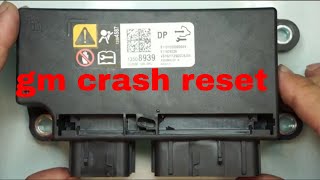
- Vehicle was in a collision (Very Common) — This is the primary reason for the 'Deployment Commanded' variation. The airbag control module senses an impact, stores non-erasable crash data, and permanently disables the SRS system until the module is reset or replaced. This code is 'latched' and cannot be cleared with a standard scanner. 🎬 See how a professional resets GM crash data for B0053.
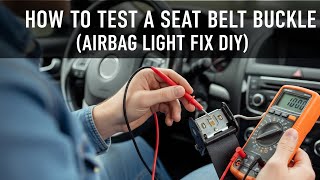
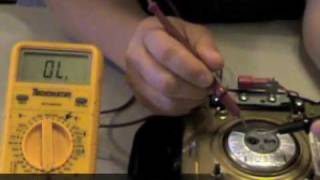
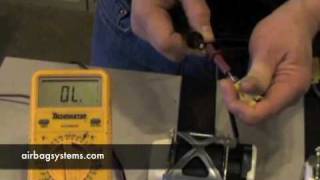
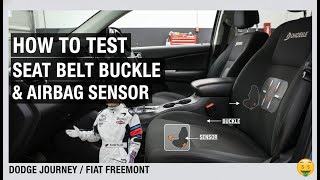
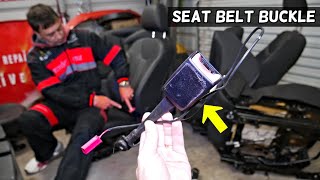
- Faulty second-row left seatbelt buckle/sensor (Common) — For vehicles where B0053 indicates a seatbelt fault, the sensor inside the buckle is the most common failure point. This sensor detects if the belt is latched and fails from internal wear, defects, or liquid spills. 🎬 Watch: How to test a seat belt buckle sensor circuit.
- Damaged wiring or corrosion under the seat (Common) — The wiring for the seatbelt buckle sensor is highly vulnerable. Items stored under the seat, passenger foot traffic, or spilled liquids stretch, pinch, or corrode the wires and connectors, leading to an open or shorted circuit.
- Faulty Airbag Control Module (SDM/RCM) (Less Common) — The control module fails internally due to software corruption, electronic degradation, or moisture damage, falsely reporting either a deployment event or a sensor fault without a collision.
- Low system voltage or weak battery (Uncommon) — A failing battery, bad alternator, or parasitic drain causes voltage drops during startup. The sensitive SRS module interprets this unstable power as a fault, triggering spurious codes like B0053.
- Faulty ignition switch (Rare) — In specific vehicles, particularly older BMW models, a failing ignition switch causes unstable power delivery, triggering false fault codes across various modules, including the SRS system.
Symptoms
- Airbag warning light is on — The SRS or airbag warning light remains illuminated constantly, indicating the entire safety system is disabled and will not deploy in a crash.
- Dashboard warning message — The driver information center displays a specific text warning like 'Service Airbag System', 'Seat Belt Fault', or 'Restraint System Malfunction'.
- Second-row seatbelt warning light — In vehicles where the code relates to the seatbelt sensor, the rear seatbelt warning light flashes or stays on continuously, even when the belt is buckled.
- Failed state safety inspection — An illuminated airbag warning light results in an automatic failure of the vehicle's annual safety inspection in most jurisdictions.
- Inability to clear the code (scan-tool only — no driver-felt sign) — If the code is the 'Deployment Commanded' type, it is 'latched'. A standard OBD-II scanner will fail to erase it, often displaying a 'Cannot Execute Routine' error.
Diagnostic Flowchart
Tap your situation to follow the diagnostic path that matches what you're seeing on this code.
Common Fixes & Costs
- Airbag Module Reset Service — Parts: $40-$60, Labor: $100-$200, ~1.5 hr book time (Professional)
- Replace Second-Row Seatbelt Buckle
— Parts: $75-$150, Labor: $100-$150, ~1.0 hr book time
(Intermediate)
Ford F-150 (2015-2017): OEM FL3Z-1660044-GE (Alt: Dorman HELP! 74531)
Hyundai Elantra (2017): OEM 89840-F2000-TRY - Repair Wiring Under Seat — Parts: $10-$30, Labor: $100-$250, ~1.5 hr book time (Intermediate)
- Replace Airbag Control Module (ACM/SDM)
— Parts: $250-$600, Labor: $200-$400, ~2.0 hr book time
(Professional)
Chevrolet Silverado 1500 (2014): OEM 13518044 (Alt: Dorman 591-230)
Hyundai Elantra (2017): OEM 95910-F2100
Used vs. New Parts: Buying Guide
When a used part is worth it: For a 'Seatbelt Buckle' replacement, a used OEM part from a low-mileage, non-accident vehicle is a cost-effective alternative. For the 'Airbag Control Module', buying used is STRONGLY DISCOURAGED. It is far safer to have your original module professionally reset.
Donor-vehicle mileage cap: roughly under 60000 miles for the part to have meaningful remaining life.
Donor quality checklist:
- For seatbelt buckles, verify the donor vehicle was not in a collision.
- For Airbag Control Modules, NEVER buy used. A used module likely contains crash data and is not programmed for your vehicle's VIN.
Decision logic:
- If Code is 'Deployment Commanded' → Send original module for a professional reset service. This is cheaper and avoids VIN programming issues.
- If Code is 'Seatbelt Sensor' and vehicle is >100K miles → A used buckle from a reputable recycler is acceptable, but a new aftermarket part often has a better warranty for a similar price.
- If Airbag Control Module is physically damaged (water, fire, impact) → Buy a new OEM module and have it programmed by the dealer. A reset is not possible.
Warranty tradeoff: Used parts: 30-90 day warranty. Aftermarket new: 1-year to limited lifetime warranty. OEM new: 12-month/12,000-mile warranty. Module Reset Service: Often includes a lifetime guarantee on the reset.
Worst-case if a used part fails: $800-$1500 if a used/improperly reset module is installed, including repeat labor, a proper new module, and dealer programming fees.
What Happens If You Wait — Timeline
- Immediate (0 days): The Airbag/SRS warning light illuminates. The entire Supplemental Restraint System is disabled by the control module as a safety precaution. (MPG impact: 0%% · Added cost: $0)
- First Drive: The vehicle operates without passive safety systems. The risk of severe injury or death in a collision is dramatically increased. (MPG impact: 0%% · Added cost: Potentially infinite (in case of an accident).)
- First State Inspection: The vehicle automatically fails its annual safety inspection in most jurisdictions, preventing legal registration renewal. (MPG impact: 0%% · Added cost: $20-$50 (re-inspection fee).)
- 6+ months: Driving with a disabled safety system becomes normalized. If the root cause was water intrusion, the airbag control module suffers permanent electronic damage, turning a simple fix into an expensive module replacement. (MPG impact: 0%% · Added cost: $500-$1000+ (module replacement and programming).)
Cost of Not Fixing It
- Immediate: The entire Supplemental Restraint System is disabled. In a collision, no passive safety devices will deploy, drastically increasing the risk of serious injury or death. (Added cost: N/A)
- First Inspection: The vehicle automatically fails the safety inspection portion in many states, preventing legal registration renewal. (Added cost: $20-$50 (re-inspection fee))
- Long-term: Ignoring the fault normalizes driving a vehicle with a critical safety system disabled, leading to catastrophic outcomes in an otherwise survivable accident. (Added cost: Potentially infinite (medical bills, loss of life))
Diagnosis Steps
- Identify the Code's Meaning for Your Vehicle
Research your specific vehicle make, model, and year along with 'B0053' to determine if it is a 'Deployment Commanded' code (common on GM) or a 'Seatbelt Sensor' code (common on Ford, Hyundai). Misinterpreting the code is the leading cause of misdiagnosis.
Tools: Smartphone or computer (Beginner) - Attempt to Clear the Code
Using a professional scan tool, try to clear the B0053 code. If the scanner reports it cannot be cleared or the code immediately returns, you have a 'latched' crash code. If it clears and stays off, it was an intermittent fault.
Tools: Professional Scan Tool (Beginner) - Inspect Under the Second-Row Left Seat
For a 'Seatbelt Sensor' fault, inspect the area under the seat. Remove debris and trace the wire from the seatbelt buckle to its connector. Look for pinched, stretched, or frayed wires, and ensure the connector is securely plugged in and free of corrosion.
Tools: Flashlight (Intermediate) - Test the Seatbelt Buckle Sensor
Disconnect the battery. Unplug the second-row left seatbelt buckle connector (disengage the shorting bar if present). Set a multimeter to 200 Ohms and probe the buckle-side pins. A healthy sensor shows 2.0 to 3.0 Ohms. Infinite resistance (OL) or near zero Ohms confirms a faulty buckle.
Tools: Multimeter, trim removal tools (Advanced) - Visually Inspect for Collision Damage
If you suspect a 'Deployment Commanded' code, thoroughly inspect the vehicle for signs of a past accident. Look for repaired bumper covers, mismatched paint, or replaced hardware on frame rails.
Tools: Flashlight (Intermediate) - Check Live Data
Use a high-end scan tool to view live data from the Restraints Control Module. Navigate to the seatbelt status PID. The display must change from 'Unbuckled' to 'Buckled' as you operate the seatbelt. No change confirms a buckle or wiring fault.
Tools: Professional Scan Tool (Intermediate) - Inspect the Airbag Control Module (SDM)
For 'Deployment Commanded' codes, disconnect the battery for 30 minutes. Locate and remove the airbag module (usually under the center console). Inspect it for physical damage, corrosion, or water intrusion, which requires replacement rather than a reset.
Tools: Socket set, trim removal tools (Advanced) - Check SRS Module Voltage and Grounds
With the battery connected, backprobe the power and ground terminals at the SRS module connector. Power should show battery voltage (12.0-14.5V). Ground should show less than 0.1V. Voltage outside this range indicates a power supply issue triggering false codes.
Tools: Multimeter, vehicle-specific wiring diagram (Advanced)
When This Code Triggers (Freeze-Frame Conditions)
- System Voltage: 11.5V - 14.5V (Key-On or Engine Running. The SRS module performs a self-test at every startup. Low or high voltage sets a fault.)
- Fault Status: Present / Active (Indicates the fault is currently detected by the module, not just a historical event.)
- Ignition Cycles Since Fault: 0 (A value of '0' means the fault was detected on the current drive cycle.)
- Vehicle Speed: 0 mph or Various (For a 'Deployment Commanded' code, this shows the speed at the moment of impact. For a sensor circuit fault, it occurs at 0 mph during the startup self-check.)
Related Codes
- B0051 — Also means 'Deployment Commanded.' On GM vehicles, B0053 sets instead of B0051 if the module detects a deployment-level crash while an existing fault in an inflator circuit is already present.
- B0052 — Means 'Deployment Commanded' or 'First Row Center Seatbelt Sensor.' When seen with B0053 on a GM vehicle, it confirms the airbag module stored crash data.
- B0054 — Points to the 'Second Row Center Seatbelt Sensor'. Seeing B0053 and B0054 together strongly suggests a shared wiring harness issue (like a common ground) rather than two separate buckle failures.
- U3000 — Means 'Control Module Internal Fault.' If B0053 is present without a crash, a U3000 code confirms the module itself failed electronically and requires replacement.
Climate & Environmental Factors
- High Humidity / Water Intrusion: Moisture from spills, flooding, or high humidity penetrates under-seat connectors or the airbag control module. This causes corrosion on electrical pins, increasing resistance and triggering a B0053 sensor fault.
- Extreme Cold: Freezing temperatures cause wiring and connectors to contract, leading to intermittent open circuits or poor connections that trigger a false B0053 code during a cold start.
How to Talk to a Mechanic About This Code
Say this: "I have an airbag light on and my scanner is showing code B0053. I know this code can mean two different things. I need a diagnosis to determine if it's a 'Deployment Commanded' crash code that needs a module reset, or if it's a 'Second Row Seatbelt Sensor' fault."
This signals you are an informed customer. It prevents them from quoting a simple seatbelt replacement when the issue is a complex crash data reset, or vice-versa. It forces a proper diagnosis first.
Avoid saying:
- 'My airbag light is on, can you fix it?'
- 'Just replace the bad sensor.'
- 'I was in a little fender bender, can you just turn the light off?'
Questions to ask before authorizing the repair:
- If it's a 'Deployment Commanded' code: Is the module physically damaged, or can my original module be sent out for a reset service?
- If it's a 'Seatbelt Sensor' code: Did you test the sensor and wiring with a multimeter before recommending a full seatbelt buckle replacement?
- Will you provide me with all the SRS fault codes found in the system, not just B0053?
- What is your warranty on SRS system repairs?
Where to Take It: Dealer vs Independent vs Chain
- Dealer:
Recommended only if a new module must be installed and programmed or if the vehicle is under warranty. Otherwise, an independent shop is a better value.
Best for: Vehicles under warranty., Post-collision repairs where OEM procedure requires module and sensor replacement., Complex cases requiring programming of a brand new airbag module.
Downsides: Highest labor rates and part costs., Will almost always replace the airbag module rather than offering a more affordable reset service. (Typical cost: +75% vs. baseline) - Independent Shop:
Best fit for most B0053 scenarios. They handle both the simple sensor fault and the module reset, offering the most cost-effective solutions.
Best for: Diagnosing and repairing the 'Seatbelt Sensor' fault., Facilitating a cost-effective 'Deployment Commanded' fix by removing the module and sending it to a reset service., Out-of-warranty vehicles where cost is a major factor.
Downsides: Quality and SRS expertise vary; choose a shop with ASE certifications for electrical/safety system work., May not have the proprietary tools to program a brand new module if replacement is required. (Typical cost: +0% vs. baseline) - Chain Shop:
AVOID. Airbag system repairs are safety-critical and require expertise not typically found at chain shops.
Best for: Not recommended for SRS/airbag system diagnostics or repair.
Downsides: Technicians often lack specialized training and diagnostic tools for safety-critical SRS systems., High risk of misdiagnosis or refusal to perform the repair due to liability concerns. (Typical cost: +0% vs. baseline)
When to Walk Away From the Repair
If the total estimated repair cost for the SRS system exceeds 50% of your car's private-party market value, consider selling the car as-is or trading it in.
- Car worth $3000, fix is $1800: Walk away. The repair cost is over 50% of the vehicle's value. Sell as a 'mechanic's special' or trade it in, fully disclosing the airbag issue.
- Car worth $15000, fix is $1200: Fix it. This repair is well below the threshold and restores a critical safety feature, preserving the vehicle's value.
- Car worth $5000, fix is $450: Fix it. A sub-$500 repair for a wiring issue or module reset is an excellent value and makes the car safe to drive again.
What Scan Tool You Need for This Code
Minimum: A scan tool that reads and clears codes from the Supplemental Restraint System (SRS) / Airbag module. Basic engine-only code readers will not work.
A standard $20 OBD-II reader only communicates with the engine control unit (ECU). It cannot see 'B' (Body) codes like B0053 stored in the SRS module. You will see 'No Codes Found' while the airbag light is on.
Budget: Autel AutoLink AL619 / ML629 (~$85) — Specifically designed to read and clear codes from the Engine, ABS, and SRS systems. It successfully identifies the B0053 code and clears it after a seatbelt sensor repair.
Mid-range: BlueDriver Pro Bluetooth Scanner (~$120) — Reads and clears SRS codes and provides live data streaming. This allows you to watch the seatbelt sensor status change in real-time on your phone as you buckle and unbuckle it.
Professional: Autel MaxiCOM MK808 / Foxwell NT809 (~$450-600) — Offers full system diagnostics, deep SRS analysis, and live data graphing. These tools perform module self-tests and provide detailed manufacturer-specific code descriptions.
Rent vs buy: For a one-time diagnosis, auto parts stores offer free loaner tools. You must specifically ask for a scanner that reads SRS/airbag codes. If you plan to do your own maintenance, buying a mid-range scanner is a worthwhile investment.
How to Clear the Code After You Fix It
- For 'Seatbelt Sensor' fault: After replacing the buckle or repairing wiring, use a professional scan tool to clear codes from the SRS/RCM module.
- For 'Deployment Commanded' fault: This code is latched and CANNOT be cleared with a scan tool. The module must be physically removed and sent to a reset service or replaced entirely.
- After reinstallation, clear any related codes and verify the airbag light turns off after the initial self-check.
Drive cycle (~15 minutes): The SRS system does not require a complex drive cycle. After the repair and code clear, the system performs a self-test every time the ignition is turned on. If the airbag light illuminates at startup and turns off after a few seconds, the system is operational.
Readiness monitors affected: Supplemental Restraint System
Watch out for:
- Attempting to clear a 'Deployment Commanded' code with a standard scanner will fail and show a 'Cannot Execute Routine' error.
- Forgetting to disconnect the battery for at least 30 minutes before working on any SRS component, risking accidental deployment.
- Not verifying the specific meaning of B0053 for the vehicle, leading to incorrect repairs.
Will This Fail Emissions / State Inspection?
No — by itself this code doesn't fail OBD inspection (but it can keep readiness monitors from setting, which causes a separate fail).
- California: An airbag light will NOT cause a failure of the California Smog Check, which is strictly an emissions test.
- New York: An illuminated airbag warning light is cause for rejection during the annual safety inspection.
- Texas: As of 2025, most non-commercial vehicles are no longer subject to a safety inspection. An airbag light will not fail the emissions test, but you can be ticketed for operating a vehicle with a known safety defect.
Most Commonly Affected Vehicles
- Chevrolet Silverado, Suburban, Tahoe, Colorado (2003-2014) — These GM models widely set the latched 'Deployment Commanded' B0053 code after a collision. GM mandates replacement of the SDM and involved impact sensors.
- GMC Sierra, Yukon (2003-2014) — Sister vehicles to Chevrolet, using the same SDM logic. B0053 is a common latched crash code requiring professional service.
- Ford C-Max, F-150, Expedition (2013-2018) — Consistently refers to a 'Second Row Left Seatbelt Sensor' fault. TSB 13-6-16 addresses intermittent warnings by rerouting the under-seat wiring harness.
- Hyundai Elantra, Sonata (2011-2017) — Frequently reports B0053 as a seatbelt sensor fault traced to stressed under-seat wiring or internal buckle failure.
- Kia Sorento, Optima (2011-2018) — Sets a B0053 code for the second-row seatbelt sensor, pointing to issues with the buckle or its wiring.
- Chevrolet Corvette (1999-2004) — Sets the 'Deployment Commanded' code due to internal SDM failure even without a crash, often accompanied by other DTCs.
- Toyota Tundra, Highlander, Sienna (2022-Present) — Newer models have known issues with rear seat belt sensor warnings. Dealers perform a software update of the SRS ECU to resolve false warnings.
- BMW 3-Series, X3 (2004-2018) — Issues with seat sensors, wiring, or a failing ignition switch trigger faults that mimic the symptoms of a B0053 code.
Manufacturer-Specific Notes
- General Motors (Chevrolet, GMC, Cadillac): B0053 almost always means 'Deployment Commanded.' It is a latched code requiring module reset or replacement. Official GM procedures mandate replacing the SDM and involved impact sensors after a collision.
- Ford: B0053 indicates a fault in the 'Second Row Left Seatbelt Sensor' circuit. TSB 13-6-16 addresses intermittent warnings by rerouting the wiring harness to prevent stress and damage.
- Toyota: On 2022+ models, a persistent rear seatbelt sensor fault is often caused by a software glitch in the SRS ECU requiring a dealer reflash before replacing hardware.
- Honda: Highly sensitive to battery voltage. A weak battery causes the SRS light to illuminate with various codes. Always check battery health before complex SRS diagnostics.
Real Owner Stories
2004 Chevy Suburban - The Misleading Scanner
Airbag light came on while idling. A basic scanner reported code B0053 as 'Second Row Left Seatbelt Sensor'. The owner inspected the seat wiring but found nothing.
What they tried:
- Visually inspected front and rear seatbelt wiring.
- Cleared codes, but B0053 returned immediately.
- Posted on a Chevrolet forum for advice.
Outcome: A forum expert identified that on this GM vehicle, B0053 is a latched 'Deployment Commanded' code. The generic scanner's definition was wrong. The owner sent the original SDM for a professional reset service.
Lesson: Always verify the specific meaning of a code for your exact make and model. Generic scanner definitions are dangerously misleading for manufacturer-specific codes like B0053.
2015 Ford F-150 - The Under-Seat Gremlin
The 'Seat Belt Fault' message appeared on the dash, corresponding to a B0053 code. The warning was intermittent at first, then became constant.
What they tried:
- Checked under the seat and found nothing obvious.
- Wiggled the wiring harness under the seat, which temporarily turned the light off.
- Researched Ford TSBs related to the code.
Outcome: The owner discovered Ford TSB 13-6-16. The wiring harness for the sensor was routed in a way that caused it to stretch from passenger foot traffic. The fix was rerouting the harness and repairing the damaged wire, saving the cost of a new buckle.
Lesson: For intermittent sensor faults, check for Technical Service Bulletins (TSBs). The manufacturer may have documented a known issue and a specific repair procedure.
2014 Chevy Silverado - Post-Accident Surprise
Vehicle was in a minor front-end collision. No airbags deployed, but the 'Service Airbag' light came on and would not turn off.
What they tried:
- Took the truck to a body shop for cosmetic repairs.
- The shop tried to clear the B0053 'Deployment Commanded' code, but the tool reported 'Cannot Execute Routine'.
Outcome: The body shop was unaware this code is 'latched'. The owner had the airbag control module (SDM) removed and sent to a mail-in reset service for $50 to erase the crash data. After reinstalling, the system was functional.
Lesson: Even if airbags do not deploy, a collision stores 'crash data' and sets a latched code. A standard shop scanner cannot clear this; it requires a specialized module reset service.
How to Prevent This Code From Triggering
- Keep the area under all seats clear of objects. (Monthly Check) — Prevents items from rolling under the seat and snagging, stretching, or unplugging the sensitive SRS wiring harness during seat adjustment.
- Clean up liquid spills in the rear seat area immediately. (As needed) — Prevents moisture from seeping into the seatbelt buckle mechanism or under-seat electrical connectors, causing corrosion and sensor failure.
- Use a protective wire loom on exposed under-seat wiring. (Once) — Adds a physical barrier against abrasion and damage from passenger foot traffic or pets.
- Test and maintain battery health. (Annually) — A weak battery causes low voltage spikes during startup, corrupting module software or triggering spurious SRS fault codes.
- Periodically operate unused seatbelts. (Quarterly) — Cycling the buckle mechanism keeps the internal contacts of the sensor clean and free from sticking, reducing false 'open circuit' readings.
Frequently Asked Questions
Is it safe to drive with code B0053?
No. It is not safe. The illuminated airbag light means the entire safety system is offline. No airbags or seatbelt pretensioners will deploy in a crash, significantly increasing the risk of severe injury.
Can I reset the B0053 code myself?
It depends on the code's definition for your vehicle. If it is a 'Seatbelt Sensor' fault, you can clear it with a capable OBD-II scanner after fixing the underlying problem. If it is a 'Deployment Commanded' fault from a crash, the module must be professionally reset or replaced.
My car was in a minor accident but the airbags didn't deploy. Why do I have a 'Deployment Commanded' code?
The airbag module records impact data even from minor collisions that do not deploy the airbags. The system logs the event and sets a latched code to force a mandatory professional inspection of the entire SRS system.
What is the most common misdiagnosis for B0053?
The most common mistake is confusing the two meanings of the code. A DIYer with a GM truck might see 'Second Row Left Seatbelt Sensor' on a generic scanner and waste money replacing the seatbelt. Always verify the code's specific definition for your exact make and model.
Can I use a used airbag module from a junkyard?
No, this is highly discouraged. A used module likely contains crash data, has hidden electronic damage, or is programmed to a different vehicle's VIN.
Can a weak battery cause the B0053 code?
Yes, a weak or failing battery causes voltage drops that trigger false airbag codes, including B0053. Always test your battery and charging system before authorizing expensive SRS repairs.
Do I have to replace the impact sensors if I get a 'Deployment Commanded' code?
Manufacturer repair procedures, especially from GM, mandate replacing the front impact sensors along with the SDM after a collision that triggers a B0053 code. Reusing sensors subjected to an impact is a severe safety risk.
How do I find the airbag control module?
The airbag control module (SDM, RCM, or ACM) is typically located under the center console, beneath the radio, or under a front seat. You must disconnect the battery for at least 30 minutes before accessing it to prevent accidental deployment.
Will replacing the seatbelt fix the airbag light?
If your vehicle has the 'Second Row Left Seatbelt Sensor' version of B0053 and the buckle is faulty, replacing the assembly fixes the problem and allows the code to clear.
Key Takeaways
- Code B0053 means a severe 'Deployment Commanded' crash fault in GM vehicles, or a 'Second Row Seatbelt Sensor' failure in Ford and Hyundai models.
- An illuminated airbag light disables the entire SRS system, meaning zero airbags will deploy in a crash.
- A latched 'Deployment Commanded' code cannot be cleared with a scanner; you must mail the module to a professional reset service for about $50 or replace it entirely.
- For seatbelt-related B0053 codes, replacing the $75-$150 second-row left buckle assembly or repairing pinched under-seat wiring resolves the issue 90% of the time.
- Never install a used junkyard airbag module, as it likely contains locked crash data and requires expensive dealer VIN programming to function.
Helpful Videos
Shop the Parts Behind B0053
Below are the parts most often responsible for code B0053, ranked by how frequently each one is the actual culprit (per the diagnosis above). Tap any to see what we have for your vehicle.


The information in this article is provided for general reference and educational purposes only. Vehicle specifications, procedures, and part compatibility can vary by production date, trim level, and region. Always consult your vehicle's factory service manual and verify part numbers before purchasing or performing repairs. Safety-critical components such as airbags, seat belts, and braking systems should be installed by a qualified professional.
- 🧭 Diagnostic Flowchart
- 🎬 Helpful Videos
- 🛍️ Shop This Part
- What Does B0053 Mean?
- Can I Drive With B0053?
- Common Causes
- Symptoms
- Common Fixes & Costs
- Used vs. New Parts: Buying Guide
- What Happens If You Wait — Timeline
- Cost of Not Fixing It
- Diagnosis Steps
- When This Code Triggers (Freeze-Frame Conditions)
- Related Codes
- Climate & Environmental Factors
- How to Talk to a Mechanic About This Code
- Where to Take It: Dealer vs Independent vs Chain
- When to Walk Away From the Repair
- What Scan Tool You Need for This Code
- How to Clear the Code After You Fix It
- Will This Fail Emissions / State Inspection?
- Most Commonly Affected Vehicles
- Manufacturer-Specific Notes
- Real Owner Stories
- 2004 Chevy Suburban - The Misleading Scanner
- 2015 Ford F-150 - The Under-Seat Gremlin
- 2014 Chevy Silverado - Post-Accident Surprise
- How to Prevent This Code From Triggering
- Frequently Asked Questions
- Is it safe to drive with code B0053?
- Can I reset the B0053 code myself?
- My car was in a minor accident but the airbags didn't deploy. Why do I have a 'Deployment Commanded' code?
- What is the most common misdiagnosis for B0053?
- Can I use a used airbag module from a junkyard?
- Can a weak battery cause the B0053 code?
- Do I have to replace the impact sensors if I get a 'Deployment Commanded' code?
- How do I find the airbag control module?
- Will replacing the seatbelt fix the airbag light?
- Key Takeaways
- 🎟️ Get 5% Off