

Ultimate Guide to OBD-II Code B0054: Second Row Center Seatbelt Sensor Fault
The Most Comprehensive B0054 Resource: In-Depth Causes, Pro-Level Diagnosis, and Proven Fixes
- Code B0054 disables the second-row center airbag, creating a severe safety risk for that passenger during a collision.
- Damaged under-seat wiring and corroded connectors cause 80% of B0054 faults, while control module failures are rare.
- Test the buckle switch resistance with a multimeter before buying parts; a healthy switch reads near-zero ohms when buckled and infinite resistance when unbuckled.
- SRS codes are permanent and will not clear themselves; you must manually erase B0054 using an SRS-capable OBD-II scanner after completing repairs.
What Does B0054 Mean?
Code B0054 indicates the Restraints Control Module (RCM) detects an electrical fault in the second-row center seatbelt sensor circuit. This sensor reports whether the seatbelt is buckled. When the module loses this signal, it triggers the airbag warning light and deactivates the corresponding airbag to prevent improper deployment.
Technical definition: SAE J2012 defines B0054 as "Second Row Center Seatbelt Sensor (Subfault)". The control module identifies an open circuit, short circuit, or invalid signal from the second-row center seatbelt buckle switch.
Can I Drive With B0054?
Yes, But With Caution. You can drive the vehicle, but the Supplemental Restraint System (SRS) disables the second-row center airbag as a failsafe. In a collision, this airbag will not deploy, creating a life-threatening risk for that passenger. There is no mechanical risk to the engine, but the safety compromise requires immediate attention.
Common Causes
- Damaged Under-Seat Wiring Harness (Very Common) — Wiring routed under the seat is highly susceptible to damage. Repeated seat movement or pinching from folding mechanisms (like Stow 'n Go) chafes or breaks the wires, creating an open or short circuit.
- Failed Seatbelt Buckle Switch (Common) — The sensor is a mechanical switch inside the buckle. Internal components wear out or break from mechanical stress, preventing the correct signal when latched.
- Corroded Electrical Connector (Common) — Spilled liquids or water leaks introduce moisture to the sensor's electrical connector, causing pin corrosion. Vehicle vibrations also loosen the connector, resulting in signal loss.
- Debris in Buckle Mechanism (Uncommon) — Coins, food, or toys falling into the buckle physically obstruct the switch, preventing contact when the seatbelt is inserted.
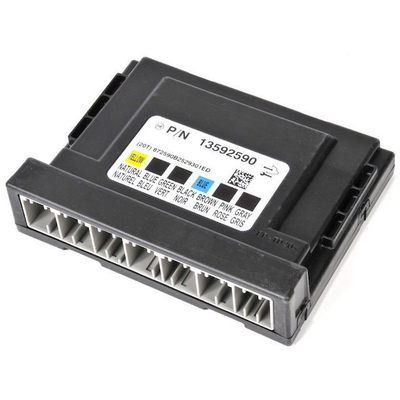
- Failed Restraints Control Module (RCM) (Less Common) — An internal hardware fault or failed driver circuit in the RCM prevents it from processing signals from a functional sensor.
- Poor Ground Connection (Rare) — A loose or corroded ground wire at the chassis introduces high resistance, leading to an erratic signal.
- Outdated RCM Software (Rare) — A software glitch causes the RCM to misinterpret sensor data, requiring a firmware update from the manufacturer.
- Interference from Aftermarket Accessories (Rare) — Improperly installed seat covers strain the buckle wiring, or poorly shielded electronics create electromagnetic interference.
Symptoms
- Airbag Warning Light On — The SRS warning light on the dashboard illuminates permanently.
- Seatbelt Warning Light Stays On or Flashes — The second-row center seatbelt indicator remains lit or flashes, even when buckled.
- Passenger Airbag Disabled Message — The instrument cluster displays 'Service Airbag System' or 'Passenger Airbag Off'.
- Incorrect Seatbelt Status on Info Display — The vehicle's occupancy display incorrectly shows the seat as unbuckled.
- Audible Warning Chime — An audible warning chime sounds repeatedly for an unbuckled seatbelt.
Diagnostic Flowchart
Tap your situation to follow the diagnostic path that matches what you're seeing on this code.
Common Fixes & Costs
- Repairing Damaged Wiring — Parts: $10-$30, Labor: $100-$200, ~1.5 hr book time (Intermediate)
- Replacing Seatbelt Buckle
— Parts: $80-$400, Labor: $100-$250, ~1.2 hr book time
(DIY)
Ford Explorer (2014-2016): OEM BB5Z-7860044-AC (Alt: {"brand": "Dorman", "part_number": "Check vehicle-specific fitment"})
Ford Escape (2020-2022): OEM LJ6Z-7860044-BA
Dodge Grand Caravan (2011-2015): OEM P0ZV84BD1AB - Cleaning Corroded Connector — Parts: $5-$15, Labor: $50-$125, ~0.8 hr book time (DIY)
- Replacing RCM/BCM — Parts: $350-$800, Labor: $150-$300, ~2 hr book time (Professional)
- BCM Reprogramming — Parts: $0, Labor: $100-$250, ~1 hr book time (Professional)
Used vs. New Parts: Buying Guide
When a used part is worth it: For older vehicles where OEM buckles are prohibitively expensive, sourced from a reputable salvage yard.
Donor-vehicle mileage cap: roughly under 60000 miles for the part to have meaningful remaining life.
Donor quality checklist:
- Verify donor vehicle had no accidents.
- Match part number exactly.
- Inspect for corrosion.
Decision logic:
- If Vehicle is less than 10 years old OR the seat is frequently used → Buy new OEM. The safety assurance far outweighs the cost savings of a used part.
- If Vehicle is over 15 years old AND budget is the primary concern → A tested, low-mileage used part is a viable option, but accept the inherent risk.
- If Part is from a vehicle in a high-humidity or rust-belt region → Favor new, as the risk of unseen internal corrosion on the used part is high.
Warranty tradeoff: Used parts offer 30-90 days. New aftermarket offers 1 year. New OEM offers best guarantee.
Worst-case if a used part fails: $200-$400 if used part fails, requiring repeat labor. Ultimate worst case is failure to protect an occupant.
What Happens If You Wait — Timeline
- Immediate (First Occurrence): RCM detects electrical fault. Airbag light illuminates and B0054 stores as active. (MPG impact: 0%% · Added cost: $0)
- 0-1 second after fault detection: RCM disables the second-row center airbag as a failsafe. Safety system is compromised. (MPG impact: 0%% · Added cost: Incalculable (Safety risk is active))
- Ongoing until repaired: Airbag light remains on. Safety risk persists anytime the vehicle is driven. (MPG impact: 0%% · Added cost: $0)
- At the next state safety inspection: Automatic failure of mandatory state safety inspections, leading to fines. (MPG impact: 0%% · Added cost: $50-$500 (in fines and fees))
- At time of vehicle resale: Active airbag light significantly reduces vehicle trade-in or private sale value. (MPG impact: 0%% · Added cost: $500-$2000 (in diminished resale value))
Cost of Not Fixing It
- Immediate: Second-row center airbag is disabled, creating a life-threatening risk in a collision. (Added cost: Negligible (until an accident occurs))
- 1-6 Months: Failure of mandatory state safety inspections and potential insurance claim denial. (Added cost: $50-$500 (in potential fines or re-inspection fees))
- 6+ Months: Illuminated airbag light decreases vehicle resale value. (Added cost: $500-$2000+ (in diminished vehicle value))
Diagnosis Steps
- Confirm the Fault with an SRS-Capable Scanner
Use an SRS-capable OBD-II scanner to confirm B0054. Note manufacturer-specific suffixes (e.g., B0054-13 for Open Circuit) and review freeze-frame data.
Tools: OBD-II Scanner (SRS capable) (Beginner) - Perform a Detailed Visual Inspection
Inspect the wiring harness under the second-row center seat. Look for pinched wires, chafed insulation, or liquid spills. Check inside the buckle for foreign objects.
Tools: Flashlight (Beginner) - Perform a 'Wiggle Test' with Live Data
With the scanner monitoring live data for the sensor, gently wiggle the wiring harness from the buckle to the carpet. If the status flickers between 'Buckled' and 'Unbuckled', you have located a wiring break.
Tools: OBD-II Scanner (with live data) (Intermediate) - Inspect and Clean the Electrical Connector
Disconnect the battery, locate the sensor connector under the seat, and unplug it. Inspect pins for green/white corrosion or damage. Clean with contact cleaner.
Tools: Flashlight, Electrical Contact Cleaner (Beginner) - Test the Buckle Switch with a Multimeter
Disconnect the buckle connector. Set a multimeter to Ohms and probe the buckle pins. It should read infinite resistance (OL) unbuckled, and near-zero ohms (under 5 ohms) when buckled. No change means a faulty switch.
Tools: Digital Multimeter (Intermediate) - Check for Reference Voltage and Ground
With the ignition ON and sensor disconnected, set the multimeter to DC Volts. Probe the harness connector. One pin requires a 5V or 12V reference voltage from the RCM, and the other requires a solid ground. Missing voltage indicates a wiring or module fault.
Tools: Digital Multimeter (Intermediate) - Perform a Voltage Drop Test on the Ground Circuit
Connect the multimeter's black lead to the negative battery terminal. Back-probe the sensor's ground wire with the red lead while the ignition is ON. A reading above 0.2 volts indicates excessive ground resistance.
Tools: Digital Multimeter with back-probe pins (Advanced) - Isolate the Fault by Jumpering the Connector
Bridge the harness connector pins with a jumper wire to simulate a 'buckled' signal. If the scanner live data changes to 'Buckled', the wiring and module are functional, condemning the buckle.
Tools: Jumper wire, OBD-II Scanner (Advanced)
When This Code Triggers (Freeze-Frame Conditions)
- Fault Status: Active/Current (Fault is present at the time of the scan.)
- Battery Voltage: 11.5-14.5V (Indicates if the fault occurred during a low or high voltage event.)
- Ignition Cycles Since Fault: 0-255 (Shows how many times the car started since the fault logged.)
- Odometer at Time of Fault: Vehicle Mileage (Records exact mileage when the fault occurred to correlate with recent events.)
Related Codes
- B0050 — Driver Seatbelt Sensor. Functionally identical to B0054 but for the driver's seat.
- B00A0 — Occupant Classification System. Reports occupant weight, whereas B0054 reports buckle status.
- B0061 — Seatbelt Tension Sensor. Located in the retractor mechanism, not the buckle.
- U3000 — Control Module Communication Failure. Suggests the root cause is the BCM/RCM or network wiring, not the sensor.
Climate & Environmental Factors
- High Humidity: Accelerates corrosion on electrical connectors, increasing resistance and triggering faults.
- Water Leaks: Window leaks or spills saturate the carpet, exposing low-lying seatbelt wiring to a highly corrosive environment.
- Extreme Cold: Plastic wire insulation becomes brittle and cracks under normal seat movement, leading to open circuits.
How to Talk to a Mechanic About This Code
Say this: "I have an airbag light on, and my scanner shows code B0054 for the second-row center seatbelt sensor. Since the most common causes are wiring or connector issues under the seat, please start with a visual inspection and a wiggle test of the harness before quoting a new buckle assembly."
This signals you are an informed customer. It directs the technician to the most likely and least expensive fixes first, preventing them from immediately quoting a costly part replacement. It also sets a collaborative tone and shows you have realistic expectations.
Avoid saying:
- 'My airbag light is on, can you just fix it?'
- 'I think I need a new seatbelt.'
- 'Just do whatever you think is best.'
Questions to ask before authorizing the repair:
- What were the results of the visual inspection and wiggle test?
- Did you test the buckle switch with a multimeter? What was the resistance reading when latched and unlatched?
- If you are recommending a wiring repair, can you show me the damaged section?
- If you are recommending a new buckle, can you confirm you verified good voltage and ground at the harness connector?
- What is the warranty on this specific repair, covering both parts and labor?
Where to Take It: Dealer vs Independent vs Chain
- Dealer:
Best for: Vehicles under warranty, Cases where a Technical Service Bulletin (TSB) or recall exists, Complex diagnostics involving module replacement and programming
Downsides: Highest labor rates, typically 1.5-2x more than independent shops., May default to replacing the entire buckle assembly rather than repairing a simple wire. (Typical cost: +50% vs. baseline) - Independent Shop:
Best overall fit. A reputable independent shop is perfectly equipped to handle the common wiring and sensor faults that cause B0054, offering the best balance of expertise and value.
Best for: Out-of-warranty vehicles where cost is a factor., Straightforward electrical diagnosis and repair., Building a long-term relationship with a trusted mechanic.
Downsides: Shop quality and expertise can vary widely. Vet them by checking for ASE certifications and online reviews., May lack expensive, manufacturer-specific diagnostic tools for module programming if needed. (Typical cost: +0% vs. baseline) - Chain Shop:
Not recommended. While an experienced technician at a chain could fix this, the risk of improper diagnosis of a critical safety system is too high. Avoid for SRS-related work.
Best for: Simple, routine maintenance like oil changes and tires.
Downsides: Technician skill varies dramatically; many are not experienced in SRS diagnostics., Business model incentivizes quick parts replacement over detailed electrical diagnosis, leading to potential misdiagnosis of critical safety systems. (Typical cost: -10% vs. baseline)
When to Walk Away From the Repair
If the estimated repair cost exceeds 40-50% of your car's value, consider selling.
- Car worth $8000, fix is $450: Fix it. The repair cost is a small fraction of the car's value and resolves a critical safety issue.
- Car worth $3500, fix is $450: Borderline, but likely worth fixing. This repair is necessary to pass safety inspections in many states and restores key safety functionality.
- Car worth $2500, fix is $1200: Walk away. This estimate is likely for a module replacement. At this price, the repair is not economically viable. Sell the vehicle 'as-is' with full disclosure of the airbag light.
What Scan Tool You Need for This Code
Minimum: A scanner that reads and clears Supplemental Restraint System (SRS/Airbag) codes. Basic engine-only readers will not work.
A standard $20 OBD-II reader only communicates with the Engine Control Module (ECU). Code B0054 is stored in the Restraints Control Module (RCM) or Body Control Module (BCM). You need a tool that accesses these systems to see the code, view live data, and clear the light after the repair.
Budget: Autel AutoLink AL619 / MaxiLink ML619 (~$90) — Reads and clears engine, ABS, and SRS codes, providing the essential functions to identify B0054 and turn off the airbag light.
Mid-range: BlueDriver Pro (~$120) — Connects to your smartphone and provides SRS code reading, clearing, and live data graphing crucial for performing a wiggle test.
Professional: Autel MaxiCOM MK808 / Foxwell NT630 Plus (~$300-500) — Offers comprehensive all-system diagnostics, including SRS live data and bidirectional controls to command components.
Rent vs buy: Most auto parts stores like AutoZone or O'Reilly offer free tool loaner programs, but they typically do NOT lend out scanners with SRS/airbag capabilities due to liability. For a one-time fix, buying a budget-friendly SRS-capable scanner is often the most cost-effective option.
How to Clear the Code After You Fix It
- Ensure the physical repair is complete.
- Disconnect the negative battery terminal for 15 minutes before starting any SRS work.
- Reconnect the battery after the repair is finished.
- Use an SRS-capable OBD-II scan tool to access the Restraints Control Module.
- Select the function to 'Clear DTCs' or 'Erase Fault Codes'.
- Cycle the ignition off, then on, and verify the airbag warning light turns off after its initial 5-7 second self-test.
Drive cycle (~5 minutes): No drive cycle required. The SRS performs a full self-test upon ignition. Perform 2-3 ignition cycles to confirm the fault does not return.
Readiness monitors affected: None. SRS codes do not affect emissions-related readiness monitors.
Watch out for:
- Assuming the light turns off automatically.
- Using an engine-only code reader.
- Forgetting to disconnect the battery before repairs.
Will This Fail Emissions / State Inspection?
No — by itself this code doesn't fail OBD inspection (but it can keep readiness monitors from setting, which causes a separate fail).
- California: Airbag light does not fail standard smog check, but fails revived salvage Vehicle Safety Systems Inspection.
- New York: Illuminated SRS light causes automatic failure of annual safety inspection.
- Texas: Airbag light does not fail annual safety inspection.
Most Commonly Affected Vehicles
- Ford Explorer (2014-2016) — Second-row seat wiring routes too tightly, causing wires to fatigue and break. OEM center buckle is BB5Z-7860044-AC.
- Ford Escape (2020-2022) — Prone to open circuit faults (B0054-13). Related to a pattern of buckle sensor wire failures seen in Customer Satisfaction Program 24N08.
- GMC/Chevrolet Yukon, Tahoe, Suburban, Equinox (2007-2014) — Suffer from poor pin tension in large under-seat wiring connectors. Reseating connectors often resolves the issue.
- Dodge/Chrysler Grand Caravan, Town & Country (2011-2015) — Stow 'n Go seating repeatedly pinches or severs delicate sensor wires routed underneath.
- Honda Pilot (2009-2015) — High failure rate for the internal seatbelt buckle switch, requiring complete buckle replacement.
- BMW X3, X5, 3-Series, 5-Series (2010-2018) — Highly sensitive to moisture. Spilled liquids corrode under-seat connectors, triggering 'Passenger Restraint System Malfunction'.
- Hyundai/Kia Santa Fe, Sorento, Sonata (2013-2018) — Intermittent internal switch failures necessitate replacing the entire buckle assembly.
- Subaru Outback, Forester (2015-2019) — Faults trace to a damaged wire near the seat's mounting points due to frequent seat movement.
Manufacturer-Specific Notes
- Ford: Uses a two-digit suffix. B0054-13 indicates an Open Circuit, while B0054-1A indicates a Short Circuit, speeding up diagnosis.
- General Motors (GM): Large yellow SRS connectors under front seats suffer from poor pin tension. Reseating them often restores connection.
- Honda: High failure rates for buckle switches. Check with dealers for unpublicized 'goodwill' warranty extensions.
- BMW: Stores detailed fault frequency and exact mileage, helping distinguish between loose connections and hard failures.
- Ford (Warranty): Customer Satisfaction Program 24N08 extends warranty for driver's buckle sensor wire (B0050), showing a precedent for this failure type.
Real Owner Stories
2013 Dodge Grand Caravan with Stow 'n Go seats
Airbag light flickered when folding Stow 'n Go seats. Code read B0054.
Outcome: Spliced the broken wire and secured the harness away from the seat mechanism using zip ties. Total cost was under $10.
Lesson: Wiggle test while moving the seat pinpoints breaks without tools.
2015 Ford Explorer at 110,000 miles
Airbag light on, code B0054-13 (Open Circuit).
Outcome: A mechanic found a broken wire inside the harness 8 inches from the connector. Repaired for $120.
Lesson: Open Circuit codes point to wiring breaks. Perform continuity tests before buying expensive parts.
2010 GMC Yukon after interior detailing
Airbag light appeared after carpet shampooing. Code B0054 was present.
Outcome: Dried the connector with compressed air and applied dielectric grease, resolving the fault.
Lesson: Moisture causes SRS faults. Inspect connectors for water before replacing parts.
How to Prevent This Code From Triggering
- Secure and Protect Under-Seat Wiring (Once, or after any under-seat work) — Use zip ties or harness tape to secure wiring away from seat tracks and folding mechanisms.
- Avoid Storing Hard Objects Under Seats (Daily habit) — Keep the under-seat area clear to prevent items from snagging or crushing the sensor wiring.
- Use Caution When Cleaning (During interior cleaning) — Avoid spraying liquids directly onto the buckle to prevent moisture from corroding the internal switch.
- Apply Dielectric Grease to Connector (During any related repair) — Apply dielectric grease to the connector seal to create a moisture barrier.
- Periodically Inspect Buckle for Debris (Every 6 months) — Periodically check the buckle opening for crumbs or coins and clean with compressed air.
Frequently Asked Questions
Can I just ignore the B0054 code if the airbag light doesn't bother me?
No. An active B0054 code means the SRS module disabled the airbag for that seat. In an accident, it will not deploy, posing a serious safety risk.
I replaced the seatbelt buckle but the B0054 code is still there. What now?
This indicates a misdiagnosis where the fault lies upstream in the wiring harness. Inspect the harness for breaks and use a multimeter to verify reference voltage and ground at the connector. Ensure you cleared the code with an SRS-capable scanner, as these codes will not disappear on their own.
Will the code go away on its own if I fix the wire?
No. Most vehicle safety systems require a manual reset. Once an SRS fault stores in the module's memory, you must clear it with a capable OBD-II scanner after repairing the physical issue.
Is the second-row center seatbelt sensor the same as the front passenger seat sensor?
No. The front passenger seat uses a weight-based Occupant Classification System (OCS) sensor. Code B0054 refers exclusively to the simple on/off switch inside the second-row seatbelt buckle.
Why did the airbag light come on right after I cleaned my car or moved the seats?
You likely snagged, stressed, or disconnected the sensor's wiring harness while working under the seats. Look under the seat to ensure the connector is plugged in securely and no wires are visibly damaged.
Can I replace the seatbelt buckle myself to save money?
Yes, this is a manageable DIY repair requiring basic tools to remove the mounting bolts and electrical plug. You must disconnect the negative battery terminal for 30 minutes before starting to prevent accidental airbag deployment.
What's the difference between a seatbelt pretensioner and a buckle switch?
The buckle switch (B0054) is a simple sensor reporting if the belt is buckled. The pretensioner is an explosive safety device in the retractor that instantly tightens the belt during a crash. A pretensioner fault sets a completely different code, such as B0074.
Key Takeaways
- Code B0054 disables the second-row center airbag, creating a severe safety risk for that passenger during a collision.
- Damaged under-seat wiring and corroded connectors cause 80% of B0054 faults, while control module failures are rare.
- Test the buckle switch resistance with a multimeter before buying parts; a healthy switch reads near-zero ohms when buckled and infinite resistance when unbuckled.
- SRS codes are permanent and will not clear themselves; you must manually erase B0054 using an SRS-capable OBD-II scanner after completing repairs.
Shop the Parts Behind B0054
Below are the parts most often responsible for code B0054, ranked by how frequently each one is the actual culprit (per the diagnosis above). Tap any to see what we have for your vehicle.

The information in this article is provided for general reference and educational purposes only. Vehicle specifications, procedures, and part compatibility can vary by production date, trim level, and region. Always consult your vehicle's factory service manual and verify part numbers before purchasing or performing repairs. Safety-critical components such as airbags, seat belts, and braking systems should be installed by a qualified professional.
- 🧭 Diagnostic Flowchart
- 🛍️ Shop This Part
- What Does B0054 Mean?
- Can I Drive With B0054?
- Common Causes
- Symptoms
- Common Fixes & Costs
- Used vs. New Parts: Buying Guide
- What Happens If You Wait — Timeline
- Cost of Not Fixing It
- Diagnosis Steps
- When This Code Triggers (Freeze-Frame Conditions)
- Related Codes
- Climate & Environmental Factors
- How to Talk to a Mechanic About This Code
- Where to Take It: Dealer vs Independent vs Chain
- When to Walk Away From the Repair
- What Scan Tool You Need for This Code
- How to Clear the Code After You Fix It
- Will This Fail Emissions / State Inspection?
- Most Commonly Affected Vehicles
- Manufacturer-Specific Notes
- Real Owner Stories
- 2013 Dodge Grand Caravan with Stow 'n Go seats
- 2015 Ford Explorer at 110,000 miles
- 2010 GMC Yukon after interior detailing
- How to Prevent This Code From Triggering
- Frequently Asked Questions
- Can I just ignore the B0054 code if the airbag light doesn't bother me?
- I replaced the seatbelt buckle but the B0054 code is still there. What now?
- Will the code go away on its own if I fix the wire?
- Is the second-row center seatbelt sensor the same as the front passenger seat sensor?
- Why did the airbag light come on right after I cleaned my car or moved the seats?
- Can I replace the seatbelt buckle myself to save money?
- What's the difference between a seatbelt pretensioner and a buckle switch?
- Key Takeaways
- 🎟️ Get 5% Off