

OBD-II Code B0064: Driver Seatbelt Pretensioner Circuit Low Resistance
What B0064 means, why it triggers, and how to fix it
- Code B0064 disables the entire airbag system and driver's seatbelt pretensioner, requiring immediate repair to restore crash protection.
- Over 80% of B0064 faults stem from damaged wiring or a loose yellow connector under the driver's seat caused by normal seat movement.
- An illuminated airbag warning light is the only visible symptom and guarantees a failed state safety inspection in jurisdictions that mandate them.
- Disconnect the negative battery terminal and wait exactly 15 minutes before touching any yellow SRS wiring to prevent accidental, explosive airbag deployment.
What Does B0064 Mean?
The B0064 code indicates the Supplemental Restraint System (SRS) module detects electrical resistance below the manufacturer's threshold in the driver's seatbelt pretensioner circuit. This short circuit disables the pretensioner and the entire airbag system as a safety precaution.
Technical definition: The official SAE/ISO definition is "Left Front/Driver Pretensioner Deployment Loop Resistance Low". This indicates the SRS control module measured resistance in the driver's seatbelt pretensioner circuit below the specified threshold (typically under 1.5 ohms) for a set duration.
Can I Drive With B0064?
Yes, But With Caution. You can drive the vehicle, but the airbag and seatbelt pretensioner system is disabled. In a crash, the driver's seatbelt will not tighten and the airbags will not deploy. Driving without frontal airbags significantly increases the risk of severe injury or death.
Common Causes
- Damaged or chafed wiring under the driver's seat. (Very Common) — Constant movement of the driver's seat rubs or pinches the wiring harness over time. This strips the insulation, causing the two circuit wires to touch each other or a metal ground, resulting in a short circuit.
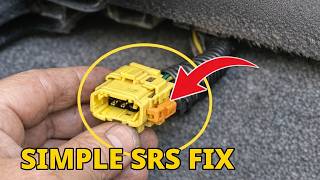
- Compromised electrical connector (loose, bent pins, or corroded). (Common) — The yellow pretensioner plug under the seat can loosen, suffer bent pins, or corrode from moisture (spills, leaks), creating a short circuit across the pins or a poor connection.
- Failed seatbelt pretensioner assembly. (Common) — The pretensioner unit contains a small explosive charge (squib). An internal short circuit within this squib causes a permanent low resistance fault requiring component replacement.
- Broken wires in a door harness. (Less Common) — On specific vehicles, particularly extended cab trucks, the wiring passing between the rear door and the body fatigues and breaks from repeated opening and closing.
- Faulty SRS Airbag Control Module. (Rare) — The control module monitoring the circuit fails internally and incorrectly reports a B0064 code. This is the last component to suspect after eliminating all wiring and pretensioner faults.
- Incorrectly installed or incompatible replacement parts. (Rare) — Replacing a seat sensor, clock spring, or SRS module with a non-matching part triggers a fault. The new part's serial ID fails to match the SRS module's expected data, requiring dealer-level initialization.
Symptoms
- Airbag or SRS warning light is on. — The primary and often only visible symptom. The light stays illuminated on the dashboard continuously while the fault is active.
- Audible chime or beep on startup. — Many vehicles sound a repetitive chime for the first minute of driving to alert the driver of an active SRS fault.
- Failed safety inspection. — A vehicle with an active SRS warning light automatically fails state safety inspections in jurisdictions that mandate them.
- Entire airbag system is disabled. (scan-tool only — no driver-felt sign) — Most vehicles disable the entire SRS system when detecting a B0064 fault. No airbags will deploy in an accident.
- Seatbelt pretensioner is disabled. (scan-tool only — no driver-felt sign) — The driver's seatbelt fails to tighten in response to a sudden stop or collision.
Diagnostic Flowchart
Tap your situation to follow the diagnostic path that matches what you're seeing on this code.
Common Fixes & Costs
- Cleaning and re-securing the pretensioner connector. — Parts: $0-$10, Labor: $50-$150, ~0.5 hr book time (DIY)
- Repairing damaged wiring under the seat. — Parts: $5-$20, Labor: $125-$250, ~1.5 hr book time (Intermediate)
- Rebuilding the original seatbelt pretensioner. — Parts: $65-$100, Labor: $150-$250, ~1.5 hr book time (Intermediate)
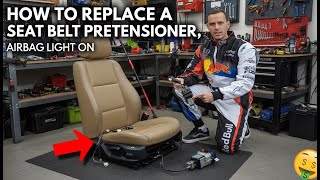
- Replacing the driver's seatbelt pretensioner assembly. — Parts: $150-$350, Labor: $150-$250, ~1.5 hr book time (Professional)
- Replacing the SRS Airbag Control Module. — Parts: $500-$1,200, Labor: $150-$350, ~2.0 hr book time (Professional)
Used vs. New Parts: Buying Guide
When a used part is worth it: Buying a used pyrotechnic component like a seatbelt pretensioner from a salvage yard is strongly discouraged. You cannot verify its history, water exposure, or collision status.
Donor-vehicle mileage cap: roughly under 10000 miles for the part to have meaningful remaining life.
Donor quality checklist:
- Avoid used parts entirely. The risk of installing a non-functional or previously deployed part is too high.
- A 'rebuilt' pretensioner from a reputable service is a safe alternative. They replace the explosive charge and internal mechanisms with new OEM components.
- When buying new, ensure the part number matches your vehicle's VIN exactly.
Decision logic:
- If Budget is the primary concern → Use a mail-in rebuild service for your original pretensioner. This is safer and more reliable than buying used.
- If Safety and reliability are the top priority → Buy a new OEM part from a dealer or authorized reseller.
- If You need the part immediately and cannot wait for a rebuild service → Buy a new OEM or equivalent aftermarket part. Do not install a used pretensioner.
Warranty tradeoff: Used parts: Minimal to no warranty. Rebuilt Service: Typically offer a lifetime warranty. Aftermarket New: 1-year to limited lifetime warranty. OEM New: 12-month/12,000-mile warranty.
Worst-case if a used part fails: Incalculable. If the replacement part fails to deploy in an accident, the cost is severe personal injury or death.
What Happens If You Wait — Timeline
- 0-3 months: An intermittent short begins. The airbag light flickers when the seat moves or during temperature changes. The SRS system is disabled only when the light is on. (MPG impact: 0%% · Added cost: $0)
- 3-6 months: Wire insulation wears through completely or corrosion becomes permanent. The airbag light is on constantly, and the entire SRS system is permanently disabled. (MPG impact: 0%% · Added cost: $0)
- At next inspection: The vehicle fails its annual state safety inspection due to the illuminated airbag light, preventing registration renewal. (MPG impact: 0%% · Added cost: $50-$150 (in failed inspection and re-test fees))
- During a collision: A collision occurs. Because the B0064 fault disabled the SRS system, the driver's seatbelt pretensioner does not fire, and no airbags deploy. The risk of serious injury or death increases significantly. (MPG impact: 0%% · Added cost: Incalculable (Severe personal injury))
Cost of Not Fixing It
- Immediately: The entire Supplemental Restraint System is disabled. The driver's seatbelt will not tighten and no airbags will deploy in a crash. (Added cost: N/A (Safety Risk))
- 0-12 months: Significantly increased risk of serious injury or death for the driver and passengers in any collision. (Added cost: N/A (Safety Risk))
- At next state inspection: Vehicle fails the safety inspection portion in states that check for illuminated warning lights, preventing legal registration renewal. (Added cost: $50-$150 (for failed test and re-inspection fees))
Diagnosis Steps
- Safety First: Disable the SRS System
Before touching any yellow SRS wiring, disconnect the negative battery terminal and wait exactly 15 minutes. This discharges the system's backup power capacitors, preventing accidental, explosive airbag deployment.
Tools: 10mm wrench or socket (Beginner) - Read and Record All Codes
Use an OBD-II scanner capable of reading SRS/Airbag codes to confirm B0064 is active. Record any other codes present to identify related circuit failures.
Tools: SRS-capable OBD-II Scanner (Beginner) - Visually Inspect Wiring and Connectors
Look under the driver's seat for the yellow SRS wiring harness and connector. Check for pinched wires, worn insulation, loose connectors, or signs of water damage.
Tools: Flashlight (Beginner) - Clean, Secure, and Inspect the Connector
Unplug the pretensioner connector. Inspect the pins for corrosion, bending, or misalignment. Clean the connector with electrical contact cleaner, let it dry, and reconnect it firmly until it clicks. Secure it with a zip-tie to prevent future loosening.
Tools: Electrical contact cleaner, Zip-tie (Intermediate) - Test Pretensioner Resistance (The Component)
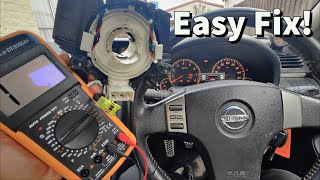
With the pretensioner unplugged, use a multimeter set to Ohms (Ω) to measure resistance across the two pins on the pretensioner itself. A normal reading is 2.0 to 3.0 ohms. A reading near 0 ohms indicates a shorted pretensioner requiring replacement. Note: Carefully lift the built-in 'shorting bar' with a small pick to get an accurate reading.
Tools: Multimeter, Small pick (Intermediate) - Test Harness for Shorts (The Wiring)
On the vehicle-side harness connector, check for continuity between the two pins using a multimeter. It should read infinite resistance ('OL'). A low resistance reading means the wires are shorted together in the harness. Next, check for continuity between each pin and a chassis ground to rule out a short to ground.
Tools: Multimeter (Advanced) - Isolate the Fault with a Resistor (Advanced)
Plug a 2.2-ohm SRS diagnostic resistor into the vehicle-side harness connector. Reconnect the battery, clear the codes, and check if B0064 returns. If it stays off, the fault is in the pretensioner assembly. If the code returns immediately, the fault is in the wiring harness or SRS module.
Tools: 2.2-ohm SRS diagnostic resistor (Advanced) - Perform a Harness Wiggle Test (Pro Tip)
For intermittent codes, connect an SRS scan tool and view live data for the driver pretensioner circuit resistance. Wiggle the wiring harness under the seat and at the B-pillar. A sudden drop in resistance pinpoints the exact location of the short.
Tools: SRS-capable OBD-II Scanner (Advanced) - Check for Shorts to Voltage (Advanced)
Turn the ignition ON (pretensioner disconnected, battery reconnected). Measure DC Volts between each pin on the vehicle-side harness connector and a chassis ground. Both must read 0 volts. Any voltage indicates a short to a power source, requiring harness tracing.
Tools: Multimeter (Advanced)
When This Code Triggers (Freeze-Frame Conditions)
- SRS Module Voltage: 12.0-14.5V (Key On / Engine Running)
- Fault Status: Active/Present (The SRS module continuously self-tests; the fault is detected immediately at key-on.)
- Ignition Cycles Since Fault: 0 (The code sets on the same ignition cycle the fault is first detected.)
- Vehicle Speed: 0 mph (The fault is an electrical circuit check completed before the vehicle is in motion.)
Related Codes
- B0065 — The direct opposite of B0064: 'Driver Pretensioner Deployment Circuit, Open Circuit'. Resistance is too high, indicating an unplugged connector or fully broken wire rather than a short.
- B0066 — Indicates 'Driver Pretensioner Deployment Circuit, Voltage Out of Range'. A wire in the pretensioner circuit is shorted to a different voltage source or ground elsewhere in the vehicle.
- B0022 — The equivalent 'Resistance Low' code for the steering wheel airbag. The diagnostic process is identical, but testing moves to the clock spring connector in the steering column.
- B0058 / B0059 — These codes relate to the passenger-side seatbelt pretensioner. B0058 is 'Resistance Low' and B0059 is 'Resistance High', diagnosed identically on the opposite side of the vehicle.
Climate & Environmental Factors
- High Humidity / Water Intrusion: High humidity and A/C condensation cause water leaks near SRS components. Moisture entering the yellow connectors creates corrosion, shorting the pins together and triggering the B0064 code.
- Cold Weather: Freezing temperatures make plastic wiring insulation and connectors brittle. Moving the seat cracks brittle wires or shifts connectors, creating intermittent short circuits that disappear when the cabin warms up.
How to Talk to a Mechanic About This Code
Say this: "I have an airbag light on and my scanner shows a B0064 code, pointing to the driver's seatbelt pretensioner circuit. Since the most common causes are wiring or connector issues under the seat, please start by inspecting the harness and the yellow connector for damage before quoting a new pretensioner assembly."
This signals you understand the common, inexpensive failure points. It directs the technician to perform a proper diagnosis (inspecting wires) rather than jumping to the most expensive conclusion (replacing the part).
Avoid saying:
- 'My airbag light is on, can you fix it?'
- 'Just replace whatever is broken.'
- 'I think I need a new airbag.'
Questions to ask before authorizing the repair:
- Did you perform a resistance test on the pretensioner itself to confirm it's shorted?
- Did you inspect the wiring harness under the seat and at the B-pillar for chafing or damage?
- If you recommend a new pretensioner, can you confirm the wiring harness leading to it is good?
- What is the warranty on the recommended repair, for both the part and the labor?
Where to Take It: Dealer vs Independent vs Chain
- Dealer:
Recommended only if you suspect a known manufacturer issue or if the fault requires module replacement and programming.
Best for: Vehicles under warranty, Vehicles with known TSBs or Special Coverage Adjustments for this issue, Complex cases requiring module programming
Downsides: Highest labor rates and part costs., May replace the entire assembly rather than attempting a nuanced wire repair. (Typical cost: +50% vs. baseline) - Independent Shop:
Best fit for most cases. A reputable independent shop easily diagnoses common wiring faults at a much lower cost than the dealer.
Best for: Out-of-warranty vehicles where cost is a factor., Diagnosing and repairing common wiring and connector faults.
Downsides: Shop must be experienced and equipped for SRS/airbag system repairs. (Typical cost: +0% vs. baseline) - Chain Shop:
AVOID. SRS system repair is safety-critical and requires diagnostic expertise not found at quick-lube or chain tire shops.
Best for: Routine maintenance like oil changes and brakes.
Downsides: Technicians lack specialized training for SRS systems., Many chain shops refuse to work on airbag systems due to liability. (Typical cost: -10% vs. baseline)
When to Walk Away From the Repair
If the estimated repair cost for the B0064 fault exceeds 40-50% of your car's private-party value, evaluate your options. Since this is a critical safety issue, 'not fixing it' is only an option if you plan to sell or scrap the vehicle.
- Car worth $5000, fix is $750: Fix it. This cost is well below the threshold and restores a critical safety system, preserving the car's value.
- Car worth $3000, fix is $1500: Borderline. The repair cost is 50% of the car's value. Get a second opinion. If confirmed, decide if you want to invest in the vehicle or sell it with full disclosure.
- Car worth $2000, fix is $1800: Walk away. The repair cost is nearly the entire value of the car. It is not economical to proceed.
What Scan Tool You Need for This Code
Minimum: A scan tool that reads and clears SRS (Airbag) system codes. Basic engine-only code readers will not work.
A standard $20 OBD-II reader only accesses the powertrain module. It cannot communicate with the SRS module where the B0064 code is stored.
Budget: Autel AutoLink AL619 (~$70) — Specifically designed to read and clear codes from Engine, ABS, and SRS modules. It successfully identifies B0064 and clears the light after repair.
Mid-range: Foxwell NT510 Elite (~$180) — Provides full system diagnostics and live data streaming. You can graph the resistance of the pretensioner circuit while wiggling wires to pinpoint intermittent shorts.
Professional: Autel MaxiCOM MK808 / Launch X431 series (~$500-1200) — Offers full OEM-level diagnostics, bi-directional control, and programming functions if an SRS module needs replacement.
Rent vs buy: Auto parts stores read engine codes for free, but their loaner tools typically do not cover SRS/airbag codes. You must buy an SRS-capable scanner or pay for a professional diagnosis.
How to Clear the Code After You Fix It
- Ensure the physical fault (shorted wire, bad pretensioner) is fully repaired.
- With the negative battery terminal still disconnected, reconnect all SRS components.
- Reconnect the negative battery terminal.
- Use an SRS-capable OBD-II scan tool to erase the B0064 fault code from the SRS module.
- Cycle the ignition off, then on, and verify the airbag warning light illuminates for a few seconds and then turns off permanently.
Drive cycle (~5 minutes): The SRS system does not require a complex drive cycle. It performs a complete self-test every time the ignition turns on. If the repair is successful and the code is cleared, the light stays off immediately.
Readiness monitors affected: None. SRS faults do not affect emissions readiness monitors.
Watch out for:
- Using a standard OBD-II code reader that cannot access or clear SRS (airbag) codes.
- Failing to fix the root electrical problem, causing the code to return instantly after clearing.
- Not waiting 15 minutes after disconnecting the battery, risking personal injury from accidental deployment.
Will This Fail Emissions / State Inspection?
No — by itself this code doesn't fail OBD inspection (but it can keep readiness monitors from setting, which causes a separate fail).
- California: An illuminated airbag light will NOT cause a failure of the California smog check, which only tests emissions.
- New York: An illuminated airbag light is an ADVISORY item only and will NOT cause a failure of the NYS safety inspection. The vehicle passes, but the inspector notes it.
- Texas: An illuminated airbag light is NOT a criterion for failure on the Texas safety inspection. The vehicle passes.
Most Commonly Affected Vehicles
- Chevrolet Colorado (2004-2009) — Broken wires in the rear door harness of extended cab models trigger this code. GM issued Special Coverage Adjustment 14609 to cover this repair.
- GMC Canyon (2004-2009) — Shares the same platform and wiring issue as the Colorado extended cab. Broken wires occur inside the rubber boot between the rear door and the cab.
- Cadillac CTS, SRX, Escalade (2003-2014) — Brittle plastic Connector Position Assurance (CPA) clips break, allowing the yellow under-seat connector to loosen and set circuit faults like B0064.
- Honda Accord, CR-V, Pilot, Odyssey (2018-2022) — Subject to widespread SRS sensor and connector issues, leading to various circuit codes and diagnostic confusion.
- Subaru Outback, Forester (2008-2014) — Frequently cited for SRS faults related to belt tension sensors and cracked solder joints on related circuit boards.
- Hyundai Sonata, Elantra (2011-2016) — Experience SRS circuit codes related to wiring and sensor failures under the seats or in the B-pillars.
- Ford F-150, Expedition (2015-2020) — Expedition models were recalled (24S06) for pretensioner pin corrosion caused by A/C condensation, highlighting component vulnerability to moisture.
- Saab 9-5 (2006-2010) — Service manuals specify the B0064 code sets when resistance drops below 1.5 ohms for 2 seconds.
Manufacturer-Specific Notes
- General Motors (Chevrolet/GMC): On 2004-2009 Colorado and Canyon extended cab trucks, B0064 is commonly caused by broken wires inside the rubber boot between the rear door and the cab.
- Cadillac (GM): The small plastic Connector Position Assurance (CPA) locks on yellow SRS connectors become brittle and break. Securing the connector with a zip-tie permanently fixes the resulting loose connection.
- Ford: Ford systems use two-digit sub-codes (e.g., B00A0:64). The sub-code '64' indicates a 'signal plausibility failure', helping technicians pinpoint intermittent faults.
- Saab: Saab service information dictates code B0064 sets if the control module measures resistance below 1.5 ohms for exactly 2 seconds.
Real Owner Stories
2007 Honda Odyssey with intermittent airbag light
Airbag light came on and off intermittently, then stayed on permanently.
What they tried:
- Replaced a fuse, which worked temporarily.
- Inspected the yellow connectors under the driver's seat.
Outcome: Unplugging and firmly re-seating the main yellow SRS connector under the driver's seat fixed the problem. The loose connection caused the intermittent fault. The code was cleared, and the light stayed off.
Lesson: Check the simplest solution first. Thoroughly inspect and reseat all relevant SRS connectors before buying parts, as seat movement frequently loosens connections.
2008 Cadillac CTS with various SRS codes (B0065, B0066)
Airbag light was on with codes indicating an open circuit and voltage out of range for the driver's pretensioner.
What they tried:
- Disconnected the battery for 30 minutes.
- Removed the driver's seat to access the pretensioner.
- Tested the pretensioner resistance (read 2.8 ohms, confirming it was good).
- Inspected the wiring and found a broken wire right at the connector.
- Spliced the wire and re-secured the connection.
Outcome: Repairing the broken wire and clearing the codes resolved the issue. The owner added dielectric grease to prevent future corrosion.
Lesson: Even with complex codes, the root cause is often a simple physical wiring failure. A multimeter is essential to prove whether the fault is in the part or the wiring.
2004-2009 Chevrolet Colorado / GMC Canyon with B0064
Owner of an extended cab model experienced a persistent B0064 code and airbag light.
What they tried:
- Initial checks under the seat revealed no obvious damage to the wiring or connectors.
Outcome: The owner discovered GM's Special Coverage Adjustment 14609, which extended the warranty for wire fatigue inside the rear door harness boot to 10 years or 120,000 miles. The dealer performed the repair at no charge.
Lesson: Always search for Technical Service Bulletins (TSBs) or Special Coverage Adjustments for your specific vehicle, as the repair might be a known issue covered by the manufacturer.
How to Prevent This Code From Triggering
- Secure the under-seat wiring harness. (Once) — Use zip-ties to secure excess slack in the yellow SRS harness to a non-moving part of the seat frame. This prevents the harness from getting snagged or pinched when the seat moves.
- Apply dielectric grease to SRS connectors. (During any related repair) — Apply a small amount of non-conductive dielectric grease to the seal of any disconnected yellow SRS connector. This creates a barrier against moisture, preventing pin corrosion.
- Be mindful of items stored under the seat. (Daily habit) — Avoid shoving items under the front seats. Loose objects can roll into the connector and damage it or pull the wires loose.
- Address water leaks immediately. (As needed) — Dry out wet carpets from leaking door seals, sunroof drains, or A/C evaporator drains immediately. Prolonged moisture causes connector corrosion in low-mounted SRS wiring.
Frequently Asked Questions
Can I just clear the B0064 code?
You can clear the code with a scanner, but it returns immediately if the underlying electrical fault remains. The airbag light stays illuminated until you fix the physical short circuit.
What resistance should a good seatbelt pretensioner have?
A functional seatbelt pretensioner typically measures between 2.0 and 3.0 ohms. A reading near 0 ohms indicates a short, while infinite resistance (OL) indicates an open circuit.
What is a 'squib' in a seatbelt?
The squib is the small pyrotechnic initiator inside the seatbelt pretensioner assembly. When the SRS module detects a crash, it sends an electrical signal to ignite the squib, rapidly tightening the seatbelt. The squib's electrical resistance is what the SRS module monitors.
Can I use a regular resistor for SRS testing?
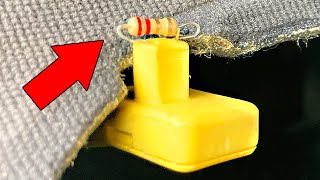
Never use a standard electronics resistor for permanent repairs. Professionals use a specific 2.2-ohm SRS diagnostic resistor strictly for temporary testing to isolate a fault. Bypassing a faulty component with a resistor is dangerous and disables the safety device during a crash.
What is a 'shorting bar' on an SRS connector?
A shorting bar is a built-in safety feature that automatically connects the two pins when an SRS connector is unplugged. This intentional short prevents static electricity from accidentally deploying the explosive device. You must carefully lift this bar with a small pick to measure accurate resistance.
Can I use a used seatbelt pretensioner from a junkyard?
Avoid used pretensioners because you cannot verify if they were exposed to water, damaged, or previously deployed. A deployed or compromised pretensioner provides zero crash protection. Use a reputable mail-in rebuild service or buy a new OEM part instead.
My airbag light is on, but the code is B0065, not B0064. What's the difference?
B0064 indicates circuit resistance is too low (a short circuit), often from chafed wires touching. B0065 indicates resistance is too high (an open circuit), typically caused by a completely broken wire or an unplugged connector.
Key Takeaways
- Code B0064 disables the entire airbag system and driver's seatbelt pretensioner, requiring immediate repair to restore crash protection.
- Over 80% of B0064 faults stem from damaged wiring or a loose yellow connector under the driver's seat caused by normal seat movement.
- An illuminated airbag warning light is the only visible symptom and guarantees a failed state safety inspection in jurisdictions that mandate them.
- Disconnect the negative battery terminal and wait exactly 15 minutes before touching any yellow SRS wiring to prevent accidental, explosive airbag deployment.
Helpful Videos
Shop the Parts Behind B0064
Below are the parts most often responsible for code B0064, ranked by how frequently each one is the actual culprit (per the diagnosis above). Tap any to see what we have for your vehicle.



The information in this article is provided for general reference and educational purposes only. Vehicle specifications, procedures, and part compatibility can vary by production date, trim level, and region. Always consult your vehicle's factory service manual and verify part numbers before purchasing or performing repairs. Safety-critical components such as airbags, seat belts, and braking systems should be installed by a qualified professional.
- 🧭 Diagnostic Flowchart
- 🎬 Helpful Videos
- 🛍️ Shop This Part
- What Does B0064 Mean?
- Can I Drive With B0064?
- Common Causes
- Symptoms
- Common Fixes & Costs
- Used vs. New Parts: Buying Guide
- What Happens If You Wait — Timeline
- Cost of Not Fixing It
- Diagnosis Steps
- When This Code Triggers (Freeze-Frame Conditions)
- Related Codes
- Climate & Environmental Factors
- How to Talk to a Mechanic About This Code
- Where to Take It: Dealer vs Independent vs Chain
- When to Walk Away From the Repair
- What Scan Tool You Need for This Code
- How to Clear the Code After You Fix It
- Will This Fail Emissions / State Inspection?
- Most Commonly Affected Vehicles
- Manufacturer-Specific Notes
- Real Owner Stories
- 2007 Honda Odyssey with intermittent airbag light
- 2008 Cadillac CTS with various SRS codes (B0065, B0066)
- 2004-2009 Chevrolet Colorado / GMC Canyon with B0064
- How to Prevent This Code From Triggering
- Frequently Asked Questions
- Can I just clear the B0064 code?
- What resistance should a good seatbelt pretensioner have?
- What is a 'squib' in a seatbelt?
- Can I use a regular resistor for SRS testing?
- What is a 'shorting bar' on an SRS connector?
- Can I use a used seatbelt pretensioner from a junkyard?
- My airbag light is on, but the code is B0065, not B0064. What's the difference?
- Key Takeaways
- 🎟️ Get 5% Off