

OBD-II Code B0073: Second Row Left Seatbelt Pretensioner Circuit Fault
The Ultimate 2026 Guide to Diagnosing and Fixing B0073
- Code B0073 disables the entire Supplemental Restraint System, meaning the second-row left seatbelt pretensioner and all airbags will fail to deploy in a crash.
- The most frequent fix is reseating the bright yellow connector under the second-row left seat after disconnecting the battery for at least 15 minutes.
- On 2018-2024 Chevrolet Equinox and GMC Terrain models, a cracked passenger-side tail light leaking water onto connector X320 causes this code (TSB 22-NA-170).
- The airbag warning light is a hard fault that requires an SRS-compatible OBD-II scan tool to clear; it will never turn off automatically after a repair.
What Does B0073 Mean?
Code B0073 indicates the Sensing and Diagnostic Module (SDM) detected an electrical fault in the second-row left seatbelt pretensioner circuit. A pretensioner uses a small explosive charge to instantly tighten the seatbelt during a crash, securing the passenger firmly before the airbag deploys. When this code triggers, the SDM disables the entire SRS system to prevent unpredictable or accidental deployments.
Technical definition: The SAE/ISO definition for B0073 is "Second Row Left Seatbelt Pretensioner Deployment Control (Subfault)". The SDM sends a low-voltage test signal through the pretensioner circuit at startup. If the return signal's resistance falls outside the specified range (typically 1.9 to 3.1 ohms for GM vehicles), the module detects an open circuit, short to ground, or short to voltage, setting code B0073 and illuminating the airbag lamp.
Can I Drive With B0073?
Yes, But With Caution. You can physically drive the vehicle, but doing so is unsafe. The airbag warning light indicates the entire Supplemental Restraint System (SRS) is disabled as a fail-safe measure. The second-row left seatbelt pretensioner and all airbags will not deploy in a crash. Seatbelts equipped with pretensioners reduce front occupant fatality risk by 12.8%, highlighting the critical safety function you lose while this code is active.
Common Causes
- Loose or corroded electrical connector (Very Common) — The yellow pretensioner connector under the seat or near the B-pillar is the most frequent culprit. Kicks, under-seat storage, or moisture cause poor connections that alter circuit resistance.
- Damaged or chafed wiring harness (Common) — Seat movement pinches, cuts, or frays the wires leading to the pretensioner. This damage creates an open circuit or a short to ground.
- Faulty seatbelt pretensioner assembly (Common) — The pretensioner's internal pyrotechnic charge (squib) or resistor fails over time. This creates an open circuit (infinite resistance) or an out-of-spec reading.
- Water intrusion causing shorts (GM Specific) (Less Common) — On 2018-2024 Chevy Equinox and GMC Terrain models, water leaks from a cracked passenger-side tail light and corrodes body harness connector X320 under the passenger front sill plate (TSB 22-NA-170).
- Incompatible aftermarket or swapped seats (Rare) — Installing aftermarket seats or swapping seats from different model years creates an electrical mismatch. Different seat belt switch and position sensor technologies trigger persistent B0073 codes.
- Faulty Sensing and Diagnostic Module (SDM) (Rare) — The main computer controlling the airbags and pretensioners fails internally. This is the absolute last component to suspect after verifying all wiring and pretensioners.
Symptoms
- Airbag / SRS warning light is on — The light stays illuminated on the dashboard continuously while the fault is active.
- "Service Safety Restraint System" message — A text warning displays on the driver information center alongside the airbag light.
- Intermittent warning light — The light turns on and off as the vehicle moves or the seat is adjusted, indicating a loose connection or chafed wire.
- Seatbelt pretensioner disabled (scan-tool only — no driver-felt sign) — The affected seatbelt fails to tighten during a crash, significantly reducing passenger protection.
Diagnostic Flowchart
Tap your situation to follow the diagnostic path that matches what you're seeing on this code.
Common Fixes & Costs
- Secure or clean the pretensioner connector — Parts: $0-$10, Labor: $100-$180, ~1.2 hr book time (DIY)
- Replace the second-row left seatbelt assembly (with pretensioner)
— Parts: $200-$450, Labor: $150-$300, ~1.5 hr book time
(Intermediate)
2018-2024 Chevrolet Equinox/GMC Terrain: OEM
2015-2019 Hyundai Sonata: OEM - Repair damaged wiring harness or replace pigtail connector
— Parts: $20-$60, Labor: $150-$300, ~2.0 hr book time
(Intermediate)
Universal: OEM - Repair corroded connector and replace tail light (GM TSB 22-NA-170) — Parts: $150-$500, Labor: $350-$900, ~4.5 hr book time (Professional)
- Replace the Sensing and Diagnostic Module (SDM)
— Parts: $600-$900, Labor: $200-$300, ~2.0 hr book time
(Professional)
2018-2020 GMC Terrain: OEM
2018-2024 Chevrolet Silverado: OEM
Used vs. New Parts: Buying Guide
When a used part is worth it: NEVER use a used seatbelt pretensioner. These are single-use pyrotechnic safety devices with unknown histories. Moisture exposure or flood damage renders them useless.
Donor quality checklist:
- No reliable quality cues exist for used pretensioners. Internal degradation is invisible.
- Automakers explicitly warn against using salvaged SRS components due to severe liability and safety risks.
Decision logic:
- If The faulty part is the seatbelt pretensioner assembly. → Always buy a new, OEM (Original Equipment Manufacturer) part.
- If The fault is a damaged connector. → Buy a new OEM or high-quality aftermarket pigtail. Do not splice in a used connector.
- If The budget is extremely tight. → Use a professional rebuilding service that restores original pretensioners to factory specs using OEM parts.
Warranty tradeoff: Salvage yards offer 30-90 day warranties covering only the part. New OEM parts carry a 12-month/12,000-mile manufacturer warranty.
Worst-case if a used part fails: $350-$750. The worst-case scenario is complete failure in a crash, leading to severe injury or death.
What Happens If You Wait — Timeline
- 0-3 months: Intermittent fault begins. Airbag light turns on and off with vehicle movement. SRS is disabled only when the light is on. (MPG impact: 0%% · Added cost: $0. The risk is having no airbag protection during the intermittent periods the light is on.)
- 3-6 months: Fault becomes permanent. Chafed wire breaks or pins corrode completely. Airbag light stays on constantly. (MPG impact: 0%% · Added cost: $0-$150. A simple connector fix might now require a more expensive wiring pigtail replacement.)
- At next inspection: Vehicle fails annual state safety inspection. Driving becomes illegal until repaired. (MPG impact: 0%% · Added cost: $50-$100 in re-inspection fees, plus the mandatory cost of the original repair.)
- The day of an accident: Sensing and Diagnostic Module fails to deploy any airbags or pretensioners, drastically increasing injury risk. (MPG impact: 0%% · Added cost: Immeasurable cost in significantly increased risk of serious or fatal injury.)
Cost of Not Fixing It
- Immediately: The entire Supplemental Restraint System (SRS) is disabled. No airbags or seatbelt pretensioners will deploy in a crash. (Added cost: $0 in repair costs, but an immeasurable cost in increased risk of serious injury or death.)
- At next state inspection: The vehicle fails its annual safety inspection. States require the airbag warning light to be off to pass, preventing legal registration. (Added cost: Cost of the required repair plus potential fines or re-inspection fees.)
- Long-term: No mechanical damage occurs to the engine or drivetrain. The consequence is the persistent, severe safety hazard of driving without airbags. (Added cost: $0 escalating monetary cost.)
Diagnosis Steps
- Read the Code with an SRS-Compatible Scanner
Use an SRS-compatible OBD-II scanner to confirm B0073. Note manufacturer-specific sub-codes (e.g., B0073-04 for Open Circuit or B0073-02 for Short to Ground).
Tools: SRS-compatible OBD-II Scan Tool (Beginner) - Check for Technical Service Bulletins (TSBs)
Search for your vehicle's make, model, year, and 'B0073 TSB'. Known issues like the Chevy Equinox tail light leak (TSB 22-NA-170) save hours of diagnostic time.
Tools: Internet access (Beginner) - Reseat the Electrical Connector
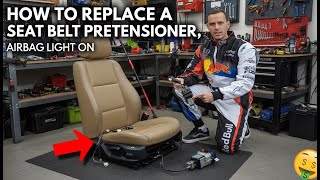
Disconnect the negative battery terminal and wait 15 minutes. Unplug the yellow pretensioner connector under the second-row left seat, inspect for corrosion, and plug it back in firmly.
Tools: Socket set, Flashlight (Beginner) - Perform a 'Wiggle Test' with Live Data (Advanced)
Connect the scan tool and monitor live resistance data for the pretensioner. Wiggle the yellow harness under the seat. A reading that jumps to OL (Open Loop) or 0 ohms pinpoints a wiring break.
Tools: SRS-compatible OBD-II Scan Tool with Live Data (Advanced) - Test Circuit with a Diagnostic Resistor (Advanced)
Disconnect the battery and plug a 2.2-ohm SRS diagnostic resistor into the vehicle-side harness connector. Reconnect the battery and clear the code. If the code stays away, the pretensioner is faulty; if it returns, the wiring is bad.
Tools: SRS Diagnostic Resistor (2.0 - 2.5 Ohm) (Advanced) - Measure Resistance of the Pretensioner (Advanced)
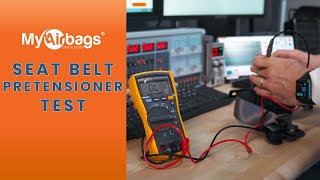
With the battery disconnected, measure resistance across the pretensioner pins. A healthy unit reads 2.0 to 3.1 ohms. Use a non-conductive pick to hold back the connector's internal shorting bar.
Tools: Multimeter, Small non-conductive pick set (Advanced) - Check Harness Continuity to SDM (Professional)
Disconnect the harness from the pretensioner and SDM. Check for end-to-end continuity (< 1.0 ohm) and shorts to ground or voltage (OL). Repair any wiring deviations.
Tools: Multimeter, OEM Wiring Diagrams (Professional) - Check for a Faulty SDM (Professional)
If wiring and the pretensioner test perfectly, the Sensing and Diagnostic Module (SDM) failed. This requires professional replacement and VIN programming.
Tools: Advanced scan tool, OEM service information (Professional)
When This Code Triggers (Freeze-Frame Conditions)
- Ignition Status: Key-On (The SRS module performs a self-test of all components each time the ignition turns on. Faults set within seconds of startup.)
- System Voltage: 11.5V - 14.5V (The code sets during the key-on self-test when system voltage is normal. Low voltage triggers erroneous codes, but B0073 usually indicates a hard circuit fault.)
- Fault Status: Active / Current (SRS codes immediately register as 'active' upon detection, instantly disabling the system and illuminating the warning light.)
Related Codes
- B0072 — Second Row Left Seat Belt Switch Circuit. Indicates a problem with the buckle sensor, not the explosive charge.
- B0075 — Second Row Right Seatbelt Pretensioner. The direct counterpart to B0073 on the opposite side of the vehicle.
- B0074 — Second Row Center Seatbelt Pretensioner. Indicates a fault in the center seat's explosive charge circuit.
- P12A6 — Crank/No-Start engine code. On newer GM vehicles, this appears alongside B0073 due to the TSB 22-NA-170 tail light water leak.
Climate & Environmental Factors
- High Humidity / Water Intrusion: Moisture corrodes unprotected electrical connectors, increasing circuit resistance. The GM Equinox/Terrain TSB is a prime example of water intrusion triggering B0073.
- Road Salt (Winter Climates): Salty slush splashes onto under-seat wiring. This highly corrosive mixture accelerates pin degradation, causing permanent open circuits.
- Extreme Temperature Cycles: Heat and cold cycles make plastic connector housings brittle and cause metal pins to expand and contract, loosening connections.
How to Talk to a Mechanic About This Code
Say this: "I have code B0073 for the second-row left seatbelt pretensioner. Please check for relevant TSBs, inspect the under-seat connector, and test the circuit with a diagnostic resistor before quoting a full replacement."
Directs the technician to perform logical, cost-effective diagnostics rather than immediately firing the parts cannon.
Avoid saying:
- Just reset my airbag light.
- Fix whatever is wrong with the airbag.
- I heard it's a loose wire, fix it cheap.
Questions to ask before authorizing the repair:
- Did you perform a wiggle test on the harness?
- Did you confirm the wiring is good using a diagnostic load resistor?
- Is the replacement part a new OEM component?
Where to Take It: Dealer vs Independent vs Chain
- Dealer:
Recommended if you suspect a TSB or software issue, or if the vehicle is under warranty. Their access to proprietary information is invaluable.
Best for: Vehicles under warranty, Diagnosing known manufacturer-specific TSBs (like the GM water leak) or software recalls., Complex cases where the SDM requires replacement and programming.
Downsides: Highest labor rates, often 1.5-2x more than independent shops., May be quicker to replace an entire assembly rather than repair a simple wire. (Typical cost: +50% vs. baseline) - Independent Shop:
Best fit for most out-of-warranty scenarios, provided you choose a reputable shop capable of diagnosing and repairing wiring correctly.
Best for: Out-of-warranty vehicles where the cause is likely a common wiring or connector issue., Cost-effective diagnosis and repair for owners on a budget.
Downsides: Shop quality and experience with SRS systems vary greatly. Ensure the shop has ASE-certified technicians., May lack access to the latest TSBs or OEM programming tools for module replacement. (Typical cost: +0% vs. baseline) - Chain Shop:
AVOID. SRS repairs are safety-critical and require a level of diagnostic expertise not typically found at chain shops.
Best for: Simple, unrelated maintenance like oil changes or tires.
Downsides: Technicians often lack specialized training for SRS diagnostics., Business model focuses on high-volume, simple repairs, not complex electrical diagnosis., High risk of misdiagnosis leading to unnecessary parts replacement. (Typical cost: -10% vs. baseline)
When to Walk Away From the Repair
If the estimated repair cost exceeds 40-50% of the car's private-party value, you should pause and evaluate your options. However, for a safety-critical issue like B0073, this rule changes.
- Car worth $4000, fix is $750: Fix it. The car is unsafe and will not pass a safety inspection without this repair. Its value 'as-is' with a known safety defect is significantly lower than KBB value.
- Car worth $12000, fix is $900: Fix it, without question. The repair cost is a small fraction of the vehicle's value and restores a critical safety system.
- Car worth $2500, fix is $1500: Walk away. The repair cost is too high relative to the car's value. The car is near the end of its economic life.
What Scan Tool You Need for This Code
Minimum: A scan tool capable of reading and clearing Supplemental Restraint System (SRS/Airbag) codes.
Standard $20 OBD-II readers only see 'P' (Powertrain) codes. B0073 is a 'B' (Body) code stored in the SRS module. Without an SRS-capable scanner, you cannot confirm or clear the code.
Budget: Autel AutoLink AL619 (~$80) — Reads and clears SRS codes to confirm B0073 and turn off the light after you perform a repair.
Mid-range: BlueDriver Pro or Foxwell NT630 Plus (~$100-150) — Offers live data streaming to perform a wiggle test, allowing you to watch the pretensioner resistance value in real-time to find intermittent faults.
Professional: Autel MaxiCOM MK808 / Foxwell NT809 (~$450-600) — Provides full bi-directional control and access to manufacturer-specific sub-codes, making diagnosis much faster and more accurate for a professional.
Rent vs buy: Auto parts stores rarely loan SRS-capable scanners. Pay a shop diagnostic fee for a one-time fault. Buy a scanner only if you plan to do your own electrical diagnostics regularly.
How to Clear the Code After You Fix It
- Ensure the physical fault (e.g., loose connector, bad part) is corrected.
- Reconnect the negative battery terminal if disconnected for the repair.
- Connect an SRS-compatible OBD-II scan tool to the vehicle.
- Navigate to the SRS or Airbag Control Module section and select 'Clear DTCs'.
- Cycle the ignition off, then on again, and verify the airbag warning light illuminates briefly and turns off.
Drive cycle: SRS codes require no drive cycle. The system performs a self-test at every key-on. If the repair succeeds and the code is cleared with a scan tool, the light stays off.
Readiness monitors affected: None. Readiness monitors track emissions systems and ignore SRS/airbag faults.
Watch out for:
- Using a basic OBD-II code reader. You need a scan tool specifically designed to read and clear 'B' (Body/SRS) codes.
- Forgetting to clear the code. The airbag light is a 'hard fault' and never turns off automatically after a repair.
- Clearing the code without fixing the root cause. The code returns immediately on the next key cycle.
Will This Fail Emissions / State Inspection?
No — by itself this code doesn't fail OBD inspection (but it can keep readiness monitors from setting, which causes a separate fail).
- California: Will NOT fail a smog check. California's inspection is emissions-focused; the airbag system is exempt.
- New York: Will NOT cause an automatic failure. The inspector issues an advisory, but the vehicle passes the safety inspection.
- Texas: Will NOT fail a safety inspection. The airbag warning light is excluded from the standard Texas safety inspection checklist.
- Virginia / Massachusetts: WILL fail a safety inspection. States with comprehensive safety inspections automatically fail vehicles with illuminated airbag lights.
Most Commonly Affected Vehicles
- Chevrolet Equinox (2018-2024) — Prone to water leaks from a cracked passenger-side tail lamp causing corrosion in connector X320 (TSB 22-NA-170).
- GMC Terrain (2018-2024) — Shares the Equinox platform and tail light leak issue. Also subject to recall 18V-340 for an SDM software fault.
- Ford Focus / Fusion (2012-2018) — Wiring harnesses under the seat and inside the B-pillar chafe from friction and seat movement, causing intermittent faults.
- Hyundai Elantra / Sonata (2011-2017) — Frequently experience internal failures of the seatbelt buckle pretensioner assembly requiring complete replacement.
- Chevrolet Silverado / GMC Sierra (2014-2019) — Under-seat wiring harnesses become damaged or disconnected from seat movement and stored items.
- Nissan Pathfinder (2022-2024) — Triggers due to issues with either the lap belt or shoulder belt pretensioner circuits in the rear.
Manufacturer-Specific Notes
- General Motors (Chevy/GMC): On 2018-2024 Equinox/Terrain, check for a cracked passenger tail light (TSB 22-NA-170) before inspecting the seatbelt.
- Stellantis (Chrysler/Dodge/Jeep): Software issues cause the module to report B0073 (left side) when the actual fault is on the right side (B0075).
- Ford: Wiring harnesses route tightly in the B-pillar. Perform a 'wiggle test' while watching live resistance data to pinpoint chafed wires.
- Hyundai: Known for internal pretensioner failures. Always check with a dealer for unadvertised 'goodwill' warranty extensions on SRS components.
Real Owner Stories
2019 Chevy Equinox at 65K miles - The TSB is Real
Airbag light and 'Service Safety Restraint System' message appeared. The code was B0073. The owner had recently gone through an automatic car wash.
What they tried:
- Initially suspected a loose connector under the rear seat but found nothing.
- A mechanic friend mentioned a known water leak issue on these cars.
Outcome: Following GM TSB 22-NA-170, they inspected the passenger side tail light and found it was cracked. Water had wicked down the harness and corroded the X320 connector under the passenger front sill plate. The fix required replacing the tail light assembly and repairing the corroded connector terminals. Total repair cost at a shop was around $700.
Lesson: On a 2018+ Equinox or Terrain, always check for the tail light water leak TSB (22-NA-170) before tearing apart the interior seats. The problem is often far from the component the code points to.
2014 Ford Focus at 110K miles - A Simple, Intermittent Fix
Airbag light would come on and off intermittently, especially after adjusting the driver's seat or when someone sat in the back.
What they tried:
- Checked the yellow connector under the second-row left seat and found it seemed secure.
- A forum post suggested the wiring is often stressed where it runs from the floor into the seat.
- Performed a 'wiggle test' on the harness while a friend watched the light.
Outcome: The light flickered when the harness was moved near the B-pillar. After disconnecting the battery and waiting 15 minutes, they unplugged the connector, cleaned it with electrical contact cleaner, and plugged it back in, ensuring it clicked. They then used a zip tie to secure the harness to the seat frame, preventing it from being pulled tight. The code was cleared and did not return. Cost: $5 for zip ties.
Lesson: An intermittent light is a strong clue for a wiring or connector issue. Don't just check if a connector is plugged in; reseat it and ensure the wiring harness has enough slack and is not being stressed by seat movement.
2013 Hyundai Elantra at 85K miles - Misdiagnosis and Wasted Money
Airbag light came on with code B0073. The owner assumed it was a wiring issue.
What they tried:
- Paid a shop $150 for a diagnostic, who confirmed the code but only did a visual inspection and recommended replacing the pretensioner.
- Owner declined the $600 repair and bought a used pretensioner from a junkyard for $75 to install themselves.
- After installing the used part, the light remained on. They cleared the code, but it came back instantly.
Outcome: Took the car to a different, more experienced mechanic. The second mechanic tested the resistance of the original and used pretensioners (both were out of spec) and also tested the vehicle's wiring harness with a 2.2-ohm diagnostic resistor. The code cleared with the resistor in place, proving the vehicle wiring was good. The actual fault was the pretensioner itself. The owner had to buy a NEW OEM pretensioner for $380 and pay for labor again. Total cost ended up being over $800.
Lesson: Never assume the cause. Replacing parts without proper electrical testing is a costly gamble. Using a diagnostic resistor is the definitive way to isolate the fault between the component and the vehicle's wiring. Never buy used pyrotechnic safety devices.
How to Prevent This Code From Triggering
- Apply dielectric grease to SRS connectors (During any repair or inspection) — Seals out moisture and prevents corrosion, a primary cause of resistance-based codes like B0073.
- Secure under-seat wiring harnesses (Once, or after any under-seat work) — Use zip ties to secure the yellow SRS harness to the seat frame, preventing snags and stretches caused by seat movement.
- Keep vehicle interior dry (Ongoing) — Address water leaks immediately to prevent moisture from corroding floor-level SRS connectors.
- Avoid forcing items under seats (Daily habit) — Misplaced items easily snag and unplug sensitive SRS connectors or damage wiring.
Frequently Asked Questions
Can I fix code B0073 myself?
Simple fixes like checking and securing the under-seat connector are DIY-friendly. However, because this involves the SRS (airbag) system, you must disconnect the battery for at least 15 minutes before starting. Replacing the pretensioner or SDM requires professional programming and handling to prevent accidental deployment.
Will the airbag light go off by itself after I fix the problem?
No. On virtually all vehicles, SRS codes like B0073 are 'hard faults' that remain in the module's memory. You must use an SRS-compatible scan tool to clear the code and turn off the light after completing the repair.
What are the most common misdiagnosis mistakes for B0073?
The biggest mistake is replacing the seatbelt pretensioner without testing the wiring first. Mechanics often miss manufacturer-specific issues, like the GM tail light water leak (TSB 22-NA-170), which triggers the code despite the seat being fine. Always use a 2.2-ohm diagnostic resistor to isolate the fault before buying parts.
Can a weak or bad battery cause code B0073?
Yes, a weak battery causes significant voltage drops during engine cranking, prompting the SDM to incorrectly flag sensor faults. If the code appeared randomly alongside other electrical gremlins, test your battery and alternator first. Replacing a dying battery often resolves erroneous SRS codes.
Is it safe to drive with code B0073?
While the vehicle drives normally, it is completely unsafe. An active B0073 code disables the entire SRS system as a fail-safe precaution. In an accident, neither the airbags nor the seatbelt pretensioners will function, increasing fatality risk by over 12%.
How much does it cost to fix code B0073?
A professional diagnosis typically costs $100 to $180. If the fix is a simple loose connector, you only pay the diagnostic fee. Replacing a faulty seatbelt pretensioner assembly costs between $350 and $750 for parts and labor.
What are B0073 sub-codes like B0073-04?
Sub-codes like B0073-04 provide specific electrical fault details to pinpoint the issue. For example, GM uses '01' for Short to Battery, '02' for Short to Ground, and '04' for Open Circuit. Accessing these two-digit sub-codes requires an advanced, manufacturer-specific scan tool.
What is a shorting bar in an SRS connector?
A shorting bar is a built-in safety mechanism inside SRS connectors. When unplugged, a small metal bar connects the two pins to short the circuit, preventing stray voltage from accidentally deploying the explosive charge. You must carefully hold this bar back with a non-conductive pick to measure resistance accurately.
Key Takeaways
- Code B0073 disables the entire Supplemental Restraint System, meaning the second-row left seatbelt pretensioner and all airbags will fail to deploy in a crash.
- The most frequent fix is reseating the bright yellow connector under the second-row left seat after disconnecting the battery for at least 15 minutes.
- On 2018-2024 Chevrolet Equinox and GMC Terrain models, a cracked passenger-side tail light leaking water onto connector X320 causes this code (TSB 22-NA-170).
- The airbag warning light is a hard fault that requires an SRS-compatible OBD-II scan tool to clear; it will never turn off automatically after a repair.
Helpful Videos
Shop the Parts Behind B0073
Below are the parts most often responsible for code B0073, ranked by how frequently each one is the actual culprit (per the diagnosis above). Tap any to see what we have for your vehicle.



The information in this article is provided for general reference and educational purposes only. Vehicle specifications, procedures, and part compatibility can vary by production date, trim level, and region. Always consult your vehicle's factory service manual and verify part numbers before purchasing or performing repairs. Safety-critical components such as airbags, seat belts, and braking systems should be installed by a qualified professional.
- 🧭 Diagnostic Flowchart
- 🎬 Helpful Videos
- 🛍️ Shop This Part
- What Does B0073 Mean?
- Can I Drive With B0073?
- Common Causes
- Symptoms
- Common Fixes & Costs
- Used vs. New Parts: Buying Guide
- What Happens If You Wait — Timeline
- Cost of Not Fixing It
- Diagnosis Steps
- When This Code Triggers (Freeze-Frame Conditions)
- Related Codes
- Climate & Environmental Factors
- How to Talk to a Mechanic About This Code
- Where to Take It: Dealer vs Independent vs Chain
- When to Walk Away From the Repair
- What Scan Tool You Need for This Code
- How to Clear the Code After You Fix It
- Will This Fail Emissions / State Inspection?
- Most Commonly Affected Vehicles
- Manufacturer-Specific Notes
- Real Owner Stories
- 2019 Chevy Equinox at 65K miles - The TSB is Real
- 2014 Ford Focus at 110K miles - A Simple, Intermittent Fix
- 2013 Hyundai Elantra at 85K miles - Misdiagnosis and Wasted Money
- How to Prevent This Code From Triggering
- Frequently Asked Questions
- Can I fix code B0073 myself?
- Will the airbag light go off by itself after I fix the problem?
- What are the most common misdiagnosis mistakes for B0073?
- Can a weak or bad battery cause code B0073?
- Is it safe to drive with code B0073?
- How much does it cost to fix code B0073?
- What are B0073 sub-codes like B0073-04?
- What is a shorting bar in an SRS connector?
- Key Takeaways
- 🎟️ Get 5% Off