

OBD-II Code B0074: Passenger Occupant Classification Sensor Circuit Malfunction
The Ultimate Guide to B0074: What it means, why it triggers, and how to fix it for good
- Code B0074 disables the passenger-side frontal airbag, leaving occupants with zero supplemental protection in a crash.
- A failed passenger seat sensor mat causes over 70% of B0074 codes, particularly on 2009-2017 GM vehicles with known factory defects.
- Ford vehicles use code B0074 to indicate a failed second-row center seatbelt pretensioner, requiring diagnosis of the rear seatbelt rather than the front passenger seat.
- Clear the passenger seat of all electronics, wet clothing, and heavy objects, as these frequently trigger false B0074-0F 'Wet Seat' codes.
- Replacing a sensor mat or module mandates a professional system calibration using an OEM-level scan tool to restore airbag functionality.
What Does B0074 Mean?
Code B0074 indicates a critical fault in the Passenger Presence System (PPS) or Occupant Classification System (OCS). The main safety computer uses a sensor in the passenger seat to detect occupant weight and position. When this circuit fails, the system deactivates the passenger airbag to prevent improper deployment.
Technical definition: The official SAE/ISO definition for B0074 is "Passenger Occupant Classification Sensor Circuit Malfunction." However, on Ford vehicles, this code means "Second-Row Center Seat-Belt Pretensioner Deployment Control." Common sub-faults pinpoint the electrical issue: B0074-00 (Circuit Malfunction), B0074-0D (Resistance Above Threshold), B0074-0E (Resistance Below Threshold), or B0074-0F (Erratic/Wet Seat Signal).
Can I Drive With B0074?
Yes, But With Caution. You can drive the vehicle, but the passenger-side airbag is permanently disabled and will not deploy in a crash. Driving with this light on strips your passenger of frontal airbag protection, significantly increasing their risk of serious injury or death.
Common Causes
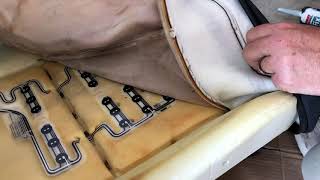
- Faulty Passenger Presence Sensor (PPS) Mat (Very Common) — The sensor mat, a flexible grid inside the seat cushion, is the most frequent failure point. Repeated flexing breaks the delicate internal circuits over time, causing an open circuit (high resistance) that triggers the B0074-0D code.
- Damaged Wiring or Corroded Connectors (Common) — The wiring harness connecting the sensor mat to the control module runs under the seat and frequently pinches during seat movement. Spilled liquids also corrode the electrical connectors, leading to high resistance and signal failure.
- Interference from Objects, Moisture, or Seat Covers (Common) — Placing electronic devices, wet clothing, or thick aftermarket covers on the passenger seat interferes with the sensor's capacitance field. This triggers an erratic signal fault, often logging a B0074-0F (Wet Seat) sub-code.
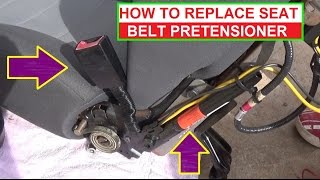
- Faulty Seat Belt Pretensioner (Ford Specific) (Less Common) — On many Ford vehicles, B0074 refers to the second-row center seatbelt pretensioner, not the front passenger seat. The fault lies within the pyrotechnic squib in the seat belt assembly or its dedicated wiring. 🎬 See how to replace a Ford seat belt pretensioner
- Software or Calibration Errors (Rare) — An outdated software version in the PPS module or an incomplete calibration after a previous repair leaves the control logic in an invalid state, generating the code even with healthy hardware.
- Faulty Passenger Presence System (PPS) Module (Rare) — The control module that interprets the sensor mat's signals occasionally fails internally. This requires complete module replacement and professional reprogramming.
Symptoms
- Airbag Warning Light On — The primary dashboard airbag warning light illuminates permanently.
- Passenger Airbag "Off" Indicator Lit — The status light indicating passenger airbag activity permanently reads "OFF," even when an adult occupies the seat.
- "Service Airbag System" Message — A text warning appears on the driver information center instructing immediate service of the airbag system.
- Warning Chime — An audible chime sounds at startup to alert the driver to the disabled safety system.
- Seat Belt Warning Light On (Ford Specific) — In vehicles where the code points to a seatbelt pretensioner, the seatbelt warning light illuminates alongside the airbag light.
Diagnostic Flowchart
Tap your situation to follow the diagnostic path that matches what you're seeing on this code.
Common Fixes & Costs
- Replacing the Passenger Presence Sensor Mat — Parts: $300-$600, Labor: $300-$800, ~3.2 hr book time (Professional)
- Repairing Damaged Wiring or Connectors — Parts: $10-$50, Labor: $150-$300, ~1.5 hr book time (Intermediate)
- Replacing the Seat Belt Pretensioner Assembly (Ford) — Parts: $150-$350, Labor: $150-$300, ~1.2 hr book time (Professional)
- Replacing the Passenger Presence System (PPS) Module — Parts: $350-$600, Labor: $150-$250, ~1.0 hr book time (Professional)
- PPS Module Software Update and Recalibration — Parts: $0, Labor: $100-$200, ~0.8 hr book time (Professional)
Used vs. New Parts: Buying Guide
When a used part is worth it: A complete used seat assembly makes sense only if the donor vehicle is low-mileage, had no collision, and the price is significantly lower than a new sensor mat. You must still budget for professional programming.
Donor-vehicle mileage cap: roughly under 60000 miles for the part to have meaningful remaining life.
Donor quality checklist:
- Verify the donor vehicle was not scrapped due to a collision or flood damage.
- Visually inspect the used seat's wiring for cuts, pinches, or repairs.
- Match the part number for the sensor and module exactly.
- Avoid parts from regions with high humidity or extreme temperatures.
Decision logic:
- If The vehicle is a model with a known high failure rate for this part (e.g., Buick Verano, BMW E90). → Buy new OEM. The used part is highly likely to fail in the same manner.
- If The cost of a new OEM sensor mat is over $700 and a low-mileage used seat is under $250. → A used seat is a worthwhile gamble, provided you budget for professional calibration.
- If The fault is the seat belt pretensioner (Ford specific). → Buy new OEM. A used pretensioner is a compromised pyrotechnic safety device.
Warranty tradeoff: Used parts typically carry a 30-90 day warranty that excludes labor. Given the high labor cost for this repair, a new OEM part with a 1-year warranty is highly recommended.
Worst-case if a used part fails: $800-$1500 if a used sensor mat fails after installation, requiring a second round of labor and parts.
What Happens If You Wait — Timeline
- Immediately: Code B0074 sets. The airbag warning light illuminates, and the passenger frontal airbag is immediately disabled. (MPG impact: 0%% · Added cost: $0)
- Ongoing: The vehicle operates normally, but there is zero frontal airbag protection for a passenger. An audible chime sounds at startup. (MPG impact: 0%% · Added cost: $0)
- During a collision: The passenger airbag fails to deploy, dramatically increasing the passenger's risk of severe head, neck, and chest injuries. (MPG impact: 0%% · Added cost: $10,000 - $1,000,000+ in potential medical costs and liability.)
- At state safety inspection: The vehicle fails safety inspections in jurisdictions that check for illuminated airbag warning lights, preventing registration renewal. (MPG impact: 0%% · Added cost: $600-$1400 (The cost of the mandatory repair).)
Cost of Not Fixing It
- Immediately: The passenger frontal airbag is disabled, significantly increasing the risk of serious or fatal injury to the front passenger. (Added cost: N/A)
- During a Collision: Increased medical costs, potential for long-term disability, and liability concerns. (Added cost: $10,000 - $1,000,000+)
- Vehicle Inspection: The vehicle fails safety inspections in many states, preventing legal registration renewal. (Added cost: $600-$1400 (Cost of required repair))
Diagnosis Steps
- Perform a Thorough Visual Inspection
Remove all objects, seat covers, and electronics from the passenger seat. With the vehicle off, inspect the wiring and connectors under the seat for disconnected plugs, pinched wires, or corrosion.
Tools: Flashlight (Beginner) - Read SRS Codes with a Capable Scan Tool
Use a scan tool capable of reading Supplemental Restraint System (SRS) codes. Note the specific B0074 suffix (e.g., 0D, 0E, 0F) to pinpoint the exact circuit fault.
Tools: SRS-capable OBD-II Scan Tool (Intermediate) - Check for Technical Service Bulletins (TSBs)
Search a TSB database for your specific make and model. GM has issued multiple bulletins (like #16-NA-145) detailing exact repair procedures for known factory defects causing this code.
Tools: Internet Access / TSB Database (Intermediate) - Perform a 'Wiggle Test'
While observing the sensor status on your scan tool's live data stream, carefully wiggle the wiring harness under the passenger seat. Fluctuating values confirm an intermittent connection.
Tools: SRS-capable OBD-II Scan Tool (Intermediate) - Analyze Scan Tool Live Data PIDs (Advanced)
Monitor the 'Passenger Presence Sensor Status' PID. An empty seat should read 'Empty'; an occupied seat should read 'Occupied'. An 'Unknown' or erratic reading confirms a sensor or wiring failure.
Tools: SRS-capable OBD-II Scan Tool (Advanced) - Test Circuit Integrity with a Resistor (Advanced)
Disconnect the battery. Unplug the PPS sensor and insert a 2.0-3.3 ohm resistor into the harness connector to simulate a healthy component. Reconnect the battery and clear codes. If B0074 disappears, the sensor mat is faulty.
Tools: Multimeter, 2.0-3.3 Ohm Resistor, Wiring Diagram (Advanced) - Measure Sensor Circuit Voltages (Advanced)
Back-probe the PPS module connector. Verify the main ignition voltage supply is between 9V and 16V. Check the signal circuit for the manufacturer-specified fluctuating voltage (typically 2-2.5V).
Tools: Multimeter, Wiring Diagram (Advanced) - Test Pretensioner Squib Resistance (Ford Specific, Advanced)
For Ford second-row pretensioner faults, disconnect the battery for 15 minutes. Unplug the pretensioner and measure squib resistance. A reading outside the 2.0-4.0 ohm range indicates a failed pretensioner.
Tools: Multimeter (Advanced) - Perform System Calibration/Re-zero
After replacing any PPS component, you must re-calibrate the system using an OEM-level scan tool. Skipping this step leaves the airbag disabled.
Tools: Professional Scan Tool (e.g., GM GDS2/Tech2) (Professional)
When This Code Triggers (Freeze-Frame Conditions)
- SRS Warning Light Status: ON (The code sets when the SRS module's self-test fails upon ignition ON.)
- Ignition Cycle Counter: 1 (The fault is detected on the first ignition cycle after the failure occurs.)
- Passenger Presence Sensor Resistance: > 4.0 Ohms or < 2.0 Ohms (The system continuously monitors circuit resistance; the code triggers when the reading breaches the pre-defined threshold.)
- System Voltage: 9-16 Volts (The fault is monitored when the vehicle's electrical system is within normal operating voltage.)
Related Codes
- B0081 — This generic 'Passenger Presence System Malfunction' code almost always accompanies B0074 on GM vehicles. Diagnosing and fixing the specific B0074 circuit fault automatically resolves B0081.
- B101D — Indicates 'Electronic Control Unit Hardware' failure. If present alongside B0074 on newer GM vehicles, TSB 17-NA-010 mandates replacing both the sensor mat and module assembly.
- U0170 — Means 'Lost Communication With Restraints System Sensor A.' This indicates a total power/ground failure or severed harness, whereas B0074 points to a specific sensor circuit fault while the module still communicates.
- B0075 — Relates to the 'Second-Row Left Seatbelt Pretensioner'. If seen with B0074 on a Ford, it indicates a broader issue within the rear restraint system.
Climate & Environmental Factors
- Humidity and Moisture: High humidity or spilled liquids cause the system to log a B0074-0F 'Wet Seat' fault. Allowing the seat to dry completely for 48 hours often resolves the issue without parts replacement.
- Extreme Cold: Cold temperatures make wiring insulation and plastic connectors brittle. Moving the seat in freezing weather frequently cracks a failing wire, triggering the code.
How to Talk to a Mechanic About This Code
Say this: "I have an airbag light on and my scanner shows code B0074. I need a diagnostic for the passenger presence system. Please check for any related TSBs for my vehicle and confirm you have the tools to perform the required PPS calibration after the repair."
This signals you've done research, specifies the exact system, mentions manufacturer bulletins, and asks about the mandatory calibration step. This prevents a shop from taking a job they can't finish.
Avoid saying:
- 'My airbag light is on, can you just turn it off?'
- 'Just fix whatever is wrong with the airbag.'
- 'I have a B0074 code, just replace the seat sensor.' (This presumes the diagnosis and is completely wrong on a Ford).
Questions to ask before authorizing the repair:
- What specific B0074 suffix code did you find (e.g., -0D, -0E, -0F)?
- Did you perform a 'wiggle test' on the under-seat harness to rule out a loose connection?
- Is the recommended repair to replace the sensor mat, repair wiring, or something else?
- Does the estimate include the mandatory passenger presence system re-calibration?
- What is the warranty on both the parts and labor for this specific repair?
Where to Take It: Dealer vs Independent vs Chain
- Dealer:
Recommended. The mandatory calibration step requires a dealer-level scan tool. The dealer is the most reliable choice to ensure the safety system is repaired and calibrated correctly.
Best for: Vehicles under warranty or covered by a Special Coverage program., Repairs requiring manufacturer-specific software for programming and calibration., Complex cases where independent shops lack the proper scan tools.
Downsides: Highest labor rates, typically 1.5-2x more than independent shops., May default to replacing an entire seat assembly when a smaller component suffices. (Typical cost: +50% vs. baseline) - Independent Shop:
Acceptable with caution. Verify beforehand that the shop owns a professional, bidirectional scan tool and has experience performing SRS calibrations.
Best for: Out-of-warranty vehicles where cost is a major factor., Shops that specialize in your vehicle's make., Simple wiring repairs under the seat.
Downsides: May not have the expensive, specialized scan tool required for the final SRS calibration. (Typical cost: +0% vs. baseline) - Chain Shop:
Not Recommended. Airbag system repairs are complex and safety-critical, falling far beyond the scope of chain shops.
Best for: Simple services like oil changes and tires.
Downsides: Technicians lack the training and tools for SRS diagnosis., High risk of misdiagnosis or being sold unnecessary parts., Guaranteed not to have the ability to perform the mandatory calibration. (Typical cost: -10% vs. baseline)
When to Walk Away From the Repair
If the estimated repair cost for the B0074 fault exceeds 50% of the car's private-party value, seriously consider selling the car 'as-is'. An active airbag light reduces a car's value by 20-40%.
- Car worth $4000, fix is $1800: Walk away. The repair cost is 45% of the car's value. Selling the car 'as-is' for a reduced price is more economical.
- Car worth $12000, fix is $1400: Fix it. The repair cost is 11% of the vehicle's value. Fixing it restores a critical safety feature and maximizes resale value.
- Car worth $2500, fix is $1500: Walk away. The repair cost is 60% of the car's value. The car's value with a known safety defect is minimal.
What Scan Tool You Need for This Code
Minimum: A scanner that reads and clears Supplemental Restraint System (SRS/Airbag) codes. A basic engine-only code reader will NOT work for B0074.
Standard $20 OBD-II scanners only access the powertrain control module. They cannot communicate with the SRS module, resulting in a 'No Codes Found' message while the airbag light remains on.
Budget: Foxwell NT604 Elite / TopDon AD500 (~$90) — Reads and clears SRS codes to identify the specific B0074 fault, but CANNOT perform the mandatory calibration after the repair.
Mid-range: BlueDriver Pro / Foxwell NT510 Elite (~$100) — Reads/clears SRS codes and shows live data from the PPS module for 'wiggle tests'. It lacks the bidirectional control needed for final calibration.
Professional: Autel MaxiCOM MK808 / Launch X431 Series (~$450-900) — Provides full bidirectional control. Reads codes, views live data, and performs the mandatory 'Passenger Presence System Calibration' required after replacing parts.
How to Clear the Code After You Fix It
- Perform the physical repair (e.g., replace sensor, repair wiring).
- Reconnect the battery if disconnected.
- Use an SRS-capable OBD-II scan tool to clear B0074 and related codes.
- Perform mandatory system calibration/re-zeroing using the scan tool.
- Cycle the ignition and verify the airbag warning light performs its 6-second self-check and stays off.
Drive cycle (~1 minutes): SRS codes do not require a driving cycle. After clearing the code and calibrating the system, turn the ignition to 'ON'. If the repair was successful, the airbag light turns off after 6-7 seconds and remains off.
Readiness monitors affected: Supplemental Restraint System (SRS)
Watch out for:
- Disconnecting the battery will NOT clear a B0074 code from the SRS module's memory.
- The code returns immediately upon the next ignition cycle if the physical fault remains.
- Skipping the mandatory system calibration leaves the code active and the airbag disabled.
Will This Fail Emissions / State Inspection?
No — by itself this code doesn't fail OBD inspection (but it can keep readiness monitors from setting, which causes a separate fail).
- California: An airbag light will NOT fail the emissions portion (smog check) of the inspection, but it remains a critical safety failure.
- New York: An illuminated airbag warning light is an advisory item. The inspector notes it on the receipt, but it does NOT cause an inspection failure.
- Texas: An airbag warning light does NOT cause a failure on the Texas state safety inspection, which focuses on lights, brakes, and tires.
Most Commonly Affected Vehicles
- Buick Verano (2012-2017) — Extremely common failure of the sensor mat due to a creased sensor tail from factory assembly. Covered under GM TSB #16-NA-145.
- Chevrolet Impala (2009-2016) — 2009-2013 models suffer from chafed wiring harnesses under the seat. 2014-2016 models experience failed sensor mats addressed in TSB 17-NA-010.
- Chevrolet Equinox (2011-2017) — Uses a silicone bladder-type pressure sensor that frequently fails, often setting B0081 and B0074 together.
- Chevrolet Traverse (2011-2017) — Experiences faults triggered by electronic devices on the seat or internal sensor failure.
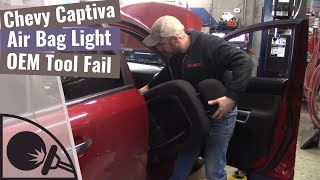
- Chevrolet Captiva (2012-2015) — Requires a specialized scan tool to unlock and re-zero the passenger presence system after a fault is detected.
- Ford Fusion, F-150 (2006-2020) — B0074 refers to the 'Second-Row Center Seat-Belt Pretensioner Deployment Control'. Diagnosis must focus on the rear seatbelt assembly, not the front passenger seat.
- Hyundai Sonata, Elantra, Accent (2006-2015) — The Occupant Classification System (OCS) sensor mat is a widely known failure point, prompting Hyundai to issue a 15-year warranty extension for select models.
- BMW 3-Series (E90), 5-Series (E60) (2004-2011) — The passenger seat occupancy mat (OC3 mat) fails universally due to micro-cracking. BMW issued multiple recalls and a 15-year extended warranty for this component.
Manufacturer-Specific Notes
- General Motors (Chevrolet, Buick, GMC, Cadillac): GM vehicles are highly susceptible to this code due to factory assembly defects. TSBs explicitly point to the sensor tail being crushed by 'hog-rings' during seat upholstery installation.
- Ford: On many Ford models, B0074 is defined as a fault in the second-row center seatbelt pretensioner circuit. Diagnosing this as a passenger seat sensor issue is a common and costly mistake.
- Hyundai: Due to widespread OCS sensor mat failures, Hyundai extended the warranty on this component to 15 years with unlimited mileage for several models. Always check dealer coverage before paying out of pocket.
- BMW: The passenger seat occupancy mat is a near-universal failure point due to micro-cracks. While aftermarket 'bypass emulators' are popular, they keep the airbag permanently armed and pose severe safety risks.
Real Owner Stories
2011 Chevy Camaro with 55K miles
Airbag light stayed on. Dealer diagnosed codes B0074 and B0081 and quoted $700 for repair.
What they tried:
- Owner disconnected the battery for 24 hours and inspected the sensor pad for tears, finding none.
- Reinstalled everything, but the light came on immediately.
Outcome: The owner learned that even if they replaced the module themselves, a dealer visit was mandatory to re-zero the system. A simple battery disconnect cannot clear the fault.
Lesson: Physical replacement of SRS components is only half the job. A professional shop with the right scan tool is always required for the final calibration step.
2007 Chevy Equinox with B0074/B0081
Airbag light was permanently on. Dealer quoted $1,100 for the repair.
What they tried:
- Owner swapped the Passenger Presence Module from an identical junkyard vehicle.
- The light remained on. They paid a dealership to 'relearn' the junkyard module, which failed.
Outcome: The owner purchased an aftermarket 'bypass emulator' online. Plugging it in turned off the light by making the system believe an adult was always seated.
Lesson: Using junkyard SRS modules is risky and often fails programming. While bypass modules extinguish the light, they defeat the safety system's logic and are highly dangerous.
2012 Buick Verano
Service Airbag Light illuminated, with the passenger airbag indicator showing 'OFF'.
What they tried:
- A technician diagnosed DTC B0074-0D and followed GM TSB #16-NA-145.
- They removed the seat upholstery and found a sharp crease in the sensor mat's tail, pinched during factory assembly.
Outcome: The technician replaced the sensor mat assembly, ensuring the new tail was routed correctly. After re-calibration, the code cleared permanently.
Lesson: On many GM vehicles, the root cause is a physically damaged sensor from the factory, not a random electrical failure. The repair is complex but well-documented in TSBs.
How to Prevent This Code From Triggering
- Avoid placing heavy, sharp, or electronic objects on the passenger seat (Daily habit) — Laptops and heavy containers interfere with the sensor's capacitance reading and physically damage the delicate sensor mat over time.
- Do not allow passengers to kneel on the seat cushion (Ongoing) — Concentrated pressure points from kneeling crack the flexible circuits in the mat, leading to an open circuit (B0074-0D).
- Keep the passenger seat and under-seat area dry (Ongoing) — Spilled liquids seep into the cushion and cause a 'Wet Seat' fault (B0074-0F). Moisture also corrodes electrical connectors under the seat.
- Be cautious when moving the passenger seat (When adjusting seat) — Moving the seat to extreme positions strains, pinches, or severs wires that are brittle or improperly routed.
- Avoid non-approved, thick, or heated seat covers (During vehicle modification) — Thick covers buffer the sensor from detecting an occupant. Aftermarket seat heaters introduce an electrical grid that causes interference.
Frequently Asked Questions
Can I fix a B0074 code myself?
Simple checks like removing objects from the seat or inspecting under-seat connectors are DIY-friendly. However, replacing the sensor mat requires seat disassembly, upholstery work, and special tools. Any repair to the airbag system mandates a professional calibration afterwards to function.
Will clearing the code fix the problem?
No. If the underlying physical fault still exists, the code returns immediately after the system's self-test. You must repair the hardware issue before the code will permanently clear.
Is it safe to ignore the B0074 code?
No, it is a critical safety issue. Ignoring this code means you are driving with a disabled passenger airbag. This drastically increases the risk of severe injury or death for your passenger in an accident.
What is a common misdiagnosis for B0074?
On GM vehicles, mechanics often mistakenly replace the main airbag module (SDM) because code B0081 is also present, even though B0081 is just a symptom of B0074. On Ford vehicles, the most common error is replacing the passenger seat sensor when the code actually refers to the second-row seatbelt pretensioner.
I found a cheap 'bypass module' online. Should I use it?
Using a bypass emulator is extremely dangerous and strongly discouraged. These devices trick the system into keeping the passenger airbag permanently armed, causing it to deploy even if the seat is empty or holds a child seat. This creates massive liability and fails to properly repair the safety system.
Why did the airbag light come on after I moved the passenger seat?
Moving the seat strains or pulls on wires that are already partially broken or have loose connections. This momentary break in the electrical circuit forces the system to detect a fault and illuminate the airbag light. A 'wiggle test' of the harness while monitoring scan tool data confirms this.
Can I use a passenger seat from a junkyard to fix this?
Yes, but the sensor in the used seat is often faulty or near failure itself. Furthermore, the Passenger Presence Module in the used seat is 'locked' to the donor vehicle's VIN. You must pay for a professional programming service to unlock and calibrate the new module to your vehicle.
Is it safe to test airbag system components with a multimeter?
Extreme caution is required, and you must never test for voltage on a pyrotechnic device connector. To test resistance on a component, disconnect the battery for at least 15 minutes to allow system capacitors to discharge. Be aware that many SRS connectors have built-in shorting bars that give false readings unless carefully bypassed.
Key Takeaways
- Code B0074 disables the passenger-side frontal airbag, leaving occupants with zero supplemental protection in a crash.
- A failed passenger seat sensor mat causes over 70% of B0074 codes, particularly on 2009-2017 GM vehicles with known factory defects.
- Ford vehicles use code B0074 to indicate a failed second-row center seatbelt pretensioner, requiring diagnosis of the rear seatbelt rather than the front passenger seat.
- Clear the passenger seat of all electronics, wet clothing, and heavy objects, as these frequently trigger false B0074-0F 'Wet Seat' codes.
- Replacing a sensor mat or module mandates a professional system calibration using an OEM-level scan tool to restore airbag functionality.
Helpful Videos
Shop the Parts Behind B0074
Below are the parts most often responsible for code B0074, ranked by how frequently each one is the actual culprit (per the diagnosis above). Tap any to see what we have for your vehicle.



The information in this article is provided for general reference and educational purposes only. Vehicle specifications, procedures, and part compatibility can vary by production date, trim level, and region. Always consult your vehicle's factory service manual and verify part numbers before purchasing or performing repairs. Safety-critical components such as airbags, seat belts, and braking systems should be installed by a qualified professional.
- 🧭 Diagnostic Flowchart
- 🎬 Helpful Videos
- 🛍️ Shop This Part
- What Does B0074 Mean?
- Can I Drive With B0074?
- Common Causes
- Symptoms
- Common Fixes & Costs
- Used vs. New Parts: Buying Guide
- What Happens If You Wait — Timeline
- Cost of Not Fixing It
- Diagnosis Steps
- When This Code Triggers (Freeze-Frame Conditions)
- Related Codes
- Climate & Environmental Factors
- How to Talk to a Mechanic About This Code
- Where to Take It: Dealer vs Independent vs Chain
- When to Walk Away From the Repair
- What Scan Tool You Need for This Code
- How to Clear the Code After You Fix It
- Will This Fail Emissions / State Inspection?
- Most Commonly Affected Vehicles
- Manufacturer-Specific Notes
- Real Owner Stories
- 2011 Chevy Camaro with 55K miles
- 2007 Chevy Equinox with B0074/B0081
- 2012 Buick Verano
- How to Prevent This Code From Triggering
- Frequently Asked Questions
- Can I fix a B0074 code myself?
- Will clearing the code fix the problem?
- Is it safe to ignore the B0074 code?
- What is a common misdiagnosis for B0074?
- I found a cheap 'bypass module' online. Should I use it?
- Why did the airbag light come on after I moved the passenger seat?
- Can I use a passenger seat from a junkyard to fix this?
- Is it safe to test airbag system components with a multimeter?
- Key Takeaways
- 🎟️ Get 5% Off