

OBD-II Code B0082: Passenger Seatbelt Fault
What B0082 means, why it triggers, and how to fix it
- Code B0082 disables the passenger's airbag and seatbelt pretensioner, requiring immediate repair to restore crash protection.
- Over 50% of B0082 faults stem from damaged wiring or loose yellow connectors under the passenger seat, costing under $200 to repair.
- Never carry a front-seat passenger while this code is active, as their primary restraint systems will fail to deploy in a collision.
- Always disconnect the negative battery terminal and wait 30 minutes before inspecting under-seat wiring to prevent accidental deployment of the pyrotechnic pretensioner.
What Does B0082 Mean?
B0082 indicates the Restraints Control Module (RCM) detected a failure in the passenger's seatbelt system. This fault disables the passenger safety system. The issue typically stems from damaged under-seat wiring, a faulty seatbelt pretensioner, or a failed occupant detection sensor.
Technical definition: The SAE/ISO definition for B0082 is "Passenger Seatbelt Load Limiter Deployment Control (Subfault)". The control module detected an electrical fault in the circuit controlling the passenger's seatbelt pretensioner—a pyrotechnic device that tightens the belt during a collision.
Can I Drive With B0082?
Yes, But With Caution. You can drive the vehicle, but this critical safety fault disables the passenger's airbag and seatbelt pretensioner. In a crash, the passenger lacks primary restraint protection, significantly increasing the risk of fatal injury. Do not carry a front-seat passenger until you repair this fault.
Common Causes
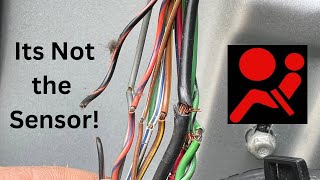
- Damaged or Corroded Under-Seat Wiring (Very Common) — The wiring harness under the passenger seat is the most frequent culprit. Repeated seat movement chafes, pinches, or breaks wires. Spilled liquids or winter road salt corrode the yellow connector pins, causing high resistance or a short circuit. 🎬 See how a damaged wire loom often causes these airbag codes.
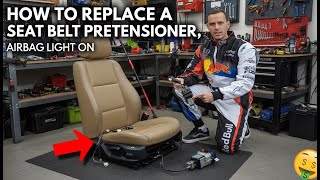
- Faulty Passenger Seatbelt Pretensioner (Common) — The seatbelt unit contains a small explosive charge that tightens the belt in a crash. This internal mechanism fails its self-test due to an internal open circuit, a short, or a seized mechanical spring. 🎬 Watch: A beginner's guide to testing and replacing seatbelt pretensioners.
- Faulty Occupant Detection System (ODS) Sensor (Common) — Many vehicles use a sensor mat in the passenger seat cushion to detect occupant weight. A failure in this mat prevents the system from determining if the passenger airbag should arm, triggering B0082. This is a documented defect on many Nissan and GM vehicles.
- Deployed Pretensioner from Previous Accident (Common) — If the vehicle was in a prior collision where the pretensioner deployed, it is a one-time-use device that requires replacement. If a shop failed to replace it or clear the RCM crash data, this code remains active.
- Faulty Restraints Control Module (RCM) (Less Common) — The RCM monitors and controls the entire airbag system. Internal circuit failures or corrupted software within the module trigger this code. Suspect the RCM only after ruling out wiring and pretensioner failures.
- Low Battery Voltage or Poor Ground (Rare) — The airbag system requires stable voltage. A weak battery dropping below 9V during startup or a ground circuit with over 0.5 ohms of resistance causes the control module to set false fault codes.
Symptoms
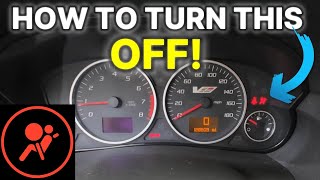
- Airbag Warning Light On — The red dashboard icon depicting a person with a deployed airbag remains permanently illuminated.
- Seatbelt Warning Light Flashing — The passenger seatbelt indicator flashes or stays lit even when the belt is securely buckled.
- "Service Airbag System" Message — The driver information center displays a text warning such as "Service Airbag System" or "Passenger Belt Fault".
- Passenger Airbag Off Light Illuminated — The center console light indicating the passenger airbag is 'OFF' stays lit regardless of passenger presence.
- Clicking Sound from Seatbelt Retractor — A distinct clicking noise emits from the passenger B-pillar when starting the car as the system fails its self-test.
Diagnostic Flowchart
Tap your situation to follow the diagnostic path that matches what you're seeing on this code.
Common Fixes & Costs
- Repair Under-Seat Wiring Harness — Parts: $10-$30, Labor: $150-$300, ~1.5 hr book time (Intermediate)
- Replace Passenger Seatbelt Pretensioner — Parts: $200-$450, Labor: $150-$300, ~1.5 hr book time (Professional)
- Rebuild Original Seatbelt Pretensioner — Parts: $75-$120, Labor: $150-$300, ~1.5 hr book time (DIY)
- Replace and Recalibrate OCS Sensor — Parts: $300-$800, Labor: $200-$400, ~2.5 hr book time (Professional)
- Replace Restraints Control Module (RCM) — Parts: $400-$700, Labor: $150-$300, ~1.5 hr book time (Professional)
DIY vs Professional
- Repair Under-Seat Wiring Harness — Beginner:
- Replace Passenger Seatbelt Pretensioner — Beginner:
- Replace and Recalibrate OCS Sensor — Beginner:
- Replace Restraints Control Module (RCM) — Beginner:
Used vs. New Parts: Buying Guide
When a used part is worth it: Used seatbelt assemblies are cost-effective only if sourced from a reputable dismantler guaranteeing the part is undeployed and from a non-collision vehicle. A rebuilt pretensioner from a specialized service is safer than a random salvage yard part.
Donor-vehicle mileage cap: roughly under 60000 miles for the part to have meaningful remaining life.
Donor quality checklist:
- Verify the donor vehicle was not in a collision.
- Ensure the part number is an exact match.
- Check that the webbing is not frayed and the retractor operates smoothly.
- Reject parts with any signs of water damage or corrosion.
Decision logic:
- If The fault is a deployed pretensioner from an accident → Buy a new OEM part or use a professional rebuilding service. Never install a used part from a crashed vehicle.
- If The fault is electrical and the vehicle is over 10 years old → A rebuilt unit or a guaranteed used part from a low-mileage donor saves significant money.
- If The part is for a newer vehicle and safety is the top priority → Buy a new OEM part to ensure maximum reliability.
Warranty tradeoff: Salvage yards offer 30-90 day warranties. Rebuilding services provide lifetime warranties. New OEM parts carry a 1-year manufacturer's warranty.
Worst-case if a used part fails: $600 if a faulty used part fails, requiring repeat labor and a new part. The ultimate cost is failure to protect an occupant in a crash.
What Happens If You Wait — Timeline
- Immediate: The code sets and the airbag light illuminates. The RCM disables the passenger seatbelt pretensioner and airbag as a fail-safe. (MPG impact: 0%% · Added cost: $0)
- 0-2 months: Intermittent connections become permanent hard codes that will not clear on their own. (MPG impact: 0%% · Added cost: $0)
- Ongoing: The vehicle fails state safety inspections, preventing registration renewal. (MPG impact: 0%% · Added cost: $50-$200 in failed inspection fees.)
- During a collision: The passenger's seatbelt fails to tighten and the airbag does not deploy, causing catastrophic safety failure. (MPG impact: 0%% · Added cost: Thousands in medical bills and liability.)
Cost of Not Fixing It
- Immediate: The passenger's primary restraint systems are disabled, creating a severe risk of fatal injury in a collision. (Added cost: N/A (Safety Risk))
- Ongoing: The vehicle automatically fails state safety inspections, preventing legal registration renewal. (Added cost: $50-$200 in failed inspection fees and fines.)
- Post-Accident: If the disabled safety system leads to enhanced passenger injury, you face significant legal and insurance liability. (Added cost: Thousands in medical bills and liability costs.)
Diagnosis Steps
- Read Codes with an SRS Scanner
Use an OBD-II scanner capable of reading SRS/Airbag codes. Confirm B0082 is active and note any manufacturer-specific sub-codes (e.g., :11 for short to ground, :13 for open circuit) to pinpoint the electrical fault.
Tools: OBD-II Scanner (SRS/Airbag compatible) (Beginner) - Check Technical Service Bulletins (TSBs)
Search for TSBs specific to your vehicle's year, make, and model. Manufacturers frequently release bulletins for known B0082 triggers, such as Nissan's OCS sensor failure (NTB19-071D), saving hours of diagnostic time.
Tools: Internet Access (Beginner) - Visually Inspect Under the Passenger Seat
Look for loose or disconnected yellow connectors. Check if the wiring harness is pinched by the seat rail, frayed, or showing exposed copper. Inspect connector pins for green or white corrosion.
Tools: Flashlight (Beginner) - Disconnect Battery and Reseat Connectors
Disconnect the negative battery terminal and wait 30 minutes for the backup power to discharge. Unplug the main yellow connector under the passenger seat, spray it with electrical contact cleaner, and reconnect it securely.
Tools: Socket wrench, Electrical Contact Cleaner (Intermediate) - Perform a Wiggle Test with Live Data
Using an advanced scan tool, monitor the live data PID for the passenger seatbelt pretensioner resistance (typically 1.5 to 3.5 ohms). Wiggle the under-seat wiring harness. If the resistance spikes to OL (Open Loop), you found an intermittent break.
Tools: Advanced Scan Tool with Live Data (Professional) - Test Pretensioner Circuit Resistance
With the battery disconnected and the pretensioner unplugged, measure the resistance across the pretensioner's two pins. A reading outside the 1.5-3.5 ohm range indicates a failed pretensioner requiring replacement.
Tools: Multimeter, Vehicle Service Manual (Advanced) - Test Harness Continuity and Shorts
With the battery disconnected and both the RCM and pretensioner unplugged, measure resistance between corresponding pins at both ends of the harness (must be <0.5 ohms). Check for shorts to ground by measuring from each wire to the chassis (must be OL).
Tools: Multimeter, Vehicle Service Manual, Wiring Diagram (Advanced) - Check Power, Ground, and Signal Voltage
Verify proper voltage and ground at the harness-side connector for the pretensioner. Ensure the system operating voltage remains stable between 9V and 16V during startup.
Tools: Multimeter, Vehicle Service Manual (Advanced) - Swap Components
If the vehicle has an identical pretensioner on the driver's side, swap the components. If the code changes from B0082 to B0081, the pretensioner is definitively faulty.
Tools: Professional Scan Tool, Basic Hand Tools (Professional)
When This Code Triggers (Freeze-Frame Conditions)
- System State: Ignition ON (The SRS module performs a self-test every time the ignition is turned on.)
- Time After Ignition: 0-7 seconds (Faults are detected during the initial system check (lamp test).)
- System Voltage: 9-16V (The code sets if voltage drops outside the normal operating range during the self-test.)
- Component Monitored: Passenger Seatbelt Pretensioner Circuit (The module continuously monitors the circuit for correct resistance (typically 1.5-3.5 ohms).)
Related Codes
- B0081 — The equivalent code for the driver's side seatbelt. If B0081 and B0082 appear together, the fault lies in a shared component like the RCM power supply or ground.
- B007F — Indicates a fault in the passenger seatbelt buckle, not the main retractor on the pillar. B0082 points to the retractor; B007F points to the latch.
- U0170 — Means 'Lost Communication With Restraints System Sensor A'. Seeing this with B0082 confirms a completely severed wire or unplugged connector.
- B0092 — Indicates a 'Passenger Presence System Performance' issue. When paired with B0082, it confirms the fault is in the seat's weight sensor mat, not the seatbelt mechanism.
Climate & Environmental Factors
- High Humidity and Water Ingress: Moisture corrodes the wiring and connector pins under the seat, creating the high resistance that triggers B0082. This frequently occurs after detailing the interior or leaving windows open in the rain.
- Winter Road Salt: Salt tracked into the vehicle melts into the carpet, creating a highly corrosive environment for the low-lying SRS wiring harness and accelerating pin degradation.
- Extreme Temperature Fluctuations: Cycles of extreme heat and cold cause plastic wire insulation to become brittle. Combined with seat movement, the insulation cracks, exposing copper and causing short circuits.
How to Talk to a Mechanic About This Code
Say this: "I have an airbag light on and my scanner shows code B0082 for the passenger seatbelt system. Please start by inspecting the wiring and connectors under the passenger seat before quoting a new seatbelt assembly."
This directs the shop to the most likely and lowest-cost failure point first, preventing them from immediately quoting an expensive $500 seatbelt replacement.
Avoid saying:
- My airbag light is on, can you fix it?
- I think I need a new seatbelt.
- Just do whatever it takes to turn the light off.
Questions to ask before authorizing the repair:
- What was the result of the visual inspection of the under-seat wiring?
- Did you test the resistance of the pretensioner circuit, and what was the exact ohm reading?
- Is any programming or calibration required after installing the new part?
- What is the warranty on both the parts and the labor?
Where to Take It: Dealer vs Independent vs Chain
- Dealer:
Necessary for Nissan OCS recalibrations or warranty work. Otherwise, it is an unnecessarily expensive option for common wiring faults.
Best for: Vehicles under warranty., Complex cases involving OCS sensor recalibration (common on Nissan)., When you require OEM parts and factory-trained technicians.
Downsides: Labor rates are 50% higher than independent shops., Dealers default to replacing entire assemblies instead of performing $100 wiring repairs. (Typical cost: +50% vs. baseline) - Independent Shop:
The best fit for the majority of B0082 faults. An ASE-certified independent shop handles wiring and pretensioner replacements effectively and affordably.
Best for: Most B0082 repairs, especially wiring and connector issues., Out-of-warranty vehicles where cost is a major factor.
Downsides: May lack expensive, dealer-specific tools for OCS programming or calibration. (Typical cost: +0% vs. baseline) - Chain Shop:
AVOID. The risk of an incorrect repair on a critical safety system is too high for a general lube or tire shop.
Best for: Routine maintenance like oil changes and tires.
Downsides: Technicians lack training for complex electrical and pyrotechnic safety systems., Not equipped with advanced SRS diagnostic scanners. (Typical cost: -10% vs. baseline)
When to Walk Away From the Repair
If the estimated repair cost exceeds 40-50% of your car's private-party value, consider selling the vehicle. Because an airbag light is a critical safety failure, you cannot safely ignore it.
- Car worth $4000, fix is $2000: Borderline. The repair is 50% of the car's value. Get a second opinion, but selling a car with a known safety defect reduces its value significantly.
- Car worth $12000, fix is $800: Fix it. The repair cost is well below the threshold and restores a critical safety feature.
- Car worth $2500, fix is $1500: Walk away. The repair cost is 60% of the car's value. It is not economically sensible to proceed.
What Scan Tool You Need for This Code
Minimum: A scanner that reads and clears Supplemental Restraint System (SRS) / Airbag codes. Basic engine-only code readers cannot access 'B' codes.
A standard $20 engine code reader only communicates with the engine control unit (ECU). It cannot see the Restraints Control Module (RCM) to diagnose or clear the B0082 code.
Budget: Autel AutoLink AL619 (~$70) — Reads and clears engine, ABS, and SRS codes. It retrieves the B0082 code and turns off the light after a successful repair.
Mid-range: Foxwell NT630 Plus (~$150) — Provides live data streaming for SRS components. This allows you to perform a 'wiggle test' by watching the pretensioner resistance value in real-time to find intermittent wiring faults.
Professional: Autel MaxiCOM MK808S (~$450) — Offers full system diagnostics and bidirectional control. It performs the necessary OCS/ODS recalibration procedures on models like Nissan after a sensor replacement.
Rent vs buy: Auto parts stores offer free scanning, but their basic readers rarely read SRS codes. You must purchase your own SRS-capable scanner or pay a shop $100-$150 for a diagnosis.
How to Clear the Code After You Fix It
- Ensure the underlying mechanical or electrical fault is repaired.
- Reconnect the negative battery terminal.
- Use an SRS-capable OBD-II scan tool to access the Restraints/Airbag module.
- Select 'Clear Codes' or 'Reset Faults'.
- Cycle the ignition off, then on. The airbag light should illuminate for 7 seconds and turn off permanently.
Drive cycle (~10 minutes): SRS codes do not require a complex drive cycle. A simple ignition cycle (on-off-on) verifies the fix. A 10-minute test drive confirms the light does not return due to intermittent wiring movement.
Watch out for:
- Using a basic $20 engine code reader that cannot communicate with the SRS module.
- Failing to fix the root cause, causing the code to reappear instantly.
- Assuming disconnecting the battery clears SRS hard codes (it does not).
Will This Fail Emissions / State Inspection?
No — by itself this code doesn't fail OBD inspection (but it can keep readiness monitors from setting, which causes a separate fail).
- California: An airbag light does NOT fail a California smog check, which only tests emissions.
- New York: An airbag warning light results in an advisory note but is currently NOT grounds for failing the safety inspection.
- Texas: An airbag warning light is NOT an inspected item and will pass the Texas state safety inspection.
- Virginia: An illuminated airbag warning light is an automatic failure for the state safety inspection.
Most Commonly Affected Vehicles
- Chevrolet / GMC Silverado / Sierra (2007-2018) — Prone to broken wires in the under-seat harnesses and the flexible boot in the door jamb.
- Dodge / Ram Ram 1500 / 2500 (2009-2018) — Frequently traced to a poor connection at the seatbelt retractor. The red connector locking tab must be fully engaged.
- Ford Focus (2012-2018) — Ford uses specific sub-codes (B0082:11, :12, :13) to pinpoint the fault. The RCM expects a strict resistance between 1.7 and 2.78 ohms.
- Jeep Grand Cherokee (2005-2015) — Often caused by pinched wires under the passenger seat due to the seat's movement on its rails.
- Chrysler / Dodge 300, Charger (2011-2019) — Faults in the seatbelt pretensioner connectors or wiring are a known issue requiring harness repair.
- Nissan Altima, Rogue, Sentra (2013-2020) — Heavily tied to Occupant Classification System (OCS) sensor mat failures (TSB NTB19-071D). Requires dealer recalibration.
- Subaru Outback, Forester (2009-2018) — Triggered by internal failures of the belt tension sensor integrated into the seatbelt retractor assembly.
Manufacturer-Specific Notes
- General Motors (Chevy/GMC): Wires for the side impact sensors and seatbelts run through a flexible boot in the door jamb. Repeated door opening breaks these wires, triggering B0082.
- Ford: Ford systems provide highly specific sub-codes: B0082:11 (short to ground), B0082:12 (short to battery), or B0082:13 (circuit open). A scanner capable of reading these suffixes is mandatory.
- Chrysler/Dodge/Jeep/Ram: Seatbelt pretensioner connectors are highly sensitive. Disconnecting the connector, applying contact cleaner, and firmly seating the red locking tab often resolves intermittent B0082 codes.
- Nissan: B0082 is frequently tied to the Occupant Classification System (OCS). TSB NTB19-071D requires replacing the seat cushion sensor and performing a dealer-level Zero Point Reset.
Real Owner Stories
2016 Ram 1500 with intermittent airbag light
The airbag light toggled randomly, usually after the passenger seat was adjusted.
Outcome: Unplugging and securely reconnecting the under-seat connector solved the problem permanently. The issue was a loose connection, not a failed part.
Lesson: Always check the simplest things first. Reseating the under-seat connectors fixes this code for free in many cases.
2016 Nissan Rogue with persistent airbag light
The airbag light stayed on permanently. Two dealerships diagnosed a failed passenger occupant control module.
Outcome: The owner waited two months for backordered OEM parts. The repair required replacing the seat cushion sensor and dealer recalibration.
Lesson: On modern Nissans, B0082 is frequently caused by a failed OCS sensor (TSB NTB19-071D). This is a dealer-only fix requiring proprietary calibration tools.
2005 GMC Sierra with severed under-seat wires
The airbag light illuminated intermittently when moving the seat, then stayed on permanently.
Outcome: The owner installed a replacement harness pigtail (Part No. 88978225) for $94, resolving the code immediately.
Lesson: A careful visual inspection prevents replacing expensive seatbelt assemblies when the actual fault is a $90 wiring harness.
How to Prevent This Code From Triggering
- Prohibit storing items under the passenger seat (Daily habit) — Prevents snagging or disconnecting the sensitive SRS wiring harness, which is the leading cause of B0082.
- Inspect and secure under-seat wiring (Annually) — Ensures the harness is clipped away from the seat rails and passengers' feet.
- Apply dielectric grease to connector seals (When disconnected) — Blocks moisture and prevents the pin corrosion that causes high resistance faults.
- Clean up liquid spills immediately (As needed) — Prevents liquids from seeping into the carpet and corroding the low-lying SRS connectors.
- Maintain a healthy battery (Ongoing) — Prevents low voltage drops during startup that cause the SRS module to set false codes.
Frequently Asked Questions
Can I just clear the B0082 code?
You can clear the code with a scanner, but it returns immediately upon startup if the fault remains. SRS codes trigger a self-test every ignition cycle and cannot be permanently bypassed.
What do the B0082 sub-codes like :11, :12, and :13 mean?
These manufacturer-specific suffixes pinpoint the electrical fault. For example, :11 means a short to ground, :12 means a short to battery, and :13 means an open circuit. Knowing the sub-code drastically reduces diagnostic time.
What is the most common misdiagnosis for a B0082 code?
Mechanics often replace the expensive seatbelt assembly or RCM before inspecting the under-seat wiring. In most cases, the fault is a broken wire or corroded pin that costs under $200 to fix.
I replaced my passenger seat, and now the airbag light is on. Why?
The new seat lacks the correct Occupant Detection System (ODS) sensor mat, or the system requires recalibration. You must transfer the original sensor mat or have a dealership perform a 'rezero' procedure.
Is it safe to work on the airbag system myself?
It is extremely dangerous without proper training. The system contains explosive charges that cause severe injury if mishandled. Always disconnect the negative battery terminal for 30 minutes before touching yellow wiring.
Will a B0082 code cause my car to fail an inspection?
Yes, an illuminated airbag warning light is an automatic failure for vehicle safety inspections in states like Virginia, New York, and Massachusetts.
I put something under my seat and now the airbag light is on. Could that be the cause?
Yes. Shoving items under the passenger seat frequently snags the wiring harness, pulling a connector loose or breaking a wire.
The car was in an accident. Does the seatbelt need replacement?
Yes. Deployed seatbelt pretensioners are one-time-use devices. You must replace the pretensioner and have the RCM crash data professionally reset.
Will the B0082 code go away on its own?
No. The light stays on until you repair the physical fault and clear the code from the RCM memory using an SRS-capable scanner.
What is a seatbelt pretensioner?
A pretensioner is a pyrotechnic safety device that rapidly retracts the seatbelt during the first milliseconds of a crash. This removes slack, holding the occupant firmly against the seat to maximize airbag effectiveness.
Key Takeaways
- Code B0082 disables the passenger's airbag and seatbelt pretensioner, requiring immediate repair to restore crash protection.
- Over 50% of B0082 faults stem from damaged wiring or loose yellow connectors under the passenger seat, costing under $200 to repair.
- Never carry a front-seat passenger while this code is active, as their primary restraint systems will fail to deploy in a collision.
- Always disconnect the negative battery terminal and wait 30 minutes before inspecting under-seat wiring to prevent accidental deployment of the pyrotechnic pretensioner.
Helpful Videos
Shop the Parts Behind B0082
Below are the parts most often responsible for code B0082, ranked by how frequently each one is the actual culprit (per the diagnosis above). Tap any to see what we have for your vehicle.



The information in this article is provided for general reference and educational purposes only. Vehicle specifications, procedures, and part compatibility can vary by production date, trim level, and region. Always consult your vehicle's factory service manual and verify part numbers before purchasing or performing repairs. Safety-critical components such as airbags, seat belts, and braking systems should be installed by a qualified professional.
- 🧭 Diagnostic Flowchart
- 🎬 Helpful Videos
- 🛍️ Shop This Part
- What Does B0082 Mean?
- Can I Drive With B0082?
- Common Causes
- Symptoms
- Common Fixes & Costs
- DIY vs Professional
- Used vs. New Parts: Buying Guide
- What Happens If You Wait — Timeline
- Cost of Not Fixing It
- Diagnosis Steps
- When This Code Triggers (Freeze-Frame Conditions)
- Related Codes
- Climate & Environmental Factors
- How to Talk to a Mechanic About This Code
- Where to Take It: Dealer vs Independent vs Chain
- When to Walk Away From the Repair
- What Scan Tool You Need for This Code
- How to Clear the Code After You Fix It
- Will This Fail Emissions / State Inspection?
- Most Commonly Affected Vehicles
- Manufacturer-Specific Notes
- Real Owner Stories
- 2016 Ram 1500 with intermittent airbag light
- 2016 Nissan Rogue with persistent airbag light
- 2005 GMC Sierra with severed under-seat wires
- How to Prevent This Code From Triggering
- Frequently Asked Questions
- Can I just clear the B0082 code?
- What do the B0082 sub-codes like :11, :12, and :13 mean?
- What is the most common misdiagnosis for a B0082 code?
- I replaced my passenger seat, and now the airbag light is on. Why?
- Is it safe to work on the airbag system myself?
- Will a B0082 code cause my car to fail an inspection?
- I put something under my seat and now the airbag light is on. Could that be the cause?
- The car was in an accident. Does the seatbelt need replacement?
- Will the B0082 code go away on its own?
- What is a seatbelt pretensioner?
- Key Takeaways
- 🎟️ Get 5% Off