

Ultimate Guide to OBD-II Code B0085: Restraint System Fault
The Most Comprehensive B0085 Guide: What it means, why it triggers, and exactly how to fix it.
- Code B0085 disables the affected airbag or pretensioner, creating an immediate safety risk that automatically fails state vehicle inspections.
- On 2007-2014 GM vehicles, B0085 almost always indicates broken wires in the driver's door jamb harness, not a failed impact sensor.
- Always test circuit continuity with a multimeter before spending $100-$300 on a replacement sensor.
- Read the 2-digit sub-code (like -04 for open circuit or -39 for internal failure) to pinpoint the exact electrical fault and avoid unnecessary parts replacement.
What Does B0085 Mean?

B0085 is a diagnostic trouble code (DTC) stored by the Supplemental Restraint System (SRS) module indicating a fault in a safety component. For most brands, it flags the 'Second Row Right Seatbelt Load Limiter Deployment Control'. However, on General Motors (GM) vehicles, it specifically indicates a failure in the 'Left Front Side Impact Sensor' circuit located in the driver's door.
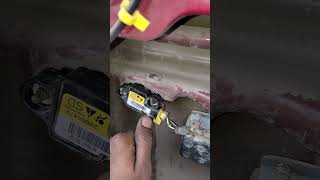
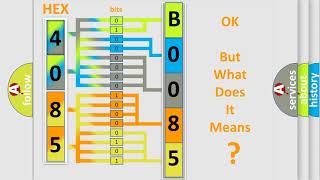
🎬 Watch: How to locate and replace the side impact sensor.Technical definition: The SAE/ISO definition for B0085 is 'Second Row Right Seatbelt Load Limiter Deployment Control'. On GM vehicles, it is defined as 'Left Front Side Impact Sensor Circuit'. GM models append a two-digit sub-code (e.g., B0085-02, B0085-04) specifying the exact electrical fault, such as a short to ground or open circuit. The SRS module expects 9-16 volts; deviations trigger faults.
Can I Drive With B0085?
No, recommended The vehicle will operate, but this code indicates a critical safety system failure. The affected airbag or seatbelt pretensioner WILL NOT deploy in a crash. Driving with this code active significantly increases the risk of serious injury. Immediate repair is mandatory for occupant safety.
Common Causes

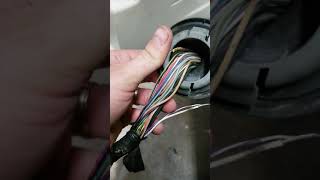
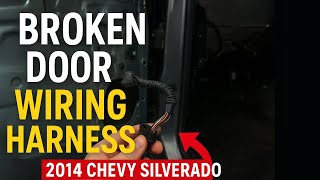
- Broken Wires in Driver's Door Harness (GM) (Very Common) — On GM trucks and SUVs, this is the primary cause. The wires for the side impact sensor pass through a flexible rubber boot between the driver's door and the body. 🎬 See why replacing the sensor might not fix the problem. Constant opening and closing fatigues these wires until they break, causing an open or short circuit.
- Faulty Impact Sensor or Seatbelt Pretensioner (Common) — The sensor or pretensioner unit fails internally. Side impact sensors fail from moisture intrusion after the plastic housing cracks due to internal metal sleeve corrosion. Seatbelt assemblies fail from mechanical wear or internal sensor faults.
- Loose, Corroded, or Damaged Connector Pins (Common) — The electrical connector at the sensor or seatbelt assembly loosens, or its pins corrode from moisture. Female pins within the connector also spread apart over time, causing a poor connection that interrupts the signal to the SRS module.
- Corroded Kick Panel Connector (GM Specific) (Uncommon) — On GM SUVs like the GMC Yukon, side impact sensor wiring passes through a large junction connector in the driver's side kick panel (e.g., connector X500). Water leaks cause severe corrosion here, triggering B0085 even when door wiring is intact.
- Low System Voltage / Weak Battery (Uncommon) — The SRS module is highly sensitive to voltage fluctuations. A weak battery causes a voltage drop during startup (below 11.5V), corrupting the module's memory and triggering false, intermittent SRS codes.
- Faulty Airbag Control Module (SDM/SRS) (Less Common) — The main computer for the airbag system (Sensing and Diagnostic Module) fails internally, suffers corrupted software, or sustains internal trace damage, causing it to set false codes.
- External Interference (GM Specific TSB) (Rare) — General Motors TSB #11-09-41-002C identifies that on 2010-2012 trucks, strong electromagnetic interference from aviation radar in specific geographic areas intermittently triggers B0083-B0088 history codes. The fix is a software update.
Symptoms

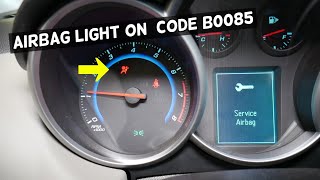
- Airbag Warning Light On — The primary and often only symptom. The SRS warning light (airbag icon or 'SRS') remains illuminated on the instrument cluster.
- Service Airbag System Message — The vehicle's driver information center (DIC) displays a text warning, such as 'Service Airbag' or 'Service Restraint System'.
- Failed Safety Inspection — An active SRS/airbag warning light is an automatic failure for state-mandated vehicle safety inspections.
- Seatbelt Feels Slack (Non-GM) — For vehicles where B0085 relates to the seatbelt load limiter, the belt feels unusually slack or fails to tension correctly during a hard stop.
- Audible Chime — Some vehicles sound a recurring warning chime as long as the airbag light is on, particularly upon startup.
Diagnostic Flowchart
Tap your situation to follow the diagnostic path that matches what you're seeing on this code.
Common Fixes & Costs
- Repair Broken Wires in Door Harness — Parts: $5-$25, Labor: $150-$300, ~1.5 hr book time (Intermediate)
- Replace Left Front Impact Sensor — Parts: $100-$300, Labor: $150-$250, ~1.2 hr book time (DIY)
- Repair Corroded Kick Panel Connector — Parts: $20-$50, Labor: $200-$400, ~2.5 hr book time (Advanced)
- Replace Second Row Seatbelt Assembly — Parts: $200-$400, Labor: $150-$300, ~1.5 hr book time (Intermediate)
- Replace/Reprogram SRS Control Module — Parts: $500-$800, Labor: $150-$300, ~1.5 hr book time (Professional)
Used vs. New Parts: Buying Guide
When a used part is worth it: For an impact sensor, a used OEM part from a reputable automotive recycler is a viable budget option, provided the donor vehicle was not in a collision. It is not recommended for the main SRS control module due to programming complexities.
Donor-vehicle mileage cap: roughly under 100000 miles for the part to have meaningful remaining life.
Donor quality checklist:
- Verify the donor vehicle was not involved in an accident.
- Part must be an exact part number match.
- Avoid parts from vehicles with signs of water damage or from rust-belt regions.
- Purchase from a certified automotive recycler who offers a warranty.
Decision logic:
- If The part is the main SRS Control Module → Buy new OEM or use a professional service to reset your original module. A used module requires costly dealer reprogramming.
- If The part is a sensor and budget is the top priority → A used OEM sensor from a certified recycler is a reasonable risk.
- If Safety and peace of mind are the top priorities → Buy a new OEM or high-quality aftermarket sensor. The cost difference is minimal compared to the labor involved.
Warranty tradeoff: Used parts typically have a 30-90 day functional warranty. New aftermarket parts carry a 1-year to limited lifetime warranty. New OEM parts carry a 1-year manufacturer warranty.
Worst-case if a used part fails: $200-$400 if a used sensor is bad from the start, requiring repeat labor for replacement plus the cost of another part.
What Happens If You Wait — Timeline
- Day 1: The SRS module detects a fault. The airbag warning light illuminates, and B0085 is stored. The affected safety component is immediately disabled. (MPG impact: 0%% · Added cost: $0)
- 1 week - 3 months: The airbag light remains on. The vehicle operates normally, but the safety risk persists. Corrosion slowly worsens, potentially affecting adjacent pins. (MPG impact: 0%% · Added cost: $0 - $50 (If corrosion spreads, a simple pin cleaning becomes a more expensive connector replacement).)
- At next state inspection: The vehicle automatically fails state safety inspections. It cannot be legally registered until repaired. (MPG impact: 0%% · Added cost: $50 - $200 in re-inspection fees, plus the mandatory cost of the original repair.)
- In a collision: The disabled airbag or pretensioner fails to deploy, leading to severe or fatal injuries that a functional system would have mitigated. (MPG impact: 0%% · Added cost: $10,000 - $1,000,000+ in potential medical costs, lost wages, and liability.)
Cost of Not Fixing It
- Immediate: The airbag or seatbelt pretensioner in the faulted circuit is disabled. This creates a significant, immediate safety risk for occupants. (Added cost: N/A (Safety Risk))
- At Next Inspection: Vehicle automatically fails the safety inspection portion of any state-mandated vehicle inspection, preventing legal registration renewal. (Added cost: $50-$200+ in re-inspection fees and potential fines for expired registration.)
- In a Collision: Failure of the safety device to deploy leads to severe injury or death that would have otherwise been prevented. (Added cost: $10,000 - $1,000,000+ in medical bills, lost wages, and liability.)
Diagnosis Steps
- Read DTCs with a Capable Scanner
Use an OBD-II scanner that accesses the SRS/Airbag module. A basic engine code reader will not work. Record the full code, including the crucial two-digit sub-code (e.g., -02, -04, -39). Clear the codes and cycle the ignition to see if it returns immediately.
Tools: SRS-capable OBD-II Scanner (Beginner) - Interpret the Sub-Code (GM)
The sub-code pinpoints the fault. B0085-02 indicates a short to ground. B0085-04 or -05 indicates an open circuit (broken wire). B0085-39 points to an internal sensor failure. B0085-71 indicates invalid data. This prevents replacing a good sensor when wiring is bad.
Tools: Service Manual, SRS-capable OBD-II Scanner (Advanced) - CRITICAL SAFETY STEP: Disconnect the Battery
Before touching, unplugging, or testing any SRS component, disconnect the negative battery terminal and wait 20-30 minutes. This discharges backup power, preventing accidental deployment of airbags or pretensioners.
Tools: Wrench Set (Beginner) - Visually Inspect the Primary Failure Point
For GM vehicles, go directly to the driver's door jamb. Peel back the rubber boot and meticulously inspect the wires for breaks, chafing, or exposed copper. For other vehicles, inspect the wiring for the second-row right seatbelt retractor.
Tools: Flashlight, Trim Removal Tools (Intermediate) - Test Circuit Continuity and Voltage
Using a multimeter, test the suspect circuit. For an open circuit (B0085-04), check for continuity between the sensor connector and the SDM connector; 'OL' confirms a broken wire. For a short to ground (B0085-02), test continuity between the signal wire and chassis ground.
Tools: Digital Multimeter, Vehicle-Specific Wiring Diagram (Advanced) - Test Sensor Resistance
With the component unplugged, measure internal resistance across its pins. Compare this to the manufacturer's exact specifications (e.g., 2.0-3.5 Ohms). A reading outside the specified range indicates a failed component. NEVER apply external voltage to an SRS component.
Tools: Digital Multimeter, Vehicle-Specific Service Manual (Advanced) - Perform a Component Swap Diagnosis
If you have two identical sensors (e.g., left and right side impact sensors), swap them. Disconnect the battery, swap the sensors, reconnect the battery, and rescan. If the code moves to the other side (e.g., B0084), the sensor is faulty. If it stays, the wiring or module is bad.
Tools: Wrench Set, Trim Removal Tools (Intermediate) - Analyze Live Data with a Scan Tool
Monitor the PIDs for the Left Front Side Impact Sensor. Look for data that is erratic, frozen, or reads 'Fault' compared to the right-side sensor. This differentiates an intermittent wiring issue from a hard sensor failure.
Tools: Bi-Directional/SRS-capable Scan Tool (Advanced) - Diagnose the SRS Control Module
If all wiring and components test good, the fault lies with the SRS control module. Use a professional scan tool to check communication data and verify software versions. The module requires a reflash or replacement and programming.
Tools: Professional Diagnostic Scan Tool, Manufacturer Software Subscription (Professional)
When This Code Triggers (Freeze-Frame Conditions)
- System Voltage: 12.0-14.8V (Ignition On, Engine Running)
- Fault Status: Present / Active (Code is currently a hard fault)
- Ignition Cycles Since Fault: 0 (Fault detected on current startup)
- Component Loop Resistance: Varies (e.g., > 4.0 Ohms) (Indicates an open circuit or high resistance)
Related Codes
- B0083 / B0084 — Refer to the Left Front and Right Front Impact Sensors. B0085 is a specific fault within the B0083 circuit on GM vehicles.
- B0086, B0087, B0088 — Codes for other impact sensors. Multiple sensor codes appearing together strongly suggests a central problem like a common ground or failing SRS module.
- B0090 / B0095 — On Ford vehicles, these refer to frontal impact sensors. They function similarly to side impact sensors but are located on the radiator support.
- GM Sub-codes (-01, -02, -04, -05, -39, -71) — Suffixes to B0085 that specify Short to Voltage (-01), Short to Ground (-02), Open Circuit (-04, -05), Internal Sensor Failure (-39), or Invalid Data (-71).
Climate & Environmental Factors
- High Humidity / Rain: Moisture penetrates failing seals, corroding sensor connectors and the SRS module. This increases circuit resistance, triggering fault codes.
- Road Salt (Salt Belt Regions): Salt spray accelerates corrosion of airbag sensors, connectors, and wiring exposed under the vehicle or in door jambs, causing premature failure.
- Extreme Cold: Cold temperatures cause plastic components and wire insulation to become brittle and crack. Metal connector pins contract, causing intermittent loose connections on cold starts.
How to Talk to a Mechanic About This Code
Say this: "I have an airbag light on and my scanner shows code B0085 for the left front side impact sensor. Since it's a GM vehicle, I'd like you to start by performing a continuity test on the wiring in the driver's door jamb before quoting me for a new sensor."
This signals you've done research, directs the technician to the most common failure point, and prevents them from immediately selling you an expensive sensor you do not need.
Avoid saying:
- 'My airbag light is on, can you fix it?'
- 'Just do whatever it takes to turn the light off.'
- 'I think I need a new airbag sensor.'
Questions to ask before authorizing the repair:
- Did you find an open or short in the door harness wiring?
- If the wiring is good, what was the resistance reading of the sensor itself?
- What is the full code, including the two-digit failure code (e.g., -02, -04, -39)?
- What is the warranty on this specific repair, including both parts and labor?
Where to Take It: Dealer vs Independent vs Chain
- Dealer:
Good for complex diagnostics or module programming, but the most expensive option for the common wiring fix.
Best for: Vehicles under warranty., Repairs requiring SRS module replacement and programming., Diagnosing rare issues covered by a Technical Service Bulletin (TSB).
Downsides: Significantly higher labor rates and parts costs., More inclined to replace a whole harness or module rather than perform a simple wire repair. (Typical cost: +50% vs. baseline) - Independent Shop:
Best fit for most B0085 scenarios. An experienced independent technician quickly diagnoses and repairs the common wiring fault for a reasonable price.
Best for: Out-of-warranty vehicles, especially common GM trucks/SUVs., Diagnosing and repairing the common broken wire in the door harness., Sensor replacement at a lower cost than the dealer.
Downsides: Quality varies; ensure the shop is well-regarded for electrical diagnostics., Lacks the expensive tools to reprogram a new SRS module if needed. (Typical cost: +0% vs. baseline) - Chain Shop:
Use with caution. Acceptable if you are 100% certain it's a bad sensor and just need it replaced, but not recommended for initial diagnosis.
Best for: Simple, straightforward parts replacement if the diagnosis is already certain.
Downsides: Technician skill varies greatly., Lacks the in-depth diagnostic experience for SRS systems., Less likely to perform a detailed wiring repair; pushes for unnecessary part replacement. (Typical cost: -10% vs. baseline)
When to Walk Away From the Repair
If the estimated repair cost exceeds 50% of the car's private-party value, and the car has other pending issues, you should seriously consider selling it as-is or trading it in.
- Car worth $4000, fix is $2000: Walk away. The repair cost is too high relative to the vehicle's value.
- Car worth $12000, fix is $800: Fix it. This is a critical safety repair and is well below the threshold.
- Car worth $2500, fix is $400: Fix it. The repair cost is reasonable and necessary to pass a safety inspection and ensure the vehicle is safe to drive or sell.
What Scan Tool You Need for This Code

Minimum: A scan tool that reads and clears codes from the SRS (Airbag) module. A basic engine code reader will not work.
A standard $20 OBD-II reader only communicates with the engine control module (PCM). It cannot see the SRS module where airbag codes like B0085 are stored.
Budget: Autel AutoLink AL619 (~$80) — Reads and clears engine, ABS, and SRS (airbag) codes on most major vehicle makes. It successfully identifies the B0085 code and allows you to clear it after repair.
Mid-range: Foxwell NT630 Plus (~$150) — Provides robust ABS and SRS diagnostics, including reading/clearing codes and viewing live sensor data. It offers bi-directional controls to test system components.
Professional: Autel MaxiCOM MK808 / MK906BT (~$500-1200) — Offers full-system, professional-level diagnostics. It reads and clears codes, views live data, and performs module programming required if the SRS control module is replaced.
Rent vs buy: Most auto parts stores do NOT rent out SRS-capable scanners due to liability. Buying a budget pick like the Autel AL619 is more cost-effective than paying for a single diagnostic session at a shop.
How to Clear the Code After You Fix It
- Ensure the underlying fault is repaired (e.g., wire fixed, sensor replaced)
- Reconnect the negative battery terminal
- Use an SRS-capable OBD-II scan tool to access the Airbag/SRS module
- Select the function to 'Clear DTCs' or 'Erase Fault Codes'
- Cycle the ignition off, then on again; the airbag light should perform its self-check and then turn off
Drive cycle (~1 minutes): The SRS module performs a self-test upon every ignition cycle. No specific driving pattern is required. If the repair was successful and the code is cleared, the light stays off. If the fault persists, the light reappears immediately.
Readiness monitors affected: None. SRS codes do not affect engine emissions readiness monitors.
Watch out for:
- Using a basic engine code reader that cannot access the SRS module.
- Simply clearing the code without fixing the root cause, resulting in the light immediately returning.
- Attempting to clear 'hard codes' set after a collision with a standard scanner; these require the module to be professionally reset or replaced.
Will This Fail Emissions / State Inspection?
Yes — this code typically fails an OBD-II emissions inspection.
- California: An airbag light will NOT cause a failure of the California Smog Check, which is strictly an emissions test.
- New York: An illuminated airbag light is noted as an ADVISORY on the safety inspection report but is NOT a cause for failure.
- Texas: The Texas vehicle safety inspection requires the airbag warning light to function correctly. An illuminated light indicates a fault and causes the vehicle to FAIL the inspection.
Most Commonly Affected Vehicles
- Chevrolet Silverado (2007-2014) — Extremely common for B0085 due to broken wires in the driver's door jamb. Always test wiring before replacing the sensor.
- GMC Sierra (2007-2014) — Shares the identical platform and door harness design as the Silverado, suffering from the exact same wire breakage.
- Chevrolet Tahoe / Suburban (2007-2014) — These SUVs share the front door and wiring design of the Silverado, making them highly prone to the door harness failure.
- GMC Yukon / Yukon XL / Acadia (2007-2017) — Highly susceptible to B0085. Besides the door harness, Yukons are known for corrosion in the X500 kick panel connector.
- Chevrolet Cruze (2011-2015) — Commonly sets B0085 for the left front side impact sensor. Diagnosis often leads to a faulty sensor or a loose connector at the sensor itself.
- Nissan Rogue (2014-2020) — Frequently experiences airbag lights from related faults, like the Occupant Classification System (OCS).
- Volkswagen Jetta / Golf (2011-2018) — Airbag faults are frequently traced to the yellow connectors under the front seats loosening over time.
- Hyundai Sonata / Elantra (2011-2019) — Often experience airbag light issues from a faulty clock spring or damaged wiring connectors under the front seats.
Manufacturer-Specific Notes

- General Motors (Chevrolet, GMC, Cadillac, Buick): B0085 almost always means 'Left Front Side Impact Sensor'. The cause is overwhelmingly broken wires in the driver's door jamb, not a bad sensor.
- General Motors (Specific TSB): TSB #11-09-41-002C applies to 2010-2012 trucks. Intermittent B0083-B0088 codes store in history due to radio frequency interference. The fix is an SRS module software update.
- General Motors (Recall): Recall 14V-118 covers 2008-2013 Buick Enclave, GMC Acadia, Chevy Traverse, and Saturn Outlook. Corrosion in side impact airbag connectors increases resistance. The fix replaces the connectors.
- Honda / Acura: Uses manufacturer-specific codes. An incorrect part number generates a misleading 'Internal SRS Module Failure' code (e.g., 53-43). Verify sensor part numbers before condemning the module.
- Ford: Similar faults for frontal impact sensors trigger codes B0090 and B0095. The cause is often a loose connection after front-end work near the radiator support.
Real Owner Stories
2010 Chevy Silverado with 273k miles - The Classic Misdiagnosis
Airbag light came on, scanner showed code B0085 for the Left Front Side Impact Sensor.
What they tried:
- Replaced the impact sensor located in the driver's door, spending $110 on the new part.
Outcome: The new sensor did not fix the problem. The owner tested the wiring harness in the door jamb with a multimeter and found two broken wires. After splicing in a new section, the code cleared.
Lesson: On GM trucks, always inspect the door harness wiring for breaks before buying a new sensor. A simple continuity test saves over $100 and prevents replacing a perfectly good part.
2015 Chevy Cruze - The Easy Fix
Airbag light was on, and a scan revealed code B0085-05, indicating 'Left Front Side Impact Sensor High Voltage/Open'.
What they tried:
- Disconnected the battery and inspected the sensor and its connector located on the interior door jamb.
Outcome: The electrical connector for the sensor was loose. The owner pushed the connector in firmly until it clicked. After reconnecting the battery, the airbag light went away.
Lesson: Before assuming a broken wire or bad sensor, check the simplest thing first. A loose or corroded connector is a common cause for SRS faults. Reseating the connector is a zero-cost fix.
2011 GM Truck/SUV in Amarillo, TX - The Unusual Root Cause
The airbag warning light illuminated intermittently. A scan showed a history code for B0085 with a symptom code of 0F, but the code was never current.
What they tried:
- Initial diagnosis pointed towards an intermittent wiring issue or a failing sensor.
Outcome: The actual cause was identified in GM TSB #11-09-41-002C. Strong electromagnetic interference from aviation radar created erratic sensor information. The fix was a software update for the SDM.
Lesson: If you have an intermittent SRS code with no clear wiring fault, check for applicable TSBs. In rare cases, the cause is external and a software reflash is the only solution.
How to Prevent This Code From Triggering
- Periodically lubricate the door harness boot (Every 1-2 years) — Applying a silicone-based lubricant to the rubber boot in the door jamb helps it flex more easily and reduces strain on the internal wiring harness, delaying wire breakage.
- Apply dielectric grease to key connectors (When a connector is disconnected for any service) — Dielectric grease seals out moisture and oxygen, preventing pin corrosion. Applying a small amount to the seal of an SRS connector prevents future faults.
- Secure the door harness to relieve strain (During any door-related repair) — When repairing broken wires, add a few inches of slack and loosely zip-tie the sensor wires to the main harness. This transfers strain to the larger harness, preventing repeat breaks.
- Regularly clean and inspect door jambs and drain holes (Every 6 months or during car washes) — Clogged drains cause water to back up, submerging connectors in the kick panel. Keeping these areas clean prevents water intrusion that leads to corroded connectors.
Frequently Asked Questions
I replaced the GM impact sensor for B0085, but the light is still on. What now?
The problem is almost certainly the wiring harness running between the door and the truck body. You must peel back the rubber boot and inspect for broken wires. Always test circuit continuity before buying parts.
What does the B0085-39 sub-code mean on my Chevy?
The '-39' suffix specifically indicates an 'Internal Electronic Failure' of the sensor itself. Unlike an open or short circuit code, a -39 code makes it highly likely the sensor is the actual point of failure. Verify the wiring is intact before replacing it.
Can a weak car battery cause the B0085 code?
Yes. The SRS module requires a stable 9-16V to perform its startup self-checks. A weak battery causes a momentary voltage drop, logging false codes in the SRS module.
Is it safe to drive with the B0085 code?
No. The vehicle will drive, but the airbag light signifies a crucial safety system is disabled. In a collision, the affected airbag or seatbelt pretensioner will not function, dramatically increasing injury risk.
How much does it cost to fix code B0085?
A simple wiring repair in a GM door harness costs $150-$300 at a shop. Replacing an impact sensor ranges from $250-$550 including parts and labor. Replacing the main SRS control module costs between $650-$1100.
Will clearing the code with a scanner fix the problem?
No. Clearing the code only erases the error log. If the underlying electrical or mechanical fault remains, the SRS module detects it on the next ignition cycle and the light returns immediately.
Why is the sensor for my GM truck located inside the door?
The 'Left Front Side Impact Sensor' must be mounted inside the driver's door to detect side collisions effectively. The wires connecting this sensor to the main computer pass through the flexible door jamb. Constant opening and closing causes these wires to fatigue and break.
My airbag light is on but my scanner shows no codes. Why?
Most inexpensive, consumer-grade OBD-II scanners only read codes from the engine and transmission. Airbag codes are stored in the Supplemental Restraint System (SRS) module. You need an advanced, SRS-capable scan tool to access these codes.
Key Takeaways
- Code B0085 disables the affected airbag or pretensioner, creating an immediate safety risk that automatically fails state vehicle inspections.
- On 2007-2014 GM vehicles, B0085 almost always indicates broken wires in the driver's door jamb harness, not a failed impact sensor.
- Always test circuit continuity with a multimeter before spending $100-$300 on a replacement sensor.
- Read the 2-digit sub-code (like -04 for open circuit or -39 for internal failure) to pinpoint the exact electrical fault and avoid unnecessary parts replacement.
Helpful Videos
Shop the Parts Behind B0085
Below are the parts most often responsible for code B0085, ranked by how frequently each one is the actual culprit (per the diagnosis above). Tap any to see what we have for your vehicle.



The information in this article is provided for general reference and educational purposes only. Vehicle specifications, procedures, and part compatibility can vary by production date, trim level, and region. Always consult your vehicle's factory service manual and verify part numbers before purchasing or performing repairs. Safety-critical components such as airbags, seat belts, and braking systems should be installed by a qualified professional.
- 🧭 Diagnostic Flowchart
- 🎬 Helpful Videos
- 🛍️ Shop This Part
- What Does B0085 Mean?
- Can I Drive With B0085?
- Common Causes
- Symptoms
- Common Fixes & Costs
- Used vs. New Parts: Buying Guide
- What Happens If You Wait — Timeline
- Cost of Not Fixing It
- Diagnosis Steps
- When This Code Triggers (Freeze-Frame Conditions)
- Related Codes
- Climate & Environmental Factors
- How to Talk to a Mechanic About This Code
- Where to Take It: Dealer vs Independent vs Chain
- When to Walk Away From the Repair
- What Scan Tool You Need for This Code
- How to Clear the Code After You Fix It
- Will This Fail Emissions / State Inspection?
- Most Commonly Affected Vehicles
- Manufacturer-Specific Notes
- Real Owner Stories
- 2010 Chevy Silverado with 273k miles - The Classic Misdiagnosis
- 2015 Chevy Cruze - The Easy Fix
- 2011 GM Truck/SUV in Amarillo, TX - The Unusual Root Cause
- How to Prevent This Code From Triggering
- Frequently Asked Questions
- I replaced the GM impact sensor for B0085, but the light is still on. What now?
- What does the B0085-39 sub-code mean on my Chevy?
- Can a weak car battery cause the B0085 code?
- Is it safe to drive with the B0085 code?
- How much does it cost to fix code B0085?
- Will clearing the code with a scanner fix the problem?
- Why is the sensor for my GM truck located inside the door?
- My airbag light is on but my scanner shows no codes. Why?
- Key Takeaways
- 🎟️ Get 5% Off