

OBD-II Code B0088: Airbag System Fault (Right Side Restraints)
The Ultimate Guide to Diagnosing and Fixing B0088
- Code B0088 disables the right-side airbags, creating an immediate safety risk that requires urgent repair.
- Inspect the flexible rubber boot in the door jamb first, as broken wires here cause the majority of B0088 codes.
- Disconnect the negative battery terminal and wait exactly 15 minutes before touching any yellow SRS connectors to prevent accidental airbag deployment.
- Test the wiring circuit for continuity (under 1.0 Ohm) before spending $150 or more on a replacement side impact sensor.
- Use an SRS-capable OBD-II scanner to diagnose and clear this code, as standard $20 engine code readers cannot communicate with the airbag module.
What Does B0088 Mean?

Code B0088 indicates that your vehicle's primary safety computer, the Sensing and Diagnostic Module (SDM), has detected a critical fault within the right-side restraints system. This fault originates from a side impact sensor (often on the B or C-pillar), a seat belt pretensioner circuit (particularly in third-row seats), or the wiring and connectors that link them to the control module. As a result, the airbag warning light illuminates on your dashboard, and the affected safety components are deactivated.
Technical definition: The SAE/ISO definition for code B0088 is "Right Side Restraints Sensor 3 Circuit Malfunction." Depending on the manufacturer, this refers to the Right Rear Side Impact Sensor circuit or the Third-Row Right Seat-Belt Load-Limiter Deployment Control circuit. The SDM sets this code when it detects an out-of-range condition, such as a short to voltage, a short to ground, an open circuit, incorrect component installation, or invalid serial data from the sensor for a specified duration (typically 2.5-10 seconds).
Can I Drive With B0088?
No, recommended Driving is physically possible but highly dangerous. With code B0088 active, the right-side airbags and potentially the entire supplemental restraint system (SRS) are disabled and will not deploy in a collision. This dramatically increases the risk of serious or fatal injury for occupants. There is no safe distance to drive with this fault; the system requires immediate repair.
Common Causes

- Damaged or Corroded Wiring/Connectors (Very Common) — The wiring harness for side impact sensors is extremely vulnerable. It runs under carpets, beneath seats, and through the flexible door jamb boot. Constant door movement, moisture ingress, and micro-vibrations (fretting) stretch, break, or corrode these wires, causing an open or short circuit.
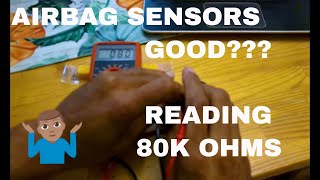
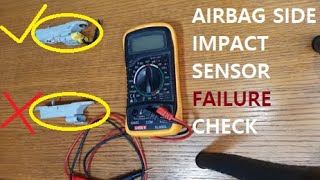
- Faulty Side Impact Sensor (Common) — Sensitive electronic sensors fail internally from age, moisture intrusion leading to corrosion, or physical damage from minor collisions and road debris. 🎬 See this guide on testing airbag side impact sensors.
- Faulty Seat Belt Pretensioner or Retractor (Less Common) — In vehicles with three rows of seating, B0088 points to a fault in the third-row right seat belt's pyrotechnic pretensioner or its associated load-limiter mechanism. Mechanical failures in the retractor also send incorrect electrical signals to the SDM.
- Faulty or Corrupted Sensing and Diagnostic Module (SDM) (Rare) — The main airbag control module fails internally or suffers software corruption after a significant voltage fluctuation (e.g., jump-starting), preventing it from correctly interpreting signals from the right-side sensors.
- Incorrect Component Installed (Rare) — If a sensor is replaced with an incorrect or incompatible part number, the SDM recognizes the mismatch via the sensor's ID signal and sets a code (e.g., GM sub-code 3A) to indicate the wrong component is installed.
- Electromagnetic Interference (EMI) (Very Rare) — Certain 2010-2012 General Motors vehicles experience intermittent airbag lights and store history codes like B0088 with symptom byte 0F due to EMI from high-power aviation radar. The fix is a specific software update for the SDM.
Symptoms

- Solid Airbag Warning Light & Dashboard Message — The red SRS/airbag light on the instrument cluster remains continuously lit, usually accompanied by a 'Service Airbag System' text warning on the Driver Information Center.
- Airbag Light Flashing in a Pattern — On specific makes like Nissan, the airbag light flashes in a sequence after startup, acting as a self-diagnosis code to indicate the nature of the fault. 🎬 Watch: How to get and erase airbag trouble codes yourself.
- Continuous Seat Belt Chime — If the fault involves the third-row seat belt system, the vehicle chime sounds constantly as if the belt is unbuckled, even when fastened.
Diagnostic Flowchart
Tap your situation to follow the diagnostic path that matches what you're seeing on this code.
Common Fixes & Costs

- Repairing Damaged Wiring or Connector — Parts: $5-$50, Labor: $150-$450, ~1.5 hr book time (Intermediate)
- Replacing the Side Impact Sensor
— Parts: $70-$350, Labor: $75-$180, ~1.0 hr book time
(DIY)
Chevrolet Silverado / GMC Sierra (2007-2014): OEM GM: 20926385, 20884470 (Alt: Dorman: 590-271, 590-206)
Chevrolet Equinox / GMC Acadia (2010-2017): OEM ACDelco/GM: 13502577 (Alt: Dorman: 590-227) - Replacing a Faulty Seat Belt Retractor/Pretensioner
— Parts: $250-$600, Labor: $125-$250, ~2.0 hr book time
(Professional)
GMC Acadia (2013-2016, 3rd Row Right): OEM GM: 19301094 (Alt: Limited aftermarket availability; used/remanufactured units are common.) - Replacing or Reprogramming the Airbag Control Module (SDM)
— Parts: $200-$1200, Labor: $150-$400, ~2.0 hr book time
(Professional)
Chevrolet Silverado (2007-2013): OEM ACDelco/GM: Varies by VIN. (Alt: Remanufacturing services (e.g., Safety Restore) are a common alternative.)
Used vs. New Parts: Buying Guide
When a used part is worth it: For a side impact sensor, a used OEM part from a low-mileage vehicle (under 80K miles) that was not involved in a flood or major collision is a cost-effective alternative to a new part. Avoid used pyrotechnic devices like seat belt pretensioners.
Donor-vehicle mileage cap: roughly under 80000 miles for the part to have meaningful remaining life.
Donor quality checklist:
- Verify the donor vehicle was not salvaged due to flood damage, as moisture ruins electronics.
- Match the part number exactly; superseded numbers are often incompatible.
- Obtain a vehicle history report for the donor car to check for accident history.
Decision logic:
- If The part is a pyrotechnic device (e.g., airbag, seat belt pretensioner) → Always buy new OEM. The risks of a used explosive device are too high.
- If The part is an electronic sensor and the vehicle is over 10 years old → A verified used part is an acceptable budget option if the part number matches exactly.
- If A new aftermarket sensor is available with a good warranty for a similar price to used → Favor the new aftermarket part for its warranty and guaranteed condition.
Warranty tradeoff: Used parts from salvage yards typically offer a 30-90 day warranty. New aftermarket parts often come with a 1-year to limited lifetime warranty. New OEM parts carry a manufacturer's warranty (typically 12 months).
Worst-case if a used part fails: $200-$500 if a used sensor fails after installation, requiring repeat labor costs plus the cost of another replacement part.
What Happens If You Wait — Timeline
- Immediate (0 ignition cycles): A fault is detected during the initial system self-check. The airbag warning light illuminates, and the SDM deactivates the right-side restraint system. The airbag will not deploy. (MPG impact: 0%% · Added cost: $0)
- 1-100 ignition cycles: If the fault is intermittent, the light turns off and on, but a 'History' code remains stored. The safety system is unreliable and disabled when the light is on. (MPG impact: 0%% · Added cost: $0)
- 100+ ignition cycles / 1-6 months: An intermittent wiring issue worsens with continued movement, becoming a permanent open or short. The vehicle fails any state safety inspection. (MPG impact: 0%% · Added cost: $50-$200 (Failed inspection fees, potential fines))
- In the event of an accident: The disabled safety system fails to deploy, leading to a significantly higher risk of serious injury or death for occupants. Insurance claims are potentially complicated or denied. (MPG impact: 0%% · Added cost: Incalculable (Injury, liability, denied claims))
Cost of Not Fixing It
- Immediate: The right-side airbags and related safety systems are disabled and will not deploy in a collision. This represents a critical and immediate safety risk to all occupants. (Added cost: Incalculable (Risk of serious injury or death))
- 0-12 months: Failure to pass a mandatory state safety inspection. In many jurisdictions, an illuminated airbag light is an automatic failure, preventing legal vehicle registration renewal. (Added cost: $50-$200 (Failed inspection fees and potential fines))
- Ongoing: Potential for insurance claim denial or complication. In the event of an accident, an insurance provider argues negligence if it's proven the vehicle was knowingly operated with a disabled primary safety system. (Added cost: Potentially thousands in denied claims or increased liability.)
Diagnosis Steps

- Scan for SRS Codes & Sub-codes
Use an advanced OBD-II scanner to access the Supplemental Restraint System (SRS) module. Record the specific sub-code (e.g., B0088-02, B0088-39) to define the exact electrical problem: -02 (Short to Ground), -05 (High Voltage/Open), -39 (Internal Sensor Failure), or -3A (Incorrect Component).
Tools: SRS-capable OBD-II Scanner (Beginner) - Check for Technical Service Bulletins (TSBs)
Search for manufacturer bulletins related to B0088 for your specific year, make, and model to identify known issues like door harness wiring breaks or required software updates.
Tools: Smartphone or Computer with Internet Access (Beginner) - Visually Inspect the Sensor and Harness
Locate the right rear side impact sensor (typically on the C-pillar) or the third-row seat belt retractor. Inspect the sensor, connector, and wiring for physical damage, focusing heavily on the rubber boot between the door and the body.
Tools: Flashlight, Trim Removal Tools (Intermediate) - Perform a Hard Reset and Connector Reseat
Disconnect the negative battery terminal and wait exactly 15 minutes for the SRS backup power to discharge. Disconnect the sensor, inspect pins for corrosion, apply electrical contact cleaner, and reseat firmly until the Connector Position Assurance (CPA) clip locks. Reconnect the battery and rescan.
Tools: Wrench (for battery), Electrical Contact Cleaner (Intermediate) - Swap Sensors (If Applicable)
With the battery disconnected, swap the right sensor with the identical left sensor. Reconnect and rescan. If the code changes to B0087 (left side), the sensor is faulty. If B0088 returns, the wiring or SDM is the issue.
Tools: Basic Hand Tools, Trim Removal Tools (Intermediate) - Advanced: Test Circuit Resistance for Continuity/Opens
With the battery, SDM, and sensor unplugged, use a multimeter set to Ohms (Ω). Measure resistance on the signal and low reference wires between the sensor and SDM connectors. A healthy wire reads under 1.0 Ohm. 'OL' indicates a broken wire.
Tools: Digital Multimeter, Vehicle-Specific Wiring Diagram, Pin Probes (Advanced) - Advanced: Test Circuit Resistance for Shorts to Ground
Keep all components disconnected and measure resistance between each wire at the sensor connector and a known good chassis ground. Any reading other than infinite (OL) indicates a chafed wire touching the body.
Tools: Digital Multimeter, Vehicle-Specific Wiring Diagram, Pin Probes (Advanced) - Advanced: Test for Shorts to Voltage
With the sensor unplugged, SDM reconnected, and ignition ON, test for voltage on the signal and low reference circuits. A reading of battery voltage (12V) indicates a short to power in the harness.
Tools: Digital Multimeter, Vehicle-Specific Wiring Diagram, Pin Probes (Advanced) - Advanced: Monitor Live Data Parameters
Use an advanced scan tool to monitor live SRS data. Look for erratic current values or communication dropouts that point to a failing sensor or intermittent wiring connection.
Tools: SRS-capable OBD-II Scanner with Live Data (Advanced) - Final Diagnosis: Sensor or Module
If all wiring tests pass and swapping sensors points to the harness, but the harness is perfect, suspect a faulty Sensing and Diagnostic Module (SDM) requiring professional replacement.
Tools: None (Professional)
When This Code Triggers (Freeze-Frame Conditions)
- System Voltage: 11.5-14.5V (Normal operating voltage at the time the fault was registered by the SDM.)
- Fault Status: Current / Active (Indicates the fault is present at the time of the scan, as opposed to a 'History' code.)
- Ignition Cycles Since Fault: 0-255 (Counts how many times the vehicle has been started since the code was first set.)
- Time/Mileage Since Fault: Varies (Advanced scan tools show how long ago the fault occurred, helping to diagnose intermittent issues.)
Related Codes
- B0087 — This is the direct counterpart code for the left side of the vehicle. If swapping the left and right sensors causes the code to change from B0088 to B0087, you have definitively diagnosed a bad sensor.
- B0083, B0084, B0085, B0086 — These codes refer to other impact sensors in the system. If multiple sensor codes appear simultaneously, it strongly suggests a systemic problem like a faulty SDM, a power supply issue, or a network communication failure.
- B0090 / B0093 (Nissan) — These codes refer to different sensors within the restraints system, such as a Left Frontal Restraints Sensor. They are not interchangeable. Always use the vehicle's service manual to confirm the exact sensor location.
- U0177 — This is a communication code meaning 'Lost Communication With Right Side Restraints Sensor.' Seeing this alongside B0088 heavily points towards an open circuit or a completely failed sensor.
Climate & Environmental Factors
- Humidity and Moisture: High humidity, water leaks from windows, or wet carpets cause severe corrosion on the sensor's connector pins and internal circuitry. This is a leading cause of high resistance and open circuit faults for sensors located near the floor.
- Road Salt: In regions that use road salt during winter, moisture mixed with salt accelerates the degradation of wiring and connectors exposed under the vehicle or in door jambs.
- Electromagnetic Interference (EMI): Certain 2010-2012 GM trucks and SUVs log a history code B0088-0F when operated near high-power aviation radar facilities. This is resolved with an SDM software update.
How to Talk to a Mechanic About This Code
Say this: "I have an airbag light on and my scanner shows code B0088, which points to the right side restraint system. Since wiring is a common issue, please start by testing the sensor circuit for continuity and shorts before recommending a new sensor."
This signals you are informed about the code and its common causes. It directs the technician toward a proper diagnostic process instead of just replacing the most expensive part first.
Avoid saying:
- 'My airbag light is on, can you just turn it off?'
- 'Just replace the airbag sensor.'
- 'Fix whatever is wrong with the airbag.'
Questions to ask before authorizing the repair:
- What were the results of the wiring continuity and short-to-ground tests?
- Did you find a broken wire, corrosion, or a bad sensor?
- If the sensor needs to be replaced, what is the warranty on the new part and your labor?
- If the module needs replacement, does the cost include VIN programming?
Where to Take It: Dealer vs Independent vs Chain
- Dealer:
Recommended if the problem is confirmed to be the main computer (SDM) or a software issue. For wiring or sensor issues, an independent shop is more cost-effective.
Best for: Vehicles under warranty or with a known TSB/Special Coverage for this issue., When diagnosis points to a faulty Airbag Control Module (SDM) that requires replacement and programming., If the cause is a rare software issue (like EMI) that requires a dealer-specific update.
Downsides: Highest labor rates and part costs., Defaults to module replacement when a simpler wiring repair is possible. (Typical cost: +50% vs. baseline) - Independent Shop:
Best fit for most B0088 scenarios. A reputable independent shop handles the most common causes (wiring, connectors, sensor replacement) at a much lower cost than a dealer.
Best for: Out-of-warranty vehicles where the cause is likely wiring or a sensor., Cost-conscious owners, as labor rates are typically lower., Diagnosing and repairing common failures like broken wires in a door harness.
Downsides: Shop must have an SRS-capable scan tool., Cannot program a new airbag control module if needed, requiring a second trip to a dealer. (Typical cost: +0% vs. baseline) - Chain Shop:
AVOID. Airbag system repairs require a level of precision and expertise not consistently found at chain shops. The risk of misdiagnosis on a critical safety system is too high.
Best for: Not generally recommended for SRS/airbag diagnostics.
Downsides: Technician skill with complex electrical diagnostics varies greatly., High pressure to sell parts leads to replacing a sensor when only a wiring repair is needed., Lacks the tools or expertise for module programming. (Typical cost: -10% vs. baseline)
When to Walk Away From the Repair
If the estimated repair cost for the B0088 code exceeds 40-50% of your car's current private-party value, seriously consider selling the car as-is or trading it in.
- Car worth $4000, fix is $750: Fix it. This cost is well within a reasonable range to restore a critical safety feature and maintain the vehicle's value.
- Car worth $3000, fix is $1800: Walk away. The repair cost is over half the car's value.
- Car worth $15000, fix is $1200: Fix it. While a significant expense, it is a small percentage of the vehicle's overall value and necessary for safety.
What Scan Tool You Need for This Code
Minimum: An OBD-II scanner that reads and clears Supplemental Restraint System (SRS/Airbag) codes. A basic engine-only code reader will not work.
A standard $20 scanner only reads 'P' (Powertrain) codes from the engine computer. Airbag codes are 'B' (Body) codes stored in a separate module. Without an SRS-capable scanner, you cannot see the B0088 code or clear the light after repair.
Budget: Autel AutoLink AL619 / ML629 (~$80) — Reads and clears engine, ABS, and SRS (airbag) codes on most major vehicle makes. It shows you the B0088 code and allows you to clear the light after the repair is complete.
Mid-range: BlueDriver Pro or Foxwell NT630 Plus (~$120) — Reads SRS codes and provides live data streams. This allows you to monitor sensor circuit voltage and status in real-time, helping diagnose intermittent wiring issues.
Professional: Autel MaxiCOM MK808 / Launch CRP919E (~$500-800) — Provides full-system diagnostics, including reading SRS codes and viewing live data. These tools have the bidirectional capability needed to perform advanced diagnostics or programming functions if the SDM needs replacement.
Rent vs buy: Most auto parts stores do NOT rent out SRS-capable scanners due to liability. If you plan to do any of your own car repairs, buying a budget SRS-capable scanner is a worthwhile investment.
How to Clear the Code After You Fix It
- Ensure the physical fault (e.g., broken wire, faulty sensor) has been properly repaired.
- Reconnect the vehicle battery if it was disconnected for the repair.
- Connect an SRS-capable OBD-II scan tool to the vehicle's diagnostic port.
- Navigate to the SRS/Airbag control module menu and select the option to 'Clear/Erase DTCs'.
- Turn the ignition off, then back on, and verify that the airbag warning light illuminates for a few seconds and then turns off.
Drive cycle: No specific drive cycle is required for an SRS code. The airbag light will not turn off on its own after a repair; the fault must be cleared manually with a compatible scan tool.
Readiness monitors affected: None
Watch out for:
- Using a basic engine code reader that cannot communicate with the SRS module.
- Forgetting to clear the code after the repair is complete, leading to the false conclusion that the fix didn't work.
- The code returning immediately, indicating the root cause was not fixed or the repair was done improperly.
Will This Fail Emissions / State Inspection?
No — by itself this code doesn't fail OBD inspection (but it can keep readiness monitors from setting, which causes a separate fail).
- California: Will NOT fail a smog check. An airbag light is a safety issue, not an emissions issue, and is ignored during the test.
- New York: Will NOT cause a failure. According to the NY DMV, an illuminated airbag warning lamp is an advisory item only and is not cause for rejection during the safety inspection.
- Texas: Will NOT fail an inspection. The airbag system is not a required inspection item in Texas.
- Virginia: WILL fail a safety inspection. States with comprehensive annual safety inspections treat an illuminated airbag light as a critical safety failure.
Most Commonly Affected Vehicles
- Chevrolet Silverado 1500 (2007-2014) — Extremely common due to broken wires in the driver's or passenger's door jamb harness. Also affected by a TSB for EMI in certain regions (2010-2012 models).
- GMC Sierra, Yukon, Acadia (2007-2014) — These share the same platform as their Chevy counterparts and suffer from identical impact sensor corrosion and wiring failures. On Acadias, check for broken Connector Position Assurance (CPA) clips under the seats.
- Chevrolet Equinox (2010-2017) — Known for this code. A special coverage (14710) was issued for 2010-2011 models for high resistance in side impact airbag wiring, with the official fix being to solder the connections.
- Chevrolet Suburban / Tahoe (2007-2014) — Service manuals provide detailed diagnostic trees for B0088, indicating it is a well-documented fault. Also covered under the EMI-related TSB for 2010-2012 models.
- Cadillac Escalade (2010-2012) — Included in GM Technical Service Bulletin #11-09-41-003A for intermittent airbag lights caused by electromagnetic interference.
- Ford F-150, Explorer (2009-2018) — On Ford vehicles, this code points to the side impact sensor or its wiring. Corrosion at the sensor connector, mounted on the B or C-pillar, is a frequent cause.
- Nissan Frontier, Murano, Titan (2012-2019) — Nissan uses related codes like B0093 for the side satellite sensor. Failures are commonly traced to harness issues in the door or poor connections under the dash or seats.
- Hyundai Sonata, Elantra (2011-2017) — Known for issues with side impact sensors and the associated wiring harnesses that run under the front seats, which easily become damaged or disconnected.
Manufacturer-Specific Notes
- General Motors (Chevrolet/GMC/Cadillac): GM provides extensive diagnostic sub-codes (symptom bytes) that are crucial for an accurate repair, such as 39 (Internal Electronic Failure) and 3A (Incorrect Component Installed). GM has also issued 'Special Coverage' programs extending warranties for specific known issues like high resistance in airbag wiring.
- Ford/Lincoln: On many Ford models, the Restraints Control Module (RCM) is highly sensitive to connection integrity. The fault is frequently traced to corrosion or poor pin tension at the side impact sensor connector itself, which is exposed to moisture.
- Nissan: Nissan vehicles have a user-accessible diagnostic mode for the airbag system. If the airbag light flashes in a slow, steady pattern, it is in this mode, which requires a specific ignition timing procedure to exit.
- Hyundai/Kia: These vehicles have highly sensitive SRS connectors under the front seats. Items stored under the seat or vigorous cleaning easily dislodge these connectors, triggering a variety of SRS codes.
Real Owner Stories
2014 Chevy Silverado with intermittent 'Service Airbag' light
The airbag light came on and off randomly. The owner noticed the window controls on the passenger door stopped working when the light was on. The code scanned was B0088.
What they tried:
- Initially suspected a bad sensor and considered replacing it.
- Swapped the left and right side impact sensors, but the B0088 code for the right side returned, proving the sensor was not the issue.
Outcome: After removing the passenger door panel and pulling back the rubber boot in the door jamb, the owner found two broken wires in the harness. He soldered the wires, covered them with heat-shrink tubing, and cleared the code. The total cost was under $10 for repair materials.
Lesson: Intermittent electrical issues in a door (windows, locks, speakers) that coincide with an airbag light strongly point to a broken wiring harness in the door jamb. Always test the wiring before replacing an expensive sensor.
2013 GMC Acadia with constant airbag light and B0088 code
Airbag light came on and stayed on. A scan revealed code B0088, which on this vehicle pointed to the third-row right seat belt pretensioner.
What they tried:
- The owner checked the main connector for the pretensioner under the third-row seat but found no visible issues.
- A mechanic used a special SRS diagnostic resistor to bypass the pretensioner. The code remained active, indicating the problem was the wiring.
Outcome: Further inspection of the harness running along the floor to the third row revealed a section that had been crushed and severed by the seat's sliding mechanism. Repairing this section of the harness resolved the code.
Lesson: On vehicles with three rows, B0088 is often related to the seat belt system. Before replacing a costly pretensioner assembly, verify the wiring harness is intact, especially in areas where it can be pinched by seat movement.
2011 Chevy Equinox with B0088 and a history of the light coming on in wet weather
The 'Service Airbag' light appeared after a heavy rainstorm. The code was B0088-05 (High Voltage/Open). The owner had previously tried clearing the code, but it kept returning when humid.
What they tried:
- The owner disconnected the battery, then located and disconnected the side impact sensor connector on the C-pillar. The pins showed signs of minor green corrosion.
- He cleaned the connector pins with electrical contact cleaner and a small brush.
Outcome: After cleaning the connector and applying a small amount of dielectric grease to seal it from moisture, he reconnected it, cleared the codes, and the light stayed off. The root cause was water intrusion causing high resistance.
Lesson: If the code appears intermittently with weather changes, the cause is almost certainly moisture getting into a connector. A simple cleaning and application of dielectric grease provides a permanent, low-cost fix.
How to Prevent This Code From Triggering
- Apply Dielectric Grease to At-Risk Connectors (Once, or whenever a connector is serviced) — Dielectric grease is a non-conductive, silicone-based sealant. When applied to the outside of a sealed connector, it prevents moisture and oxygen from reaching the metal pins, stopping corrosion before it starts.
- Protect the Door Jamb Harness (Proactive check every 5 years on high-risk vehicles) — The wires inside the rubber door boot flex and fatigue over time. Wrapping the harness in high-quality TESA tape or split-loom tubing adds abrasion resistance and support, reducing stress on individual wires.
- Secure Under-Seat Connectors (Once) — Loose connectors under seats are a common cause of intermittent airbag faults. Use a zip-tie to secure the connector halves to each other or to a fixed point on the seat frame to prevent them from being kicked loose.
- Address Water Leaks Immediately (As needed) — A leaking window seal, sunroof drain, or door vapor barrier allows water to saturate the carpet and pool around floor-level sensors and connectors. Fixing the source of the leak is critical to preventing repeat electrical failures.
Frequently Asked Questions
Is it safe to drive with code B0088?
No. The right-side airbags are disabled and will not deploy in a crash. This significantly increases the risk of severe injury or death.
Where is the B0088 sensor located?
It typically refers to the Right Rear Side Impact Sensor on the C-pillar or within the rear door. On three-row vehicles, it often points to the third-row right seat belt assembly. Always consult your specific service manual.
I replaced the sensor, but the B0088 code came back. What's wrong?
The root cause is likely a broken wire inside the rubber boot in the door jamb or a corroded connector pin. You must perform continuity and short tests on the wiring harness to find the break.
Can a low car battery cause a B0088 code?
Yes. The SRS module requires a stable 9-16 volts to operate correctly. A weak battery causes voltage drops during cranking, triggering spurious fault codes in sensitive modules.
What do the sub-codes like B0088-05 or B0088-39 mean?
These two-digit suffixes pinpoint the exact electrical failure. For example, -05 means High Voltage or Open Circuit, while -39 indicates an Internal Electronic Failure of the sensor itself.
My airbag light is flashing, not solid. What does that mean?
A flashing light indicates a detected fault. On manufacturers like Nissan, the specific flash pattern acts as a diagnostic code to identify the problem area without a scanner.
Can I fix a B0088 code myself?
Yes, if the cause is a disconnected connector or a visibly broken wire you can solder. You MUST disconnect the battery and wait 15 minutes before touching any yellow-harnessed SRS components. Complex wiring or SDM faults require a professional.
How do I clear the airbag light after the repair?
The airbag light will not turn off on its own after the fault is corrected. You must use an SRS-capable OBD-II scanner to clear the stored B0088 code from the module.
My cheap scanner can't see the B0088 code, but the airbag light is on. Why?
Basic code readers only communicate with the engine computer for P-codes. Airbag codes are B-codes stored in the Sensing and Diagnostic Module, requiring a mid-tier SRS-capable scanner.
Key Takeaways
- Code B0088 disables the right-side airbags, creating an immediate safety risk that requires urgent repair.
- Inspect the flexible rubber boot in the door jamb first, as broken wires here cause the majority of B0088 codes.
- Disconnect the negative battery terminal and wait exactly 15 minutes before touching any yellow SRS connectors to prevent accidental airbag deployment.
- Test the wiring circuit for continuity (under 1.0 Ohm) before spending $150 or more on a replacement side impact sensor.
- Use an SRS-capable OBD-II scanner to diagnose and clear this code, as standard $20 engine code readers cannot communicate with the airbag module.
Helpful Videos
Shop the Parts Behind B0088
Below are the parts most often responsible for code B0088, ranked by how frequently each one is the actual culprit (per the diagnosis above). Tap any to see what we have for your vehicle.



The information in this article is provided for general reference and educational purposes only. Vehicle specifications, procedures, and part compatibility can vary by production date, trim level, and region. Always consult your vehicle's factory service manual and verify part numbers before purchasing or performing repairs. Safety-critical components such as airbags, seat belts, and braking systems should be installed by a qualified professional.
- 🧭 Diagnostic Flowchart
- 🎬 Helpful Videos
- 🛍️ Shop This Part
- What Does B0088 Mean?
- Can I Drive With B0088?
- Common Causes
- Symptoms
- Common Fixes & Costs
- Used vs. New Parts: Buying Guide
- What Happens If You Wait — Timeline
- Cost of Not Fixing It
- Diagnosis Steps
- When This Code Triggers (Freeze-Frame Conditions)
- Related Codes
- Climate & Environmental Factors
- How to Talk to a Mechanic About This Code
- Where to Take It: Dealer vs Independent vs Chain
- When to Walk Away From the Repair
- What Scan Tool You Need for This Code
- How to Clear the Code After You Fix It
- Will This Fail Emissions / State Inspection?
- Most Commonly Affected Vehicles
- Manufacturer-Specific Notes
- Real Owner Stories
- 2014 Chevy Silverado with intermittent 'Service Airbag' light
- 2013 GMC Acadia with constant airbag light and B0088 code
- 2011 Chevy Equinox with B0088 and a history of the light coming on in wet weather
- How to Prevent This Code From Triggering
- Frequently Asked Questions
- Is it safe to drive with code B0088?
- Where is the B0088 sensor located?
- I replaced the sensor, but the B0088 code came back. What's wrong?
- Can a low car battery cause a B0088 code?
- What do the sub-codes like B0088-05 or B0088-39 mean?
- My airbag light is flashing, not solid. What does that mean?
- Can I fix a B0088 code myself?
- How do I clear the airbag light after the repair?
- My cheap scanner can't see the B0088 code, but the airbag light is on. Why?
- Key Takeaways
- 🎟️ Get 5% Off