

OBD-II Code B0095: Right Frontal Restraints Sensor
What B0095 means, why it triggers, and how to fix it
- Code B0095 disables the passenger-side front airbag, creating a critical safety risk that automatically fails state inspections in states like New York and Virginia.
- Over 50% of B0095 codes trigger due to damaged wiring, corroded connectors, or sensors left unplugged after front-end repairs like radiator replacements.
- Perform a 15-minute 'swap test' by exchanging the left and right impact sensors to definitively prove if the sensor is dead before spending $80-$250 on a replacement part.
- Never attempt DIY repairs on the SRS system without first disconnecting the negative battery terminal and waiting 15 minutes to prevent accidental airbag deployment.
What Does B0095 Mean?

Code B0095 means the Restraints Control Module (RCM) detected a fault in the right frontal restraints sensor circuit. This sensor detects frontal impacts to trigger airbag deployment. When this code triggers, the airbag warning light illuminates, and the system disables the right-front airbag as a safety precaution.
Technical definition: The official SAE definition for B0095 is "Right Frontal Restraints Sensor (Subfault)". This indicates the Restraints Control Module (RCM) detected an internal electronic failure, communication error, or out-of-range electrical condition in the right frontal impact sensor circuit. Sub-codes provide specifics: B0095:11 indicates a short to ground, while B0095:93 points to an open circuit. The 'subfault' designation means an advanced scan tool can read the exact failure type.
Can I Drive With B0095?

No — Do Not Drive. Driving with code B0095 means the passenger-side front airbag is inactive and will not deploy in a frontal collision. This dramatically increases the risk of serious injury or death for the front passenger. While core drivability remains unaffected, the vehicle's primary safety system is critically compromised. Do not drive the vehicle until repaired.
Common Causes

- Disconnected or damaged wiring from recent repairs. (Very Common) — If recent work occurred on the radiator, A/C condenser, or front bumper, the sensor was likely left unplugged or its wiring was pinched during reassembly.
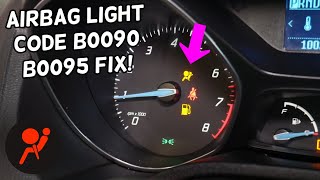
- Corroded connectors due to water and road salt. (Very Common) — Located at the extreme front of the vehicle, the sensor connector is highly vulnerable to moisture and corrosive road salt. This exposure degrades the connector pins, causing high electrical resistance. 🎬 See how to fix corroded sensor connectors on a Ford Focus.
- Failed right frontal impact sensor. (Common) — The sensor fails internally due to age, manufacturing defects, or physical damage from a previous minor impact. The internal piezoelectric element degrades and fails its startup self-test.
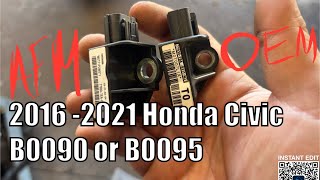
- Incompatible aftermarket sensor installation. (Common) — Cheap aftermarket sensors frequently fail to meet the precise resistance and communication specifications required by the OEM Restraints Control Module, causing the code to persist even with a new part. 🎬 Watch: Why aftermarket sensors often fail on Honda Civics.
- Faulty Restraints Control Module (RCM). (Less Common) — The control module that reads the sensor data can suffer an internal hardware fault or corrupted firmware, preventing it from processing the sensor's signal.
- Low vehicle battery voltage or poor ground. (Rare) — Extremely low battery voltage during startup or a heavily corroded chassis ground introduces electrical noise, causing the RCM to set false sensor codes.
Symptoms

- Airbag warning light is on (solid or flashing). — The dashboard light showing a person with an airbag steadily illuminates or flashes to indicate an active SRS fault.
- Airbag system disabled or 'Not Ready' message. — The instrument cluster displays a text warning such as "SRS System Service Required" or "Passenger Airbag Off".
- No deployment of right-front airbag in a collision. — The system completely disables the faulty circuit, meaning the passenger airbag will not deploy during a crash.
- Failed state safety inspection. — An active airbag warning light triggers an automatic failure for vehicle safety inspections in states like New York and Virginia.
- Airbag chime sounds at startup. — An audible chime or beep sounds when starting the vehicle to alert the driver of the SRS fault.
- Stored fault code in RCM memory. (scan-tool only — no driver-felt sign) — The B0095 code stores in the Restraint Control Module, accessible only with an SRS-capable scan tool.
Diagnostic Flowchart
Tap your situation to follow the diagnostic path that matches what you're seeing on this code.
Common Fixes & Costs
- Reconnecting or cleaning corroded sensor connectors — Parts: $5-$15, Labor: $75-$150, ~0.8 hr book time (Beginner)
- Replacing the right frontal impact sensor
— Parts: $80-$250, Labor: $100-$200, ~1.2 hr book time
(Intermediate)
: OEM
: OEM
: OEM - Repairing damaged wiring or replacing connector pigtail — Parts: $15-$60, Labor: $150-$300, ~1.5 hr book time (Advanced)
- Reprogramming or replacing the SRS/RCM module — Parts: $550-$1200, Labor: $150-$300, ~1.5 hr book time (Professional)
DIY vs Professional
- Cleaning corroded sensor/harness connectors 🟢 Beginner
Tools: Socket set, electrical contact cleaner, small wire brush, dielectric grease. - Replacing the right frontal impact sensor 🟢 Beginner
Tools: SRS-capable scanner (to clear code), socket set, trim removal tools. - Repairing wiring or replacing connector pigtail 🟢 Beginner
Tools: Soldering iron, heat shrink tubing, wire strippers, multimeter, wiring diagram. - Replacing the SRS/RCM module 🟢 Beginner
Tools: Professional diagnostic scan tool for programming, basic hand tools.
Used vs. New Parts: Buying Guide
When a used part is worth it: For a simple impact sensor, a used OEM part from a reputable salvage yard is a viable option if the donor vehicle has no front-end damage.
Donor-vehicle mileage cap: roughly under 120000 miles for the part to have meaningful remaining life.
Donor quality checklist:
- Verify the donor vehicle was not involved in a front-end collision.
- Inspect the part for physical damage, cracks, or corrosion.
- Match the part number exactly. Slight variations will not communicate with the SRS module.
- Never buy used control modules (RCM/SDM), as they contain hard-coded crash data.
Decision logic:
- If The cost of a new OEM sensor is less than $100 → Buy new OEM to guarantee compatibility and avoid the risk of a faulty used part.
- If The vehicle is old and has a low market value → A used sensor for under $50 is a reasonable gamble to pass inspection and restore safety function.
- If The part is a control module (RCM/SDM) or an airbag → Never buy used. Buy a new OEM part or use a professional service to reset your original module.
Warranty tradeoff: Salvage yard parts carry a 30-90 day warranty. New aftermarket parts offer 1-year warranties. New OEM parts carry a 12-month/12,000-mile warranty.
Worst-case if a used part fails: $150-$300 if a used sensor fails, covering a second diagnostic scan and repeat labor.
What Happens If You Wait — Timeline
- Immediate (0 seconds after fault detection): The SRS light illuminates, and the RCM disables the passenger-side front airbag. The safety system is compromised. (MPG impact: 0%% · Added cost: $0)
- First drive after fault: The passenger faces a dramatically increased risk of serious injury or death in a frontal collision due to the disabled airbag. (MPG impact: 0%% · Added cost: N/A (Safety risk))
- At the next state safety inspection: The vehicle automatically fails safety inspections in states that check dashboard warning lights, preventing registration renewal. (MPG impact: 0%% · Added cost: $20-$50 (Inspection re-test fee))
- At time of resale or trade-in: An active airbag light signals unresolved safety issues, diminishing the vehicle's resale value by 20-40%. (MPG impact: 0%% · Added cost: $500-$2500+ (Diminished resale value))
Cost of Not Fixing It
- Immediate: The passenger-side front airbag is disabled, drastically increasing the risk of serious injury or death for the passenger in a frontal collision. (Added cost: N/A)
- At next state inspection: The vehicle automatically fails safety inspections in states that check for active airbag warning lights. (Added cost: $20-$50 (re-inspection fee))
- At time of resale: An active airbag light is a major red flag for buyers, suggesting unresolved safety issues and severely reducing resale value. (Added cost: $500-$2500 (diminished value))
Diagnosis Steps
- Read Specific SRS Sub-Codes
Use an SRS-capable OBD-II scanner to read the full code, including any suffix (e.g., B0095:11, B0095:93). This suffix dictates the diagnostic direction (short vs. open circuit). Clear the codes and observe which ones return immediately.
Tools: SRS-capable OBD-II Scanner (Beginner) - Visually Inspect the Sensor and Wiring
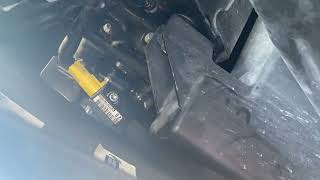
Locate the right frontal impact sensor on the radiator core support or behind the bumper. Inspect the sensor for physical cracks. Examine the wiring harness for chafing and the connector for green/white corrosion or bent pins.
Tools: Flashlight, Inspection mirror (Beginner) - Perform a 'Swap Test' (Pro Tip)
Disconnect the battery and wait 15 minutes. Swap the left (driver) and right (passenger) impact sensors. Reconnect the battery, clear codes, and rescan. If the code changes to B0090 (left sensor), the sensor is dead. If B0095 returns, the wiring or RCM is faulty.
Tools: Basic hand tools (e.g., 10mm socket) (Intermediate) - Perform a Wiggle Test
With the scanner viewing live data for the sensor, gently wiggle the wiring harness and connector. If the live data reading changes erratically or the code sets during the wiggle, you have located an intermittent open or short in the wiring.
Tools: SRS-capable OBD-II Scanner (Intermediate) - Test Circuit Continuity and Resistance
WARNING: Depower the SRS by disconnecting the battery for 15 minutes. Disconnect the sensor and RCM. Use a multimeter to check for continuity on the signal/ground wires between the sensor and RCM connectors (should be <1.0 ohm). Check for a short to ground by measuring resistance between the signal wire and chassis ground (should be >10,000 ohms).
Tools: Digital Multimeter, Vehicle-specific wiring diagram (Advanced) - Test Sensor Internal Resistance
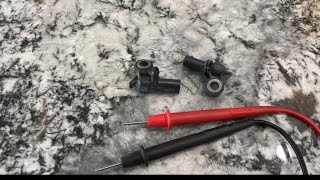
With the sensor disconnected, measure the resistance between its two pins. A common specification is 1.2 kΩ ± 10%. A reading showing an open loop or a dead short confirms a failed sensor. Always verify the exact spec in your service manual.
Tools: Digital Multimeter (Advanced) - Induce an Opposite Fault (Pro Tip)
For an open circuit code (B0095:93), use a fused jumper wire at the RCM harness connector to momentarily short the signal circuit to ground. Scan for codes. If the code changes to a 'Circuit Short to Ground' (B0095:11), the RCM and wiring are functional, proving the sensor is the culprit.
Tools: Fused jumper wire, SRS-capable OBD-II Scanner (Professional) - Analyze Sensor Signal with an Oscilloscope
Connect an oscilloscope to the sensor's signal and ground wires. A functional sensor displays a clean, consistent digital waveform or stable DC voltage (0-5V). A noisy or flat-lined signal indicates a failed sensor or severe external interference.
Tools: Automotive Oscilloscope, Back-probe connectors (Professional) - Substitute with a Known-Good OEM Sensor
If circuit tests pass, replace the sensor with a genuine OEM part. Reconnect the battery, clear the codes, and cycle the ignition to confirm the SRS self-test passes and the light remains off.
Tools: New OEM impact sensor, Basic hand tools (Advanced)
When This Code Triggers (Freeze-Frame Conditions)
- SRS System Status: Fault Present (During initial key-on self-test.)
- Ignition Status: ON (The fault is detected within seconds of turning the ignition on.)
- System Voltage: 11-14 Volts (Code sets during normal startup, but voltage below 10V can trigger false codes.)
- Event Time: 0-6 seconds after key-on (The RCM performs a primary check of all sensors immediately at startup.)
Related Codes
- B0090 — The identical fault code for the Left Frontal Restraints Sensor. B0090 and B0095 frequently appear together if both sensors were left unplugged during a repair.
- B0095-11 — A sub-code indicating a 'Circuit Short to Ground'. Diagnosis requires testing for continuity between the sensor's signal wire and the chassis ground.
- B0095-93 — A sub-code indicating 'No Operation'. This points to an open circuit caused by a broken wire, unplugged connector, or dead sensor.
- B0095-87 — Common on Hondas, this translates to 'Missing Message' or 'No Signal', indicating a complete loss of communication from the sensor.
- B00A0 — Relates to the passenger seat weight sensor (Occupant Classification System). A proper scan tool distinguishes between this seat sensor fault and the B0095 impact sensor fault.
Climate & Environmental Factors
- Moisture and Corrosive Road Salt: The sensor's forward location exposes it to rain, car washes, and winter road salt. Salt aggressively corrodes the connector pins and wiring insulation, causing high electrical resistance and triggering the fault.
- Extreme Temperature Fluctuations: Rapid shifts from hot to cold cause the metal pins and plastic housings of electrical connectors to expand and contract at different rates, creating micro-cracks that allow moisture to penetrate the sealed connector.
How to Talk to a Mechanic About This Code
Say this: "I have an airbag light on and my scanner shows code B0095 for the right frontal restraints sensor. Since the most common causes are wiring or corrosion, could you please start by inspecting the sensor's connector, and if possible, perform a 'swap test' with the left sensor before quoting a replacement part?"
This signals you understand the common failure points. It directs the technician to perform logical, low-cost diagnostic steps first, preventing an immediate quote for an expensive sensor replacement.
Avoid saying:
- 'My airbag light is on, can you just fix it?'
- 'I think I need a new airbag sensor.'
- 'Just do whatever you think is best.'
Questions to ask before authorizing the repair:
- What were the results of the wiring and connector inspection?
- If you performed a 'swap test,' did the fault code move to the other side (B0090)?
- If you are recommending a new sensor, are you using an OEM part or an aftermarket one?
- What is the warranty on the parts and labor for this repair?
Where to Take It: Dealer vs Independent vs Chain
- Dealer:
Recommended only if you suspect a software issue or your vehicle is under warranty. Otherwise, an independent shop is more cost-effective.
Best for: Vehicles still under warranty., Known manufacturer-specific software issues (like the GM SDM-PPS mismatch)., Complex cases where a previous shop failed to find the issue.
Downsides: Highest labor rates., May refuse component-level wiring repairs and insist on replacing the entire harness. (Typical cost: +50% vs. baseline) - Independent Shop:
Best fit for most B0095 repairs. Find a reputable shop with good reviews for electrical diagnostics.
Best for: Out-of-warranty vehicles where the cause is likely wiring, corrosion, or the sensor itself., Cost-conscious repairs.
Downsides: Diagnostic capabilities vary widely. Ensure the shop has specific experience with SRS/airbag systems. (Typical cost: +0% vs. baseline) - Chain Shop:
AVOID for initial diagnosis. The risk of misdiagnosis is high. Only consider if you have already confirmed the sensor is the problem.
Best for: Simple, pre-diagnosed part replacements.
Downsides: Technician skill varies greatly., Less likely to perform in-depth electrical diagnostics; defaults to replacing parts unnecessarily. (Typical cost: -10% vs. baseline)
When to Walk Away From the Repair
If the estimated repair cost exceeds 40-50% of the car's Kelley Blue Book (KBB) private-party value, seriously consider selling the car as-is.
- Car worth $4000, fix is $1800: Walk away. The repair cost is too high relative to the car's value. A worst-case RCM replacement makes this an easy decision.
- Car worth $12000, fix is $350: Fix it. This is an inexpensive repair that restores a critical safety feature and protects the vehicle's value.
- Car worth $2500, fix is $350: Borderline. While the cost is low, it represents a significant percentage of the car's value. Get a firm quote before proceeding.
What Scan Tool You Need for This Code

Minimum: An OBD-II scanner with SRS/Airbag system access.
A standard $20 engine code reader cannot communicate with the Supplemental Restraint System (SRS) module. It will not see or clear B-prefix codes like B0095.
Budget: BlueDriver Pro (~$99) — Connects to a smartphone app via Bluetooth and reads/clears SRS codes for most major brands. Provides live data to help diagnose intermittent wiring issues.
Mid-range: Foxwell NT510 Elite (~$180) — A powerful handheld scanner providing full-system diagnostics. Reads manufacturer-specific sub-codes and offers bi-directional controls to test components.
Professional: Autel MaxiCOM MK808 (~$500) — A professional tablet scanner offering deep SRS analysis, live data graphing, and module programming capabilities across a wide range of vehicles.
Rent vs buy: Most auto parts store loaner tools are basic engine code readers and will NOT read SRS codes. Buying a budget SRS-capable scanner is a mandatory investment for this repair.
How to Clear the Code After You Fix It
- Ensure all SRS components are securely connected.
- Reconnect the negative battery terminal.
- Use an SRS-capable OBD-II scan tool to read and clear the fault codes from the Restraints Control Module (RCM).
- Cycle the ignition off, then on. The airbag warning light should illuminate for 6-7 seconds and then turn off permanently.
Drive cycle (~10 minutes): An extensive drive cycle is not required. The SRS system performs a self-test at every key-on event. A short 10-minute test drive confirms the light stays off.
Readiness monitors affected: No engine emissions readiness monitors are affected by SRS codes.
Watch out for:
- Using a basic $20 engine code reader that cannot access the SRS module.
- Forgetting to clear the code after the repair; the light will never turn off on its own.
- Failing to disconnect the battery for 15 minutes before working on SRS components, risking accidental deployment.
Will This Fail Emissions / State Inspection?
Yes — this code typically fails an OBD-II emissions inspection.
- California: An airbag light does NOT cause a SMOG check failure, but the vehicle is not legally roadworthy from a safety standpoint.
- New York: An illuminated airbag warning light is an automatic failure of the annual safety inspection.
- Texas: An illuminated airbag light causes the vehicle to fail the state safety inspection.
- Virginia: An illuminated airbag light causes a failure of the state safety inspection.
- Pennsylvania: An airbag light passes the standard annual inspection but fails the enhanced safety inspection required for rebuilt/salvage titles.
Most Commonly Affected Vehicles
- Ford Focus (2011-2018) — Extremely common. The sensors mount directly on the radiator support and are frequently forgotten during front-end repairs. Codes B0095:11 and B0095:93 are prevalent.
- Ford Fiesta, Fusion, Escape, F-150, Edge (2011-2019) — These models share SRS architecture with the Focus, making them highly prone to corrosion and disconnected sensors after service.
- Honda Civic, Accord (2015-2021) — Often presents as code B0095-87 ('No Signal'). On 2016+ Civics, the sensor is difficult to access behind the washer fluid reservoir. Aftermarket sensors cause repeat failures.
- Honda Fit, HR-V (2016-2017) — Subject to a dealer-level investigation (AER17060A) for a high volume of B0095-87 complaints related to impact sensor failures.
- Ram 1500 (2014-2019) — On 2014 models, the sensor is uniquely located inside the passenger door panel. On 2019+ models, sensors are located by the lower radiator shroud.
- Chevrolet / GMC Silverado, Sierra (2014-2018) — B0095 often indicates an 'SDM-PPS Mismatch Malfunction'—a software configuration error requiring dealer recalibration, not a hardware fault.
- Nissan Xterra, Frontier, Pathfinder (2005-2015) — The front crash sensor mounts low on the radiator support, making corrosion of the sensor and connector the leading cause of failure.
- Land Rover Discovery 4 / LR4 (2009-2016) — The right front sensor is located behind the right-side headlamp assembly, requiring grille and headlamp removal for access.
Manufacturer-Specific Notes
- Ford: Front impact sensors mount directly on the radiator support and are frequently left disconnected after radiator or A/C condenser repairs. Always check connections first.
- Honda: The RCM strictly rejects aftermarket impact sensors. Using non-OEM parts guarantees the code will return. On 10th-gen Civics, the right sensor requires removing the washer fluid tank to access.
- Ram: Sensor locations vary wildly by year. A 2014 Ram 1500 houses the sensor inside the passenger door, while a 2019 model places it near the radiator.
- Dodge/Chrysler/Jeep: B0095 can have non-airbag meanings on certain models. B0095-13 on a Jeep can refer to a transmission solenoid circuit. A manufacturer-specific scan is mandatory.
- GM (Chevrolet/GMC): B0095 frequently points to a software mismatch between the Sensing and Diagnostic Module (SDM) and the Passenger Presence System (PPS), requiring dealer recalibration rather than parts replacement.
Real Owner Stories
2017 Honda Civic with B0095-87
The airbag light illuminated after a body shop repaired minor front-end damage.
Outcome: The owner installed a genuine OEM Honda sensor (Part # 77930-TEA-B21). After clearing the codes, the airbag light permanently turned off.
Lesson: Aftermarket SRS sensors frequently fail to communicate with Honda modules. A swap test confirms a bad sensor, and OEM parts are mandatory for a permanent fix.
2012 Ford Focus with B0095 and B0090
The airbag light appeared immediately after the owner replaced the upper radiator support.
Outcome: The owner realized they forgot to plug both sensors back in during reassembly. Securely connecting the sensors and clearing the codes resolved the issue.
Lesson: If a fault code appears immediately after a repair, the cause is almost always an unplugged connector or pinched wire related to that specific job.
2014 Ram 1500 with B0095
The scanner revealed code B0095 for 'Right Frontal Acceleration Sensor Internal Electronic Failure'.
Outcome: The owner replaced the sensor inside the door (Part # 56054085AA), which cleared the fault immediately.
Lesson: Never assume a sensor's location based on generic advice. Manufacturers frequently change component locations by model year. Always verify using a vehicle-specific service manual.
How to Prevent This Code From Triggering
- Apply dielectric grease to sensor connectors (During any front-end service or once every 3-5 years) — Dielectric grease blocks moisture and oxygen from reaching the metal pins, preventing the corrosion that causes high resistance and signal faults.
- Wash the vehicle's undercarriage and front end (Monthly, especially during winter in the salt belt) — Regularly washing corrosive road salt off the front frame rails and radiator support prevents it from eating through the sensor housing and wiring insulation.
- Use annual rust-proofing oil spray services (Once per year in cold climates) — Professional oil-based rust-proofing applies a creeping oil that penetrates seams and protects electrical connections from moisture and salt.
Frequently Asked Questions
What does 'subfault' mean for code B0095?
The term 'subfault' means the computer identified the specific type of electrical failure. For example, B0095:11 specifies a 'short to ground', while B0095:93 specifies 'no operation'. This extra detail helps technicians diagnose the exact wiring issue much faster.
Can I fix code B0095 myself?
A DIYer can safely perform visual inspections, clean connectors, and replace the sensor if comfortable. However, you must depower the system by disconnecting the battery for 15 minutes first. Complex wiring repairs or module programming require a professional.
Will the airbag light go off by itself after fixing the problem?
No. SRS codes are permanently stored in the Restraints Control Module's memory. You must manually clear the code using an SRS-compatible scan tool to turn off the warning light.
What are common misdiagnosis pitfalls for B0095?
The most common mistake is replacing the sensor without testing the wiring, as broken wires are frequent culprits. Another pitfall is installing a cheap aftermarket sensor that fails to communicate with the vehicle's computer.
How much does it cost to diagnose and fix a B0095 code?
A professional diagnostic scan costs $100-$200. A simple wiring repair or connector cleaning runs $150-$250. Replacing the sensor ranges from $180 to $350 for parts and labor.
My car was in a minor accident, could that cause this code?
Yes. Even a minor frontal impact that doesn't deploy the airbags can fracture the internal piezoelectric element of the sensor or damage its wiring.
Can I reset the airbag light without a scanner?
No. Disconnecting the battery will not reset an SRS light. The fault is hard-coded into the module's memory and requires a compatible diagnostic tool to clear.
Where is the B0095 sensor located?
In most vehicles, it mounts to the radiator core support, frame rail, or behind the front bumper on the passenger side. However, some vehicles like the 2014 Ram 1500 place it inside the passenger door. Always verify the location for your specific model year.
Key Takeaways
- Code B0095 disables the passenger-side front airbag, creating a critical safety risk that automatically fails state inspections in states like New York and Virginia.
- Over 50% of B0095 codes trigger due to damaged wiring, corroded connectors, or sensors left unplugged after front-end repairs like radiator replacements.
- Perform a 15-minute 'swap test' by exchanging the left and right impact sensors to definitively prove if the sensor is dead before spending $80-$250 on a replacement part.
- Never attempt DIY repairs on the SRS system without first disconnecting the negative battery terminal and waiting 15 minutes to prevent accidental airbag deployment.
Helpful Videos
Shop the Parts Behind B0095
Below are the parts most often responsible for code B0095, ranked by how frequently each one is the actual culprit (per the diagnosis above). Tap any to see what we have for your vehicle.



The information in this article is provided for general reference and educational purposes only. Vehicle specifications, procedures, and part compatibility can vary by production date, trim level, and region. Always consult your vehicle's factory service manual and verify part numbers before purchasing or performing repairs. Safety-critical components such as airbags, seat belts, and braking systems should be installed by a qualified professional.
- 🧭 Diagnostic Flowchart
- 🎬 Helpful Videos
- 🛍️ Shop This Part
- What Does B0095 Mean?
- Can I Drive With B0095?
- Common Causes
- Symptoms
- Common Fixes & Costs
- DIY vs Professional
- Used vs. New Parts: Buying Guide
- What Happens If You Wait — Timeline
- Cost of Not Fixing It
- Diagnosis Steps
- When This Code Triggers (Freeze-Frame Conditions)
- Related Codes
- Climate & Environmental Factors
- How to Talk to a Mechanic About This Code
- Where to Take It: Dealer vs Independent vs Chain
- When to Walk Away From the Repair
- What Scan Tool You Need for This Code
- How to Clear the Code After You Fix It
- Will This Fail Emissions / State Inspection?
- Most Commonly Affected Vehicles
- Manufacturer-Specific Notes
- Real Owner Stories
- 2017 Honda Civic with B0095-87
- 2012 Ford Focus with B0095 and B0090
- 2014 Ram 1500 with B0095
- How to Prevent This Code From Triggering
- Frequently Asked Questions
- What does 'subfault' mean for code B0095?
- Can I fix code B0095 myself?
- Will the airbag light go off by itself after fixing the problem?
- What are common misdiagnosis pitfalls for B0095?
- How much does it cost to diagnose and fix a B0095 code?
- My car was in a minor accident, could that cause this code?
- Can I reset the airbag light without a scanner?
- Where is the B0095 sensor located?
- Key Takeaways
- 🎟️ Get 5% Off