

OBD-II Code B0132: Right Front Seat Belt Pretensioner Circuit Malfunction
What B0132 means, why it triggers, and how to fix it
- Code B0132 indicates a short to ground in the passenger-side seat belt pretensioner circuit, immediately disabling all vehicle airbags.
- Over 80% of B0132 faults stem from damaged wiring or a loose, corroded yellow connector under the front passenger seat.
- Never probe a seat belt pretensioner with a standard multimeter; the electrical current will deploy the explosive charge and cause severe injury.
- On General Motors vehicles, B0132 often points to a windshield washer fluid sensor fault rather than an airbag system failure.
What Does B0132 Mean?
Code B0132 means the airbag control module (SRS module) detects a problem in the passenger-side seat belt pretensioner circuit. The pretensioner contains a small explosive charge that rapidly tightens the seat belt during a crash. This fault indicates the pretensioner cannot deploy, forcing the computer to shut down the entire SRS system.
Technical definition: B0132 specifically indicates a short to ground in the right-hand (RH) front seat belt pretensioner squib circuit. The 'squib' is the electrically-activated pyrotechnic charge. The SRS module constantly monitors circuit resistance; if voltage shorts to the vehicle's chassis ground, it triggers this code. Note: On General Motors vehicles, this code often refers to the windshield washer fluid system instead.
Can I Drive With B0132?
No — Do Not Drive. Driving is not recommended. When the SRS warning light is on, the entire Supplemental Restraint System (SRS) is disabled as a fail-safe. In a collision, none of the airbags (driver, passenger, or side) will deploy, and the seat belt pretensioners will not activate. You are driving without critical safety systems; repair the vehicle immediately.
Common Causes
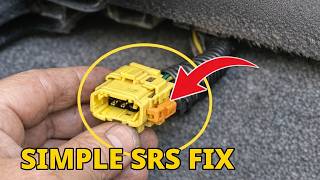
- Damaged or Loose Under-Seat Wiring/Connectors (Very Common) — The yellow-taped wiring harness and primary connector under the passenger seat are highly vulnerable. Frequent seat movement, moisture from spills, or chafing against the seat frame causes shorts, open circuits, or pin corrosion.
- Debris or Foreign Objects Under the Seat (Common) — Loose change, food wrappers, or water bottles lodged in the seat mechanism pinch wires or stress the pretensioner connector, directly causing electrical faults.
- Faulty Right Front Seat Belt Pretensioner (Common) — The pretensioner unit itself fails internally. The pyrotechnic squib's resistance falls out of specification, or internal wiring breaks.
- Previous Accident History (Rare) — If the vehicle was in an accident and the pretensioner deployed, it creates an open circuit. Improper replacement or failing to clear crash data from the airbag module triggers this code.
- Faulty Airbag Control Module (SRS Module) (Less Common) — The central computer controlling the airbag system fails internally. A faulty driver circuit within the module incorrectly reports a short or fails to read pretensioner signals.
- Faulty Seat Track Position Sensor (Less Common) — Some vehicles use a sensor to tell the SRS module how close the seat is to the dashboard. If this sensor fails or is disconnected, it triggers a general SRS fault associated with circuit codes.
- Faulty Occupant Classification System (OCS) Sensor (Rare) — The passenger seat weight sensor mat determines if the airbag should be enabled. A failure here usually sets its own DTC (like B00A0) but is frequently misdiagnosed as a pretensioner issue.
Symptoms
- Airbag or SRS Warning Light On — The dashboard airbag icon or 'SRS' light stays illuminated continuously.
- Seat Belt is Locked, Loose, or Won't Retract — A deployed or mechanically failing pretensioner locks the seat belt solid or causes the retractor to hang loosely.
- Audible Chime or Warning Message — The instrument cluster displays 'Service Airbag System' accompanied by a recurring warning chime.
- Passenger Airbag Off Light is Erratic — The 'Passenger Airbag Off' indicator stays lit even with an adult in the seat due to conflicting sensor data.
Diagnostic Flowchart
Tap your situation to follow the diagnostic path that matches what you're seeing on this code.
Common Fixes & Costs
- Repair Under-Seat Wiring or Connector — Parts: $10-$30, Labor: $150-$300, ~1.5 hr book time (Intermediate)
- Replace Right Front Seat Belt Assembly
— Parts: $250-$600, Labor: $150-$300, ~1.2 hr book time
(Professional)
Toyota Tacoma (2004-2015): OEM 73210-04230-B0 (Gray), 73210-04230-B1 (Graphite) (Alt: N/A)
Chevrolet Silverado (2007-2018): OEM 19260170 (Ebony, 2014), 19351677 (Jet Black, Crew Cab) (Alt: N/A) - Mail-in Seat Belt Pretensioner Rebuild Service
— Parts: $75-$120, Labor: $100-$200, ~1.2 hr book time
(DIY)
All Makes/Models: OEM N/A (Service performed on your existing OEM part) (Alt: Safety Restore, MyAirbags) - Replace or Reset Airbag Control Module — Parts: $300-$800, Labor: $150-$350, ~2 hr book time (Professional)
Used vs. New Parts: Buying Guide
When a used part is worth it: Never for pyrotechnic components. Use a certified rebuild service or buy new OEM.
Donor-vehicle mileage cap: roughly under 10000 miles for the part to have meaningful remaining life.
Donor quality checklist:
- Verify the donor vehicle was not in a flood or fire.
- Ensure the part was never exposed to moisture.
Decision logic:
- If The part contains a pyrotechnic charge (squib). → Buy a new OEM part or use a certified rebuild service.
- If The vehicle is older and the budget is extremely tight. → A mail-in rebuild service for your original part is the most cost-effective safe alternative.
- If The fault is in the wiring or a non-pyrotechnic part of the assembly. → Repairing the wire or replacing a simple connector is vastly preferable to replacing the entire unit.
Warranty tradeoff: Used parts have no warranty and zero safety guarantee. OEM new parts typically carry a 12-month/12,000-mile warranty. Professional rebuilds often include lifetime warranties.
Worst-case if a used part fails: $10000+
What Happens If You Wait — Timeline
- 0 Seconds: The SRS module detects the short circuit. The SRS warning light illuminates, and the entire safety system is disabled as a fail-safe. (MPG impact: 0%% · Added cost: $0)
- 1 Day - 1 Month: The SRS system remains completely inactive. You are driving with a significant safety risk. (MPG impact: 0%% · Added cost: $0)
- 1-12 Months: The vehicle fails mandatory state safety inspections in many jurisdictions, preventing registration renewal. (MPG impact: 0%% · Added cost: $50-$200)
- Post-Accident: If a collision occurs, none of the airbags or pretensioners deploy, drastically increasing the risk of severe injury. (MPG impact: 0%% · Added cost: $10000+)
Cost of Not Fixing It
- Immediate: The entire Supplemental Restraint System (SRS) is disabled. In a collision, no safety devices will deploy. (Added cost: $0)
- Ongoing: Failure to pass mandatory state safety inspections, preventing vehicle registration renewal. (Added cost: $50-$200)
- Post-Accident: Increased risk of serious injury or death for all occupants. Insurance coverage may be denied. (Added cost: $10000+)
Diagnosis Steps
- Read Codes and Live Data
Use an SRS-capable scanner to confirm B0132. Access the live data stream for the restraints control module. Look for 'Right Front Pretensioner Circuit Resistance'; a reading near zero ohms confirms a short to ground.
Tools: Advanced OBD-II Scanner (SRS Live Data capable) (Beginner) - Visually Inspect Seat Belt and Wiring
Look under the front passenger seat for the yellow SRS connector. Check for cuts, chafing, pinching, or debris. Inspect the seat belt buckle; if it sits lower than usual or is locked solid, the pretensioner has deployed.
Tools: Flashlight (Beginner) - Disconnect Battery and Inspect Connector
SAFETY FIRST: Disconnect the negative battery terminal and wait 15 minutes for the SRS backup power to discharge. Disconnect the yellow pretensioner connector, inspect for corrosion or bent pins, and clean with contact cleaner.
Tools: Wrench set, Electrical contact cleaner (Intermediate) - Test Wiring Harness for Shorts and Continuity
With the battery and pretensioner disconnected, use a multimeter to check for a short to ground (resistance should be >1 MΩ). Then, check continuity between the pretensioner connector and the SRS module connector (resistance should be <1 ohm).
Tools: Multimeter, Vehicle-specific wiring diagram (Advanced) - Use a Diagnostic Resistor Tool
NEVER use a multimeter to test the pretensioner squib itself; it will deploy the charge. Plug a 2.1-3.6 ohm diagnostic resistor into the vehicle-side connector. Reconnect the battery and clear codes. If B0132 disappears, the pretensioner is faulty.
Tools: SRS-safe diagnostic resistor set, OBD-II Scanner (Professional) - Check SRS Module Bias Voltage
With the pretensioner unplugged and key on, check for 'bias voltage' at the harness connector coming from the SRS module. Incorrect or absent voltage points to a faulty SRS module. Stop DIY and tow to a professional if this test fails.
Tools: Multimeter, Service manual (Professional)
When This Code Triggers (Freeze-Frame Conditions)
- System Voltage: 11.5-14.5V (Normal operating voltage. The code sets during engine cranking or if the battery is weak.)
- Ignition Cycle Counter: Varies (Indicates how many times the car has been started since the fault was first detected.)
- Fault Status: Active/Present (Shows that the fault was occurring at the exact moment the freeze frame data was stored.)
- Time Since Fault: Varies (Records the time elapsed since the fault was first logged by the SRS module.)
Related Codes
- B0137 — This is the equivalent code for the Driver's side ('Left Front') seat belt pretensioner circuit.
- B0133 — Indicates an 'open' circuit for the passenger pretensioner (broken wire or deployed unit), rather than a short to ground.
- B00A0 — Points to a fault in the Occupant Classification System (OCS) or passenger weight sensor, frequently misdiagnosed as a pretensioner fault.
- B1193 — Means 'Crash Data Stored'. Set only after an accident; requires professional module reset and cannot be cleared with a scanner.
Climate & Environmental Factors
- High Humidity and Moisture: Spills or wet carpets wick moisture into under-seat connectors, causing pin corrosion and electrical shorts.
- Road Salt: Salt-laden moisture tracked into the vehicle severely accelerates the degradation of electrical connectors and wiring under the seat.
- Temperature Extremes: Hot and cold cycles cause plastic connectors and wire insulation to expand and contract, eventually cracking insulation and loosening pins.
How to Talk to a Mechanic About This Code
Say this: "My scanner shows code B0132 for the passenger pretensioner circuit. Please inspect the wiring and connector under the passenger seat first, as this is the most common failure point. Do not quote a full seat belt replacement until the wiring harness is electrically tested."
This directs the shop to the most likely and least expensive fix first, preventing them from immediately jumping to a high-cost parts replacement.
Avoid saying:
- 'My airbag light is on, can you fix it?'
- 'Just replace the passenger seat belt.'
- 'Do whatever you think is best.'
Questions to ask before authorizing the repair:
- Did you find a specific problem with the wiring or connector under the seat?
- What were the results of the electrical continuity tests on the harness?
- Did you use a diagnostic resistor to confirm the pretensioner itself is faulty?
- Is the recommended replacement part a new OEM unit?
Where to Take It: Dealer vs Independent vs Chain
- Dealer:
A safe, but expensive, choice. They will fix it correctly but likely at the highest possible cost.
Best for: Vehicles under warranty., Complex, manufacturer-specific SRS issues., When you want guaranteed OEM parts and procedures.
Downsides: Highest labor rates and part costs., May be quicker to recommend full assembly replacement rather than a nuanced wiring repair. (Typical cost: +50% vs. baseline) - Independent Shop:
Excellent fit, provided you choose a reputable shop. An experienced independent technician is more likely to perform a cost-effective wiring repair.
Best for: Out-of-warranty vehicles where cost is a factor., Shops with technicians certified in electrical or SRS systems.
Downsides: Quality and expertise vary widely., May lack the latest manufacturer-specific diagnostic tools for brand new models. (Typical cost: +0% vs. baseline) - Chain Shop:
AVOID. SRS repairs are safety-critical and require specialized knowledge beyond the scope of most chain shops.
Best for: Tires, brakes, oil changes, and simple maintenance.
Downsides: Technicians are generally not specialists in complex electronics or safety systems., Often lack the advanced diagnostic tools required for SRS systems. (Typical cost: -10% vs. baseline)
When to Walk Away From the Repair
If the estimated repair cost for the B0132 code exceeds 40-50% of your car's private-party value, it's time to pause and evaluate.
- Car worth $4000, fix is $1800: Walk away. The repair cost is 45% of the car's value. It's not financially sound to invest this much into an older vehicle for a single repair.
- Car worth $12000, fix is $900: Fix it. The repair cost is only 7.5% of the vehicle's value. This is a routine cost of ownership for a safety system.
- Car worth $2500, fix is $800: Borderline. The repair is 32% of the car's value. If the rest of the car is in excellent condition, the repair makes sense.
What Scan Tool You Need for This Code
Minimum: A scanner that can read and clear Supplemental Restraint System (SRS) / Airbag codes.
A standard $20 OBD-II reader only communicates with the Engine Control Module (ECM). The B0132 code is stored in the SRS Control Module, a completely separate computer.
Budget: BlueDriver Bluetooth Pro (~$100) — Connects to your smartphone and reads/clears SRS codes for most major brands. Provides repair reports.
Mid-range: Foxwell NT630 Plus / Autel AutoLink AL619 (~$150) — Dedicated handheld units that read and clear SRS codes, and show live data from SRS sensors. Fast and reliable.
Professional: Autel MaxiCOM MK808 / Launch CRP129X (~$450-600) — Professional-level tools offering full system diagnostics, live data graphing, and bidirectional control.
Rent vs buy: Auto parts stores do NOT rent out SRS-capable scanners due to liability. Buying a budget SRS-capable scanner is a necessary investment for this repair.
How to Clear the Code After You Fix It
- Ensure the physical repair is complete.
- Reconnect the negative battery terminal.
- Use an SRS-capable OBD-II scan tool to access the Airbag/SRS module.
- Select the 'Clear Codes' or 'Erase DTCs' function.
- Cycle the ignition off, wait 10 seconds, then turn the ignition back on.
- Verify the SRS light performs its self-check (comes on for ~6 seconds, then turns off) and does not reappear.
Drive cycle (~1 minutes): The SRS system performs a full self-test every time the ignition turns to 'ON'. If the repair is successful, the light stays off after the initial 6-second check. No driving is required.
Readiness monitors affected: None. SRS codes do not affect emissions readiness monitors.
Watch out for:
- Using a standard engine code reader, which cannot access or clear SRS module codes.
- Failing to fix the root cause; the code returns immediately upon the next ignition cycle.
- Trying to clear a 'hard code' from a past deployment, which requires professional module resetting.
Will This Fail Emissions / State Inspection?
No — by itself this code doesn't fail OBD inspection (but it can keep readiness monitors from setting, which causes a separate fail).
- California: An SRS light will NOT fail a standard smog check. However, for a vehicle needing a 'salvage' title inspection or the new VSSI, an active SRS light is an automatic failure.
- New York: An illuminated airbag warning light is noted as an 'advisement' but is NOT cause for rejection of the annual safety inspection.
- Texas: An illuminated airbag light is NOT part of the annual safety inspection criteria and will not cause a failure.
- Virginia: An illuminated airbag warning light WILL cause an automatic failure of the state's annual safety inspection.
Most Commonly Affected Vehicles
- Toyota Tacoma (2004-2015) — Extremely common. The code is almost always B0132/61, indicating a short to ground in the passenger pretensioner circuit.
- Toyota Corolla (2001-2008) — Frequently logs B0132/61 for a fault in the right front seat belt pretensioner.
- Chevrolet Silverado (2007-2018) — Owners report SRS lights due to issues with under-seat connectors and wiring harness chafing.
- Honda Accord (1998-2017) — Honda uses a different code format. Codes 4-3 or 4-5 correspond directly to B0132.
- Hyundai Elantra (2011-2019) — Features dual-stage pretensioners with two separate connectors, doubling the potential points of failure under the seat.
- Nissan Altima (2013-2018) — Crucial to differentiate between an OCS fault (B00A0) and a pretensioner circuit fault (B0132). Check for open recalls.
- Ford Fusion (2013-2020) — Issues with the Seat Track Position Sensor are common. A major safety recall (16V-875) was issued because the pretensioner could sever its own cable.
Manufacturer-Specific Notes
- General Motors (Chevrolet, GMC, etc.): On many GM vehicles, B0132 is defined as 'A/V Sensor Washer-Fluid D control circuit fault', relating to the windshield washer system, not the airbags.
- Toyota: Consistently uses B0132 with a two-digit suffix (e.g., B0132-61) to indicate 'Short to GND in Front Pretensioner Squib RH Circuit'.
- Honda / Acura: Uses a two-digit code format read by flashing the SRS light. Codes 4-3 or 4-5 are the exact equivalent of B0132.
- Nissan: Multiple recalls exist for the Occupant Classification System (OCS) which mimic pretensioner issues. Always check VIN for recall status.
- Ford: A critical safety recall (16V-875) affects 2013-2016 Fusions where the pretensioner generates excessive heat and severs the anchor cable.
Real Owner Stories
2007 Toyota Tacoma
SRS light came on, scanned and found code B0132/61, indicating a short to ground in the passenger pretensioner.
What they tried:
- Initially suspected a faulty airbag sensor assembly.
- Followed forum advice to inspect the wiring under the passenger seat.
- Found the yellow connector was slightly loose.
Outcome: Owner disconnected the battery, cleaned the connector with contact cleaner, and reconnected it securely. The fix cost under $10 and the light stayed off.
Lesson: Always check the simplest cause first. For B0132, this is almost always the wiring and connector under the passenger seat.
2002 Honda Accord
SRS light flashed code 4-3, translating to 'short or low resistance in the passenger's seat belt pretensioner'.
What they tried:
- Tried to reset the SRS light using a paperclip, but the light returned immediately.
- Replaced the entire passenger seat belt assembly with a used part. The code remained.
Outcome: A mechanic tested the wiring harness and found a wire chafed against the seat frame, hidden from sight. A wiring repair fixed the issue for a one-hour labor charge.
Lesson: Don't assume a component is bad without testing the circuit first. A used pyrotechnic part is a gamble and not recommended.
2014 Chevrolet Traverse
A warning message for the washer fluid system appeared on the dash, but the SRS light was OFF.
What they tried:
- Refilled the washer fluid reservoir, but the warning persisted.
- Used an advanced scan tool and pulled code B0132.
Outcome: The owner diagnosed a faulty washer fluid level sensor. Replacing the sensor resolved the warning message and cleared the B0132 code.
Lesson: Verify the code definition for your specific make. On many GM vehicles, B0132 points to a minor washer fluid sensor issue, not the airbag system.
How to Prevent This Code From Triggering
- Never store items under the front seats. (Daily habit) — Objects shift and snag, chafe, or unplug the delicate SRS wiring harness, causing a short or open circuit.
- Clean interior spills immediately and thoroughly. (As needed) — Liquid seeps into the carpet and wicks up into under-seat electrical connectors, causing corrosion.
- Inspect under-seat connectors during interior cleaning. (Every 6 months) — A quick visual check confirms the yellow SRS connector is securely plugged in and the wiring loom hasn't been snagged.
- Apply dielectric grease to connector seals in humid climates. (Once, or if connector is serviced) — Blocks moisture intrusion and prevents long-term corrosion of the electrical pins.
- Secure pets during travel. (Every trip) — Prevents pets from chewing on wires under the seat and causing direct damage to the SRS harness.
Frequently Asked Questions
Will my other airbags work if the SRS light is on for the passenger pretensioner?
No. The SRS module disables the entire system when it detects a critical fault. No airbags or pretensioners will deploy in a crash.
What are the most common misdiagnosis pitfalls with code B0132?
The biggest mistake is replacing the expensive seat belt assembly before checking the under-seat wiring. Damaged wires or corroded connectors cause most B0132 codes. Also, on GM vehicles, this code often relates to the washer fluid system, not the airbags.
Can I reset the airbag light myself?
The SRS light will not turn off automatically after a repair. You must use an SRS-capable OBD-II scanner to clear the code. If the code stems from stored crash data, a scanner cannot clear it; the module requires professional resetting.
Is it safe to work on the airbag system myself?
Seat belt pretensioners contain explosive charges and are dangerous to handle. You must disconnect the negative battery terminal and wait 15 minutes before servicing any SRS component. This discharges the backup capacitor and prevents accidental deployment.
What's the difference between a seat belt pretensioner and a retractor?
The retractor pulls the seat belt in with spring tension during normal use. The pretensioner is a pyrotechnic device attached to the retractor or buckle. It fires only during a crash to instantly remove all slack from the belt.
What is a 'squib'?
A squib is a small, electrically-activated pyrotechnic initiator. The SRS module sends current to the squib, igniting a gas generator. The expanding gas powers the mechanism that tightens the seat belt.
Why is the SRS connector always yellow?
Automakers universally use yellow wiring and connectors for all safety-critical SRS components. This warns technicians to take extra safety precautions, like disconnecting the battery, before servicing the system.
Key Takeaways
- Code B0132 indicates a short to ground in the passenger-side seat belt pretensioner circuit, immediately disabling all vehicle airbags.
- Over 80% of B0132 faults stem from damaged wiring or a loose, corroded yellow connector under the front passenger seat.
- Never probe a seat belt pretensioner with a standard multimeter; the electrical current will deploy the explosive charge and cause severe injury.
- On General Motors vehicles, B0132 often points to a windshield washer fluid sensor fault rather than an airbag system failure.
Helpful Videos
Shop the Parts Behind B0132
Below are the parts most often responsible for code B0132, ranked by how frequently each one is the actual culprit (per the diagnosis above). Tap any to see what we have for your vehicle.



The information in this article is provided for general reference and educational purposes only. Vehicle specifications, procedures, and part compatibility can vary by production date, trim level, and region. Always consult your vehicle's factory service manual and verify part numbers before purchasing or performing repairs. Safety-critical components such as airbags, seat belts, and braking systems should be installed by a qualified professional.
- 🧭 Diagnostic Flowchart
- 🎬 Helpful Videos
- 🛍️ Shop This Part
- What Does B0132 Mean?
- Can I Drive With B0132?
- Common Causes
- Symptoms
- Common Fixes & Costs
- Used vs. New Parts: Buying Guide
- What Happens If You Wait — Timeline
- Cost of Not Fixing It
- Diagnosis Steps
- When This Code Triggers (Freeze-Frame Conditions)
- Related Codes
- Climate & Environmental Factors
- How to Talk to a Mechanic About This Code
- Where to Take It: Dealer vs Independent vs Chain
- When to Walk Away From the Repair
- What Scan Tool You Need for This Code
- How to Clear the Code After You Fix It
- Will This Fail Emissions / State Inspection?
- Most Commonly Affected Vehicles
- Manufacturer-Specific Notes
- Real Owner Stories
- 2007 Toyota Tacoma
- 2002 Honda Accord
- 2014 Chevrolet Traverse
- How to Prevent This Code From Triggering
- Frequently Asked Questions
- Will my other airbags work if the SRS light is on for the passenger pretensioner?
- What are the most common misdiagnosis pitfalls with code B0132?
- Can I reset the airbag light myself?
- Is it safe to work on the airbag system myself?
- What's the difference between a seat belt pretensioner and a retractor?
- What is a 'squib'?
- Why is the SRS connector always yellow?
- Key Takeaways
- 🎟️ Get 5% Off