

OBD-II Code B0202: Passenger Seat Occupant Sensor Circuit Short to Ground
The Ultimate 2026 Guide to Causes, Diagnosis, and Fixes for the B0202 Airbag Fault
- Code B0202 indicates a short circuit in the passenger seat weight sensor, immediately disabling the entire airbag system and making the vehicle unsafe to drive.
- Check your VIN for recalls first; over 2.5 million Honda, Toyota, and Subaru vehicles from 2020-2022 have active, free dealer recalls for this exact sensor failure.
- A basic $20 OBD-II reader cannot diagnose this code; you must use an advanced scanner capable of reading 'B' (Body) codes from the Supplemental Restraint System.
- Never replace the sensor mat without performing a mandatory 'Zero-Point Calibration' using a high-end scan tool, or the new sensor will remain locked out.
What Does B0202 Mean?
DTC B0202 signifies the vehicle's Restraints Control Module (RCM) detected a critical short to ground within the passenger seat occupant sensor circuit. This sensor, typically a pressure-sensitive mat or capacitive grid embedded in the seat cushion, detects the presence and weight of a passenger. This data dictates whether the SRS module enables or disables the passenger-side airbags. A short circuit corrupts this data, forcing the system to default to 'OFF' to prevent accidental deployment, which subsequently disables the entire airbag system as a mandatory safety precaution.
Technical definition: Driver/Passenger Seat Occupant Sensor Circuit Short to Ground. The SRS control module has identified that the occupant sensor's signal circuit has an improper, zero-resistance connection to the vehicle's chassis ground. This grounds out the sensor's voltage or data signal, forcing the module into a hard fault state.
Can I Drive With B0202?
No — Do Not Drive. It is not safe to drive with this code. A B0202 fault disables the entire Supplemental Restraint System (SRS) as a failsafe. In the event of a crash, NONE of the vehicle's airbags will deploy, including the driver's side. This dramatically increases the risk of severe injury or death. Continuing to drive also guarantees failure of a state safety inspection, making the vehicle illegal to operate on public roads in many jurisdictions.
Common Causes
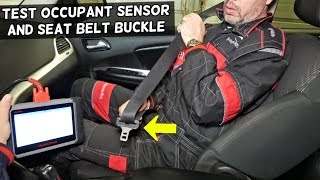
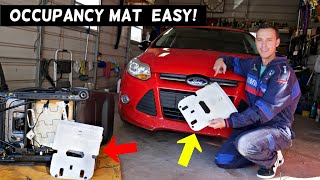
- Faulty Occupant Classification Sensor (OCS) Mat / Cracked Circuit Board (Very Common) — The sensor mat is the most frequent culprit. 🎬 Watch this walkthrough on how to replace the passenger seat sensor. Constant flexing breaks the internal printed circuits over time. Furthermore, a massive manufacturing defect in 2020-2022 Honda, Toyota, and Subaru models causes a capacitor on the sensor's circuit board to crack from normal cabin humidity, creating an internal short to ground.
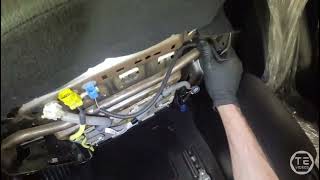
- Damaged Under-Seat Wiring or Connectors (Very Common) — The yellow SRS wiring harness under the passenger seat is highly vulnerable. Items shoved under the seat, or repeated seat adjustments, pinch, chafe, or sever the wires against the metal seat tracks. Loose or kicked connectors also trigger this fault.
- Moisture Intrusion (Common) — Spilled liquids or aggressive interior shampooing allows moisture to seep deep into the seat cushion. This liquid bridges the sensor's electrical contacts, causing an immediate short to ground. The fault often permanently damages the sensor, requiring replacement even after the seat dries.
- Interference from Electronic Devices (Less Common) — Placing electronic devices like laptops, cell phones, or power inverters directly on the passenger seat interferes with the electrical field of capacitive-type sensors. The SRS module misinterprets this interference as a short circuit.
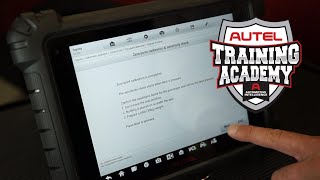
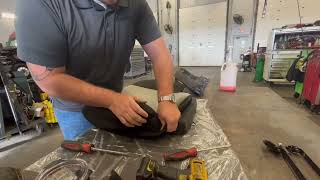
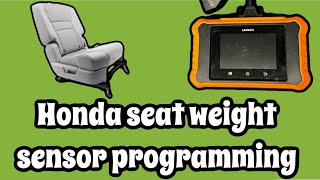
- Improperly Installed Aftermarket/Used Seat (Rare) — The OCS is strictly calibrated to the vehicle's specific SRS module. Installing a replacement seat without transferring the original sensor, or failing to perform a zero-point calibration, 🎬 See how to perform a zero point calibration on the sensor. causes the system to reject the hardware and set the code.
Symptoms
- Airbag/SRS Warning Light is On — The primary symptom. The red airbag icon on the instrument cluster remains permanently illuminated, indicating the entire airbag system is offline.
- Passenger Airbag Status Light Malfunction — The 'Passenger Airbag OFF' indicator remains lit even when an adult is seated, or the 'ON' light fails to illuminate entirely, proving the sensor is not detecting weight.
- Failed State Safety Inspection — An active SRS warning light is an automatic failure for safety inspections in states like New York, Virginia, and Texas.
- iDrive 'Passenger Restraint System Malfunction' Warning — Specific to BMW vehicles, the infotainment screen displays a critical warning message regarding the passenger restraint system alongside the cluster light.
Diagnostic Flowchart
Tap your situation to follow the diagnostic path that matches what you're seeing on this code.
Common Fixes & Costs
- Reconnecting Loose Connector / Repairing Wires — Parts: $5 - $25, Labor: $100 - $200, ~1.5 hr book time (Intermediate)
- Replacing the Occupant Classification Sensor (OCS) Mat — Parts: $250 - $800, Labor: $300 - $800, ~3.5 hr book time (Professional)
- Replacing the Entire Seat Cushion Assembly — Parts: $700 - $1500, Labor: $200 - $400, ~2.0 hr book time (Professional)
- Performing a Zero-Point Calibration — Parts: $0, Labor: $100 - $150, ~1.0 hr book time (Intermediate)
Used vs. New Parts: Buying Guide
When a used part is worth it: Almost never for the sensor mat itself. The OCS mat is a high-failure wear item. Buying a complete used seat assembly from a low-mileage, collision-free vehicle is viable only if the part number is an exact match and you are on a strict budget.
Donor-vehicle mileage cap: roughly under 40000 miles for the part to have meaningful remaining life.
Donor quality checklist:
- Verify the donor VIN is not part of an active OCS recall.
- Inspect the seat cushion for any signs of water damage, staining, or mold.
- Ensure the part number on the sensor module is an exact match to your original.
Decision logic:
- If A recall for this issue is active for your VIN → Get a brand new part installed for free at the dealership.
- If The vehicle is under 10 years old and the repair cost is high → Buy a new OEM or high-quality aftermarket part. The labor is too intensive to risk a used part failing.
- If The vehicle is very old and budget is the primary concern → Purchase a complete used seat assembly. It is a gamble, but cheaper than buying a new sensor mat and paying for upholstery labor.
Warranty tradeoff: Used parts offer a 30-90 day warranty that never covers labor. New aftermarket parts offer 1-year warranties. New OEM parts offer 12-month/12,000-mile warranties, with labor included if installed by the dealer.
Worst-case if a used part fails: $500 - $1500 if a used part fails prematurely, requiring you to pay the massive labor charge a second time.
What Happens If You Wait — Timeline
- Instant (First Ignition Cycle with Fault): The SRS module detects the short to ground, illuminates the airbag warning light, and disables the entire Supplemental Restraint System as a failsafe. (MPG impact: 0%% · Added cost: $0)
- Immediate & Ongoing: The vehicle operates with a non-functional airbag system. The risk of severe injury or death for all occupants in a collision is drastically increased. (MPG impact: 0%% · Added cost: Infinite (in a crash scenario))
- At Next State Safety Inspection: The vehicle automatically fails the safety inspection due to the illuminated airbag light, making it illegal to drive. (MPG impact: 0%% · Added cost: $50 - $200 in failed inspection fees.)
- At Time of Sale: The vehicle's resale value is severely diminished. Buyers refuse to purchase a vehicle with a critical safety system failure. (MPG impact: 0%% · Added cost: $1000 - $3000 in lost resale value.)
Cost of Not Fixing It
- Immediate: Total disablement of the vehicle's airbag system. In a crash, no airbags will deploy, drastically increasing the risk of severe injury or death. (Added cost: N/A)
- Next State Inspection: Guaranteed failure of the state safety inspection. The vehicle becomes illegal to operate on public roads. (Added cost: $50 - $200 in failed inspection fees and fines.)
- When Selling the Vehicle: Significant reduction in vehicle value. Disclosing the fault is legally required, and buyers will demand a massive discount for a critical safety defect. (Added cost: $1000 - $3000 reduction in resale value.)
Diagnosis Steps
- Check for Recalls and TSBs
Before touching the vehicle, enter your VIN into the NHTSA recall database. Over 2.5 million vehicles from Honda, Toyota, and Subaru (specifically 2020-2022 models) have active recalls for this exact sensor shorting out. If covered, the dealership will replace the sensor for free.
Tools: Computer or Smartphone (Beginner) - Perform a Thorough Visual Inspection
Slide the passenger seat fully forward and upward. Inspect the yellow SRS wiring harness underneath with a flashlight. Look for disconnected plugs, wires crushed in the seat tracks, or signs of liquid spills. Remove any electronic devices resting on the seat cushion.
Tools: Flashlight (Beginner) - Scan and Analyze Live SRS Data
Connect an advanced OBD-II scanner capable of reading 'B' (Body) codes. Clear the B0202 code and see if it immediately returns. Next, view the live data stream for 'Occupant Status' or 'Passenger Weight'. If the reading is stuck on 'FAULT', '0 lbs', or does not change when an adult sits down, the sensor or its wiring is definitively broken.
Tools: Advanced OBD-II Scanner (Intermediate) - Perform a Zero-Point Calibration
Using your advanced scan tool, execute the 'Zero-Point' or 'Seat Weight' calibration procedure. The seat must be completely empty and dry. This re-learns the empty weight of the seat and occasionally resolves faults caused by minor sensor drift or software glitches.
Tools: Advanced OBD-II Scanner (Intermediate) - [ADVANCED] Test the Sensor Circuit with a Multimeter
Disconnect the battery and wait 10 minutes. Unplug the OCS sensor under the seat. Set a multimeter to Ohms (Ω). Probe the sensor's signal and ground pins. A reading of near-zero ohms confirms an internal short in the mat. Next, probe the harness-side signal wire to a chassis ground; near-zero ohms here proves the wiring harness is shorted against the car body.
Tools: Multimeter, Vehicle Service Manual (Advanced) - [EXPERT] Isolate the Fault with an Oscilloscope
For capacitive or data-transmitting sensors, back-probe the signal wire at the SRS module with an oscilloscope. You should see a clean square wave or changing voltage pattern as weight is applied. A flat line at 0V confirms a hard short to ground.
Tools: Oscilloscope, Back-probe kit (Expert)
When This Code Triggers (Freeze-Frame Conditions)
- System Voltage: 11.5V - 14.5V (Confirms the fault was recorded during normal operating voltage, ruling out a dead battery as the cause.)
- Fault Occurrence Counter: Varies (e.g., '3') (Shows how many times the specific short-to-ground condition has been detected by the SRS module.)
- Occupant Sensor Status: 'FAULT' or 'INVALID' (The module recorded a 0V or out-of-range signal from the sensor at the exact moment the code was set.)
Related Codes
- B00A0 — Specific to Nissan/Infiniti. Indicates an 'Occupant Detection Sensor Unit Fault' that is almost always a software calibration error requiring a dealer re-flash, rather than a physical short.
- B0081 — Common on GM vehicles. Indicates a communication failure with the Passenger Presence System (PPS). Often caused by the exact same under-seat wiring damage that triggers a B0202.
- B0074 — Points to the Passenger Presence System (PPS) sensor's resistance being out of the specified range. It is a more specific electrical fault than the general short-to-ground of B0202.
- B00C2 — Defined as 'Passenger Occupant Classification Sensor B Circuit Malfunction'. Helps pinpoint a failure in a specific zone of a multi-zone sensor mat.
Climate & Environmental Factors
- High Humidity: Moisture in the cabin air penetrates the sensor's printed circuit board. This causes internal capacitors to crack and short out, triggering the B0202 code. This specific environmental vulnerability caused the recall of millions of 2020-2022 Honda, Acura, and Subaru vehicles.
- Liquid Spills: Direct liquid spills (water, coffee) saturate the seat cushion and immediately short out the sensor mat. The electrical fault often becomes permanent, requiring hardware replacement even after the fabric dries.
- Extreme Cold: Sub-zero temperatures cause the thin-film materials of the sensor mat to become brittle. The physical stress of a passenger sitting down cracks the internal circuits, severing the connection or shorting it to ground.
How to Talk to a Mechanic About This Code
Say this: "I have an airbag light on, and my scanner shows code B0202 for the passenger occupant sensor. Before quoting a full seat replacement, please check my VIN for active recalls and perform a visual inspection of the under-seat wiring."
Signals you are informed, directs the technician to the cheapest fixes first, and prevents an immediate upsell. Mentioning recalls often results in a free fix.
Avoid saying:
- 'My airbag light is on, can you just fix it?'
- 'I think I need a new seat sensor.'
- 'Just do whatever you think is best.'
Questions to ask before authorizing the repair:
- Did you check for recalls? What was the result?
- What did the live data from the occupant sensor show when you tested it?
- Does the quoted price include the mandatory zero-point calibration after installation?
- What is the warranty on this specific safety repair?
Where to Take It: Dealer vs Independent vs Chain
- Dealer:
First choice if a recall is active or suspected. The dealer has the exact calibration procedures required.
Best for: Vehicles under warranty or with an active recall for this issue., Recent Honda, Toyota, and Subaru models known for specific recall-related sensor failures., Complex cases requiring manufacturer-specific calibration tools.
Downsides: Highest labor rates., May default to replacing an entire seat assembly when only the sensor mat is needed. (Typical cost: +50% vs. baseline) - Independent Shop:
Excellent choice for out-of-warranty cars, provided you vet the shop's capabilities for SRS work.
Best for: Out-of-warranty vehicles where the cause is likely simple wiring damage., Older vehicles with well-documented failure patterns.
Downsides: Must verify the shop has an advanced scan tool capable of reading SRS codes and performing OCS calibration. (Typical cost: +0% vs. baseline) - Chain Shop:
Avoid. The safety-critical nature of the SRS system makes this a poor fit for chain shops.
Best for: Not recommended for this type of repair.
Downsides: Technicians lack specialized training for SRS diagnostics., Rarely possess the scan tools required for post-repair calibration., High potential for misdiagnosis and unnecessary parts replacement. (Typical cost: -10% vs. baseline)
When to Walk Away From the Repair
If the estimated repair cost for the B0202 fault exceeds 40-50% of your car's private-party value, consider selling the car as-is with full disclosure.
- Car worth $4000, fix is $2200: Walk away. The repair cost is over 50% of the car's value. It is not economically sensible.
- Car worth $15000, fix is $1800: Fix it. The repair is well below the threshold and restores a critical safety feature, preserving the vehicle's value.
- Car worth $2500, fix is $1600: Walk away. The repair cost is nearly 65% of the car's value.
What Scan Tool You Need for This Code
Minimum: A multi-system scanner that reads and clears SRS (Airbag) 'B' codes and views live data from the SRS module.
A basic $20 engine code reader cannot communicate with the SRS module. It will not see the B0202 code, leaving you guessing at the problem.
Budget: Autel AutoLink AL619 / FOXWELL NT604 Elite (~$85) — Reads and clears SRS codes. Displays live data from the occupant sensor to see if it registers weight.
Mid-range: BlueDriver Pro / Foxwell NT510 Elite (~$120) — Provides full SRS system access, graphs live sensor data, and the NT510 Elite performs the critical 'Zero-Point Calibration' for many models.
Professional: Autel MaxiCOM MK808 (~$500) — Offers full bidirectional control. Definitively performs the mandatory OCS 'Zero-Point Calibration' after a sensor replacement on almost all makes.
Rent vs buy: Auto parts stores do NOT rent out SRS-capable scanners due to liability. Buying a budget-level SRS scanner is cheaper than paying a shop's diagnostic fee.
How to Clear the Code After You Fix It
- Ensure all wiring repairs are complete and under-seat connectors are securely locked.
- Reconnect the vehicle's battery.
- Connect an SRS-capable OBD-II scan tool to the vehicle.
- Navigate to the Restraints Control Module and select 'Clear Codes'.
- Perform a Zero-Point Calibration if the sensor hardware was replaced.
- Cycle the ignition off, then on, and verify the airbag light turns off after its 5-second self-check.
Drive cycle: Not applicable. SRS codes are 'latched' safety faults that never clear via a drive cycle. The code must be manually cleared using a diagnostic scan tool after the hardware is fixed.
Readiness monitors affected: None. Readiness monitors apply only to emissions systems.
Watch out for:
- Using a basic engine code reader that cannot communicate with the SRS module.
- Clearing the code without fixing the short circuit; the code returns instantly.
- Failing to perform the mandatory Zero-Point Calibration after installing a new sensor.
Will This Fail Emissions / State Inspection?
No — by itself this code doesn't fail OBD inspection (but it can keep readiness monitors from setting, which causes a separate fail).
- California: An airbag light will not cause a failure of the emissions-only 'smog check'. However, a non-functional SRS system is a severe safety defect.
- New York: An illuminated airbag warning lamp is an 'advisement only' for the annual safety inspection, but many shops will refuse to pass a vehicle with a known safety system failure.
- Virginia: An active airbag light is an automatic failure for the state safety inspection. The vehicle cannot be legally registered or driven until repaired.
Most Commonly Affected Vehicles
- Honda / Acura Accord, Civic, CR-V, Pilot, Odyssey / MDX, RDX, TLX (2020-2022) — Subject to major recall 23V-787 affecting over 750,000 vehicles. A sensor PCB capacitor cracks due to humidity, causing a short. The dealer replaces the seat weight sensor for free.
- Toyota / Lexus Camry, RAV4, Highlander, Corolla / ES, RX (2020-2022) — Recall 23TA15 / 23LA04 covers approximately 1 million vehicles for an OCS sensor manufacturing defect that causes a short circuit, disabling the passenger airbag.
- Subaru Outback, Legacy (2020-2022) — Recall WRA-24 (NHTSA 24V227) affects over 118,000 vehicles. A capacitor in the ODS sensor cracks and short-circuits due to moisture exposure.
- Chevrolet / GM Impala, Verano, Tahoe, Silverado (2007-2017) — Prone to chafed wiring under the passenger seat. The harness rubs against the metal seat adjustment rails, wearing through the insulation and grounding out the circuit.
- BMW 3-Series, 5-Series, X3, X5 (2004-2015) — Chronic failures of the passenger seat occupancy mat (OC3 mat). Dealer repair costs frequently exceed $1,500 because the entire seat cushion must be replaced.
- Nissan / Infiniti Altima, Sentra, Rogue (2013-2024) — Commonly presents as code B00A0-00 rather than B0202. This is usually a software glitch requiring a dealer re-flash per TSB NTB19-071D, not a hardware replacement.
Manufacturer-Specific Notes
- Honda/Acura: A supplier's manufacturing process made the seat sensor's circuit board highly susceptible to cracking from normal cabin humidity. This single defect prompted recall 23V-787 for over 750,000 vehicles.
- General Motors: The factory routed the OCS wiring harness too close to the seat adjustment rails. Moving the seat back and forth eventually chafes through the wire insulation, causing a direct short to the metal frame.
- Subaru: Subaru does not sell the sensor mat separately. If the sensor fails, you must purchase and install the entire lower seat cushion assembly, pushing repair bills over $1,500.
- BMW: Due to exorbitant dealer repair costs ($1,500+), a massive black market exists for 'bypass emulators'. These illegal devices trick the car into thinking the seat is occupied, turning off the light but forcing the airbag to deploy in every crash.
Real Owner Stories
2006 BMW 530i with 'Passenger Restraint System Malfunction'
The airbag warning light and iDrive message appeared intermittently, then became constant.
What they tried:
- Checked fuses in the glove box.
- Visually inspected under-seat wiring and re-seated all yellow connectors.
- Disconnected the battery for 10 minutes.
Outcome: The owner diagnosed a failed sensor mat within the seat cushion. Faced with a dealer quote of $2,500, they installed a $45 aftermarket bypass emulator to turn off the light, accepting the severe safety risk of an 'always-on' passenger airbag.
Lesson: On older BMWs, mat failure is notoriously common and expensive. Bypass emulators are a popular but highly dangerous alternative that should be avoided.
2007 Honda Odyssey with SRS light
The SRS warning light came on and stayed on, concerning the owner about family safety.
What they tried:
- Used a basic OBD-II scanner which failed to read the SRS codes.
- Researched under-seat connector issues online.
Outcome: The owner slid the passenger seat forward, located the yellow connectors, and firmly pushed them together. Upon restarting the car, the airbag light turned off. The fix was free and took five minutes.
Lesson: Always perform a visual inspection first. Items stored under the seat easily knock connectors loose. This zero-cost step saves a trip to the mechanic.
2016 Subaru Impreza with airbag light after spill
The airbag light illuminated immediately after a passenger spilled a drink on the front seat.
What they tried:
- Letting the seat dry for several days.
- Received an $800 quote from the dealer to replace the entire seat bottom assembly.
Outcome: The owner, an electronics hobbyist, soldered a specific capacitor across the sensor input pins to trick the system into thinking the seat was occupied. This turned off the light but compromised the airbag system.
Lesson: Capacitive sensors are extremely sensitive to moisture. A liquid spill causes a permanent short, requiring expensive replacement. Never bypass safety sensors.
How to Prevent This Code From Triggering
- Prohibit liquids on or near the passenger seat (Daily habit) — Moisture from spills is the primary cause of capacitive sensor failure. A single spill easily leads to a $1,500 repair.
- Never store items under the front seats (Always) — Water bottles or umbrellas roll and snag the delicate yellow SRS wiring harness, causing a short or breaking a connection.
- Use foam-based cleaners for upholstery (When cleaning) — Liquid shampoos soak through the fabric and saturate the OCS mat. Foam cleaners add minimal moisture and protect the electronics.
- Avoid placing heavy, sharp, or electronic items on the passenger seat (Daily habit) — Kneeling on the seat physically cracks the delicate sensor mat. Laptops create electrical interference that triggers false codes.
Frequently Asked Questions
Is it safe to drive with code B0202 and the airbag light on?
No, it is critically unsafe. An active airbag warning light means the entire SRS is offline. In an accident, no airbags will deploy, turning a minor collision into a life-threatening event.
My airbag light came on after I cleaned the seats. What should I do?
The OCS mat is extremely sensitive to moisture. Let the vehicle sit in a warm, dry place for 24 hours, then clear the 'latched' code with an SRS-capable scan tool. If the light returns immediately, the sensor is permanently shorted and requires replacement.
Can I sell a car with the airbag light on?
Selling a car with an active airbag light opens you to significant liability and violates dealer laws in many states. Private sellers must provide full written disclosure, which drastically reduces the sale price. Buyers typically demand a $1,000 to $2,000 discount to cover potential repair costs.
What is an OCS bypass emulator and should I use one?
A bypass emulator tricks the airbag computer into thinking an adult is always in the seat, turning the warning light off. This forces the passenger airbag to deploy with full force in every crash, even if the seat holds a child. This is extremely dangerous and strongly discouraged.
Will disconnecting the battery reset the B0202 code?
No. Disconnecting the battery will not fix an underlying hardware fault or clear permanent SRS memory. The module performs a self-check upon startup and will immediately illuminate the light when it detects the short circuit.
Why can't my cheap OBD-II scanner see the B0202 code?
Basic scanners only read 'P' (Powertrain) codes from the engine. Airbag codes are 'B' (Body) codes stored in the SRS module, requiring a more advanced, multi-system scanner to read and clear.
Key Takeaways
- Code B0202 indicates a short circuit in the passenger seat weight sensor, immediately disabling the entire airbag system and making the vehicle unsafe to drive.
- Check your VIN for recalls first; over 2.5 million Honda, Toyota, and Subaru vehicles from 2020-2022 have active, free dealer recalls for this exact sensor failure.
- A basic $20 OBD-II reader cannot diagnose this code; you must use an advanced scanner capable of reading 'B' (Body) codes from the Supplemental Restraint System.
- Never replace the sensor mat without performing a mandatory 'Zero-Point Calibration' using a high-end scan tool, or the new sensor will remain locked out.
Helpful Videos

Shop the Parts Behind B0202
Below are the parts most often responsible for code B0202, ranked by how frequently each one is the actual culprit (per the diagnosis above). Tap any to see what we have for your vehicle.


The information in this article is provided for general reference and educational purposes only. Vehicle specifications, procedures, and part compatibility can vary by production date, trim level, and region. Always consult your vehicle's factory service manual and verify part numbers before purchasing or performing repairs. Safety-critical components such as airbags, seat belts, and braking systems should be installed by a qualified professional.
- 🧭 Diagnostic Flowchart
- 🎬 Helpful Videos
- 🛍️ Shop This Part
- What Does B0202 Mean?
- Can I Drive With B0202?
- Common Causes
- Symptoms
- Common Fixes & Costs
- Used vs. New Parts: Buying Guide
- What Happens If You Wait — Timeline
- Cost of Not Fixing It
- Diagnosis Steps
- When This Code Triggers (Freeze-Frame Conditions)
- Related Codes
- Climate & Environmental Factors
- How to Talk to a Mechanic About This Code
- Where to Take It: Dealer vs Independent vs Chain
- When to Walk Away From the Repair
- What Scan Tool You Need for This Code
- How to Clear the Code After You Fix It
- Will This Fail Emissions / State Inspection?
- Most Commonly Affected Vehicles
- Manufacturer-Specific Notes
- Real Owner Stories
- 2006 BMW 530i with 'Passenger Restraint System Malfunction'
- 2007 Honda Odyssey with SRS light
- 2016 Subaru Impreza with airbag light after spill
- How to Prevent This Code From Triggering
- Frequently Asked Questions
- Is it safe to drive with code B0202 and the airbag light on?
- My airbag light came on after I cleaned the seats. What should I do?
- Can I sell a car with the airbag light on?
- What is an OCS bypass emulator and should I use one?
- Will disconnecting the battery reset the B0202 code?
- Why can't my cheap OBD-II scanner see the B0202 code?
- Key Takeaways
- 🎟️ Get 5% Off