

OBD-II Code B0229: Recirculation Door Actuator Problem
What B0229 means, why it triggers, and how to fix it
- Code B0229 indicates a failure in the recirculation door system, most commonly caused by stripped plastic gears inside the actuator motor.
- Listen for a repetitive clicking noise behind the passenger dashboard; this confirms a broken actuator gear in over 80% of cases.
- Always attempt a free system recalibration by disconnecting the battery for 15 minutes before buying replacement parts.
- Repair costs range from $130 for a simple glovebox-access replacement to over $1,200 if the vehicle requires full dashboard removal.
What Does B0229 Mean?

Code B0229 means the Heating, Ventilation, and Air Conditioning (HVAC) module detects a problem with the recirculation door. This door controls whether the car pulls in fresh outside air or recirculates cabin air. The module triggers this code when the door fails to move to the commanded position, travels beyond its expected limits, or fails a self-test.
Technical definition: The SAE/ISO definition for B0229 is "Recirculate Position Feedback Circuit Range/Performance". The HVAC control module determines the recirculation door's actual position is out of its expected range (e.g., below 5 or above 250 counts on GM systems), the actuator's position sensor signal is incorrect, or the actuator failed calibration. The module sends a command and expects specific voltage feedback; a mismatch triggers the code.
Can I Drive With B0229?
Yes, But With Caution. You can drive the vehicle, but you lose control over the cabin air source. This significantly reduces A/C performance on hot days and prevents you from blocking outside exhaust fumes. In freezing conditions, the inability to direct warm air to the windshield impairs visibility, posing a safety risk. It does not cause mechanical damage to the engine or transmission.
Common Causes

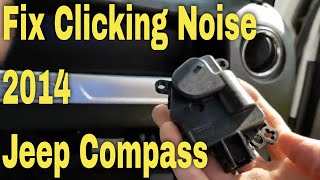
- Failed Recirculation Door Actuator (Very Common) — The small electric motor or plastic gears inside the actuator break or strip, preventing door movement. 🎬 Watch: Hear what a faulty HVAC actuator sounds like. This usually causes a repetitive clicking noise as the motor slips against broken gear teeth.
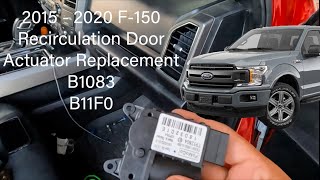
- Broken or Jammed Recirculation Door / Linkage (Common) — The physical door breaks, or its pivot points and cams jam from debris or wear. This stops the actuator from moving the door. On Ford F-150s, binding plastic cams are a known mechanical failure point. 🎬 Watch: Replace an F-150 recirculation actuator without removing the dash.
- Deteriorating Door Seals Causing Overtravel (Common) — On GM trucks and SUVs, foam seals on the door rot away over time. This allows the door to travel past its designed limits. The HVAC module interprets this overtravel as a fault and sets the code.
- Wiring or Connector Issues (Common) — Damaged, corroded, or loose wiring interrupts the power, ground, or signal to the actuator. A short to ground on the signal circuit often triggers multiple HVAC codes simultaneously.
- Loss of Calibration (Less Common) — After a battery replacement or pulling the HVAC fuse, the module loses its memory of the door's end positions. If recalibration fails upon startup, it sets a code.
- Failed HVAC Control Module (Less Common) — The computer module fails internally, stopping correct signals or failing to read feedback, even if the actuator and wiring are intact.
Symptoms
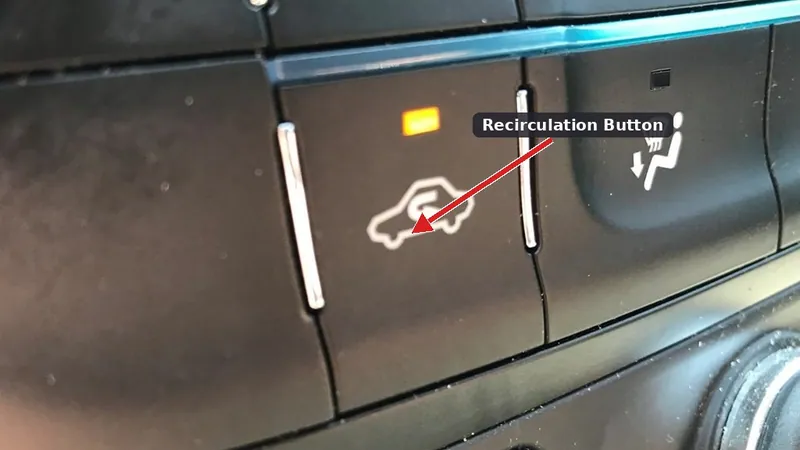
- Clicking, Ticking, or Knocking Noise From the Dashboard — A repetitive clicking sound from behind the passenger dashboard confirms a broken or stripped gear inside the actuator.
- Inability to Switch Between Fresh and Recirculated Air — Pressing the recirculation button produces no change in airflow sound, leaving the system stuck in either fresh air or recirculate mode.
- Poor Air Conditioning Performance — The A/C struggles to cool the cabin on hot days because the system is stuck pulling in 90+ degree outside air instead of recirculating chilled cabin air.
- Unpleasant Odors or Stale Air in the Cabin — A system stuck on fresh air constantly pulls in exhaust fumes. A system stuck on recirculate causes cabin air to become stale and stuffy.
Diagnostic Flowchart

Tap your situation to follow the diagnostic path that matches what you're seeing on this code.
Common Fixes & Costs
- Replace Recirculation Door Actuator — Parts: $30-$100, Labor: $100-$1200, ~1.0-8.0 hr book time (Intermediate)
- Recalibrate HVAC Control Module — Parts: $0, Labor: $0-$150, ~0.5 hr book time (DIY)
- Reprogram HVAC Control Module (GM Specific) — Parts: $0, Labor: $100-$200, ~1.0 hr book time (Professional)
- Repair Wiring/Connector — Parts: $5-$25, Labor: $100-$300, ~1.0-2.5 hr book time (Intermediate)
- Replace HVAC Control Module — Parts: $200-$500, Labor: $100-$200, ~1.0 hr book time (Professional)
DIY vs Professional
- Recalibrate HVAC Control Module 🟢 Beginner
Tools: Wrench or fuse puller - Replace Recirculation Door Actuator 🟢 Beginner
Tools: Screwdriver set, trim removal tools, socket set, flashlight - Repair Wiring/Connector 🟢 Beginner
Tools: Multimeter, wire strippers, crimpers, heat shrink tubing, wiring diagram - Reprogram or Replace HVAC Control Module 🟢 Beginner
Tools: Professional-grade bi-directional scan tool with programming capabilities
Used vs. New Parts: Buying Guide
When a used part is worth it: Buying a used recirculation door actuator rarely makes sense. The primary failure mode is wear on internal plastic gears, meaning a used part is already compromised. Only consider used if a new part is entirely unavailable.
Donor-vehicle mileage cap: roughly under 40000 miles for the part to have meaningful remaining life.
Donor quality checklist:
- Match the part number exactly; visually similar actuators have different internal logic.
- Avoid parts from high-mileage vehicles or extreme heat climates.
- Inspect the gear for visible wear or cracks before purchasing.
Decision logic:
- If The part is under $100 new. → Always buy new. Savings from a used part do not justify the risk of repeating the labor.
- If The labor to access the part requires dashboard removal. → Absolutely buy a new OEM or premium aftermarket part to guarantee you only do the job once.
- If The vehicle is very old and the budget is extremely tight. → A low-mileage used part is a gamble but serves as a temporary solution.
Warranty tradeoff: Used parts offer 30-90 day warranties. New aftermarket parts offer 1-year to lifetime warranties. New OEM parts offer the best assurance of fitment and longevity.
Worst-case if a used part fails: $1200 if a used part fails after installation on a dash-out vehicle, requiring you to pay the massive labor cost twice.
What Happens If You Wait — Timeline
- 0-1 month: Intermittent clicking from the dashboard on startup. The function still works most of the time. B0229 is stored as pending. (MPG impact: 0%% · Added cost: $0)
- 1-3 months: Clicking becomes constant. The door is stuck in one position. A/C performance worsens on hot days. B0229 is set as a hard fault. (MPG impact: 0-2%% · Added cost: $20 in wasted fuel due to reduced A/C efficiency.)
- 3-12 months: Clicking stops as the internal motor burns out. Recirculation function is completely lost, leading to permanent poor A/C performance in summer. (MPG impact: 1-4%% · Added cost: $60 in wasted fuel and increased strain on the A/C compressor.)
- 12+ months: Actuator is completely dead. The primary consequence is permanent loss of recirculation control and ongoing poor climate performance. (MPG impact: 1-4%% · Added cost: $0)
Cost of Not Fixing It
- 0-3 months: Annoying clicking noise from the dashboard and reduced A/C performance on hot days. Inability to block outside fumes. (Added cost: $0)
- 3-12 months: Increased strain on the A/C compressor if stuck in 'fresh air' mode in a hot climate. The clicking noise stops once the actuator motor burns out completely. (Added cost: $20 (wasted fuel due to higher A/C load))
- 12+ months: Permanent loss of recirculation function. The risk of major component failure (like the A/C compressor) is low but present due to continuous maximum-load operation in summer. (Added cost: $0)
Diagnosis Steps
- Attempt a System Recalibration
Force the HVAC system to recalibrate before buying parts. Disconnect the negative battery terminal for 15 minutes or pull the HVAC fuse for 60 seconds. Reconnect, turn the ignition to 'ON' (engine off), and wait 3 minutes without touching climate controls. If the code clears, the issue was a simple loss of calibration.
Tools: Wrench or fuse puller (Beginner) - Verify the Symptom and Listen for the Actuator
With the engine running and blower fan on low, toggle the recirculation button. Listen for a clicking sound from the passenger dashboard. Clicking confirms a broken actuator gear. Silence indicates a dead motor, wiring issue, or faulty control module.
Tools: Your ears (Beginner) - Scan for All HVAC Codes
Use an OBD-II scanner capable of reading Body (B) codes. Check for other HVAC codes (like B0414 or B0424). Multiple codes appearing simultaneously point to a systemic problem, such as a faulty HVAC control module or a compromised 5-volt reference circuit, rather than multiple broken actuators.
Tools: OBD-II Scanner (with B-code capability) (Beginner) - Visually Inspect the Actuator and Door Linkage
Remove the glove box to access the recirculation actuator. Have a helper press the recirculation button while you watch the actuator. If it stutters or binds, the door linkage is jammed. If it does not move at all, the motor or wiring is at fault.
Tools: Screwdriver, trim removal tools, flashlight (Intermediate) - Test the Actuator's Electrical Connector
Unplug the actuator. Using a multimeter and wiring diagram, verify a steady 5V on the reference wire and a solid ground. A missing 5V reference indicates a wiring fault or bad HVAC module.
Tools: Multimeter, vehicle-specific wiring diagram (Advanced) - Analyze Scan Tool Live Data (PIDs)
View live data for the recirculation door position on a bidirectional scan tool. Normal operating range is typically 5 to 250 counts. A value stuck at 0 or above 250 while commanding movement confirms a sensor fault, wiring issue, or door overtravel.
Tools: Bi-directional Scan Tool (Advanced) - Test the Actuator Directly (Bench Test)
Remove the actuator. Apply power and ground to the motor pins using a 9V battery. The gear should turn smoothly. Reverse polarity to turn it the other way. If it fails to move, the internal motor is dead.
Tools: 9V Battery, jumper wires, wiring diagram (Advanced) - Check for a Shorted 5-Volt Reference Circuit
If multiple actuator codes exist, disconnect all HVAC actuators. Check for 5 volts at the reference wire on each connector. If voltage returns when you disconnect one specific actuator, that actuator has an internal short pulling the entire circuit down.
Tools: Multimeter, wiring diagram (Advanced)
When This Code Triggers (Freeze-Frame Conditions)
- Ignition Status: ON (The fault is detected when the ignition is on, as the HVAC module performs self-tests and calibrations.)
- Battery Voltage: 9-16 Volts (The system requires adequate voltage to run diagnostics.)
- HVAC Command: Mode Change (The code sets immediately following a driver command (pressing the recirculation button) or during the initial self-calibration sequence.)
- Actuator Position Counts: <5 or >250 (The module sees a position feedback value outside its pre-programmed acceptable range.)
Related Codes
- B0414 — Driver-side temperature door actuator code. If present with B0229 on GM vehicles, it strongly suggests a systemic issue like a shared 5V reference circuit short, not independent actuator failures.
- B0424 — Passenger-side temperature door actuator code. Seeing it alongside B0229 flags a shared electrical problem or faulty control module.
- B3770 — Mode door actuator code. Its presence with B0229 indicates a probable control module or common circuit fault.
- B1081:07 — Ford code for 'Air Temperature Door Motor - Mechanical Failures'. It points specifically to mechanical binding of the door or linkage (TSB 20-2236), rather than an electrical actuator failure.
Climate & Environmental Factors
- Cold Weather: Freezing temperatures cause the plastic internal gears to become brittle. Activating the HVAC system in extreme cold frequently shatters these weakened gears.
- High Heat: Prolonged exposure to hot climates accelerates the aging of plastic components and breaks down the internal circuit board controlling the actuator motor.
- Humidity: High humidity causes condensation inside the actuator. This moisture corrodes the electrical contacts of the internal potentiometer, leading to erratic signals.
How to Talk to a Mechanic About This Code
Say this: "I have a B0229 code and a clicking noise from the passenger dashboard. I need a diagnostic to confirm if it's the recirculation door actuator or a binding door. Please also check for any relevant TSBs for my vehicle."
This identifies the specific code and symptom while pointing to the most likely causes. Mentioning TSBs prevents a shop from blindly replacing a part without checking for known software or mechanical fixes.
Avoid saying:
- 'My A/C is making a weird noise.'
- 'Just fix whatever's wrong with the climate control.'
- 'The internet said to replace this part, can you do it?'
Questions to ask before authorizing the repair:
- What is the total estimated cost, including parts and labor?
- Does the dashboard need to be removed to access the actuator?
- Will you perform the HVAC system recalibration after installation?
- Did you confirm the door itself isn't jammed or binding?
Where to Take It: Dealer vs Independent vs Chain
- Dealer:
Best for: Vehicles under warranty., Known TSB fixes requiring specific software updates (common on GM vehicles)., Extremely difficult repairs requiring full dashboard removal.
Downsides: Highest labor rates., May default to replacing the entire HVAC module instead of diagnosing wiring. (Typical cost: +50% vs. baseline) - Independent Shop:
Best fit for most cases. A reputable independent shop can diagnose and replace the actuator for a reasonable price.
Best for: Out-of-warranty vehicles where the actuator is reasonably accessible., Diagnosing common failures like a bad actuator, wiring fault, or jammed door., Cost-effective repairs for most scenarios.
Downsides: May lack specific tools to perform a software update if a TSB requires it. (Typical cost: +0% vs. baseline) - Chain Shop:
Use with caution. Avoid for in-depth diagnosis, intermittent electrical problems, or jobs requiring dashboard removal.
Best for: Simple, accessible actuator replacements where you have already confirmed the diagnosis.
Downsides: Technician skill varies dramatically., Lacks advanced diagnostic tools to read B-codes or view live data., High risk of being sold unnecessary services like an A/C recharge. (Typical cost: -10% vs. baseline)
When to Walk Away From the Repair
If the estimated repair cost exceeds 40-50% of the car's private-party value, consider selling or trading it in instead of repairing it.
- Car worth $4500, fix is $250: Fix it. The repair cost is well below the threshold and restores important functionality.
- Car worth $12000, fix is $1200: Borderline, but likely worth fixing. This is a high but reasonable cost for a valuable vehicle requiring dashboard removal.
- Car worth $3000, fix is $1500: Walk away. The repair cost is 50% of the car's value. It is not financially sensible to invest this much into an older vehicle for a non-critical repair.
What Scan Tool You Need for This Code
Minimum: A scanner that reads and clears Body (B) control module codes. Basic sub-$30 readers only handle engine (P) codes and will not see B0229.
A basic code reader leaves you blind. To properly diagnose B0229, you must see the code, view live HVAC data (actuator position counts), and have bidirectional control to command the actuator.
Budget: Ancel AD410 / Foxwell NT301 (~$50) — Reads and clears Body (B) codes. Good for confirming the code and clearing it after a DIY repair, but lacks live HVAC data.
Mid-range: Foxwell NT809 / Autel MaxiCOM MK808 (~$350) — The sweet spot for DIY. Offers full system diagnostics, live data streams for actuator position, and bidirectional control to command the actuator to move for testing.
Professional: Launch X431 Series / Autel MaxiSys MS906Pro (~$500-1200) — Provides advanced functions like ECU programming. Necessary to perform the TSB software update for applicable GM vehicles.
Rent vs buy: Auto parts stores offer loaner tools, but standard loaners are often basic readers that cannot read Body (B) codes. Call your local store to confirm their tool's capability before relying on this option.
How to Clear the Code After You Fix It
- Install the new part and reconnect all electrical connectors.
- Reconnect the battery or install the HVAC fuse.
- Turn ignition to 'ON' (do not start engine) and wait 3 minutes without touching climate controls to allow for self-calibration.
- Use an OBD-II scan tool to clear the Body (B) codes.
Drive cycle (~5 minutes): A specific drive cycle is not required. The fault is detected by the HVAC module during its power-on self-test. After repair and calibration, clear the code with a scan tool.
Watch out for:
- Forgetting to let the system self-calibrate after reconnecting power. Interrupting this process causes improper operation even with a new part.
- Using a basic scan tool that cannot read or clear Body (B) codes.
- Ignoring a binding door or software issue (on applicable GM vehicles), causing the code to return immediately.
Will This Fail Emissions / State Inspection?
No — by itself this code doesn't fail OBD inspection (but it can keep readiness monitors from setting, which causes a separate fail).
- California: This is a Body (B) code and does not affect the emissions control system. It will not cause a failure of the California Smog Check.
- New York: The NYS inspection checks for the Check Engine Light. B0229 does not activate this light and will not cause an inspection failure.
- Texas: B0229 is not an emissions code and will not cause a failure during county-specific emissions testing.
Most Commonly Affected Vehicles
- Chevrolet / GMC / Cadillac Silverado, Sierra, Tahoe, Yukon, Escalade (2002-2007) — Extremely common failure. TSB 06-01-38-003 addresses a software fix for deteriorating door seals causing this code, frequently misdiagnosed as a bad actuator.
- Ford F-150, F-Super Duty (2015-2022) — Subject to TSB 20-2236 for binding HVAC doors. The issue is often a binding door cam requiring lubrication, not just a failed actuator.
- Nissan Titan, Armada, Frontier (2004-2015) — Actuator failure is common, but replacement requires removing the entire dashboard assembly, pushing repair costs over $1,000.
- Jeep Wrangler (JK) (2011-2018) — The actuator is a known failure point and notoriously difficult to access. Independent shops charge $300+, while dealers charge $600+ for labor.
- Dodge / Ram Ram 1500/2500/3500 (2006-2012) — The plastic stop on the recirculation door breaks, allowing the actuator to over-rotate and strip its gears.
Manufacturer-Specific Notes
- General Motors (Chevrolet, GMC, Cadillac): Per TSB 06-01-38-003, B0229 is often caused by deteriorating foam on the blend doors allowing overtravel. The official fix is reprogramming the HVAC Control Module with updated software, not replacing the actuator.
- Ford: On F-150s, HVAC door issues relate to physical door cams binding within the housing. TSB 20-2236 requires lubricating the door bearing surfaces and replacing the cams.
- Nissan: Due to massive labor costs for dashboard removal, a common Titan owner workaround is unplugging the clicking actuator entirely, permanently sacrificing the recirculation function to stop the noise.
- Toyota / Lexus: Many models feature a self-diagnostic mode accessed by holding 'AUTO' and 'Recirculation' simultaneously while turning the ignition 'ON', allowing you to clear codes without a scanner.
Real Owner Stories
2005 Chevy Tahoe with automatic climate control
Owner experienced a continuous clicking noise from the passenger side dashboard. The A/C worked, but code B0229 was present.
What they tried:
- Scanned for codes and identified the recirculation actuator.
- Accessed the actuator behind the glove box and replaced it.
- Performed a recalibration procedure by pulling the HVAC fuse.
Outcome: Replacing the accessible actuator and performing the recalibration eliminated the clicking noise and cleared the code. Total DIY cost was $40.
Lesson: For 2002-2007 GM trucks, the recirculation actuator is reachable for a DIY repair. A clicking noise guarantees actuator failure, and simple replacement is the fix.
2014 Chevy Silverado 1500 after a battery replacement
Immediately after replacing a dead battery, the HVAC blew warm air on the driver's side and cold on the passenger side. No clicking was heard.
What they tried:
- Performed a fuse-pull reset, which oddly reversed the hot/cold sides.
- Replaced the actuator, but the problem persisted.
Outcome: The issue was a loss of calibration after the battery change. The initial reset attempt failed to resolve the logic confusion in the HVAC module. The root cause was a calibration failure that a part swap couldn't fix.
Lesson: If HVAC problems appear immediately after a battery change, the root cause is a loss of calibration. Do not replace parts. Attempt a full recalibration procedure first.
2018 Ford F-150 with no temperature control
Owner could not adjust the temperature. A scan revealed DTC B1081:07 alongside general HVAC malfunction codes.
What they tried:
- A simple recalibration did not work.
- Found Ford TSB 20-2236 describing the exact issue.
Outcome: The fix required removing the climate control housing to lubricate binding door bearing surfaces and replace actuator cams. Replacing the actuator alone would not have fixed the binding door.
Lesson: Always check for Technical Service Bulletins (TSBs). For newer Ford trucks, B0229-related symptoms are caused by mechanical binding (TSB 20-2236), not electrical actuator failure.
How to Prevent This Code From Triggering
- Cycle the Recirculation Button Regularly (Once a week) — Regularly switching between fresh and recirculated air keeps the actuator motor and gears from seizing up due to inactivity.
- Avoid Extreme and Sudden Temperature Adjustments (Daily habit) — Rapidly cycling from full hot to full cold puts unnecessary stress on the plastic gears of all HVAC actuators. Gradual adjustments prolong component life.
- Replace Cabin Air Filter Regularly (Every 12 months or 15,000 miles) — A clogged filter increases strain on the HVAC system and allows debris into the housing, which can jam the recirculation door.
Frequently Asked Questions
I replaced the actuator, but the code came back. What now?
If a new actuator didn't fix it, the problem is likely elsewhere. Common reasons include a lack of post-installation recalibration, a faulty HVAC control module, or a physically jammed door. On 2003-2007 GM vehicles, deteriorating door seals require a software update, not a new part.
What's the difference between a blend door actuator and a recirculation door actuator?
Blend door actuators control temperature by mixing hot and cold air. The recirculation door actuator controls the air source, switching between fresh outside air and recirculated cabin air. Code B0229 specifically targets the recirculation door.
Can I just unplug the actuator to stop the clicking noise?
Yes, unplugging the actuator stops the clicking noise. However, the door remains stuck in its last position, permanently disabling your ability to switch air sources. This is a common zero-cost workaround for vehicles requiring a $1,000+ dashboard removal.
Why is the labor cost so high to replace a small plastic part?
The high cost stems entirely from the actuator's location. On vehicles like the Jeep Wrangler or Nissan Titan, mechanics must remove dashboard panels, the instrument cluster, and sometimes the entire dash assembly. This turns a $40 part replacement into a 6-to-8 hour labor job.
Can a bad recirculation door actuator affect the AC compressor?
Indirectly, yes. If the door is stuck pulling in hot outside air on a 90-degree day, the A/C system works continuously at maximum capacity. This reduces cooling performance and puts premature wear on the compressor over time.
Will code B0229 cause my car to fail an emissions test?
No. B0229 is a 'Body' (B) code related to the vehicle's interior comfort systems. It does not trigger the Check Engine Light or affect emissions, so it will not cause an inspection failure.
How do I perform the HVAC recalibration procedure?
Disconnect the negative battery terminal for 15 minutes or pull the HVAC fuse for 60 seconds. After reconnecting, turn the ignition to 'ON' without starting the engine. Wait 3 minutes without touching any climate controls while the system relearns the door positions.
Key Takeaways
- Code B0229 indicates a failure in the recirculation door system, most commonly caused by stripped plastic gears inside the actuator motor.
- Listen for a repetitive clicking noise behind the passenger dashboard; this confirms a broken actuator gear in over 80% of cases.
- Always attempt a free system recalibration by disconnecting the battery for 15 minutes before buying replacement parts.
- Repair costs range from $130 for a simple glovebox-access replacement to over $1,200 if the vehicle requires full dashboard removal.
Helpful Videos
Shop the Parts Behind B0229
Below are the parts most often responsible for code B0229, ranked by how frequently each one is the actual culprit (per the diagnosis above). Tap any to see what we have for your vehicle.



The information in this article is provided for general reference and educational purposes only. Vehicle specifications, procedures, and part compatibility can vary by production date, trim level, and region. Always consult your vehicle's factory service manual and verify part numbers before purchasing or performing repairs. Safety-critical components such as airbags, seat belts, and braking systems should be installed by a qualified professional.
- 🧭 Diagnostic Flowchart
- 🎬 Helpful Videos
- 🛍️ Shop This Part
- What Does B0229 Mean?
- Can I Drive With B0229?
- Common Causes
- Symptoms
- Common Fixes & Costs
- DIY vs Professional
- Used vs. New Parts: Buying Guide
- What Happens If You Wait — Timeline
- Cost of Not Fixing It
- Diagnosis Steps
- When This Code Triggers (Freeze-Frame Conditions)
- Related Codes
- Climate & Environmental Factors
- How to Talk to a Mechanic About This Code
- Where to Take It: Dealer vs Independent vs Chain
- When to Walk Away From the Repair
- What Scan Tool You Need for This Code
- How to Clear the Code After You Fix It
- Will This Fail Emissions / State Inspection?
- Most Commonly Affected Vehicles
- Manufacturer-Specific Notes
- Real Owner Stories
- 2005 Chevy Tahoe with automatic climate control
- 2014 Chevy Silverado 1500 after a battery replacement
- 2018 Ford F-150 with no temperature control
- How to Prevent This Code From Triggering
- Frequently Asked Questions
- I replaced the actuator, but the code came back. What now?
- What's the difference between a blend door actuator and a recirculation door actuator?
- Can I just unplug the actuator to stop the clicking noise?
- Why is the labor cost so high to replace a small plastic part?
- Can a bad recirculation door actuator affect the AC compressor?
- Will code B0229 cause my car to fail an emissions test?
- How do I perform the HVAC recalibration procedure?
- Key Takeaways
- 🎟️ Get 5% Off