

OBD-II Code B0423: Passenger-Side Temperature Control Problem
What B0423 means, why it triggers, and how to fix it
- Code B0423 indicates a failure in the passenger-side temperature blend door actuator, locking the passenger vents on full hot or full cold.
- A repetitive clicking noise from behind the glovebox confirms stripped plastic gears inside the actuator, requiring immediate replacement.
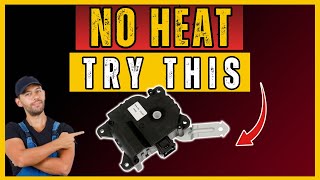
- Before buying parts, pull the HVAC fuse for 60 seconds to force a system recalibration, which fixes temporary communication glitches for free.
- Expect to pay between $230 and $655 at a repair shop, as replacing the $40 actuator often requires 2 to 4 hours of dashboard disassembly.
What Does B0423 Mean?

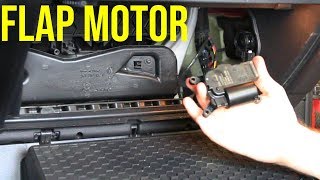
Code B0423 means your vehicle's HVAC control module is not receiving the correct signal from the passenger-side temperature blend door actuator. This small electric motor controls a dashboard flap that mixes hot and cold air. The computer triggers this code when it detects the actuator is mechanically stuck, its internal feedback sensor is out of range, or its electrical circuit has failed.
Technical definition: The SAE/ISO definition for B0423 is "Temperature Control 2 Circuit Malfunction." The HVAC module sets this code when the actual position of the passenger-side temperature blend door actuator differs from the commanded position by a specific threshold, or the feedback signal circuit is shorted, open, or out of range (typically less than 3 or more than 253 counts). GM service literature uses suffixes to specify the fault: B0423 02 (short to ground), B0423 05 (short to battery or open), or B0423 61 (actuator stuck).
Can I Drive With B0423?
Yes. You can safely drive the vehicle without risking engine or transmission damage. However, the passenger-side climate control will not produce the correct air temperature. In freezing conditions, the inability to defrost the passenger side of the windshield becomes a safety hazard due to impaired visibility.
Common Causes

- Faulty Passenger Temperature Blend Door Actuator (Very Common) — The small electric motor and its internal plastic gears are the primary failure point. The gears strip, causing a clicking noise, or the motor burns out, leaving the door permanently stuck.
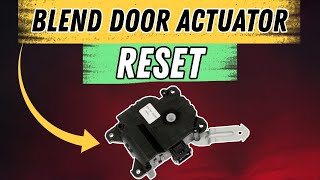
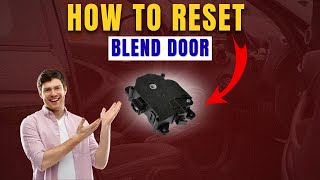
- Loss of Calibration (Common) — After a dead battery or jump-start, the HVAC system forgets the actuator's start and end points. A recalibration procedure often fixes this without requiring new parts. 🎬 See how to easily reset your blend door actuator.
- Wiring Harness or Connector Issue (Uncommon) — Damaged wires or corroded connectors cause a short to ground, a short to power, or an open circuit, cutting off communication between the actuator and the HVAC module.
- Poor Ground Connection to HVAC System (Uncommon) — A loose or corroded dashboard ground connection (like G200 or G203 on GM trucks) causes multiple actuator codes to trigger simultaneously and prevents new parts from working.
- Faulty HVAC Control Module (Rare) — The main climate control computer fails internally, losing its ability to send commands or interpret feedback. Consider this only after thoroughly testing the actuator and wiring.
- Mechanical Obstruction of the Blend Door (Rare) — Debris or a broken piece of the internal HVAC case jams the blend door, preventing the actuator from moving it.
Symptoms

- Passenger Side Temperature Stuck (Hot or Cold) — Air from the passenger-side vents remains on full hot or full cold, regardless of the temperature setting. In dual-zone systems, the driver's side functions normally while the passenger side fails.
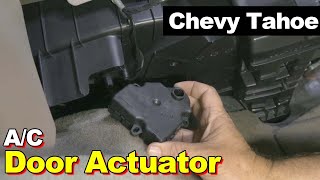
- Clicking or Ticking Noise from Dashboard — A repetitive clicking or tapping sound behind the glove box occurs when starting the vehicle or changing temperature settings, indicating stripped actuator gears. 🎬 Listen to the clicking noise caused by a failing actuator.
- HVAC Service Message or Check Engine Light (also visible on scanner) — The vehicle stores the B0423 code, triggering a climate control service message or warning light on the instrument cluster.
Diagnostic Flowchart

Tap your situation to follow the diagnostic path that matches what you're seeing on this code.
Common Fixes & Costs
- Replace Passenger Temperature Blend Door Actuator
— Parts: $30-$155, Labor: $200-$500, ~3.5 hr book time
(Intermediate)
Chevrolet Tahoe / GMC Yukon (2007-2014): OEM GM 89018365 (Alt: ACDelco 15-72971)
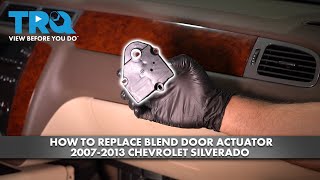
Chevrolet Silverado / GMC Sierra (2007-2013): OEM GM 89018365 (Alt: ACDelco 15-72971)
Buick Enclave / Chevy Traverse (2008-2012): OEM GM 20826182 (Alt: ACDelco 15-73953) - HVAC System Recalibration — Parts: $0, Labor: $0-$150, ~0.5 hr book time (DIY)
- Repair Wiring or Connector — Parts: $5-$25, Labor: $150-$350, ~1.5 hr book time (Intermediate)
- Clean or Repair HVAC System Ground — Parts: $0-$10, Labor: $75-$200, ~1 hr book time (Intermediate)
- Replace HVAC Control Module — Parts: $200-$600, Labor: $100-$200, ~1.2 hr book time (Professional)
DIY vs Professional
- Replace Passenger Temperature Blend Door Actuator 🟢 Beginner
Tools: Trim removal tools, socket set (7mm, 8mm, 10mm), screwdrivers, flashlight. - HVAC System Recalibration 🟢 Beginner
Tools: Fuse puller. - Repair Wiring or Connector 🟢 Beginner
Tools: Multimeter, wire strippers, crimpers, heat shrink tubing, wiring diagram.
Used vs. New Parts: Buying Guide
When a used part is worth it: Buying a used blend door actuator is never recommended. The internal plastic gears have a 100% failure rate over time, making a used part a massive risk for repeat labor costs.
Donor-vehicle mileage cap: roughly under 50000 miles for the part to have meaningful remaining life.
Donor quality checklist:
- Match the part number exactly, as several identical-looking actuators perform different functions in the dashboard.
- Choose an OEM part over an unknown aftermarket brand.
- There is no reliable way to visually inspect internal gear wear on a used actuator.
Decision logic:
- If The labor to access the part requires dashboard removal → Buy a new OEM part (ACDelco) to eliminate the risk of a repeat repair.
- If The actuator is easily accessible behind the glove box → A new aftermarket part is inexpensive enough that a used part still makes no financial sense.
- If The part has a known wear-out failure mode (plastic gears) → Strongly favor a new part with a warranty.
Warranty tradeoff: Used parts from a salvage yard carry a 30-day warranty on the part only. New OEM parts carry a 1-year warranty. Neither covers the $200-$500 labor cost if the part fails.
Worst-case if a used part fails: $200-$500 in repeat labor costs if a used or cheap aftermarket part fails after installation.
What Happens If You Wait — Timeline
- 0-1 month: Code B0423 sets. A clicking noise begins when changing temperature. Passenger side air is stuck hot or cold. Comfort is impacted, but no mechanical damage occurs. (MPG impact: 0%% · Added cost: $0)
- 1-6 months: The clicking noise becomes constant. In winter, if stuck on cold, the inability to defrost the passenger side of the windshield becomes a severe safety hazard. (MPG impact: 0%% · Added cost: $0)
- 6-12 months: The internal electric motor burns out from straining against the stripped gear. The clicking noise stops, but the temperature remains permanently stuck. (MPG impact: 0%% · Added cost: $0)
- 12+ months: No further damage to other vehicle systems occurs. The consequence remains a permanent loss of passenger-side climate control until the actuator is replaced. (MPG impact: 0%% · Added cost: $0)
Cost of Not Fixing It
- Immediate: Loss of passenger-side temperature control and a persistent clicking noise from the dashboard. (Added cost: Negligible)
- 1-6 months: In winter, a stuck-cold actuator impairs window defrosting on the passenger side, creating a severe visibility hazard. (Added cost: Negligible)
- 6+ months: The faulty actuator motor burns out, stopping the clicking noise but leaving the temperature permanently stuck. No damage to other vehicle systems occurs. (Added cost: Negligible)
Diagnosis Steps
- Verify Code and Suffixes
Use a body-code capable OBD-II scanner to confirm B0423 is active. Note any numeric suffixes (e.g., -02, -05, -61) which specify if the fault is electrical or mechanical. Check for related codes like B0413 (driver side) to see if multiple actuators are failing.
Tools: OBD-II Scanner (Body Code Capable) (Beginner) - Attempt HVAC System Recalibration
Force the HVAC module to relearn the actuator positions. Pull the HVAC or HVAC/ECAS fuse for 60 seconds, reinstall it, start the engine, and wait 2 minutes without touching any climate controls. This fixes temporary communication glitches.
Tools: Fuse puller (Beginner) - Listen for Actuator Movement
With the engine on and radio off, change the passenger temperature setting from full hot to full cold. Listen behind the glove box. Clicking confirms a broken actuator gear. Silence indicates a dead motor, wiring problem, or faulty module.
Tools: Quiet environment (Beginner) - Command Actuator via Scan Tool
Use a bi-directional scan tool to command the actuator to move while watching the 'Pass Temp Door Pos' data PID. If the position count (normally 3-253) does not change, the actuator or circuit has failed.
Tools: Bi-directional scan tool (Advanced) - Inspect Actuator and Connector
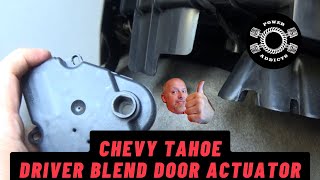
Locate the passenger temperature blend door actuator (often behind the radio or glovebox). Ensure the electrical connector is seated securely. Inspect the wiring harness for chafing, pinched wires, or corrosion.
Tools: Flashlight, Trim removal tools (Intermediate) - Test Electrical Circuit
Disconnect the actuator. Using a multimeter and wiring diagram, turn the key on and test the harness connector. Verify a 5-volt reference signal, a solid ground (less than 10 ohms to chassis), and check the signal wire for shorts to ground or power.
Tools: Multimeter, Vehicle-specific wiring diagram (Advanced) - Analyze Signal Circuit
For intermittent issues, back-probe the actuator's signal wire with an oscilloscope. Command temperature changes and watch for a clean voltage sweep between 0.5V and 4.5V. Dropouts indicate a failing internal potentiometer.
Tools: Oscilloscope, Wiring diagram (Professional)
When This Code Triggers (Freeze-Frame Conditions)
- HVAC Module Status: ON (The climate control system was active.)
- Ignition Status: ON (The vehicle's ignition was on and the engine was running.)
- Commanded Position: Varies (e.g., 25 counts) (The HVAC module commanded the actuator to move to a new position.)
- Actual Position: Varies (e.g., 150 counts) (The actuator's reported position failed to match the commanded position, triggering the fault.)
Related Codes
- B0413 — Indicates a failure in the driver's side temperature actuator. If the driver's side blows the wrong temperature, the issue is B0413; if the passenger's side is faulty, it is B0423.
- B3779 — Points to a failure in the mode door actuator, which controls airflow direction (defrost, dash, or floor). B0423 affects temperature, while B3779 affects vent location.
- B0228 — Indicates a failure in the recirculation actuator. The symptom is the inability to switch between outside air and recirculated cabin air, unrelated to air temperature.
- B0433 — Indicates a failure in the auxiliary (rear) temperature actuator in vehicles with rear climate controls. B0423 applies strictly to the front passenger zone.
Climate & Environmental Factors
- Extreme Temperature Fluctuations: Operating in climates with significant swings between hot and cold accelerates wear on the actuator's internal plastic gears. The plastic becomes brittle in the cold and strips easily under load.
- High Humidity: Moisture enters the actuator housing or electrical connector, causing corrosion on the circuit board or pins. This increases electrical resistance and triggers intermittent failures.
- Freezing Temperatures: Moisture inside the HVAC case freezes, physically jamming the blend door. The actuator motor strains against the ice, triggering a 'stuck' code (B0423-61) or stripping its gears.
How to Talk to a Mechanic About This Code
Say this: "I have a B0423 code and the classic symptoms of a failed passenger temperature blend door actuator—clicking from the dash and the passenger vents are stuck on hot/cold. I'd like a quote to diagnose and replace the actuator."
This signals you have done your research, points the technician directly to the most likely cause, and frames the conversation around a specific, common repair. It prevents a broad, open-ended diagnostic process.
Avoid saying:
- 'My A/C is broken.'
- 'Just fix whatever is wrong with the climate control.'
- 'I heard a noise in my dash, can you check it out?'
Questions to ask before authorizing the repair:
- Is this an actuator that requires dashboard removal, or is it accessible from under the dash?
- What is the price difference between an OEM (ACDelco) part versus an aftermarket part?
- Does your labor estimate include the time to perform an HVAC system recalibration after installation?
- What is the warranty on both the part and your labor for this specific repair?
Where to Take It: Dealer vs Independent vs Chain
- Dealer:
Recommended only if under warranty. An independent shop is a better value for this common repair.
Best for: Vehicles still under a bumper-to-bumper warranty., When a previous repair at an independent shop failed, suggesting a complex electrical problem.
Downsides: Significantly higher labor rates and part markups compared to independent shops., Inflexible on part choices, insisting on expensive OEM parts. (Typical cost: +50% vs. baseline) - Independent Shop:
Best fit. This is a bread-and-butter repair for competent independent shops. They have extensive experience with this failure and offer OEM parts at better labor rates.
Best for: Out-of-warranty vehicles, especially the common GM trucks and SUVs affected by this code., Vehicle owners who are cost-conscious but want quality work.
Downsides: Shop quality varies, so choose a shop with good reviews and ASE-certified technicians. (Typical cost: +0% vs. baseline) - Chain Shop:
Not recommended. This repair requires more skill and patience than a typical chain shop provides, especially if dashboard removal is necessary.
Best for: Simple, routine maintenance like oil changes and tire rotations.
Downsides: Technician experience with complex dash disassembly is limited, increasing the risk of broken trim., May lack the bi-directional scan tools needed for proper diagnosis and calibration. (Typical cost: -10% vs. baseline)
When to Walk Away From the Repair
If the estimated repair cost exceeds 40-50% of the car's private-party value, pause and consider alternatives.
- Car worth $9000, fix is $650: Fix it. The repair cost is well under the threshold and restores a key comfort feature.
- Car worth $3500, fix is $1500: Borderline. This repair cost is significant relative to the car's value. Get a second opinion to confirm the high labor cost before proceeding.
- Car worth $2000, fix is $1200: Walk away. The repair cost is over half the car's value. It is not an economically sound repair.
What Scan Tool You Need for This Code
Minimum: A scanner that reads manufacturer-specific Body (B) codes. Basic $20 readers that only show Powertrain (P) codes will not see code B0423.
A standard code reader cannot access the HVAC module. It shows 'No Codes Found' even when B0423 is active, leading to a dead end.
Budget: BlueDriver Pro / Autel MaxiAP AP200 (~$60-120) — These Bluetooth dongles read B-codes from the HVAC module, confirm B0423 is present, and clear it after a repair. They view live data but lack bi-directional control.
Mid-range: Foxwell NT510 Elite / Innova 5610 (~$150-350) — The sweet spot for DIY diagnosis. These scanners offer bi-directional control, allowing you to command the actuator to move directly from the tool. They also initiate the HVAC recalibration procedure.
Professional: Autel MaxiCOM MK808 / XTOOL D7 (~$450-700) — Provides full professional-level capabilities. Offers fast bi-directional control, advanced live data graphing to analyze the actuator's feedback signal, and performs module programming.
Rent vs buy: Auto parts store loaner tools are basic code readers and will not read B-codes or perform bi-directional tests. You must buy a capable scanner or pay for a professional diagnosis.
How to Clear the Code After You Fix It
- Use an OBD-II scan tool to clear the B0423 trouble code.
- Perform an HVAC system recalibration by pulling the HVAC/ECAS fuse for 60 seconds, then reinstalling it.
- Start the engine and wait for at least 120 seconds without touching any climate controls to allow the system to self-calibrate.
Drive cycle (~20 minutes): A specific drive cycle is not required to clear a B-code, which clears automatically after 100 fault-free ignition cycles. If the battery was disconnected, a standard drive cycle is required to reset emissions monitors: cold start, 3 minutes idling with A/C on, accelerate to 55 mph for 5 minutes, then coast to 20 mph without braking.
Readiness monitors affected: None
Before emissions retest: drive at least 100 miles to fully set monitors.
Watch out for:
- Forgetting to perform the HVAC recalibration after replacing the actuator causes the new part to function incorrectly.
- Disconnecting the battery clears the code but resets all emissions readiness monitors, requiring a full drive cycle before an emissions test.
- If the root cause (e.g., a wiring short) remains unfixed, the code returns immediately upon startup.
Will This Fail Emissions / State Inspection?
No — by itself this code doesn't fail OBD inspection (but it can keep readiness monitors from setting, which causes a separate fail).
- California: This is a Body (B) code and does not illuminate the Check Engine Light. It will not cause a smog check failure.
- New York: An active B0423 code will not cause an emissions failure. However, if the battery was disconnected during a repair attempt, the vehicle fails if too many emissions readiness monitors read 'Not Ready'.
- Texas: In counties requiring emissions testing, a B-code does not cause an automatic failure. The test focuses strictly on Powertrain (P) codes.
Most Commonly Affected Vehicles
- Chevrolet Tahoe / Suburban (2007-2014) — Extremely common failure item. The passenger actuator is located behind the center of the dashboard, requiring removal of the radio and dash trim to access.
- GMC Yukon / Yukon XL (2007-2014) — Identical to the Chevrolet Tahoe, these models experience a high rate of actuator failures requiring tedious dashboard disassembly.
- Chevrolet Silverado (2007-2013) — Shares the same HVAC system design and part numbers as the SUVs of the same era, leading to frequent B0423 codes.
- GMC Sierra (2007-2013) — The sister truck to the Silverado suffers from the same common blend door actuator failures and high labor repair costs.
- Buick Enclave (2008-2017) — Known for multiple blend door actuator issues across its production run, including the passenger temperature actuator triggering B0423.
- Ford F-150, F-Super Duty (2015-2022) — These trucks exhibit identical symptoms but store code B1081:07. Ford TSB 23-2115 addresses a binding temperature door requiring full dash removal.
- Cadillac Escalade (2007-2015) — Uses a similar HVAC system to the Tahoe/Yukon and is highly prone to B0423 actuator failures, particularly the -61 (actuator stuck) variant.
- Chevrolet Traverse (2009-2017) — Shares its platform with the Buick Enclave, making it susceptible to the same blend door actuator faults requiring significant dashboard disassembly.
Manufacturer-Specific Notes
- General Motors (Chevrolet, GMC, Cadillac, Buick): B0423 almost exclusively refers to the passenger-side temperature blend door actuator. Using an OEM (ACDelco) part is mandatory, as cheap aftermarket actuators have a near-100% premature failure rate on GMT900 platforms.
- Ford: Modern Ford trucks store the equivalent fault as DTC B1081:07. Ford TSB 23-2115 notes the cause is often a binding door within the HVAC case itself, requiring 8-10 hours of labor to remove the entire dashboard and lubricate the case.
- Saturn: Some Saturn models use B0423 to indicate a communication failure with the HVAC module (B0423-05) or, in rare electrical anomalies, an issue with a tailgate switch circuit (B0423-61).
- Honda, Toyota, Nissan: Code B0423 is predominantly a General Motors code. Asian manufacturers experience identical blend door actuator failures but use proprietary, manufacturer-specific diagnostic trouble codes to report them.
Real Owner Stories
2010 Chevy Tahoe with clicking dash and incorrect passenger temperature
Owner experienced a constant clicking noise from the passenger dash, and the air was stuck blowing cold. The vehicle was a high-mileage daily driver.
What they tried:
- Attempted a DIY replacement of the passenger blend door actuator using an ACDelco part.
- The replacement fixed the temperature issue, but the mode actuator failed shortly after, getting stuck on defrost.
Outcome: Successfully resolved the B0423 code. The experience highlights that on high-mileage GM trucks, multiple actuators fail around the same time due to identical plastic gear wear.
Lesson: If paying for labor on an older GM SUV, consider replacing multiple hard-to-reach actuators at once to save on future dashboard disassembly costs.
2014 GMC Sierra with multiple HVAC codes after part replacement
After replacing the driver's side actuator (B0413), both driver and passenger sides stopped working, and multiple codes appeared, including B0423.
What they tried:
- Used a scan tool and found the new part was not responding to commands.
- Checked the main dash ground points (G200 and G203) based on forum advice.
Outcome: The owner found the grounds had good continuity, leading to the conclusion that the HVAC control module itself had failed and required replacement.
Lesson: If multiple actuators fail simultaneously or new parts don't work, investigate common electrical causes like bad grounds or a faulty HVAC module before buying more actuators.
2013 Chevy Traverse with B0423-04 (Feedback Circuit Open)
The HVAC system malfunctioned. The owner used a bi-directional scan tool to perform a recalibration, which temporarily fixed the issue. A week later, code B0423-04 appeared.
What they tried:
- Performed an HVAC system recalibration with an Xtool D7 scan tool.
- Scanned the vehicle a week later and found a historical code B0423-04.
Outcome: The recalibration provided a temporary fix, but the stored code indicated an underlying intermittent electrical problem, likely a failing potentiometer inside the actuator.
Lesson: A recalibration overcomes temporary glitches, but if a code returns with an electrical suffix (-04), it points to a hard failure requiring part replacement.
GMC Terrain with repeated aftermarket actuator failures
An owner replaced the blend door actuator five times in a single year using a cheap aftermarket brand. Each time, it worked briefly before failing and sticking on high heat.
What they tried:
- Repeatedly replaced the actuator under the parts store warranty.
- Verified the blend door itself moved freely by hand.
Outcome: Forum members diagnosed this as a classic case of poor-quality aftermarket parts with weak internal solder joints. The owner installed an OEM ACDelco part, permanently fixing the issue.
Lesson: The high labor cost of accessing blend door actuators makes cheap parts a massive gamble. Paying more for an OEM part is the most cost-effective solution.
How to Prevent This Code From Triggering
- Cycle temperature controls through their full range (Once a month) — Moving the blend door from full hot to full cold prevents the actuator's motor and gears from seizing due to inactivity during extreme seasons.
- Replace the cabin air filter regularly (Every 15,000 miles or annually) — A clogged filter restricts airflow, causing moisture buildup in the HVAC case that freezes and impedes door movement.
- Operate the climate controls gently (Daily habit) — Avoid rapidly spinning knobs. Smooth inputs place less shock load on the small plastic gears inside the actuator, extending their life.
- Address water leaks promptly (As needed) — Leaks from windshield seals or sunroof drains allow water to drip onto dashboard electronics, causing corrosion and electrical shorts in the actuator connectors.
Frequently Asked Questions
Can I just ignore code B0423?
Yes, ignoring it causes no mechanical harm to your engine or transmission. However, you lose passenger-side temperature control, and the clicking noise remains a constant annoyance. In winter, impaired passenger-side defrosting creates a visibility hazard.
Why is the repair so expensive if the part is cheap?
The high cost comes entirely from labor. On many affected vehicles, the passenger actuator sits deep inside the dashboard. Mechanics must spend 2 to 4 hours removing the radio, glovebox, and dash trim to access it.
I replaced the actuator, but the code came back. What now?
First, perform the mandatory HVAC recalibration procedure so the computer learns the new part's position. If that fails, you likely installed a defective aftermarket part or have an underlying wiring issue like a bad ground.
What is that clicking sound coming from my dash?
The clicking is the classic symptom of a failed blend door actuator. It is the sound of stripped internal plastic gears slipping as the motor tries to move the blend door.
Can I replace a blend door actuator myself?
This depends on the actuator's location. If it sits directly behind the glove box, a DIYer with basic hand tools can replace it in an hour. If it requires full dashboard removal, leave it to a professional to avoid breaking brittle trim pieces.
Is a cheap aftermarket actuator okay to use?
No. Mechanics and owners report that budget aftermarket actuators have an extremely high premature failure rate. Given the high labor cost to access the part, spend the extra $30-$50 on an OEM actuator (like ACDelco) to avoid doing the job twice.
My scanner shows B0423-61, B0423-05, or B0423-02. What's the difference?
Suffixes pinpoint the exact fault. B0423-61 means the actuator is mechanically stuck, requiring replacement. B0423-02 (short to ground) and B0423-05 (short to battery/open) indicate electrical wiring faults that require multimeter testing before replacing parts.
Key Takeaways
- Code B0423 indicates a failure in the passenger-side temperature blend door actuator, locking the passenger vents on full hot or full cold.
- A repetitive clicking noise from behind the glovebox confirms stripped plastic gears inside the actuator, requiring immediate replacement.
- Before buying parts, pull the HVAC fuse for 60 seconds to force a system recalibration, which fixes temporary communication glitches for free.
- Expect to pay between $230 and $655 at a repair shop, as replacing the $40 actuator often requires 2 to 4 hours of dashboard disassembly.
Helpful Videos

Shop the Parts Behind B0423
Below are the parts most often responsible for code B0423, ranked by how frequently each one is the actual culprit (per the diagnosis above). Tap any to see what we have for your vehicle.



The information in this article is provided for general reference and educational purposes only. Vehicle specifications, procedures, and part compatibility can vary by production date, trim level, and region. Always consult your vehicle's factory service manual and verify part numbers before purchasing or performing repairs. Safety-critical components such as airbags, seat belts, and braking systems should be installed by a qualified professional.
- 🧭 Diagnostic Flowchart
- 🎬 Helpful Videos
- 🛍️ Shop This Part
- What Does B0423 Mean?
- Can I Drive With B0423?
- Common Causes
- Symptoms
- Common Fixes & Costs
- DIY vs Professional
- Used vs. New Parts: Buying Guide
- What Happens If You Wait — Timeline
- Cost of Not Fixing It
- Diagnosis Steps
- When This Code Triggers (Freeze-Frame Conditions)
- Related Codes
- Climate & Environmental Factors
- How to Talk to a Mechanic About This Code
- Where to Take It: Dealer vs Independent vs Chain
- When to Walk Away From the Repair
- What Scan Tool You Need for This Code
- How to Clear the Code After You Fix It
- Will This Fail Emissions / State Inspection?
- Most Commonly Affected Vehicles
- Manufacturer-Specific Notes
- Real Owner Stories
- 2010 Chevy Tahoe with clicking dash and incorrect passenger temperature
- 2014 GMC Sierra with multiple HVAC codes after part replacement
- 2013 Chevy Traverse with B0423-04 (Feedback Circuit Open)
- GMC Terrain with repeated aftermarket actuator failures
- How to Prevent This Code From Triggering
- Frequently Asked Questions
- Can I just ignore code B0423?
- Why is the repair so expensive if the part is cheap?
- I replaced the actuator, but the code came back. What now?
- What is that clicking sound coming from my dash?
- Can I replace a blend door actuator myself?
- Is a cheap aftermarket actuator okay to use?
- My scanner shows B0423-61, B0423-05, or B0423-02. What's the difference?
- Key Takeaways
- 🎟️ Get 5% Off