

OBD-II Code B0560: Tachometer Circuit Malfunction
The Ultimate Expert Guide to Diagnosing and Fixing B0560
- Code B0560 triggers when a body module, typically the audio amplifier or instrument cluster, loses the engine speed (RPM) signal from the ECM.
- On 2007-2014 GM trucks and SUVs, this code is almost always caused by a failed Active Noise Cancellation (ANC) amplifier, disabling the system and increasing cabin drone.
- Do not confuse B0560 (Tachometer Signal Fault) with P0560 (System Voltage Fault), as P0560 requires diagnosing the battery and alternator instead.
- Professional diagnosis requires testing the tachometer signal wire at the amplifier connector with a multimeter, looking for a target frequency of 275-325 Hz at 600 RPM.
What Does B0560 Mean?
B0560 means a vehicle module, like the instrument cluster or audio amplifier, is receiving an invalid engine speed (RPM) signal. The Engine Control Module (ECM) broadcasts this dedicated signal. When the signal is lost, scrambled, or illogical, this Body Control Module (BCM) code triggers.
Technical definition: The SAE definition for B0560 is "Tachometer Circuit Malfunction". On GM vehicles, it specifies "Tachometer Circuit Signal Invalid". This indicates a module monitoring the engine speed signal detected a voltage or frequency outside its expected range. For example, the code sets if the ANC amplifier receives a signal indicating under 300 RPM or over 9000 RPM while the CAN bus reports the engine is running.
Can I Drive With B0560?
Yes. Driving with code B0560 is safe. It does not affect engine, transmission, or brake functions. You will likely lose tachometer function or Active Noise Cancellation (ANC), increasing cabin noise. There is no risk of progressive damage to the powertrain.
Common Causes
- Faulty Audio Amplifier / ANC Module (Very Common) — The audio amplifier uses the engine speed signal for Active Noise Cancellation. Internal electronic failures in this module frequently cause it to report an invalid signal.
- Wiring or Connector Issues (Very Common) — The wire carrying the RPM signal from the ECM can break, short, or corrode. Water intrusion in the trunk or rear cabin frequently corrodes amplifier connector pins, disrupting the signal.
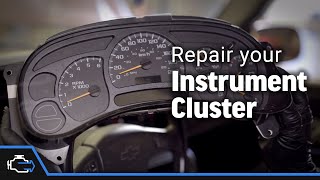
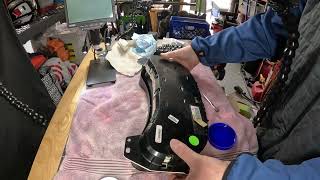
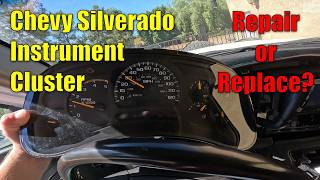
- Faulty Instrument Panel Cluster (IPC) (Common) — The instrument cluster uses the RPM signal for the tachometer. Internal circuit board failures or broken stepper motors disrupt this signal, especially on early-2000s vehicles. 🎬 Watch: How to repair common instrument cluster failures on GM trucks.
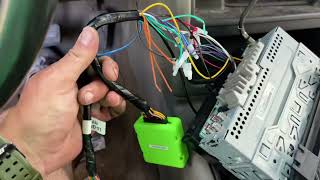
- Improperly Installed Aftermarket Audio (Less Common) — Installing aftermarket stereos or amplifiers often interferes with the ANC system. 🎬 Watch: Using a bypass harness for Bose amplifier installations. Tapping incorrect wires or using incompatible interface harnesses disrupts the tachometer signal.
- Blown Fuse (Rare) — A blown fuse supplying power to the amplifier or cluster prevents it from processing the tachometer signal.
- Faulty Engine Control Module (ECM) (Very Rare) — The ECM driver generating the engine speed signal rarely fails. If it does, severe engine performance codes (P-codes) will accompany B0560.
Symptoms
- Increased cabin drone — Active Noise Cancellation is disabled. A low 'drone' or 'boom' at highway speeds becomes noticeable inside the car.
- Dead or erratic tachometer — The RPM gauge reads 0, jumps erratically, or shows incorrect engine speed. This isolates the fault to the Instrument Panel Cluster.
- Check Engine Light illuminated — The vehicle's computer illuminates a warning light to indicate a stored fault code.
- Reduced turbocharger performance — On 2020-2022 Chevrolet Trax models, this code appears concurrently with a loss of turbocharger function due to shared RPM data reliance.
Diagnostic Flowchart
Tap your situation to follow the diagnostic path that matches what you're seeing on this code.
Common Fixes & Costs
- Replace ANC Module / Audio Amplifier
— Parts: $200-$400, Labor: $100-$200, ~1.0 hr book time
(DIY)
: OEM
: OEM - Repair Damaged Wiring or Connectors — Parts: $10-$50, Labor: $150-$300, ~2.0 hr book time (Intermediate)
- Repair or Replace Instrument Panel Cluster (IPC)
— Parts: $150-$500, Labor: $100-$250, ~1.5 hr book time
(Professional)
: OEM - Disable Active Noise Cancellation (ANC) — Parts: $0-$20, Labor: $50-$150, ~0.8 hr book time (Intermediate)
- Replace Engine Control Module (ECM) — Parts: $600-$1200, Labor: $150-$300, ~1.5 hr book time (Professional)
DIY vs Professional
- Replace ANC Module / Audio Amplifier 🟢 Beginner
Tools: Socket set, trim removal tools. - Repair Damaged Wiring or Connectors 🟢 Beginner
Tools: Multimeter, wiring diagrams, wire strippers, crimpers, soldering iron, heat shrink. - Repair or Replace Instrument Panel Cluster (IPC) 🟢 Beginner
Tools: Trim removal tools, socket set, soldering iron, professional scan tool. - Disable Active Noise Cancellation (ANC) 🟢 Beginner
Tools: Trim removal tools, wire terminal tools.
Used vs. New Parts: Buying Guide
When a used part is worth it: When the vehicle is older than 10 years and the part is a simple plug-and-play module. Used OEM amplifiers offer significant savings.
Donor-vehicle mileage cap: roughly under 100000 miles for the part to have meaningful remaining life.
Donor quality checklist:
- Match the part number exactly.
- Buy from a reputable recycler offering a 6-month warranty.
- Visually inspect photos for corrosion on the connectors.
Decision logic:
- If The vehicle is under 5 years old and cost savings are less than 40% → Buy a new OEM part for the longer warranty.
- If The vehicle is over 10 years old and a warrantied used part is under 50% of the new price → A used part is a cost-effective choice.
- If You are uncomfortable with the risk of a used part failing → Choose a mail-in repair service for your original part, which often includes a lifetime warranty.
Warranty tradeoff: Used parts typically include a 30-day to 6-month warranty. New OEM parts carry a 1-2 year warranty. Mail-in repairs often offer lifetime warranties.
Worst-case if a used part fails: $100-$200 if a used part fails, requiring repeat labor.
What Happens If You Wait — Timeline
- Immediately: Code B0560 sets. ANC disables, causing cabin drone. If the IPC is faulty, the tachometer stops working. (MPG impact: 0%% · Added cost: $0)
- 1-3 months: Symptoms persist. The check engine light remains on, causing an automatic emissions inspection failure. (MPG impact: 0%% · Added cost: $0)
- 3-12 months: The failing module occasionally develops a parasitic draw, weakening the battery. (MPG impact: 0%% · Added cost: $0-$50)
- 12+ months: Severe parasitic draw completely drains the battery overnight, requiring battery replacement. (MPG impact: 0%% · Added cost: $150-$300)
Cost of Not Fixing It
- Immediately: Active Noise Cancellation (ANC) disables, resulting in a noticeable low-frequency engine drone inside the cabin at highway speeds. (Added cost: $0)
- Ongoing: If the fault is the Instrument Panel Cluster, the tachometer remains inoperative or erratic. (Added cost: $0)
- 1-6+ months: A failing module occasionally causes a parasitic battery drain, leading to a dead battery if the vehicle sits for extended periods. (Added cost: $50-$250)
Diagnosis Steps
- Scan for All Trouble Codes
Use an OBD-II scanner to check for stored codes. Code B1277 ('Amplifier Deactivated') strongly points to the ANC circuit. Diagnose any U-series (communication) or P-series (powertrain) codes first.
Tools: OBD-II Scanner (Beginner) - Verify Tachometer Function
Observe the tachometer gauge. If it works correctly, the fault is not the instrument cluster. The problem is isolated to the parallel circuit going to the audio amplifier.
Tools: None (Beginner) - Inspect for Aftermarket Accessories & Water Intrusion
Check for aftermarket audio equipment or incompatible wiring harnesses. Locate the audio amplifier and inspect the wiring for chafing, pinched wires, or water corrosion on the connectors.
Tools: Flashlight, Trim removal tools (Intermediate) - Test Amplifier Ground Circuit
Disconnect the main harness connector at the amplifier. Using a multimeter set to resistance (Ω), test for less than 10 ohms between the 'engine speed low signal' circuit terminal and a known good chassis ground. High resistance indicates a bad ground.
Tools: Multimeter, Vehicle-specific wiring diagram (Advanced) - Test Tach Signal Frequency
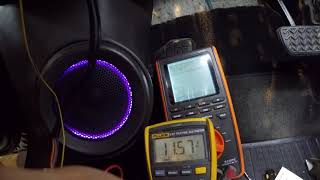
Start the engine. Set your multimeter to Frequency (Hz). Connect the positive lead to the 'engine speed high signal' terminal and the negative lead to ground. At 600 RPM, you should see 275-325 Hz. If correct, the amplifier is faulty. If absent, the problem is upstream.
Tools: Multimeter with frequency (Hz) setting, Vehicle-specific wiring diagram (Advanced) - Perform Instrument Cluster Gauge Sweep
If the tachometer is dead, use a bidirectional scan tool to command an 'Instrument Cluster Gauge Sweep'. If the needle moves, the cluster's internal motor works, pointing to a signal processing failure.
Tools: Advanced bidirectional OBD-II Scanner (Professional) - Isolate the Faulty Module
If the signal is absent at the amplifier or cluster connector, test for the same frequency directly at the ECM output pin. A good signal at the ECM confirms a broken wire. A bad signal at the ECM condemns the ECM.
Tools: Multimeter, Wiring diagram (Professional)
When This Code Triggers (Freeze-Frame Conditions)
- Engine State: Running (The module setting the code receives a data message that the engine is running.)
- Battery Voltage: 9-16V (The system voltage must be within the normal operating range.)
- Reported RPM: < 300 RPM or > 9000 RPM (The code triggers when the dedicated RPM signal wire reports a value that is illogical for a running engine.)
Related Codes
- B1277 — Amplifier Deactivated. This GM-specific code confirms the audio amplifier shut down its ANC function because it received an invalid tach signal (B0560). Seeing these together isolates the fault to the amplifier circuit.
- P0560 — System Voltage Malfunction. P0560 is a Powertrain code meaning the ECM detected a problem with its power supply (bad battery/alternator). B0560 is a Body code regarding the RPM signal. They are frequently confused.
- U0100 — Lost Communication With ECM/PCM. If present with B0560, it points to a larger vehicle network problem preventing modules from receiving the tach signal.
Climate & Environmental Factors
- Humidity and Water Intrusion: Audio amplifiers are located in areas susceptible to water leaks from clogged sunroof drains or failed window seals. Moisture corrodes the amplifier's connector pins, directly causing signal loss and code B0560.
- Road Salt: In winter climates, road salt corrodes chassis ground points. A poor ground connection for the amplifier or instrument cluster causes signal interpretation errors.
How to Talk to a Mechanic About This Code
Say this: "I have code B0560. My tachometer works fine, but I have increased engine drone at highway speeds. I suspect a fault in the Active Noise Cancellation (ANC) amplifier circuit. Can you test the frequency signal on the tach wire at the amplifier connector and check the module's ground?"
This directs the technician to the most likely cause (ANC amp) instead of a generic 'tachometer problem,' saving diagnostic time.
Avoid saying:
- 'My tachometer is broken.'
- 'My check engine light is on, can you look at it?'
- 'There's a weird noise in my car.'
Questions to ask before authorizing the repair:
- Did you test the Hz signal at the amplifier connector? What was the reading at idle?
- Did you check for the B1277 code?
- Can you confirm the ground circuit tested under 10 ohms?
- What is the warranty on the replacement part and labor?
Where to Take It: Dealer vs Independent vs Chain
- Dealer:
Best for: Vehicles under warranty, Complex electrical issues involving network communication (U-codes)
Downsides: Highest labor rates, Inclined to replace modules rather than repair wiring (Typical cost: +50% vs. baseline) - Independent Shop:
Best fit. A reputable independent shop diagnoses and repairs this efficiently and affordably.
Best for: Out-of-warranty vehicles, Common problems like the GM ANC amplifier failure
Downsides: May lack the latest manufacturer-specific tools (Typical cost: +0% vs. baseline) - Chain Shop:
Not recommended. This code requires specific electrical diagnostic skills beyond a chain shop's focus.
Best for: Routine maintenance like oil changes and brakes
Downsides: Lack in-depth diagnostic tools for body control module issues (Typical cost: -10% vs. baseline)
When to Walk Away From the Repair
If the estimated repair cost exceeds 50% of the car's private-party value, consider selling or trading it in.
- Car worth $5000, fix is $2800: Walk away. The repair cost is over 50% of the vehicle's value.
- Car worth $15000, fix is $750: Fix it. The repair cost is a small fraction of the car's value.
- Car worth $3000, fix is $1600: Walk away. The repair cost is well over half the car's value.
What Scan Tool You Need for This Code
Minimum: A scanner that reads Body ('B') codes. Basic sub-$50 readers only read Powertrain ('P') codes.
Generic readers cannot connect to the Body Control Module to retrieve B0560 or view live data from the ECM and Amplifier.
Budget: BlueDriver Pro (~$100) — Reads and clears Body codes, views live engine RPM data, and generates repair reports.
Mid-range: Foxwell NT510 Elite (~$180) — Provides full system access and bidirectional control to command an 'Instrument Cluster Gauge Sweep' test.
Professional: Autel MaxiCOM MK808S (~$500) — Offers dealer-level diagnostics, bidirectional controls, and live data from all modules simultaneously.
Rent vs buy: Buy an entry-level scanner like the BlueDriver. Auto parts store loaner tools often cannot read Body codes.
How to Clear the Code After You Fix It
- Use an OBD-II scan tool to clear all diagnostic trouble codes.
- A current B0560 clears as soon as the module receives a valid RPM signal.
- For a history code, perform several complete drive cycles to reset the internal counter.
Drive cycle (~20 minutes): A GM drive cycle involves a cold start, a 2-3 minute idle with A/C on, accelerating to 55 mph and holding for 3-5 minutes, coasting down to 20 mph without braking, and accelerating back to 55 mph for 5 minutes.
Readiness monitors affected: Not applicable for a B-code., Disconnecting the battery to clear codes resets all powertrain monitors to 'Not Ready'.
Before emissions retest: drive at least 100 miles to fully set monitors.
Watch out for:
- Clearing the code with a scanner does not fix the problem; it returns immediately if the fault is present.
- Disconnecting the battery causes an automatic emissions test failure until a full drive cycle is completed.
Will This Fail Emissions / State Inspection?
Yes — this code typically fails an OBD-II emissions inspection.
- California: An illuminated Check Engine light is an automatic failure. If B0560 triggers the main warning light, the vehicle fails.
- New York: Any illuminated Check Engine light results in an automatic failure of the emissions inspection.
- Texas: In the 17 counties requiring emissions testing, an illuminated Check Engine light is an automatic failure.
Most Commonly Affected Vehicles
- Chevrolet / GMC / Cadillac Full-Size Trucks & SUVs (Tahoe, Suburban, Yukon, Escalade, Silverado, Avalanche) (2007-2014) — Extremely common. The failure is almost always the audio amplifier for the Active Noise Cancellation (ANC) system on the GMT900 platform.
- Chevrolet / GMC Full-Size Trucks & SUVs (2003-2006) — On the older GMT800 platform, B0560 is frequently linked to a failing stepper motor or circuit board inside the instrument panel cluster.
- Chevrolet Trax (2020-2022) — A notable outlier where B0560 appears alongside turbo performance issues, causing diagnostic confusion.
Manufacturer-Specific Notes
- General Motors (GMT900 Platform, 2007-2014): B0560 is almost always caused by the Active Noise Cancellation (ANC) amplifier. When the amplifier's internal processor fails, it sets the code and disables ANC. The tachometer on the dash usually continues to work perfectly.
- General Motors (GMT800 Platform, 2003-2006): The code is frequently linked to a failing stepper motor inside the instrument panel cluster. The primary symptom is a dead or erratic physical tachometer gauge.
- Chevrolet (Trax): On 2020-2022 Trax models, B0560 can be a red herring appearing alongside a lack of power. The root cause is often a separate issue with the turbocharger system.
Real Owner Stories
2011 GMC Yukon Denali at 130K miles
Owner noticed an annoying exhaust drone at highway speeds. The tachometer worked perfectly. A scan revealed codes B0560 and B1277.
What they tried:
- Initially suspected an exhaust leak, but found none.
- Researched forums pointing to the ANC amplifier.
Outcome: Replaced the factory Bose amplifier with a new OEM unit (Part #20808897). The codes cleared and the cabin drone vanished immediately.
Lesson: On 2007-2014 GM SUVs, a working tachometer, increased cabin drone, and code B0560 isolate the fault to the ANC amplifier.
2004 Chevrolet Silverado 1500 at 185K miles
The entire instrument cluster intermittently stopped working. The truck developed a parasitic battery drain killing the battery in 3 days. Code B0560 was stored.
What they tried:
- Traced a 0.25 amp parasitic draw to the IPC fuse.
- Sent the instrument cluster to a mail-in repair service for $100.
Outcome: The service repaired bad solder joints. After reinstalling, all gauges functioned, B0560 cleared, and the battery drain stopped.
Lesson: On 2003-2006 GMT800 trucks, B0560 is often caused by the instrument panel cluster. A mail-in repair service is highly cost-effective.
2021 Chevrolet Trax at 8K miles
Owner experienced a sudden loss of turbocharger function. The dealer found code B0560.
What they tried:
- Dealer replaced the turbo wastegate solenoid, but the problem returned.
- Dealer replaced the entire turbocharger assembly, but the issue returned after 100 miles.
Outcome: The owner pursued a lemon law claim. The underlying cause was a deeper data communication problem where the invalid tach signal affected turbo management.
Lesson: On newer models like the Chevy Trax, B0560 can be a red herring appearing alongside serious powertrain problems.
2013 Cadillac Escalade after stereo upgrade
After installing an aftermarket head unit, the owner noticed a constant low hum from the speakers and a B0560 code.
What they tried:
- Diagnosed the aftermarket wiring interface adapter, which failed to manage the factory Bose ANC feature.
Outcome: The installer fixed the issue using a high-quality data interface module designed for the GM Bose ANC system.
Lesson: If B0560 appears after installing aftermarket audio, the wiring interface is the cause. Use a high-quality adapter compatible with your specific sound system.
How to Prevent This Code From Triggering
- Periodically clean sunroof drains and check for water leaks. (Once per year.) — Clogged sunroof drains cause water intrusion into the trunk, corroding audio amplifier electronics.
- Inspect and seal body seams and wiring boots. (During vehicle washing.) — Seals around the rear hatch and wiring boots dry out, allowing water to reach modules. Applying automotive sealant prevents leaks.
- Apply dielectric grease to critical connectors. (When a module is disconnected.) — Dielectric grease creates a moisture-proof barrier, preventing corrosion that causes signal loss.
- Use high-quality interface harnesses for aftermarket audio. (During stereo installation.) — Cheap wiring adapters fail to manage the vehicle's data network, directly causing B0560.
Frequently Asked Questions
What is the difference between B0560 and P0560?
B0560 is a Body code indicating a fault with the tachometer signal going from the ECM to another module. P0560 is a Powertrain code indicating a fault with the main system voltage supplied to the ECM. They are completely different problems.
My tachometer works fine, so why do I have code B0560?
The ECM sends the tach signal on parallel paths to the instrument cluster and the ANC amplifier. If your gauge works, the signal path to the cluster is good. The fault is isolated to the amplifier, its connector, or its dedicated wiring.
I installed a new radio and now I have this code. What did I do wrong?
You likely used a wiring harness adapter that interfered with the ANC system. The factory amplifier requires the engine RPM signal, and incompatible interfaces disrupt this data. Re-check your wiring and ensure you are using a high-quality, ANC-compatible integration module.
Can I just disable the Active Noise Cancellation (ANC) to fix this?
Disconnecting the ANC microphones disables the system and stops the cabin drone. However, it does not fix the underlying electrical fault, and the B0560 code will remain. This is a workaround, not a repair.
Why does my radio amplifier need to know the engine speed?
Modern vehicles use the audio system for Active Noise Cancellation (ANC) to eliminate low-frequency engine drone. The amplifier requires the precise engine RPM to calculate and broadcast an opposite sound wave. Without this signal, the system cannot cancel the noise.
Can I fix B0560 myself to save money?
Replacing a faulty audio amplifier on a GM vehicle is a simple plug-and-play job for a DIYer. However, repairing a broken wire, faulty instrument cluster, or bad ECM requires advanced diagnostic skills and tools. Stop DIYing and consult a shop if the issue isn't the amplifier.
Will clearing the code with my scanner fix the problem?
No. Clearing the code only temporarily turns off the warning light. The module will run its self-test, detect the missing signal, and trigger the code again immediately.
Key Takeaways
- Code B0560 triggers when a body module, typically the audio amplifier or instrument cluster, loses the engine speed (RPM) signal from the ECM.
- On 2007-2014 GM trucks and SUVs, this code is almost always caused by a failed Active Noise Cancellation (ANC) amplifier, disabling the system and increasing cabin drone.
- Do not confuse B0560 (Tachometer Signal Fault) with P0560 (System Voltage Fault), as P0560 requires diagnosing the battery and alternator instead.
- Professional diagnosis requires testing the tachometer signal wire at the amplifier connector with a multimeter, looking for a target frequency of 275-325 Hz at 600 RPM.
Helpful Videos


Shop the Parts Behind B0560
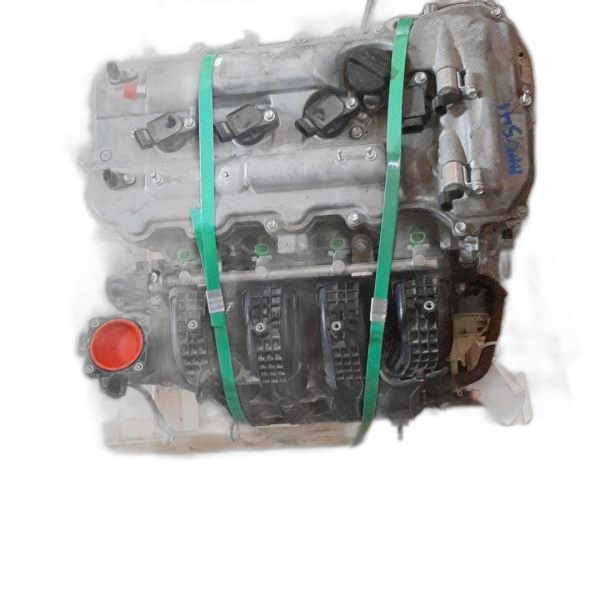
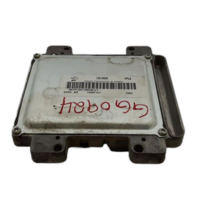
Below are the parts most often responsible for code B0560, ranked by how frequently each one is the actual culprit (per the diagnosis above). Tap any to see what we have for your vehicle.



The information in this article is provided for general reference and educational purposes only. Vehicle specifications, procedures, and part compatibility can vary by production date, trim level, and region. Always consult your vehicle's factory service manual and verify part numbers before purchasing or performing repairs. Safety-critical components such as airbags, seat belts, and braking systems should be installed by a qualified professional.
- 🧭 Diagnostic Flowchart
- 🎬 Helpful Videos
- 🛍️ Shop This Part
- What Does B0560 Mean?
- Can I Drive With B0560?
- Common Causes
- Symptoms
- Common Fixes & Costs
- DIY vs Professional
- Used vs. New Parts: Buying Guide
- What Happens If You Wait — Timeline
- Cost of Not Fixing It
- Diagnosis Steps
- When This Code Triggers (Freeze-Frame Conditions)
- Related Codes
- Climate & Environmental Factors
- How to Talk to a Mechanic About This Code
- Where to Take It: Dealer vs Independent vs Chain
- When to Walk Away From the Repair
- What Scan Tool You Need for This Code
- How to Clear the Code After You Fix It
- Will This Fail Emissions / State Inspection?
- Most Commonly Affected Vehicles
- Manufacturer-Specific Notes
- Real Owner Stories
- 2011 GMC Yukon Denali at 130K miles
- 2004 Chevrolet Silverado 1500 at 185K miles
- 2021 Chevrolet Trax at 8K miles
- 2013 Cadillac Escalade after stereo upgrade
- How to Prevent This Code From Triggering
- Frequently Asked Questions
- What is the difference between B0560 and P0560?
- My tachometer works fine, so why do I have code B0560?
- I installed a new radio and now I have this code. What did I do wrong?
- Can I just disable the Active Noise Cancellation (ANC) to fix this?
- Why does my radio amplifier need to know the engine speed?
- Can I fix B0560 myself to save money?
- Will clearing the code with my scanner fix the problem?
- Key Takeaways
- 🎟️ Get 5% Off