

B1000 on 2015-2023 Dodge Challenger: Keyless Ignition vs. HVAC Faults Explained
On a 2015-2023 Dodge Challenger, code B1000 is not a single problem. It most often points to a communication failure with the keyless ignition module (WIN module), causing no-start issues. However, it can also be triggered by a stuck button on your A/C control panel. You must use a good scan tool to see which module (Body Control or HVAC) set the code to know which problem you have.
- B1000 is not one specific fault. You MUST find out which module (BCM or HVAC) set the code.
- If you have starting problems, the Wireless Ignition Node (WIN) module is the most likely culprit.
- If your climate controls are acting up, a stuck button on the HVAC panel is the probable cause.
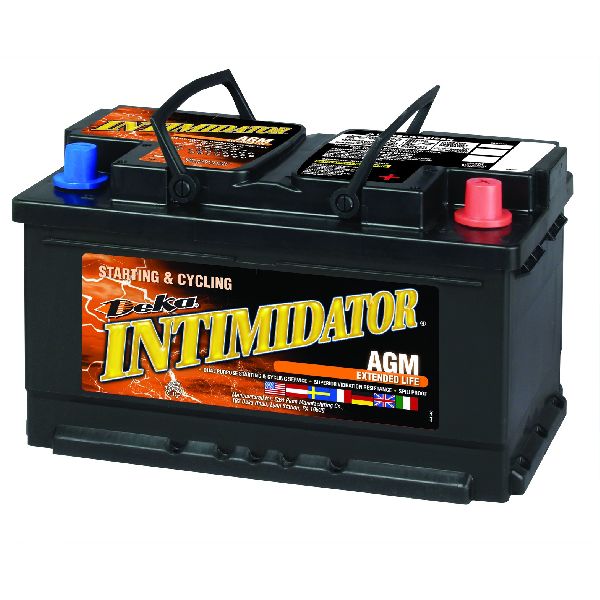
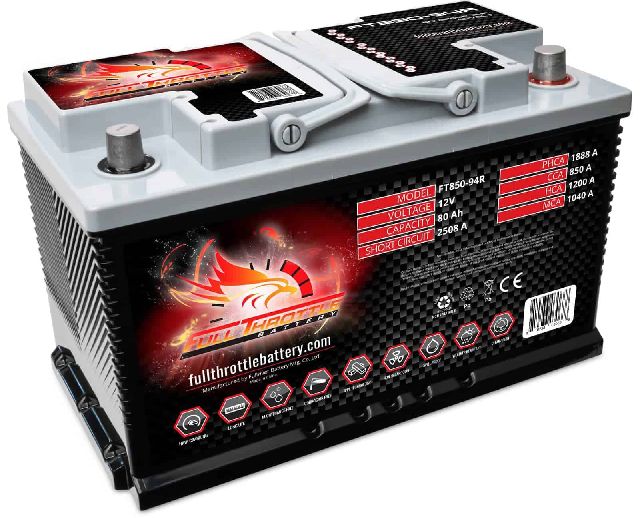
- Before replacing expensive parts, check the key fob battery and the main vehicle battery.
- Replacing the WIN module requires special programming; a mail-in repair service can be a cost-effective alternative that avoids this step.
What's Unique About the 2015-2023 Dodge Challenger
The Challenger, like many modern Chrysler/Dodge/Jeep vehicles, relies on a component called the Wireless Ignition Node (WIN) module for its keyless ignition functions. These WIN modules are a known failure point across many models from this era, leading to a variety of frustrating starting and electrical issues. While the B1000 code can point to other problems, the high rate of WIN module issues makes it a primary suspect when this code appears alongside starting problems. The confusion arises because Dodge also uses the same code number for a completely unrelated, and less severe, fault within the climate control system.
Symptoms You May Notice
- Vehicle will not start (no crank)
- "Key Fob Not Detected" message on the dash
- Engine stalls intermittently while driving
- Key fob functions (lock/unlock) work intermittently or not at all
- Ignition is slow to respond or requires wiggling the start button/key fob to find the 'sweet spot'.
- Key gets stuck in the ignition and cannot be removed.
- A/C or other climate control functions are unresponsive
- Airbag warning light may be illuminated
- Replacing the battery when the WIN module is the actual cause of the no-start.
- Replacing the starter motor without confirming it is receiving a signal to crank.
- Assuming the code is for the airbag system, as it is on many other manufacturers.
Most Likely Causes
- Failing Wireless Ignition Node (WIN) Module 🔴 High Probability This is a widely documented failure point on many Chrysler/Dodge/Jeep vehicles of this era. Internal components, specifically the contact terminals, wear out or become dirty, leading to communication loss.
How to confirm: Use a scan tool to confirm the B1000-92 code is logged by the Body Control Module (BCM). Symptoms like no-start, key not detected, and stalling strongly point to the WIN module. Wiggling the key to get a response is a tell-tale sign. Test for 12V+ at the WIN connector (Pin 1, often Pink/Light Green or Blue/Red) and continuity to ground (Pin 8, often Black/White).
Typical fix: The WIN module must be replaced, repaired, or cleaned. Replacement requires programming by a dealer or a locksmith with appropriate tools. Mail-in repair services are a popular option that avoids reprogramming by rebuilding your original unit. Some owners have had success disassembling the module and cleaning the internal contacts as a DIY fix.
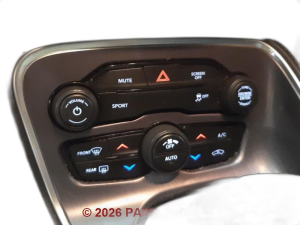
Est. part cost: $80-$200 - Stuck Button on HVAC Control Head 🟡 Medium Probability Buttons can become physically stuck due to debris, liquid spills, or internal switch failure. The system will log a fault if a button is detected as pressed for more than 60 seconds to four minutes, depending on the specific software version.
How to confirm: Use a scan tool to confirm the B1000-92 code is logged by the HVAC module. Physically inspect the A/C and other climate control buttons to see if any are depressed, sticky, or unresponsive. A blinking light on the control panel can also indicate a fault. A scan tool can monitor the live data for the 'A/C Switch Request' status.
Typical fix: First, try cleaning around the buttons with electronics cleaner or isopropyl alcohol. If a button is internally faulty, the entire HVAC control module/panel needs to be replaced. Sometimes a software glitch can be resolved by disconnecting the battery for 30 minutes to reset the module.
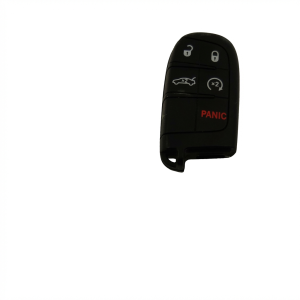
Est. part cost: $150-$400 - Weak or Dead Key Fob Battery ⚪ Low Probability → Shop Vehicle Battery This is a common issue for any vehicle with a keyless system.
How to confirm: Try the spare key fob. If the spare works reliably, the battery in the primary fob is the likely culprit. You can also try the emergency start procedure (placing the fob directly on the start button).
Typical fix: Replace the coin battery (typically a CR2032) inside the key fob.
Est. part cost: $1-$5 - Poor CAN Bus Network Connection ⚪ Low Probability Complex electrical systems can develop wiring issues over time, though it's less common than module failure.
How to confirm: This requires advanced diagnostics. With the battery disconnected, test the resistance between Pin 6 (CAN-C High) and Pin 14 (CAN-C Low) at the OBD-II port. A healthy network should read approximately 60 Ω. A reading of 120 Ω suggests a break in the circuit or a missing terminating resistor, while 0 Ω indicates a short between the two lines.
Typical fix: Locate and repair the damaged wiring or corroded connector. This is often labor-intensive.
Est. part cost: $5-$50
Diagnosis Steps
- Connect a diagnostic scan tool capable of reading manufacturer-specific Body (B) codes and viewing data from individual modules.
- Identify which module (e.g., BCM, HVAC, etc.) has stored the B1000 code. This is the most critical step.
- If logged in the BCM (as B1000-92): Suspect the keyless ignition system. Test with a spare key fob. Check the vehicle's main battery to ensure it's fully charged and healthy. Inspect the WIN module connector for corrosion or loose pins. Test for 12V+ power and ground at the WIN connector. If all else is good, the WIN module is the likely failure. Consider a mail-in repair service as a cost-effective option.
- If logged in the HVAC module (as B1000-92): Inspect the climate control panel for any stuck, sticky, or non-functional buttons. Use the scan tool to monitor the status of the A/C switch input to see if it's permanently 'On'. Check for related TSBs like #24-004-16 which may require a software update for the HVAC Control Module.
- If the source module is unclear or other communication codes are present, investigate the vehicle's CAN bus network. Disconnect the battery and measure resistance between pins 6 and 14 of the OBD-II port. The reading should be ~60 Ohms.
Parts You'll Likely Need
- Wireless Ignition Node (WIN) Module
(OEM #68210151AB, 68105738AD (Note: Part numbers are frequently superseded, always verify with VIN))— This is the most probable cause if you have starting issues. It's a known failure item.
Trusted brands: Mopar
OEM price range: $200-$350
Aftermarket price range: $80-$200 (for repair service) - HVAC Control Module / Panel — This is the fix if the code is logged by the HVAC module and a button is confirmed to be stuck internally.
Trusted brands: Mopar
OEM price range: $250-$400
Aftermarket price range: $150-$300 - Key Fob Battery
(OEM #CR2032)— Always the first, cheapest, and easiest thing to check when troubleshooting key fob issues.
Trusted brands: Duracell, Energizer
OEM price range: $5-$10
Aftermarket price range: $1-$5
Related Codes That Often Appear With This One
- U-codes (e.g., U0141, U0164) — If the root cause is a network or BCM issue, you will often see other codes indicating lost communication with various modules, such as the HVAC or instrument panel cluster.
Technical Service Bulletins (TSBs) & Recalls
- TSB #24-008-14: Addresses an issue on 2015 models where the HVAC blower motor intermittently cuts out. The fix involves reprogramming the HVAC Control Module with updated software.
- TSB #24-004-16 REV. A: Addresses issues with blend door operation on some 2015 models via an HVAC module software update.
Platform-Specific Known Issues
- A recall (NHTSA 14V-373) was issued for earlier model years of some Chrysler/Dodge vehicles for a WIN module issue where the ignition could be bumped out of the 'RUN' position, causing the engine to stall. While this specific recall may not cover the 2015-2023 range, it highlights the history of problems with this component.
Documented NHTSA Reports
While the B1000 code on a Dodge Challenger typically refers to the WIN or HVAC modules, cross-manufacturer records show this code can represent different critical failures in other systems. For example, NHTSA ODI #11471720 describes a B1000 code in an Air Bag Control Module as "Igniter for Driver's Air Bag, Resistance Too Large." Similarly, NHTSA ODI #11307397 notes the code appearing alongside airbag service lights during driving. In other electrical contexts, NHTSA ODI #11105156 identifies B1000 as an ECU malfunction linked to very bad ground conditions at the battery negative, engine, and frame. Furthermore, NHTSA ODI #11687675 and NHTSA ODI #11660121 both associate the B1000 with ECM/ECU faults that may require the unit to be replaced, updated, or reprogrammed.
Mechanic-Grade Diagnostic Values
- CAN Bus Network Resistance — expected: ~60 Ω. Failure: A reading of ~120 Ω indicates an open circuit or one of the two terminating resistors is offline. A reading near 0 Ω indicates a short between the CAN High and CAN Low wires.
- WIN Module Power Supply Voltage — expected: 12V+ (Battery Voltage). Failure: Low or no voltage indicates a problem with the power feed circuit or fuse, not the module itself.
- WIN Module Ground Connection — expected: < 1.0 Ω continuity to chassis ground. Failure: High resistance indicates a poor ground connection, which can cause intermittent module operation.
- CAN Bus Voltage (Key On, Engine Off) — expected: CAN High (Pin 6): ~2.5-3.0V; CAN Low (Pin 14): ~2.0-2.5V. Failure: Voltages outside these ranges, or that are identical on both lines, indicate a short to power, ground, or a short between the two CAN lines.
Scan Tool Commands That Help
- AlfaOBD / Witech: Proxy Alignment — This procedure is required after replacing the Body Control Module (BCM) or other key network modules. It synchronizes the configuration of all modules on the CAN bus. Failure to perform a proxy alignment can result in a flashing odometer and various communication fault codes.
- Autel IM508/IM608 / Witech: Immobilizer Module Replacement / WIN Replaced — This function is used to program a new WIN module to the vehicle. It requires obtaining the vehicle's 4-digit security PIN to pair the new module with the PCM and program the keys.
- Autel / High-End Scan Tools: Erase VIN (from used module) — When attempting to install a used WIN module, the VIN from the donor vehicle must first be erased before the module can be programmed to the new vehicle. This is a specialized function not available on all tools.
- Witech / AlfaOBD: Read HVAC Switch Status — When B1000 is logged by the HVAC module, this live data PID can be monitored to see if the A/C request switch is stuck in the 'On' or 'Pressed' state, confirming the fault without disassembly.
Wiring & Ground Locations
- G905 — On the left side of the instrument panel support beam, typically behind the driver's side lower dash trim.. This is a primary instrument panel ground point. The Wireless Ignition Node (WIN) module relies on this ground for proper operation. A loose or corroded connection at G905 can cause intermittent no-start conditions and communication codes like B1000.
- WIN Module Connector — Directly on the back of the Wireless Ignition Node (WIN) module, located behind the start/stop button assembly in the dash.. This is the primary connection point for power, ground, and CAN bus signals to the ignition module. Pin 1 is typically Fused B+ (power), and Pin 8 is Ground. The CAN bus wires are also in this connector. Verifying power and ground here is a critical first step.
- HVAC Module Connector — On the rear of the main HVAC control panel in the center stack.. If B1000 is logged by the HVAC module, inspecting this connector for corrosion, damage, or backed-out pins is necessary. A poor connection can mimic an internal module fault.
Real Owner Repair Stories
- Forum User Experience (Dodge/Chrysler vehicle with WIN module) — No-start, key not detected, intermittent stalling.
❌ Tried (didn't work) Replacing key fob battery, Replacing vehicle battery
✅ What actually fixed it The owner removed the original WIN module and sent it to a mail-in repair service. The service rebuilt the internal components of the original module. After reinstalling the repaired original module, the vehicle started and functioned correctly without needing any dealer programming. - Forum User Experience (2015+ Dodge Challenger) — HVAC controls became unresponsive after the vehicle battery was replaced or jump-started.
❌ Tried (didn't work) Pressing all the buttons repeatedly.
✅ What actually fixed it The owner performed a hard reset by disconnecting the negative terminal of the car battery for 30 minutes. Upon reconnection, the HVAC module rebooted and all functions were restored, clearing the fault.
OEM Part Supersession History
68210151AA→68210151AB— Internal revision and improvement by the manufacturer.
Heads up: Part numbers for the WIN module are superseded frequently (e.g., 68105738AD to AE, AF, etc.). While newer revisions are generally backward compatible, the critical point is that ANY new or used replacement WIN module must be electronically programmed to the vehicle's VIN and security PIN. A module from another vehicle will not work without being programmed.
Model Year Variations Within This Range
- 2015+: The 2015 model year marked a significant interior redesign, including a new HVAC control panel integrated into the Uconnect center stack. While the B1000 fault logic for a stuck button is the same, the physical part is completely different from the 2008-2014 models. When replacing an HVAC panel, it must match the original's button layout (e.g., heated seats, sport mode) exactly.
Diagnostic Flowchart
Other Known Issues on This Vehicle
Issues unrelated to this code that are worth knowing about as an owner of this generation:
- Hemi Lifter/Camshaft Failure ('Hemi Tick') 🔴 High — Widespread issue on 5.7L and 6.4L Hemi engines, particularly those with MDS. Can occur after 80,000-120,000 miles, but sometimes earlier. Often attributed to oil breakdown and extended idling.
- Active Exhaust Valve Rattle/Squeak 🟡 Low — Very common on models equipped with active exhaust (R/T Scat Pack, SRT). The butterfly valves in the exhaust begin to rattle or squeak, especially on startup.
- Uconnect Infotainment System Glitches 🟡 Low — Frequent owner complaints about the Uconnect system lagging, freezing, dropping phone connections, or having a non-responsive touchscreen. (Ref: Various software update TSBs exist.)
- HVAC Blend Door Actuator Failure 🟠 Medium — A common failure where a small plastic motor under the dash breaks, causing a repetitive clicking noise and inability to control temperature on one side of the vehicle.
- Premature Front Brake Rotor Warping 🟠 Medium — Owners frequently report vibration or shuddering during braking due to warped front brake rotors, often requiring replacement sooner than expected for a heavy, high-performance vehicle.
Used vs. New Parts: Buying Guide for This Vehicle
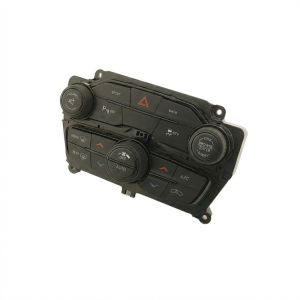
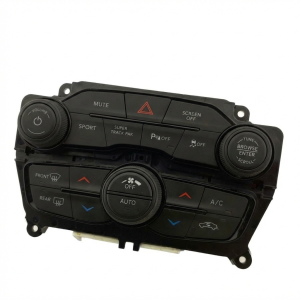
When a used part is the smart pick: A used HVAC control panel is often a smart, cost-effective choice. This part is typically plug-and-play and does not require programming. Inspect the donor part for physical condition before purchase.
Donor-vehicle mileage cap: roughly under 100000 miles for the part to have meaningful remaining life.
What to inspect on the donor part:
- Ensure the part number and ALL button functions (Heated Seats, Sport Mode, etc.) exactly match your original panel.
- Physically press every button to ensure none are sticky or broken.
- Inspect the rear electrical connectors for any signs of corrosion, melted plastic, or bent pins.
- Check that all plastic mounting tabs are intact.
OEM-only on this vehicle (don't cheap out):
- Wireless Ignition Node (WIN) Module: If purchasing a brand new replacement, it is strongly recommended to use a Mopar part. However, the most practical solution is often repairing your original module.
Aftermarket brands forum-validated for this vehicle:
- UpFix (Repair Service)
- Module Experts (Repair Service)
- Karman Auto (Cloning/Repair Service)
Brands owners have reported issues with on this vehicle:
- Unknown/no-name used WIN modules from junkyards or online marketplaces are a major risk. They are VIN-locked to the donor car and will not start your vehicle without specialized, expensive reprogramming tools to 'virginize' them first.
Real Owner Stories
Aggregated from forums and TSBs cited above. Mileages and costs reflect what owners reported in those sources.
2013 Dodge Challenger
Symptoms: AC controls stopped working and the control module had a previously blinking light.
What fixed it: The HVAC control module failed and required replacement.
Source hint: Reddit - r/dodgechallenger - '2013 Challenger AC controls stopped working'
2015 Dodge Challenger — ~100000 miles
Symptoms: Hemi Tick noise, often attributed to oil breakdown and extended idling.
What fixed it: This is a mechanical failure of the Hemi lifters/camshaft, distinct from the B1000 electrical code but a known platform issue.
Source hint: known_issues section regarding Hemi Lifter/Camshaft Failure
Dodge Challenger (WIN Module equipped)
Symptoms: WIN module not working, ignition not responding to the key.
What fixed it: Disassembling the module and cleaning the internal contact terminals to restore electrical connection.
Source hint: YouTube - 'Dodge WIN module not working, how to clean dodge win module interior contact terminals'
Related OBD-II Codes
Frequently Asked Questions
My 2015 Challenger's HVAC blower is cutting out; is there a specific fix for this?
I'm getting a 'Key Fob Not Detected' message and have to wiggle the key to start my Challenger. Is this a known issue?
Can I fix the B1000 code on my HVAC controls without replacing the whole panel?
Is there a recall for the ignition issues on the 2015-2023 Challenger models?
My 2015 Challenger has issues with the blend door operation; is there a software update?
How can I tell if my B1000 code is a module failure or a wiring issue in the CAN bus?
Helpful Videos
Used OEM Parts in Stock
New Aftermarket Parts Available


The information in this article is provided for general reference and educational purposes only. Vehicle specifications, procedures, and part compatibility can vary by production date, trim level, and region. Always consult your vehicle's factory service manual and verify part numbers before purchasing or performing repairs. Safety-critical components such as airbags, seat belts, and braking systems should be installed by a qualified professional.
- Dodge Challenger:
- 🧭 Diagnostic Flowchart
- 🎬 Helpful Videos
- 🛍️ Shop This Part
- What's Unique About the 2015-2023 Dodge Challenger
- Symptoms You May Notice
- Most Likely Causes
- Diagnosis Steps
- Parts You'll Likely Need
- Related Codes That Often Appear With This One
- Technical Service Bulletins (TSBs) & Recalls
- Platform-Specific Known Issues
- Documented NHTSA Reports
- Mechanic-Grade Diagnostic Values
- Scan Tool Commands That Help
- Wiring & Ground Locations
- Real Owner Repair Stories
- OEM Part Supersession History
- Model Year Variations Within This Range
- Other Known Issues on This Vehicle
- Used vs. New Parts: Buying Guide for This Vehicle
- Real Owner Stories
- 2013 Dodge Challenger
- 2015 Dodge Challenger — ~100000 miles
- Dodge Challenger (WIN Module equipped)
- Related OBD-II Codes
- Frequently Asked Questions
- 🎟️ Get 5% Off