

B1000 on 2023-2026 Toyota Prius: Airbag ECU Malfunction Causes and Fixes
Code B1000 on a 2023-2026 Toyota Prius means the main airbag computer (ECU) has failed its internal self-test. The airbag system is disabled. The most common fix is replacing the Center Airbag Sensor Assembly, costing approximately $500-$650 at a shop.
- B1000 on a 2023-2026 Prius means the main airbag computer has failed and the entire SRS system is offline.
- This is a critical safety failure; your airbags will not work until it is fixed.
- If B1000 is the only code present, the module itself needs to be replaced or, if crash data is the cause, reset by a specialist.
- This is not a DIY-friendly repair. Replacement requires special software (Toyota Techstream) for programming and calibration.
What's Unique About the 2023-2026 Toyota Prius
For the 5th generation Prius (2023-2026), like most modern Toyotas, the B1000 code is a definitive pointer to a faulty main airbag module. Unlike some other manufacturers where B1000 can be a generic communication error, Toyota uses it to signify an internal processor, memory, or circuit failure within the module itself. If this code appears alone, without any other SRS codes, Toyota's diagnostic procedure is to replace the module. The 5th gen Prius is built on the second-generation TNGA-C platform, which standardizes many components, including airbag systems, across multiple models.
Symptoms You May Notice
- Solid or flashing airbag warning light on the instrument cluster.
- Inability to clear the B1000 code with a standard OBD-II scanner; it will return immediately.
- A professional scan tool like Toyota Techstream will show the code as 'Center Airbag Sensor Assembly Malfunction'.
- Replacing satellite airbag sensors (e.g., front bumper or side impact sensors) when B1000 is the only code present. The code points to the central ECU, not the peripheral sensors.
Most Likely Causes
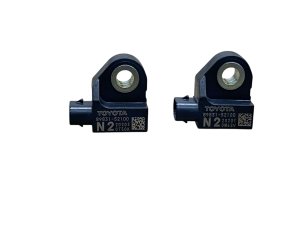
- Internal Failure of the Center Airbag Sensor Assembly 🔴 High Probability → Shop Air Bag Impact Sensor This is the most common reason for a B1000 code appearing without any physical incident. The complex electronics within the module can fail over time due to thermal stress or component degradation, causing the unit to fail its internal self-check.
How to confirm: Scan the SRS system with a professional-grade tool like Toyota Techstream. If B1000 is the only code present and it cannot be cleared, the module is internally faulty.
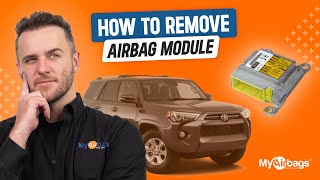
Typical fix: Replace the Center Airbag Sensor Assembly and perform 🎬 See this walkthrough on replacing a Toyota airbag control module the necessary system calibration (Zero Point Calibration).
Est. part cost: $350-$500 - Stored Crash Data After an Accident 🟡 Medium Probability After any accident that triggers the SRS system (even if airbags don't deploy), the module stores permanent 'crash data' and locks itself, often setting a B1000 code. This is a safety feature to ensure the system is inspected and properly repaired after a collision.
How to confirm: The code will appear after a known vehicle accident. The code will be 'hard set' and will not clear with a scan tool.
Typical fix: The module must be either replaced or sent to a specialized service that can clear the internal crash data. Dealers will only replace the module. Services like MyAirbags and Safety Restore offer this reset for a fraction of the replacement cost.
Est. part cost: $50-$150 for a reset service, or full replacement cost.
Rare But Worth Checking
- Software Glitch Requiring a Re-flash: On some Toyota/Lexus models, an intermittent B1000 code could be caused by a software logic issue. A Technical Service Bulletin (TSB L-SB-0148-17) was issued for some Lexus vehicles for this exact problem, where the fix was to reprogram the SRS ECU. While not specifically documented for the 2023+ Prius, it's a possibility if the code is intermittent and not constant.
- Severe Voltage Irregularity: An improper jump-start, a failing battery, or a significant electrical system short could theoretically corrupt the airbag module's memory or internal circuits, triggering a B1000 code. Before condemning the module, it's wise to ensure the vehicle's 12V battery and charging system are stable.
- Water Intrusion: While less common for the centrally-located airbag ECU, water leaks can cause this code. The module is typically located under the center console, making it vulnerable 🎬 Watch: How to access and remove a Toyota airbag module to large spills. If the vehicle has signs of water damage in the cabin, inspecting the module and its connectors for corrosion is a valid diagnostic step.
Diagnosis Steps
- SAFETY FIRST: Disconnect the negative battery terminal and wait at least 90 seconds before working on any SRS component to allow the system's capacitors to discharge.
- Connect a professional-grade scan tool (e.g., Toyota Techstream) capable of reading manufacturer-specific SRS codes.
- Scan the Supplemental Restraint System (SRS) for codes.
- If B1000 is stored along with other DTCs, diagnose and resolve those other codes first per the factory service manual.
- If B1000 is the ONLY code stored, attempt to clear it.
- If the code immediately returns and cannot be cleared, this confirms an internal malfunction of the Center Airbag Sensor Assembly.
- Visually inspect the module's connector and wiring for any signs of corrosion, water damage, or physical damage, though this is an unlikely cause.
- Confirm stable voltage from the 12V battery and charging system to rule out electrical irregularities.
- The definitive fix is to replace the Center Airbag Sensor Assembly or, if applicable due to a prior accident, have it reset by a specialist service.
Parts You'll Likely Need
- Center Airbag Sensor Assembly
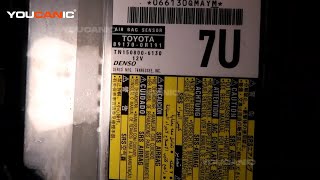
(OEM #89170-47B60 (for 2024 models), 89170-47B10 (for 2020-2022, check for supersession))— This is the main computer for the SRS system. The B1000 code specifically indicates an internal failure of this component. Part numbers are year-specific; always verify with VIN.
Trusted brands: Toyota (OEM)
OEM price range: $362-$537
Aftermarket price range: Not typically available; used modules from salvage yards cost ~$125 but require VIN programming and/or crash data clearing.
Related Codes That Often Appear With This One
- None — The B1000 code is most significant when it appears by itself, indicating an internal module failure. If other codes like B1610 (front sensor fault) or B1650 (occupant classification system) are present, they indicate a separate issue that should be diagnosed first, as a wiring fault could theoretically, in rare cases, lead to the B1000 code.
Technical Service Bulletins (TSBs) & Recalls
- L-SB-0148-17 (Lexus): Documents an intermittent B1000 code on related Lexus models caused by a software glitch, fixed by reprogramming the SRS ECU. Provides a potential, though unconfirmed, diagnostic path for the Prius.
- 23-NA-107 (GM, but relevant principle): Describes water leaks from roof seams causing electrical issues, highlighting water intrusion as a possible, though rare, cause for module failure.
Mechanic-Grade Diagnostic Values
- Power Supply Voltage at Airbag ECU Connector — expected: 11-14V (Ignition ON). Failure: Voltage below 11V or 0V indicates a power supply issue to the module.
- Ground Circuit Resistance at Airbag ECU Connector — expected: Less than 1.0 Ω. Failure: Resistance higher than 1.0 Ω indicates a poor ground connection, which can cause module malfunction.
Hidden / Shadow Codes Worth Checking
- B1000/31: This is a more specific version of B1000, directly translating to 'Center Airbag Sensor Assembly Malfunction'. The '/31' is a detail code that reinforces the diagnosis of an internal ECU fault. (see via A professional scan tool like Toyota Techstream that can read manufacturer-specific SRS detail codes.)
Scan Tool Commands That Help
- Toyota Techstream: Zero Point Calibration — This is a mandatory procedure after replacing the Center Airbag Sensor Assembly. It calibrates the yaw rate and deceleration sensors, which are often integrated into the airbag ECU, to the vehicle's level state. Failure to perform this can result in other system errors (like VSC) and improper SRS function.
- Toyota Techstream: Health Check — This should be the first and last step of any SRS repair. It scans all vehicle modules for DTCs. Running it initially confirms if B1000 is the only code, and running it after the repair ensures no new codes were set and the system is clear.
- Toyota Techstream: SRS Data List — While B1000 often appears alone, viewing the live data list can be useful to check for any erratic readings from other SRS components before condemning the ECU, although this is unlikely to be the cause if B1000 is the sole code.
Wiring & Ground Locations
- Center Airbag Sensor Assembly — Located under the center console, on the transmission tunnel, often beneath ductwork or trim panels. Access requires removing the center console assembly.. This is the physical location of the failed component. Its central position makes it susceptible to damage from liquid spills into the console.
- ECU Power and Ground Pins — On the main electrical connector(s) of the Center Airbag Sensor Assembly. Based on generic Toyota diagrams, look for pins labeled IG2 (Ignition Power), E1 (Ground), and E2 (Ground).. Before replacing the expensive module, a master technician will perform a sanity check by verifying the module is receiving proper power and has a solid ground connection directly at its connector. A loss of either could mimic an internal failure.
Real Owner Repair Stories
- YouTube video by 'Repairs101' (2023-2025 Toyota Prius (5th Gen)) — Airbag light was on, requiring module replacement.
❌ Tried (didn't work) The video implies that for this new generation, module reset services are not yet available, making replacement the only option.
✅ What actually fixed it The Center Airbag Sensor Assembly (Part No. 89170-47B60) was replaced with a new 'virgin' unit from a Toyota dealer. The video notes that after installation, it must be programmed for the airbag light to turn off.
OEM Part Supersession History
89170-47B60→No supersession found.— This is the current part number for the specified model years.
Heads up: This part is listed for 2023-2025 Toyota Prius and Prius Prime models. Using a module from another model or year range is not advised due to different programming and hardware configurations.
Diagnostic Flowchart
Other Known Issues on This Vehicle
Issues unrelated to this code that are worth knowing about as an owner of this generation:
- Rear Door Opening Unexpectedly 🔴 High — Affects enough vehicles to trigger a widespread recall (NHTSA 24V274, expanded by 26TB03/26TA03). (Ref: Recall 24V274 / 26TB03. Water can enter the electronic rear door switches, causing a short circuit and allowing the doors to open while driving.)
- Hybrid System Shutdown / Loss of Power 🔴 High — A recurring issue in previous Prius generations (2013-2017) leading to multiple recalls. While the 5th gen has a new powertrain, it's a known historical problem for the nameplate where the vehicle may stall without entering failsafe mode. (Ref: Recalls on prior generations (e.g., 20TA10 for 2013-2015 models) addressed inverter failures and software logic.)
- Rear-View Camera Fails to Display 🟠 Medium — Subject of a recall for some 2023-2024 models. (Ref: Recall for software update to the parking-assist ECU.)
- Discharged 12V Auxiliary Battery 🟡 Low → Shop Vehicle Battery — A disproportionate number of owner complaints across modern Prius generations involve the 12V battery going flat unexpectedly, which can prevent the car from starting.
Used vs. New Parts: Buying Guide for This Vehicle
When a used part is the smart pick: A used module is a viable option ONLY if you have access to a third-party service that can clear its stored crash data and VIN information. It is not a simple plug-and-play replacement. For a spontaneous internal failure (B1000 without a crash), a used part carries the same risk of failure as the one being replaced.
Donor-vehicle mileage cap: roughly under 50000 miles for the part to have meaningful remaining life.
What to inspect on the donor part:
- Verify the donor vehicle was NOT in an accident. A module from a crashed car will have locked crash data.
- Check for any signs of water damage, corrosion on the pins, or physical damage to the case.
- Match the OEM part number EXACTLY. Even a single digit difference can mean incompatibility.
OEM-only on this vehicle (don't cheap out):
- Center Airbag Sensor Assembly
Aftermarket brands forum-validated for this vehicle:
- No aftermarket alternatives are available for this specific safety-critical component. The only options are a new OEM module or a used/reset OEM module.
Brands owners have reported issues with on this vehicle:
- Any non-OEM branded airbag control module should be avoided.
Documented NHTSA Reports
While B1000 is a manufacturer-specific code, reports from other makes highlight how this fault is interpreted across the industry. For example, NHTSA ODI #11471720 describes a B1000 code as an igniter resistance issue, while NHTSA ODI #11105156 explicitly identifies B1000 as an ECU malfunction linked to poor ground conditions at the battery and frame. Another report, NHTSA ODI #11660121, notes that a B1000-00 code indicated the Electronic Control Unit required replacement or reprogramming. In some instances, such as NHTSA ODI #11687675, the B1000 code appeared alongside communication errors like U0100 and U0140, suggesting a broader electrical system failure.
Real Owner Stories
Aggregated from forums and TSBs cited above. Mileages and costs reflect what owners reported in those sources.
2018 Toyota Prius
Symptoms: The owner reported a B1000 code that appeared spontaneously without the vehicle being involved in an accident. The code could not be cleared with a scan tool.
What fixed it: Replacement of the Airbag ECU (Center Airbag Sensor Assembly).
Source hint: PriusChat - Thread 'B1000 Airbag ECU Malfunction - Help needed please' (priuschat.com/threads/b1000-airbag-ecu-malfunction-help-needed-please.249490/)
2009 Toyota Corolla
Symptoms: The airbag light would not go off and a B1000 code was present after the owner accidentally arced the battery terminals during a repair.
What fixed it: Replacing the airbag control module with a used unit.
Source hint: YouTube - '2009 Corolla with B1000 code- Airbag Light won't go Off'
Cross-Manufacturer Reference
Symptoms: An owner reported an "Airbag Service" light coming on while driving without anyone in the passenger seat, associated with codes B0081-00 and B1000 (NHTSA ODI #11307397).
Related OBD-II Codes
Frequently Asked Questions
Can I clear the B1000 code on my 2023 Prius using a standard OBD-II scanner?
Does the Lexus TSB L-SB-0148-17 apply to the B1000 code on my Prius?
Is the B1000 code always caused by a crash?
Can I use a used airbag module from a salvaged 2024 Prius to fix this?
Are there any recalls for the 2023-2024 Prius that might be related to electrical or sensor failures?
How much does it cost to fix the B1000 code on this vehicle?
Helpful Videos
We Have This Part in Stock

The information in this article is provided for general reference and educational purposes only. Vehicle specifications, procedures, and part compatibility can vary by production date, trim level, and region. Always consult your vehicle's factory service manual and verify part numbers before purchasing or performing repairs. Safety-critical components such as airbags, seat belts, and braking systems should be installed by a qualified professional.
- Toyota Prius:
- 🧭 Diagnostic Flowchart
- 🎬 Helpful Videos
- 🛍️ Shop This Part
- What's Unique About the 2023-2026 Toyota Prius
- Symptoms You May Notice
- Most Likely Causes
- Rare But Worth Checking
- Diagnosis Steps
- Parts You'll Likely Need
- Related Codes That Often Appear With This One
- Technical Service Bulletins (TSBs) & Recalls
- Mechanic-Grade Diagnostic Values
- Hidden / Shadow Codes Worth Checking
- Scan Tool Commands That Help
- Wiring & Ground Locations
- Real Owner Repair Stories
- OEM Part Supersession History
- Other Known Issues on This Vehicle
- Used vs. New Parts: Buying Guide for This Vehicle
- Documented NHTSA Reports
- Real Owner Stories
- 2018 Toyota Prius
- 2009 Toyota Corolla
- Cross-Manufacturer Reference
- Related OBD-II Codes
- Frequently Asked Questions
- 🎟️ Get 5% Off