

OBD-II Code B1006: A Comprehensive Guide for All Makes
What B1006 means, why it triggers, and how to fix it — from Harley overvoltage to Honda communication faults
- Always verify your specific vehicle's definition for B1006, as it ranges from a Harley-Davidson overvoltage issue to a Nissan airbag fault.
- On Harley-Davidson motorcycles, test the voltage regulator first; a failure here pushes system voltage above 16.0 volts and triggers the B1006 code.
- For Honda vehicles, treat B1006 as a communication error and inspect connector C701 for water damage before replacing the $1,500 MICU.
- On Nissan models, fix a B1006 airbag hard code by mailing the SRS module to a professional reset service for $50-$60 instead of buying a new part.
- Never ignore an overvoltage B1006 code, as driving with voltage spiking above 15 volts boils the battery and destroys control modules, leading to repair bills exceeding $2,500.
What Does B1006 Mean?
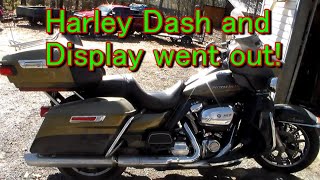
The meaning of code B1006 varies dramatically by manufacturer. On Harley-Davidson motorcycles, it means 'Accessory Line Overvoltage,' indicating the charging system is out of control and voltage exceeded 16 volts for more than five seconds. On Honda, it indicates a lost communication error with the multiplex control unit. On Nissan, it flags an internal airbag module fault containing stored crash data.
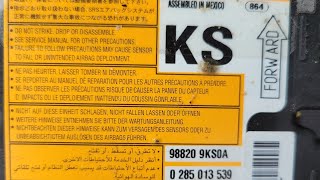
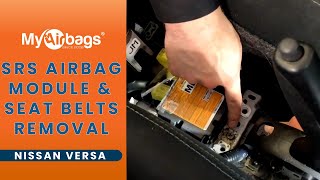
Technical definition: The official SAE/ISO definition for code B1006 is manufacturer-specific. Its most documented meaning is 'Accessory Line Overvoltage,' where a control module detects accessory line voltage exceeding a preset threshold (typically 16.0 volts) for 5-10 seconds. For Honda, it means 'MICU Lost Communication with Door Multiplex Control Unit.' For Nissan, it means 'DIAGNOSIS SENSOR UNIT 🎬 See this walkthrough on locating and removing the Nissan SRS module,' indicating an internal airbag module fault.
Can I Drive With B1006?
Yes, But With Caution. You can drive short distances, but ignoring it is risky. On vehicles where B1006 indicates overvoltage (like Harley-Davidson), continued driving boils the battery and destroys sensitive electronics. Replacing a fried Engine Control Unit (ECU) or Body Control Module (BCM) costs between $900 and $2,500. Address the problem immediately to avoid getting stranded or incurring expensive secondary damage.
Common Causes
- Faulty Voltage Regulator (Harley/Motorcycles) (Very Common) — The voltage regulator caps the charging system voltage between 13.5 and 14.5 volts. When it fails, it sends uncontrolled, excessive voltage through the system, triggering the B1006 code. This is the absolute most frequent cause for the overvoltage definition of the code.
- Module Communication or Internal Fault (Honda/Nissan) (Very Common) — For Honda, water intrusion or wiring damage severs the B-CAN network connection to the MICU. For Nissan, the Airbag Control Module intentionally locks itself and stores a hard fault code after a collision event, requiring a professional reset.
- Loose or Corroded Battery/Ground Connections (Common) — A poor connection at the battery terminals or a bad ground wire creates high resistance, causing erratic voltage readings. The computer interprets these rapid fluctuations as an overvoltage condition. Always check the main frame ground and the regulator's ground point.
- Failing or Weak Battery (Common) — An internally damaged battery resists charging, forcing the alternator's output to spike system voltage. A battery with a dead cell causes unpredictable electrical problems and damages healthy charging components.
- Aftermarket Electrical Accessories (Less Common) — Installing LED turn signals without a compatible load equalizer is a known trigger on motorcycles. Certain load equalizers cause a brief voltage spike on startup, triggering a false code even though the charging system is healthy.
- Faulty Stator (Less Common) — The stator generates the AC power that the regulator converts. A stator with a shorted winding produces irregular voltage, contributing to charging system spikes that lead to an overvoltage code.
- Faulty Alternator Diode (Less Common) — The rectifier bridge in the alternator contains diodes to convert AC to DC voltage. If a diode fails, it leaks unregulated AC voltage (AC ripple) onto the DC circuits, confusing sensors and triggering an overvoltage code.
- Pinched or Shorted Wiring Harness (Uncommon) — A wiring harness that is pinched, chafed, or improperly routed shorts to the frame. This causes erratic behavior on the accessory circuit, which a module interprets as an overvoltage event.
Symptoms
- Check Engine Light, Airbag Light, or Security Light is On — The vehicle's computer illuminates a dashboard warning light to indicate a fault. The specific light depends entirely on which module is reporting the B1006 code.
- Flickering Lights or Unusually Bright Headlights — Headlights pulse, dim and brighten erratically, or appear excessively bright. This is a classic, immediate sign that the voltage regulator is failing to control the voltage.
- Engine Randomly Stalls or Runs Erratically — An overvoltage condition disrupts power to the ignition system, fuel injectors, or the ECU itself, causing the engine to shut off unexpectedly or hesitate during acceleration.
- Battery "Boiling", Swelling, or Rotten Egg Smell — Severe overcharging boils the battery acid, producing a sulfur or rotten egg smell and permanently swelling the battery case. This indicates irreversible internal damage.
- Electrical Burning Smell — A sharp, acrid smell of burning plastic indicates high voltage is overheating wires, relays, or circuit boards. This is a serious fire hazard; stop the vehicle immediately.
Diagnostic Flowchart
Tap your situation to follow the diagnostic path that matches what you're seeing on this code.
Common Fixes & Costs
- Replace Voltage Regulator — Parts: $100-$250, Labor: $100-$150, ~1 hr book time (DIY)
- Reset Airbag Module (Nissan) — Parts: $40-$60, Labor: $0-$150, ~2 hr book time (DIY)
- Clean and Tighten Battery/Ground Connections — Parts: $0-$10, Labor: $25-$50, ~0.3 hr book time (DIY)
- Replace Battery — Parts: $100-$350, Labor: $25-$75, ~0.5 hr book time (DIY)
- Replace MICU (Honda) — Parts: $300-$800, Labor: $150-$300, ~2.5 hr book time (Professional)
- Replace Stator — Parts: $70-$300, Labor: $250-$800, ~3.5 hr book time (Professional)
Used vs. New Parts: Buying Guide
When a used part is worth it: For a Honda MICU, a used part from a reputable salvage yard is a good value if the part number matches exactly. For a Harley voltage regulator, high-quality aftermarket parts are better than used OEM. For a Nissan airbag module, NEVER buy used; reset your original module instead.
Donor-vehicle mileage cap: roughly under 100000 miles for the part to have meaningful remaining life.
Donor quality checklist:
- Verify the part number on the module itself, not just from a catalog.
- For electronic modules, choose donors from regions without extreme humidity or road salt to minimize corrosion risk.
- Ensure the salvage yard offers at least a 30-day warranty.
Decision logic:
- If The part is a Nissan airbag module → Send your original module for a reset service. Do not buy new or used.
- If The part is a Harley voltage regulator → Buy a new, high-quality aftermarket unit (e.g., from Cycle Electric). It provides better reliability than OEM for a similar price.
- If The part is a Honda MICU and a new OEM part is over $800 → A used part with an exact part number match is a reasonable choice, but budget for professional programming.
Warranty tradeoff: Used parts typically have a 30-90 day warranty covering the part only. Aftermarket new parts carry a 1-year to limited lifetime warranty. A new OEM part installed by a dealer includes a 12-month/12,000-mile warranty on parts and labor.
Worst-case if a used part fails: $300-$600 if a used electronic module fails after installation, requiring repeat labor costs for removal, reinstallation, and reprogramming.
What Happens If You Wait — Timeline
- 0-2 weeks (Overvoltage Type): Code B1006 appears intermittently. Headlights seem slightly brighter or flicker when revving the engine. The vehicle stalls unexpectedly. No permanent damage yet. (MPG impact: 0%% · Added cost: $0)
- 2 weeks - 2 months (Overvoltage Type): The code is permanent. You smell sulfur ('rotten eggs') from the battery as it overcharges and 'boils'. The battery case swells. Headlight bulbs burn out. (MPG impact: 0-2%% · Added cost: $150-$400 (New battery and replacement bulbs needed).)
- 2-6 months (Overvoltage Type): Catastrophic failure is likely. Extreme voltage spikes (>17V) shut the engine down at highway speeds. The ECU, BCM, or instrument cluster are permanently damaged. (MPG impact: 2-5%% · Added cost: $900-$2,500 (Cost to replace a single fried electronic module, plus towing and a new battery).)
- Immediate and Ongoing (Nissan Airbag / Honda Comm Type): For Nissan, the airbag system is completely disabled. For Honda, critical body functions (locks, wipers, lights) become unreliable. The failure does not progress in cost, but in risk. (MPG impact: 0%% · Added cost: $0 (The cost is the high repair bill for the initial fault and the significant safety risk).)
Cost of Not Fixing It
- Immediate (Overvoltage Type): Extreme risk of being stranded. An overvoltage spike shuts down the ECU, causing the engine to stall instantly. (Added cost: $150-$350 (Towing and diagnostic fees).)
- 0-1 Month (Overvoltage Type): Destruction of the battery and damage to sensitive electronics. The battery swells or boils, and bulbs burn out frequently. (Added cost: $100-$350 (New battery) + $50 (Bulbs).)
- 1-6 Months (Overvoltage Type): Catastrophic failure of control modules. Unregulated voltage permanently destroys the Body Control Module (BCM), Engine Control Unit (ECU), or instrument cluster. (Added cost: $900-$2,500+ (Cost to replace and program one or more fried modules).)
- Ongoing (Nissan Airbag Type): The entire SRS (airbag) system is disabled. In the event of a collision, none of the airbags or seatbelt pretensioners deploy, drastically increasing the risk of serious injury or death. (Added cost: Negligible financially, but an extreme safety risk.)
- Ongoing (Honda Communication Type): Loss of function for components on the B-CAN network. This includes power windows, door locks, and A/C, creating significant inconvenience and safety issues. (Added cost: Negligible secondary cost, but repair costs are high if the MICU itself fails.)
Diagnosis Steps
- Check for Other Codes
Use an OBD-II scanner to pull all codes. On overvoltage systems, codes B1007 (Ignition Line Overvoltage) or P0563 (System Voltage High) definitively confirm a charging system fault. On Honda, look for B-CAN communication codes like B1005 or B1008.
Tools: OBD-II Scanner (Beginner) - Test Charging System Voltage (Dynamic)
Start the engine and let it idle. Set your multimeter to DC volts and measure across the battery terminals. The reading must be between 13.5 and 14.5 volts. Increase engine speed to 2,500 RPM. A reading that climbs above 15 volts confirms a faulty voltage regulator.
Tools: Multimeter (Intermediate) - Inspect Battery Terminals and Ground Wires
Ensure battery terminals are clean, free of corrosion, and tight. Follow the negative battery cable to where it bolts to the frame; ensure that connection is clean and secure. Check the ground connection for the voltage regulator itself.
Tools: Wrenches, Wire Brush, Safety Glasses (Beginner) - Test Battery Voltage (Static)
With the engine off, set a multimeter to DC volts. A healthy, fully charged battery reads between 12.4 and 12.7 volts. A reading below 12.4V indicates a weak or discharged battery that requires charging and load testing.
Tools: Multimeter (Beginner) - Isolate Aftermarket Accessories
If you recently installed LED lights with a load equalizer on a motorcycle, disconnect them completely. Clear the codes and see if B1006 returns. If it does not, the accessory or its wiring is the cause.
Tools: Basic Hand Tools (Intermediate) - Check for Manufacturer-Specific Causes (Honda/Nissan)
For a Honda, investigate for water leaks. TSB 08-078 points to water entering connector C701 behind the left rear side trim panel on 2005-09 Odysseys. For a Nissan, the code points to an internal airbag module fault after an accident, requiring a professional reset service.
Tools: Trim removal tools, Dielectric grease (for Honda) (Advanced) - Pro Tip: Perform an AC Ripple Test
Set your multimeter to AC Volts. With the engine running at 2000 RPM and electrical loads on (headlights, fan), connect the leads to the battery terminals. A healthy system has less than 0.5 Volts AC. A reading above 0.5V AC proves a failing alternator diode bridge.
Tools: Multimeter with AC Volts setting (Advanced) - Test the Stator (Harley-Davidson Example)
Disconnect the stator from the voltage regulator. Set your multimeter to Ohms (Ω). Resistance between the stator output pins should be 0.1-0.4 Ω. Check for continuity from each pin to the engine case (ground); there should be infinite resistance. Finally, measure AC voltage between the pins at 2,000 RPM; it should be 16-26 VAC per 1,000 RPM.
Tools: Multimeter, Service Manual (Advanced) - Advanced Diagnosis: Honda B-CAN Test Mode
For Honda communication faults, enter diagnostic mode without a scanner. Turn the key to ON (II), pull and hold the passing switch, and cycle the parking lights within 10 seconds. The gauge cluster will display DTCs, confirming if modules are communicating.
Tools: Service Manual (Advanced)
When This Code Triggers (Freeze-Frame Conditions)
- System Voltage: > 16.0 V (The exact moment the voltage spike is detected (for overvoltage faults).)
- Engine RPM: 2000-3500 RPM (Occurs at steady cruising speed, not at idle, as the alternator generates more power.)
- Engine Coolant Temp: 180-220°F (82-104°C) (Fault appears after the vehicle is fully warmed up, as heat causes failing electronics (like a regulator) to malfunction.)
- Time Since Engine Start: > 15 minutes (Consistent with a heat-related failure, the code appears during longer drives rather than short trips.)
Related Codes
- B1007 — 'Ignition Line Overvoltage.' This is the direct companion to B1006 on overvoltage systems. They point to the same root cause: a system-wide overcharging condition. Seeing both strongly suggests a faulty voltage regulator.
- P0563 — 'System Voltage High.' This powertrain code confirms the Engine Control Module (ECM) is also seeing the high voltage condition. Having P0563 alongside B1006 makes a charging system fault virtually certain.
- B1005 — On Harleys, it means 'Fuel Level Sending Unit High/Open,' appearing with B1006 during extreme voltage spikes. On Hondas, it means 'MICU lost communication with relay control module,' appearing due to a shared B-CAN network problem.
- B1008 — On Honda vehicles, this code means 'MICU lost communication with gauge control module.' It frequently appears with B1006 and other B-CAN codes, pointing towards a general network communication failure.
Climate & Environmental Factors
- High Humidity: High humidity is a significant factor for communication-based B1006 codes in Honda vehicles. Moisture penetrates wiring connectors (like C701), circuit boards, and fuse boxes, leading to corrosion and communication failures.
- Cold Weather: Extreme cold weakens a battery's performance and exposes underlying issues in a vehicle's charging system. A marginal voltage regulator fails under the increased load required to charge a cold battery, triggering an overvoltage code.
- Water Intrusion: Direct water leaks from clogged sunroof drains or damaged weatherstripping are a primary cause for communication codes. For the Honda Odyssey, a known water leak path leads directly to a critical B-CAN network connector.
How to Talk to a Mechanic About This Code
Say this: "For a Harley-Davidson, say: 'I have a B1006 overvoltage code and symptoms of a charging issue. Can I book an appointment for a dynamic voltage test to check the regulator?' For a Honda, say: 'I have a B1006 communication code and other electrical issues. Can I book a diagnostic to check the B-CAN network and for a possible MICU fault?' For a Nissan, say: 'My airbag light is on with a B1006 code. I need a quote to remove the SRS module so I can send it for a reset.'"
Using manufacturer-specific language directs the technician to the correct diagnostic path for your specific vehicle, saving time and preventing them from chasing the wrong problem.
Avoid saying:
- 'My check engine light is on.' (Too vague, invites a costly fishing expedition).
- 'I have a B1006 code, just replace the [part you guessed].' (Let them diagnose first).
- 'Just fix whatever is wrong.' (This is a blank check for unnecessary repairs).
Questions to ask before authorizing the repair:
- For Harley: 'What was the peak voltage you recorded when revving the engine?'
- For Honda: 'Did you find evidence of water intrusion or corrosion in the connectors?'
- For Nissan: 'Is the repair quote just for labor to remove and reinstall the module, or are you trying to sell me a new one?'
- Will you provide a written warranty for this repair, including both parts and labor?
Where to Take It: Dealer vs Independent vs Chain
- Dealer:
Best for Honda communication faults if a trusted independent specialist isn't available. AVOID for Nissan airbag faults, as they insist on a costly replacement instead of a reset.
Best for: Vehicles under warranty., Complex Honda communication issues requiring proprietary HDS tools and software., If you are not cost-sensitive and prefer OEM parts and processes.
Downsides: Highest labor rates and part costs., Defaults to replacing an expensive module (like a Nissan SRS or Honda MICU) rather than recommending a cost-effective repair (like a reset service or wiring fix). (Typical cost: +40% vs. baseline) - Independent Shop:
Best overall fit for all versions of B1006, provided you choose a reputable shop. For Honda issues, ask if they specialize in electrical diagnostics or Japanese vehicles.
Best for: Out-of-warranty vehicles., Harley-Davidson overvoltage issues (a good motorcycle indie is ideal)., Removing and reinstalling a Nissan airbag module for a reset service., Diagnosing common electrical problems.
Downsides: Quality and expertise vary; look for ASE certification and good reviews., Lacks expensive, dealer-level diagnostic software for the newest models. (Typical cost: +0% vs. baseline) - Chain Shop:
AVOID. This code in all its forms requires specialized knowledge that is beyond the scope of a chain repair shop.
Best for: Simple, unrelated jobs like oil changes or tires.
Downsides: Technicians are not equipped or trained for complex electrical or module-level diagnostics., High pressure to upsell common items rather than perform detailed diagnostic work. (Typical cost: -10% vs. baseline)
When to Walk Away From the Repair
If the estimated repair cost exceeds 50% of your car's private-party value from a source like Kelley Blue Book, seriously consider selling or trading in the vehicle.
- Car worth $4000, fix is $2200: Walk away. The repair cost is over 50% of the car's value. You face other age-related repairs soon.
- Car worth $15000, fix is $1500: Fix it. The repair cost is only 10% of the vehicle's value and well below the walk-away threshold.
- Car worth $3000, fix is $60: Fix it. If you have a Nissan B1006, the $60 reset fee is a tiny fraction of the car's value and a huge safety win.
What Scan Tool You Need for This Code
Minimum: A scanner that reads and clears codes from the SRS (Airbag) and BCM (Body Control Module), not just the engine. A basic engine-only code reader is useless for B1006.
A $20 reader only talks to the Engine Control Unit (ECU). B1006 is a Body or SRS code, so a basic scanner won't see it, leaving you with a warning light and no information.
Budget: BlueDriver Pro (~$100) — Connects to your phone via Bluetooth. It reads and clears enhanced codes from the ABS, SRS, and BCM on many major makes like Honda and Nissan, which is essential for this code.
Mid-range: Foxwell NT510 Elite (~$180) — A powerful handheld unit offering OE-level diagnostics for a specific car brand. It supports reading all modules (BCM, SRS) and includes bi-directional controls to test components.
Professional: Autel MaxiCOM MK808 (~$500) — A full-featured diagnostic tablet that reads codes from all vehicle systems on almost any make or model. It provides extensive live data and service functions for complex electrical issues.
Rent vs buy: For a one-time diagnosis, the free 'Loan-A-Tool' program at AutoZone is a great option. You pay a deposit for a scanner, and get a full refund when you return it. Buy your own scanner only if you plan to do your own diagnostics more than once a year.
How to Clear the Code After You Fix It
- For overvoltage/communication faults: Reconnect battery, use an OBD-II scan tool to clear codes from all modules (Engine, Body, SRS).
- For Nissan airbag faults: Reinstall the professionally reset module. The code clears automatically. A standard scanner cannot clear 'crash data' codes.
- Perform a complete drive cycle to ensure the fault does not return and to allow readiness monitors to run.
Drive cycle (~20 minutes): Cold start the engine and let it idle for 2-3 minutes. Drive in mixed city/highway conditions, including steady speeds between 40-60 mph for at least 10 minutes. Allow the vehicle to idle for another 2-3 minutes before shutting down. Let the vehicle cool completely.
Readiness monitors affected: Comprehensive Component Monitor, Misfire Monitor
Watch out for:
- Simply disconnecting the battery will not clear a B1006 code from memory in most modern vehicles, especially a Nissan airbag hard code.
- If the underlying cause (e.g., faulty regulator, water leak) is not fixed, the code returns immediately upon the fault condition reoccurring.
- Failure to clear the code from the correct module (e.g., BCM for Harley, SRS for Nissan) leaves the warning light on even after repair.
Will This Fail Emissions / State Inspection?
No — by itself this code doesn't fail OBD inspection (but it can keep readiness monitors from setting, which causes a separate fail).
- General Note: As a 'B' (Body) code, B1006 does not affect engine emissions and will not cause a failure in a standard OBD-II plug-in smog check. However, the associated warning light WILL cause a failure in states that include a visual/safety inspection.
- California: The OBD test focuses on powertrain codes, so B1006 itself won't cause a failure. However, if the check engine light is on due to a related P-code like P0563, it's an automatic fail. An airbag light is also grounds for a safety failure.
- New York: The NYS safety inspection includes checking all malfunction indicator lights. An illuminated airbag light or check engine light is an automatic failure, regardless of the code behind it.
- Texas: The state safety inspection requires that the airbag warning light is not illuminated. A B1006 code in a Nissan that turns on the airbag light results in a failed inspection.
Most Commonly Affected Vehicles
- Harley-Davidson Touring, Dyna, Softail, Sportster (2004-2017) — Extremely common across these model ranges. The primary cause is a failed voltage regulator. Aftermarket LED lighting with incompatible load equalizers is also a frequent trigger.
- Honda Accord, Odyssey, Ridgeline, CR-V (2005-2012) — B1006 means 'MICU Lost Communication with Door Multiplex control unit.' TSB 08-078 for 2005-09 Odysseys specifically identifies water intrusion into connector C701 as the cause.
- Nissan Versa, Qashqai, Rogue, Altima, Sentra (2012-2024) — B1006 is 'DIAGNOSIS SENSOR UNIT', an internal fault in the Airbag Control Module. It typically occurs after an accident and stores 'crash data.' The fix is sending the module to a service for a $50 reset.
- Subaru Outback, Legacy (2007-2009) — Airbag codes are triggered by a fault in the overhead console's passenger airbag indicator light. Cracked solder joints cause communication faults with the airbag system.
- Chrysler / Jeep Various, including Hybrid models (2008-2018) — B1006 means 'BI-Level Mode Switch' failure in the HVAC system or 'DC to DC Converter Performance' on hybrid models, indicating a fault in the high-voltage to 12V conversion system.
- Ford / Fiat / Alfa Romeo Various (2015-2024) — The definition varies widely, from 'Fuel Level Signal Circuit Short to Battery' to internal failures in ADAS cameras or Haptic Lane Feedback systems. It is not an overvoltage code on these makes.
- General Motors (Chevrolet/GMC) Silverado, Sierra (2007-2018) — GM does not typically use B1006. A similar generic fault is B1000, indicating an 'ECU Malfunction,' which requires a more advanced scan tool to pinpoint the specific faulty module.
- Volkswagen Various (2010-2024) — In some VW models, B1006 relates to an electrical fault in the driver's side seat belt pretensioner circuit, completely unrelated to system voltage.
Manufacturer-Specific Notes
- Harley-Davidson: The speedometer itself acts as the monitoring module for this code. Aftermarket LED turn signal load equalizers are a very common cause of false B1006 codes due to voltage spikes on startup.
- Honda / Acura: B1006 is a B-CAN network communication code, not a voltage code. Honda issued TSB 08-078 for 2005-2009 Odysseys detailing a known water leak that corrodes connector C701, causing B1006. The fix involves sealing the leak and applying dielectric grease.
- Nissan / Infiniti: B1006 is an airbag code indicating an internal module fault, usually after an accident. The module stores 'crash data' and must be professionally reset; clearing the code with a scanner will not work.
- Chrysler / Jeep / Dodge: On these brands, B1006 often points to a fault within the HVAC (climate control) system, such as a stuck 'BI-Level Mode Switch.' On hybrid models, it indicates a 'DC to DC Converter Performance' problem.
Real Owner Stories
2007 Harley-Davidson Road King with stalling issues
The motorcycle randomly cut off while riding. The only code present was B1006. The owner noticed headlights dimmed and gauge lights flickered when revving the engine.
Outcome: The owner replaced the voltage regulator. After replacement, the charging voltage normalized to ~14.3V at 2500 RPM, and the flickering lights and stalling issues were resolved.
Lesson: A failing voltage regulator causes both under-voltage and over-voltage conditions at different times. Don't be thrown off if a spot-check voltage reading seems low; the B1006 code proves voltage spikes have occurred.
2009 Honda Odyssey with multiple electrical failures
After wet weather, the power door locks, keyless entry, and wipers stopped working intermittently. A scan revealed B-CAN communication codes B1005, B1006, and B1008.
Outcome: Following Honda TSB 08-078, the technician found water leaking into the cabin behind the left rear trim panel, corroding connector C701. Sealing the body seam, drying the connector, and applying dielectric grease restored communication.
Lesson: On a Honda, B1006 is a communication code. Before replacing an expensive MICU, always investigate for water intrusion, especially on Odysseys, as outlined in TSB 08-078.
Nissan Versa with airbag light on after minor accident
The airbag light stayed on after a minor fender bender where airbags did not deploy. A scanner pulled code B1006, 'Diagnosis Sensor Unit,' but could not clear it.
Outcome: The owner learned B1006 indicates 'crash data' stored in the SRS module. The module was mailed to a reset service for $50. After reinstalling the reset module, the code was gone.
Lesson: For a Nissan, B1006 is a 'hard code' that cannot be cleared with a standard scanner. Send your original module for a reset to save hundreds of dollars and avoid dealer programming.
Harley-Davidson with B1006 after installing LED turn signals
Immediately after installing new LED turn signals and a Badlands load equalizer, the check engine light came on, storing a B1006 code.
Outcome: With the stock bulbs back in, the code disappeared. Some aftermarket load equalizers cause a brief voltage spike upon startup, which the computer registers as an overvoltage event.
Lesson: If B1006 appears right after an electrical modification, the new part is the culprit. Isolate the new accessory to confirm. This false code is benign but masks a real future regulator failure.
How to Prevent This Code From Triggering
- Periodically Clean Battery Terminals and Ground Connections (Once per year) — Corrosion on battery terminals or the main frame ground strap increases resistance, tricking the charging system into producing excessive voltage.
- Use a Battery Tender for Storage (During any storage period longer than 2 weeks) — Maintains a full charge without overcharging. A weak battery forces the voltage regulator and stator to work harder, shortening their lifespan.
- Keep Voltage Regulator Fins Clean (Motorcycles) (During every bike wash) — The voltage regulator generates significant heat. Its cooling fins must be free of caked-on dirt to dissipate heat effectively. Overheating is a primary cause of failure.
- Clean Sunroof Drains (Honda/Acura) (Once per year, especially before rainy season) — Clogged sunroof drains cause water intrusion that damages the MICU and B-CAN network connectors, leading to communication codes like B1006.
- Inspect Body Seam Sealer (Honda Odyssey) (Check every 2-3 years or if water is suspected) — The factory seam sealer on the roofline of 2005-2019+ Honda Odysseys cracks and fails, allowing water to run directly onto critical electrical components.
Frequently Asked Questions
I replaced my battery but the B1006 code came back. What now?
This is a common misdiagnosis. While a bad battery contributes, the most frequent cause of an overvoltage B1006 is a faulty voltage regulator. Test the charging system output with the engine running; if it exceeds 15 volts, replace the regulator.
Is it the stator or the voltage regulator?
It is almost always the voltage regulator. Always test the charging system voltage first to verify the regulator before performing complex stator resistance tests.
How much does it cost to fix code B1006?
Cleaning terminals is nearly free, while a new voltage regulator costs $150-$400 including labor. A Nissan airbag reset service costs about $50-$60. Replacing a Honda MICU module at a dealer costs over $1,500.
Why does the code only appear on long rides?
This is a classic symptom of a heat-related electronic failure. A voltage regulator or stator often tests fine when cool but malfunctions after an hour of riding. As it heats up, its ability to control voltage degrades, causing the spike.
My Nissan has code B1006 after a minor accident, but the airbags didn't deploy. What do I do?
This is normal, as the airbag module stores 'crash data' and locks itself for safety. You must remove the module and mail it to a specialist service to clear the data for around $50. A standard OBD-II scanner cannot clear this hard code.
Can I just clear the B1006 code and keep driving?
You can clear it, but a real fault returns immediately. Ignoring an overvoltage condition destroys your battery and fries expensive computers, costing over $1,000 to fix. Ignoring a communication or airbag code leaves critical safety systems disabled.
What is an AC Ripple test and can I do it myself?
An AC Ripple test checks for faulty alternator diodes using a multimeter set to AC voltage. With the engine running, measure the AC voltage across your battery terminals. A reading above 0.5V AC means the alternator is failing and leaking 'dirty' power into your system.
Key Takeaways
- Always verify your specific vehicle's definition for B1006, as it ranges from a Harley-Davidson overvoltage issue to a Nissan airbag fault.
- On Harley-Davidson motorcycles, test the voltage regulator first; a failure here pushes system voltage above 16.0 volts and triggers the B1006 code.
- For Honda vehicles, treat B1006 as a communication error and inspect connector C701 for water damage before replacing the $1,500 MICU.
- On Nissan models, fix a B1006 airbag hard code by mailing the SRS module to a professional reset service for $50-$60 instead of buying a new part.
- Never ignore an overvoltage B1006 code, as driving with voltage spiking above 15 volts boils the battery and destroys control modules, leading to repair bills exceeding $2,500.
Helpful Videos
Shop the Parts Behind B1006
Below are the parts most often responsible for code B1006, ranked by how frequently each one is the actual culprit (per the diagnosis above). Tap any to see what we have for your vehicle.



The information in this article is provided for general reference and educational purposes only. Vehicle specifications, procedures, and part compatibility can vary by production date, trim level, and region. Always consult your vehicle's factory service manual and verify part numbers before purchasing or performing repairs. Safety-critical components such as airbags, seat belts, and braking systems should be installed by a qualified professional.
- 🧭 Diagnostic Flowchart
- 🎬 Helpful Videos
- 🛍️ Shop This Part
- What Does B1006 Mean?
- Can I Drive With B1006?
- Common Causes
- Symptoms
- Common Fixes & Costs
- Used vs. New Parts: Buying Guide
- What Happens If You Wait — Timeline
- Cost of Not Fixing It
- Diagnosis Steps
- When This Code Triggers (Freeze-Frame Conditions)
- Related Codes
- Climate & Environmental Factors
- How to Talk to a Mechanic About This Code
- Where to Take It: Dealer vs Independent vs Chain
- When to Walk Away From the Repair
- What Scan Tool You Need for This Code
- How to Clear the Code After You Fix It
- Will This Fail Emissions / State Inspection?
- Most Commonly Affected Vehicles
- Manufacturer-Specific Notes
- Real Owner Stories
- 2007 Harley-Davidson Road King with stalling issues
- 2009 Honda Odyssey with multiple electrical failures
- Nissan Versa with airbag light on after minor accident
- Harley-Davidson with B1006 after installing LED turn signals
- How to Prevent This Code From Triggering
- Frequently Asked Questions
- I replaced my battery but the B1006 code came back. What now?
- Is it the stator or the voltage regulator?
- How much does it cost to fix code B1006?
- Why does the code only appear on long rides?
- My Nissan has code B1006 after a minor accident, but the airbags didn't deploy. What do I do?
- Can I just clear the B1006 code and keep driving?
- What is an AC Ripple test and can I do it myself?
- Key Takeaways
- 🎟️ Get 5% Off