

OBD-II Code B1010: Electronic Control Unit Fault
What B1010 means, why it triggers, and how to fix it
- Search 'B1010 [Your Make and Model]' first, as this manufacturer-specific code has completely different definitions for a Honda versus a Pontiac.
- Test your battery voltage before replacing any parts; a reading below 12.4V is the number one cause of false B1010 codes.
- Fix any accompanying specific sensor codes (like B1296) before addressing B1010, as B1010 is often just a secondary logic fault.
- Do not drive if the B1010 code triggers your airbag light; the system is disabled and requires a $50-$150 professional module reset to restore safety.
What Does B1010 Mean?

B1010 is a manufacturer-specific code with different definitions depending on your car. It signals a problem with an electronic control module, such as the Airbag Control Module (SRS) or the Body Control Module (BCM). The vehicle's computer detected an internal error, a communication failure, illogical sensor data, or a fault triggered by low system voltage.
Technical definition: The SAE/OBD-II definition for code B1010 varies by manufacturer. Common definitions include 'Airbag Control Module Internal Fault', 'MICU Lost Communication with Door Multiplex Control Unit', or 'Folding Top Control Module System Sensors Data Mismatch'. The 'B' indicates a Body system fault, and the '1' confirms it is a manufacturer-specific code.
Can I Drive With B1010?
Yes, But With Caution. You can drive, but the consequences range from inconvenient to dangerous. If the code relates to the airbag system, the airbags are disabled and will not deploy in a collision. If it relates to the Body Control Module, critical systems like headlights or brake lights fail unexpectedly. Address this code immediately to ensure safety and functionality.
Common Causes

- Weak or Faulty Vehicle Battery (Very Common) — Low voltage from a dying battery forces electronic modules to malfunction and report false internal errors. This is the most frequent trigger for B1010 across all vehicle makes, often occurring after a jump-start or a deep discharge.
- Wiring or Connection Issues (Common) — Damaged wires, corroded connectors, or water intrusion from clogged sunroof drains interrupt signals to control modules. Chafing from moving parts, like a trunk hinge, or rodent damage frequently causes these open or short circuits.
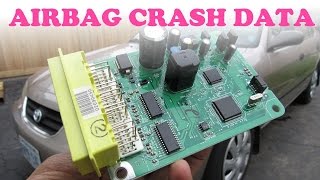
- Stored Crash Data in Airbag Module (Common) — If the vehicle was in an accident, the Airbag Control Module stores permanent 'crash data'. This illuminates the airbag light and sets a B1010 code that standard scanners cannot clear.
- Faulty Component or Sensor (Less Common) — A specific sensor, such as a convertible top position switch or a door latch sensor, fails and sends incorrect data to the main control module, triggering a logic fault.
- Faulty Steering Lock Module (Less Common) — On specific vehicles, like Fiat and Mercedes models, B1010 points directly to a failure in the Electronic Steering Lock (ESL) motor, preventing the vehicle from starting.
- Aftermarket Electronics Interference (Less Common) — Improperly installed aftermarket remote starters, alarms, or stereos interfere with the vehicle's CAN bus network or draw excessive power, causing communication errors between modules.
- Faulty Control Module (BCM, Airbag, etc.) (Rare) — The control module itself fails due to internal hardware or software degradation. This is the last component to suspect after verifying all wiring, power, grounds, and sensor inputs.
Symptoms

- Airbag Warning Light is On — This is the most common symptom when B1010 relates to the Supplemental Restraint System (SRS). It confirms the airbags will not deploy in a crash.
- Malfunctioning Electronics — When the Body Control Module fails, power windows, door locks, interior lights, the horn, or the alarm system operate erratically or stop working entirely.
- Parasitic Battery Drain — A faulty BCM fails to enter 'sleep' mode when the car is off, creating a continuous power draw that drains the battery overnight.
- Convertible Top Won't Open or Close — On vehicles like the Pontiac G6, this code disables the retractable hardtop to prevent mechanical damage when sensors report conflicting position data.
- Steering Column Will Not Unlock / No Start — On Fiat and Mercedes models, a B1010 code related to the electronic steering lock prevents the steering wheel from unlocking and disables the ignition.
- Flashing Odometer or Warning Lights — A communication error on the vehicle's data network causes erratic behavior in the instrument cluster, illuminating multiple warning lights simultaneously.
Diagnostic Flowchart
Tap your situation to follow the diagnostic path that matches what you're seeing on this code.
Common Fixes & Costs
- Replace Weak or Faulty Battery — Parts: $150-$350, Labor: $0-$50, ~0.5 hr book time (DIY)
- Repair Damaged Wiring Harness — Parts: $10-$50, Labor: $150-$800, ~3.5 hr book time (Professional)
- Reset Airbag Module Crash Data — Parts: $0, Labor: $50-$150, ~1 hr book time (Intermediate)
- Replace Specific Failed Sensor — Parts: $50-$200, Labor: $100-$250, ~1.5 hr book time (Intermediate)
- Replace Body Control Module (BCM)
— Parts: $250-$700, Labor: $150-$400, ~2 hr book time
(Professional)
Pontiac G6 (2006-2010): OEM 15260312, 25885304, 15829740 (Alt: Dorman 502-055)
Honda Pilot (2012-2015): OEM AM11B SZA-A03, 38809-T43-A12 (Alt: Dorman 502-008)
Chevrolet/GMC Trucks (2007-2011): OEM 25835966, 15940214 (Alt: Dorman 502-000) - Replace Airbag Control Module (SRS/SDM)
— Parts: $300-$1000, Labor: $100-$250, ~1.5 hr book time
(Professional)
Nissan Rogue (2010-2013): OEM K8820-1VK0A (Alt: N/A)
DIY vs Professional
- Replace Weak or Faulty Battery 🟢 Beginner
Tools: Wrench set - Repair Damaged Wiring Harness 🟢 Beginner
Tools: Multimeter, wire strippers, crimpers, heat shrink connectors, wiring diagrams. - Reset Airbag Module Crash Data 🟢 Beginner
Tools: Specialized EEPROM programming tools. - Replace Body Control Module (BCM) 🟢 Beginner
Tools: Wrench set, trim removal tools, OEM-level scan tool for programming. - Replace Specific Failed Sensor 🟢 Beginner
Tools: Wrench set, trim removal tools, multimeter.
Used vs. New Parts: Buying Guide
When a used part is worth it: A used Body Control Module (BCM) is cost-effective only if you have access to professional programming tools. For Airbag (SRS) modules, a used part is a severe safety risk; have your original module professionally reset instead.
Donor-vehicle mileage cap: roughly under 100000 miles for the part to have meaningful remaining life.
Donor quality checklist:
- Verify the part number matches exactly.
- Source from a vehicle in a dry, salt-free climate to avoid corrosion.
- Ensure the donor vehicle was not scrapped due to flood or fire damage.
- Never use an airbag module from a vehicle where airbags deployed.
Decision logic:
- If The part is an Airbag (SRS) Control Module → Have your original module professionally reset to retain the correct VIN programming and ensure safety.
- If The part is a Body Control Module (BCM) and requires programming → Buy new or remanufactured unless you confirm a shop will program a used module to your car's VIN. Many dealers refuse to program used parts.
- If The part is a simple, non-programmable module or sensor → A used part from a reputable salvage yard is a reasonable, low-risk option.
Warranty tradeoff: Used parts typically have a 30-90 day warranty covering only the part. New aftermarket parts offer 1-year to lifetime warranties. New OEM parts offer a 1-2 year warranty when installed by a dealer.
Worst-case if a used part fails: $300-$800 if a used, programmed module fails, requiring repeat labor and a replacement module.
What Happens If You Wait — Timeline
- Immediate: If the code is for the Airbag System, the airbag light turns on, and the entire SRS system is disabled. This is an immediate and critical safety failure. (MPG impact: 0%% · Added cost: $0)
- 0-2 months: If the code is for a BCM fault causing a parasitic draw, the initial symptom is an intermittent dead battery requiring jump-starts. Electronic glitches occur randomly. (MPG impact: 0%% · Added cost: $20-50 in wasted time and inconvenience)
- 2-6 months: The constant parasitic draw and repeated deep-discharges cause sulfation, permanently damaging the battery. The car fails to start daily. (MPG impact: 0%% · Added cost: $150-$400 for a mandatory new battery)
- 6+ months: Operating the vehicle with a persistently faulty BCM sends erratic voltage signals to other modules on the CAN network, potentially damaging the instrument cluster or transmission control module. (MPG impact: 0%% · Added cost: $500-$2000+ for diagnosing and replacing additional damaged modules)
Cost of Not Fixing It
- Immediate: If related to the airbag system, airbags are disabled, creating a major safety risk. If related to the BCM, critical systems like headlights or door locks fail unpredictably. (Added cost: N/A)
- 1-6 months: If the fault causes a parasitic draw, it repeatedly drains the battery. This constant deep cycling permanently damages the battery via sulfation, requiring premature replacement. (Added cost: $150-$400 for a new battery)
- 6+ months: A persistently faulty BCM sends incorrect voltage signals that stress other connected electronic components, leading to a cascade of failures and expensive module replacements. (Added cost: $500-$2000+ for additional module replacements)
Diagnosis Steps
- Identify the Code's Specific Meaning
Search online for 'B1010 [Your Car's Make Model Year]' (e.g., 'B1010 Honda Ridgeline 2007'). This identifies exactly which system (Airbag, Body, Steering) is affected on your specific vehicle.
Tools: Internet access (Beginner) - Test the Battery and Charging System
Use a multimeter to check battery voltage with the car off; it must be above 12.4 volts. Start the engine and verify the voltage is between 13.7 and 14.7 volts. Replace the battery or alternator if readings fall outside these ranges, as low voltage is the primary cause of false B1010 codes.
Tools: Multimeter (Beginner) - Scan for All Trouble Codes
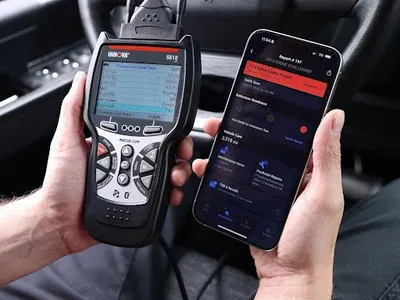
Use an advanced OBD-II scanner to check for other stored codes. B1010 is frequently a secondary fault caused by a specific sensor failure. Diagnosing and fixing the accompanying codes first usually resolves the B1010 code.
Tools: OBD-II Scanner (capable of reading Body codes) (Beginner) - Perform a Thorough Visual Inspection
Inspect the wiring harnesses and connectors related to the affected module. Look for chewed wires, green corrosion, or pinched lines, especially around moving parts like trunk hinges and areas prone to water leaks like floorboards.
Tools: Flashlight (Intermediate) - Test Specific Circuits
Using a vehicle-specific wiring diagram, check for correct voltage and ground at the suspect module's connector. Verify 12V+ on the main power pins and less than 0.1V on the ground pins to confirm the circuit is intact before condemning the module.
Tools: Multimeter, Vehicle-specific wiring diagram (Advanced) - Analyze Live Sensor Data
View the live data stream for the affected module using an advanced scan tool. Operate related switches and sensors to verify their inputs toggle clearly between 'Open' and 'Closed' or 'Active' and 'Inactive'.
Tools: Advanced Scan Tool (Advanced) - Perform a Parasitic Draw Test
If the battery drains overnight, perform a parasitic draw test. With the vehicle off for 30 minutes, connect a multimeter in series with the negative battery cable. If the draw exceeds 50-85 milliamps, pull fuses one by one to isolate the faulty circuit.
Tools: Multimeter with 10A capability (Advanced) - Test CAN Bus Network Integrity
If B1010 appears with U-series communication codes, disconnect the battery and measure resistance between pins 6 and 14 on the OBD-II port. A reading of 120 Ohms indicates a broken wire; 0 Ohms indicates a short. A healthy network reads 60 Ohms.
Tools: Multimeter (Advanced) - Check Voltage Drop Across Fuses
As a faster alternative to a parasitic draw test, set a multimeter to the millivolt (mV) scale. Touch the probes to the test points on top of each fuse while the car is asleep. Any reading above 0 mV indicates current is flowing through that circuit.
Tools: Digital Volt-Ohm Meter (DVOM) with mV scale (Advanced)
When This Code Triggers (Freeze-Frame Conditions)
- System Voltage: < 11.8V or > 15.0V (During module self-test at startup (Key On, Engine Off))
- Module State: Self-Test Active (The fault logs within the first 5-10 seconds after turning the ignition on, when modules perform internal checks.)
- Communication Status: No Response / Invalid Data (When a peripheral module fails to respond to a status request from the main body computer.)
- Event Trigger: Crash Data Stored (For airbag modules, the code sets permanently following a collision and remains until the module is professionally reset.)
Related Codes
- B1000 — Indicates 'ECU Malfunction'. If B1010 and B1000 appear together in the airbag module, it strongly suggests an internal hardware failure of the module itself.
- U-Series Codes (e.g., U0155, U0140) — Indicate a loss of communication on the CAN bus network. If B1010 is present with a U-code, the problem is a network-wide issue like a broken CAN wire, not an isolated module fault.
- B1296, B3669, B367A (GM Specific) — Point to specific sensor failures within the Pontiac G6 convertible top system. Fix these specific sensor codes first, and the general B1010 logic fault will resolve itself.
- U1932 (Fiat Specific) — Paired with B1010 on Fiat models, indicating the Body Control Module is not enabling the start sequence due to a problem in the steering lock/immobilizer system.
Climate & Environmental Factors
- Cold Climates / Road Salt: Road salt dissolves in water, creating a powerful electrolyte solution that dramatically accelerates corrosion on underbody wiring harnesses and module casings.
- High Humidity / Coastal Regions: Constant exposure to salt-laden air promotes moisture intrusion and corrosion on electrical components, leading to poor connections and voltage faults.
- Extreme Cold: Low temperatures reduce a battery's chemical efficiency. A weak battery struggling in the cold is a primary trigger for low-voltage fault codes like B1010.
How to Talk to a Mechanic About This Code
Say this: "I have a B1010 fault code and I'd like to schedule a diagnostic appointment. Based on my vehicle's make, it points to a [BCM/Airbag/etc.] issue. Can you please start by verifying battery voltage, ground connections, and checking for any related communication codes before recommending a module replacement?"
This signals you understand that B1010 is often caused by simpler issues than complete module failure. It directs the technician to perform a thorough diagnosis instead of jumping to the most expensive conclusion.
Avoid saying:
- 'My airbag light is on, just fix it.'
- 'The car is doing weird electrical things, can you look at it?'
- 'I think I need a new BCM.'
Questions to ask before authorizing the repair:
- What specific tests did you perform to confirm the module itself has failed?
- Did you check for voltage and ground directly at the module's connector?
- If you're recommending a module replacement, does the cost include the necessary programming or VIN cloning?
- Will you provide a printout of all fault codes and the diagnostic path you followed?
Where to Take It: Dealer vs Independent vs Chain
- Dealer:
Recommended for programming-intensive or airbag system repairs.
Best for: Vehicles under warranty., Complex module programming or 'Proxi Alignment' procedures on brands like Fiat, Maserati, or Mercedes-Benz., Safety-critical repairs like airbag system faults where OEM parts and procedures are paramount.
Downsides: Highest labor rates., Refuses to install customer-supplied or used parts, including reset airbag modules. (Typical cost: +50% vs. baseline) - Independent Shop:
Best fit for most B1010 scenarios, especially wiring and non-programming fixes. Vet the shop's electrical expertise first.
Best for: Out-of-warranty vehicles where the cause is likely wiring, battery, or a known issue., Shops specializing in electrical diagnostics or specific vehicle makes.
Downsides: Quality and diagnostic capabilities vary widely. Ensure they have ASE-certified technicians and advanced scan tools., Lacks access to the latest OEM programming software for brand-new modules. (Typical cost: +0% vs. baseline) - Chain Shop:
Acceptable ONLY for a battery test and replacement. AVOID for any further B1010 diagnosis.
Best for: Battery testing and replacement, which is a common cause of B1010.
Downsides: Technicians are not equipped or trained for in-depth electrical diagnosis beyond code reading., High pressure to upsell leads to incorrect recommendations like replacing a module when the battery is the real issue. (Typical cost: -10% vs. baseline)
When to Walk Away From the Repair
If the estimated repair cost exceeds 40-50% of the car's private-party value, seriously consider selling or trading it in.
- Car worth $4000, fix is $2200: Walk away. The repair cost is 55% of the vehicle's value, which is a poor investment for an older car.
- Car worth $12000, fix is $1100: Fix it. The repair is less than 10% of the car's value and restores critical functionality and safety.
- Car worth $2500, fix is $800: Borderline. At 32% of the car's value, the decision depends on the car's overall condition. If it's otherwise reliable, the fix is worth it for a few more years of service.
What Scan Tool You Need for This Code
Minimum: A scanner that reads and clears Body ('B') and Supplemental Restraint System (SRS) codes.
A basic $20 engine code reader cannot see 'B' codes like B1010. You need a tool that accesses the Body Control Module and Airbag module to pull the code, view live data, and clear it.
Budget: BlueDriver Pro Scan Tool (~$100) — Reads and clears engine, ABS, Airbag (SRS), and BCM codes for most major brands. It views live data from these modules, which is essential for diagnosing if a sensor or switch is working correctly.
Mid-range: Innova 5610 / Foxwell NT510 Elite (~$350) — Offers bi-directional controls to test components directly (e.g., command a door lock to cycle). It displays live data from body modules and helps differentiate between a bad module and a bad sensor signal.
Professional: Autel MaxiCOM MK808 / Launch X431 series (~$500-1200) — Provides full bi-directional control, OE-level diagnostics, and special functions. Crucially, these tools perform the 'Proxi Alignment' needed for Fiat, Chrysler, and Maserati vehicles after module replacement or a severe voltage drop.
Rent vs buy: Most auto parts stores offer free loaner tools, but their basic scanners cannot read BCM or SRS codes. If you are serious about diagnosing B1010 yourself, you must buy a capable scanner.
How to Clear the Code After You Fix It
- Fix the underlying cause (e.g., replace battery, repair wiring).
- Reconnect the battery if it was disconnected for the repair.
- Use an OBD-II scanner capable of reading 'B' codes to clear the fault memory.
- For airbag crash data, mail the module to a professional for a hard reset; a scanner cannot clear it.
Drive cycle (~10 minutes): A specific drive cycle is not required. After clearing the code, turn the ignition off, wait 10 seconds, and turn it back on. If the warning light stays off after a 10-minute drive, the repair was successful.
Readiness monitors affected: Body codes like B1010 do not affect emissions readiness monitors.
Watch out for:
- Using a basic code reader that cannot access or clear 'B' (Body) codes.
- Attempting to clear an airbag code with 'crash data stored' without a professional reset.
- Failing to fix the root cause, which forces the code to return immediately upon startup.
Will This Fail Emissions / State Inspection?
No — by itself this code doesn't fail OBD inspection (but it can keep readiness monitors from setting, which causes a separate fail).
- California: A B1010 code will not fail the emissions smog check. However, an illuminated airbag warning light fails the safety inspection portion.
- New York: An illuminated airbag warning lamp is an advisory issue and will not cause a rejection of the annual safety inspection.
- Texas: An illuminated airbag light causes an automatic failure of the annual safety inspection.
- Virginia: An illuminated airbag warning light causes an automatic failure of the state safety inspection.
Most Commonly Affected Vehicles
- Pontiac G6 Convertible (2006-2009) — Prone to B1010 as a 'System Sensors Data Mismatch' for the retractable top, almost always caused by broken wires in the driver's side trunk hinge harness.
- Honda / Acura Ridgeline, Pilot, MDX, Accord (2005-2015) — Shows B1010 for 'MICU Lost Communication with Door Multiplex Control Unit', often due to a weak battery or a faulty door module.
- Nissan Rogue, March, Sentra (2007-2020) — Appears as a 'Diagnosis Sensor Unit' fault in the airbag module after an accident, indicating stored crash data that requires a professional reset service.
- Mercedes-Benz C-Class, E-Class, SL-Class (2000-2015) — Logs B1010 for an airbag system fault, often traced back to a weak battery or faulty ignition switch causing an undervoltage condition.
- Maserati Ghibli, Quattroporte (2014-2020) — Sets a B1010 'Body Computer Fault' when battery voltage drops. After battery replacement, a 'Proxi Alignment' procedure is required to re-establish module communication.
- Ford Escape, F-150 (2017-2020) — Sets B1010 as a secondary fault triggered by wiring issues related to other powertrain codes.
- Chevrolet / GMC Silverado 1500, Sierra 1500 (2019-2020) — A P1010 code (powertrain equivalent) sets for 'Engine Coolant Flow Control Valve Position Sensor', requiring an ECM software update per TSB 20-NA-039.
- Hyundai / Genesis Genesis, G80, Sonata (2015-2018) — The part number 58920-B1010 corresponds to an ABS control unit, not a generic BCM fault. A failure here triggers ABS/ESC warning lights.
Manufacturer-Specific Notes
- General Motors (Pontiac): On the G6 convertible, B1010 is a secondary code. TSB 07-08-67-010C states to ignore B1010 and diagnose other active 'B' codes first. The root cause is almost always broken wires in the trunk hinge harness.
- Honda / Acura: The code points to a loss of communication with a door module. Diagnosis requires checking communications with the driver's door module, passenger's door module, and the main body computer individually.
- Nissan / Infiniti: Indicates the Airbag Control Module has stored crash data. The module must be professionally reset or replaced; standard scanners cannot clear this code.
- Fiat / Jeep: Definitions are highly specific. On a Fiat, it means 'Steering Lock Motor - Component Failures', while on a Jeep, it points to an 'Air Suspension RR Height Sensor Circuit Failure'.
- Maserati: B1010 is a 'Body Computer Fault' caused by low battery voltage. After replacing the battery, a 'Proxi Alignment' is mandatory to re-synchronize all vehicle modules on the CAN network.
Real Owner Stories
2008 Pontiac G6 Convertible with 115K miles
The convertible top suddenly stopped working, and the message 'Top Not Secure' appeared on the dash. A scan revealed code B1010.
What they tried:
- Initially suspected a faulty Folding Top Control (FTC) module or a hydraulic leak.
- Inspected the wiring harness in the driver's side trunk hinge based on forum advice.
- Found several broken wires inside the black plastic conduit.
Outcome: Spliced the broken wires using butt connectors and heat shrink tubing. The total cost was under $20. The B1010 code cleared and the top functioned normally.
Lesson: On the G6 convertible, B1010 is almost always caused by broken wires in the trunk hinge. Inspect this high-failure area before considering expensive module replacements.
2015 Maserati Ghibli with 50K miles
After the car sat for a few weeks, the battery completely died. After charging, the car started but displayed a B1010 'Body Computer Fault' code and a flashing odometer.
What they tried:
- Charged the battery fully.
- Attempted to clear the code with a standard OBD-II scanner, but it persisted.
- Took the car to a specialist with an advanced diagnostic tool.
Outcome: The specialist performed a 'Proxi Alignment' procedure to re-establish communication between all control modules. This cleared the B1010 code and the flashing odometer.
Lesson: On modern European cars, a low battery event sets persistent communication codes. After replacing a battery, a 'Proxi Alignment' is required to get all modules talking to each other again.
2011 Nissan Rogue after a minor front-end collision
The vehicle was repaired after a minor accident where airbags did not deploy. The airbag warning light remained on, and a scan showed code B1010 'Diagnosis Sensor Unit' fault.
What they tried:
- The body shop tried to clear the code with their scanner, but it would not erase.
- The dealer quoted over $800 for a new airbag module.
Outcome: The owner mailed the original airbag module to a specialized reset service. For $50, the service cleared the stored 'crash data'. After reinstalling the module, the airbag light went off.
Lesson: For a Nissan with an airbag-related B1010 code after an accident, the module has stored 'crash data'. Use a mail-in reset service to restore the original module for a fraction of the cost of a new one.
How to Prevent This Code From Triggering
- Test battery voltage regularly (Every 3 months) — Low system voltage is the primary cause of false B1010 codes. Verifying your battery is above 12.4V catches a weak battery before it forces modules to set fault codes.
- Clean battery terminals and ground connections (Annually) — Corrosion on battery terminals creates resistance, lowering the voltage supplied to modules. Cleaning these points ensures a stable power supply.
- Use a battery tender/maintainer (If the vehicle is stored for more than 2-3 weeks) — Modern cars have a normal parasitic draw that drains a battery over several weeks. A battery tender prevents the low-voltage conditions that trigger B1010.
- Clear debris from sunroof drains and cowl vents (Annually, especially in the fall) — Clogged drains cause water to overflow into the cabin, dripping directly onto the BCM. Keeping drains clear prevents water intrusion and module corrosion.
- Protect wiring in rodent-prone areas (As needed) — Rodents chewing on wiring harnesses cause severe electrical faults. Wrapping critical wiring with rodent-deterrent tape prevents this damage.
Frequently Asked Questions
Can I reset the B1010 code myself?
You can clear the code with a scanner, but it returns immediately if the underlying problem remains. Airbag codes caused by an accident contain 'crash data' that standard scanners cannot erase. You must use a professional mail-in reset service to clear these hard codes.
Is it safe to drive with an airbag-related B1010 code?
No. An active B1010 code in the airbag system disables the airbags and seatbelt pretensioners. The vehicle will not protect you in a crash.
What is a common misdiagnosis for B1010?
Mechanics frequently misdiagnose B1010 by replacing the control module when the actual fault is a broken wire, poor ground, or low battery. Always verify power, ground, and sensor signals at the module's connector before condemning the unit. A $20 wiring fix often solves an $800 module quote.
Why did the code appear after a jump-start or installing a stereo?
Voltage spikes or drops during a jump-start corrupt module memory and trigger false internal fault codes. Improperly installed aftermarket stereos or alarms also interfere with the CAN bus network. Both scenarios disrupt module communication and set B1010.
A mechanic quoted me $800 to fix this. Is that a rip-off?
An $800 bill is fair for replacing and programming a new Body Control Module or tracing a complex wiring short. However, it is an extreme overcharge if the root cause is simply a weak battery. Always ask for the diagnostic printout to justify the module replacement.
My scanner can't find any 'B' codes. What should I do?
Basic $20 code readers only scan for powertrain ('P') codes and cannot see body-related faults. You must use an advanced OBD-II scanner capable of reading Body ('B'), Chassis ('C'), and Network ('U') codes. Tools like the BlueDriver or Innova 5610 meet this requirement.
Can a blown fuse cause a B1010 code?
Yes. A blown fuse cuts power to a control module or a monitored component, forcing the module to report a communication fault. Always test relevant fuses with a multimeter before replacing expensive electronic parts.
Key Takeaways
- Search 'B1010 [Your Make and Model]' first, as this manufacturer-specific code has completely different definitions for a Honda versus a Pontiac.
- Test your battery voltage before replacing any parts; a reading below 12.4V is the number one cause of false B1010 codes.
- Fix any accompanying specific sensor codes (like B1296) before addressing B1010, as B1010 is often just a secondary logic fault.
- Do not drive if the B1010 code triggers your airbag light; the system is disabled and requires a $50-$150 professional module reset to restore safety.
Helpful Videos

Shop the Parts Behind B1010
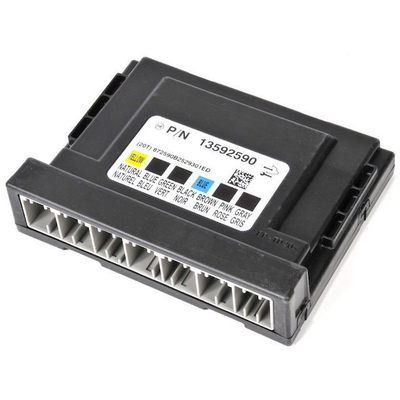
Below are the parts most often responsible for code B1010, ranked by how frequently each one is the actual culprit (per the diagnosis above). Tap any to see what we have for your vehicle.




The information in this article is provided for general reference and educational purposes only. Vehicle specifications, procedures, and part compatibility can vary by production date, trim level, and region. Always consult your vehicle's factory service manual and verify part numbers before purchasing or performing repairs. Safety-critical components such as airbags, seat belts, and braking systems should be installed by a qualified professional.
- 🧭 Diagnostic Flowchart
- 🎬 Helpful Videos
- 🛍️ Shop This Part
- What Does B1010 Mean?
- Can I Drive With B1010?
- Common Causes
- Symptoms
- Common Fixes & Costs
- DIY vs Professional
- Used vs. New Parts: Buying Guide
- What Happens If You Wait — Timeline
- Cost of Not Fixing It
- Diagnosis Steps
- When This Code Triggers (Freeze-Frame Conditions)
- Related Codes
- Climate & Environmental Factors
- How to Talk to a Mechanic About This Code
- Where to Take It: Dealer vs Independent vs Chain
- When to Walk Away From the Repair
- What Scan Tool You Need for This Code
- How to Clear the Code After You Fix It
- Will This Fail Emissions / State Inspection?
- Most Commonly Affected Vehicles
- Manufacturer-Specific Notes
- Real Owner Stories
- 2008 Pontiac G6 Convertible with 115K miles
- 2015 Maserati Ghibli with 50K miles
- 2011 Nissan Rogue after a minor front-end collision
- How to Prevent This Code From Triggering
- Frequently Asked Questions
- Can I reset the B1010 code myself?
- Is it safe to drive with an airbag-related B1010 code?
- What is a common misdiagnosis for B1010?
- Why did the code appear after a jump-start or installing a stereo?
- A mechanic quoted me $800 to fix this. Is that a rip-off?
- My scanner can't find any 'B' codes. What should I do?
- Can a blown fuse cause a B1010 code?
- Key Takeaways
- 🎟️ Get 5% Off