

OBD-II Code B1013: Airbag Control Module Internal Fault
The Ultimate Guide: What B1013 Means, Why It Triggers, and How to Fix It
- Code B1013 disables your entire airbag system, meaning zero airbags will deploy in a crash.
- Always test your battery first; a voltage drop below 10V during a cold start triggers false B1013 codes.
- If the code appeared after an accident, spend $50-$150 on a mail-in module reset service instead of paying $800+ for a new module.
- On 2007-2014 GM trucks, check for wet carpets under the driver's seat; clogged sunroof drains frequently destroy the floor-mounted module.
- On 2007-2013 Mazdas and 2005-2012 Subarus, a flashing airbag light usually requires a $5 DIY solder repair on the passenger indicator board, not a module replacement.
What Does B1013 Mean?
The B1013 code means the vehicle's primary safety computer, the Airbag Control Module (ACM), detected a fatal internal hardware or software error during its self-test. The module shuts itself down to prevent accidental deployment, rendering the entire airbag system inoperative. Electrical overstress during a crash event causes internal damage and prevents deployment, manifesting as an internal fault code like B1013.
Technical definition: The official SAE/ISO definition for code B1013 varies by manufacturer, but universally points to a critical internal module fault. On Nissan vehicles, it is defined as "Diagnosis Sensor Unit." For Chevrolet/GM, it means a "ROM Check Error." On Volkswagen models, it points to a high resistance fault in the "Driver's Belt Force Limiter Igniter." For Acura, it indicates "MICU Lost Communication with Driver's MPCS Unit."
Can I Drive With B1013?
No — Do Not Drive. No, it is not safe to drive the vehicle. A B1013 code indicates a critical fault within the Supplemental Restraint System (SRS). The airbag control module disables the entire system as a fail-safe. NONE of the airbags or seatbelt pretensioners will deploy in a collision. The risk of serious or fatal injury increases drastically. Driving with this light on also causes an automatic failure of safety inspections in many jurisdictions.
Common Causes
- Internal Airbag Control Module failure (Very Common) — Internal electronic components like processors, memory chips (ROM), or capacitors fail over time due to heat cycles and vibration. This includes microscopic cracks in solder joints or damage to the circuit board.
- Water damage to the Airbag Control Module (Common) — The module is often located under the center console or front seats. Spilled drinks, clogged sunroof drains, or water wicking up from snow-covered boots causes moisture intrusion, leading to corrosion and short circuits.
- Stored crash data in the Airbag Control Module (Common) — If the vehicle was in an accident severe enough to deploy airbags or pretensioners, the module stores permanent crash data and locks itself. The module must be professionally reset or replaced.
- Low System Voltage / Failing Battery (Common) — A weak battery or failing alternator causes significant voltage drops during engine cranking, especially in cold weather. The sensitive SRS control module interprets this unstable power supply as an internal fault.
- Passenger Seat Occupancy Mat Failure (Common) — Common in BMW and Ford models, the pressure-sensitive mat in the passenger seat cushion degrades over time. The SRS module loses the signal and sets a fault, disabling the passenger airbag.
- Cracked Solder Joints on Ancillary Components (Common) — On specific Mazda and Subaru models, this code is caused by cracked solder joints on the passenger airbag indicator light circuit board. The open circuit is detected by the main SRS module.
- Corroded or loose wiring connectors (Less Common) — The main connectors to the Airbag Control Module or under-seat sensors become loose or corroded. Items pushed under the seat or moisture from interior cleaning dislodge plugs or cause pin corrosion.
Symptoms
- Airbag warning light is on or flashing — The light (showing a person with an airbag or 'SRS') remains illuminated or flashes a specific pattern after the initial startup self-check. Many vehicles also display a 'Service Airbag System' message.
- Passenger airbag 'Off' light behaves incorrectly — The indicator light showing the passenger airbag is deactivated stays on regardless of whether someone is in the seat, or fails to illuminate entirely.
- Airbags are disabled (scan-tool only — no driver-felt sign) — The entire Supplemental Restraint System, including all airbags and seatbelt pretensioners, is inactive and will not deploy in a collision.
Diagnostic Flowchart
Tap your situation to follow the diagnostic path that matches what you're seeing on this code.
Common Fixes & Costs
- Replace the Airbag Control Module
— Parts: $200 - $1200, Labor: $150 - $400, ~1.5 hr book time
(Professional)
Chevrolet/GMC (2007-2014): OEM Varies by VIN (e.g., 20984026, 25896408). Must verify. (Alt: Dorman (Remanufactured), Cardone (Remanufactured)) - Reset the Airbag Control Module — Parts: $0, Labor: $50 - $150, ~1.5 hr book time (Professional)
- Repair Wiring or Clean Connectors — Parts: $5 - $25, Labor: $100 - $250, ~1.5 hr book time (Intermediate)
- Replace Passenger Seat Occupancy Sensor Mat
— Parts: $150 - $700, Labor: $300 - $600, ~3.5 hr book time
(Professional)
BMW 3-Series E90 (2006-2011): OEM 65779154960, 65776958494 (Varies by seat type/year). (Alt: Seat mat emulators are sold but are NOT a safe repair.) - Re-solder Indicator Light Circuit Board
— Parts: $1 - $5, Labor: $150 - $300, ~1.8 hr book time
(DIY)
Mazda 3 (2010-2013): OEM BBM4-66-4H0C (Full indicator assembly). (Alt: N/A (Repair of original part is standard))
Used vs. New Parts: Buying Guide
When a used part is worth it: A used Airbag Control Module is a cost-effective option ONLY if it is from an identical vehicle (exact same part number), is guaranteed free of crash data, and a professional programs it to your vehicle's VIN. It is safer and easier to have your original module reset by a professional service if it only contains crash data.
Donor-vehicle mileage cap: roughly under 100000 miles for the part to have meaningful remaining life.
Donor quality checklist:
- Part number MUST match exactly. Superseded numbers from a dealer are acceptable.
- Verify the donor vehicle was not in a collision where airbags deployed.
- Avoid modules from flood or fire-damaged vehicles; internal corrosion makes them unsafe.
- The module must be 'virginized' or unlocked by a specialist to allow reprogramming of your car's VIN.
Decision logic:
- If Your original module has an internal hardware fault (e.g., water damage, ROM error) → Buy a NEW OEM module. This is the safest option with the best warranty.
- If Your original module only has crash data stored and is physically undamaged → Use a professional mail-in RESET service. This is cheaper than new and retains your vehicle's original programming.
- If A new module is prohibitively expensive and your original is lost or destroyed → A USED module from a reputable salvage yard is a last resort, requiring professional programming.
Warranty tradeoff: Used parts typically have a 30-90 day warranty, which expires before hidden issues appear. New OEM parts carry a 1-year or longer warranty. Professional reset services guarantee their work, but not unrelated module faults.
Worst-case if a used part fails: $400 - $1000 if a used module is incompatible or fails after installation, requiring repeat labor costs and another part.
What Happens If You Wait — Timeline
- Immediately (0 seconds): The B1013 code sets during the initial power-on self-test. The airbag warning light illuminates, and the entire Supplemental Restraint System is disabled. (MPG impact: 0%% · Added cost: $0 (but safety is compromised))
- First Drive (0-1 week): The vehicle is driven with no functional airbag system, posing a significant risk of serious injury. The vehicle is illegally non-compliant in states with safety inspections. (MPG impact: 0%% · Added cost: $50 - $200 in potential fines or failed inspection fees.)
- 1-6 months: If the root cause was minor (e.g., a corroded connector pin), continued exposure allows corrosion to worsen. A $150 wiring repair escalates to a full module replacement. (MPG impact: 0%% · Added cost: $600 - $1500 (Cost escalates to full module replacement).)
- 6+ months: The illuminated warning light masks new, unrelated faults within the SRS system. A subsequent failure in a different sensor goes unnoticed. (MPG impact: 0%% · Added cost: $1000 - $2000+ (Cost of original module replacement plus repair of a second, hidden fault).)
Cost of Not Fixing It
- Immediately: The entire Supplemental Restraint System is disabled and will not deploy in a collision. This drastically increases the risk of serious or fatal injury. (Added cost: N/A)
- Next Safety Inspection: The vehicle automatically fails safety inspections in states that check the SRS system. This results in fines or the inability to legally register the vehicle. (Added cost: $50 - $200 (re-inspection fees and potential fines))
- Long-Term: Ignoring the light masks other developing issues. A minor wiring fault is often the initial problem, but continued driving leads to moisture intrusion and damage to the expensive control module itself. (Added cost: $500 - $1500+ (escalation from a simple wiring repair to a full module replacement))
Diagnosis Steps
- Verify Battery and Charging System Voltage
Before component replacement, verify system voltage. Use a multimeter to check the battery. It should read at least 12.4V at rest. With the engine running, it should be 13.7V to 14.7V. Low or fluctuating voltage during a cold start sets false internal module faults.
Tools: Multimeter (Beginner) - Perform Full Vehicle DTC Scan
Use an advanced OBD-II scanner capable of reading SRS/Airbag codes. Record the exact B1013 definition and accompanying codes. A U0151 code points to a power/ground issue TO the airbag module. If the scanner states 'Crash Data Stored', the module must be reset or replaced.
Tools: Advanced OBD-II Scanner (Beginner) - Inspect Module and Connectors for Water Damage
Disconnect the battery and wait 10 minutes for the backup capacitor to discharge. Locate the airbag module (under the center console or front seats). Unplug its connectors and inspect the module, pins, and connectors for water intrusion, white/green corrosion, or bent pins.
Tools: Socket set, trim removal tools, flashlight (Intermediate) - Inspect for Cracked Solder Joints (Mazda/Subaru)
If you own an affected Mazda or Subaru, remove the passenger airbag indicator light assembly from the dash or overhead console. Disassemble the unit and inspect the solder joints on the circuit board. Cracked or cold solder joints are the primary cause.
Tools: Trim removal tools, screwdriver set, magnifying glass (Intermediate) - Test Module Power and Ground at the Connector (Advanced)
With the battery reconnected and the module unplugged, use a wiring diagram to identify power and ground pins on the harness connector. With the ignition ON, use a multimeter to verify 12V+ at the power pin and less than 1.0 ohm resistance to chassis ground. Loss of power or ground causes a B1013.
Tools: Multimeter, vehicle-specific wiring diagram (Advanced) - Isolate Circuits with a Resistor (Advanced)
For manufacturer-specific B1013 definitions pointing to a specific circuit (e.g., VW 'Belt Force Limiter'), jump a 2.0-3.0 ohm resistor across the pins on the harness-side connector. If the code clears and changes to 'stored', the component is faulty. WARNING: Probing the wrong circuit deploys an airbag.
Tools: 2-3 Ohm Resistor, Multimeter, Advanced OBD-II Scanner (Advanced) - Scope Test the CAN Bus Network (Advanced)
For communication-related definitions (e.g., Acura B1013), use an oscilloscope to check the CAN High and CAN Low signals at the airbag module's connector. The two signals should be mirror images, switching between ~2.5V and ~3.5V (CAN High) and ~2.5V and ~1.5V (CAN Low).
Tools: Oscilloscope, wiring diagram (Advanced)
When This Code Triggers (Freeze-Frame Conditions)
- System Self-Test Status: Failed (The code sets when the Airbag Control Module (ACM) performs its initial power-on self-test (POST) and detects an internal, non-recoverable error.)
- Ignition Cycle State: Key-On / Engine-Off or Key-On / Engine-On (The fault is detected within the first 5-10 seconds after the ignition is turned to the 'ON' or 'RUN' position.)
- System Voltage: 9V - 16V (Extreme voltage fluctuations cause internal logic or hardware failures, triggering the code.)
- Fault Type: Internal Error / ROM Failure / Crash Data Present (Freeze frame data points to a specific internal failure mode, such as a memory checksum error, processor fault, or locked crash data.)
Related Codes
- U0151 — Means 'Lost Communication with Restraints Control Module.' Set by OTHER modules when they cannot get a signal from the airbag module. Indicates a power, ground, or network wiring issue TO the module.
- B1010 / B1011 — Indicates low or high voltage supplied to the control unit. An unstable power supply from a weak battery causes the module to fail its internal self-test and set a B1013.
- B0091 — Points to a fault in a front impact sensor. Severe corrosion of these sensors causes communication issues on the SRS network misinterpreted by the main module.
- B0001 — Indicates a specific fault in the driver-side airbag circuit. A catastrophic failure of an internal driver for this circuit leads the module to flag itself with a B1013.
Climate & Environmental Factors
- High Humidity / Water Intrusion: Moisture is a primary enemy of the airbag module. Water leaks from sunroof drains or melting snow saturate carpets. Floor-mounted modules suffer direct water damage, corroding the circuit board and causing short circuits.
- Extreme Cold Temperatures: Cold weather triggers intermittent SRS faults. A battery's cranking amperage drops in the cold, and the resulting voltage drop is misinterpreted as a system fault. Extreme cold also causes microscopic cracks in old solder joints to contract and create an open circuit.
- Road Salt (Salt Belt Regions): Salt-laden moisture brought into the cabin on footwear severely corrodes floor-mounted airbag modules and under-seat connectors, exacerbating water intrusion.
How to Talk to a Mechanic About This Code
Say this: "I have an airbag warning light on, and my scanner shows code B1013, pointing to an internal control module fault. I'd like to schedule a diagnostic appointment. Please check for simple causes like low battery voltage, corroded connectors under the seat, and any related technical service bulletins before recommending a full module replacement."
This signals you are an informed consumer. It directs the mechanic to perform a proper diagnosis rather than jumping to the most expensive conclusion.
Avoid saying:
- 'My airbag light is on, can you just turn it off?'
- 'Just replace whatever is broken, I need the light off.'
- 'I heard it's probably the airbag module, can you give me a price to replace it?'
Questions to ask before authorizing the repair:
- What was the specific fault your scanner found? Did it confirm B1013?
- Did you check the battery and charging system voltage?
- Did you inspect the module and its connectors for water damage or corrosion?
- If recommending module replacement, can you confirm the new module will be programmed to my vehicle's VIN?
- If the cause was 'crash data', can my original module be reset instead of replaced?
- What is the warranty on the parts and labor for this repair?
Where to Take It: Dealer vs Independent vs Chain
- Dealer:
A safe but expensive choice. They have the correct diagnostic tools and programming capabilities, but you pay a premium for a problem an independent shop solves for less.
Best for: Vehicles under warranty., Complex manufacturer-specific issues (e.g., network faults on Honda/Acura)., Repairs requiring proprietary software for module programming.
Downsides: Highest labor rates and part costs., Defaults to module replacement over simpler fixes or reset services. (Typical cost: +50% vs. baseline) - Independent Shop:
Best fit for most scenarios. A reputable independent shop with ASE-certified technicians and modern scan tools diagnoses and repairs B1013 effectively, often at a significant saving over the dealer.
Best for: Out-of-warranty vehicles., Common B1013 causes like water damage, wiring issues, or known pattern failures., Vehicle owners seeking better value.
Downsides: Shop quality varies; must verify they have advanced SRS diagnostic tools., May not be able to program all new modules for all makes/models. (Typical cost: +0% vs. baseline) - Chain Shop:
AVOID for B1013 diagnosis. Their scanners may not properly read SRS codes, and they lack module programming capabilities.
Best for: Not recommended for this type of repair.
Downsides: Technicians lack specialized training and equipment for complex SRS diagnostics., Business model focuses on high-volume, simple jobs., High risk of misdiagnosis, leading to unnecessary part replacement. (Typical cost: -10% vs. baseline)
When to Walk Away From the Repair
If the total estimated repair cost for the B1013 fault exceeds 50% of the car's current private-party market value, sell the vehicle as-is (with full disclosure) or trade it in.
- Car worth $3000, fix is $1600: Walk away. The repair cost is over half the car's value. The money is better spent on a down payment for a safer vehicle.
- Car worth $15000, fix is $1200: Fix it. The repair cost is well under the threshold and restores a critical safety feature, preserving the vehicle's value.
- Car worth $5000, fix is $800: Borderline, but likely worth fixing. This restores a critical safety system and makes the car sellable for its full market value.
What Scan Tool You Need for This Code
Minimum: An OBD-II scanner that specifically reads and clears Supplemental Restraint System (SRS) or Airbag codes. Often labeled as 'ABS/SRS' scan tools.
A standard $20 engine code reader will NOT see SRS codes like B1013. It shows 'No Codes Found' even with the airbag light on.
Budget: Autel AutoLink AL619 / Foxwell NT630 Plus (~$80) — Reads and clears SRS/Airbag codes, defines the code, and shows live data from SRS sensors. The minimum required to confirm the B1013 code.
Mid-range: BlueDriver Pro Bluetooth Scanner / Autel MaxiCOM MK808 (~$120) — Offers enhanced diagnostics for SRS systems, providing specific code details and live data graphing. The BlueDriver app provides repair reports based on a database of fixes.
Professional: Autel MK906BT / Thinkcar Thinkscan 689BT (~$500-1200) — Provides full bidirectional control, allowing the user to command modules and run active tests. Required for coding/programming a new airbag control module to the vehicle.
Rent vs buy: Most auto parts stores do NOT rent out SRS-capable scanners due to liability. Buying a budget or midrange SRS-capable scanner is a worthwhile investment. For a one-time fix, pay a shop for the initial 1-hour diagnostic fee.
How to Clear the Code After You Fix It
- Physically repair the underlying fault (e.g., replace module, fix wiring).
- Reconnect the vehicle battery if disconnected.
- Use an SRS-capable OBD-II scan tool to connect to the Restraints Control Module.
- Select 'Clear DTCs' or 'Erase Fault Codes'. The code will not clear if the fault still exists.
- Turn the ignition off, wait 10 seconds, then turn it back on. The airbag light illuminates for a 6-7 second self-test and then turns off.
Drive cycle (~1 minutes): The SRS system does not require a drive cycle. Readiness is determined by a successful power-on self-test. After clearing the code, cycling the ignition off and on verifies the repair. If the light stays off after the startup bulb check, the system is operational.
Readiness monitors affected: None. SRS system status is separate from emissions readiness monitors.
Watch out for:
- Using a basic engine code reader, which cannot communicate with the SRS module.
- Attempting to clear the code without fixing the root cause; the code immediately returns.
- Disconnecting the battery will NOT clear B1013 codes, as they are stored in non-volatile memory.
- Trying to clear 'Crash Data' with a standard scan tool; this requires specialized professional equipment.
Will This Fail Emissions / State Inspection?
No — by itself this code doesn't fail OBD inspection (but it can keep readiness monitors from setting, which causes a separate fail).
- California: An airbag light will NOT fail the emissions-only (smog) check. However, the vehicle is considered unsafe and requires repair.
- New York: An illuminated airbag warning lamp is an advisory item, not a cause for rejection of the safety inspection. The owner is informed, but the vehicle passes.
- Texas: An illuminated airbag light is NOT a failure item for the Texas safety inspection. The inspection focuses on brakes, lights, and horn.
- Virginia / Pennsylvania: In states with strict annual safety inspections, an illuminated airbag light is an automatic failure.
Most Commonly Affected Vehicles
- Chevrolet / GMC Silverado, Sierra, Tahoe, Suburban (2007-2014) — Extremely common issue where the Sensing & Diagnostic Module (SDM) is located on the floor under the driver's seat, making it highly prone to water damage from wet carpets.
- Mazda CX-7, Mazda3 (2007-2013) — Well-known for flashing airbag code 1-6. The cause is typically cracked solder joints on the circuit board for the Passenger Airbag Deactivation indicator light.
- BMW 3-Series (E90), 5-Series (E60), 7-Series (E65), X3/X5 (2002-2013) — Passenger seat occupancy sensor mat failure is a widespread problem triggering a passenger restraint system fault.
- Nissan Versa, Juke, Sentra, Altima (2011-2020) — B1013 ('Diagnosis Sensor Unit') almost always means the Airbag Control Module has an internal failure or stored crash data. Replacement or a professional reset is required.
- Subaru Outback, Legacy, Forester (2005-2012) — Known for cracked solder joints on the small circuit board for the passenger airbag indicator lights, creating an open circuit the main SRS module flags as a fault.
- Ford Focus, Fusion (2012-2018) — B1013 is often defined as 'Occupant Classification System Calibration Fault,' pointing directly to a problem with the passenger seat weight sensor system.
- Volkswagen Jetta, Golf, Passat (2010-2018) — Frequently logs B1013 with a suffix like '1B' (Resistance Too High), pointing to a fault in a seat belt pretensioner igniter.
- Honda / Acura Various Models (2005-2015) — Often defines B1013 as a communication failure between the MICU and other body control modules, requiring advanced electrical diagnosis.
Manufacturer-Specific Notes
- Nissan/Infiniti: The definition 'Diagnosis Sensor Unit' does not refer to an external sensor. It means the internal diagnostic processor within the main Airbag Control Module has failed.
- Mazda: B1013 is accompanied by a flashing airbag light sequence of 1-6. This points to the passenger airbag deactivation indicator light circuit, almost always a cracked solder joint.
- Chevrolet/GM: Defines this code as a 'ROM Check Error.' On GMT900 trucks (2007-2014), always suspect water damage to the module under the driver's seat as the primary cause.
- BMW: Most commonly a symptom of a failed passenger seat occupancy mat. Using 'emulator' modules to bypass the sensor is NOT a safe repair as it causes the passenger airbag to always be armed.
- Volkswagen/Audi: Uses suffixes with its codes. A B1013 with a suffix points to a specific component circuit, such as the 'Driver's Belt Force Limiter Igniter,' rather than a central module failure.
- Subaru: Airbag faults trace to cracked solder joints on the small circuit board for the passenger airbag indicator lights, typically located in the overhead map light console.
Real Owner Stories
2010 Mazda 3 with 125K miles - Flashing Airbag Light
Owner noticed the airbag light flashing a repeating pattern: one flash, pause, then six flashes (Code 1-6).
What they tried:
- A forum search for 'Mazda airbag flash code 1-6' pointed to a common issue.
- Following a tutorial, the owner removed the center dash display housing the passenger airbag indicator light.
Outcome: The owner found a visibly cracked solder joint on one of the connector pins. After re-soldering the joint for less than $1 in materials, the flashing light was gone.
Lesson: On specific Mazda and Subaru models, a flashing airbag light points to a simple, inexpensive solder joint failure on an indicator light board, not a catastrophic module failure.
2008 Chevy Silverado with 150K miles - Airbag Light After Rain
The 'Service Airbag System' message appeared after a heavy rainstorm. The driver's side carpet felt damp.
What they tried:
- A mechanic pulled code B1013 and quoted over $1,000 to replace the module.
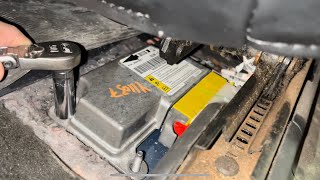
- The owner disconnected the battery, removed the driver's seat, and unbolted the module from the floor.
- The module's casing and connector were visibly corroded from water damage.
Outcome: The owner purchased a used, crash-free module with a matching part number for $75. After cleaning the harness connector and installing the used module, the light went out. The root cause was a clogged sunroof drain.
Lesson: On vehicles where the airbag module is mounted to the floor, always suspect water damage as the primary cause of a B1013 code, especially after rain.
2012 Nissan Juke with 80K miles - Post-Accident Repair
Vehicle was in a minor collision. Airbags did not deploy, but seatbelt pretensioners fired. After repairs, the airbag light remained on.
What they tried:
- The scanner showed code B1013 - 'Diagnosis Sensor Unit' and 'Crash Data Stored'.
- The dealer quoted $1,200 for a new Airbag Control Module plus programming.
Outcome: The owner paid $50 for a mail-in reset service. They removed the module, mailed it in, and reinstalled it three days later. The light was gone.
Lesson: If B1013 appears after an accident, it is due to stored crash data. Using a mail-in reset service saves over $1,000 compared to dealer replacement.
How to Prevent This Code From Triggering
- Clean sunroof drains and door seals annually (Once per year) — Clogged sunroof drains are a primary cause of water intrusion that damages floor-mounted airbag modules.
- Test battery health before each winter (Once per year) — The SRS module is highly sensitive to low voltage during engine cranking. A weak battery causes a voltage drop that triggers a false B1013 code.
- Apply dielectric grease to key electrical connectors (When servicing components) — Applying dielectric grease to connector seals keeps moisture out, preventing pin corrosion.
- Avoid placing liquids on the center console (Daily habit) — The airbag control module is often located directly under the center console. A spilled drink causes catastrophic water damage to the module.
- Address any known water leaks immediately (As needed) — A small leak from a windshield seal or door vapor barrier saturates carpets and wicks moisture into the airbag module over time.
Frequently Asked Questions
Can I reset the B1013 code by disconnecting the battery?
No. Airbag codes are stored in non-volatile memory. You must repair the underlying problem and clear the code with an SRS-capable scan tool. Disconnecting the battery does nothing.
Will my car fail its safety inspection with the airbag light on?
Yes, in most states with annual safety inspections (like NY, VA, PA), an illuminated airbag light is an automatic failure. In emissions-only states, it passes testing but the vehicle remains unsafe to drive.
Can a weak battery cause the airbag light to come on?
Yes. The SRS module is highly sensitive to voltage drops during engine start-up, especially in cold weather. Always test the battery and charging system before replacing expensive airbag components.
What is a passenger seat occupancy sensor bypass and is it safe?
An emulator is a small electronic module used to bypass a broken passenger seat weight sensor. It tricks the computer into keeping the passenger airbag permanently armed. This is extremely dangerous for children or rear-facing car seats and is not a safe repair.
My car was in an accident and now has this code. What do I do?
The airbag module stored permanent crash data and locked itself. You must replace the module or send it to a professional mail-in service for a data reset. Resetting costs a fraction of a new module.
Why did the airbag light come on after I got my car detailed?
Excessive moisture or cleaning chemicals often seep into electrical connectors under the front seats, causing a short. Allow the area to dry completely, check the connections, and clear the codes.
Can a bad clock spring cause a B1013 code?
It is uncommon but possible. A severe internal short within the clock spring disrupts communication, which the SRS module interprets as an internal B1013 error. You will typically also lose horn or steering wheel button functions.
Key Takeaways
- Code B1013 disables your entire airbag system, meaning zero airbags will deploy in a crash.
- Always test your battery first; a voltage drop below 10V during a cold start triggers false B1013 codes.
- If the code appeared after an accident, spend $50-$150 on a mail-in module reset service instead of paying $800+ for a new module.
- On 2007-2014 GM trucks, check for wet carpets under the driver's seat; clogged sunroof drains frequently destroy the floor-mounted module.
- On 2007-2013 Mazdas and 2005-2012 Subarus, a flashing airbag light usually requires a $5 DIY solder repair on the passenger indicator board, not a module replacement.
Helpful Videos
Shop the Parts Behind B1013
Below are the parts most often responsible for code B1013, ranked by how frequently each one is the actual culprit (per the diagnosis above). Tap any to see what we have for your vehicle.



The information in this article is provided for general reference and educational purposes only. Vehicle specifications, procedures, and part compatibility can vary by production date, trim level, and region. Always consult your vehicle's factory service manual and verify part numbers before purchasing or performing repairs. Safety-critical components such as airbags, seat belts, and braking systems should be installed by a qualified professional.
- 🧭 Diagnostic Flowchart
- 🎬 Helpful Videos
- 🛍️ Shop This Part
- What Does B1013 Mean?
- Can I Drive With B1013?
- Common Causes
- Symptoms
- Common Fixes & Costs
- Used vs. New Parts: Buying Guide
- What Happens If You Wait — Timeline
- Cost of Not Fixing It
- Diagnosis Steps
- When This Code Triggers (Freeze-Frame Conditions)
- Related Codes
- Climate & Environmental Factors
- How to Talk to a Mechanic About This Code
- Where to Take It: Dealer vs Independent vs Chain
- When to Walk Away From the Repair
- What Scan Tool You Need for This Code
- How to Clear the Code After You Fix It
- Will This Fail Emissions / State Inspection?
- Most Commonly Affected Vehicles
- Manufacturer-Specific Notes
- Real Owner Stories
- 2010 Mazda 3 with 125K miles - Flashing Airbag Light
- 2008 Chevy Silverado with 150K miles - Airbag Light After Rain
- 2012 Nissan Juke with 80K miles - Post-Accident Repair
- How to Prevent This Code From Triggering
- Frequently Asked Questions
- Can I reset the B1013 code by disconnecting the battery?
- Will my car fail its safety inspection with the airbag light on?
- Can a weak battery cause the airbag light to come on?
- What is a passenger seat occupancy sensor bypass and is it safe?
- My car was in an accident and now has this code. What do I do?
- Why did the airbag light come on after I got my car detailed?
- Can a bad clock spring cause a B1013 code?
- Key Takeaways
- 🎟️ Get 5% Off