

OBD-II Code B1014: A Comprehensive Guide to Body Control Module Circuit Malfunctions
The Ultimate Resource for Understanding, Diagnosing, and Fixing B1014
- Always look up the manufacturer-specific definition for B1014, as it means a critical airbag fault in a Nissan but a simple accessory power issue in a Toyota.
- Test your battery voltage first; a drop below 12.4V triggers false B1014 codes on many vehicles before any actual hardware fails.
- Treat any B1014 code accompanied by an airbag light as a critical safety failure, because the entire Supplemental Restraint System is disabled and will not deploy in a crash.
- Inspect high-stress wiring areas, like the rubber boot in the driver's door jamb, which causes over 90% of B1014 communication errors in Honda and Acura vehicles.
- Never replace a $800 Body Control Module without first verifying power, ground, and fuse integrity, as simple wiring breaks cause the vast majority of these faults.
What Does B1014 Mean?
B1014 is a body-related trouble code (B-code) indicating a fault within an electrical circuit managed by a control module, usually the Body Control Module (BCM). Unlike standardized powertrain 'P' codes, B1014 is highly manufacturer-specific. It signifies a simple power supply issue in a Toyota, a critical airbag sensor fault in a Nissan, or a communication failure in a Honda. The module has detected voltage, resistance, or a signal outside its expected operational range.
Technical definition: The official SAE/ISO definition for code B1014 varies significantly by manufacturer. Common definitions include 'ACC Power Supply Circuit Malfunction' (Toyota, Subaru), 'MICU Lost Communication With Driver's MPCS Unit' (Honda/Acura), 'Diagnosis Sensor Unit Fault' (Nissan), 'RH position lights - O.C.' (Maserati), 'Program ROM Checksum Error' (Chevrolet/GM), and 'Motor Pump Error' (Mazda).
Can I Drive With B1014?
Yes, But With Caution. Driving is possible but requires extreme caution. If the airbag warning light is on, the Supplemental Restraint System (SRS) is disabled and will NOT deploy in a crash, drastically increasing injury risk. If the code causes a severe battery drain or a no-start condition, you risk being stranded. Treat any safety-related symptom as a critical failure requiring immediate service.
Common Causes
- Weak or failing battery (Very Common) — A battery dropping below 12.4 volts causes a cascade of electrical problems and triggers false fault codes. Modules set a B1014 code if system voltage drops below a specific threshold, often 8-9 volts during engine cranking.
- Blown fuse or faulty relay (Very Common) — A blown fuse is the most common cause for legitimate electrical circuit codes. Fuses protect circuits from overcurrent; when they blow, the circuit stops working and sets a code. Always check the relevant fuse box first.
- Corroded or damaged wiring/connectors (Common) — Heat, abrasion, vibration, or moisture damages wiring, causing short or open circuits. Wires in flexible locations like door jambs, under seats, or in the engine bay are highly vulnerable to breaking.
- Stored Crash Data in Airbag Module (Common) — After an accident, the airbag control module (SRS unit) stores 'crash data'. In many vehicles, especially Nissan, this triggers a B1014 fault and permanently disables the airbag system until the module is professionally reset or replaced.
- Worn Ignition Lock Cylinder/Tumbler (Common) — On Ford trucks from 2009-2014, a worn mechanical ignition lock cylinder develops excessive play. This jiggling causes electronic ignition switch contacts to send intermittent signals, triggering fault codes and battery drains.
- Poor ground connection (Less Common) — Every electrical circuit requires a solid ground. A loose, corroded, or broken ground strap increases resistance, causing intermittent electrical issues, severe voltage drops, and module communication failures.
- Faulty component (e.g., ignition switch, light assembly) (Less Common) — The end component the circuit controls—such as a bad ignition switch, a faulty LED tail light, or a malfunctioning door lock switch—often fails internally before the module or wiring does.
- Improperly Installed Aftermarket Accessories (Less Common) — Incorrectly wiring aftermarket stereos, alarms, or remote starters interferes with the BCM. Tapping into the wrong power or data wire introduces voltage irregularities or communication errors.
- Faulty Body Control Module (BCM) (Uncommon) — The control module itself fails due to internal hardware defects (like a ROM checksum error on GM vehicles), software glitches, or physical damage from voltage surges or water intrusion.
- Software Glitch or Incorrect Initialization (Uncommon) — A control module occasionally fails to initialize correctly upon startup, setting a temporary fault code. If these persist after clearing, a manufacturer software update is required.
Symptoms
- Warning light on the dashboard — A check engine light, flashing airbag light, or system-specific warning indicator illuminates on the instrument cluster.
- Malfunctioning electrical accessories — Power windows, interior/exterior lights, radio, or power door locks work intermittently or fail completely.
- Car won't start or has trouble starting — Ignition switch faults, anti-theft system lockouts, or module ROM errors (common in GM) prevent the vehicle from cranking or starting.
- Battery drain — A short circuit or a module failing to enter 'sleep' mode creates a parasitic draw that drains the battery overnight.
- Intermittent or constant warning chimes — Faults in the key-in-ignition or door ajar circuits cause the vehicle to produce warning chimes at incorrect times.
Diagnostic Flowchart
Tap your situation to follow the diagnostic path that matches what you're seeing on this code.
Common Fixes & Costs
- Replacing a blown fuse — Parts: $1-$5, Labor: $0, ~0.1 hr book time (DIY)
- Repairing damaged wiring or connectors — Parts: $10-$50, Labor: $150-$500, ~1.5 hr book time (Intermediate)
- Resetting the Airbag Control Module (after a crash) — Parts: $0, Labor: $50-$100, ~1.0 hr book time (Professional)
- Replacing a faulty ignition lock cylinder — Parts: $100-$250, Labor: $100-$200, ~1.2 hr book time (Intermediate)
- Replacing an airbag sensor or module — Parts: $150-$800, Labor: $150-$300, ~2.5 hr book time (Professional)
- Replacing the Body Control Module (BCM) — Parts: $400-$800, Labor: $150-$300, ~1.5 hr book time (Professional)
DIY vs Professional
- Replacing a blown fuse 🟢 Beginner
Tools: Fuse puller or small pliers. - Repairing damaged wiring or connectors 🟢 Beginner
Tools: Multimeter, wire strippers, crimpers, heat shrink tubing, wiring diagrams. - Replacing a faulty ignition lock cylinder 🟢 Beginner
Tools: Screwdrivers, trim removal tools, socket set. - Replacing an airbag sensor or module 🟢 Beginner
Tools: Socket set, trim removal tools, professional OBD-II scan tool. - Replacing the Body Control Module (BCM) 🟢 Beginner
Tools: Socket set, trim removal tools, professional scan tool with manufacturer software.
Used vs. New Parts: Buying Guide
When a used part is worth it: A used part from a reputable recycler offers significant savings for expensive electronic modules on older vehicles. However, it requires exact part number matching and often professional reprogramming.
Donor-vehicle mileage cap: roughly under 100000 miles for the part to have meaningful remaining life.
Donor quality checklist:
- Match the part number EXACTLY; a one-digit difference means incompatibility.
- Verify the donor vehicle was not scrapped due to flood or fire damage.
- For SRS modules, ensure the donor vehicle did not have airbags deployed.
Decision logic:
- If The part is an SRS (Airbag) Control Module. → Favor resetting your original module or buying new. Used modules have unknown histories and require costly VIN reprogramming.
- If The part is a BCM and a 'cloning' service is available. → A used BCM combined with a cloning service is a cost-effective alternative to expensive dealer programming.
- If The vehicle is newer and under warranty, or the part is relatively inexpensive. → Always buy new OEM to ensure compatibility and warranty coverage.
Warranty tradeoff: Used parts typically have a 30-90 day warranty covering only the part. New aftermarket parts offer 1-year warranties. New OEM parts offer the best warranty, especially when installed by a dealer.
Worst-case if a used part fails: $300-$800 if a used module is faulty or requires unexpected programming, including repeat labor costs.
What Happens If You Wait — Timeline
- 0-1 month: A warning light appears. If caused by a parasitic draw, the owner experiences a single unexplained dead battery. (MPG impact: 0%% · Added cost: $0 (Safety risk is the primary concern if airbag light is on))
- 1-3 months: Dead batteries become frequent. Repeated jump-starts and deep cycling permanently damage the battery via sulfation. Intermittent accessory malfunctions worsen. (MPG impact: 0%% · Added cost: $200-$350 (Cost of a prematurely destroyed battery))
- 3-6 months: Unresolved parasitic draw strains the alternator, leading to premature failure. Water intrusion corrosion spreads within the BCM, causing widespread electrical issues. (MPG impact: 0-5% (If alternator is failing)% · Added cost: $600-$1000 (Cost of a new battery plus a new alternator))
- 6+ months: A persistent short or severe corrosion permanently destroys the Body Control Module (BCM). The vehicle experiences a no-start condition or failure of critical systems. (MPG impact: N/A (Vehicle is inoperable)% · Added cost: $800-$2000+ (Cost of BCM replacement and programming))
Cost of Not Fixing It
- Immediate: If the airbag light is on, the entire SRS system is disabled. Airbags will not deploy in a crash, drastically increasing the risk of serious injury or death. (Added cost: N/A (Safety Risk))
- 0-3 months: A parasitic draw causes repeated dead batteries, leading to premature battery failure and potential alternator damage from frequent deep cycling. (Added cost: $200-$600 (for new battery and potential alternator))
- 3+ months: An unresolved electrical short or corroded wiring damages the expensive BCM or connected modules, turning a simple wiring fix into a major repair. (Added cost: $500-$1500+ (for module replacement and programming))
Diagnosis Steps
- Check Manufacturer-Specific Definitions
Search online for the exact meaning of B1014 for your vehicle's make, model, and year. A Nissan airbag diagnostic path differs completely from a Toyota power supply path.
Tools: Internet access (Beginner) - Test the Battery and Charging System
Use a multimeter to check battery voltage with the car off; it must read 12.4-12.6 volts. Start the engine; voltage must rise to 13.7-14.7 volts. Correct low voltage before proceeding to prevent false codes.
Tools: Multimeter (Beginner) - Inspect Fuses and Relays
Locate relevant fuse boxes using the owner's manual. Visually inspect fuses related to the BCM, SRS, ACC, and non-working components. Replace blown fuses with the exact same amperage.
Tools: Owner's manual, fuse puller (Beginner) - Perform a Visual Inspection
Check for loose connectors, corroded chassis ground wires, or frayed wiring. Focus on the area related to the specific code definition (e.g., driver's door jamb for Honda, under seats for airbags).
Tools: Flashlight, inspection mirror (Intermediate) - PRO TIP: Use a Bi-Directional Scan Tool
Command the BCM to perform 'active tests' using a professional scan tool. If a commanded light fails to turn on, the problem lies in the wiring or the light itself, not the BCM.
Tools: Bi-directional OBD-II scan tool (Advanced) - Check Power and Ground at the Component
Identify power and ground wires using a wiring diagram. With the key on, test for proper voltage at the power-in wire. Check the ground wire's connection to the chassis; it must read below 1 Ohm.
Tools: Multimeter, vehicle-specific wiring diagram (Advanced) - PRO TIP: Perform a Parasitic Draw Test
Disconnect the negative battery terminal and connect a multimeter in series (10A scale). With the car off and doors closed for 30 minutes, the draw must be under 50 milliamps. Pull fuses to isolate higher draws.
Tools: Multimeter with Amp setting (Advanced) - Test the Component or Isolate the Wiring
If power and ground are good, test the component for continuity or swap in a known-good part. Perform a voltage drop test to find hidden resistance from corrosion.
Tools: Multimeter, advanced scan tool (Advanced) - Advanced Test: Ground Circuit Resistance Check
Measure resistance between the module's ground pin and the negative battery terminal using a milliohm meter. A bonded ground connection must not exceed 2.5 mΩ (0.0025 Ω).
Tools: Milliohm meter, vehicle-specific wiring diagram (Advanced) - Advanced Test: Manufacturer Voltage Thresholds
Check specific voltage triggers. For a Toyota 'ACC Power Supply Circuit' fault, the code sets if voltage at the main body ECU is above 16.7V or below 8.3V.
Tools: Multimeter, manufacturer service manual (Advanced)
When This Code Triggers (Freeze-Frame Conditions)
- System Voltage: < 9.0V or > 16.0V (The code sets at key-on or during engine start when battery voltage is lowest or alternator voltage is highest.)
- Ignition Status: RUN or START (Faults are detected when the BCM or related module is commanded to wake up.)
- Component Status: Commanded ON (For circuit-specific faults, the code sets the exact moment the driver activates the component.)
- Module State: Active/Awake (B-codes set during the module's self-test immediately after powering on.)
Related Codes
- U-prefix codes (e.g., U0140, U0155) — U-codes indicate a network communication problem. If U0140 is present with B1014, the entire BCM has lost communication with the vehicle network, causing the B1014 as a secondary fault.
- B1020 — On Maseratis, this 'Reverse light relay error' appears alongside B1014. Multiple output circuit codes from the same module suggest a shared power/ground failure rather than separate wiring issues.
- B10F1 — On Ford vehicles, B10F1 ('Key In Switch Circuit Failure') points directly to a worn ignition lock cylinder causing intermittent electrical contact and battery drains.
- B-prefix codes for specific components — Other B-codes for lights or locks appearing with B1014 help pinpoint the fault location. An 'ACC Power Supply' code with a specific light code confirms a widespread power issue.
Climate & Environmental Factors
- Cold Weather: Low temperatures reduce battery efficiency, causing voltage drops that trigger B1014 codes. Cold also makes wire insulation brittle and prone to cracking in door jambs.
- High Humidity / Salt: Moisture and road salt accelerate corrosion on wiring, ground points, and connector pins, increasing resistance and causing circuit faults.
- Extreme Heat: High temperatures accelerate wire insulation breakdown and warp plastic connectors, leading to short circuits.
How to Talk to a Mechanic About This Code
Say this: "I have a B1014 fault code and I understand it's manufacturer-specific. I'd like to schedule a diagnostic appointment. Please start by identifying the specific definition for my [Insert Make, Model, Year] and then call me with a detailed diagnostic plan and estimate before proceeding."
This language establishes you as an informed customer. It directs the shop to follow a logical process, prevents guessing, and requires authorization before running up the bill.
Avoid saying:
- 'My airbag light is on, can you fix it?' (Too vague, invites expensive guesses).
- 'Just do whatever it takes to fix it.' (Gives them a blank check).
- 'My friend said it's probably the BCM, can you replace it?' (Never suggest a specific, expensive repair).
Questions to ask before authorizing the repair:
- What is the specific definition of B1014 for my vehicle, and what system does it relate to?
- What diagnostic tests did you perform to confirm the cause?
- Is this a part failure or a wiring issue? Can the part be repaired or reset, or must it be replaced?
- If a module needs replacement, does the price include programming it to my vehicle?
- What is the warranty on the parts and labor for this specific repair?
Where to Take It: Dealer vs Independent vs Chain
- Dealer:
Necessary for complex module programming, but the most expensive option for common wiring or sensor issues.
Best for: Vehicles under warranty., Complex module replacement requiring proprietary software for programming., Recalls or Technical Service Bulletins (TSBs) related to the code.
Downsides: Highest labor rates and part costs., Defaults to replacing entire assemblies rather than repairing simple wiring. (Typical cost: +50% vs. baseline) - Independent Shop:
Best choice for most B1014 scenarios, provided you choose a shop specializing in electrical diagnostics.
Best for: Out-of-warranty vehicles., Known problems like Honda's broken door jamb wires or Ford's ignition cylinder., Diagnosing and repairing wiring, ground, or power supply issues.
Downsides: Shop quality and electrical expertise vary widely., Lacks expensive, manufacturer-specific programming tools for new modules. (Typical cost: +0% vs. baseline) - Chain Shop:
AVOID for diagnosing a B1014 code. Their business model is not suited for detailed electrical diagnosis.
Best for: Simple, confirmed part swaps like a battery replacement AFTER a proper diagnosis.
Downsides: Technicians lack training for complex electrical diagnostics., High pressure to upsell common items instead of solving the actual problem., Highly likely to misdiagnose a B1014. (Typical cost: -10% vs. baseline)
When to Walk Away From the Repair
If the estimated repair cost for the B1014 fault exceeds 40-50% of your car's current private-party value, seriously consider selling the car as-is.
- Car worth $3000, fix is $1800: Walk away. The repair cost is over 50% of the car's value. Sell it as a 'mechanic's special'.
- Car worth $8000, fix is $750: Fix it. This repair is well below the threshold and is a reasonable cost to keep the car running safely.
- Car worth $4500, fix is $2200: Borderline. The repair is nearly 50% of the car's value. Get a second opinion, and strongly consider selling.
What Scan Tool You Need for This Code
Minimum: A scan tool that reads and clears manufacturer-specific Body ('B') and SRS codes. A basic $20 engine-only code reader is useless.
Cheap scanners only read generic 'P' (Powertrain) codes. They cannot access the BCM or SRS modules where B1014 originates.
Rent vs buy: AutoZone's free loaner tools are basic code readers and will NOT read a B1014 code. You must buy at least a budget-level tool capable of reading B-codes.
How to Clear the Code After You Fix It
- Reconnect the battery if it was disconnected for the repair.
- Use a compatible OBD-II scan tool to clear the B-codes from the specific module (e.g., BCM, SRS).
- For SRS codes, perform the manufacturer-specific key-on/key-off reset procedure.
- Perform a function test of the repaired system to confirm the fix.
Drive cycle (~15 minutes): A specific drive cycle is not required for B-codes. The module re-runs internal self-tests at the next key-on event. A 15-minute drive operating all accessories confirms the fix.
Readiness monitors affected: None. Body codes do not affect emissions readiness monitors.
Watch out for:
- Using a basic code reader that only clears 'P' codes will not clear a 'B' code.
- Disconnecting the battery will not clear crash data stored in an SRS module.
- The code returns immediately if the root electrical fault remains unfixed.
Will This Fail Emissions / State Inspection?
No — by itself this code doesn't fail OBD inspection (but it can keep readiness monitors from setting, which causes a separate fail).
- California: An airbag light does not cause a smog check failure, but it is a serious safety concern.
- New York: An illuminated airbag warning light is an automatic failure of the annual safety inspection.
- Texas: An airbag light does not currently cause a failure on the standard Texas safety inspection.
Most Commonly Affected Vehicles
- Nissan Micra, Note, Versa, Titan (2002-2019) — B1014 indicates an internal fault ('Diagnosis Sensor Unit') in the airbag control module. It frequently appears after an accident and requires a professional reset or module replacement.
- Acura/Honda CR-V, Accord, Civic (2001-2012) — This code points to a communication loss between the main body module and the driver's door module. The cause is almost always broken wires in the flexible rubber boot of the driver's door jamb.
- Toyota Camry, Corolla, RAV4 (2005-2018) — The code refers to an accessory (ACC) power circuit problem where voltage is above 16.7V or below 8.3V. Diagnosis must focus on the battery, alternator, and ACC fuse.
- Chevrolet/GM Cruze, Captiva, Malibu (2008-2016) — B1014 is defined as a 'Program ROM Checksum Error,' indicating a fatal internal memory problem within the BCM that prevents the car from starting. Reprogramming or replacement is required.
- Ford F-150, Explorer, Super Duty (2009-2019) — Related faults like B10F1 are frequently caused by a worn-out mechanical ignition lock cylinder, resulting in battery drains and accessory malfunctions.
- Subaru Crosstrek, Forester, WRX (2012-2020) — B1014 means 'ACC Power' circuit voltage failure. This is often caused by a blown 15A 'P/OUTLET' fuse and results in the Daytime Running Lights (DRL) failing.
- Maserati GranTurismo (2008-2018) — This code points to an open or short circuit in the right-hand side position light. It suggests an issue with the Body Computer (NBC) or its wiring.
- Mazda CX-9, Mazda3 (2007-2015) — B1014 is defined as a 'Motor Pump Error' related to the hydraulic control unit (HECU) for the ABS. The cause is often a wiring fault or poor ground connection.
Manufacturer-Specific Notes
- Toyota/Lexus: Code B1014 triggers when accessory circuit voltage is below 8.3V or above 16.7V, pointing directly to a battery or alternator issue.
- Nissan: This code almost always relates to the Airbag Control Module (SRS unit) and means crash data is stored or the module has an internal hardware fault.
- Acura/Honda: The code means the main body computer lost communication with the driver's door unit, caused by broken wires in the door jamb boot 90% of the time.
- GM (General Motors): B1014 means 'Program ROM Checksum Error', an internal memory fault in the BCM that causes a no-start condition and requires module replacement.
- Fiat/Chrysler/Stellantis: B1014 can indicate a 'Signal Plausibility Failure'. For the 2024 Dodge Hornet, a TSB fixes this code for the power liftgate via a software update.
- Suzuki: The definition points to a fault in the airbag warning light circuit on an SX4, or a communication circuit issue with the battery module on hybrids.
Real Owner Stories
2013 Nissan Versa with Airbag Light
Airbag light stayed on after a minor collision. A scanner showed code B1014, defined for Nissan as 'Diagnosis Sensor Unit Fault'.
What they tried:
- Tried a DIY key-on/key-off reset procedure, which cleared the light for one day.
- A general mechanic cleared the code, but it returned immediately.
- The dealership quoted over $800 to replace the SRS Airbag Control Module.
Outcome: The owner removed the SRS module and mailed it to a specialized reset service. For $50, the service cleared the hard-coded 'crash data'. After reinstalling the original module, the B1014 code vanished and the airbag light stayed off.
Lesson: For Nissan's B1014 code appearing after an accident, do not replace the expensive SRS module. A mail-in reset service is a proven, $50 solution to clear crash data that dealers refuse to reset.
2007 Honda CR-V with multiple electrical issues
The driver's side power window and locks stopped working. A scan tool pulled code B1014, meaning 'MICU Lost Communication With Driver's MPCS Unit'.
What they tried:
- Suspected a bad window motor or lock actuator.
- Checked the fuses for the power windows and locks, finding them intact.
Outcome: The owner inspected the rubber boot in the driver's door jamb. They found several wires with cracked insulation from years of flexing. Splicing the broken wires using butt connectors and heat shrink tubing restored all functions and cleared the code.
Lesson: On Hondas, B1014 points directly to broken wires in the driver's door jamb. Inspect this high-stress area before replacing door motors or switches.
2011 Chevy Cruze with a No-Start Condition
The car would not start, and the key was stuck in the ignition. A tow to the shop revealed code B1014, defined as 'Program ROM Checksum Error' in the BCM.
What they tried:
- Tried jump-starting the car, assuming a dead battery.
- A mechanic attempted to reprogram the existing BCM, but the checksum error indicated internal hardware failure.
Outcome: The Body Control Module required replacement. A new OEM BCM was installed and programmed by the technician using GM-specific software to match the VIN. The total repair cost was $750.
Lesson: A 'Checksum Error' code on a GM vehicle is a fatal internal module fault. It requires module replacement and professional programming; jump-starting or clearing the code will not fix it.
2013 Infiniti G37 with BCM issues only when raining
Experienced bizarre electrical behavior during rain: doors locking/unlocking, alarm sounding, and a no-start condition. Forums pointed to water intrusion into the BCM.
What they tried:
- Found the insulation near the BCM in the passenger footwell was damp.
- The dealership quoted $2000 for a new BCM, suspecting permanent water damage.
Outcome: The root cause was a clogged sunroof drain tube allowing rainwater to leak down the A-pillar onto the BCM. After clearing the drain and drying the BCM completely, all electrical issues ceased without replacing the module.
Lesson: If electrical problems appear only during rain, the root cause is a water leak. Check sunroof drains and windshield seals before paying for expensive electronic replacements.
How to Prevent This Code From Triggering
- Clean battery terminals and chassis ground points (Every 12 months) — Corrosion creates high resistance, leading to voltage drops that trigger B1014 and other electrical faults. Cleaning ensures a solid connection.
- Apply dielectric grease to electrical connectors (When servicing exposed components) — Dielectric grease seals out moisture and oxygen, preventing corrosion on metal pins exposed to the elements under the hood or chassis.
- Inspect and clean sunroof drains and cowl vents (Every 6 months) — Clogged drains cause water to overflow into the cabin, dripping directly onto sensitive electronics like the BCM and causing short circuits.
- Ensure professional installation of aftermarket electronics (When adding any new accessory) — Improper installation overloads circuits or creates electrical noise that interferes with the BCM, causing fault codes and module damage.
- Use a battery maintainer for stored vehicles (If parked for more than 2 weeks) — Normal parasitic draw drains a battery over time. A maintainer prevents low voltage states that trigger codes and cause permanent sulfation.
Frequently Asked Questions
Can I fix a B1014 code myself?
Simple fixes like replacing a fuse or checking for loose connectors are DIY-friendly. Intermediate tasks like repairing a broken wire in a door jamb are possible for skilled DIYers. Diagnostics involving module communication or programming must be left to a professional.
Is it safe to drive with an active B1014 code?
This is a critical safety failure if the airbag light is on, as the system is disabled and will not protect you in a crash. If the issue causes stalling or a no-start condition, you risk being stranded. Do not drive until safety systems are verified.
Will clearing the code make it go away?
Clearing the code with a scan tool will not fix the underlying electrical problem, and the code will return immediately. In cases like a Nissan airbag light, a specific reset procedure is required even after the repair is complete.
What's the most common misdiagnosis with a B1014 code?
The most common mistake is replacing an expensive module based on a generic code definition. For example, replacing a Ford electronic ignition switch when the actual problem is the cheaper mechanical ignition lock cylinder.
My mechanic says body codes (B-codes) aren't important. Is that true?
No, that is dangerously incorrect. While some B-codes relate to minor accessories, a B1014 code in a Nissan or Mazda directly points to a fault in the airbag or ABS control unit. Ignoring it has life-threatening consequences.
My car was in an accident and now has a B1014 code and an airbag light. What do I do?
The airbag control module has stored 'crash data' and is locked. It must be professionally reset or replaced before the airbags will function. A mail-in reset service costs around $50, while a new module costs over $800.
Why does the meaning of B1014 change so much between car brands?
Unlike 'P' codes, manufacturers have freedom in assigning 'B' (Body) codes. This allows them to create specific codes for unique systems, meaning B1014 is a lighting problem on a Maserati but an airbag problem on a Nissan.
Can a bad battery cause a B1014 code?
Yes. A weak battery causes low system voltage, which is a direct trigger for code B1014 on many vehicles, especially Toyota and Subaru. Always test the battery and charging system early in your diagnosis.
Key Takeaways
- Always look up the manufacturer-specific definition for B1014, as it means a critical airbag fault in a Nissan but a simple accessory power issue in a Toyota.
- Test your battery voltage first; a drop below 12.4V triggers false B1014 codes on many vehicles before any actual hardware fails.
- Treat any B1014 code accompanied by an airbag light as a critical safety failure, because the entire Supplemental Restraint System is disabled and will not deploy in a crash.
- Inspect high-stress wiring areas, like the rubber boot in the driver's door jamb, which causes over 90% of B1014 communication errors in Honda and Acura vehicles.
- Never replace a $800 Body Control Module without first verifying power, ground, and fuse integrity, as simple wiring breaks cause the vast majority of these faults.
Shop the Parts Behind B1014
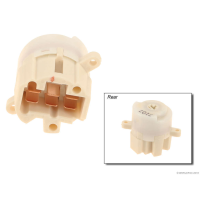
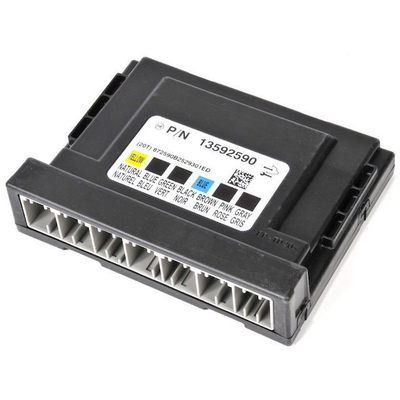
Below are the parts most often responsible for code B1014, ranked by how frequently each one is the actual culprit (per the diagnosis above). Tap any to see what we have for your vehicle.




The information in this article is provided for general reference and educational purposes only. Vehicle specifications, procedures, and part compatibility can vary by production date, trim level, and region. Always consult your vehicle's factory service manual and verify part numbers before purchasing or performing repairs. Safety-critical components such as airbags, seat belts, and braking systems should be installed by a qualified professional.
- 🧭 Diagnostic Flowchart
- 🛍️ Shop This Part
- What Does B1014 Mean?
- Can I Drive With B1014?
- Common Causes
- Symptoms
- Common Fixes & Costs
- DIY vs Professional
- Used vs. New Parts: Buying Guide
- What Happens If You Wait — Timeline
- Cost of Not Fixing It
- Diagnosis Steps
- When This Code Triggers (Freeze-Frame Conditions)
- Related Codes
- Climate & Environmental Factors
- How to Talk to a Mechanic About This Code
- Where to Take It: Dealer vs Independent vs Chain
- When to Walk Away From the Repair
- What Scan Tool You Need for This Code
- How to Clear the Code After You Fix It
- Will This Fail Emissions / State Inspection?
- Most Commonly Affected Vehicles
- Manufacturer-Specific Notes
- Real Owner Stories
- 2013 Nissan Versa with Airbag Light
- 2007 Honda CR-V with multiple electrical issues
- 2011 Chevy Cruze with a No-Start Condition
- 2013 Infiniti G37 with BCM issues only when raining
- How to Prevent This Code From Triggering
- Frequently Asked Questions
- Can I fix a B1014 code myself?
- Is it safe to drive with an active B1014 code?
- Will clearing the code make it go away?
- What's the most common misdiagnosis with a B1014 code?
- My mechanic says body codes (B-codes) aren't important. Is that true?
- My car was in an accident and now has a B1014 code and an airbag light. What do I do?
- Why does the meaning of B1014 change so much between car brands?
- Can a bad battery cause a B1014 code?
- Key Takeaways
- 🎟️ Get 5% Off