

OBD-II Code B1021: Airbag & System Communication Faults
Manufacturer-specific definitions, diagnostic steps, and repair costs for code B1021
- Code B1021 disables your vehicle's airbag system, increasing the risk of severe injury in a frontal collision by up to 50%.
- The definition of B1021 varies strictly by manufacturer, meaning 'Invalid Data from Passenger Presence System' on a Chevy but 'Fan Dial SW Error' on a Mitsubishi.
- Over 70% of B1021 airbag faults stem from damaged under-seat wiring, a failed passenger seat occupancy sensor, or a broken steering wheel clock spring.
- Never attempt to diagnose B1021 with a standard $20 engine code reader; you must use an SRS-capable scan tool to read the specific sub-codes.
- Expect repair costs to range from $150 for a simple under-seat wiring repair to over $1,200 if the passenger seat cushion and integrated sensor require replacement.
What Does B1021 Mean?
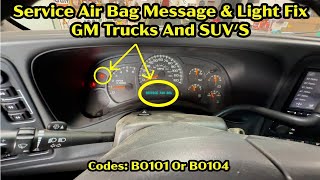
Code B1021 flags a critical fault within the Supplemental Restraint System (SRS). However, its exact meaning varies dramatically by car manufacturer. It typically signifies a communication breakdown between airbag components, high resistance in a specific circuit, or a sensor failure. On GM and Nissan vehicles, it frequently points to a failed passenger seat occupancy detection system. When active, the SRS module disables the airbags and illuminates the dashboard warning light.
Technical definition: B1021 lacks a universal OBD-II definition, making manufacturer-specific scanning mandatory. For General Motors, it means 'Invalid Data from another Control Module' (usually the Passenger Presence System). For Ford, it indicates 'Restraints Control Module (RCM) Not Configured.' For Chrysler/Dodge/Jeep, it flags 'Seat Track Position Sensor Muxed Circuit Open.' For Hyundai/Kia, it translates to 'Driver Air Bag Initiator Circuit Resistance High.' Conversely, on Mitsubishi vehicles, B1021 is unrelated to airbags and means 'Fan Dial SW Error' in the climate control system.
Can I Drive With B1021?
No — Do Not Drive. Driving with code B1021 presents a severe safety risk. The SRS control module disables the entire airbag system as a fail-safe, meaning airbags will not deploy in a crash. Safety experts estimate this increases the risk of severe injury in a frontal collision by up to 50%. Repair the vehicle immediately to restore critical safety functions.
Common Causes
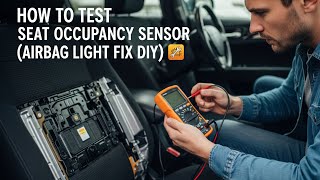
- Faulty Passenger Occupant Detection System (PPS/OCS) (Very Common) — The sensor mat integrated into the passenger seat cushion detects occupant weight to enable or disable the airbag. 🎬 Watch: How to test and fix a seat occupancy sensor. It frequently fails due to liquid spills, knee pressure, or general wear, especially in GM, Nissan, and Subaru vehicles.
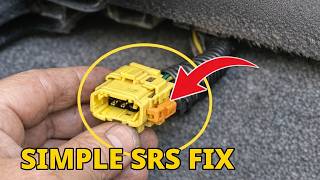
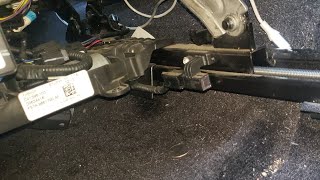
- Damaged Wiring or Connectors Under Seat (Very Common) — Wiring harnesses under the front seats suffer damage from seat movement, stored items, or liquid corrosion. The yellow SRS-specific connectors are the primary failure point for high-resistance or open-circuit faults.
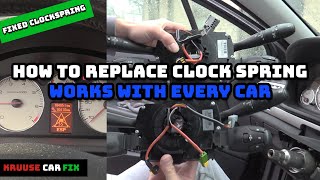
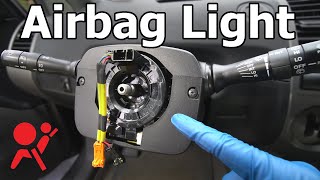
- Faulty Clock Spring (Spiral Cable) (Common) — Common on Hyundai, Kia, and Volkswagen models, a broken internal ribbon cable inside the steering column clock spring triggers a 'high resistance' B1021 variant. This often coincides with horn or steering wheel button failures. 🎬 See this walkthrough for replacing a faulty clock spring.
- Faulty Seat Track Position Sensor (Common) — This sensor informs the airbag module of the seat's fore/aft position. It fails frequently on Chrysler, Dodge, and Jeep vehicles, usually due to stretched or broken wires in the harness rather than the sensor itself.
- Lost Airbag Control Module (RCM) Configuration (Less Common) — On Ford and Mazda models, the RCM loses its vehicle-specific programming after a battery replacement, jump-start, or severe voltage drop, triggering a configuration error.
- Improper Aftermarket Accessory Installation (Rare) — Incorrectly installed remote starters, heated seats, or audio systems interfere with sensitive SRS wiring networks, causing communication drops.
Symptoms
- Airbag Warning Light is On — The primary symptom. A red airbag icon or 'SRS' text remains illuminated while the engine runs.
- 'Service Airbag System' Dashboard Message — The driver information center displays a direct text warning to service the restraint system.
- Passenger Airbag 'Off' Light Stays On — The indicator shows the passenger airbag is deactivated even when an adult occupies the seat, confirming an occupant detection system failure.
- Horn or Steering Wheel Controls Inoperative — If the B1021 code stems from a broken clock spring, the horn and cruise/radio controls on the steering wheel will also fail.
Diagnostic Flowchart
Tap your situation to follow the diagnostic path that matches what you're seeing on this code.
Common Fixes & Costs
- Replacing the Passenger Presence System (PPS) Sensor — Parts: $500-$850, Labor: $300-$600, ~3.0 hr book time (Professional)
- Repairing Damaged Wiring Under Seat — Parts: $10-$30, Labor: $150-$350, ~1.5 hr book time (Intermediate)
- Replacing the Clock Spring — Parts: $80-$300, Labor: $150-$400, ~1.5 hr book time (Intermediate)
- Replacing the Seat Track Position Sensor — Parts: $30-$80, Labor: $100-$200, ~1.0 hr book time (DIY)
- Reprogramming the Airbag Control Module (RCM) — Parts: $0, Labor: $150-$300, ~1.0 hr book time (Professional)
Used vs. New Parts: Buying Guide
When a used part is worth it: Used parts are only acceptable for purely mechanical components like seat frames or undamaged wiring pigtails. Never buy used electronic safety sensors.
Donor-vehicle mileage cap: roughly under 50000 miles for the part to have meaningful remaining life.
Donor quality checklist:
- NEVER use an airbag module, clock spring, or sensor from a crashed vehicle. They store hard crash data.
- Match part numbers exactly. SRS components are highly specific to the VIN.
- Avoid seat cushions with any signs of water damage, staining, or foam compression.
Decision logic:
- If The part is an electronic sensor, clock spring, or control module → Buy new OEM or high-quality aftermarket. The safety risk of a used electronic part failing is too high.
- If The part is a seat cushion assembly with an integrated sensor → Buy new. The labor to install is massive, and used sensors have high failure rates, risking a costly re-do.
- If The part is a simple wiring connector → A used part is acceptable if it shows zero corrosion or wire fatigue.
Warranty tradeoff: Used parts offer 30-90 day warranties. New OEM parts carry 12-month warranties. New aftermarket parts often carry limited lifetime warranties.
Worst-case if a used part fails: $300-$800. If a used electronic part fails, you pay the labor cost twice.
What Happens If You Wait — Timeline
- Immediate (0 seconds): The SRS module detects a fault during startup. The airbag warning light illuminates, and the entire restraint system is disabled as a fail-safe. (MPG impact: 0%% · Added cost: $0)
- 0-12 months: The vehicle poses an ongoing severe safety risk. It will fail state safety inspections, leading to fines or registration suspension. (MPG impact: 0%% · Added cost: $50-$500 in fines and re-inspection fees.)
- 12+ months: The illuminated light masks new safety issues. A second fault (like a failed crash sensor) develops, but the driver receives no new warning. (MPG impact: 0%% · Added cost: $0)
- At time of sale: Vehicle resale value plummets. An active airbag light is a major red flag, causing dealers to reduce trade-in offers by 20-40%. (MPG impact: 0%% · Added cost: $1,000-$4,000+ in lost resale value.)
Cost of Not Fixing It
- Immediate: Total failure of the airbag system. Airbags will not deploy in a crash, significantly increasing the risk of severe injury or death. (Added cost: N/A)
- 0-12 months: Failure to pass state safety inspections in strict jurisdictions (like VA, PA, NY), leading to fines or suspended registration. (Added cost: $50-$500 in fines or re-inspection fees.)
- Long-term: The illuminated SRS light masks new safety system failures. A second fault (e.g., a failed crash sensor) will occur without alerting the driver. (Added cost: N/A)
Diagnosis Steps
- Scan for Manufacturer-Specific SRS Codes
Use an SRS-capable OBD-II scanner to read the specific sub-code and manufacturer definition. A basic $20 engine code reader will not work. Record the exact definition (e.g., 'Invalid Data from PPS' vs. 'Driver Airbag Resistance High') to dictate your next steps.
Tools: SRS-capable OBD-II Scanner (Beginner) - Visually Inspect Under Both Front Seats
With the ignition OFF, inspect the wiring harnesses under the driver and passenger seats. Locate the yellow SRS connectors. Check for unplugged connections, pinched wires, or green/white corrosion from liquid spills.
Tools: Flashlight (Beginner) - Test Passenger Presence System (PPS) Functionality
Clear the codes. Have an adult weighing over 120 lbs sit in the passenger seat. Start the vehicle and observe the 'Passenger Airbag' status light. If it stays 'OFF' or the main airbag warning light returns immediately, the PPS sensor or module is faulty.
Tools: SRS-capable OBD-II Scanner, Adult helper (Intermediate) - Check for Technical Service Bulletins (TSBs) and Recalls
Search the NHTSA database using your VIN. Manufacturers frequently issue extended warranties or recalls for B1021 causes, such as Hyundai's clock spring extension (Campaign TXXC) or Nissan's OCS recalls.
Tools: Internet access, Vehicle VIN (Beginner) - PRO TIP: Measure Clock Spring Resistance
For 'High Resistance' codes: Disconnect the negative battery terminal and wait 15 minutes. Disconnect the yellow driver's airbag connector. Use a multimeter set to Ohms to measure resistance across the clock spring pins. A healthy clock spring reads 1.5 to 3.5 ohms. Infinite (OL) or wildly fluctuating readings while turning the wheel confirm a broken clock spring. NEVER probe the airbag module itself.
Tools: Multimeter, Trim removal tools (Advanced) - Test Seat Track Position Sensor (Chrysler/Dodge/Jeep)
Disconnect the sensor. Use a multimeter to verify a 5V reference signal from the SRS module. Measure the sensor's resistance while sliding the seat. Erratic readings or an open circuit (OL) indicate a failed sensor or broken harness wire.
Tools: Multimeter (Advanced) - Check Airbag Module Configuration (Ford/Mazda)
Using a bidirectional scan tool, navigate to the Restraints Control Module (RCM). If the status reads 'Not Configured,' perform a Programmable Module Installation (PMI) to restore the software.
Tools: Advanced bidirectional scan tool (Professional) - PRO TIP: Check CAN Bus Network Integrity
For 'Invalid Data' codes: Use an oscilloscope to verify 2.5V square wave communication on the CAN bus network at the SRS module. Distorted or missing waves indicate a shorted network wire or a different failed module crashing the network.
Tools: Oscilloscope, Wiring diagram (Professional)
When This Code Triggers (Freeze-Frame Conditions)
- System State: Key-On, Engine Off (The SRS module performs a primary self-test every time the ignition turns on. Most B1021 faults trigger during this initial 6-second check.)
- Component Status: Circuit Resistance High/Low or Open (Logs the exact out-of-spec resistance or voltage reading that triggered the fault for a specific component like a clock spring.)
- Communication Status: Invalid Data Received (Indicates the main SRS module failed to receive a valid signal from a subsystem, such as the Passenger Presence System.)
Related Codes
- B0081 — Identifies a direct fault with the Passenger Presence System (PPS) sensor mat. If you have B0081 alongside B1021 on a GM vehicle, the seat sensor is definitively the problem.
- B0091 — Indicates a 'Passenger Presence System Fault.' Similar to B0081, it confirms the issue lies within the passenger seat occupant sensing system.
- U0151 — Means 'Lost Communication With Restraints Control Module.' Indicates a total power, ground, or network failure of the main airbag computer. Fix U0151 before diagnosing B1021.
- B00B5 — Flags the 'Driver Seat Track Position Sensor Circuit.' This is the driver's side equivalent of the B1021 Chrysler/Dodge/Jeep fault.
Climate & Environmental Factors
- High Humidity / Salt Belt Regions: Moisture and road salt accelerate corrosion on wiring and yellow SRS connectors under the seats. This corrosion increases circuit resistance, triggering B1021.
- Extreme Cold: Plastic wiring insulation and clock spring ribbons become brittle and snap easily. Thickened grease inside the clock spring impedes movement, stressing the internal cables.
How to Talk to a Mechanic About This Code
Say this: "I have an airbag light on and my scanner shows code B1021. I need a diagnostic to get the manufacturer-specific definition and pinpoint the fault. Can you please check for recalls or TSBs related to the SRS system for my [Make, Model, Year] before starting?"
This proves you understand B1021 is manufacturer-specific, preventing the shop from guessing. Mentioning TSBs directs them to check for known free fixes first, potentially saving you the diagnostic fee.
Avoid saying:
- 'My airbag light is on, can you just reset it?'
- 'I think it's the sensor, can you just replace it?'
- 'Just fix whatever is wrong with the airbag system.'
Questions to ask before authorizing the repair:
- What is the specific definition of B1021 for my vehicle?
- What diagnostic steps confirmed that [specific part] is the cause?
- If recommending a module replacement, how did you rule out a wiring or ground issue?
- Does the replacement part require digital calibration, and is that included in the estimate?
- Will you provide a written estimate with a warranty for the parts and labor?
Where to Take It: Dealer vs Independent vs Chain
- Dealer:
Highly recommended if the fix involves software or calibration. Always call with your VIN to check for recalls first.
Best for: Vehicles under warranty or with a known recall (e.g., Hyundai clock spring, Nissan OCS)., Repairs requiring module programming or Zero Point Calibration (Ford, Nissan, Subaru)., Complex CAN bus communication faults.
Downsides: Highest labor rates., Defaults to replacing large, expensive assemblies (full seat cushion) instead of smaller components. (Typical cost: +50% vs. baseline) - Independent Shop:
Good for known wiring or mechanical replacements. Verify they own an SRS-capable scan tool before booking.
Best for: Out-of-warranty vehicles with mechanical faults (Chrysler seat wiring, VW clock spring)., Brand-specialized shops owning advanced diagnostic tools.
Downsides: May lack the specific software for module programming or calibration., Expertise with SRS systems varies widely. (Typical cost: +0% vs. baseline) - Chain Shop:
AVOID. The risk of misdiagnosis on a critical safety system is too high.
Best for: Not recommended for this type of repair.
Downsides: Technicians lack specialized training for complex SRS diagnostics., Unlikely to own manufacturer-specific programming tools., High pressure to upsell leads to incorrect part replacements. (Typical cost: -10% vs. baseline)
When to Walk Away From the Repair
If the estimated repair cost exceeds 40-50% of the car's private-party value, consider selling the car 'as-is' instead of repairing it.
- Car worth $4000, fix is $1800: Walk away. The repair cost is 45% of the car's value. It is not worth investing that much into an older vehicle for a single repair.
- Car worth $15000, fix is $350: Fix it. This is a low-cost repair relative to the car's value and is critical for safety.
- Car worth $8000, fix is $1200: Borderline. The repair is 15% of the car's value. Get a second opinion before authorizing the repair.
What Scan Tool You Need for This Code
Minimum: A scanner that reads and clears Supplemental Restraint System (SRS) codes. Basic engine-only code readers will not work.
A standard $20 scanner cannot communicate with the SRS module. It will show 'No Codes Found' even with the airbag light on, leaving you blind to the actual fault.
Budget: Autel AutoLink AL619 (~$80) — Reads and clears codes from the SRS system. It provides the specific B1021 fault definition, allowing for targeted research.
Mid-range: Foxwell NT630 Plus (~$150) — Provides live SRS data streaming to test sensors. Performs basic bidirectional tests to diagnose intermittent faults.
Professional: Autel MaxiCOM MK808 (~$500) — Offers full bidirectional control, module programming, and sensor calibrations (like Zero Point Calibration for passenger seat sensors).
How to Clear the Code After You Fix It
- Ensure the physical fault (broken wire, faulty sensor) is fully repaired.
- Reconnect the vehicle's battery.
- Use an SRS-capable OBD-II scan tool to access the Supplemental Restraint System module.
- Select 'Clear Fault Codes' or 'Erase DTCs'.
- Cycle the ignition off, then on. The airbag light should illuminate for 6 seconds for its self-test, then turn off permanently.
Drive cycle: SRS codes do not require a drive cycle. System readiness is determined instantly by a successful self-test upon startup.
Readiness monitors affected: SRS System Monitor
Watch out for:
- Using a basic engine code reader that cannot communicate with the SRS module.
- Clearing the code without fixing the hardware. The code returns immediately on the next startup.
- Failing to perform a required Zero Point Calibration after replacing a passenger seat sensor.
Will This Fail Emissions / State Inspection?
No — by itself this code doesn't fail OBD inspection (but it can keep readiness monitors from setting, which causes a separate fail).
- California: An airbag light will NOT fail a Smog Check. However, a DMV examiner will refuse to conduct a driving test in the vehicle.
- New York: An illuminated airbag warning light is noted as an advisory during the safety inspection but is NOT a cause for failure.
- Texas: An airbag light will NOT fail the state safety inspection. Only the Check Engine Light triggers an automatic failure.
- Virginia & Pennsylvania: An illuminated airbag light triggers an automatic safety inspection failure.
Most Commonly Affected Vehicles
- Chevrolet / GMC Silverado, Sierra, Tahoe, Impala (2007-2014) — Highly prone to B1021 caused by a failed passenger presence sensor mat. GM issued Special Coverage Adjustment #14332 extending warranty coverage for this specific issue.
- Ford F-150, Mustang, Focus (2005-2014) — Frequently sets B1021 when the Restraints Control Module (RCM) loses its configuration after a battery change or jump-start.
- Jeep Grand Cherokee (2011-2018) — Commonly affected by a failed seat track position sensor or broken wiring harness. FCA issued recall UB7 (NHTSA 18V-822) for this issue.
- Dodge / Chrysler Grand Caravan, Town & Country (2008-2016) — Seat track position sensor wiring harnesses stretch and break internally due to frequent seat movement.
- Nissan Frontier, Titan, Altima, Rogue (2005-2015) — Typically defined as 'Occupant Classification System (OCS) Is Faulting.' Nissan issued multiple recalls (16V-911, 16V-244) to reprogram or replace the OCS unit.
- Subaru Outback, Forester, Impreza (2010-2018) — Prone to failure of the Occupant Detection System (ODS) sensor. Repair requires replacing the entire lower seat cushion assembly.
- Hyundai / Kia Elantra, Sonata, Forte, Soul (2011-2016) — A 'Driver Airbag Resistance Too High' code is almost always a failed clock spring. Hyundai extended the clock spring warranty to 15 years/unlimited miles (Campaign TXXC).
- Volkswagen Golf, Jetta, EOS (2010-2017) — Sets a high resistance fault for the side or driver's airbag due to corroded under-seat wiring or a faulty clock spring.
- Mazda 3, 6, CX-5 (2010-2018) — Indicates a 'SAS control module configuration error' following a battery replacement, requiring a dealer re-flash.
Manufacturer-Specific Notes
- General Motors: The passenger presence sensor is permanently bonded to the seat cushion foam. Replacing it requires buying the entire lower seat assembly and performing a digital calibration.
- Ford: The Restraints Control Module (RCM) loses its programming if the battery dies or is disconnected improperly. It requires a dealer-level 'Programmable Module Installation' to fix.
- Chrysler / Dodge / Jeep: The wiring harness for the seat track position sensor breaks internally from the seat sliding back and forth. A $20 wiring repair usually fixes the code, not a new sensor.
- Nissan / Subaru: Replacing the Occupant Classification System (OCS) sensor requires a 'Zero Point Calibration' with a specialized scan tool. The system remains disabled until calibrated.
- Mitsubishi: B1021 is NOT an airbag code on Mitsubishi vehicles. It indicates a 'Fan Dial SW Error,' pointing to a broken fan speed knob on the A/C control panel.
- Hyundai: Definitions vary wildly. It usually means 'Driver Air Bag Initiator Circuit Resistance High' (clock spring failure), but on some models, it flags an 'Air Intake System Leak.'
Real Owner Stories
2012 Chevy Silverado with 'Service Airbag System' message
Airbag light stayed on. Owner frequently stored heavy tool bags under the driver's seat.
What they tried:
- Used a basic scanner which showed 'No Codes Found'.
- Took it to a shop with an SRS scanner, pulling B1021: 'Invalid Data from Passenger Presence System'.
- Inspected under the driver's seat and found a pinched yellow wire harness crushed by a tool bag.
Outcome: The shop repaired the severed wires in the harness under the driver's seat. Total cost was $180. The code cleared permanently.
Lesson: Always check the wiring under BOTH front seats. Items stored under the seat are a primary cause of crushed wiring and communication faults.
2013 Hyundai Elantra at 110K miles
Airbag light illuminated, and the horn and steering wheel radio controls stopped working simultaneously.
What they tried:
- Scanned the car and found a 'Driver Airbag Resistance High' code.
- Suspected the clock spring based on the dead horn.
- Called the Hyundai dealership with the VIN.
Outcome: The dealer confirmed coverage under Hyundai's extended clock spring warranty (Campaign TXXC). The clock spring was replaced for free in 2 hours.
Lesson: If a 'High Resistance' code accompanies a dead horn on a Hyundai/Kia, the clock spring is broken. Always check for warranty extensions before paying out of pocket.
2011 Jeep Grand Cherokee with persistent airbag light
Scanner pulled B1021: 'Seat Track Position Sensor Muxed Circuit Open'.
What they tried:
- Cleaned the sensor connector under the passenger seat with contact cleaner. Code returned.
- Replaced the seat track position sensor with a new $29 dealer part. Code returned.
Outcome: Inspection of the wiring harness revealed a wire broken inside its insulation where the harness bends during seat movement. Repairing the broken wire cleared the code.
Lesson: On Chrysler/Dodge/Jeep vehicles, the wiring harness is the weak point. A new sensor won't fix a broken wire hidden inside the harness loom.
2010 Mitsubishi Lancer with B1021
Check engine light came on, but the airbag light was OFF. Scanner pulled code B1021.
What they tried:
- Almost booked an expensive SRS specialist based on generic online airbag advice.
- Got a second opinion from a mechanic with an advanced scan tool.
Outcome: The advanced scanner provided the Mitsubishi definition: 'Fan Dial SW Error'. The actual problem was a faulty A/C fan speed knob. The airbag system was flawless.
Lesson: Getting the manufacturer-specific definition is non-negotiable. Assuming B1021 is an airbag fault on a Mitsubishi leads to a completely wrong diagnostic path.
How to Prevent This Code From Triggering
- Never store items under the front seats (Daily habit) — Water bottles or tool kits slide and crush the delicate SRS wiring harnesses, causing open or short circuits.
- Use caution during interior detailing (As needed) — Excessive water extraction on the passenger seat seeps into the cushion, permanently shorting out the Occupant Detection Sensor.
- Apply dielectric grease to under-seat connectors (During under-seat maintenance) — In salt-prone climates, dielectric grease on the yellow SRS connectors creates a moisture barrier, preventing high-resistance corrosion.
- Move power seats slowly (Daily habit) — Repeatedly slamming the seat to its forward or rear limit stresses the wiring harness, leading to internal wire breaks on Chrysler/Dodge/Jeep vehicles.
Frequently Asked Questions
Is it safe to drive with the B1021 code?
No. The vehicle's computer disables the entire airbag system as a safety precaution when this code is active. In an accident, none of the airbags will deploy, dramatically increasing the risk of serious injury. Repair it immediately.
Can I reset the airbag light myself?
You can clear the code using an SRS-capable scan tool, but the light will return instantly on the next startup if the physical hardware fault remains. You cannot permanently clear an active SRS code without fixing the root cause.
Why is the repair so expensive if it's just a sensor?
In many vehicles, the passenger presence sensor is permanently bonded to the lower seat cushion foam. Replacing it requires purchasing the entire cushion assembly ($500+) and paying for labor-intensive upholstery removal. The new sensor then requires a dealer-level digital calibration to function.
Something spilled on my passenger seat. Could that cause this?
Yes. Liquid seeping into the seat cushion shorts out the delicate electronics of the passenger presence sensor mat, leading directly to a B1021 fault. Do not attempt to dry it out; the electrical damage is usually permanent.
What is a clock spring and why does it fail?
The clock spring is a coiled ribbon cable inside the steering column that maintains electrical connections for the driver's airbag and horn while the wheel turns. It fails from simple wear and tear, as constant winding eventually snaps the internal wires.
Will a used airbag module work?
No. Used modules store 'hard codes' and crash data from previous accidents, making them unsafe and often impossible to clear. Always install a new, correctly programmed module or send your original unit to a certified reset service.
What does the SRS light mean?
SRS stands for Supplemental Restraint System. The light indicates the computer detected a fault in the airbags, impact sensors, seat belt pre-tensioners, or the control module itself. When illuminated, the entire system is disabled.
Can a cell phone on the passenger seat cause the B1021 code?
Electronic devices can temporarily confuse the Occupant Classification System (OCS) and illuminate the 'Passenger Airbag Off' light. However, this temporary interference does not set a permanent B1021 hardware fault code. If B1021 is active, you have a persistent physical or communication failure.
What is the most common misdiagnosis for B1021?
The biggest mistake is failing to get the manufacturer-specific definition and assuming it's an airbag issue on a car like a Mitsubishi, where it actually indicates a broken A/C fan knob. Another error is replacing the expensive airbag module when the real fault is a broken wire under the seat.
Key Takeaways
- Code B1021 disables your vehicle's airbag system, increasing the risk of severe injury in a frontal collision by up to 50%.
- The definition of B1021 varies strictly by manufacturer, meaning 'Invalid Data from Passenger Presence System' on a Chevy but 'Fan Dial SW Error' on a Mitsubishi.
- Over 70% of B1021 airbag faults stem from damaged under-seat wiring, a failed passenger seat occupancy sensor, or a broken steering wheel clock spring.
- Never attempt to diagnose B1021 with a standard $20 engine code reader; you must use an SRS-capable scan tool to read the specific sub-codes.
- Expect repair costs to range from $150 for a simple under-seat wiring repair to over $1,200 if the passenger seat cushion and integrated sensor require replacement.
Helpful Videos
Shop the Parts Behind B1021
Below are the parts most often responsible for code B1021, ranked by how frequently each one is the actual culprit (per the diagnosis above). Tap any to see what we have for your vehicle.



The information in this article is provided for general reference and educational purposes only. Vehicle specifications, procedures, and part compatibility can vary by production date, trim level, and region. Always consult your vehicle's factory service manual and verify part numbers before purchasing or performing repairs. Safety-critical components such as airbags, seat belts, and braking systems should be installed by a qualified professional.
- 🧭 Diagnostic Flowchart
- 🎬 Helpful Videos
- 🛍️ Shop This Part
- What Does B1021 Mean?
- Can I Drive With B1021?
- Common Causes
- Symptoms
- Common Fixes & Costs
- Used vs. New Parts: Buying Guide
- What Happens If You Wait — Timeline
- Cost of Not Fixing It
- Diagnosis Steps
- When This Code Triggers (Freeze-Frame Conditions)
- Related Codes
- Climate & Environmental Factors
- How to Talk to a Mechanic About This Code
- Where to Take It: Dealer vs Independent vs Chain
- When to Walk Away From the Repair
- What Scan Tool You Need for This Code
- How to Clear the Code After You Fix It
- Will This Fail Emissions / State Inspection?
- Most Commonly Affected Vehicles
- Manufacturer-Specific Notes
- Real Owner Stories
- 2012 Chevy Silverado with 'Service Airbag System' message
- 2013 Hyundai Elantra at 110K miles
- 2011 Jeep Grand Cherokee with persistent airbag light
- 2010 Mitsubishi Lancer with B1021
- How to Prevent This Code From Triggering
- Frequently Asked Questions
- Is it safe to drive with the B1021 code?
- Can I reset the airbag light myself?
- Why is the repair so expensive if it's just a sensor?
- Something spilled on my passenger seat. Could that cause this?
- What is a clock spring and why does it fail?
- Will a used airbag module work?
- What does the SRS light mean?
- Can a cell phone on the passenger seat cause the B1021 code?
- What is the most common misdiagnosis for B1021?
- Key Takeaways
- 🎟️ Get 5% Off